DD
MM
YYYY

PAGES

DD
MM
YYYY

spot_img

PAGES

Home Blog Page 163

Meta’s Top AI Scientist Yann LeCun to Exit Company, Plans New Startup Amid Zuckerberg’s Expanding AI Push

0

Meta’s Chief Artificial Intelligence Scientist, Yann LeCun, is planning to leave the social media giant to start his own company, according to the Financial Times, which cited people familiar with the matter.

The deep-learning pioneer is reportedly in early talks to raise funds for his new venture, marking the likely end of a decade-long tenure at the heart of Meta’s AI evolution.

LeCun’s departure comes at a pivotal time for Meta Platforms, the parent company of Facebook and Instagram, which has dramatically intensified its investments in artificial intelligence. CEO Mark Zuckerberg recently restructured the company’s AI operations under a new division known as Superintelligence Labs. This move underscores Meta’s growing ambitions to rival OpenAI, Google DeepMind, and Anthropic in the race toward artificial general intelligence (AGI).

As part of this overhaul, Zuckerberg recruited Alexandr Wang, the former CEO of data-labeling startup Scale AI, to lead the new AI initiative. The shake-up shifted reporting lines within Meta’s AI leadership, with LeCun — who previously reported to Chief Product Officer Chris Cox — now reporting directly to Wang. The change reportedly signaled a major organizational realignment, aimed at accelerating Meta’s efforts to integrate AI across its platforms and hardware ecosystem.

Zuckerberg has spent resources building Meta’s artificial intelligence empire, pouring billions of dollars into AI infrastructure and research. The company pledged to invest $600 billion in the U.S. over the next three years to support data centers and computing systems capable of running large-scale AI models. That spending spree has been matched with aggressive recruitment of top AI talent globally — a strategy that helped establish Meta’s Facebook Artificial Intelligence Research (FAIR) unit, which LeCun founded in 2013.

LeCun, who also serves as a Silver Professor at New York University, is renowned for pioneering deep learning and inventing the convolutional neural network (CNN) — technology that underpins much of today’s image, video, and speech recognition systems. Alongside Geoffrey Hinton and Yoshua Bengio, he received the 2018 ACM A.M. Turing Award, often described as the “Nobel Prize of Computing,” for his contributions to the field.

His exit, however, is expected to leave a recruitment gap within Meta’s AI leadership, as the company continues to compete for scarce global expertise in machine learning and neural systems. Some suggest that replacing a figure of LeCun’s stature will not be easy, particularly as Meta faces increasing pressure to close the technological gap with OpenAI’s GPT models and Google’s Gemini systems.

LeCun has long been known for his skepticism toward large language models as the ultimate path to superintelligence, often arguing for more biologically inspired and energy-efficient approaches. His departure could therefore mark a philosophical turning point for Meta’s AI strategy — away from his theoretical orientation and further toward applied generative systems favored by Zuckerberg’s new AI leadership team.

LeCun’s planned startup reportedly aims to explore “alternative foundations” for building general intelligence, though no specific details have yet been made public. If realized, the move could signal a new wave of independent AI ventures led by the original pioneers of deep learning — a trend already evident in Geoffrey Hinton’s exit from Google last year.

As Meta ramps up spending and research to dominate the next era of computing, the loss of LeCun’s vision may reshape the company’s AI culture.

Bitcoin Faces Stiff Resistance as Market Momentum Weakens

0

Bitcoin’s recent recovery continues to face strong headwinds after slipping below the $100,000 mark earlier this month.

The world’s largest cryptocurrency briefly climbed above $107,000 at the start of the week but fell back below $104,000 on Tuesday, signaling what Bloomberg described as “fragile sentiment” in the market. BTC is currently trading at $103,190, at the time of writing this report, as the crypto asset seeks to gather momentum.

Reports reveal that since October 10, 2025, approximately $340 billion in market value has been wiped out amid a wave of liquidations. Analysts note that Bitcoin’s inability to break above its 200-day moving average around $110,000 has limited the potential for a sustained uptrend.

The rejection around the $107,000 to $108,000 range highlights persistent selling pressure, with momentum cooling and traders now watching key support levels at $104,000 and $100,000. These zones could determine whether the asset consolidates or undergoes a deeper correction toward $90,000 to $93,000.

Market analysts describe the current movement as a classic rejection pattern, where strong resistance meets fading bullish volume. For Bitcoin to stage a meaningful recovery, renewed ETF inflows, easing macroeconomic headwinds, and reduced long-term holder selling above the $100,000 threshold are seen as essential catalysts.

From a technical perspective, failure to maintain support at $104,000 could trigger a broader retracement. Conversely, a rebound from this level may signal renewed accumulation before a potential upward move.

Bullish Outlook

For buyers to regain control, analysts emphasize that defending the $101,275 support level is critical. A successful push above the $110,300 resistance, where both the 50-day and 200-day moving averages converge would help reestablish bullish momentum. Breaking this resistance could pave the way for a rally toward $116,025, with a further breakout potentially propelling Bitcoin toward its all-time high near $124,725. Sustained momentum beyond that level could set the stage for a move toward new highs around $132,000.

Bearish Outlook

Despite recent outflows, Bitcoin’s resilience has been partially supported by strategic accumulation from crypto whales, who continue to buy during downturns, reflecting long-term confidence in the asset’s value. However, on-chain data shows a steady decline in active addresses since early 2025, indicating waning retail participation. This divergence between price performance and network activity suggests that the current rally lacks broad user engagement, raising concerns about its sustainability.

While Bitcoin remains about 20% below its all-time high of $126,000 reached in October, the market is currently characterized by uncertainty and heightened selling pressure. The cryptocurrency is now consolidating slightly above the $100,000 level, as investors weigh whether a deeper correction is imminent.

Crypto analyst Ali Martinez recently predicted that Bitcoin might find its next market bottom around October 2026, with potential declines of 51% to $50,000 or even 63% to $38,000 in a more severe downturn. Martinez based his outlook on historical cycle patterns, noting that previous bull runs, 2015–2017 and 2018–2021, each lasted 1,064 days from the bear market bottom to the bull market peak.

The current cycle, which began in November 2022 and peaked at $126,220, has now reached roughly 1,082 days, suggesting that Bitcoin may already have topped for this phase. While Martinez cautioned that historical patterns do not guarantee outcomes, he believes the market may be entering the early stages of a post-peak retracement—a cooling phase after an overheated bull run.

Future Outlook

Bitcoin’s near-term outlook remains finely balanced between cautious optimism and potential downside risk. However, much depends on broader market conditions. Persistent macroeconomic uncertainty, such as interest rate decisions, U.S. dollar strength, and global liquidity, continues to weigh heavily on risk assets, including cryptocurrencies.

From a longer-term perspective, analysts remain divided. While some warn that the current cycle may have already peaked and could enter a prolonged retracement phase through 2026, others see the ongoing consolidation as a healthy correction within a broader bull market. In essence, Bitcoin stands at a pivotal juncture. The coming weeks will determine whether it stabilizes above key support levels to prepare for another leg higher or slips further into a deeper correction phase.

Jim Cramer Warns of Risks in AI Boom, Urges Caution on OpenAI Spending

0

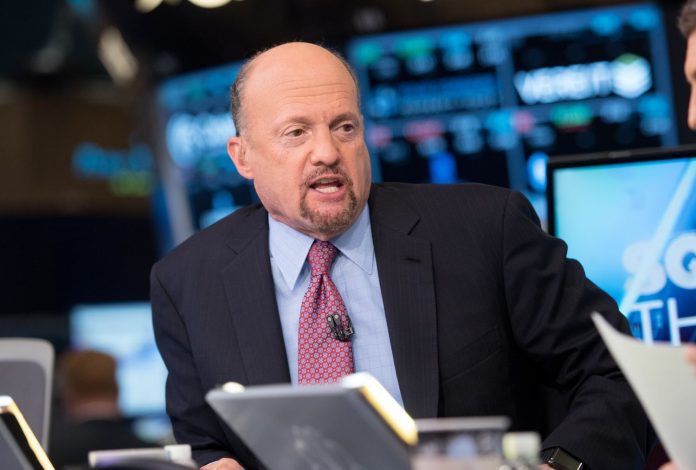
CNBC host Jim Cramer raised fresh warnings about the artificial intelligence sector on Monday, suggesting that some companies may start to underperform after months of easy gains, with OpenAI at the center of concern.

Cramer highlighted the enormous infrastructure commitments OpenAI has undertaken and questioned the company’s ability to finance the billions of dollars it has pledged to spend.

“In this kind of environment, you need to start diversifying into other growth areas, perhaps in time to keep all the king’s horses and all the king’s men sidelined,” Cramer said. “Maybe OpenAI can come public and Humpty-Dumpty won’t have a great fall, but in the meantime, it’s something you need to keep an eye on.”

OpenAI has signed deals with numerous technology companies, cumulatively worth hundreds of billions of dollars, creating potential exposure across the industry. Cramer warned that if OpenAI were forced to borrow money to meet its commitments, the situation could become riskier. He noted that while the AI buildout so far has largely been fueled by cash rather than debt, reliance on borrowing could leave companies vulnerable, particularly in a market that is increasingly scrutinizing valuations and profitability.

Cramer also cited comments from OpenAI CFO Sarah Friar, who recently floated the idea of using government support to fulfill the company’s spending obligations. While Friar later clarified that OpenAI is not currently seeking government funding, the initial suggestion spooked some investors and added to sector concerns.

Drawing historical parallels, Cramer likened the current rush of AI investment to the U.S. railroad boom of the 19th century, when companies borrowed heavily and many ultimately failed.

“I’m not suggesting OpenAI will end up bankrupt, but I wish these guys would just slow down,” he said, highlighting the risk that problems at a central player like OpenAI could ripple across the broader AI ecosystem.

To mitigate potential risks, Cramer recommended that OpenAI consider going public through an IPO, which could raise billions and provide greater transparency into its finances. He also encouraged the sector to shift focus toward profitability: “I’m proclaiming that for the rest of the year it’s the era of investing not as if by magic, but as if by profits,” he said, cautioning that the next phase of AI investing would likely produce far fewer winners and a lot more losers.

Cramer added that he hopes investors will see returns “from the miners and not just from those who make the Nvidia picks and the AMD shovels,” underscoring a need for real earnings rather than speculative gains tied to the AI hype.

The warning comes as AI companies, including OpenAI and chip suppliers like AMD and Nvidia, continue to see extraordinary demand for computing infrastructure. Against this backdrop, these companies are racing to expand their AI infrastructure to contain the demand.

OpenAI’s rapid growth has been supported by massive infrastructure investments across the AI ecosystem. The company is investing tens of billions of dollars in cloud computing, servers, and AI accelerators, partnering with multiple providers, including Microsoft Azure, Nvidia, and chipmakers like AMD.

OpenAI’s Azure partnership is central to scaling ChatGPT and GPT-4 services, with Microsoft reportedly committing over $10 billion in cloud credits and infrastructure resources.

In addition to AMD, OpenAI has acquired hardware and AI acceleration capacity from Nvidia, leveraging H100 GPUs for generative AI workloads.

OpenAI has invested in and contracted other startups and smaller firms providing AI-specific software tools and high-performance computing solutions, reinforcing its reliance on a broad ecosystem.

Collectively, these investments have positioned OpenAI at the center of the AI infrastructure market but also exposed it to substantial financial and operational risk given the scale of its commitments.

While the sector’s growth story remains compelling, Cramer believes that investor caution may be warranted as the pace of spending accelerates and exposure to debt increases.

Tesla’s China Sales Sink to Three-Year Low as Global Slump Deepens

0

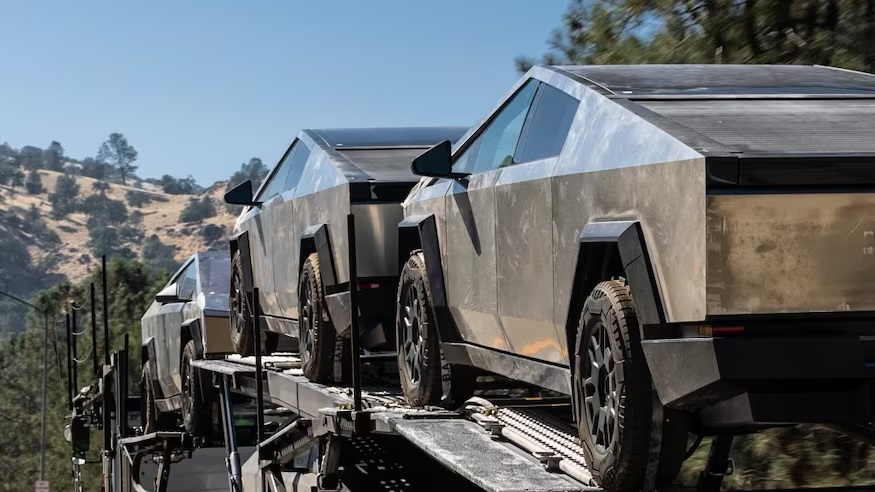
Tesla’s sales in China fell to their lowest level in three years in October, deepening concerns over the electric vehicle (EV) maker’s weakening grip on key global markets.

The latest figures highlight how Elon Musk’s company — once the undisputed leader in the global EV race — is losing momentum amid fierce competition, cooling demand, and growing unease over Musk’s political posturing.

Data from the China Passenger Car Association (CPCA) showed that Tesla sold 26,006 vehicles in China last month — a staggering 35.8% decline from a year earlier and a sharp fall from 71,525 in September, when it began delivering the new long-wheelbase Model Y L SUV. It was Tesla’s weakest monthly sales performance in China since 2020.

While exports of China-made Teslas rose to a two-year high of 35,491 units, the automaker’s share of China’s EV market collapsed to 3.2% in October, down from 8.7% a month earlier — its lowest in more than three years. The drop underscores Tesla’s deepening vulnerability in a market now dominated by well-funded Chinese rivals, including BYD, Li Auto, and Xiaomi, whose EV arm reported record sales of 48,654 units last month.

Tesla’s poor showing in China follows disappointing results in Europe, where sales have slumped in major markets such as Germany, Spain, the Netherlands, and across the Nordic countries. Analysts have pointed to a combination of intensifying competition and Musk’s increasingly right-wing political rhetoric, which they say has alienated many environmentally conscious consumers — the very demographic that fueled Tesla’s rise.

In the United States, Tesla has also faced headwinds. EV adoption growth has slowed, while Ford, General Motors, Rivian, and Hyundai have all launched aggressively priced alternatives that have impacted Tesla’s dominance. According to analysts, Musk’s high-profile political commentary — including his alignment with conservative figures and criticism of diversity initiatives — has become a reputational drag on Tesla’s brand appeal, particularly among progressive consumers in North America and Europe.

Yet Musk has signaled that he is betting on the next frontier of AI and robotics to drive Tesla’s comeback. The company is doubling down on autonomous driving technologies and AI-powered products, including plans to launch a dedicated robotaxi fleet and expand production of the Optimus humanoid robot — a project Musk claims could eventually be “worth more than Tesla’s car business.”

These initiatives are central to Musk’s broader vision to transform Tesla into an AI-driven robotics company, a pivot that underpinned his $1 trillion pay package, recently approved by Tesla shareholders after months of controversy. Musk has argued that the compensation plan aligns his incentives with Tesla’s long-term value creation, saying the company’s future lies “beyond cars.”

However, skeptics remain cautious. Analysts note that robotaxis and humanoid robots are still in early experimental stages, with regulatory, safety, and technological hurdles likely to delay commercialization for years. Meanwhile, Tesla’s profit margins continue to shrink under the weight of price cuts aimed at maintaining sales volume in a crowded market.

China — Tesla’s second-largest market after the United States — remains a critical battleground for Musk’s turnaround ambitions. But with BYD and Xiaomi rapidly expanding and domestic consumer confidence softening due to weaker government subsidies, Tesla’s once-dominant position looks increasingly fragile.

The company’s future currently hinges on whether Musk’s ambitious AI push can offset the erosion of its EV leadership — and whether his political choices will continue to overshadow the brand’s technological promise.

SoftBank’s $34.7bn OpenAI Gamble Delivers Record Profit, but ‘AI Bubble’ Fears Grow

0

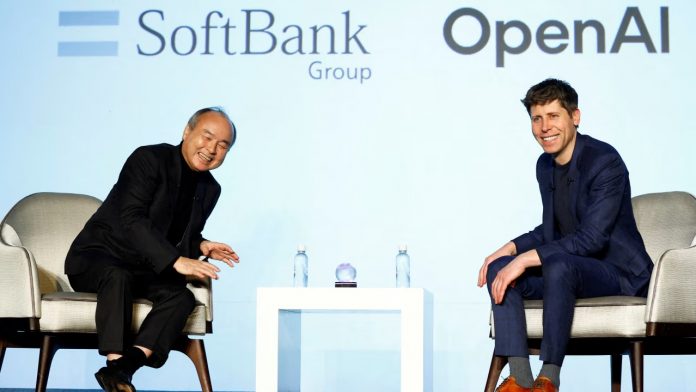
SoftBank Group’s aggressive wager on artificial intelligence has turned into a windfall. The Japanese tech conglomerate posted a 2.5 trillion yen ($16.6 billion) net profit for the second quarter ended September, more than doubling its results from a year earlier.

The turnaround was driven primarily by valuation gains in OpenAI, the U.S. company behind ChatGPT, marking SoftBank’s strongest performance since 2022, according to Reuters.

The results underline Masayoshi Son’s high-stakes pivot toward AI as the core of SoftBank’s future. Once reeling from the collapse of several Vision Fund-backed startups such as WeWork and Oyo, Son has re-emerged as one of the world’s most bullish investors in AI — a stance he describes as “an all-in conviction on the future of intelligence.”

SoftBank’s Vision Fund, which manages two investment vehicles launched in 2017 and 2019, posted a 3.5 trillion yen gain in the quarter — a reversal from the fund’s previous streak of losses. Nearly two-thirds of that came from its OpenAI holdings, which gained 2.16 trillion yen in value following the U.S. firm’s successive fundraising rounds and soaring secondary market demand.

The scale of SoftBank’s exposure to OpenAI has made it one of the company’s largest outside backers. In March 2025, SoftBank led a funding round of up to $40 billion at a valuation of $300 billion, and by October, it joined a consortium of investors acquiring $6.6 billion worth of employee shares at an implied valuation of $500 billion. By December, its total investment is expected to reach $34.7 billion — a sum larger than the entire GDP of some developing nations.

The AI windfall also pushed SoftBank’s share price to a record high, prompting the company to announce a four-to-one stock split to make its shares more accessible to retail investors. The stock has nearly quadrupled in value in the past six months amid a broader rally in tech-related equities.

Financing the AI gamble

Son’s AI ambitions demand vast capital. To bankroll them, SoftBank has moved swiftly to liquidate legacy assets and raise fresh cash. The firm sold its entire 32.1 million-share stake in Nvidia in October for $5.83 billion, and also offloaded part of its T-Mobile holdings for $9.17 billion.

In parallel, SoftBank has issued bonds in three currencies — yen, dollars, and euros — worth more than 1 trillion yen ($6.4 billion) since April. It also secured two major bridging loans totaling $15 billion: an $8.5 billion loan to finance its OpenAI investment and another $6.5 billion for the planned acquisition of U.S. chip design firm Ampere Computing, which remains pending.

SoftBank’s Chief Financial Officer, Yoshimitsu Goto, defended the company’s aggressive financing strategy at a Tokyo briefing.

“There are various opinions, but SoftBank’s position is that the risk of not investing is far greater than the risk of investing,” he said.

Goto hinted that the company sees OpenAI’s ecosystem — from model training to infrastructure — as a central pillar of global digital transformation.

AI boom — or speculative bubble?

While SoftBank’s results reinforce its reputation as a bellwether for tech cycles, analysts warn that the AI sector may be overheating. Many of the leading companies in the space, including OpenAI, are reporting mounting losses despite sharp valuation increases.

“Son is a savvy investor, so selling the entire [Nvidia] stake must mean he is no longer optimistic about the share price,” said Wong Kok Hoi, CEO of Singapore-based APS Asset Management. “Big tech companies may continue to invest heavily in GPU chips but not at this year’s level for many years.”

The concern is that the massive sums flowing into AI infrastructure — particularly data centers, semiconductor production, and model training — may not yet translate into sustainable profits. OpenAI, for instance, has seen its operating costs surge due to the expense of training and deploying its GPT models, which require vast computing power.

Still, SoftBank maintains that the potential upside of AGI — artificial general intelligence — outweighs the short-term financial risks. Son has framed the company’s strategy as a long-term play that echoes his earlier success with Alibaba, which turned a $20 million stake into more than $50 billion at its peak.

Son’s investing style has always been marked by extremes: bold vision backed by heavy leverage. His early triumph with Alibaba gave him global prominence, but later missteps — particularly with WeWork, which filed for bankruptcy in 2023 — left the Vision Fund battered and investors wary.

SoftBank’s new trajectory represents both a recovery and a reckoning. The group is now positioning itself as a cornerstone investor in the global AI ecosystem, participating in infrastructure ventures, chip design, and data center construction, alongside stakes in leading AI software developers.

The company’s strategy also aligns with Japan’s broader push to reclaim technological leadership in semiconductors and next-generation computing, sectors long dominated by the U.S. and China.

Amid this technological competition, the US motivates EU and Asian companies to relocate their members and ventures to the country, increasing the global visa services activity around the world to ensure global dominance in the AI sector.

However, SoftBank’s latest surge signals a sustainable AI renaissance or a temporary bubble remains uncertain. The current rally has drawn comparisons to the late 1990s dot-com boom, when valuations soared on enthusiasm for a technology whose business models were still unproven.

For now, Son’s gamble has paid off handsomely. But with OpenAI still burning cash, the broader market tightening, and competition intensifying across AI research and infrastructure, SoftBank’s balance between vision and vulnerability may soon be tested again.