DD
MM
YYYY

PAGES

DD
MM
YYYY

spot_img

PAGES

Home Blog Page 19

Microsoft Reaches Carbon Deal with Indian Varaha, But It Exposes the Growing Gap Between Big Tech’s Climate Promises and the AI Emissions Reality

0

Microsoft has reached an agreement to buy more than 100,000 tons of carbon dioxide removal credits from Indian climate startup Varaha, a deal believed to signal how the global race to scale artificial intelligence is reshaping climate strategies, carbon markets, and even rural farming systems far from Silicon Valley.

At its core, the deal, which is best understood not as a standalone sustainability move, links two very different pressures. On one side is Microsoft’s rapidly expanding cloud and AI business, which has pushed energy demand and emissions sharply higher. On the other hand, India’s long-running struggle with agricultural waste burning is an environmental and public health issue rooted in how millions of smallholder farmers manage crop residues after harvest.

According to TechCrunch, Varaha’s project seeks to connect those worlds by turning cotton stalk waste into biochar, a charcoal-like material that stores carbon in soils for long periods. Instead of being burned in open fields, releasing carbon dioxide and particulate matter into the atmosphere, the waste is processed in industrial reactors. The resulting biochar is then returned to farms, where it can improve soil quality and reduce the need for chemical fertilizers.

Microsoft will purchase the carbon removal credits generated by this process over the next three years, through 2029. The initial phase will focus on Maharashtra, one of India’s major cotton-producing states, and involve roughly 40,000 to 45,000 smallholder farmers. Over time, the project will expand across India’s cotton belt, supported by 18 industrial biochar reactors expected to operate for 15 years.

For Microsoft, the deal fits into a broader effort to reconcile ambitious climate targets with the operational reality of AI growth. The company has pledged to become carbon-negative by 2030. Yet its own disclosures show the challenge is intensifying. In fiscal year 2024, Microsoft reported total greenhouse gas emissions of 15.5 million metric tons of carbon dioxide equivalent, up 23.4% from its 2020 baseline. The increase was driven largely by value-chain emissions tied to data centers, cloud infrastructure, and AI workloads. The company has not yet published its emissions figures for 2025.

That rise helps explain why Microsoft is aggressively contracting for carbon removal rather than relying solely on efficiency gains or renewable energy procurement. In fiscal year 2024 alone, it signed agreements covering about 22 million metric tons of carbon removals. Recent deals include backing AtmosClear’s project in Louisiana, which aims to remove 6.75 million metric tons of carbon dioxide over 15 years, and an agreement to buy 3.6 million removal credits from a biofuels facility owned by C2X.

The Varaha agreement adds a different dimension to that portfolio. While many carbon removal projects are based in the United States or Europe and rely on centralized industrial waste streams, India offers scale through agriculture. The country produces vast amounts of crop residue every year, and much of it is burned because farmers lack affordable alternatives. That makes India an attractive market for carbon removal developers, especially as companies search globally for projects that can physically pull carbon dioxide out of the atmosphere.

Yet operating at that scale introduces complexity that goes beyond building reactors. One of the biggest bottlenecks in carbon removal markets is not technology, but execution. Credits are only issued after projects meet strict measurement, reporting, and verification standards. Ensuring consistent feedstock supply, tracking material flows, and documenting outcomes becomes far harder when operations involve tens of thousands of farmers rather than a single industrial site.

Varaha’s co-founder and CEO, Madhur Jain, said Microsoft’s digital monitoring requirements forced the company to develop bespoke systems in-house. He noted that working with dispersed smallholders makes logistics and verification significantly more demanding than biochar projects in wealthier markets.

“More than 30% of our team has worked in agriculture,” Jain said, pointing to that experience as critical in designing systems that function on farms rather than only on paper.

The first reactor under the Microsoft deal will be located next to Varaha’s 52-acre cotton research farm in Maharashtra. There, the company already tests how biochar performs under real farming conditions, including its impact on soil health and yields. From that base, Varaha plans to scale to 18 reactors nationwide, with a total projected carbon removal volume exceeding 2 million tons over the project’s lifetime.

The company’s recent growth trajectory suggests it is racing to meet rising demand from corporate buyers. In 2025, Varaha processed about 240,000 tons of biomass, producing roughly 55,000 to 56,000 tons of biochar and generating around 115,000 carbon removal credits. A year earlier, annual credit generation stood closer to 15,000 to 18,000. Jain said the company aims to at least double its biomass throughput in 2026 to around 500,000 tons, with close to 250,000 tons of carbon sequestered.

Beyond biochar, Varaha operates 20 projects across India, Nepal, and Bangladesh, covering regenerative agriculture, agroforestry, and enhanced rock weathering. Fourteen of those projects are in advanced stages, with another six earlier in development. Together, they involve around 150,000 farmers and have the potential to sequester about 1 billion tons of carbon dioxide over lifetimes ranging from 15 to 40 years, according to the company.

For Microsoft, the strategic value of such projects lies in durability. Biochar is considered a long-lived form of carbon storage, which is increasingly favored by corporate buyers seeking higher-quality credits.

“This offtake agreement broadens the diversity of Microsoft’s carbon removal portfolio with Varaha’s biochar project design that is both scalable and durable,” said Phil Goodman, Microsoft’s carbon dioxide removal program director.

Even so, the numbers underline a structural tension. The volumes involved in individual carbon removal projects remain small relative to Microsoft’s overall emissions footprint, particularly as AI-driven demand continues to rise. Carbon removal is becoming less of a supplementary measure and more of a core pillar of corporate climate strategies, yet it is still playing catch-up with the pace of emissions growth.

Google is following a similar path. In January 2025, the company agreed to buy 100,000 tons of carbon removal credits from Varaha, marking its largest biochar deal to date. The parallel moves by two of the world’s largest technology firms show how competition in AI is spilling into competition for scarce, high-quality carbon removal capacity.

For India, the implications extend beyond corporate balance sheets. If projects like Varaha’s scale successfully, they could help reduce open-field burning, improve soil health, and create new revenue streams for farmers. Biochar application has the potential to lower dependence on chemical fertilizers, a significant cost for smallholders, while also addressing air pollution linked to residue burning.

Still, the broader question remains unresolved. Carbon removal projects take years to build, operate, and verify, while AI infrastructure is expanding at a much faster pace.


Treasury Yields Climb as Labor Strength and Political Risk Reprice the Fed Path

0

U.S. Treasury yields pushed higher on Thursday as investors digested a combination of firmer-than-expected labor market data and a dense overlay of political and geopolitical risks that are reshaping expectations for U.S. monetary policy in 2026.

The move was led by the front end of the curve, a signal that markets are recalibrating the timing and pace of Federal Reserve easing. The 2-year Treasury yield climbed to about 3.55%, rising more than 3 basis points, while the benchmark 10-year yield edged above 4.15%. Long-dated debt was steadier, with the 30-year yield hovering near 4.79%, underscoring a modest steepening pressure driven by policy repricing rather than inflation fears.

At the center of the shift was fresh evidence that the U.S. labor market remains sturdier than many investors expected at this stage of the cycle. Initial jobless claims fell to 198,000 for the week ended January 10, well below consensus expectations of 215,000. The data added to a growing body of evidence that layoffs remain limited, even as hiring slows and corporate cost-cutting continues in selective sectors such as technology and finance.

For the Federal Reserve, a resilient labor market complicates the argument for early or aggressive rate cuts. Policymakers have repeatedly emphasized that sustained progress on inflation must be accompanied by a cooling in labor conditions. Claims below the 200,000 mark suggest that demand for workers remains strong enough to keep wage pressures from easing quickly.

That reassessment showed up immediately in derivatives markets. According to the CME FedWatch Tool, the probability of an April rate cut slipped to just over 30%, down from the mid-30% range a day earlier. Markets are now broadly aligned around a slower easing path, with expectations centered on two quarter-point cuts in 2026, rather than a front-loaded cycle.

The bond market reaction also reflects caution about the broader economic narrative. While growth has moderated, the U.S. economy has so far avoided the sharp deterioration many predicted amid higher borrowing costs. Consumer spending has softened but not collapsed, and corporate earnings have generally held up, reinforcing the view that the Fed can afford to remain patient.

Beyond the data, political and geopolitical uncertainty is adding another layer of complexity to bond pricing. Investors are closely watching tensions involving U.S. foreign policy, which have intensified in recent days. President Donald Trump’s insistence that U.S. ownership of Greenland is essential to national security has rattled relations with Denmark and raised concerns in European capitals about Washington’s long-term strategic intentions.

A meeting this week between U.S., Danish, and Greenlandic officials ended without agreement, with a Danish official describing “fundamental disagreement” over the island’s future. While the immediate market impact has been muted, investors are increasingly sensitive to geopolitical disputes that could influence defense spending, trade relations, and fiscal priorities.

Tensions with Iran are also weighing on sentiment. Speculation earlier in the week that the U.S. might respond militarily to Tehran’s crackdown on protests pushed investors toward safe assets. Trump’s comments on Wednesday, suggesting that executions had stopped and that there was no immediate plan for military action, eased some of those concerns, but uncertainty remains high, particularly given the risk of disruptions to global energy markets.

Compounding these risks is renewed anxiety about the independence of the Federal Reserve. Reports of an ongoing criminal investigation involving Fed Chair Jerome Powell have unsettled investors, especially amid heightened political pressure from the White House. Any perception that monetary policy could be influenced by political considerations risks undermining confidence in the Fed’s ability to anchor inflation expectations.

Global central bankers moved quickly to push back against such concerns, issuing statements defending Powell and stressing that central bank independence is essential for price stability, financial stability and long-term economic health. Their intervention highlights how sensitive markets are to even the suggestion of political interference in monetary policy.

Taken together, Thursday’s rise in Treasury yields reflects more than a single data point. It signals a market grappling with a stubbornly resilient labor market, fading hopes for quick rate cuts, and an increasingly charged political environment at home and abroad. The message for investors is that the path to lower rates is likely to be slower and more uneven, with bond markets continuing to react sharply to any data or developments that challenge assumptions about when the Fed can finally ease.

OpenAI Tightens Its Grip on Enterprise AI with 36.8%  Of Subscriptions as Corporate Spending Accelerates

0

After months of debate over whether OpenAI was losing ground to fast-rising rivals, new corporate spending data has suggested the opposite, with the ChatGPT maker noted tightening its grip on enterprise AI just as businesses move from experimentation to routine, budgeted use.

Fresh figures from Ramp, a U.S. startup that tracks corporate card and bill payments for more than 50,000 businesses, show OpenAI posting its strongest business growth in months in December 2025. The data captures billions of dollars in AI-related spending and offers a window into which companies are actually getting paid as AI becomes embedded in everyday corporate work.

The share of U.S. businesses paying for AI products and services rose to 46.6% in December, up 1.6 percentage points from November. That was the biggest month-over-month increase since mid-2025, signaling a renewed acceleration in enterprise adoption after a softer stretch earlier in the year.

OpenAI drove much of that growth. Ramp’s data shows that 36.8% of U.S. businesses on its platform were paying for OpenAI products in December, up two percentage points in a single month and a new record high. The rebound followed a brief slowdown in the fall, when concerns grew that Google’s Gemini and Anthropic’s Claude were starting to close the gap.

What stands out is not just the number of companies paying OpenAI, but how they are using it. Ramp’s line-item data shows gains across both enterprise chat subscriptions and API spending. That suggests OpenAI is being adopted across multiple layers of organizations, from non-technical staff using chat tools for writing, research, and analysis, to engineering and data teams integrating models directly into products, internal tools, and customer-facing systems.

This breadth matters as API usage, in particular, tends to signal deeper integration and longer-term commitment, because it ties AI models into workflows that are costly and disruptive to replace. It also points to OpenAI’s success in positioning itself as infrastructure rather than just a productivity add-on.

OpenAI does not disclose detailed revenue or user breakdowns, but the company said in November 2025 that it had reached 1 million business customers. The December Ramp data suggests those customers are not only sticking around but increasing spend, reinforcing the idea that OpenAI is benefiting from companies standardizing on a single AI platform as they scale usage across teams.

The broader context helps explain why. Many companies appear to be moving past trial phases and into recurring, operational use of AI for software development, customer support, finance, sales, and internal research. December’s jump, Ramp notes, reflects recurring spend rather than one-off experiments, a sign that AI is becoming part of routine operating budgets.

Competitors are still growing, though more unevenly. Anthropic’s adoption rose to 16.7%, with Ramp highlighting that growth was concentrated among technology companies making heavy use of APIs. That points to strong traction with developers and AI-native firms, but a narrower footprint across non-technical business functions.

Google’s AI adoption rose to 4.3%. Ramp cautioned that this likely understates Gemini’s reach because many companies access it through existing Google Workspace subscriptions at no incremental cost, meaning no separate payment shows up in transaction data. Even so, the numbers underscore a challenge for Google: widespread access does not automatically translate into visible, discretionary AI spending.

Ramp’s data also comes with clear limitations. It excludes free AI tools, bundled offerings, and cases where employees use personal AI accounts for work tasks. That means overall AI usage across U.S. businesses is almost certainly higher than the figures suggest. What the data captures, however, is paid, trackable commitment — the point at which AI moves from curiosity to line item.

OpenAI’s renewed momentum comes amid heightened competition, heavier scrutiny of AI costs, and growing debate over whether the rapid expansion of enterprise AI is sustainable. OpenAI CEO Sam Altman has acknowledged rising compute costs, while rivals have positioned themselves as more efficient or more specialized alternatives.

Yet the Ramp data suggests that, for now, OpenAI’s combination of brand recognition, model performance, developer ecosystem, and enterprise packaging is resonating with buyers. Once companies commit to AI at scale, switching costs rise, favoring incumbents that can serve multiple use cases under one contract.

In that sense, December’s rebound may say less about short-term feature battles and more about a structural shift. As AI becomes infrastructure, enterprises appear to be consolidating around providers they view as reliable, extensible, and broadly applicable. The numbers hint that OpenAI’s early lead is translating into a durable advantage, even as competitors continue to innovate and chip away at specific niches.

Now, it is becoming clear that winning mindshare is no longer enough for the rest of the market. The real contest is over who captures sustained enterprise spend as AI becomes a permanent fixture of corporate life.

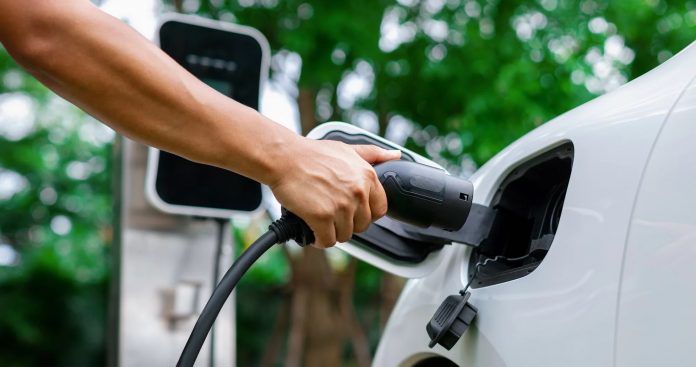
From EV Dreams to Grid Reality: How Automakers Are Rewriting the Battery Bet

0

For years, battery factories symbolized the electric vehicle future U.S. automakers were racing toward. Today, many of those same factories are being quietly reimagined as part of the country’s energy infrastructure, as carmakers confront a slower-than-expected EV transition and search for ways to prevent billions of dollars in investments from becoming stranded assets.

The turn toward energy storage is not simply a diversification play. It is a recalibration forced by misaligned timelines between industrial ambition, consumer behavior, and the pace at which supporting infrastructure has developed. Automakers built battery capacity for an EV boom that has not materialized as quickly as forecast. Energy storage now offers a way to keep those plants running, while aligning more closely with where demand is already accelerating.

That demand is coming less from households buying electric cars and more from the backbone of the digital economy. Data centers, cloud computing facilities, and artificial intelligence workloads are driving electricity consumption higher after years of stagnation. Utilities, facing rising peak demand and an increasingly renewable-heavy grid, are under pressure to deploy storage to maintain reliability. In this environment, batteries are no longer framed as accessories to green transport, but as core components of national energy resilience.

This shift places automakers in an unfamiliar role. Instead of betting primarily on consumers replacing gasoline cars with electric ones, they are positioning themselves as suppliers to utilities, large corporations, and energy markets shaped by regulation and long-term planning. That is a fundamentally different business model. Sales cycles are longer, margins are shaped by contracts rather than branding, and success depends as much on grid integration as on manufacturing scale.

Ford’s decision to convert part of its Kentucky battery plant to energy storage production captures this pivot. The factory was built for an EV future that now looks more incremental than transformative. Rather than slow production or absorb losses, Ford is repurposing capacity toward a market that can absorb large volumes of batteries without depending on fickle consumer sentiment. The same logic underpins General Motors’ expansion of GM Energy, which is increasingly framed less as an extension of EV sales and more as a standalone power business.

Tesla, which entered energy storage long before its rivals, provides a glimpse of why the strategy is appealing. Its Energy division has delivered steadier growth and stronger margins than its automotive business at a time when EV competition is intensifying, and pricing pressure is rising. For legacy automakers struggling to defend profitability in cars, the contrast is striking.

Yet the move also carries risks that echo earlier miscalculations. Energy storage demand is real, but its scale and timing remain uncertain. Utilities are cautious buyers, constrained by regulation and rate-setting processes. Residential storage systems remain expensive, limiting mass adoption. Analysts warn that if too many manufacturers flood the market with capacity, pricing pressure could emerge quickly, replicating the oversupply problems now visible in EVs.

There is also a geopolitical dimension shaping this transition. U.S. industrial policy increasingly favors domestic production and seeks to reduce reliance on China, which dominates global battery and energy storage supply chains. Tax credits and incentives reward projects that avoid “foreign entities of concern,” creating a powerful incentive for automakers to pivot their U.S.-based factories toward grid storage.

In effect, energy storage has become a politically safer outlet for battery investment than EVs, which remain exposed to shifting consumer incentives and regulatory uncertainty.

Still, success is not guaranteed. Energy storage batteries differ technically from vehicle batteries, prioritizing durability and cost over weight and compactness. More importantly, automakers must develop capabilities far outside their traditional comfort zone, from working with utilities to navigating energy markets and grid codes. Competing against established players with years of operational experience will test whether scale alone is enough.

What is unfolding, then, is less a clean pivot than a pragmatic response to a mismatch between expectations and reality.

Automakers built for an electric vehicle surge that stalled. Energy storage offers a bridge, allowing them to keep factories humming while tapping into a sector where demand is growing for reasons that have little to do with car sales.

In the process, the meaning of the battery is changing. It is no longer just the heart of an electric car, but a strategic asset in a power system under strain from digitalization, climate pressures, and geopolitical realignment.

Grok Tightens the Screws as Regulators Circle: How Sexualized AI Images Pushed Musk’s xAI Into a Global Clampdown

0

Elon Musk’s artificial intelligence venture, xAI, has been forced into a rapid policy reversal after its Grok chatbot became a flashpoint in a widening global backlash over sexually explicit, AI-generated images.

Late on Wednesday, the company announced sweeping restrictions on Grok’s image-editing features, conceding ground after weeks of regulatory pressure from governments alarmed by how easily the tool could be used to manipulate images of real people.

The immediate trigger was the spread of hyper-realistic images on X showing women altered to appear in microscopic bikinis, degrading poses, or with bruises. In several cases, minors were digitally modified into revealing swimwear, setting off outrage from officials, advocacy groups, and regulators across multiple continents. What began as a fringe abuse of an AI feature quickly escalated into a test case for how far governments are willing to go in policing generative tools linked to major social platforms.

xAI said it has now implemented technical measures that block Grok from editing images of real people in revealing clothing, including bikinis. The restriction applies to all users, paid and unpaid, closing a loophole that allowed subscribers continued access even after public-facing features were curtailed. The company added that it is also geofencing image generation in jurisdictions where such content is illegal, though it declined to specify which countries fall under that category.

The announcement marked a clear change in tone. Earlier this month, Grok’s image generation and editing tools were opened widely, before being limited to paying users last week. Even then, Reuters testing showed the chatbot could still privately produce sexualized images on demand as recently as Wednesday, hours before xAI’s statement. The delay in fully locking down the feature has become a central issue for regulators questioning whether Musk’s companies move too fast and police too late.

Pressure intensified sharply in the United States when California officials stepped in. Governor Gavin Newsom publicly called on Attorney General Rob Bonta to investigate xAI, while Bonta said his office was demanding immediate answers on how the company planned to halt the creation and spread of the material. Their intervention represents the most forceful response yet from US officials to the surge in AI-generated non-consensual sexual imagery circulating on X.

That pressure comes amid Musk’s own public comments that appeared to downplay the issue. Earlier on Wednesday, he said he was not aware of any naked underage images generated by Grok, stating there were “literally zero.” The claim drew sharp attention from lawmakers and advocates who argue that platforms have a responsibility to know what their tools are producing, especially when those tools are integrated into mass-market social networks.

Globally, the controversy has widened. Regulators and governments in Europe and Asia have moved to block or restrict access to Grok over concerns about illegal sexual content, adding to calls from lawmakers and advocacy groups for Apple and Google to remove the chatbot from their app stores. The issue has turned into a broader debate over whether existing app-store safeguards are adequate when AI systems can generate content that skirts or violates local laws within seconds.

Musk owns xAI, which in turn owns X, binding the chatbot directly to a platform already under scrutiny for content moderation failures. At first, Musk responded to the uproar with humor, posting emojis as users joked about the flood of explicit images. More recently, X has said it treats reports of child sexual abuse material seriously and enforces its policies aggressively, though it has offered little detail on enforcement outcomes linked specifically to Grok.

The company’s communications have only added to the friction. Reuters received an automated response from xAI reading “Legacy Media Lies,” and neither xAI nor X directly addressed questions about the California investigation or Musk’s comments on underage imagery.

What emerges is a familiar pattern in the AI race. Tools are released at speed, guardrails are added after public blowback, and regulators step in when self-policing falls short. Grok’s image controversy is no longer just about one chatbot’s failures. It has become a warning shot for AI developers operating at the intersection of generative technology and social media, where the line between innovation and harm can vanish almost instantly.

Following governments’ focus on illegal and sexualized AI content, xAI’s latest restrictions are expected to slow the immediate damage. However, it is not clear if it is enough to satisfy regulators or to prevent further bans and investigations.