DD
MM
YYYY

PAGES

DD
MM
YYYY

spot_img

PAGES

Home Blog Page 2

Nvidia Acquires SchedMD to Expand Open-Source Workload Management for AI

0

Nvidia has announced the strategic acquisition of SchedMD, the developer behind the widely adopted open-source workload management system, Slurm.

NVIDIA today announced it has acquired SchedMD — the leading developer of Slurm, an open-source workload management system for high-performance computing (HPC) and AI — to help strengthen the open-source software ecosystem and drive AI innovation for researchers, developers and enterprises.

NVIDIA will continue to develop and distribute Slurm as open-source, vendor-neutral software, making it widely available to and supported by the broader HPC and AI community across diverse hardware and software environments.

HPC and AI workloads involve complex computations running parallel tasks on clusters that require queuing, scheduling and allocating computational resources. As HPC and AI clusters get larger and more powerful, efficient resource utilization is critical.

This move is a significant affirmation of the chip designer’s commitment to strengthening its grip on the artificial intelligence (AI) ecosystem, not just through hardware, but through control and enhancement of the essential software layers that enable the efficient use of its high-performance chips. The acquisition, for which financial details were not disclosed, comes as Nvidia faces intensifying competition and strategically doubles down on the importance of the open-source community.

SchedMD’s flagship product, Slurm (Simple Linux Utility for Resource Management), is a sophisticated, vendor-neutral software that serves as the de facto cluster management and job scheduling system for large-scale computing environments globally.

Slurm’s importance in the current AI landscape is profound. The product is designed to schedule and manage enormous computing jobs, such as those required for training large foundation models and performing generative AI inference. It ensures the efficient allocation of vast shares of a data center’s server capacity and, crucially, excels at managing and optimizing the use of high-value resources like GPUs alongside CPUs across massive computing clusters.

This directly maximizes the return on investment for customers purchasing Nvidia hardware.

Slurm is a cornerstone of the global supercomputing community, currently acting as the scheduler for more than half of the top 10 and top 100 supercomputer systems on the prestigious TOP500 list, demonstrating its unmatched scalability and efficiency in distributed environments. Its customer base spans major institutions and private firms, including the cloud infrastructure firm CoreWeave and the Barcelona Supercomputing Center.

The integration of SchedMD and its Slurm technology directly supports Nvidia’s strategy, which views its proprietary CUDA software ecosystem as the critical moat protecting its market dominance. While Nvidia builds its reputation on fast chips, the software stack is what locks developers into the platform.

Nvidia gains the ability to accelerate the development of the scheduler itself by acquiring the team behind Slurm. This allows the company to ensure that Slurm is optimized at the most fundamental level to meet the rapidly evolving demands of next-generation AI and supercomputing, maximizing the throughput and efficiency of its newest hardware generations, such as the NVIDIA GB200 systems. This deep integration is vital for foundation model developers who need highly efficient resource management for distributed training jobs.

Additionally, this acquisition helps neutralize the efforts of rival chip makers, such as AMD, who are actively building competing GPU platforms and often rely on Slurm integration to appeal to customers. By owning the leading open-source scheduler, Nvidia can directly influence its future, making it strategically more challenging for competitors to offer a truly seamless and optimized experience on alternative hardware stacks, thereby maintaining its overall control of the AI infrastructure.

Despite taking ownership, Nvidia has made an explicit and crucial commitment to maintain and distribute Slurm as open-source, vendor-neutral software. This dedication reassures the existing ecosystem of supercomputing centers and AI labs that rely on Slurm for flexibility and multi-vendor compatibility.

The move strengthens Nvidia’s overall open-source push, which also includes the recent unveiling of its new Nemotron 3 family of open-source AI models, all aimed at cementing its influence across the entire AI stack, from silicon to scheduling.

The acquisition of the 40-person company, which was founded in 2010 by Slurm developers Morris “Moe” Jette and Danny Auble, reinforces Nvidia’s strategy of making targeted, high-impact investments in the software layers that control how its accelerated computing platform is utilized, ensuring its hardware remains the indispensable component in the global AI infrastructure.

Nvidia Weighs H200 Production Ramp as China Orders Surge After U.S. Export Green Light

0

Nvidia is considering ramping up production of its H200 graphics processing units as demand from Chinese customers accelerates following fresh approval from the Trump administration to resume sales of the chips to China, according to a Reuters report citing people familiar with the matter.

The H200 is the most powerful chip from Nvidia’s previous Hopper generation and is widely used to train large language models and other advanced artificial intelligence systems. Until recently, the chip was effectively off-limits to China after the Biden administration proposed tighter export controls aimed at restricting the flow of cutting-edge AI hardware to Chinese firms.

That position shifted last week when the U.S. Department of Commerce cleared Nvidia to sell the H200 in China, under an arrangement that requires the company to remit 25% of sales from those chips. The approval reopened a critical market for Nvidia at a time when Chinese technology companies are racing to secure compute capacity to remain competitive in AI development.

According to Reuters, interest from China has been strong enough that Nvidia is now examining whether to add manufacturing capacity for the H200, which is currently produced in limited volumes. Chinese firms have been moving quickly to place orders, reflecting pent-up demand created by years of export restrictions that forced many developers to rely on less capable hardware.

Chinese regulators, however, have not yet given final clearance for the chips to be imported, and discussions are ongoing within Beijing over whether to allow large-scale purchases. If approved, the H200 would represent a significant step up from the H20 chips that Nvidia previously tailored for the Chinese market to comply with U.S. restrictions. The H20, while compliant, is widely seen as a compromised alternative with reduced performance.

Several major Chinese technology companies are already in talks with Nvidia about potential orders. Firms such as Alibaba and ByteDance, both of which are building proprietary AI models, are said to be assessing how many H200 chips they can secure if imports are approved. For these companies, access to more capable GPUs could shorten training cycles and narrow the performance gap with U.S.-based rivals that have had uninterrupted access to Nvidia’s latest hardware.

“We are managing our supply chain to ensure that licensed sales of the H200 to authorized customers in China will have no impact on our ability to supply customers in the United States,” an Nvidia spokesperson said in an emailed statement.

The possible production increase highlights Nvidia’s delicate balancing act. On one hand, China remains one of the world’s largest markets for data center and AI hardware, and renewed access offers Nvidia a chance to unlock substantial incremental revenue. On the other hand, the company must navigate U.S. national security concerns and reassure policymakers that expanded China sales will not undermine domestic supply or strategic objectives.

For China’s AI sector, the development points to how export controls have reshaped priorities. With access to top-tier hardware constrained, many Chinese firms have focused on improving model efficiency and software optimization rather than brute-force scaling. The return of a chip as capable as the H200 could shift that balance, at least temporarily, even as Beijing continues to push for homegrown alternatives to reduce long-term reliance on U.S. suppliers.

More broadly, the episode illustrates how geopolitics is now directly shaping supply chains in the AI industry. Decisions about chip production, allocation, and pricing are no longer driven solely by market demand but by negotiations between governments, regulators, and corporate giants. Nvidia’s consideration of a production ramp suggests that, for now, demand from China remains too large to ignore — even as the rules governing that demand continue to evolve.

Nigeria’s Inflation Eases Sharply to 14.45% in November as Base Effects and Price Pressures Recede

0

Nigeria’s headline inflation rate slowed markedly to 14.45% in November 2025, down from 16.05% in October, signaling a notable easing in price pressures after a prolonged period of elevated inflation.

The latest figures, released on Monday by the National Bureau of Statistics (NBS), show a month-on-month decline of 1.6 percentage points, one of the sharpest disinflationary moves recorded this year. The data also indicate a slowdown compared with November last year, though the NBS cautioned that the year-on-year comparison reflects a different base year, November 2009, following the recent rebasing of inflation data.

On a month-on-month basis, however, inflation dynamics remain mixed. The NBS said headline inflation rose by 1.22% in November, higher than the 0.93% recorded in October. This suggests that while annual inflation is cooling, prices are still rising at a faster pace within the month.

“On a month-on-month basis, the Headline inflation rate in November 2025 was 1.22%, which was 0.29% higher than the rate recorded in October 2025,” the statistics agency said, noting that the average price level increased faster in November than in the preceding month.

Urban and rural price trends diverge

The moderation was evident across both urban and rural areas, though the pace of decline differed.

Urban inflation stood at 13.61% year-on-year in November 2025, a steep drop of 23.49 percentage points from the 37.10% recorded in November 2024. Month-on-month, urban inflation eased to 0.95%, down from 1.14% in October, pointing to some relief in city price pressures. The 12-month average urban inflation rate fell to 20.80%, compared with 35.07% a year earlier.

In rural areas, year-on-year inflation came in at 15.15%, down from 32.27% in November 2024. While still higher than the urban rate, the decline of 17.12 percentage points reflects easing pressures in food-producing and semi-urban communities, where inflation had been particularly severe over the past two years.

Food inflation cools sharply, but prices are still rising

Food inflation, a key driver of household hardship, slowed significantly to 11.08% year-on-year in November 2025, from 39.93% in the same month last year. The NBS attributed much of this dramatic drop to the change in the base year rather than a broad-based collapse in food prices.

Indeed, the agency noted that several staple items continued to record price increases during the month. These included dried tomatoes, cassava tubers, shelled periwinkle, ground pepper, eggs, crayfish, unshelled melon (egusi), oxtail, and fresh onions, underscoring the reality that many Nigerians are yet to feel tangible relief at the markets.

Core inflation, which strips out volatile food and energy prices, stood at 18.04% year-on-year in November. This suggests that underlying price pressures linked to transport, housing, healthcare, and services remain elevated, even as headline numbers ease.

Policy backdrop and lingering doubts

The latest data land against the backdrop of an ambitious inflation target set by President Bola Tinubu. In December 2025, while presenting the 2025 Appropriation Bill to a joint session of the National Assembly, Tinubu pledged to bring inflation down from 34.6% to 15% by the end of 2025.

“The 2025 budget projects that inflation will decline significantly from the current 34.6% to 15% by the end of next year,” the president said at the time.

While November’s reading of 14.45% appears, on the surface, to put that target within reach, economists have been cautious in interpreting the figures. Several analysts argue that base effects from the rebasing exercise are doing much of the heavy lifting, warning that structural drivers of inflation—such as exchange rate volatility, high energy costs, insecurity affecting food supply, and elevated transport expenses—have not been significantly addressed to yield the needed result.

In recent months, some economists have also called for a reassessment of monetary policy, noting that consecutive declines in headline inflation could strengthen the case for easing the Monetary Policy Rate. Others counter that the higher month-on-month inflation rate and stubborn core inflation suggest it may be too early for the Central Bank of Nigeria to declare victory.

For households and businesses, the key question remains whether the statistical slowdown will translate into sustained affordability. Currently, the data point to easing pressure, but not yet to a return to comfort, as prices continue to rise even if at a slower annual pace.

Zoom Brings AI Assistant to Web with Unveiling of Companion 3.0

0

Zoom has unveiled AI Companion 3.0, a sweeping update that redefines the platform as a comprehensive, AI-first productivity ecosystem extending far beyond its video conferencing origins.

The release introduces a dedicated web surface for the AI assistant and, critically, democratizes access to core AI features for users on the free Basic tier. The company positions the AI Companion 3.0 as a solution for “conversation to completion,” aiming to eliminate the friction between discussion and actionable outcomes.

The AI Companion is now accessible via a new, permanent conversational work surface at ai.zoom.us on a desktop web browser, establishing the assistant as a central hub for daily work outside of live meetings. This expansion is supported by a strategic freemium model designed to drive adoption.

Basic plan holders gain access to the AI Companion in up to three meetings per month for free. During these sessions, they can utilize high-value features such as meeting summary, in-meeting question answering, and AI note-taking. Additionally, free users can ask up to 20 questions each month via the side panel or the new web surface to retrieve highlights or action items from past meetings.

Full, unrestricted access to the AI Companion is available as a $10 per user per month add-on plan, which can be purchased without needing a separate paid Zoom Workplace license. An advanced Custom Companion tier is also offered for enterprise users, providing deeper customization, personalized knowledge collections, and integrations with their proprietary data sources.

Agentic Capabilities and Cross-Platform Orchestration

The most significant advancement in AI Companion 3.0 is its shift toward “agentic” capabilities, allowing it to perform multi-step actions and retrieve information across silos, turning scattered work conversations into continuous intelligence.

This intelligent assistance covers the entire workflow. The AI Companion features agentic retrieval capabilities, enabling it to pull information not only from all data stored within the Zoom ecosystem (meetings, chats, notes) but also from connected third-party platforms.

It currently supports Google Drive and Microsoft OneDrive, with planned, imminent support for Gmail and Microsoft Outlook, allowing the assistant to pull in email and document context for more informed responses. The system can even take notes for meetings held on Microsoft Teams and Google Meet, addressing the reality of mixed-platform work environments.

The assistant proactively manages the workday by generating a Daily Reflection Report, which summarizes meetings, tasks, and updates. It also automates post-meeting work with the Post-Meeting Follow-Up prompt template, which generates next steps, tasks, and drafts follow-up email messages. Custom AI agents, currently in beta for power users, allow a low-code design of personal workflows that automate routine tasks like summarizing chat threads every morning.

A new Agentic Writing Mode empowers users to draft, edit, and refine business documents using context derived directly from meeting discussions and documents. Users can start collaborative projects within the companion interface and seamlessly shift them to Zoom Docs, supporting exports to MD, PDF, Microsoft Word, and Zoom Docs formats.

Zoom, founded by CEO Eric Yuan, is actively competing with productivity behemoths like Microsoft (Copilot) and Google (Gemini) by leveraging its massive base of meeting data and an independent, platform-agnostic approach.

Lijuan Qin, head of AI product at Zoom, emphasized that the company’s independence and access to deep contextual meeting data give it a crucial advantage. Zoom’s technical core is its federated AI approach, which strategically combines the power of Zoom’s own custom Large Language Models (LLMs) and Small Language Models (SLMs) with the best models from third-party partners like OpenAI, Anthropic, and open-source models like NVIDIA Nemotron.

This hybrid approach dynamically routes tasks to the most suitable model for a given function, optimizing for performance, cost efficiency, and accuracy. This system has reportedly shown superior performance on certain benchmarks compared to reliance on a single frontier model.

By offering its AI assistant with limited free access and focusing on cross-platform functionality, Zoom is banking on a freemium strategy that captures new users and positions the AI Companion as an indispensable, neutral productivity layer across the entire enterprise stack, regardless of a company’s core software provider.

Netflix Pitches Warner Bros. Deal as Job-Saver and Growth Bet as Hollywood Braces for a Streaming Mega-Merger

0

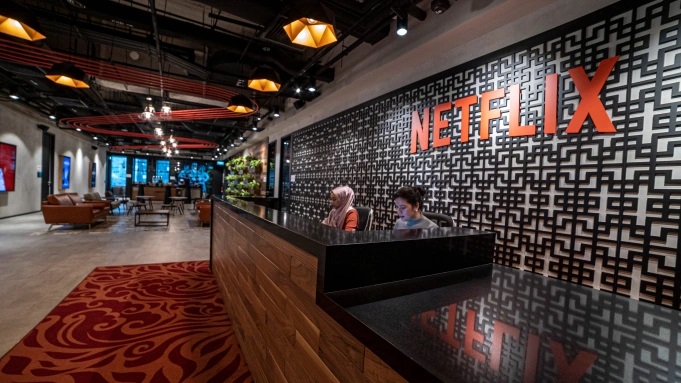
Netflix’s co-chief executives, Ted Sarandos and Greg Peters, have moved to calm internal anxiety and external skepticism over the company’s audacious plan to acquire Warner Bros. Discovery’s core streaming and studio assets, framing the proposed $72 billion deal as a rare consolidation that strengthens Hollywood rather than hollowing it out.

In a letter sent to employees on Monday — and filed publicly with the U.S. Securities and Exchange Commission — the executives argued that a combined Netflix–Warner Bros. would be “pro-consumer, pro-innovation, pro-worker, pro-creator, and pro-growth,” directly countering fears that the transaction could accelerate job losses and further erode traditional film and television models.

“We see this as a win for the entertainment industry, not the end of it,” Peters and Sarandos wrote, addressing a growing chorus within Hollywood that has warned the merger could mark a tipping point in the industry’s long shift toward streaming dominance.

The reassurance comes as Netflix faces not only cultural resistance but an intensifying corporate battle. Earlier this month, the streaming giant unveiled its plan to buy Warner Bros. Discovery’s streaming and studio businesses — a deal that would be Netflix’s largest acquisition ever and one that would fold franchises such as DC, Harry Potter, and HBO’s vast content library into its ecosystem. Days later, Paramount Skydance countered with a hostile bid for all of Warner Bros. Discovery, valuing the company at roughly $108 billion and escalating the stakes into a full-blown takeover fight.

In their letter, Peters and Sarandos said the rival bid was “entirely expected” but insisted Netflix’s proposal is the stronger option for shareholders, consumers, and workers. They emphasized that, unlike a Paramount-Warner Bros. tie-up, Netflix’s deal would not involve merging two traditional studios with overlapping operations — a key argument aimed at deflecting fears of mass redundancies.

That distinction matters in Hollywood, where “synergies” — the cost savings typically promised in mergers — often translate into layoffs. Paramount has estimated potential synergies of around $6 billion if its bid succeeds, compared with Netflix’s projection of $2 billion to $3 billion. Netflix has pitched that gap as evidence that its approach would preserve more jobs across production, marketing, and distribution.

Still, suspicion toward Netflix runs deep in parts of the industry. For years, the company’s streaming-first philosophy and limited theatrical release strategy have clashed with the preferences of major talent and cinema operators.

Sarandos has previously described long, exclusive theatrical windows as not “consumer-friendly,” arguing they are likely to continue shrinking. Aware of the sensitivity, the co-CEOs used the letter to make an explicit commitment: Warner Bros. films would continue to receive full theatrical releases.

“Theatrical is an important part of their business and legacy,” they wrote, adding that recent Warner Bros. hits such as Minecraft and Superman would still have debuted on the big screen under Netflix ownership.

They acknowledged that Netflix historically deprioritized theatrical distribution because “that wasn’t our business,” but said the acquisition would put the company squarely in that space.

Regulatory approval looms as the central obstacle. Both Netflix and Paramount have publicly argued that their respective deals pose minimal antitrust risk, but they rely on very different definitions of the market. Paramount’s David Ellison has said a Netflix–Warner Bros. combination would concentrate too much power in paid streaming, where Netflix already leads. Netflix, by contrast, is urging regulators to look at total television viewing time, including free platforms such as YouTube.

In the letter, Peters and Sarandos leaned heavily on that broader framing, citing Nielsen data showing that a combined Netflix–Warner Bros. would account for about 9% of U.S. viewing time, behind YouTube at 13% and a hypothetical Paramount–Warner Bros. combination at 14%.

“We believe the facts speak for themselves,” they wrote, signaling readiness for a prolonged regulatory fight.

Politics adds another layer of uncertainty. President Donald Trump, who has taken a keen interest in high-profile corporate deals, looms as a wild card. Paramount Skydance chief David Ellison and his father, Oracle billionaire Larry Ellison, are close to Trump, while Sarandos has longstanding ties to prominent Democrats. Trump has publicly praised both Netflix and Sarandos, yet has also said a Netflix–Warner Bros. combination “could be a problem” given its scale.

Behind the scenes, Netflix has been lobbying the administration by positioning itself as a stabilizing force in an industry battered by cord-cutting, strikes, and shrinking linear TV revenues. The company’s argument is that absorbing Warner Bros.’ assets would shore up one of Hollywood’s most storied studios rather than dismantle it.

For employees, the letter sought to shift focus away from deal drama and back to Netflix’s core growth ambitions heading into 2026. Peters and Sarandos stressed that a small, specialized internal team is handling the transaction, allowing the broader workforce to stay focused on organic expansion. They also pointed staff to internal and public communication channels designed to counter what they described as speculation and misinformation.

Whether the pitch resonates beyond Netflix’s walls remains uncertain. To critics, the deal still represents another step toward a streaming duopoly dominated by Netflix and a handful of tech-backed giants. To Netflix, it is a strategic bet that scale, libraries, and global distribution are now essential for survival — and that Hollywood’s future lies not in resisting that reality, but in reshaping itself around it.