DD
MM
YYYY

PAGES

DD
MM
YYYY

spot_img

PAGES

Home Blog Page 2

Trump Allocating Capital into Diversified Basket of Quantum Computing Companies

0

Reports indicate that the administration of President Donald Trump has begun allocating capital into a diversified basket of quantum computing companies, signaling a renewed strategic focus on next-generation computational infrastructure.

The move reflects a broader geopolitical competition over Quantum Computing capabilities, as nations race to secure advantages in cryptography, materials science, and artificial intelligence workloads. Rather than backing a single champion, the approach reportedly favors portfolio-style exposure across hardware, software, and quantum networking layers, suggesting an industrial policy framework aimed at hedging technological uncertainty.

Quantum computing represents a paradigm shift from classical binary computation, leveraging quantum bits that can exist in superposition and entanglement states to perform certain classes of calculations exponentially faster than traditional architectures.

Governments have increasingly treated this domain as a dual-use technology, with implications for national security, encryption standards, and economic competitiveness. The reported investment strategy also highlights a shift in how state actors engage with frontier technology ecosystems, moving away from direct subsidies toward more market-aligned capital deployment mechanisms that can scale with private sector innovation.

It also reflects a recognition that quantum computing development requires long-term capital patience, given the extreme technical complexity involved in error correction, qubit stability, and scalable system architecture. Market participants interpret the initiative as an early signal that public-sector balance sheets may become more active in underwriting deep tech sectors that previously relied almost entirely on venture capital cycles and defense contracting pipelines.

Such capital allocation may accelerate commercialization timelines for quantum hardware startups, particularly those focused on superconducting qubits, trapped ions, and photonic approaches, each of which faces distinct engineering bottlenecks and scaling constraints. The policy introduces new risks related to capital concentration, potential misallocation of resources, and heightened sensitivity to geopolitical tensions that could influence supply chains for specialized cryogenic and semiconductor fabrication equipment.

Analysts note that the United States is not alone in pursuing quantum investment strategies, with China and several European Union member states also expanding public-private partnerships in the sector.

The competitive dynamic is expected to intensify as breakthroughs in quantum error correction and logical qubit stability move the field closer to commercially viable systems capable of outperforming classical supercomputers in select workloads. The decision to invest through a diversified basket rather than single-company bets may be designed to mirror venture-style portfolio theory, where downside risk is mitigated through exposure breadth while preserving upside optionality across multiple technological pathways.

Weeks ahead will likely clarify whether this allocation represents a symbolic positioning statement or the beginning of a sustained federal capital architecture for frontier compute industries. Either outcome underscores how deeply emerging computational paradigms are becoming embedded in national industrial strategy, with quantum systems now positioned alongside AI infrastructure, semiconductors, and advanced energy technologies as strategic pillars of twenty-first century economic competition.

Observers further suggest that such investments may also indirectly stimulate private sector funding by de-risking early-stage quantum research through credible sovereign participation. Questions remain regarding governance, transparency, and the long-term exit strategy for public capital in highly speculative technology domains where valuation volatility can be extreme.

JPMorgan Sees S&P 500 Surging to 9,000 as AI Boom Rewrites Wall Street Expectations

0

Strategists at JPMorgan Chase are floating a scenario that would have seemed implausible only a few years ago: the S&P 500 climbing past 9,000 by mid-2027, powered by a deeper and more transformative artificial intelligence boom than markets currently anticipate.

The projection, outlined by JPMorgan Private Bank strategists Kriti Gupta and Nick Roberts, implies roughly a 22% gain from current levels and would mark another historic leg higher for a U.S. equity market already dominated by AI-linked optimism.

“While not the base case, the S&P 500 could reach as high as 9,000 by mid-2027,” Gupta and Roberts wrote in a note on Wednesday. “A ~22% gain from current levels may seem optimistic, but it remains entirely plausible.”

The call reflects how rapidly Wall Street’s AI narrative has evolved from a speculative technology theme into the central driver of equity valuations, capital spending, and corporate strategy. Investors who initially viewed the AI rally as concentrated in a handful of mega-cap technology firms are increasingly being forced to consider whether artificial intelligence could trigger a broader productivity shock similar to the internet boom of the late 1990s.

Technology shares have once again become the market’s locomotive. Tech stocks within the S&P 500 are up 23% this year, far outpacing the broader index’s 8% advance, as companies tied to AI infrastructure, semiconductors, cloud computing, and data centers continue attracting enormous flows of capital.

The concentration of gains has fueled concerns that markets may be overheating. Yet JPMorgan argues that the dominance of AI-related stocks may be justified if the technology significantly lifts productivity across the economy. The bank pointed to the late-1990s tech expansion as a historical template. During that period, productivity growth accelerated to an annualized 2.8%, helping fuel five consecutive years of returns above 20% for the S&P 500 between 1995 and 2000.

“We’ve seen it before,” Gupta and Roberts wrote. “It can happen again.”

At the center of the bullish thesis is the idea that AI could allow companies to expand earnings at double-digit rates without generating the kind of wage inflation and capacity pressures that typically force central banks to tighten policy aggressively. If businesses can automate workflows, improve efficiency, and boost output per worker, corporate margins could remain elevated even in a higher-rate environment.

That narrative has become especially important as markets grapple with renewed inflation risks stemming from the escalating U.S.-Iran conflict and surging energy prices. Rising oil costs have reignited fears that inflation could remain stubbornly high, forcing the Federal Reserve to keep interest rates elevated for longer than investors previously expected.

Those concerns intensified this week after a sharp sell-off in U.S. Treasurys pushed yields higher across the curve. The benchmark 10-year Treasury yield has jumped roughly 40 basis points in recent sessions as investors recalibrated expectations for future Fed policy.

Historically, such spikes in yields tend to pressure growth stocks, particularly highly valued technology companies whose earnings are weighted toward the future. Semiconductor and AI-related shares have already experienced bouts of volatility as investors rotate away from momentum trades. But JPMorgan views the pullback differently. Gupta and Roberts described the recent unwind in AI-linked trades as “healthy,” arguing that periodic corrections help reset positioning and reduce speculative excess before the next advance.

“Risk assets do not always go up in a straight line,” they wrote. “The current unwind in momentum stocks like semiconductors and other AI bottleneck trades in reaction to higher bond yields is entirely healthy. It sets the stage for the next leg up, with cleaner investor positioning.”

The bank also noted that equities can withstand rising bond yields if those higher yields reflect stronger economic growth expectations rather than fears of financial instability. In that scenario, investors may continue rewarding companies positioned to benefit from AI-driven productivity gains even as borrowing costs remain elevated.

The bullish projection also underlines the sheer scale of spending now pouring into AI infrastructure globally. Technology giants, including Microsoft, Alphabet, Amazon, and Meta Platforms, are collectively committing hundreds of billions of dollars toward chips, data centers, and AI software ecosystems. That investment wave has transformed semiconductor makers, cloud providers, and networking firms into some of the market’s most valuable companies.

However, Wall Street’s optimism is colliding with mounting geopolitical and macroeconomic uncertainty. Investors remain wary that prolonged tensions in the Middle East could sustain elevated oil prices, worsen inflation, and eventually slow consumer spending and business investment. The AI trade itself also faces questions about sustainability. Analysts continue debating whether corporate earnings can ultimately justify current valuations, particularly as many AI projects remain expensive and unproven commercially.

Still, the tone on Wall Street remains overwhelmingly constructive. Rather than viewing higher yields and periodic volatility as signs of an imminent collapse, many strategists see them as interruptions within a broader structural bull market tied to artificial intelligence.

JPMorgan’s 9,000 target may not be its formal base-case forecast, but the bottom line is that the bank believes the AI supercycle may still be in its early stages. This means that investors could be underestimating how profoundly the technology might reshape productivity, profits, and financial markets over the next several years.

Reddit Shares Slid 6% As Meta’s New ‘Forum’ App Rattles Investors Amid Intense Battle for Online Communities

0

Shares of Reddit slid about 6% on Friday after investors reacted to signs that Meta Platforms is once again attempting to challenge Reddit’s dominance in online discussion forums with a new experimental app called Forum.

The app, currently being tested on Apple’s iOS platform, is tied to Facebook Groups and is designed to facilitate topic-based online discussions and digital communities, according to analysts at Truist.

The move immediately revived longstanding fears among investors that Reddit’s core business model, organizing internet communities around shared interests and public conversations, could eventually face a serious threat from much larger technology rivals with deeper ecosystems, stronger advertising networks, and billions of existing users.

Truist analysts described Forum as “an attempt by the company to compete against Reddit as an online forum for public discourse” and warned that it “represents a new threat.”

The market reaction underscores how closely investors are watching competitive risks surrounding Reddit, whose valuation has increasingly depended on the durability of its highly engaged communities and its growing importance in the AI and digital advertising ecosystems.

Although Reddit shares remain under pressure, falling nearly 40% this year, the decline masks a business that has continued posting unusually strong growth. In April, the company reported its seventh consecutive quarter of revenue growth exceeding 60%, benefiting from improving advertising demand, AI licensing agreements, and stronger monetization of user engagement.

Meta, however, remains vastly larger and financially more powerful. The Facebook parent recently posted quarterly revenue growth of 33%, giving it enormous resources to experiment with new social products and aggressively compete in emerging online formats.

At the center of investor concern is whether Meta can siphon away Reddit’s more casual users — particularly people who visit discussion forums occasionally for advice, recommendations, or answers rather than participating deeply in long-standing communities.

“The risk from this move, if successful, is a gradual erosion of Reddit’s utility for casual users who have less community loyalty to Reddit and simply want answers,” Truist analysts wrote. “This would affect non-core Reddit users more than directly logged-in, habitual users.”

That distinction matters because Reddit’s strongest competitive advantage has historically been the depth and stickiness of its communities. Many of its users are intensely loyal to niche forums focused on topics ranging from finance and gaming to health, sports, and technology. Those communities often develop unique cultures, moderation systems, and user identities that are difficult to replicate elsewhere.

But the broader internet industry is shifting rapidly.

Online discussion itself has become increasingly valuable in the age of artificial intelligence because platforms such as Reddit contain vast archives of human-generated conversations, recommendations, and problem-solving exchanges. AI companies, including OpenAI and Alphabet, have struck licensing deals with Reddit to access that data for training AI models.

That has elevated Reddit from a niche social platform into a strategically important repository of human interaction data.

Meta’s renewed push into forums may therefore be about more than social networking. The company is aggressively integrating AI tools across its products and may view discussion-based communities as both a source of engagement and a future data advantage in the AI race.

The launch of Forum also reflects Meta’s broader strategy of cloning or adapting successful digital formats developed by rivals. Over the years, Meta has borrowed heavily from competitors, including Stories from Snapchat, short-form video from TikTok, and marketplace features from e-commerce platforms. The company also launched Threads in a copy of X’s microblogging format.

This is not Meta’s first attempt at building a standalone community-discussion product. More than a decade ago, the company launched a separate Facebook Groups app before shutting it down in 2017. However, Facebook Groups itself never disappeared and still hosts millions of communities globally.

The difference now is that public online discourse has become more commercially valuable and strategically important than when Meta first experimented with standalone groups.

Reddit, meanwhile, faces growing pressure to prove it can evolve from a culturally influential platform into a durable, large-scale advertising and AI-era business. While user engagement remains strong, investors remain cautious about the company’s ability to fend off competition from much larger technology firms.

The company’s stock decline this year also underpins broader market skepticism toward consumer internet companies outside the dominant mega-cap AI trade. Even firms posting strong revenue growth have struggled to maintain momentum as investors concentrate capital into semiconductor, infrastructure, and frontier AI names.

Still, many analysts believe Reddit retains a structural advantage because authentic online communities are difficult to manufacture artificially. The platform’s culture, moderation dynamics, and years of accumulated user-generated discussions create network effects that competitors may struggle to reproduce.

Ethereum’s Onchain Conviction Strengthens Even as Price Struggles, MoonPay Acquires Decent and Launches MoonPay Trade

0

Ethereum’s onchain conviction continues to strengthen even as its market price struggles to keep pace with competing layer one narratives across the digital asset ecosystem. Ethereum’s onchain conviction remains strong despite price weakness near $2,130.

Over 39 million ETH, about 31% of supply, is staked. Exchange balances fell to 14.8 million ETH, the lowest since 2016. Corporations and long-term holders accumulate, reducing liquid supply and reflecting deep confidence amid short-term market selling.

Despite periods of relative underperformance, staking activity on Ethereum has steadily climbed, signaling that long-term participants are increasingly prioritizing yield generation and network security over short-term price appreciation. This divergence between price action and staking behavior highlights a structural shift in how capital is being allocated within crypto markets.

Staking on Ethereum operates as both an economic incentive mechanism and a security guarantee for the network’s proof-of-stake consensus model. As more ETH is locked into validator contracts, circulating supply becomes more constrained, theoretically tightening sell-side liquidity.

However, this supply dynamic does not always translate into immediate price appreciation, particularly in macro environments dominated by interest rate expectations and risk-off sentiment. Instead, staking yields act as a counterbalance, offering participants a predictable return stream denominated in ETH.

Staking locks Ethereum to secure the network and earn yield, replacing miners after the Merge. With 39 million ETH, roughly 31% of supply staked, it reduces liquid supply, strengthens consensus security, enables institutional participation, and reflects long-term holder conviction despite price volatility and short-term market pressure.

The rise of liquid staking protocols such as Lido has further accelerated participation. These systems allow users to stake ETH while maintaining liquidity through derivative tokens, effectively lowering the opportunity cost of securing the network. As a result, institutional allocators and retail holders alike are increasingly treating staking as a baseline yield strategy rather than an optional commitment.

One important driver behind this trend is the maturation of institutional participation in Ethereum staking markets. Custodial staking solutions and regulated access points have reduced operational barriers, allowing larger pools of capital to participate without managing validator infrastructure directly.

This professionalization of staking infrastructure reinforces the perception of Ethereum as a yield-bearing digital bond-like asset, particularly in portfolios seeking diversified onchain income streams. At the same time, macro liquidity cycles continue to exert strong influence over ETH valuation dynamics.

Even as staking reduces circulating supply growth, broader risk asset repricing often dominates short-term performance. This creates a tension between fundamental network strengthening and market narrative volatility, a pattern that has become increasingly common in post-staking upgrade cycles.

Market participants also point to Ethereum’s evolving role in decentralized finance and tokenization infrastructure as a reinforcing mechanism behind rising staking participation. As settlement activity, smart contract deployment, and layer two scaling solutions expand, ETH’s function as both gas asset and security collateral deepens.

This dual utility increases the incentive to hold and stake rather than trade, particularly among participants who view the network as core financial infrastructure rather than a speculative asset.

Over time, the accumulation of staked ETH may serve as a structural floor for network participation and validator engagement, reinforcing decentralization and resilience across the protocol layer regardless of price fluctuations in Ethereum itself. Staking signals long term alignment between users, validators, and protocol design incentives across time.

MoonPay Acquires Decent and Launches MoonPay Trade

MoonPay acquires Decent and launches MoonPay Trade marks a notable expansion in the company’s strategy to evolve from a crypto payments onramp provider into a broader trading and liquidity infrastructure platform within the digital asset ecosystem.

The acquisition signals a deliberate move toward vertical integration where fiat onboarding trading execution and settlement increasingly converge under a single user experience layer In parallel. MoonPay Trade introduces a unified interface designed to streamline access to multiple liquidity venues allowing users to move between fiat and crypto markets with reduced friction and improved execution efficiency.

The acquisition of Decent adds a new layer of technical capability and product depth to MoonPay’s growing ecosystem particularly in the realm of trade routing infrastructure and order execution logic. While MoonPay has historically focused on simplifying fiat to crypto onboarding through cards bank transfers and embedded checkout flows this acquisition suggests a shift toward capturing more of the transaction lifecycle.

Decent’s capabilities are expected to enhance routing efficiency reduce slippage and improve access to fragmented liquidity across centralized and decentralized venues.

This integration also positions MoonPay more directly against exchange incumbents and neobrokers competing for retail and institutional flow. MoonPay Trade itself represents an attempt to unify trading functionality with onboarding infrastructure into a cohesive product stack. Users are expected to benefit from aggregated pricing smarter order routing and potentially lower effective spreads compared to traditional exchange interfaces.

The launch reflects a broader industry trend where payment processors are increasingly absorbing brokerage like functionality blurring the lines between fintech wallets exchanges and liquidity aggregators. For users this convergence may reduce onboarding complexity while improving capital efficiency across portfolios especially in volatile market conditions.

Strategically the move reflects a maturing digital asset infrastructure landscape where differentiation increasingly depends on execution quality liquidity access and user experience rather than simple asset availability.

As regulatory clarity improves in major jurisdictions platforms like MoonPay are incentivized to expand vertically into trading and market making adjacent services. The combination of Decent and MoonPay Trade may therefore be interpreted as a step toward building a full stack financial gateway for digital assets bridging fiat rails and crypto markets in a more seamless and composable way.

In the broader context of crypto market infrastructure evolution this acquisition also underscores the growing importance of embedded finance models where user journeys begin outside traditional exchanges and increasingly originate within wallets fintech apps and neobanking platforms. By consolidating onboarding and trading under one umbrella MoonPay reduces dependency on external intermediaries while capturing more value per user interaction.

At the same time Decent brings specialized infrastructure that can optimize execution paths and enhance cross venue liquidity discovery which is increasingly critical in fragmented global crypto markets. Looking forward MoonPay Trade could serve as a foundational layer for hybrid trading experiences blending centralized efficiency with decentralized access potentially reshaping how retail and institutional participants engage with digital assets.

The deal reflects a competitive landscape where payments companies exchanges and fintech platforms are converging into vertically integrated ecosystems capable of handling onboarding trading settlement and custody within a single stack. This convergence may define the next phase of crypto infrastructure maturation as user expectations shift toward seamless global liquidity access without friction and unified financial interfaces across asset classes at scale for global users overall impact.

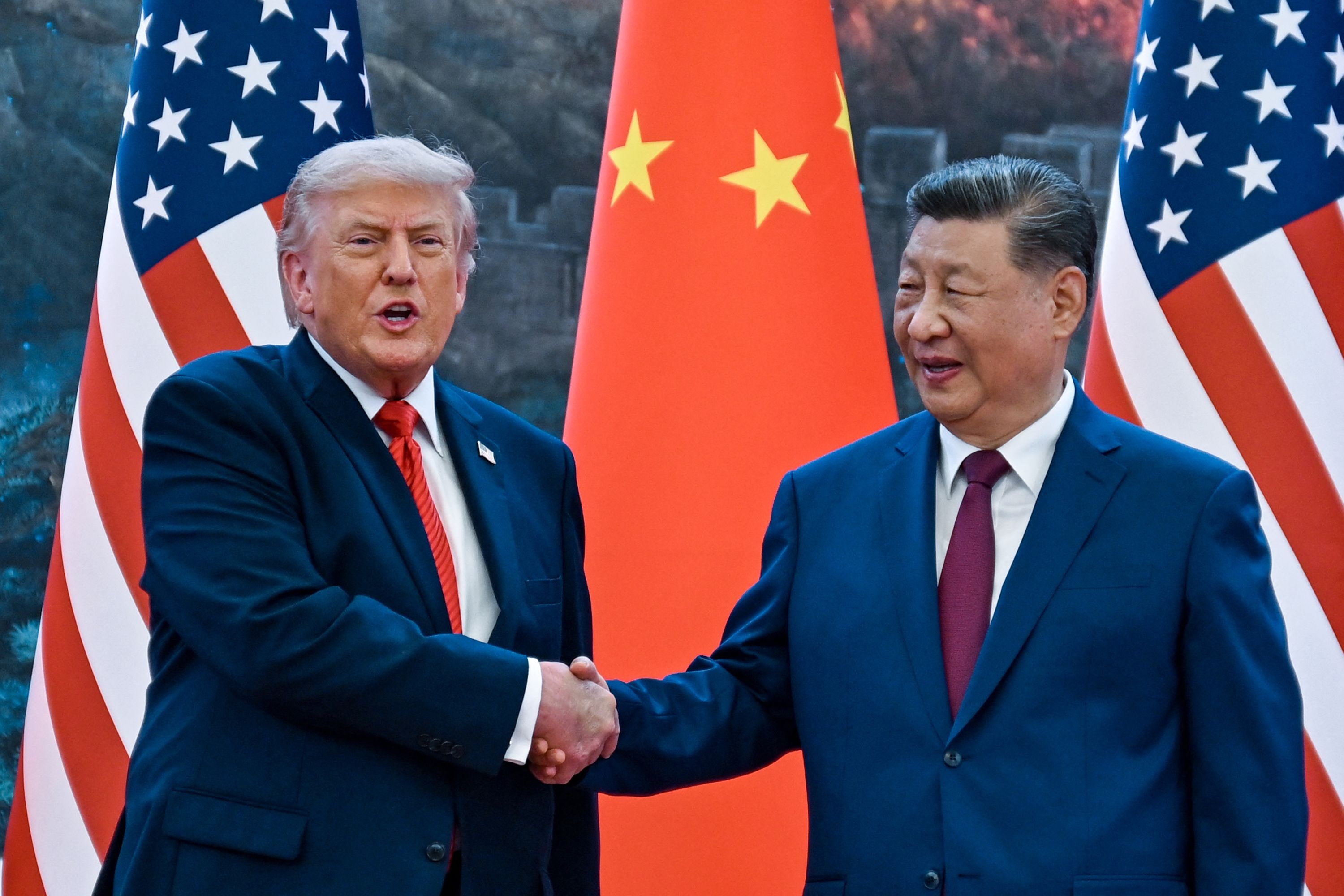
U.S.-China AI Rivalry Expands Across Asia After Trump-Xi Meeting, Washington Pushes for American Tech Adoption

0

The United States is intensifying efforts to ensure American artificial intelligence technologies become embedded across Asian markets, opening a new front in the escalating technological rivalry between Washington and Beijing.

Speaking on the sidelines of the Asia-Pacific Economic Cooperation trade ministers’ meeting in Suzhou, senior U.S. State Department official Casey K. Mace said Washington is actively promoting American AI systems across the region as China rapidly scales lower-cost domestic alternatives.

“We’re very active in promoting U.S. AI options and solutions,” Mace told CNBC, underscoring how AI diplomacy is increasingly becoming part of broader U.S. economic and geopolitical strategy in Asia.

The comments come just days after Donald Trump traveled to China alongside leading American technology executives, signaling how central AI and advanced computing have become to the competition between the world’s two largest economies.

At stake is not merely commercial dominance, but influence over the technological infrastructure likely to underpin future industries, supply chains, healthcare systems, and digital governance frameworks across the Asia-Pacific region.

Washington has spent the past several years restricting China’s access to advanced U.S. semiconductors and AI hardware, particularly high-end chips used for training frontier AI models. Those export controls were designed to slow Beijing’s progress in military AI, advanced computing, and strategic technologies.

China, meanwhile, has accelerated efforts to build a self-sufficient technology ecosystem. Beijing has long blocked major American platforms such as Google and Meta Platforms’ Facebook from operating in mainland China, while Chinese technology firms increasingly offer lower-cost alternatives to U.S. software, cloud infrastructure, and AI systems across developing markets.

The emerging battle is now shifting toward third countries, especially across Asia, where both Washington and Beijing are seeking to shape standards, partnerships, and long-term digital dependencies.

Mace said U.S. technology firms will participate in an APEC “digital week” event in Chengdu in July, where workshops will focus on practical AI applications, including food traceability, genome sequencing, and biotechnology. Although China is hosting the broader APEC process this year, Mace said the forum provides Washington with an opportunity to engage all 21 member economies simultaneously.

The official declined to identify which American firms would participate, though the involvement of U.S. companies highlights how government and private-sector coordination is becoming increasingly central to America’s AI diplomacy.

Mace also pushed back against suggestions that Washington was simply attempting to impose “best in class” U.S. technologies over Chinese competitors. Instead, he framed the effort as expanding market access and commercial engagement for American firms operating in Asia.

Still, the broader objective is increasingly difficult to separate from geopolitical competition.

Chinese technology companies, including cloud providers and AI developers, are moving aggressively into overseas markets with offerings that are often cheaper and less restricted than U.S. alternatives. That creates growing pressure on Washington to ensure allied and partner nations continue adopting American computing infrastructure and software ecosystems.

“There is pressure to distribute American compute globally,” Ryan Fedasiuk, a fellow at the American Enterprise Institute, told CNBC last week.

“The Trump administration is right in trying to advocate and implement with this,” Fedasiuk said. “But it will compete with Chinese hyperscalers and Chinese AI labs that are attempting to do exactly the same.”

The competition is increasingly extending beyond conventional AI applications into strategically sensitive sectors such as biotechnology and genomic research. Fedasiuk noted he is closely watching whether Washington and Beijing can coordinate on safeguards involving DNA synthesis vendors to reduce risks tied to engineered pathogens and future pandemics.

That area illustrates a growing paradox in the U.S.-China technology rivalry: the two powers are simultaneously competitors and necessary counterparts in managing risks associated with rapidly advancing technologies.

Signs of limited cooperation may already be emerging. China’s foreign ministry confirmed this week that Beijing and Washington have agreed to begin discussions on the safe development of AI following recent high-level engagements between Trump and Chinese President Xi Jinping.

Mace described the atmosphere surrounding recent talks as “positive,” attributing the tone partly to what he called the “very successful meeting” between the two leaders in Beijing.

Yet beneath the diplomatic language, the competition is intensifying.

For Washington, exporting American AI systems is becoming as much a national security objective as a commercial one. U.S. officials increasingly view control over global AI infrastructure, cloud computing and advanced semiconductors as foundational to maintaining economic leadership and geopolitical influence. China, meanwhile, sees technological self-reliance and overseas digital expansion as essential to insulating itself from U.S. restrictions and reshaping the global technology order around alternatives less dependent on American firms.