U.S. President Donald Trump has opened a new trade confrontation with Europe, threatening to raise tariffs on European Union car and truck imports to 25% in a move increasingly viewed by diplomats and analysts as tied not only to trade disputes, but also to mounting geopolitical tensions over the Iran war.
The announcement marks a sharp escalation in already strained transatlantic relations and threatens to hit some of Europe’s largest industrial groups at a time when the continent is battling weak manufacturing growth, elevated energy costs, and intensifying competition from China.
“Based on the fact the European Union is not complying with our fully agreed to Trade Deal, next week I will be increasing Tariffs charged to the European Union for Cars and Trucks coming into the United States,” Trump wrote on Truth Social. “The Tariff will be increased to 25%. It is fully understood and agreed that, if they produce Cars and Trucks in U.S.A. Plants, there will be NO TARIFF.”
Officially, the White House framed the move as a response to what it described as Europe’s slow implementation of an earlier trade agreement. A White House official said the EU had “failed to make substantial progress on their agreed-upon commitments” and stressed that Trump “reserves the right to adjust tariff rates if our trade deal partners fail to abide by their commitments.”
But the tariff threat is increasingly being interpreted by analysts as part of a broader effort by Trump to pressure allies that refused to fully back Washington’s military posture toward Iran.
European governments have largely resisted direct involvement in the U.S.-led campaign linked to the Iran conflict and the continuing blockade around the Strait of Hormuz. NATO Secretary General Mark Rutte acknowledged weeks ago that Trump was “clearly disappointed” with allies that declined to support the war effort.
Several European capitals have instead pushed for de-escalation, fearing prolonged conflict would deepen Europe’s energy crisis, worsen inflation, and destabilize already fragile industrial supply chains. Analysts say that divergence has increasingly spilled into trade and security relations.
The timing of Trump’s tariff threat has reinforced those suspicions. The announcement came amid continuing friction over Europe’s reluctance to support U.S. efforts around the Strait of Hormuz and shortly after Trump renewed criticism of allies, especially Germany, over burden-sharing and strategic alignment.
German Chancellor Friedrich Merz has reaffirmed his country’s commitment to transatlantic ties, but stopped short of endorsing direct military involvement, signaling support only under tightly defined conditions.
Merz had stated that the U.S. is being humiliated by Iran – a statement that got Trump riled up.
“An entire nation is being humiliated by the Iranian leadership, especially by these so-called Revolutionary Guards. And so I hope that this ends as quickly as possible.”
Trump, for his part, rebuked Merz publicly, accusing him of interfering in U.S. policy on Iran.
Political analysts say the Trump administration is increasingly using tariffs not only as an economic tool, but also as geopolitical leverage designed to compel allied cooperation on broader foreign-policy objectives.
The European Union responded cautiously but signaled growing frustration. The European Commission said the bloc remains fully committed to a predictable, mutually beneficial transatlantic relationship, but warned that “should the U.S. take measures inconsistent with the Joint Statement, we will keep our options open to protect EU interests.”
Bernd Lange, chair of the European Parliament’s trade committee, accused Washington of repeatedly undermining earlier agreements and described the United States as an increasingly unreliable partner.
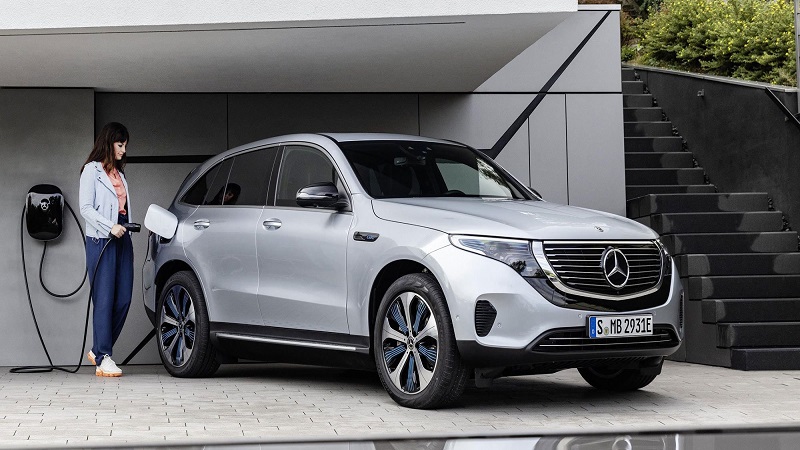
The threatened tariffs could have serious implications for Europe’s automotive sector, particularly for Mercedes-Benz Group, BMW, and Volkswagen Group, all of which export large volumes of higher-margin vehicles from Europe into the U.S. market.
Although those companies operate major manufacturing plants in the United States, a significant share of their premium models is still imported from Europe. Higher tariffs would likely force difficult decisions around pricing, production allocation, and future investment plans.
The dispute also lands at a vulnerable moment for Germany’s industrial economy, which has struggled with weak export demand, elevated power prices, and growing pressure from lower-cost Chinese electric-vehicle manufacturers.
Analysts say Europe’s energy vulnerability has become a major underlying factor in the dispute. The prolonged instability around the Strait of Hormuz has pushed fuel and natural-gas prices higher across Europe, intensifying economic pressure on manufacturers and households alike.
Trump has continued to defend the U.S. naval blockade tied to Iran, arguing it is strategically necessary.
“The blockade is somewhat more effective than the bombing,” he said recently, adding that Iran was “choking.”
For European governments already dealing with high energy costs and slowing growth, deeper involvement in the conflict carries significant political and economic risks. That caution appears to have widened the gap with Washington.
The tariff escalation also revives legal questions surrounding Trump’s trade powers. Earlier this year, the U.S. Supreme Court ruled that the administration had exceeded its authority in using the International Emergency Economic Powers Act to impose broad tariffs, forcing the White House to restructure parts of its trade agenda.
The administration now says the proposed EU auto tariffs would instead rely on Section 232 national-security provisions, the same authority previously used to impose tariffs on imported steel, aluminum, and vehicles.
Markets and manufacturers are now bracing for the possibility that trade policy under Trump may increasingly become intertwined with geopolitical loyalty tests, particularly around the Iran conflict and broader disputes involving NATO, energy security, and China.