DD
MM
YYYY

PAGES

DD
MM
YYYY

spot_img

PAGES

Home Blog Page 20

Zero Knowledge Proof (ZKP) Surges as the Crypto With Most Potential While NEAR, LINK, and INJ Struggle to Keep Up

0

In today’s market, crypto performance is clearly splitting into two very different stories. One path is powered by headlines, exchange listings, and short-term bursts of attention. The other is led by structure, where demand shapes price and access is limited by design.

For anyone tracking where returns can still multiply, the new focus is clear: fixed supply, visible demand, and pricing that forms in real time. Projects that offer this kind of environment don’t need hype to grow. They attract attention by rewarding those who act early and punishing those who hesitate.

It’s why Zero Knowledge Proof (ZKP) is now entering conversations as the crypto with most potential, while others like NEAR, LINK, and INJ begin to reveal the limits of their current systems.

Zero Knowledge Proof (ZKP): Where Daily Auctions Replace Guesswork

Zero Knowledge Proof (ZKP) isn’t waiting on listings, press cycles, or Twitter buzz. It’s gaining ground because its pricing is being set live, every single day, through a working token auction system. Buyers compete by contributing ETH, BNB, USDT, or other currencies. A fixed amount of ZKP is distributed based on each person’s contribution, resetting every 24 hours.

There are no early backers dumping tokens. No delayed unlocks hanging overhead. No behind-the-scenes deals. Participation is public, capped, and on-chain.

This puts ZKP into a different category. Instead of depending on delayed gains or post-listing hype, it moves forward based on user activity. And because the infrastructure is already online, from compute layers to privacy protocols, there’s no waiting for a product launch to drive value.

That’s why more people are identifying Zero Knowledge Proof (ZKP) as the crypto with most potential right now. Its model isn’t about rebounding from previous highs. It’s about building price from the ground up, through demand, access control, and zero noise.

NEAR Protocol: Smart Tech, But Still a Follower in the Market Cycle

NEAR Protocol has developed a solid name as a user-friendly Layer-1. Fast finality, growing dev activity, and ecosystem growth are all real. But NEAR’s momentum rarely forms on its own. It tends to follow larger altcoin trends.

When Ethereum moves, NEAR often moves with it. When market optimism fades, so does NEAR’s price strength. This tight link to external sentiment weakens its independent upside story. Even with technical success, its token distribution remains tied to long-term unlock schedules and prior allocations.

For those scanning the space for the crypto with most potential, NEAR often feels like it’s already priced in. Its ability to deliver outsized gains is limited by its maturity and external market dependency, making it more of a mid-cycle mover than a true early-stage play.

Chainlink: Foundational Utility, But Limited Price Leverage

Chainlink remains one of the most functionally reliable projects in the space. Its oracle services power the data layer for hundreds of decentralized applications. From a usage standpoint, it’s unmatched in trust.

But LINK’s token doesn’t move with that same strength. That’s because its key integrations and adoption stories are already priced in. The market views LINK as a stable building block, not as a coin positioned for rapid expansion.

The price reflects that. LINK grows slowly, mirroring the slow rollout of new partnerships and upgrades. There’s no daily mechanism for buyers to influence price directly. No user-led auction. No limited-time access.

Compared to ZKP’s on-chain bidding structure and price-through-participation model, LINK looks static. That’s why, for buyers looking at the crypto with most potential from a high-ROI angle, Chainlink is less exciting now than it was during earlier adoption waves.

Injective: Flashy Spikes, But Nothing Holding It Up

Injective Protocol (INJ) has turned heads recently with some strong price action. It’s frequently seen near the top of daily gainer lists. But when you dig into the pattern, a clear cycle appears: INJ moves on market rotation, not on internal growth.

Traders chase INJ during DeFi booms or synthetic asset cycles, then move on. Price spikes come fast, but retracements come even faster. INJ performs well for short-term traders, but that volatility cuts both ways.

INJ lacks a structural support system like ZKP’s auction model. There’s no price control, no enforced participation caps, and no transparent flow of token demand. The price is often a reflection of external trading interest, not network growth.

That makes INJ unpredictable. While it might appear on radars during specific windows, it rarely offers the kind of sustained, structure-backed momentum that serious early entries demand. For anyone evaluating the crypto with most potential, INJ falls more into a trading setup than a foundational opportunity.
Final Word: Momentum That’s Built, Not Bought

The market is getting smarter. Chasing noise doesn’t work like it used to. Projects that rely on announcements, temporary attention, or old hype cycles are being outpaced by systems with internal pricing logic and transparent mechanics.

Zero Knowledge Proof (ZKP) is one of the first tokens to truly reflect that shift. Its daily auction system rewards action. Its anti-whale rules protect access. And its infrastructure is already live, removing the guesswork from valuation.

While NEAR follows broader trends, LINK slows under its own weight, and INJ rides temporary waves, ZKP is quietly building a new standard for how value should be created and distributed.

This is why it’s more than just a candidate for the crypto with most potential. It’s the blueprint for what early-stage, high-conviction projects should look like in the next market cycle.

OpenSea Tie-in with MetaMask Rewards on Point Boosts

0

OpenSea has partnered with MetaMask to provide joint points boosts through MetaMask’s Rewards program (Season 1). This integration rewards OpenSea users with additional MetaMask points based on their performance in OpenSea’s recent rewards wave via Treasure Chest tiers.

If you haven’t opted into MetaMask Rewards yet, use the referral code OPNSEA for an instant 500 bonus points. Update your MetaMask mobile app to version 7.56 or higher. Open MetaMask, navigate to the Rewards tab. Opt in and enter the code OPNSEA.

Bonus points are awarded based on your OpenSea Treasure Chest tier delivered at a later date: Opt-in + referral: 500 points

Iron–Steel: 100 points

Titanium–Cobalt: 250 points

Amethyst–Sapphire: 500 points

Ruby–Diamond: 1,000 points

The wallet used for MetaMask Rewards must match the one linked to your OpenSea Treasure Chest. You have up until January 16, 2026 (Friday) to qualify for these points.

This appears to be a cross-promotion between the NFT marketplace (OpenSea) and the popular Ethereum wallet (MetaMask), encouraging activity across both platforms. Points earned in MetaMask Rewards are part of their broader loyalty system.

Which has fueled speculation about a future $MASK token launch tied to decentralization efforts, as confirmed by ConsenSys CEO Joseph Lubin in 2025 statements like “the MASK token is coming… sooner than you would expect”.

No direct evidence of a new standalone “joint points boosts” program beyond this integration, but community reactions on X highlight excitement and some dilution concerns from existing farmers, viewing it as a flywheel for potential future rewards or airdrops.

The OpenSea × MetaMask partnership for joint points boosts is a strategic cross-promotion that ties NFT marketplace activity directly into MetaMask’s Rewards program (Season 1). This creates a “points-on-points” flywheel, encouraging users to stay active across both platforms.

Key Mechanics and Immediate BenefitsBonus Structure: New opt-ins using referral code OPNSEA get an instant 500 points.
Additional points based on your OpenSea. Use the same wallet for MetaMask Rewards opt-in as your OpenSea-linked one.

This is low-effort for existing OpenSea users especially high-tier ones, as no new activity is required—just claim what’s already earned. Community reactions on X show mixed but mostly positive vibes: excitement over free points and ecosystem alignment, with some farmers complaining about minor dilution though the added points pool is small relative to overall Season 1 rewards, often valued at just $5–$20 equivalent for most.

MetaMask Rewards rewards on-chain actions like swaps, perps trading, prediction markets via Polymarket integration, referrals, and soon MetaMask Card spending. Points determine tiers with perks.

This OpenSea tie-in brings in NFT-focused users, boosting overall participation and data on real usage. ConsenSys and CEO Joseph Lubin have repeatedly teased the $MASK token as “coming sooner than expected”, tied to decentralizing MetaMask governance.

Rewards points explicitly “contribute to future airdrops” and integrate with the upcoming token. This partnership expands eligibility signals beyond pure MetaMask activity to include NFT trading/holding via OpenSea.

High points accrual especially with multipliers like 3x–4x on perps/predictions could translate to larger allocations if/when $MASK launches or airdrops. Season 1 already allocates >$30M in $LINEA tokens proportionally to points—many view this as a dry run for MASK mechanics.

Speculation remains high e.g., claim portals registered, community bets on Polymarket, but nothing is confirmed—points are the strongest current proxy for future rewards.
Ecosystem Alignment and “Airdrop Season” Momentum

This mirrors broader trends: OpenSea itself plans its $SEA token. Linking rewards creates synergies between wallets, marketplaces, and chains. It rewards genuine cross-platform activity rather than isolated farming, potentially filtering out low-quality users while boosting retention for high-engagement ones.

Some early farmers feel the influx of OpenSea users slightly dilutes points value— no pool increase announced, but impact appears minimal given the bonus scale. Points earn confirmed $LINEA at Season 1 end ~late January 2026, but MASK ties are speculative.

MetaMask emphasizes real usage—spam or multi-wallet farming may get excluded. Opt in by tomorrow to lock bonuses. If you’re active on OpenSea or planning to be, this is a no-brainer quick win—claim those points before the window closes tomorrow.

It positions you better for whatever comes next in MetaMask’s ecosystem evolution, whether that’s more seasons, perks, or the long-rumored $MASK drop. If you’re an active OpenSea user, this is a low-effort way to grab extra MetaMask points—especially with the referral bonus.

Russia Finalizes Draft Bill to Legalize and Regulate Cryptocurrency Trading 

0

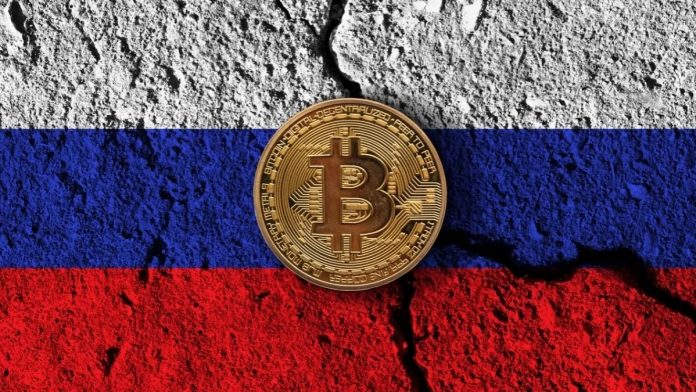
Russia has recently finalized a draft bill to legalize and regulate cryptocurrency trading within the country, marking a significant shift toward broader acceptance of digital assets.

This development builds on the Bank of Russia’s framework announced in late December 2025, which proposed allowing both qualified (professional) and non-qualified (retail) investors to buy cryptocurrencies under strict conditions.

The new draft legislation, confirmed in mid-January 2026 by Anatoly Aksakov (Chairman of the State Duma’s Committee on Financial Markets), aims to remove cryptocurrencies from “special financial regulation” and integrate them more normally into the economy as investment assets.

They must pass a knowledge or risk-awareness test and can only buy the most liquid cryptocurrencies e.g., major ones like Bitcoin. Annual purchases are capped at 300,000 rubles approximately $3,800, and transactions must go through a single licensed intermediary.

Unlimited access to most cryptocurrencies excluding anonymous/privacy coins, after passing a risk test. Cryptocurrencies remain banned for domestic payments. They are treated strictly as investment assets, with the ruble staying the sole legal tender inside the country.

The bill supports using crypto for international settlements, cross-border transactions, and attracting foreign capital, helpful amid Western sanctions. It also aims to license exchanges, brokers, and depositories.

The draft is ready for introduction to the State Duma during the spring 2026 session. Legislative changes could be finalized by July 1, 2026, with fuller enforcement including penalties for illegal intermediation potentially starting in 2027.

This represents a pragmatic evolution in Russia’s stance. The country has moved from earlier skepticism and partial bans to controlled legalization, driven by economic pressures, growing domestic crypto use, and the need for alternative financial tools.

While not full deregulation, it’s a step that could boost Russia’s crypto market, mining sector, and international trade utility. The news has circulated widely in crypto communities and media, with some viewing it as bullish for global adoption.

However, strict limits and ongoing bans on privacy coins and domestic payments keep it cautious rather than permissive. Russia plays a major role in global cryptocurrency mining, particularly Bitcoin mining, leveraging its vast natural resources, low energy costs, and cold climate to become one of the world’s top mining hubs.

Legal and Regulatory Framework

Russia fully legalized cryptocurrency mining in late 2024, with President Vladimir Putin signing laws that took effect from November 1, 2024. This shifted mining from a legal gray area to a regulated activity.

Only Russian legal entities and individual entrepreneurs can register in a national registry, maintained by the Ministry of Digital Development, Federal Tax Service, and others to operate large-scale or commercial mining.

Individuals can mine without registration if they stay within government-set energy consumption limits. Foreign entities are prohibited from mining in Russia. Miners must report details e.g., wallet addresses, mined amounts for oversight, taxation, and anti-money laundering purposes.

The government can impose regional bans or restrictions in areas with energy shortages parts of Siberia like Irkutsk — the “mining capital” — and others up to 2031; some seasonal bans upgraded to year-round in 2026 in connected regions. Unregistered or illegal mining faces penalties— proposed in late 2025 drafts: fines up to millions of rubles, forced labor, or up to 5 years imprisonment for large-scale violations.

This framework aims to formalize the industry, curb electricity theft and grid strain, collect taxes, and treat mining as a legitimate “export” activity — especially valuable amid Western sanctions. Russia holds approximately 15-16% of the global Bitcoin hashrate around 160-175 EH/s out of a total global hashrate exceeding 1 ZH/s.

This places Russia consistently as the second-largest mining country behind the United States, which holds ~37-38%. Growth has been rapid: Mining farms increased ~44% in 2025 to nearly 197,000, with power capacity recovering toward 2.1-2.2 GW peaks expected in 2026.

Russia mined tens of thousands of BTC annually at low costs— $39,000 per BTC vs. much higher market prices at times, thanks to cheap hydropower, natural gas, and surplus energy in regions like Siberia.

Abundant cheap electricity from hydro, gas flaring, etc. and natural cooling reduce operational costs, making Russia highly competitive. Mining generates foreign currency via exported BTC or related revenue, strengthening the ruble.

Russia’s Central Bank governor, Elvira Nabiullina has called it an “undervalued export” and a factor in ruble stability. It contributes ~0.5% to GDP in some estimates, attracts investment including from energy giants like Gazprom Neft, and supports industrial-scale operations.

Rogue and illegal miners persist, many unregistered, regional energy deficits lead to bans, and enforcement tightens in 2026.

Russia’s mining sector has evolved into a pragmatic, state-supported industry: regulated but encouraged for economic benefits, export revenue, and bypassing sanctions — positioning the country as a key player in the global crypto ecosystem, even as broader crypto trading regulations remain cautious on domestic use.

Pakistan Partners with WLFI USD1 for Cross-border Payments 

0

Pakistan has recently partnered with an affiliate of World Liberty Financial (WLF), the cryptocurrency platform linked to U.S. President Donald Trump’s family, to explore the integration and use of its USD1 stablecoin for cross-border payments and digital finance initiatives.

Pakistan’s Virtual Asset Regulatory Authority (PVARA) signed a Memorandum of Understanding (MoU) with SC Financial Technologies, a Delaware-registered firm affiliated with and described as a sister company to World Liberty Financial. SC Financial Technologies co-owns the USD1 stablecoin brand.

The agreement focuses on technical collaboration with Pakistan’s central bank, State Bank of Pakistan to integrate USD1 into the country’s regulated digital payments framework. This would allow it to operate alongside Pakistan’s existing digital currency infrastructure.

Primary goals include exploring stablecoins for cross-border transactions, remittances, settlement, and foreign exchange processes—aiming to modernize payments, reduce friction in international transfers, and enhance efficiency.

The announcement came during a visit to Pakistan by Zach Witkoff, CEO of both World Liberty Financial and SC Financial Technologies. He met with senior officials, including Prime Minister Shehbaz Sharif, Finance Minister Muhammad Aurangzeb, and others.

A World Liberty Financial spokesperson emphasized that the deal could help reinforce the U.S. dollar’s status as the global reserve currency by promoting a “trusted, compliant” dollar-denominated stablecoin for digital payments and remittances.

This marks one of the first public sovereign partnerships for World Liberty Financial, which launched in September 2024 and introduced USD1 in March 2025. USD1 is a U.S. dollar-pegged stablecoin aiming for a 1:1 value with USD issued by World Liberty Financial. It is fully backed by U.S. dollars, short-term Treasuries, cash equivalents, and similar assets held in regulated institutions, with periodic third-party audits for transparency.

Each USD1 token in circulation is fully backed by an equivalent value (1:1) of high-quality, liquid assets. This ensures that holders can redeem tokens directly for U.S. dollars at par value, subject to any onboarding/KYC requirements for secondary market acquisitions.

Reserve Composition: The reserves primarily consist of: Short-term U.S. Treasury bills (T-bills) and other U.S. government securities. U.S. dollar cash deposits. Cash equivalents and similar highly liquid instruments e.g., U.S. Government Money Market Funds backed by the full faith and credit of the U.S. government.

These assets are low-risk, easily convertible to cash, and chosen to minimize volatility or counterparty risk while supporting rapid redemptions. All reserve assets are held and maintained by BitGo Trust Company, Inc. and/or affiliated BitGo entities— federally registered money services businesses and state-licensed transmitters.

BitGo handles issuance, redemptions, and provides the technical infrastructure. New USD1 tokens are minted when users deposit U.S. dollars or equivalent with the custodian. Tokens are burned upon redemption.

It operates on multiple blockchains including Ethereum, BNB Chain, Solana, and Tron for fast, low-cost global settlements.As of recent reports, USD1 has grown significantly, surpassing $3 billion in market capitalization/circulation in late 2025, positioning it as a mid-tier stablecoin with institutional adoption, prior use in large deals like Abu Dhabi’s MGX investment in Binance.

The deal aligns with Pakistan’s push toward digital finance innovation, including crypto regulation and remittances, a major economic driver. It occurs amid warming U.S.-Pakistan ties and global interest in regulated stablecoins under frameworks like the U.S. GENIUS Act.

World Liberty Financial is also pursuing a U.S. national trust bank charter for USD1 operations, which could further legitimize and expand its use. This is an exploratory MoU—not a full adoption commitment—but it signals Pakistan’s interest in testing stablecoins for real-world financial efficiency.

“They Can’t Even Play Chess”: Saylor Mocks BTC Bears as Bitcoin Surges Towards $100k

0

As Bitcoin inches closer to the highly anticipated $100,000 milestone, the crypto market is buzzing with renewed optimism.

Following the BTC rally, MicroStrategy founder and longtime Bitcoin advocate Michael Saylor has taken a swipe at bears, who anticipate a downward price action.

Saylor’s post on X mocks Bitcoin bears with a chess meme, depicting a bear futilely competing against a suited strategist, amid BTC’s 5.59% weekly gain and consolidation above $80K. He captioned it, “Bears can’t play chess.”

The image and caption underscore Saylor’s view that short-term pessimism lacks the foresight to counter Bitcoin’s institutional-driven rally toward $100K targets. The Strategy CEO posted at a moment when BTC was pushing aggressively toward $97,000 (with intraday highs briefly touching $97,924 according to multiple market trackers).

As of mid-January 2026, Bitcoin has reclaimed levels not seen consistently since late 2025. Trading data shows BTC hovering in the $96,000–$97,000 range, up roughly 1–2% in the preceding 24 hours and riding solid volume support around $29 billion daily. The price of the crypto asset has, however, retraced, trading at $95,786 at the time of writing this report.

Analysts point to several tailwinds:

– Sustained institutional and whale accumulation (addresses holding 100–10,000 BTC added tens of thousands of coins in recent days).

– Moderating inflation signals from recent U.S. CPI data

– Growing optimism around crypto-friendly regulatory tailwinds

– Technical breakout above key psychological and Fibonacci resistance zones near $95,000–$96,000.

Crypto markets are getting exciting again, and market strategist Gareth Soloway says the charts are quietly telling an important story. According to Soloway, Bitcoin is holding strong near important levels, while several altcoins are flashing bullish signals that traders should not ignore.

Bitcoin is currently trading inside a tight price range, but Soloway says that is not a bad thing. In fact, this kind of sideways movement often builds energy for the next move. As long as Bitcoin stays above its main support line, the short-term outlook remains positive.

Notably, the market narrative has shifted decisively. Short-term bears who predicted a deeper pullback after the post-election euphoria appear increasingly outmaneuvered. Recent reports reveal Bitcoin’s largest holders reaccumulating coins after a period of heavy distribution. Data indicates that whale balances have turned higher following the sharpest selloff early 2023, while the mid-sized holders continue to reduce exposure:

Prediction markets and analyst targets are now clustering around $100K+ in the short term, with longer 2026 forecasts ranging from $120K–$170K under continued adoption and macro stability. Whether Bitcoin breaks through cleanly or consolidates first, the psychological message is clear: doubters are running out of good moves.

In Saylor’s view and increasingly in the market’s price action, the bear case isn’t just wrong; it’s conceptually illiterate when applied to a fixed supply, decentralized, digitally scarce asset.

Outlook

Looking ahead, Bitcoin’s short-term trajectory appears constructive, provided it continues to hold above the $92,000–$94,000 support band. A decisive break and sustained close above the $98,000–$100,000 psychological zone could trigger a fresh wave of momentum-driven inflows, potentially pushing price discovery into uncharted territory.

However, volatility remains inevitable. Profit-taking near the $100K mark, combined with macro uncertainty around interest rate policy and global liquidity conditions, could spark temporary pullbacks. Still, most analysts view any retracements as accumulation opportunities rather than trend reversals,