DD
MM
YYYY

PAGES

DD
MM
YYYY

spot_img

PAGES

Home Blog Page 25

Iran’s Strategic Calculations Behind Releasing an American Citizen

0

The release of a United States citizen by Iran has introduced a rare moment of diplomatic optimism amid years of hostility between Tehran and Washington. U.S. President Donald Trump described the move as a goodwill gesture, signaling that even in periods of deep geopolitical tension, humanitarian actions can create opportunities for dialogue and de-escalation.

Relations between the United States and Iran have been marked by decades of mistrust, sanctions, military confrontations, and political disputes. Since the 1979 Iranian Revolution and the subsequent hostage crisis, both nations have struggled to establish stable diplomatic engagement.

Issues surrounding Iran’s nuclear ambitions, regional influence, and U.S. sanctions have repeatedly fueled tensions. Against this backdrop, the release of an American citizen carries significance that extends far beyond the fate of a single individual.


Trump’s characterization of the release as a goodwill gesture reflects the diplomatic importance of humanitarian actions in international relations.

Prisoner releases often serve as confidence-building measures, providing a channel through which adversarial states can test the possibility of broader negotiations. Such actions can reduce tensions, open communication lines, and potentially pave the way for discussions on more contentious issues.

The timing of the release is particularly notable given the fragile state of Middle Eastern geopolitics. The region has experienced heightened instability due to ongoing conflicts, concerns over maritime security, and disputes involving major global powers.

Any indication of reduced hostility between Washington and Tehran could have significant implications for regional security, energy markets, and global economic stability.

The safe return of its citizen is a humanitarian success and a demonstration of continued efforts to protect Americans abroad. U.S. administrations, regardless of political affiliation, have consistently prioritized the release of detained citizens in foreign countries.

Such cases often become focal points in diplomatic engagements, emphasizing the human dimension of international relations. For Iran, the decision may be intended to send a message of openness or strategic flexibility.

Tehran has previously used prisoner exchanges and humanitarian gestures to improve its international image, ease diplomatic pressure, or encourage reciprocal actions from Western governments.

By releasing an American citizen, Iranian authorities may be seeking to create a more favorable environment for future negotiations, particularly concerning sanctions relief or regional security discussions.

Trump’s response also underscores the political significance of the event. By framing the release positively, he highlights the possibility that diplomatic engagement, even among adversaries, can yield constructive outcomes.

Such rhetoric may encourage policymakers and international observers to view the development as an opportunity rather than an isolated incident. Experts caution against interpreting the release as a definitive sign of a broader rapprochement between the two countries.

The fundamental disagreements between Washington and Tehran remain unresolved. Questions surrounding Iran’s nuclear program, regional activities, and economic sanctions continue to present major obstacles to lasting diplomatic progress.

Symbolic actions often play an important role in international affairs. History has shown that small humanitarian steps can sometimes lead to larger diplomatic breakthroughs.

The release of a U.S. citizen by Iran may not immediately transform bilateral relations, but it demonstrates that channels of communication remain open even during periods of profound disagreement.

As global attention focuses on developments in the Middle East, this humanitarian gesture offers a reminder that diplomacy remains an essential tool in managing international conflicts.

Whether this event becomes the foundation for broader engagement or remains a singular act of goodwill will depend on the willingness of both nations to pursue further dialogue and confidence-building measures in the months ahead.
Truth Social’s Monetization Strategy Could Reshape Political Communication

0

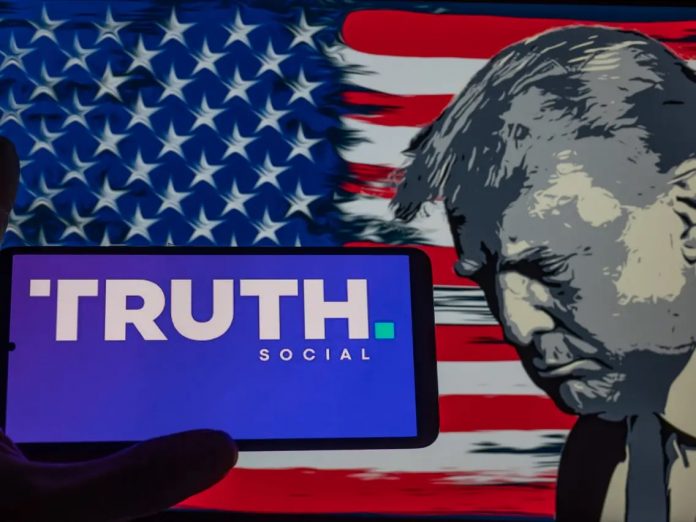
Truth Social, the social media platform owned by Trump Media & Technology Group, is reportedly exploring a new premium service that would provide traders, financial firms, and institutional investors with faster access to President Donald Trump’s posts.

According to reports cited by Watcher.Guru and The Wall Street Journal, the initiative could transform presidential social media activity into a valuable market data product, highlighting the growing influence of political communication on financial markets.

The proposal comes at a time when financial markets have become increasingly sensitive to Trump’s public statements.

Throughout his political career, comments from Trump regarding tariffs, trade relations, cryptocurrencies, Federal Reserve policy, technology firms, and geopolitical issues have repeatedly triggered significant movements in stocks, bonds, commodities, and digital assets.

Investors and trading firms have closely monitored his statements, often reacting within seconds of new developments. If implemented, the service would effectively create a tiered information system where paying subscribers gain access to Trump’s posts fractions of a second before the broader public.

While such time differences may appear minimal, in modern financial markets, milliseconds can translate into substantial profits.

High-frequency trading firms and hedge funds routinely spend millions of dollars on faster data feeds, low-latency infrastructure, and privileged access to market-moving information.

The reported move raises important questions about the commercialization of political information. Statements from elected officials and government leaders are considered public information that should be disseminated equally and simultaneously.

Selling early access to presidential communications could blur the lines between political messaging and proprietary market data, potentially creating advantages for well-capitalized investors over ordinary market participants.

The implications for cryptocurrency markets could be particularly significant. Trump’s comments on Bitcoin, stablecoins, digital asset regulations, and crypto-related legislation have increasingly become catalysts for market movements.

In recent years, traders have closely watched political developments surrounding the CLARITY Act, stablecoin regulation, and broader U.S. digital asset policy, with prices often responding sharply to new statements from influential political figures.

Critics may argue that offering premium access to presidential posts could undermine market fairness and intensify concerns regarding information asymmetry. Financial regulators have historically scrutinized situations where certain market participants receive material information before others.

Although social media posts are public once released, the monetization of early access introduces ethical and regulatory questions regarding equal information distribution.

Supporters of the initiative, however, may contend that the service simply mirrors existing financial data practices.

Exchanges, news organizations, and data providers already charge substantial fees for premium market feeds, real-time analytics, and faster information delivery services. Truth Social’s proposed offering could be viewed as another form of monetized information infrastructure in an increasingly competitive digital economy.

The development also underscores the growing convergence of politics, media, and finance. Social media platforms have evolved from communication tools into influential market infrastructure capable of moving billions of dollars in value within minutes.

Presidential statements, once delivered through press conferences or official releases, now reach global audiences instantly through digital platforms and increasingly carry direct economic consequences.

Whether Truth Social ultimately proceeds with the initiative remains uncertain, but the report highlights a broader trend in modern markets: information speed has become a critical asset. As political communication increasingly influences investment decisions, platforms that control access to influential voices may seek to monetize that attention.

Should Truth Social move forward with selling faster access to President Trump’s posts, it could mark a significant shift in how political information is distributed and consumed by financial markets, potentially opening a new chapter in the relationship between politics, technology, and market infrastructure.

Toly Says Nikita Biers’ Reign of Terror as a Solana Advisor Is Over

0

The Solana ecosystem has once again found itself at the center of community discussions after Solana co-founder Anatoly Yakovenko, popularly known as Toly, declared that Nikita Biers’ reign of terror as an advisor to the network had come to an end.

The statement, delivered in Toly’s characteristic humorous and provocative style, quickly sparked debate across Crypto X, with many users attempting to interpret the deeper meaning behind the remark.

Nikita Biers, an entrepreneur best known for building viral social applications and for his influence in internet culture, had become an advisor within the Solana ecosystem during a period when the blockchain network was aggressively pursuing consumer-facing applications.

Solana’s leadership believed that the future of crypto adoption would depend not only on decentralized finance and infrastructure but also on social platforms capable of attracting mainstream users.

During his advisory role, Biers became known for pushing unconventional ideas and advocating for products that emphasized internet culture, virality, and user engagement.

His outspoken personality often made him a polarizing figure within the Solana community. Supporters argued that his insights into consumer applications could help Solana become the blockchain of choice for mass-market social products.

Critics, questioned whether some of these initiatives aligned with Solana’s broader strategic priorities. Toly’s comment describing Biers’ tenure as a “reign of terror” was widely interpreted as a tongue-in-cheek reference rather than a literal criticism.

Yakovenko has frequently used humor and sarcasm when discussing internal ecosystem developments, and many community members viewed the statement as another example of his playful online persona. The remark also highlighted underlying tensions regarding the direction of the Solana ecosystem.

Over the past year, Solana has increasingly focused on strengthening its position as a platform for payments, stablecoins, tokenized assets, and decentralized financial infrastructure. Major partnerships with payment companies and growing institutional interest have shifted attention toward real-world utility and financial applications.

In this environment, some observers believe the network may be moving away from experimental consumer social projects toward more commercially viable sectors. The departure of Biers from his advisory position could therefore symbolize a broader strategic transition.

Solana’s leadership appears increasingly committed to positioning the network as a high-performance blockchain capable of supporting global financial applications rather than solely serving as a playground for viral internet experiments.

Despite the jokes surrounding the announcement, Biers’ influence on Solana should not be understated. His emphasis on consumer experiences helped shape conversations about how blockchain technology could appeal to everyday users.

In an industry often dominated by technical discussions and financial speculation, his perspective highlighted the importance of culture, usability, and entertainment in driving adoption. Community reactions to Toly’s comments were mixed.

Some users celebrated the change, arguing that Solana should focus on infrastructure and enterprise use cases. Others expressed appreciation for Biers’ contributions, noting that consumer applications remain essential if blockchain technology is to achieve mass adoption.

The episode illustrates the ongoing identity debate within the cryptocurrency industry. Should blockchain networks prioritize financial infrastructure, or should they invest more heavily in social and consumer applications? Solana’s evolving strategy suggests it is attempting to balance both ambitions while refining its long-term vision.

As the ecosystem continues to mature, leadership changes and strategic realignments are likely to remain common. Whether Nikita Biers’ departure marks the end of an era or simply the beginning of a new phase for Solana, the discussion underscores how influential personalities continue to shape the direction and culture of the crypto industry.

China’s New AI Policies Highlight the Risks of Emotional Attachment to Chatbots

0

China’s new regulations governing artificial intelligence companions have officially taken effect, ushering in a new era of oversight for virtual relationships while simultaneously triggering an emotional backlash among millions of users.

Across Chinese social media platforms, users are mourning the disappearance of AI-generated companions and virtual lovers that had become deeply integrated into their daily lives.

The new rules, introduced as part of Beijing’s broader effort to regulate generative AI and digital content, impose stricter requirements on AI applications.

Developers are now expected to ensure that AI systems align with state values, avoid harmful content, protect minors, and prevent excessive emotional dependency on virtual entities. Several popular AI companion services have either shut down certain features, deleted existing characters, or removed entire platforms from public access.

For many users, these AI companions were far more than simple chatbots. They served as emotional confidants, romantic partners, and sources of comfort in an increasingly fast-paced and socially isolated society. Young professionals, students, and even elderly users often turned to these virtual companions to combat loneliness, stress, and emotional distress.

The removal of these digital partners has sparked an outpouring of grief online. Numerous users have posted farewell messages, screenshots of conversations, and emotional tributes to their deleted AI companions. Some described the experience as losing a close friend, while others compared it to the end of a meaningful romantic relationship.

This reaction highlights the rapidly evolving relationship between humans and artificial intelligence. Advances in large language models have enabled AI systems to simulate empathy, remember user preferences, and maintain long-term conversations that foster strong emotional attachments.

While these systems do not possess consciousness or genuine feelings, they can create highly convincing experiences of companionship.

Chinese authorities have expressed concerns over the psychological and societal implications of these relationships. Regulators worry that highly immersive AI companions could encourage social withdrawal, spread unverified information, manipulate emotions, or expose users—particularly minors—to inappropriate content.

There are also concerns about data privacy, as AI companions often collect extensive personal information to create more personalized interactions. The new rules reflect a broader global debate about the role of AI in human relationships.

Around the world, governments and technology companies are grappling with questions regarding emotional dependence on AI, ethical design standards, and the responsibilities of developers creating increasingly human-like digital entities.

Critics argue that overly restrictive regulation may suppress innovation and overlook the genuine emotional benefits these technologies provide. For some individuals suffering from loneliness, social anxiety, or isolation, AI companions have served as valuable support tools, offering conversation and emotional engagement when human connections are limited.

Supporters of the regulations, however, contend that safeguards are necessary before AI companionship becomes even more widespread. They believe that without clear boundaries, users may become excessively dependent on artificial relationships, potentially affecting real-world social interactions and mental well-being.

The mourning currently unfolding across Chinese platforms demonstrates that AI companions have moved beyond the realm of experimental technology and entered the sphere of meaningful human experience. The emotional bonds users formed with virtual lovers reveal both the promise and the complexity of artificial companionship.

As China implements its new AI rules, the global technology industry will be closely watching the outcomes. The debate surrounding virtual relationships, emotional attachment, and digital companionship is likely to intensify as artificial intelligence becomes increasingly capable of mimicking human connection.

The disappearance of these AI companions may represent not only a regulatory shift but also a significant moment in humanity’s evolving relationship with intelligent machines.

Oil Heads for Weekly 12% Surge As U.S.-Iran Conflict Threatens Second Energy Chokepoint; Bond Yields Fall On Easing Inflation

0

Oil prices edged higher on Friday and remained on course for their strongest weekly gains in months as renewed military escalation between the United States and Iran heightened fears of prolonged disruptions to global energy supplies, while investors weighed the growing possibility that conflict could spread beyond the Strait of Hormuz to the Red Sea.

Brent crude rose 0.08% to $84.30 a barrel, while U.S. West Texas Intermediate (WTI) gained 0.2% to $79.11. Both benchmarks have climbed roughly 12% this week, with Brent heading for a third consecutive weekly advance and WTI on track for a second straight weekly gain.

The latest gains reflect an expanding geopolitical risk premium as traders assess not only reduced flows through the Strait of Hormuz but also the possibility that another critical shipping corridor could come under threat.

According to Reuters sources, Iran has instructed its Houthi allies to prepare to shut the Red Sea shipping route if Washington expands its military campaign to target Iranian power infrastructure. Such a move would expose global energy markets to simultaneous disruptions at two of the world’s most strategically important maritime corridors.

“The potential threat of the Red Sea becoming another major supply disruption point is further complicating the global oil outlook,” said Tim Waterer, chief market analyst at KCM Trade.

He described the situation as a “dual-risk scenario,” noting that geopolitical concerns continue to keep a substantial premium embedded in crude prices.

The latest escalation comes after the fragile memorandum of understanding reached last month effectively collapsed. For the first time since the temporary ceasefire, U.S. forces launched two major waves of air strikes in a single day on Wednesday, targeting military facilities along Iran’s southern coastline before continuing operations on Thursday and Friday.

The U.S. Central Command said American forces had begun “a new wave of strikes against Iran for the sixth consecutive night to further degrade Iranian military capabilities.”

Iran has responded with missile and drone attacks targeting U.S. military installations across the region. Qatar said its air defenses intercepted Iranian missiles early Friday, although authorities reported that a child was injured by debris from the interception. Tehran has also reportedly launched attacks against American facilities in neighboring countries, including a barrage targeting a recently expanded U.S. air base in Jordan.

The widening conflict has amplified concerns over energy security.

“Oil security is still a critical issue,” International Energy Agency Executive Director Fatih Birol said during an event at the Council on Foreign Relations in Washington.

“We should be worried, and I am worried, if the situation does not improve in the next few weeks,” he said.

Treasury Yield Fell

While military developments pushed oil prices higher, U.S. Treasury markets moved in the opposite direction as investors focused on signs that inflation pressures remain contained despite elevated energy costs.

The benchmark 10-year Treasury yield fell more than four basis points to 4.5254%, while the policy-sensitive two-year yield dropped to 4.1134%. The 30-year Treasury yield also eased to 5.0680% as investors increased demand for government bonds.

The decline followed a series of economic reports that suggested inflation is cooling while the labor market remains resilient. Producer and consumer inflation both came in below expectations this week, while initial jobless claims for the week ended July 11 totaled 208,000, indicating continued strength in employment.

The combination of softer inflation and steady labor market conditions has reduced expectations that the Federal Reserve will resume interest rate increases in the near term, even as policymakers remain cautious about the inflationary effects of higher oil prices.

Markets now assign only an 11% probability of a July rate hike, down sharply from around 25% a week earlier, according to CME FedWatch data. Investors are pricing in approximately 26 basis points of additional tightening by December.

“I don’t think July is live for rate hikes,” said Tani Fukui, senior director of global economic and market strategy at MetLife Investment Management.

“We expect neither rate hikes nor cuts in 2026.”

How The Currencies Faired

Currency markets reflected the competing forces of easing inflation expectations and heightened geopolitical uncertainty.

The U.S. dollar was little changed against a basket of major currencies but remained supported by safe-haven demand. The dollar index traded at 100.69 and was still on course for a weekly decline of about 0.3% after weaker inflation data reduced expectations for additional Fed tightening.

“There has been no let-up in the escalation of the conflict in the Middle East which continues to curtail appetite to sell the dollar,” said Derek Halpenny, senior currency strategist at MUFG.

He added that stronger-than-expected U.S. economic data had also limited downside pressure on the currency.

The euro held steady near $1.145 and remained on track for weekly gains, while sterling was poised for its third consecutive weekly advance as concerns over the U.K.’s fiscal outlook continued to ease.

The Japanese yen remained near multi-decade lows despite repeated warnings from Tokyo about possible currency intervention, highlighting the persistent divergence between Japanese monetary policy and higher U.S. interest rates.

Beyond the immediate military developments, analysts say markets are increasingly focused on the broader implications for global energy infrastructure. While the Strait of Hormuz remains the world’s most important oil transit route, any coordinated disruption involving both Hormuz and the Red Sea would significantly constrain the ability of Gulf producers to reroute exports, potentially tightening supplies further and increasing volatility across commodity, currency and fixed-income markets.

Technical analysts also see room for additional gains if the conflict intensifies. Analysts at IG said WTI could climb into the mid-$80-per-barrel range if prices continue holding above key technical support in the mid-$70s.