DD
MM
YYYY

PAGES

DD
MM
YYYY

spot_img

PAGES

Home Blog Page 25

Silver breaks $76 As Precious Metals Supercycle Gathers Pace on Fed Pivot Bets, Supply Stress and Geopolitical Risk

0

Silver’s surge past $76 an ounce on Friday marked a decisive escalation in what analysts increasingly describe as a broad-based precious metals supercycle, with gold, platinum and palladium all hitting record or multi-year highs as investors positioned for easier U.S. monetary policy, a weaker dollar and sustained geopolitical uncertainty.

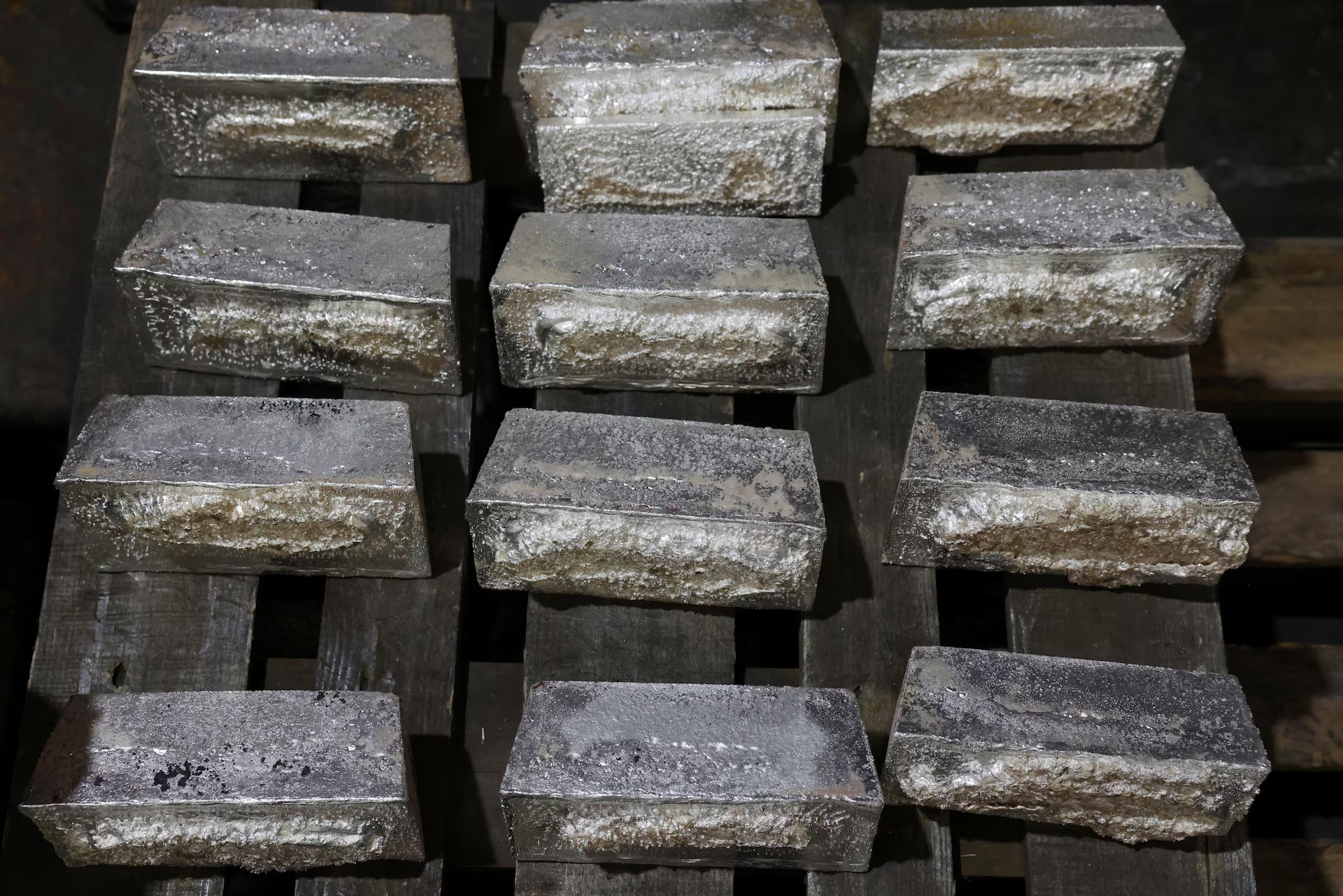
Spot silver jumped 6% to $76.24 per ounce by midday in New York, after touching an intraday peak of $76.46. The move extended silver’s extraordinary rally to about 164% so far this year, far outpacing most asset classes. Unlike earlier silver rallies that were driven largely by speculative flows, this surge is being underwritten by structural supply constraints and a sharp expansion in industrial demand tied to energy transition technologies.

Silver inventories have been drawn down steadily as mine supply struggles to keep pace with consumption from solar panel manufacturing, electronics and advanced batteries. Industry data show several consecutive years of market deficits, while new mining projects have lagged due to underinvestment, permitting delays and declining ore grades.

Silver’s designation as a U.S. critical mineral earlier this year has further elevated its strategic importance, drawing interest from institutional investors and sovereign buyers who previously focused almost exclusively on gold.

Gold, meanwhile, reinforced its role as the anchor of the precious metals complex. Spot prices rose 1.2% to $4,533.43 per ounce after earlier hitting a fresh record of $4,549.71, while February U.S. futures climbed to $4,566.50. The metal is now poised for its strongest annual gain since 1979, a year defined by runaway inflation and deep economic uncertainty.

The current rally is being fueled by a different, but equally powerful, mix of forces. Expectations that the Federal Reserve will begin cutting interest rates again in 2026 have gained traction, with futures markets pricing in two reductions, potentially starting around mid-year. That outlook has been amplified by speculation that President Donald Trump could appoint a more dovish Federal Reserve chair, a move investors believe would reinforce a shift toward looser financial conditions.

“Expectations for further Fed easing in 2026, a weak dollar and heightened geopolitical tensions are driving volatility in thin markets,” said Peter Grant, vice president and senior metals strategist at Zaner Metals.

He added that while some year-end profit-taking is possible, momentum remains firmly to the upside. Grant said silver could test $77 and even $80 an ounce before the end of the year, while gold’s next technical target sits near $4,686, with $5,000 increasingly seen as achievable in the first half of next year.

The U.S. dollar index is on track for a weekly decline, a key tailwind for precious metals. A softer dollar lowers the cost of gold and silver for non-U.S. buyers and typically encourages reserve diversification by central banks. Official sector purchases remain a crucial pillar of support for gold, with emerging market central banks continuing to add to reserves as part of a longer-term effort to reduce exposure to dollar-denominated assets.

Geopolitical risks have added another layer of demand. Ongoing conflicts, trade tensions and uncertainty around global supply chains have reinforced gold’s appeal as a hedge against political and economic shocks. Investors have also increased allocations through exchange-traded funds, reversing periods of outflows seen earlier in the tightening cycle.

In physical markets, the rapid price appreciation is beginning to reshape buying behavior. In India, the world’s second-largest gold consumer, local dealers reported discounts widening to the highest levels in more than six months as retail buyers pulled back in the face of record prices. In China, however, discounts narrowed sharply from last week’s five-year highs, suggesting bargain-hunting and restocking by wholesalers as prices stabilized at elevated levels.

Platinum delivered one of the most dramatic moves of the session, surging nearly 10% to $2,438.92 per ounce after earlier setting a record at $2,454.12. Palladium climbed more than 13% to $1,910.13. Both metals have benefited from tightening supply expectations, particularly in South Africa and Russia, as well as renewed investor interest after years of underperformance relative to gold.

All major precious metals are headed for solid weekly gains, with platinum posting its strongest weekly rise on record. Analysts caution that thin year-end liquidity could exaggerate price swings in the near term. Still, the underlying narrative of constrained supply, easing monetary policy and persistent geopolitical risk suggests that the rally is being driven by more than seasonal factors.

Currently, precious metals are increasingly being treated not just as defensive hedges, but as core assets positioned at the intersection of macroeconomic uncertainty, industrial transformation and shifting global power dynamics. The perception is expected to extend to 2026.


Nigeria Sees 11.78% Drop in Formal Remittance Inflows to $2.07bn in H1 2025, Despite CBN Reforms

0

Nigeria experienced an 11.78% decline in remittance inflows through International Money Transfer Operators in the first half of 2025, with total receipts falling to $2.07 billion from $2.34 billion in the same period of 2024—a shortfall of $275.93 million.

The figures, drawn from the Central Bank of Nigeria’s latest Quarterly Statistical Bulletin released on December 24, highlight persistent challenges in channeling diaspora funds through formal channels, even as remittances remain a vital lifeline for household consumption and foreign exchange liquidity.

The drop comes despite aggressive CBN reforms aimed at boosting inflows, including removing exchange rate caps for IMTOs in January 2024, revising operational guidelines to enhance competition, and establishing a Collaborative Task Force—reporting directly to Governor Olayemi Cardoso—to double remittance volumes. These measures had propelled a 44.5% surge to $4.76 billion in full-year 2024 inflows, but momentum has not carried into 2025.

Quarterly and Monthly Breakdown: Q1 2025 (Jan-Mar): $888.39 million, down 17.9% ($193.14 million) from $1.08 billion in Q1 2024—the sharpest quarterly fall.

  • January: $281.97 million (-27.8% from $390.86 million).
  • February: $288.82 million (-11.6% from $326.91 million).
  • March: $317.60 million (-12.7% from $363.76 million).
  • Q2 2025 (Apr-Jun): $1.18 billion, down a milder 6.6% from $1.26 billion in Q2 2024, cushioned by an April spike.
  • April: $597.44 million (+28.2% from $466.11 million)—the only month with growth.
  • May: $288.17 million (-28.8% from $404.75 million).
  • June: $292.25 million (-25.0% from $389.79 million).

The April surge softened the overall half-year decline but proved anomalous, with inflows weakening again in May and June amid seasonal and economic factors.

Diaspora remittances rank as Nigeria’s second-largest foreign exchange source after oil exports, contributing roughly 5-6% to GDP and supporting millions of households amid inflation averaging 30%+ in 2025.

Formal IMTO channels (Western Union, MoneyGram, Ria, etc.) captured the bulk, but informal transfers—via hand-carried cash or unregistered networks—likely offset some decline, though harder to quantify. The World Bank estimates total remittances (formal and informal) at $20-25 billion annually, underscoring their role in poverty alleviation and economic stability.

Reasons for the Decline

Industry stakeholders attribute the slowdown to a mix of domestic and global headwinds, such as inflationary pressures in advanced economies, such as the US, UK, EU, tighter labor markets, tougher migration policies, and potential shifts to informal channels due to naira volatility.

The World Bank notes that while global remittances to low- and middle-income countries grew 1.5% to $690 billion in 2025, Sub-Saharan Africa saw subdued flows due to economic slowdowns in host nations.

Broader Implications

As Nigeria’s external reserves hover around $40-46 billion, weaker remittances pressure the balance of payments at a time of high debt service of $2.32 billion, as of H1 2025, and import dependence.

A 10% increase in remittances correlates with 2% GDP growth (World Bank estimates), fueling sectors like fintech, e-commerce, and edtech.

While Nigeria’s H1 formal inflows declined, full-year projections remain optimistic at $23 billion—up from $19.5 billion in 2023 and representing 35% of Sub-Saharan Africa’s total, driven by diaspora engagement and digital platforms.

Globally, remittances to low- and middle-income countries grew 1.5% to $690 billion in 2025. Africa saw inflows surge to $95 billion in 2024.

Latin America bucked the trend with 10.9% growth in Q1 2025, highlighting Nigeria’s underperformance relative to peers.

China Tightens Rules on Overseas Listing Proceeds, Mandates Repatriation to Rein in Cross-Border Capital Risks

0

China has unveiled a far-reaching overhaul of the rules governing funds raised by domestic companies through overseas listings, signaling a renewed push by Beijing to tighten supervision of cross-border capital flows while still keeping global fundraising channels open.

Under the new guidelines jointly issued on Friday by the People’s Bank of China (PBOC) and the State Administration of Foreign Exchange (SAFE), companies will be required, “in principle,” to repatriate proceeds raised from offshore share sales back to the mainland. The rules, which take effect on April 1, 2026, are part of a broader effort to reduce financial risks, improve transparency, and strengthen control over the capital account at a time of heightened global market volatility.

The regulators said that if companies intend to keep funds overseas for purposes such as foreign direct investment, overseas securities investment, or the provision of overseas loans, they must secure approval before the listing is completed. This pre-approval requirement closes a long-standing grey area that allowed some firms to retain large pools of offshore capital with limited oversight after listing abroad.

To further tighten supervision, the rules mandate the use of dedicated capital accounts for all cross-border fund settlements related to overseas listings. Proceeds generated through shareholder transactions, including the buying or selling of overseas-listed shares, are also expected to be repatriated in principle. Regulators view these measures as essential to improving the traceability of funds and preventing misuse, speculative flows, or hidden capital flight.

At the same time, the guidelines include targeted flexibilities aimed at avoiding unnecessary disruption to corporate finance activities. Companies will be permitted to use either offshore or onshore funds to buy back their own overseas-listed shares, giving them room to manage valuations, investor expectations, and capital structures in volatile markets.

The rules also clarify treatment under the H-share “full circulation” regime, which allows all shares of a mainland-incorporated company to become tradable in Hong Kong. Under the new framework, fund transfers linked to full circulation must go through ChinaClear’s designated accounts, strengthening oversight of settlement flows. Dividends paid to mainland shareholders must be settled in renminbi within China rather than through offshore channels, reinforcing Beijing’s preference for keeping RMB flows onshore and under regulatory supervision.

While oversight is being tightened, authorities moved to ease administrative frictions. Registration deadlines related to overseas listings have been extended to 30 days from 15 days, a change intended to reduce compliance pressure and improve predictability for companies planning offshore IPOs or secondary listings. The PBOC and SAFE said they would continue refining cross-border capital management rules to strike a balance between risk control and convenience.

The new framework reflects Beijing’s evolving approach to financial openness. After years of encouraging overseas listings to help companies tap global capital, regulators have become more cautious as geopolitical tensions, U.S. scrutiny of Chinese firms, currency pressures, and episodes of capital outflow have raised concerns about financial stability. Chinese authorities now aim to ensure that offshore fundraising ultimately supports domestic economic activity rather than remaining outside the regulatory perimeter, by formalizing repatriation expectations and strengthening account-level supervision.

Market participants say the rules are unlikely to halt overseas listings outright, but they could influence how companies structure deals and manage post-listing capital. Firms with significant overseas expansion plans may face longer lead times and closer scrutiny, while those seeking to retain funds offshore will need clearer justifications aligned with policy objectives.

Overall, the measures underline Beijing’s message that international capital markets remain accessible, but on terms that prioritize macro-financial stability, regulatory visibility, and tighter control over cross-border funding flows.

Google Quietly Rolls Out Long-Awaited Gmail Address Change Option, Offering Fresh Start Without Data Loss

0

Google appears to be quietly rewriting one of Gmail’s longest-standing rules, offering users a way to change their @gmail.com email address without losing data, history, or access to core services — a shift that could affect hundreds of millions of accounts worldwide if fully rolled out.

According to an update spotted on Google’s account help pages, Gmail users can now replace their existing email address with a new one while keeping the same Google Account. That means emails, photos, files, messages, subscriptions, and service logins remain intact, eliminating a pain point that has frustrated users for years.

The change has not been formally announced. Instead, it surfaced through updated guidance on Google’s Hindi-language support page, which explicitly outlines how users can modify their Gmail address. The English-language version of the same page continues to state that Gmail addresses “usually cannot be changed,” suggesting the feature is still being tested, region-limited, or in the early stages of a phased rollout.

The Hindi support page says the feature is “gradually rolling out to all users,” implying eventual global availability. The presence of the update only in Hindi has led to speculation that India or Hindi-speaking markets may be the first testing ground, though Google has not confirmed this. The company did not immediately respond to questions about regional availability or a broader timeline.

Under the new policy, when a user changes their Gmail address, the original email is automatically retained as an alias. Messages sent to the old address will continue to arrive in the inbox, and the original address can still be used to sign in to Google services such as Gmail, Google Drive, YouTube, Google Maps, and Photos. This design appears aimed at minimizing disruption, particularly for users whose email addresses are deeply embedded in work tools, subscriptions, and third-party apps.

Google also says that all existing data remains unchanged after an address update. Emails, attachments, photos, chat histories, and cloud-stored files stay exactly where they are, tied to the same account. Users can also switch back to using the original email address later if they choose, according to a Google-translated version of the Hindi support page.

There are limits, though. Accounts that change their Gmail address cannot create another new Gmail address for 12 months, and the newly selected address cannot be deleted. These restrictions likely reflect Google’s effort to prevent repeated changes, impersonation risks, or misuse of the feature.

Until now, Gmail users who wanted a more professional or updated address — often because of addresses created in adolescence or early internet years — had to create an entirely new Google Account. That process required manual data transfers, re-linking third-party services, and updating login credentials across dozens of apps and platforms, often leading to broken integrations or lost messages. Google itself previously acknowledged that changing a Gmail address was not supported in most cases.

The quiet nature of the update suggests Google may be moving cautiously, testing user behavior and technical impacts before making a broader announcement. Gmail is deeply embedded across consumer, business, and developer ecosystems, and even small changes to account identity can have far-reaching consequences for security, authentication, and data integrity.

The timing is also notable. Google has been under growing pressure to modernize long-standing account limitations as competition intensifies from newer communication platforms and as users demand more control over digital identity. Allowing address changes without account disruption aligns with broader trends toward portability and flexibility in online services.

However, the absence of an official announcement currently leaves several questions unanswered, including which users qualify, whether paid Google Workspace accounts are included, and how the feature interacts with enterprise security policies. Deeper clarity is likely to come once Google updates its English-language documentation or issues a formal statement.

Still, if rolled out globally as indicated, the change would mark one of Gmail’s most significant user-centric updates in years, offering long-time account holders a rare chance to shed outdated email identities without sacrificing the digital history tied to them.

Asian Stocks Hit Six-Week High As Year-End Risk Rally Gathers Pace, Metals Surge And Yen Keeps Fears alive

0

Asian markets extended their late-year rally on Friday, with regional equities climbing to their highest levels in six weeks as investors leaned into risk assets, encouraged by easing inflation pressures, expectations of eventual U.S. rate cuts and a renewed appetite for technology and growth stocks.

At the same time, a relentless surge in precious metals and persistent volatility in currency markets underscored lingering unease over global debt, geopolitics and central bank policy paths.

According to a Reuters report, trading was thinner than usual, with markets in Australia, Hong Kong and most of Europe closed, but the lack of liquidity did little to slow momentum. Investors appeared keen to lock in gains before year-end, extending a recovery that has gathered pace over the past week after markets weathered bouts of volatility in November.

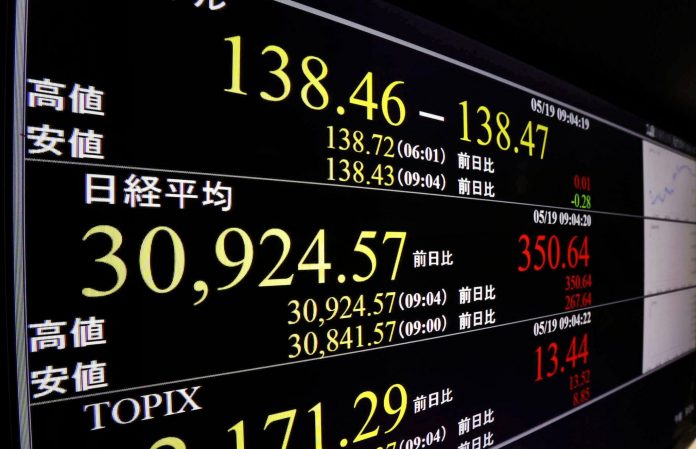
Japan once again stood out. The Topix index rose to a fresh all-time high, last up 0.5%, reflecting strong performance across industrials, exporters and financials. Gains have been supported by improving corporate earnings, shareholder-friendly reforms and still-accommodative financial conditions, even as the Bank of Japan has begun a gradual shift away from ultra-loose policy.

South Korea’s benchmark index advanced 0.6%, pushing its gain for the year to about 72% and making it the world’s best-performing major equity market in 2025. Chipmakers and technology stocks have been the main drivers, buoyed by sustained global demand for semiconductors tied to artificial intelligence, data centers and electric vehicles.

China’s CSI300 blue-chip index rose 0.27%, putting it on course for an annual gain of around 18%, its strongest performance since 2020. The advance reflects a steadier economic outlook, targeted policy support and renewed foreign interest after prolonged underperformance in previous years. The broader MSCI Asia-Pacific index climbed to its highest level since mid-November and is up about 25% for the year, marking a powerful rebound across the region.

Beyond equities, precious metals remained the standout story. Spot silver surged more than 4% to a new record high, while gold also hit a fresh peak, last trading at $4,503.39 per ounce. The rally has accelerated into year-end, driven by a combination of strong central bank buying, heavy inflows into gold-backed exchange-traded funds and investor demand for hard assets amid concerns over rising global debt and long-term currency debasement.

Gold has gained more than 71% this year, its strongest annual performance since 1979, while silver has soared roughly 158%, vastly outperforming most other asset classes. Analysts say the move reflects not only safe-haven demand but also tight physical supply and expectations that looser monetary conditions globally will persist over the medium term.

Soojin Kim, a commodities analyst at MUFG, said the strength of the rally suggests it may not be nearing exhaustion. With major banks projecting further gains into 2026, she noted that persistent geopolitical risks, heavy official-sector demand and uncertainty over fiat currencies continue to underpin prices.

Currency markets, however, painted a more cautious picture. The U.S. dollar remained under pressure as investors focused on the outlook for Federal Reserve policy and political uncertainty around the next Fed chair. Traders are now pricing in at least two rate cuts in 2026, though expectations are that the Fed will hold steady until at least June. The central bank has signaled only one cut next year, and divisions among policymakers have added to market sensitivity.

Attention is also fixed on President Donald Trump’s expected nomination of a successor to Jerome Powell, whose term as Fed chair ends in May. Any signal of Trump’s choice could trigger sharp moves in currencies, bonds and equities, given the potential implications for monetary policy independence.

The dollar index was on track for a 0.8% weekly decline, its weakest showing since July, while the euro, sterling and Swiss franc traded near recent highs. The yen hovered around 156.23 per dollar, slightly weaker on the day but still on course for its biggest weekly gain since September.

Despite the Bank of Japan’s recent rate hike to a 30-year high, the yen has struggled to strengthen decisively. Markets have interpreted Governor Kazuo Ueda’s comments as signaling a cautious, data-dependent approach to further tightening. Analysts say the BOJ is deliberately keeping its guidance ambiguous to retain flexibility, even as it continues to nudge borrowing costs higher.

Japanese officials have repeatedly warned against excessive currency moves, keeping the risk of intervention alive. Thin year-end liquidity has heightened speculation that authorities could step in, as such conditions can amplify the impact of any official action.

In the bond market, Japanese government bonds edged higher, with yields easing back from a 26-year peak. Expectations of restrained debt issuance and reassurances from Prime Minister Sanae Takaichi over fiscal discipline helped calm investor concerns about an expansionary budget and rising borrowing needs.

As markets head into the final stretch of the year, investors are balancing optimism over easing inflation and resilient growth against unresolved risks around monetary policy, geopolitics and government intervention. The strong finish to 2025 across Asian equities and commodities suggests risk appetite remains intact, but thin liquidity and crowded trades leave markets vulnerable to sudden shifts in sentiment.