DD
MM
YYYY

PAGES

DD
MM
YYYY

spot_img

PAGES

Home Blog Page 255

Can Cardano (ADA) Recovery Keep Pace for Top 2025 Crypto Investors as Blazpay’s AI Presale Surges?

0
Blazpay - Top crypto to invest in

As the crypto market stabilizes after months of volatility, two names are emerging in 2025’s investment spotlight: Blazpay and Cardano (ADA).
Blazpay, an AI-powered presale project, is gaining serious traction with over $827.7K raised and 74.7% of tokens sold in Phase 2, while Cardano maintains a steady trading level near $0.626.

While Cardano appeals to long-term believers in blockchain innovation, Blazpay’s low-entry presale and futuristic AI ecosystem make it one of the Best Crypto Coins to buy this quarter. Let’s see how these two coins stack up.

Blazpay: The Best New Crypto Coin of 2025

Blazpay is the new crypto coin that’s quickly gaining attention in 2025 for its advanced AI-powered ecosystem and real DeFi utility. Built for traders, developers, and investors, Blazpay connects multiple blockchains through its multichain SDK, offers gamified rewards, and enables perpetual trading within one unified platform. Its ongoing Phase 2 presale has already raised over $827,000, selling nearly 75% of tokens at just $0.0075 per BLAZ. Analysts predict that Blazpay could become one of the top cryptos to invest in this year, especially before prices jump in the next phase.

Gamified Rewards and Perpetual Trading

Blazpay introduces Gamified Rewards and Perpetual Trading to make crypto engagement more rewarding and active. Through Gamified Rewards, users earn bonuses and token incentives for completing actions like staking, swapping, or referring to others. This system encourages community growth and keeps investors involved long-term. The Perpetual Trading feature lets users open and hold trading positions without expiration, offering flexibility and higher profit potential compared to traditional spot trading. Together, these two features give Blazpay a unique edge, blending entertainment, utility, and profit, making it one of the best new crypto coins to watch in 2025.
Blazpay $3,000 Investment Strategy: Calculating the Upside

If you invest $3,000 in Blazpay during Phase 2 at $0.0075 per token, you would receive around 400,000 BLAZ tokens.

Now consider future value projections:

  • At $0.20, your $3,000 becomes $80,000
  • At $0.35, it jumps to $140,000
  • If Blazpay reaches $0.50+, your investment could be worth $200,000+

These numbers show why Blazpay ranks among the Best coins to Invest In right now low risk of entry, strong fundamentals, and explosive potential.

Blazpay Price Forecast 2025–2026

Analysts expect Blazpay (BLAZ) to trade between $0.20–$0.35 by mid-2026, depending on the adoption rate and AI market expansion. Bullish forecasts push it toward $0.50+, especially as more developers adopt its Multichain SDK and DeFi integrations. With nearly 75% of the presale already sold, Blazpay is positioned as one of the most promising New Crypto coins heading into 2025.

Cardano (ADA): Technical Strength with Mixed Sentiment

Cardano (ADA) currently trades around $0.626 as of October 23, 2025, showing a daily decline of 2.36%. In the short term, ADA is expected to stay between $0.622 and $0.646, but analysts see a possible rebound toward $0.78–$0.83 in November, a potential 30% monthly return.

Longer-term forecasts depend on the success of the Plomin Hard Fork, institutional adoption, and market recovery. While some analysts predict a move back to $1+ by late 2026, others caution about a correction toward $0.50–$0.59before full stabilization.

Overall, Cardano’s network upgrades and growing DeFi adoption keep it in the conversation among the Top cryptos to Invest In, though its volatility remains a factor.

Cardano (ADA) Price Prediction 2025

Cardano (ADA) is currently trading around $0.626 as of October 23, 2025, showing a slight daily decline of about 2.36%. Analysts expect short-term price movement between $0.62 and $0.65 through late October, with potential recovery in November pushing ADA towards $0.78–$0.83. This would mark an estimated 30% monthly gain if bullish momentum continues. The market outlook for Cardano remains mixed; some experts anticipate strong growth fueled by upcoming protocol upgrades like the Plomin Hard Fork and rising institutional interest, while others warn of a possible correction near $0.50–$0.59. Overall, ADA remains a top crypto to invest in for medium-term investors looking for steady growth potential and strong blockchain fundamentals in 2025. 

Blazpay vs Cardano (ADA): Innovation and Experience

Feature Blazpay (BLAZ) Cardano (ADA)
Type AI + Multichain Presale Layer-1 Blockchain
Price $0.0075 $0.626
Stage Early Presale (74.7% sold) Mature, Trading Live
Upside Potential Very High (Up to 6600%) Moderate (Up to 30%)
Utilities AI Tools, SDK, Rewards, DeFi Smart Contracts, Governance
Market Sentiment Bullish Mixed


Blazpay - Best Crypto Coins to Buy

In summary, Cardano offers long-term security and network growth, while Blazpay’s early presale access provides exponential upside potential. Investors looking for innovation-driven gains often find Blazpay the more exciting opportunity in 2025.

How to Buy Blazpay (BLAZ) – Step-by-Step Guide

  1. Visit the official website: https://blazpay.com
  2. Connect your wallet (MetaMask, WalletConnect, or Coinbase Wallet).
  3. Select your payment option (ETH, USDT, USDC, BNB, or MATIC).
  4. Enter your desired BLAZ token amount and click “Buy Now.”
  5. Confirm the transaction in your wallet to complete your purchase.

Conclusion: Why Blazpay Leads the Top Crypto to Invest In 2025

While Cardano (ADA) continues its steady path as a major blockchain network, Blazpay’s rapid presale growth and AI-powered ecosystem make it a more dynamic investment choice. With nearly 75% of tokens sold, and strong fundamentals including gamified rewards, multichain SDK, and AI integration, Blazpay stands out as a true contender among the Best Crypto Coins to Buy in 2025.

For investors looking for high-growth potential and real-world use, Blazpay may well be the next big crypto breakout heading into 2026.
Blazpay - Best Crypto Coins to Buy

Join the Blazpay Community:

Website: https://blazpay.com  Twitter: https://x.com/blazpaylabs
 Telegram: https://t.me/blazpay


FAQs

Q1: What is the Blazpay presale price right now?
Phase 2 is live at $0.0075 per token, with a price increase to $0.009375 coming soon.

Q2: How does Blazpay compare to Cardano?
Blazpay offers early-stage growth with AI, SDK, and Multichain utility, while Cardano provides network maturity and slower but steady growth.

Q3: What is the Blazpay price prediction for 2026?
Analysts estimate $0.20–$0.50, depending on adoption and market expansion.

Q4: Why is Blazpay among the Top Crypto to Invest In 2025?
Because of its low entry price, AI features, and strong presale momentum before listing.

Q5: What’s the outlook for Cardano (ADA)?
Cardano could reach $0.78–$0.83 by November 2025, and possibly $1+ in 2026 if bullish trends continue.

Q6: Can I buy Blazpay using ADA or ETH?
Yes connect your wallet and choose your preferred payment token, including ETH, ADA (via compatible networks), USDT, or BNB.
The Truth Behind BlockDAG’s 20,000+ Miner Base: Real Infrastructure, Not Marketing Hype!

0

Most crypto projects exist only in digital form, living solely as code on remote servers with little to no physical foundation. BlockDAG (BDAG) is taking a stronger, more tangible approach by creating a real, hardware-based network.

This development is not just an idea; it’s actively unfolding. More than 20,000 X-series mining machines have been sold and are being shipped to users worldwide, offering concrete proof of progress. This physical network layer is what distinguishes BlockDAG from many software-only projects. Alongside this, the presale continues to break records, having raised $430M+ with over 27 billion BDAG coins sold at a limited-time price of $0.0015, while Batch 31 is valued at $0.0304.

From Concept to Confirmation: Physical Proof Beyond the Whitepaper

In crypto, many projects gain traction through lengthy whitepapers and big promises. However, these remain theoretical until proven. BlockDAG has skipped the uncertainty stage by manufacturing and dispatching thousands of X-series miners, including the X10, X30, and X100, even before its mainnet launch.

This approach replaces words with evidence, showing real infrastructure being built. The project isn’t just selling hardware; it is constructing a distributed system where community members worldwide contribute to its strength. This hands-on progress represents a shift from theoretical planning to verified delivery, confirming BlockDAG’s focus on long-term network stability and reliability.

Achieving True Decentralization with Global Distribution

Decentralization is more than a buzzword; it’s about eliminating single points of failure. Many networks depend on a few servers, meaning one outage could disrupt the entire system. BlockDAG’s vision takes decentralization to another level.

By distributing 20,000+ miners globally, each contributing processing power from different regions, the network gains resilience and balance. No central authority can control or disable the system. This hardware-driven spread ensures that from day one, the mainnet is both secure and community-operated. This real-world deployment demonstrates what genuine decentralization looks like, a community-powered infrastructure built to last.

The X-Series Line: Foundation of BlockDAG’s Network

These 20,000+ miners form the structural core of BlockDAG’s blockchain ecosystem. They validate transactions, secure the network, and sustain operations efficiently. Each model in the X-series serves a unique role:

  • X10 Miner: Compact, user-friendly, and perfect for home operation, allowing anyone to participate.
  • X30 Miner: A mid-range powerhouse combining energy efficiency and speed for steady mining output.
  • X100 Miner: A high-performance unit designed for large-scale users, adding immense hash power to the network.

Together, they form a robust base for BlockDAG’s blockchain, ensuring performance, reliability, and participation on a global scale.

Why Hardware Brings Confidence to the Community

One of the most frequent concerns about new crypto projects is authenticity. A real hardware framework provides clarity and reassurance. Selling and shipping 20,000+ miners proves that BlockDAG operates beyond concepts; it’s physically delivering results.

This hardware base ensures network longevity and supports its growing ecosystem of applications. Instead of being controlled by a few validators, the system empowers thousands of users globally. This structure guarantees transparency, performance, and fairness while cementing BlockDAG’s role as a hardware-backed project with visible progress.

Upcoming Binance AMA: Global Insights Before Genesis Day

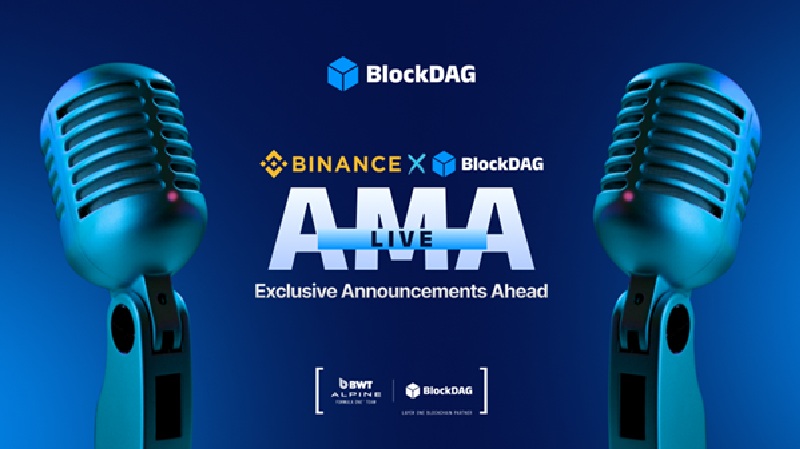
With global shipments ongoing and demand for BDAG coins soaring, BlockDAG’s next major event is set to make headlines. An exclusive AMA hosted on Binance this Friday, October 24, at 3 PM UTC, will provide insider insights, development updates, and previews ahead of Keynote 4: The Launch Note and Genesis Day. This milestone underlines BlockDAG’s openness and readiness for its next growth chapter.

Final Say

BlockDAG stands apart by turning vision into verifiable reality. Instead of relying solely on digital claims, the project has built a decentralized ecosystem with physical proof, 20,000+ miners deployed across the globe. This groundwork makes the network resilient, community-driven, and primed for success.

While others remain in the whitepaper stage, BlockDAG’s hardware-backed approach bridges imagination and reality, offering a model for future blockchain growth grounded in transparency and performance.

Presale: https://purchase.blockdag.network

Website: https://blockdag.network

Telegram: https://t.me/blockDAGnetworkOfficial

Discord: https://discord.gg/Q7BxghMVyu

How did I miss Bitcoin?

0

The revelation from JP Morgan: ‘The biggest U.S. bank will allow institutional investors to use Bitcoin or Ether as collateral for loans, Bloomberg reports, citing anonymous sources. The decision marks the continued evolution of CEO Jamie Dimon, who once referred to crypto as a “hyped-up fraud” and “pet rock.” In other banking news, Goldman Sachs launched an exchange-traded fund that seeks to approximate “private equity-like returns.”‘ -LinkedIn News

There was a season in our generation when wealth walked in the streets without disguise. It was called Bitcoin. It knocked on our doors like a friendly neighbor. Yet many of us, including this teacher, looked away. In my quest to be “pure” and academically untainted by the crypto wave, I avoided even holding it in my name. Today, I sometimes imagine: if one had allocated $1,000 and picked up 1,000 units of Bitcoin during its infancy, what story would we be telling now? It was a rare moment, the kind that generations do not see twice.

But we missed it. Why? Because the “experts” told us. They wrote papers, spoke on TV, and educated us that digital money was illusionary. And we listened. Yet today, those same experts are accumulating Bitcoin, building custodial vaults, designing ETFs, writing structured derivative notes around it. The same voices that dismissed it now shape the entry gates.

Over the next decade, firms like JP Morgan, BlackRock, and Goldman Sachs will not just participate, they will price Bitcoin. They will set the effective “yield curve” of digital capital. And people will shout that the system is rigged. But let us be honest: nothing was rigged. We had the land before the industrialists came. But we refused to cultivate it.

How did I miss Bitcoin? I still do not have an answer. It remains one of the most baffling case studies of my personal economy. It was as if one was searching for diamonds in distant lands while the foundation of his own house was laid on diamond, and yet the eyes did not see. It reminds me of that classic story from Russell Conwell’s Acres of Diamonds, the man who sold his land to travel the world in search of wealth, only for the new owner to discover diamonds in the very soil he abandoned!

Truly, our generation held acres of digital diamonds. Bitcoin was not hidden. It stood before us, open and unassuming. But familiarity is a dangerous thing. Yes, sometimes the treasure you see daily loses its shine because the mind has not been trained to recognize value before the world proclaims it. So, when I ask myself “How did I miss Bitcoin?”, the silence in my heart is loud. Because the diamond did not hide, I simply did not look, and that is unfortunate!

JPMorgan Moves to Accept BTC and ETH as Collateral, A Major Step for Institutional Crypto Integration

0
JP Morgan Chase puts contents through its CEO account, it goes viral. But the same content via JPMC account, no one cares (WSJ)

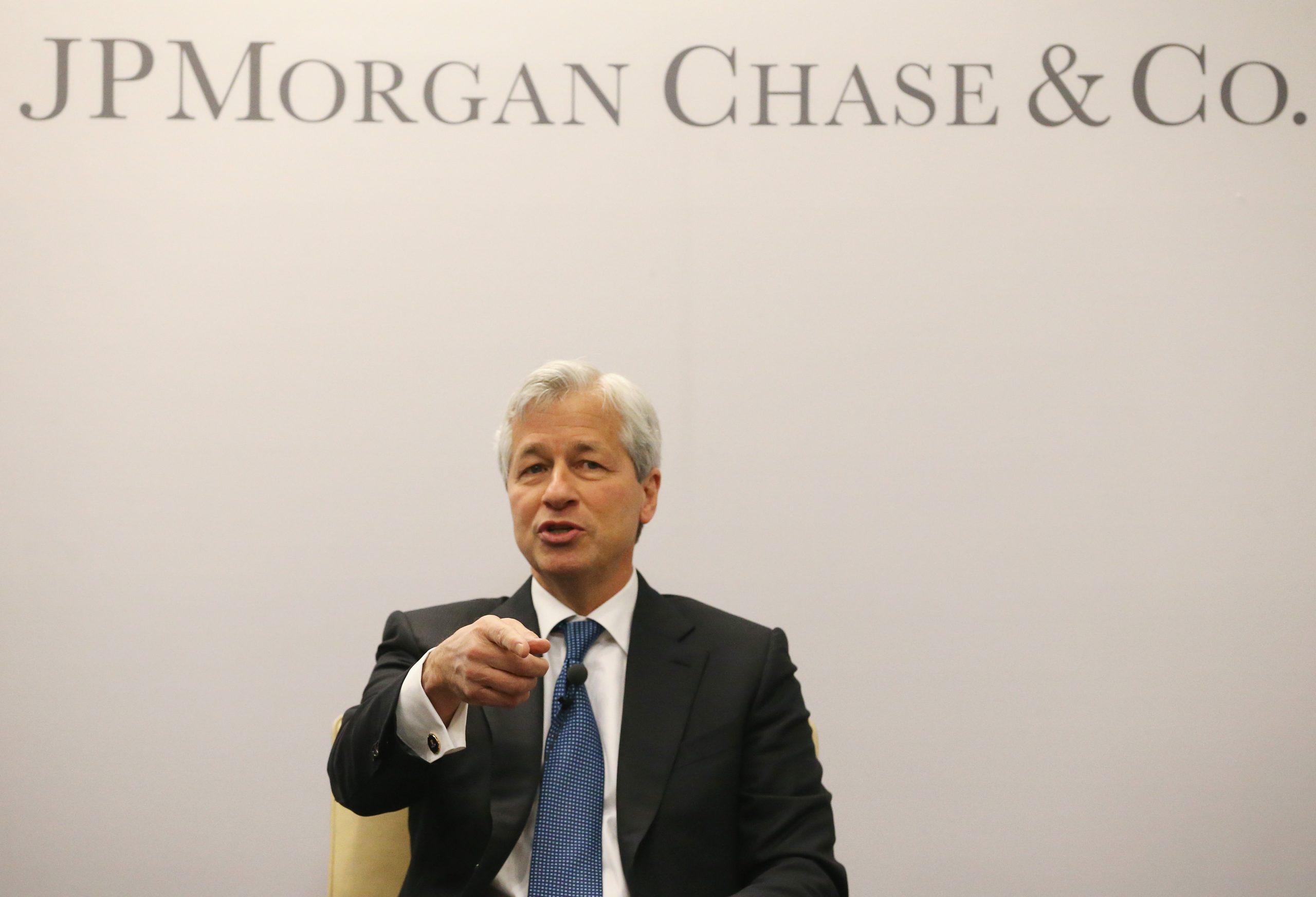
According to a Bloomberg report published today, JPMorgan Chase is planning to allow its institutional clients to use Bitcoin (BTC) and Ethereum (ETH) holdings as collateral for loans by the end of 2025.

This global program targets trading desks, wealth-management accounts, and high-net-worth individuals, marking a significant evolution in how major banks are incorporating digital assets into traditional finance.

Primarily for institutional clients, including hedge funds and asset managers. It extends JPMorgan’s earlier policy introduced in June 2025 of accepting crypto-linked ETFs as collateral, now allowing direct pledges of BTC and ETH.

Pledged tokens will be held by third-party custodians to manage risk and ensure compliance, rather than JPMorgan taking direct custody. Clients can access fiat credit lines or structured loans against their crypto holdings, similar to using stocks, bonds, or gold as collateral. This avoids the need to sell assets, providing liquidity while retaining exposure.

Rollout expected by year-end 2025, pending final internal approvals. JPMorgan’s CEO, Jamie Dimon, has historically been skeptical of crypto—once calling Bitcoin “worse than tulip bulbs”—but the bank has pivoted amid surging client demand and a more favorable regulatory environment under the current U.S. administration.

Bitcoin recently hit record highs above $110,000, and spot BTC/ETH ETFs have amassed over $149 billion in assets since their 2024 approval. This move aligns with a wave of Wall Street adoption

Morgan Stanley plans to enable retail trading of BTC, ETH, and Solana on ETRADE by Q2 2026. BNY Mellon launched tokenized money market products with Goldman Sachs in July 2025. Fidelity, State Street, and BlackRock are expanding custody and trading services.

By treating BTC and ETH like traditional collateral, the program could unlock billions in liquidity for institutions, accelerate crypto’s mainstream integration, and signal reduced volatility risks as banks refine valuation and risk models.

Morgan Stanley, managing over $8 trillion in assets, has ramped up its cryptocurrency offerings in 2025 amid a pro-crypto regulatory shift under President Trump. This builds on earlier moves like offering Bitcoin funds to wealthy clients since 2021 and approving spot BTC/ETH ETFs in 2024.

The firm’s strategy emphasizes integrated digital asset management alongside traditional portfolios, with a focus on risk-managed exposure. Morgan Stanley removed eligibility restrictions, allowing all clients—regardless of net worth, risk tolerance, or account type—to invest in crypto funds starting October 15, 2025.

Restricted to clients with ?$1.5M in assets, aggressive risk profiles, and taxable brokerage accounts only. Initially BlackRock and Fidelity BTC/ETH funds; clients can also request any listed spot crypto ETFs. The firm is monitoring for additional products like altcoin funds.

Automated monitoring caps crypto at ~4% of portfolios (per Global Investment Committee recommendation) to prevent over-concentration in volatile assets. This extends to retirement (e.g., IRAs) and trust accounts, potentially injecting billions from retail and mass-affluent investors into crypto.

Bitcoin (BTC), Ethereum (ETH), and Solana (SOL) at launch; potential expansion to others. With Zerohash (crypto infrastructure provider) for liquidity, custody, and compliance. Morgan Stanley participated in Zerohash’s $104M Series D-2 round in September 2025, valuing it at unicorn status (~$1B).

Developing an in-house digital asset wallet for secure storage, described as the “tip of the iceberg” in broader strategy. Up to 4% “opportunistic” allocation to crypto in diversified portfolios, tailored by risk profile (0% for conservative; higher for growth-oriented).

Recently issued “Dual Directional Trigger PLUS” notes linked to BlackRock’s iShares Bitcoin Trust (IBIT) ETF, closing October 31, 2025—offering leveraged exposure with auto-call features. Competitors like JPMorgan accepting BTC/ETH as loan collateral by end-2025 and Goldman Sachs tokenized funds are following suit.

CEO Ted Pick has emphasized safe crypto integration via regulators. For clients, this means seamless liquidity and exposure without selling assets; for the market, it could drive $10B+ inflows, boosting prices and legitimacy. Retail rollout via ETRADE targets younger investors, but execution risks remain.

JPMorgan to Accept Bitcoin And Ether as Loan Collateral in Global Expansion of Crypto Services

0

JPMorgan Chase & Co. is preparing to allow institutional clients to use Bitcoin and Ether holdings as collateral for loans by the end of the year, according to a Bloomberg report.

The initiative will operate globally and rely on a third-party custodian to securely hold the digital assets. This marks a significant step beyond the bank’s earlier practice of accepting crypto-linked exchange-traded funds (ETFs) as collateral.

Initially, JP Morgan allowed clients to use financial products tied to the value of cryptocurrencies such as Bitcoin or Ether ETFs, as collateral for loans or other financing activities. These ETFs track the performance of crypto assets but are traded on regulated exchanges, making them easier for banks to manage under existing financial and compliance frameworks.

In essence, the bank was engaging with crypto exposure indirectly through regulated investment instruments, rather than through the direct custody or acceptance of actual digital assets. The upcoming move to accept Bitcoin and Ether themselves as collateral represents a deeper step into the crypto space, signaling greater confidence in the maturity of digital asset markets and the infrastructure supporting them.

Also, the move comes as the Bank CEO Jamie Dimon, who was once a strong critic of cryptocurrency, describing it as “fraud”, has finally softened his stance on the digital asset. Lately, Dimon has moderated his stance somewhat, while remaining skeptical. “I don’t think we should smoke, but I defend your right to smoke,” he said at JPMorgan’s investor conference in May. “I defend your right to buy Bitcoin, go at it.”

JPMorgan’s latest move comes as it opened its new global headquarters at 270 Park Avenue, marking a major milestone in its commitment to New York City. The tower will be home to 10,000 employees by the year-end.

With Bitcoin’s sustained price rally and a more accommodating regulatory environment under the current U.S. administration, JP Morgan is not the only bank exploring crypto-related services. Across the financial sector, similar developments are underway.

Recent regulatory adjustments in the United States have encouraged other banks to design digital asset services, ranging from cryptocurrency trading and wallet management to tailored investment strategies.

Here’s an overview of some of the key players and their initiatives:

Morgan Stanley

Morgan Stanley became the first major U.S. bank to offer Bitcoin funds to its wealth management clients. Through partnerships with firms such as Galaxy Digital and NYDIG, the bank provides exposure to Bitcoin investment products. It continues to research digital asset infrastructure and is assessing opportunities in decentralized finance (DeFi).

Citigroup (Citi)

Citigroup has been building a digital assets division focused on developing blockchain-based solutions for trade finance, securities services, and cross-border payments. The bank has also tested tokenized deposits and recently received regulatory approval to provide digital asset custody and settlement services to institutional clients.

Bank of New York Mellon (BNY Mellon)

BNY Mellon, the world’s largest custodian bank, has launched a digital asset custody platform, allowing clients to hold and transfer cryptocurrencies like Bitcoin and Ether alongside traditional investments. The bank’s move reflects its belief that digital assets are becoming an essential part of modern investment portfolios.

Standard Chartered

Standard Chartered has been particularly active in the crypto ecosystem. Through its subsidiary Zodia Custody, the bank provides institutional-grade crypto custody services in partnership with Northern Trust. It also operates Zodia Markets, a digital asset trading platform offering spot and over the counter (OTC) services for institutional clients.

HSBC

Although traditionally cautious about crypto, HSBC has entered the digital asset space through tokenization and blockchain pilots. It has launched projects involving tokenized gold and is exploring central bank digital currency (CBDC) integration for international payments.

Executives in the industry emphasize that blockchain-based infrastructure is now mature enough to support mainstream adoption. They note that clients should have seamless access to both digital and traditional assets within a single financial platform, a shift that signals the growing convergence of conventional finance and the crypto economy.

Overall, these developments illustrate how traditional banks are no longer treating crypto as a fringe asset but as an emerging component of global finance.

By offering custody, trading, and tokenization services, these institutions aim to bridge the gap between traditional finance (TradFi) and the rapidly expanding digital asset economy, a trend expected to accelerate as regulations evolve and institutional demand grows.