DD
MM
YYYY

PAGES

DD
MM
YYYY

spot_img

PAGES

Home Blog Page 26

OpenAI Puts Greg Brockman in Charge of Product Strategy as Company Refocuses on ChatGPT and AI Agents

0

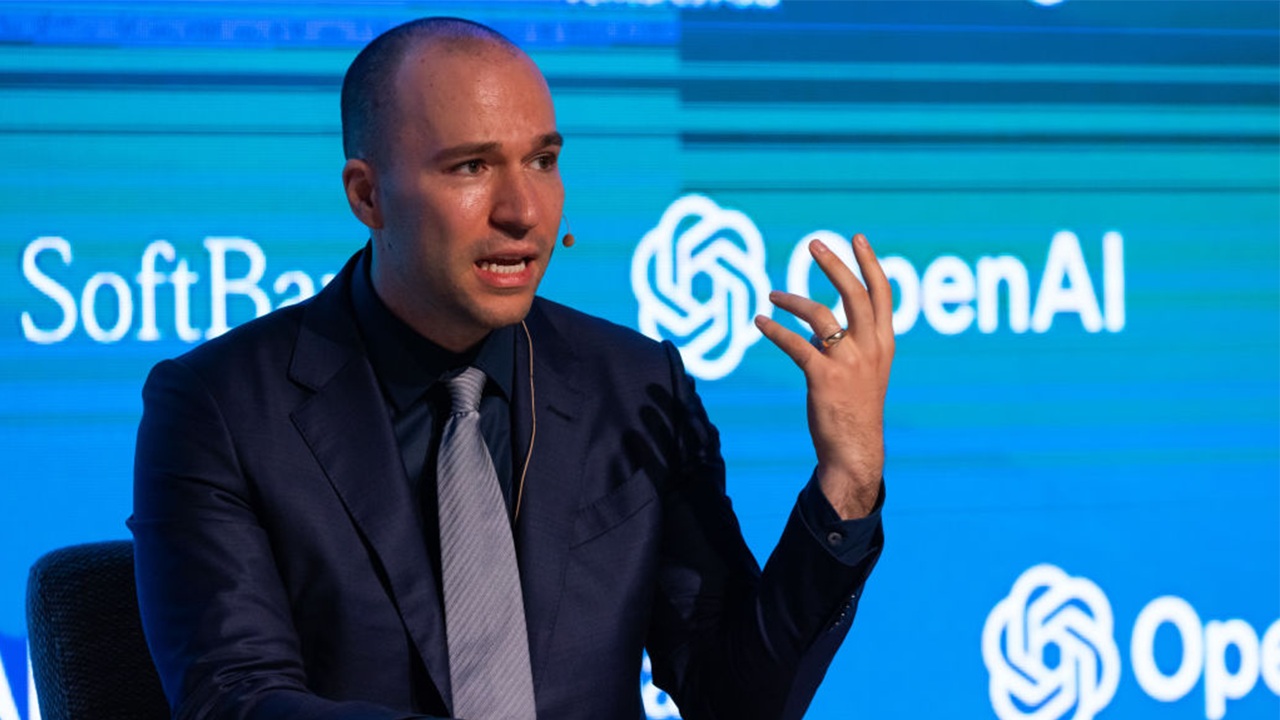
OpenAI co-founder Greg Brockman is formally taking control of the company’s product strategy in a move that signals a deeper restructuring inside the artificial intelligence firm as it intensifies focus on ChatGPT, coding tools, and AI agents.

According to a report by Wired, Brockman will now officially oversee OpenAI’s product direction, solidifying a transition that had already been unfolding internally while Fidji Simo remains on medical leave.

The report said Brockman outlined plans in a staff memo to combine ChatGPT and OpenAI’s programming platform Codex into a unified product experience as the company pushes toward what executives increasingly describe as an “agentic” future for artificial intelligence.

“We’re consolidating our product efforts to execute with maximum focus toward the agentic future, to win across both consumer and enterprise,” Brockman reportedly wrote in the memo.

OpenAI confirmed to TechCrunch that Simo collaborated with Brockman on the organizational changes before taking leave and said the company had already been discussing broader plans to integrate ChatGPT, Codex, and its API offerings into a single platform supported by one central product team.

OpenAI Refocuses Around ChatGPT

The restructuring reflects growing pressure inside OpenAI to concentrate resources around its core commercial products as competition intensifies across the AI industry. At the end of last year, Sam Altman reportedly declared a “code red” internally and warned that the company needed to refocus aggressively on the ChatGPT ecosystem.

Since then, OpenAI has scaled back or deprioritized several side initiatives, including its video-generation platform Sora and OpenAI for Science, according to reports.

The shift highlights how quickly the economics and competitive dynamics of artificial intelligence have evolved. While OpenAI remains one of the industry’s most influential companies following the explosive success of ChatGPT, rivals including Google, Anthropic, Microsoft, and Meta Platforms are spending tens of billions of dollars to build competing AI ecosystems.

The market is also increasingly shifting from standalone chatbots toward AI “agents” capable of carrying out complex tasks autonomously across software environments.

That transition is becoming central to OpenAI’s strategy. Rather than operating ChatGPT, Codex, and developer tools as relatively separate products, OpenAI now appears to be building a unified AI platform that combines conversational AI, coding assistance, and workflow automation into one integrated ecosystem.

Codex Integration Signals Bigger Enterprise Push

The decision to integrate Codex more deeply into ChatGPT also points to OpenAI’s expanding ambitions in enterprise software and developer tools. Codex, which powers AI programming capabilities, has become strategically important as software development emerges as one of the most commercially valuable applications of generative AI.

AI coding assistants are rapidly transforming software engineering workflows by automating code generation, debugging, and testing.

Competition in the sector has also intensified sharply. Microsoft’s GitHub Copilot, startups such as Cursor, and enterprise AI coding platforms are all competing aggressively for developers and corporate customers.

By merging ChatGPT and Codex more tightly, OpenAI appears to be positioning itself to compete more directly for enterprise productivity spending while creating a more seamless experience across coding, research, and workflow automation. The integration may also strengthen OpenAI’s effort to create a broader “AI operating system” that keeps users inside its ecosystem across multiple tasks rather than relying on isolated tools.

That approach increasingly mirrors the broader direction of the AI industry, where companies are racing to build integrated platforms capable of handling communication, coding, search, reasoning, and task execution within a single interface.

Brockman’s formal elevation over product strategy is also significant internally because it consolidates influence around one of OpenAI’s original architects during a period of rapid organizational change. As OpenAI scaled from a research lab into one of the world’s most valuable AI companies, leadership responsibilities became increasingly distributed across research, commercialization, and product divisions.

Brockman, who helped found the company alongside Altman and other early researchers, has historically been deeply involved in both technical and product development decisions. His expanded role suggests OpenAI is prioritizing tighter coordination between engineering and product execution as the company attempts to move faster in an increasingly competitive environment.

The changes also come after a turbulent period for OpenAI management. The company has undergone several high-profile leadership transitions, governance disputes, and executive departures over the past two years as it evolved from a research-focused organization into a commercial AI giant.

Maintaining strategic coherence has become increasingly important as OpenAI simultaneously manages rapid user growth, enterprise expansion, infrastructure demands and escalating competition.

AI Industry Moves Toward “Agentic” Systems

Brockman’s emphasis on an “agentic future” underpins one of the biggest shifts currently underway in artificial intelligence.

The first wave of generative AI centered largely on chatbots capable of responding to prompts. The next phase increasingly involves AI systems that can independently complete multi-step tasks, interact with software tools, and make limited decisions autonomously.

Technology companies are now racing to develop AI agents capable of handling workflows such as coding, scheduling, research, customer service, and enterprise operations with minimal human intervention. That transition could dramatically expand the commercial value of AI systems but also substantially increase competitive pressure among leading AI developers.

For OpenAI, unifying ChatGPT and Codex may be an early step toward creating a broader AI agent platform capable of serving both consumers and businesses. The strategy also aligns with investor expectations that AI companies must move beyond novelty chatbots toward products capable of generating durable enterprise revenue.


Tezos Privacy-focused Technologies Complement Recent Quest for Safer DeFi Rails

0

Privacy has long been one of the most debated and technically difficult frontiers in blockchain development. While many networks spent years discussing how to integrate confidential transactions without sacrificing decentralization, scalability, or regulatory flexibility, Tezos quietly deployed production-grade shielded transactions as early as 2021.

Today, in 2026, as competing ecosystems race to introduce privacy primitives and confidential asset infrastructure, Tezos’ early implementation appears increasingly prescient. The conversation around blockchain privacy has evolved dramatically over the last several years. In the early era of crypto, transparency was celebrated as a revolutionary feature.

Public ledgers allowed anyone to audit balances and transactions in real time, creating unprecedented openness in financial systems. However, as institutional participation grew and real-world applications emerged, the limitations of complete transparency became obvious. Enterprises, governments, financial institutions, and even ordinary users often require confidentiality for legitimate reasons.

Payroll systems, commercial settlements, identity-linked applications, and tokenized assets cannot always function efficiently on fully transparent rails. Tezos recognized this challenge earlier than many of its peers. Rather than positioning privacy as a niche ideological feature, the network approached shielded transactions as practical financial infrastructure.

By integrating Sapling-based privacy technology into the protocol in 2021, Tezos enabled users to conduct confidential transactions while maintaining the chain’s broader security and governance architecture. At the time, the move received less public attention than the aggressive marketing campaigns surrounding newer privacy-focused ecosystems. Yet its technical significance has become more evident with time.

What distinguishes Tezos’ approach is that the privacy functionality was not merely theoretical or experimental. It was deployed in a production-grade environment with actual usability and integration pathways. This matters because blockchain history is filled with ambitious cryptographic roadmaps that struggled to move beyond whitepapers or isolated testnets.

Tezos demonstrated that advanced privacy features could coexist with on-chain governance, formal upgrade mechanisms, and a proof-of-stake architecture without destabilizing the network. The timing is particularly noteworthy in 2026. Several major blockchain ecosystems are only now beginning to launch privacy primitives, confidential smart contracts, or shielded asset frameworks.

These developments are often presented as groundbreaking innovations, yet Tezos had already validated many of the underlying concepts years earlier. Its earlier adoption provided developers and researchers with valuable operational insights into the realities of deploying privacy technology at scale. This head start also reflects Tezos’ broader philosophy toward blockchain evolution.

Rather than prioritizing hype cycles or speculative narratives, the ecosystem has historically focused on gradual protocol refinement, governance-driven upgrades, and long-term sustainability. While that approach sometimes caused the network to be overlooked during periods dominated by meme speculation and high-risk experimentation, it allowed Tezos to quietly build infrastructure that aligned with the future needs of institutional blockchain adoption.

Privacy is increasingly becoming essential for the next phase of tokenized finance. As tokenized stocks, real-world assets, digital identity systems, and enterprise-grade settlement networks expand, selective confidentiality will likely become a baseline requirement rather than an optional feature.

Tezos’ early deployment of shielded transactions now appears less like an isolated technical experiment and more like an early blueprint for mature blockchain infrastructure. As the broader crypto industry enters an era where privacy, compliance, and scalability must coexist, Tezos stands as an example of how foresight and patient engineering can eventually outpace louder narratives.

Wall Street Wants Tokenization Due to Efficiency and Prompt Settlements

0

For decades, Wall Street has operated on financial infrastructure built long before the internet era reached its full potential. Traditional stock trading may appear instantaneous to retail investors, but behind the scenes, settlement systems, clearinghouses, brokers, custodians, and banks create layers of complexity that slow down transactions and increase costs.

Tokenization is emerging as Wall Street’s proposed solution to modernize this system. By placing stocks and other financial assets on blockchain networks, financial institutions believe they can create a faster, more efficient, and more accessible global market.

Tokenization refers to the process of converting ownership rights of an asset into digital tokens recorded on a blockchain. In the context of the stock market, this means shares of companies could eventually exist as blockchain-based assets instead of being tracked through traditional centralized databases.

Large financial institutions, asset managers, and technology firms are increasingly exploring tokenized equities because they see blockchain technology as a way to transform capital markets much like the internet transformed communication. One of the biggest reasons Wall Street wants tokenization is efficiency. Today, stock trades in many markets still settle on a T+1 basis, meaning it takes one business day for ownership.

Blockchain systems can potentially enable near-instant settlement, reducing counterparty risk and operational delays. Faster settlement also means capital becomes more liquid, allowing institutions to move money more efficiently across markets. Cost reduction is another major incentive. Traditional stock market infrastructure involves multiple intermediaries, including transfer agents, custodians, and clearing firms.

Each layer adds fees and operational overhead. Tokenized systems can automate many of these processes through smart contracts, reducing administrative costs while increasing transparency. For Wall Street firms managing trillions of dollars, even small reductions in operational expenses could translate into enormous savings.

Tokenization also opens the door to 24/7 trading. Traditional stock exchanges operate during fixed market hours and close on weekends and holidays. Blockchain-based markets, however, can function continuously. This aligns with the increasingly global nature of finance, where investors across different time zones seek uninterrupted access to markets.

The crypto industry has already demonstrated strong demand for round-the-clock trading, and Wall Street is taking notice. Another powerful advantage is fractional ownership. Tokenization makes it easier to divide assets into smaller units, allowing broader participation in financial markets.

Investors could potentially buy tiny fractions of high-priced stocks, private equity, real estate, or even fine art with greater ease. This democratization of access could attract younger and international investors who previously faced barriers to entry. Major institutions are already moving aggressively into this space. Companies like BlackRock, JPMorgan Chase, and Franklin Templeton have explored tokenized funds and blockchain settlement systems.

Their involvement signals that tokenization is no longer viewed as a fringe crypto experiment but as a serious evolution of financial markets. However, significant challenges remain. Regulation is still unclear in many jurisdictions, especially regarding securities laws, investor protection, and cross-border compliance. Cybersecurity risks, blockchain scalability, and interoperability between traditional finance and decentralized systems.

Wall Street firms must convince regulators and institutional investors that tokenized markets can remain stable and trustworthy during periods of volatility. Despite these obstacles, momentum continues to build. Wall Street sees tokenization as an opportunity to modernize outdated financial infrastructure, unlock new revenue streams, and compete in a future increasingly shaped by digital assets.

Ronin Completes its Migration as an Ethereum Layer 2 Infrastructure, as Whales Control 67.47% of Cardano’s ADA Token Supply

0

Ronin’s completion of its migration from a standalone Layer 1 blockchain to an Ethereum Layer 2 marks a defining moment in the evolution of blockchain infrastructure. The network, originally engineered to support the explosive growth of the blockchain gaming ecosystem surrounding Axie Infinity, has now repositioned itself within Ethereum’s broader scalability framework.

By describing the transition as the largest state migration in blockchain history, Ronin is emphasizing both the technical magnitude and strategic importance of moving an entire live ecosystem, complete with wallets, applications, assets, smart contracts, and historical state data, into a new architectural model without disrupting user activity.

The migration represents more than a technical upgrade. It reflects a wider industry trend in which independent Layer 1 chains are increasingly converging around Ethereum as the foundational settlement layer for Web3. During the previous market cycle, many projects launched standalone chains to optimize performance, reduce transaction costs, and establish sovereignty over their ecosystems.

However, fragmentation became one of crypto’s largest structural problems. Liquidity, users, developers, and applications were scattered across dozens of chains, weakening network effects and complicating interoperability.

Ronin’s move to Ethereum Layer 2 directly addresses those issues. Instead of competing against Ethereum, the network is now leveraging Ethereum’s security, liquidity, and developer ecosystem while retaining the high-speed, low-cost transaction environment that made Ronin successful in gaming. This aligns Ronin with the broader Layer 2 thesis currently reshaping blockchain architecture, where scalability is increasingly handled through rollups and modular execution environments rather than isolated Layer 1 ecosystems.

What makes the migration historically significant is the sheer amount of blockchain state that had to be transferred. State migration in blockchain systems is extraordinarily complex because every wallet balance, NFT ownership record, validator configuration, transaction history, smart contract interaction, and application state must remain intact. Any inconsistency risks breaking decentralized applications, compromising assets, or creating vulnerabilities.

For a network as active and asset-heavy as Ronin, the engineering challenge was immense. Ronin’s ecosystem has processed billions of dollars in NFT and gaming transactions over the years, particularly during the height of Axie Infinity’s popularity. Migrating such a large and active ecosystem required careful coordination between infrastructure providers, validators, developers, and users.

Successfully executing the transition without catastrophic downtime demonstrates how far blockchain engineering has matured since the industry’s early experimental years. Strategically, the migration could also strengthen Ronin’s long-term relevance in the increasingly competitive blockchain gaming sector. Gaming networks now compete not only on transaction speed but also on liquidity access, interoperability, and ecosystem composability.

By becoming an Ethereum Layer 2, Ronin gains deeper integration with decentralized finance protocols, stablecoin infrastructure, NFT marketplaces, and Ethereum-native tooling. This may attract a broader range of developers beyond gaming while reducing the isolation that many application-specific chains face.

The migration also reinforces Ethereum’s growing dominance as the internet’s primary blockchain settlement layer. Rather than weakening Ethereum’s position, the rise of Layer 2 ecosystems appears to be consolidating activity around it. Networks that once sought independence are now choosing alignment with Ethereum’s economic and security guarantees.

Ronin’s transition may be remembered as a pivotal example of blockchain infrastructure evolution. It signals that the future of Web3 may not belong to isolated chains competing for dominance, but to interconnected ecosystems built around scalable Ethereum-based architectures capable of supporting millions of users and increasingly sophisticated digital economies.

Whales Controlling 67.47% of Cardano’s ADA Token Supply Reflects Growing Institutional Confidence and Risk

The growing concentration of Cardano’s ADA token among large holders has become one of the most discussed developments in the cryptocurrency market. Recent data showing that Cardano whales now control 67.47% of the circulating supply — approximately 25.09 billion ADA tokens — highlights both the confidence of institutional-scale investors and the structural risks tied to token concentration.

In the broader crypto ecosystem, whale activity often serves as a major indicator of market sentiment, long-term conviction, and potential volatility. For Cardano, this development may shape the blockchain’s future trajectory in significant ways. Cardano, founded by Charles Hoskinson, has long positioned itself as a research-driven blockchain platform focused on scalability, decentralization, and sustainability.

Unlike many speculative crypto projects, Cardano built its reputation on peer-reviewed development and gradual ecosystem expansion. The accumulation of ADA by whales suggests that major investors continue to see long-term value in the network despite intense competition from rival blockchains such as Ethereum and Solana.

Whales in cryptocurrency markets are typically wallets or entities holding enormous amounts of a token, often capable of influencing price action through large trades. When whales accumulate assets, smaller investors frequently interpret the move as a bullish signal.

In Cardano’s case, the control of over two-thirds of circulating supply indicates that high-net-worth participants remain committed to ADA’s future. This could reflect optimism surrounding upcoming ecosystem developments, decentralized finance growth, staking rewards, and broader blockchain adoption. However, concentrated ownership also raises important concerns about decentralization.

One of the central promises of blockchain technology is the distribution of power across a wide network of participants. When a small number of wallets hold a dominant percentage of supply, questions emerge regarding governance influence, voting power, and potential market manipulation. Although Cardano operates on a proof-of-stake consensus mechanism that encourages community participation, whale dominance could theoretically shift influence toward a limited group of major holders.

From a market perspective, heavy whale ownership can amplify volatility. Large-scale buying may create rapid upward momentum, while sudden sell-offs could trigger sharp declines. Crypto markets are particularly sensitive to whale movements because liquidity conditions are often thinner than traditional financial markets.

If even a fraction of these 25.09 billion ADA tokens were moved to exchanges, traders could interpret the action as a bearish sign, leading to panic selling and price instability. At the same time, long-term accumulation by whales may reduce available circulating supply on exchanges, creating scarcity that supports price appreciation.

This phenomenon has been observed repeatedly in Bitcoin cycles, where institutional accumulation tightened supply and contributed to upward market pressure. Cardano supporters argue that whale accumulation may similarly signal expectations of future ecosystem expansion, especially as blockchain infrastructure, tokenization, and decentralized applications continue to evolve globally.

The situation reflects the dual nature of cryptocurrency markets. Whale dominance can indicate confidence and maturity, but it can also expose structural centralization risks that contradict the ideals of decentralized finance. Cardano maintaining a balance between institutional participation and widespread community ownership will be critical as the project continues competing for relevance in the evolving blockchain industry.

As the crypto sector matures, investor attention will increasingly focus not only on price movements, but also on ownership distribution, governance dynamics, and network resilience. Cardano’s whale concentration therefore represents more than a statistic — it is a reflection of the growing intersection between decentralized technology and large-scale capital influence in the digital asset economy.

GitHub Officially Releases the AI Software Engineering Certification Program

0

In 2026, the software engineering labor market is undergoing another structural shift as GitHub has introduced an official certification program targeting one of the most in-demand developer roles of the decade. The move reflects the growing need for standardized validation of skills in an ecosystem increasingly shaped by AI-assisted development, distributed teams, and rapid deployment cycles now.

At the center of this initiative is GitHub’s recognition that modern developers are no longer evaluated solely on syntax proficiency or familiarity with a single programming language. Instead, the emphasis has shifted toward system design, collaboration workflows, version control mastery, security awareness, and the ability to effectively leverage AI coding assistants.

The certification is designed to standardize these competencies, providing employers with a more reliable benchmark in a saturated hiring market. Industry analysts argue that certifications like this could become a defining feature of developer hiring pipelines, particularly as companies struggle to distinguish between candidates with similar portfolios.

The most in-demand developer role of 2026 is increasingly centered on AI-augmented software engineering, where developers are expected to integrate large language models, automate testing pipelines, and maintain production-grade reliability at scale. GitHub’s certification aims to formalize these expectations into measurable standards.

In practical terms, this certification may reshape how entry-level and mid-level engineers position themselves in the global job market. Rather than relying exclusively on degrees or informal experience, candidates may increasingly be evaluated through standardized, verifiable skill frameworks endorsed by platform providers like GitHub.

This shift signals a broader professionalization of software development, where demonstrated capability in real-world tooling ecosystems carries equal or greater weight than theoretical computer science knowledge. For employers, this provides a more consistent signal of competence, reducing uncertainty in hiring decisions and improving alignment between job requirements and actual engineering output.

It also reflects the increasing influence of platform ecosystems in shaping career trajectories, as companies like GitHub become not only repositories for code but also arbiters of professional credibility. The emergence of such certifications highlights a maturing developer economy where skills are increasingly modular, portable, and benchmarked against globally recognized standards.

As AI-native development becomes the default across startups and enterprise environments, certifications that validate proficiency in AI-assisted workflows are likely to become as important as traditional credentials once were for earlier generations of programmers.

Taken together, GitHub’s certification initiative represents a structural inflection point in how software engineering talent is identified, validated, and deployed across global technology markets.

It underscores the shift from informal meritocratic signaling toward more institutionalized and platform-mediated credentialing systems that aim to reduce information asymmetry between employers and developers. It reflects a broader convergence of education, certification, and production environments within software engineering ecosystems, where the boundary between learning and working continues to blur under the influence of AI tooling and cloud-native infrastructure.

This evolution suggests that future developer careers will be shaped less by static resumes and more by continuously validated, platform-verified competencies embedded directly within the tools developers use every day across distributed engineering teams overall. Getting a GitHub certification will boost developers morale and create a balance for team looking for AI engineering talents.