DD
MM
YYYY

PAGES

DD
MM
YYYY

spot_img

PAGES

Home Blog Page 26

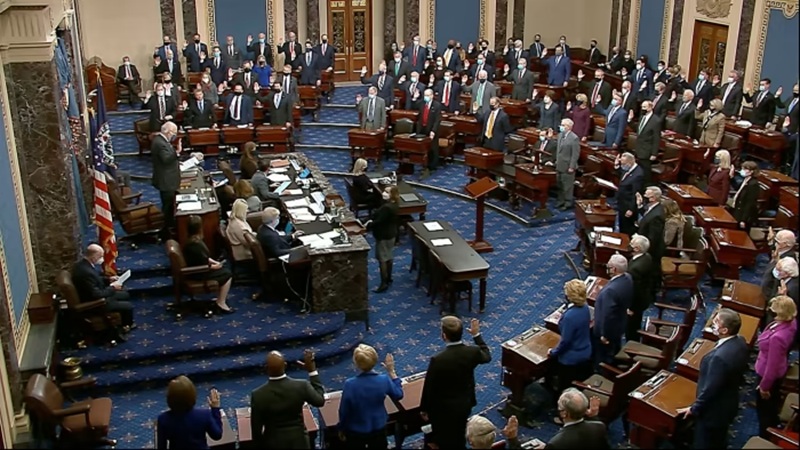
US House Urges Senate to Pass Crypto Market Structure Bill by End of December 2025

0

The US House of Representatives issued a formal call for the Senate to expedite and pass comprehensive crypto market structure legislation before the month concludes.

This push underscores mounting pressure to deliver regulatory clarity for digital assets amid a rapidly evolving industry and bipartisan momentum in Congress.

The move aligns with ongoing negotiations and builds on earlier House actions, signaling that the window for action in the current session is narrowing. The core bill in question is the Digital Asset Market Clarity Act of 2025 (CLARITY Act), a 236-page framework that passed the House in July 2025 with strong bipartisan support (294-134 vote).

It aims to delineate regulatory jurisdiction between the Securities and Exchange Commission (SEC) and the Commodity Futures Trading Commission (CFTC): For “digital commodities”— Bitcoin-like assets in spot markets, emphasizing anti-manipulation rules and exchange standards to curb scams like “rug pulls.”

SEC role, retained for securities-like tokens, with provisions for dual registration for platforms handling both. Key protections includes investor safeguards, custody requirements, and exemptions for certain decentralized finance (DeFi) elements, while addressing illicit finance and state-level preemption.

This follows the successful passage of the Guiding and Establishing National Innovation for U.S. Stablecoins (GENIUS) Act in July 2025, which established rules for stablecoin issuers like reserve backing and anti-money laundering compliance and has already been signed into law.

The CLARITY Act represents the next pillar in a “trilogy” of crypto reforms, with the third focusing on anti-CBDC measures.The Senate has been working on its version since November 2025, with the Banking and Agriculture Committees releasing discussion drafts.

These emphasize CFTC primacy for non-security tokens, DeFi guidelines though still underdeveloped, and anti-manipulation standards for exchanges. Senate Banking Chair Tim Scott (R-SC) has targeted a December markup, with hopes for early 2026 passage to President Trump’s desk, who has positioned the US as the “crypto capital of the world.”

Congress adjourns for the holidays soon after December 31, risking a stall into the next session where priorities could shift. Crypto executives, including Coinbase CEO Brian Armstrong, have lobbied intensely, warning that delays hinder US innovation.

The sector has poured hundreds of millions into campaigns, viewing clarity as essential for growth. Talks stalled in October over DeFi rules and Democratic concerns about President Trump’s family crypto ties (e.g., potential conflicts). Recent CEO meetings with senators like Cynthia Lummis (R-WY) and Mark Warner (D-VA) aim to restart negotiations.

Without passage, ongoing SEC-CFTC turf wars persist, stifling institutional adoption. Proponents argue it could “unlock US crypto growth” by reducing regulatory arbitrage. Some Senate Democrats, led by Elizabeth Warren, criticize the bills for weak consumer protections and Trump’s conflicts, pushing for stricter DeFi oversight.

Unlike the House’s version, the Senate may expand exemptions and refine jurisdictional lines, requiring House reconciliation. High for markup, but full passage by month-end is uncertain—experts peg it at 60-70% if bipartisan tweaks land.

White House Crypto Czar David Sacks has echoed the September call now exbtended, urging swift action. If passed, it would mark a historic shift, potentially catalyzing a surge in crypto adoption and valuations. Watch for Senate updates in the coming weeks—failure to act could delay reforms until mid-2026.

Crypto Markets Rally, Adding $60B to their Total Market Cap as Bitcoin Briefly Crosses $94K

0

The cryptocurrency market is experiencing a notable rally today, December 10, 2025, with Bitcoin (BTC) briefly surpassing $94,000 before pulling back to around $92,000.

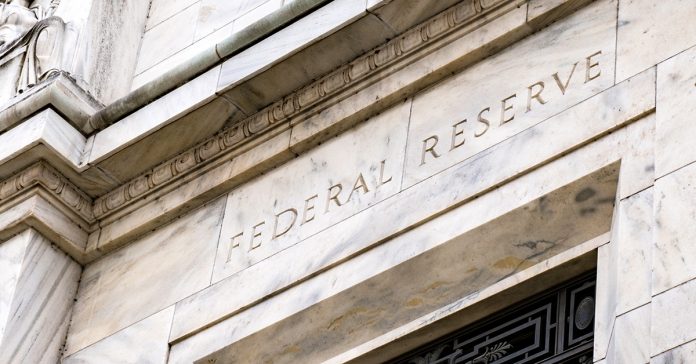
This surge has contributed to an estimated $60 billion increase in the total crypto market capitalization, pushing it above $3.1 trillion. The momentum aligns with broader risk-on sentiment in financial markets, driven by near-certainty over 96% odds of a 25-basis-point rate cut from the U.S. Federal Reserve at its meeting concluding today.

Markets are pricing in looser monetary policy, boosting appetite for high-risk assets like crypto. BTC’s price action outpaced derivatives open interest, indicating genuine spot buying rather than leveraged speculation.

A dovish Fed signal could extend the uptrend, though volatility is expected post-announcement. Bitcoin exchange-traded products (ETPs) saw net positive flows after weeks of outflows, with recent approvals from firms like Bank of America and Vanguard accelerating adoption.

On-chain data shows reduced selling pressure from large holders. Ethereum broke $3,300, while privacy coins like Zcash led gains (+12%+). Broader sentiment on X highlights short squeezes and cycle optimism, with users noting BTC’s defiance of earlier 2025 predictions— ARK Invest’s $650K call vs. current ~$92K reality.

The rally stalled near $94K due to profit-taking and bond market jitters like rising Japanese yields. A reclaim of $94K could target $95K–$100K liquidity zones, but rejection risks a dip to $88K–$85K support. Longer-term, analysts eye $111K by year-end if adoption accelerates, though 2025’s volatility underscores caution.

Ethereum (ETH) has outpaced the broader crypto market in December 2025, surging over 4.5% in the last 24 hours to briefly cross $3,300—its highest since early November—while the total market cap added $60B.

This momentum builds on a 10% weekly gain, driven by a confluence of technical upgrades, regulatory green lights, and institutional demand. Unlike Bitcoin’s more conservative climb, ETH’s rally reflects its utility as a programmable settlement layer, with on-chain activity spiking 15% week-over-week.

Ethereum’s latest hard fork, implemented on December 3, 2025, boosts scalability by expanding blob capacity from 6 to 14 per block via PeerDAS. This slashes Layer 2 fees by up to 95%, enhancing throughput to 100,000+ TPS in real-time environments like MegaETH.

Lower costs are sparking Jevons Paradox-style demand: cheaper transactions drive more DeFi, RWAs, and stablecoin activity, burning ETH via EIP-1559 and tightening supply. TVL on Ethereum L2s hit $45B post-upgrade, up 15% in a week, as chains like Base and Arbitrum see explosive growth in perps and tokenized assets.

The CFTC’s collateral pilot now allows BTC/ETH as margin in regulated derivatives, unlocking billions in TradFi liquidity—ETH futures volume on CME surpassed BTC for the first time. Spot ETH ETFs from BlackRock, Fidelity, and Franklin Templeton are live and staking-enabled, offering 4-5% APY to institutions, with $2.5B in whale accumulation during recent dips.

The GENIUS Act legalized U.S. Treasury-backed stablecoins like USDC, PYUSD, all routing through Ethereum for settlement, amplifying blockspace demand and ETH burns. Banks like JP Morgan are integrating ETH for loans and liquidity rails, citing its 10-year uptime.

With 96% odds of a Fed rate cut today, risk assets like ETH are rallying on looser policy expectations—mirroring historical +35% surges after Treasury yield drops. Developer activity hit 16,000 new contributors YTD, fueling L2 ecosystems. Stablecoin volume reached $2.82T in October, with RWAs tokenizing stocks and bonds exclusively on Ethereum’s secure stack.

Technicals show RSI at 62 and MACD crossover, with support at $3,000 and upside to $4,000 by month-end if Fed signals dovish. Risks include stake centralization and macro reversals, but fundamentals point to $5,000–$6,500 averages for 2025.

Trump Stated that Immediate Interest Rate Cuts would Serve as Litmus Test for Next Nominee

0

President Donald Trump made a statement during an interview with Politico. He explicitly affirmed that immediate interest rate cuts would serve as a “litmus test” for his nominee to replace Federal Reserve Chair Jerome Powell, whose term ends in May 2026.

Trump responded “yes” when asked if a new chair lowering rates right away would be a requirement, signaling a push for more aggressive monetary easing to support economic growth amid concerns over inflation and tariffs.

This aligns with Trump’s broader criticisms of Powell, whom he has accused of being “too late” on rate reductions, and his recent appointment of economic adviser Stephen Miran to the Fed board to influence policy.

As of December 10, 2025, the Federal Open Market Committee (FOMC) is concluding its final meeting of the year, with a decision expected at 2:00 PM ET.

Economists anticipate a third consecutive quarter-point rate cut to a range of 4.25%-4.50%, despite internal Fed divisions over persistent inflation hovering above the 2% target due to Trump’s tariffs and a weakening labor market over 1.1 million jobs cut through November.

Powell’s post-meeting press conference at 2:30 PM ET will provide further clues. Trump has signaled an announcement for Powell’s replacement in early 2026, with Kevin Hassett former White House economic adviser and advocate for low rates emerging as a frontrunner.

Hassett has long argued for “expansion-leaning” Fed policy to keep capital cheap and growth high. This move underscores Trump’s desire to bend the traditionally independent Fed toward his agenda, including slashing borrowing costs to offset tariff impacts.

The rhetoric has fueled optimism in stocks and crypto, with expectations of higher liquidity and cheaper loans under a Trump-aligned chair. However, risks include renewed inflation spikes or Fed pushback on political interference.

President Trump says rate cuts will begin right away under the next Federal Reserve Chair.” President Trump says the next Fed chair must move straight into rate cuts… Big message for the markets.” This could mark a pivotal shift in U.S. monetary policy.

Tariffs are taxes imposed on imported goods, designed to protect domestic industries by making foreign products more expensive. While they can generate government revenue and encourage local production, their primary economic impact on inflation stems from cost-push effects.

Higher prices for imports and inputs, which businesses often pass on to consumers. This raises the overall price level, contributing to inflation—a sustained increase in the general price level of goods and services.

However, the magnitude and persistence depend on factors like the scale of tariffs, import reliance, exchange rates, and global retaliation. Economic consensus, drawn from historical data and recent analyses, shows tariffs typically act as a one-time price shock rather than ongoing inflation drivers, unless they disrupt supply chains persistently.

In 2025, under President Trump’s expanded tariffs like 10-25% on most imports, up to 60% on China, they’ve measurably boosted U.S. inflation amid a backdrop of cooling post-pandemic pressures.

Tariffs raise the cost of imported consumer goods and intermediate inputs. Importers absorb some costs initially but pass most through to retail prices, especially for inelastic goods like essentials.

Higher input costs inflate production expenses across sectors, amplifying effects on non-tradable goods like housing via pricier building materials. Tariffs can weaken demand slowing growth and potentially curbing inflation but retaliatory tariffs from partners raise export costs, hurting U.S. competitiveness and adding upward pressure.

A stronger U.S. dollar from tariffs can offset some import price hikes, but depreciation as seen in 2025 exacerbates them. Effects aren’t immediate—retailers stockpile pre-tariff inventory, delaying passthrough by 3-6 months. Inflation often peaks 2-3 years later as adjustments settle.

Recent Federal Reserve analyses provide robust, data-driven insights. These added 0.1-0.2 percentage points to core PCE inflation, with near-full passthrough to consumer prices within months. Studies like Amiti et al. (2019) confirmed costs fell mostly on U.S. households, not foreign exporters.

Tariffs explain 0.5 pp of headline PCE annualized inflation and 0.4 pp of core PCE for June-August 2025. Over the 12 months ending August, they accounted for 10.9% of headline inflation—statistically significant and tied to timing of tariff hikes.

New 60% China/10% global tariffs could add at least 0.5 pp to core PCE; a broader proposal might reach 2.2 pp without offsets. A 25% universal tariff on imports could raise PCE prices by 0.3-0.8 pp short-term, with inflation peaking after 3 years. Investment goods amplify effects more than consumer goods.

Broader models (e.g., PIIE 2025) project 2025 tariffs reducing U.S. GDP by 0.5-1.5% while adding 0.5-1.0 pp to inflation in year 1, worsening with retaliation. J.P. Morgan estimates mid-teens effective rates could settle inflation 0.3-0.6 pp higher by mid-2026.

Some analyses argue tariffs’ $49B cost hike is just 0.3% of consumer spending, a one-off level shift not sustained inflation. Rolling them back might cut prices 0.3-0.7 pp but risks supply chain fragility.

CPI held at 3% through September 2025, with import goods prices slightly down year-over-year—attributed to energy drops and retailer absorption. Housing up 3.4% and electricity drove more inflation than tariffs.

Advocates claim tariffs fund rebates like $12B farmer aid in Dec 2025 and reshoring 300+ plants, offsetting costs long-term. X discussions echo this, with users noting inflation at 2.5-2.7% under Trump vs. 9.1% under Biden, blaming prior policies.

Yet, Fed Chair Powell noted in June 2025 that tariffs “materially” raised forecasts, prompting fewer rate cuts. Yale Budget Lab estimates $1,300-1,700 per-household loss in 2025, outpacing revenue gains.

Globally, they slow growth and inflate partners’ prices. Politically, affordability concerns persist—X users decry tariffs as “taxes on consumers,” fueling Democratic attacks, while supporters hail revenue for dividends.

In sum, tariffs reliably add to inflation substantiated by Fed regressions and price data, but offsets like dollar strength and subsidies mitigate severity. Persistent hikes risk entrenched inflation; monitoring PCE through 2026 will clarify dynamics.

FDA Investigates COVID-19 Vaccine Safety and Potential Links to Deaths

0

The U.S. Food and Drug Administration (FDA) announced on December 9, 2025, that it is expanding its ongoing safety review of COVID-19 vaccines to explicitly investigate potential links between the shots and deaths in adults, in addition to the pediatric cases it has already been examining.

This development has sparked significant debate, with supporters viewing it as a necessary reckoning on vaccine safety and critics labeling it as politically motivated doubt-mongering that could undermine public health efforts.

The probe originated from an internal FDA memo leaked in late November 2025, where Dr. Vinay Prasad, the agency’s top vaccine regulator, claimed a review of 96 reported child deaths post-vaccination had identified at least 10 as “likely, probable, or possible” vaccine-related, primarily due to myocarditis (heart inflammation).

These findings were not peer-reviewed or publicly detailed at the time, prompting calls for transparency from experts. On December 9, HHS spokesperson Andrew Nixon confirmed the investigation now covers “multiple age groups,” including adults, with a focus on deaths “potentially related to coronavirus vaccines.”

The FDA is coordinating across divisions to analyze data from systems like VAERS (Vaccine Adverse Event Reporting System), which has logged over 19,000 U.S. death reports post-vaccination since 2020—though VAERS reports are unverified and do not prove causation.

The review aligns with shifts under Health Secretary Robert F. Kennedy Jr., a longtime vaccine skeptic who has limited COVID-19 vaccine recommendations to those over 65 or with underlying conditions. FDA Commissioner Marty Makary has echoed concerns, stating the agency will release supporting data later in December 2025.

This comes amid broader FDA proposals to tighten vaccine approval processes, potentially requiring larger trials and delaying new shots. The 10 child deaths were attributed to myocarditis, a known rare side effect of mRNA vaccines, occurring at rates of about 27 cases per million doses in young males.

Autopsy-confirmed cases from 2021-2022 (e.g., two adolescents) have been published, but experts note these are exceedingly rare and often involve confounding factors like pre-existing conditions. No specific adult death counts have been released yet, but the probe draws on VAERS data showing temporal associations.

Broader studies, including post-mortem analyses of 325 cases, suggest a “high likelihood” of vaccine links in some multi-organ failures, though causation remains debated. Over 450 peer-reviewed studies have flagged potential harms like immune dysregulation, spike protein persistence up to 3+ years, and increased cancer risks.

However, global surveillance (e.g., CDC data from 2021-2025) found no excess cardiac deaths or transplants in myocarditis cases post-vaccination. Probe uncovers “cover-ups” from prior administrations; vaccines risky for low-risk groups; calls for market suspension or black-box warnings.

If links are confirmed, it could lead to revised guidelines, lawsuits, or halted boosters—exacerbating hesitancy already at 23% adult uptake for 2024-2025 season. Conversely, unsubstantiated claims risk more COVID deaths from unvaccinated individuals.

FDA promises data release soon; parallel reviews of RSV vaccines for infants are underway. Independent experts urge peer-reviewed publication before policy changes.

This investigation reflects deeper tensions in U.S. vaccine policy under the current administration, but the scientific consensus—bolstered by billions of global doses—still holds that COVID-19 vaccines saved far more lives than they harmed.

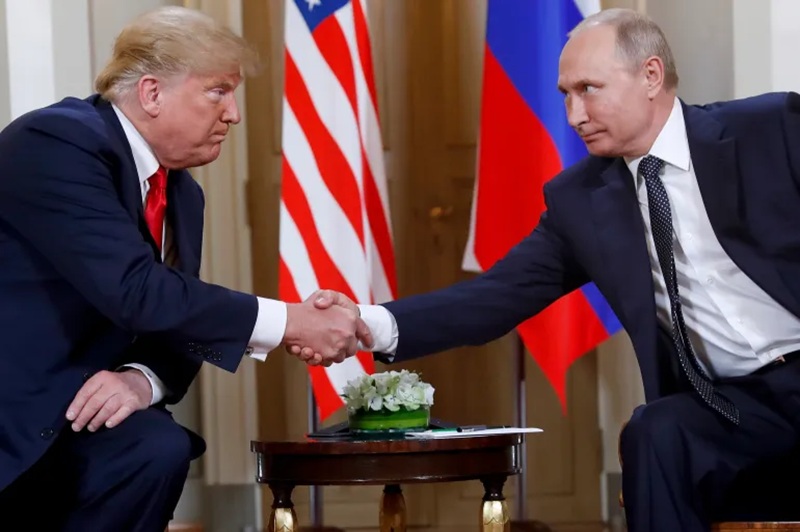
Overview of President Donald Trump’s Proposed Peace Plan for the Russia-Ukraine War

0

President Donald Trump’s proposed peace plan for the Russia-Ukraine war, unveiled in late November 2025, aims to end the nearly four-year conflict through a U.S.-mediated framework. Initially a 28-point draft leaked to media outlets like Axios and Sky News, it has undergone revisions following negotiations with Ukraine and consultations with Russia.

The plan emphasizes rapid implementation, with Trump setting aggressive deadlines—such as a Thanksgiving 2025 ultimatum for Ukraine’s response—and positioning himself as the chair of a “Peace Council” to enforce compliance.

Critics, including Ukrainian officials and European leaders, have labeled it a capitulation to Russian demands, while supporters argue it provides Ukraine with unprecedented security guarantees in exchange for concessions.

As of December 10, 2025, talks continue amid tensions, with Ukraine presenting a revised counterproposal and Trump publicly pressuring Kyiv to accept terms, claiming Russia holds the “upper hand.” The plan draws partial inspiration from a Russian “non-paper” submitted to the Trump administration in October 2025, incorporating elements like territorial recognition and demilitarization.

Negotiations involve U.S. envoys like Steve Witkoff, Jared Kushner, and Secretary of State Marco Rubio, with meetings in Geneva, Florida, Moscow, and upcoming sessions in Brussels. Despite “meaningful progress” reported in early December, core sticking points—territorial integrity, NATO aspirations, and enforcement—remain unresolved.

Key Elements of the Plan

The original 28-point framework, refined to about 19 points after U.S.-Ukraine talks, includes the following major provisions based on drafts verified by multiple outlets.

Ukraine would recognize Crimea, Donetsk, and Luhansk as “de facto Russian” under U.S. acknowledgment, ceding additional eastern territories currently held by Kyiv beyond Russia’s November 2022 annexations. A ceasefire would follow along revised lines, with troop withdrawals monitored by the Peace Council.

This reverses longstanding U.S. policy on Ukraine’s borders. Ukraine’s armed forces capped at 600,000 troops up from Russia’s initial 100,000 demand but far below current levels. Permanent renunciation of NATO membership, enshrined in Ukraine’s constitution, with a non-aggression pact involving Russia, Ukraine, and Europe.

A Russia-NATO security dialogue and U.S.-Russia working group would address broader tensions. Security guarantees modeled on NATO’s Article 5, a commitment from the U.S. and European allies to treat a “significant, deliberate, and sustained” Russian attack on Ukraine as a threat to the “transatlantic community.”

This could trigger collective responses, including military intervention, though not explicitly obligated. Ukraine seeks firmer, verifiable mechanisms. Access to frozen Russian assets ~$300 billion globally for Ukraine’s rebuilding, but tied to a U.S.-Ukraine Minerals Deal granting American firms preferential rights to lithium, titanium, and graphite reserves valued at $200–500 billion long-term.

This offsets ~$175 billion in prior U.S. aid. Sanctions relief for Russia upon compliance, allowing reintegration into global markets. Full amnesty for Russians accused of war crimes; abolition of discriminatory policies against Russian speakers in Ukraine; potential wartime elections in Ukraine by mid-2026; and de-Nazification assurances.

The Trump-chaired Peace Council imposes sanctions for violations, with immediate ceasefire upon agreement and phased retreats. Implementation is envisioned as swift, with Trump aiming for a deal by early 2026 to redirect U.S. resources domestically.

Zelenskyy hints at wartime elections; Ukraine submits revised plan refusing NATO withdrawal and Donbas troop pullout. Trump criticizes Europe as “weak and decaying” in a Bild interview, urging Zelenskyy to “get his act together.” No breakthrough; next round in Brussels.

Zelenskyy views it “positively” but insists on no territorial cessions without a full ceasefire first, calling reconstruction funding “unfair” without Europe’s full buy-in. Public polls show 69% favoring immediate peace, but constitutional barriers and sovereignty concerns fuel resistance. Kyiv demands a personal Trump-Zelenskyy summit.

Putin calls it a potential “foundation” but criticizes unmet demands like full demilitarization. Kremlin sees it as validation of gains, though some points fall short. Leaders like UK’s Keir Starmer and France’s Emmanuel Macron decry it as undermining EU accession and sovereignty, accelerating plans to seize £100 billion in Russian assets independently.

Pope Leo XIV labeled it “unrealistic and dangerous,” warning of fractured U.S.-Europe ties. Trump allies praise cost savings ~$50 billion/year in aid; critics, including Democrats, accuse it of favoring Putin.

On X, sentiment splits: pro-Trump users hail it as pragmatic, while Ukraine supporters decry it as “surrender.” If adopted, it could stabilize energy markets saving U.S. households $500–$1,000/year but risks emboldening Russia, eroding NATO credibility, and sparking internal Ukrainian unrest.

Failure might lead Trump to cut aid entirely, shifting burden to Europe. This plan represents Trump’s “America First” pivot from open-ended support, but its success hinges on concessions neither side fully accepts.