DD
MM
YYYY

PAGES

DD
MM
YYYY

spot_img

PAGES

Home Blog Page 26

Trump and Xi Agree on “Strategic Stability” Framework as U.S.-China Relations Enter Managed Competition Phase

0

President Donald Trump and Chinese President Xi Jinping concluded their summit in Beijing on Thursday with an agreement to guide bilateral ties under a new framework of “strategic stability,” offering a pragmatic pause in years of intense friction over trade, technology, security, and human rights.

The meeting, characterized by cordial gestures and attended by top U.S. business executives, including Tesla’s Elon Musk and Nvidia’s Jensen Huang, produced several concrete discussion points while underscoring that fundamental differences, especially on Taiwan, remain unresolved.

Key Outcomes from the Summit

  • New Guiding Framework: The two leaders agreed to pursue a “constructive China-U.S. relationship of strategic stability.” Xi described this as the overarching direction for the next three years and beyond, centered on cooperation paired with “measured competition” and “manageable differences.” He emphasized that the framework “must be translated into concrete actions.”
  • Positive Momentum from Pre-Summit Talks: Xi noted that trade envoys achieved “overall balanced and positive outcomes” during preparatory meetings in South Korea. He welcomed greater U.S. commercial engagement, stating, “China’s door to opening up will only open wider.”
  • Expanded Cooperation Areas: Both sides committed to better utilizing diplomatic and military communication channels. Discussions covered deeper economic and trade ties, agriculture, tourism, and market access. Trump pressed for stronger Chinese action against fentanyl flows into the U.S. and increased purchases of American agricultural products.
  • Middle East and Energy Security: The leaders stressed that the Strait of Hormuz must remain open. Xi opposed the “militarization” of the waterway and “any effort to charge a toll for its use.” China expressed interest in buying more U.S. oil to reduce dependence on Middle Eastern supplies. Both countries agreed that “Iran can never have a nuclear weapon.”
  • Taiwan Remains the Core Flashpoint: Xi reserved his strongest language for Taiwan, calling it “the most important issue in U.S.-China relations.” He warned: “Handle it well, the relationship holds; handle it badly, the two countries risk collision or conflict.”

Chinese markets reacted with cautious optimism. The Hang Seng Tech Index rose around 0.5%, and the broader Hang Seng Index gained roughly 0.3% on Thursday. While gains were modest compared to rallies in South Korea, Taiwan, and Japan, many investors viewed the summit as a tactical positive.

Goldman Sachs analysts had anticipated focused discussions on trade, tariffs, semiconductor restrictions, and rare earths. They expect China to ramp up purchases of U.S. agriculture, energy, and aircraft in exchange for avoiding escalated tariffs. The bank described the meeting as a potential “tactical catalyst” for the Chinese yuan and equities.

A notable development came shortly after the summit when Reuters reported that Washington cleared sales of Nvidia’s H200 AI chips to several major Chinese firms, including Alibaba, Tencent, ByteDance, and JD.com. This represents a meaningful breakthrough for China’s AI sector.

Jiong Shao, China internet analyst at Barclays, highlighted the stakes, saying: “The most important competitive arena today, especially between U.S. and China, is in AI, and the greatest bottleneck today in AI is compute.”

He added that access to Nvidia’s latest chips “is very, very critical for the Chinese players to compete on a global stage.”

Recent strong cloud and AI-related earnings from Alibaba and Tencent have also lifted sentiment. Analysts note that Chinese tech giants may be “a few quarters behind the U.S.” in realizing returns on their AI capital expenditure.

Despite the positive tone, investors remain selective. Dong Chen, chief investment officer at Bank J Safra Sarasin, sees the summit as a near-term catalyst but cautions that China’s equity market still faces an earnings problem.

“The problem with the Chinese equity market… is still earnings,” he said, noting a divergence between strong-performing mainland A-shares in hardware and AI versus many Hong Kong-listed internet firms.

Some traders adopted a wait-and-see approach. Jeff Mei, COO of BTSE Group, observed: “We believe that some traders are in a wait-and-see mode, taking profit and hedging their positions in the event that the U.S.-China summit fails to meet expectations.”

Economist Tianchen Xu of the Economist Intelligence Unit summarized the broader significance. He notes that while frictions will continue, the new framework provides “a guardrail, and things won’t spiral out of the two sides’ control as they nearly did in 2025.”

The Beijing summit indicates a mutual desire for stability rather than a fundamental thaw. It offers potential relief on inflation, supply chains, and fentanyl to the U.S. For China, it provides breathing room for economic recovery and technological development amid domestic challenges.

The presence of key American tech leaders and the swift Nvidia chip approval signal that both sides recognize the high costs of total decoupling in the critical AI domain. Yet the sharp language on Taiwan and the emphasis on “measured competition” make clear that rivalry remains the dominant underlying dynamic.

Markets will now watch closely for follow-through actions, increased agricultural and energy purchases, implementation of new export licenses, and whether this “strategic stability” can withstand inevitable future tests. For the time being, the world’s two largest economies have chosen managed coexistence over escalation.

The “Two Bets” Strategy for Nigerian Players: Minimizing Risk

0

Aviator is a popular crash game where players place bets before a virtual plane takes off and try to cash out before it flies away. The best part is that you can place up to two bets at the same time during one round! This means you can use two separate betting buttons with different amounts and cashout strategies.

In Nigeria, players love this feature because it helps save money. Using this trick on Pin Up Aviator helps you play for a longer time without losing everything. The goal is to use the first button for a small, quick win. You can set it to cash out early at 1.50x.

This win pays for both of your bets. Then, you use the second button to try for a much bigger prize. If the plane goes high, you win extra profit. If it crashes, you already got your money back from the first bet. This two-button system is the best way to manage your balance and play smart.

Overview of the Popular Mechanic: “Two Panels — Two Roles”

Good players do not just click one button. They use both betting boxes at the same time. This is the smartest way to play Pin Up casino Aviator so you do not run out of money too fast.

Each box has a different job:

  • Role of the first panel: This is for safety. You set it to cash out early at 1.20x or 1.50x. This small win pays for the money you spent on both bets.
  • Role of the second panel: This is for a big prize. You use this bet to try and hit huge numbers like 50x or more. You let it fly high because your first bet already kept your money safe.

Always look at the past rounds at the top of the game. If the plane has crashed early many times, a big win might happen soon. Using two panels keeps you ready for that big jump.

Analytics and Statistics: Transparency in Every Round

The game shows a list of old results at the top. You can use this to find “pink” numbers, which are huge wins over 100x. Smart players check these stats to see how often the big wins come. If you do not see a pink number for a long time, a big win might happen soon. Checking this list is a great way to win more in the Pin Up Aviator game.

There is also a live chat where you can talk to other players. You will see people cheering when they catch a high multiplier. This shows you when the game is giving out more money. Do not just guess. Look at the past rounds and read the chat to plan your bets. This helps you keep your money and play better.

Technological Advantages for the Mobile Market

The game runs smoothly on any phone, even with slow internet. These tools help you play perfectly every time:

  • Automation: Use “Auto-Bet” and “Auto-Cashout.” These buttons finish the round for you. If your internet in Lagos stops working, the game still saves your win at the exact number you picked.
  • Provably Fair: The game uses a special code that no one can fake. This makes sure every round is 100% honest. You can look at the data yourself to prove the game is fair.

Auto-features are great because they are faster than your finger. They stop you from losing money if your phone lags. It is a good idea to try the Aviator Pin Up free demo first to see how everything works. Make sure your phone is charged so you do not lose your connection during a big flight.

Conclusion: Freedom of Choice in Every Round

This game gives you the best tools to play. You are the boss of your own bets. You can take your money early to stay safe, or you can wait for the plane to go very high. Both choices are good.

When you play Pin Up Aviator, the two buttons let you do both things at the same time. Always remember to play only with money you can afford to lose. You choose the plan and you click the buttons. Play smart and have fun.

$630M Bitcoin ETF Outflow Highlights both Maturity and Fragility of the Crypto Market

0

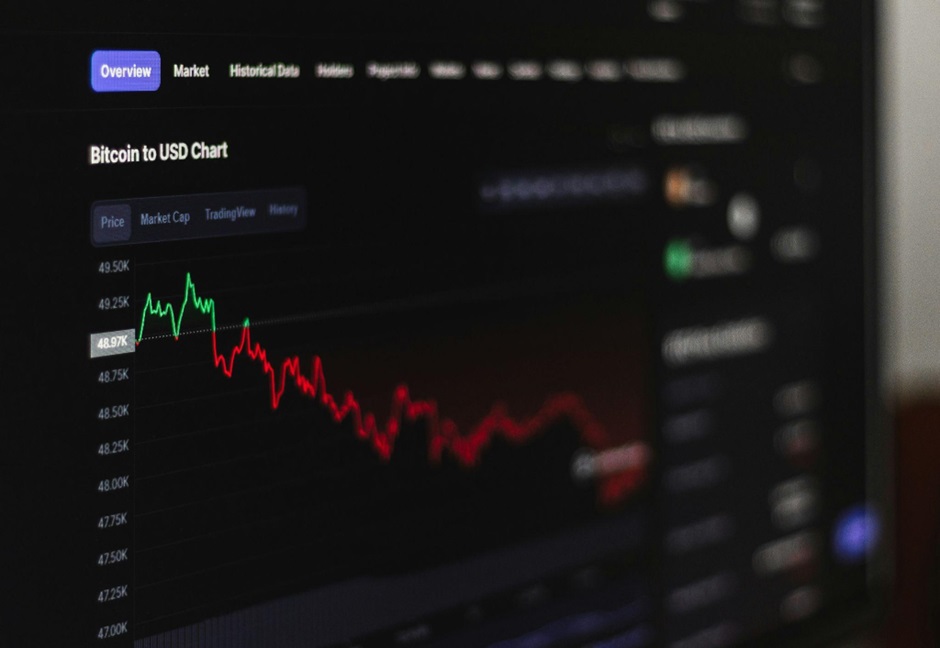
After months of sustained optimism surrounding digital asset investment products, Bitcoin ETFs recorded approximately $630 million in net outflows in a single day, marking the largest daily withdrawal since January. The event sent ripples across both crypto and traditional financial markets, reigniting debates about investor sentiment, market positioning, and the evolving relationship between institutional capital and Bitcoin.

Bitcoin ETFs have become one of the defining narratives of the modern cryptocurrency market. Since the approval and launch of spot Bitcoin ETFs in the United States, these products have served as a gateway for pension funds, hedge funds, asset managers, and retail investors seeking regulated exposure to Bitcoin without directly holding the asset. Massive inflows throughout the year helped fuel Bitcoin’s rise, reinforcing the belief that institutional adoption was entering a new phase.

However, markets rarely move in a straight line. The sudden $630 million outflow demonstrates how quickly sentiment can shift when macroeconomic uncertainty, profit-taking, and volatility collide. While the outflows are significant, they should also be viewed within the broader context of the enormous inflows Bitcoin ETFs have attracted over recent months.

In many ways, the selloff reflects a market undergoing consolidation after a prolonged rally rather than a complete rejection of the asset class. Several factors likely contributed to the large withdrawals. One major driver is macroeconomic pressure. Investors remain highly sensitive to interest rate expectations, inflation data, and geopolitical instability.

In recent years, Bitcoin has increasingly traded like a high-growth technology asset, meaning it reacts strongly to shifts in monetary policy and investor risk appetite.

Another factor is profit realization. Bitcoin experienced substantial gains leading into 2026, with many institutional participants sitting on significant unrealized profits. ETF investors, particularly large funds, may simply be locking in gains after extended upward momentum. Such behavior is common in traditional financial markets and reflects portfolio management discipline rather than panic.

The outflows also reveal how influential ETFs have become in determining Bitcoin’s short-term price action. Before spot ETFs existed, crypto markets were largely dominated by retail speculation and offshore exchanges. Today, ETF issuers and institutional allocators play a far greater role in shaping liquidity flows. A single day of heavy withdrawals can now influence market psychology globally, impacting derivatives markets, altcoins, and even crypto-related equities.

Despite the negative headlines, many analysts argue that the long-term structural case for Bitcoin remains intact. Institutional infrastructure continues to expand, governments are becoming more engaged with digital asset regulation, and tokenization trends are accelerating across global finance. Bitcoin ETFs themselves remain a landmark achievement for the industry because they integrated cryptocurrency exposure into mainstream brokerage and retirement systems.

Volatility has always been part of Bitcoin’s identity. Large inflows are often followed by periods of correction and recalibration. What matters more is whether institutional participation continues over the long run. If ETF inflows resume after this period of weakness, the current outflows may eventually be viewed as a temporary pause within a broader adoption cycle.

As the asset class evolves, such dramatic movements may become increasingly common, reflecting a market that is transitioning from speculative novelty into a fully integrated component of the global financial system.

The 5 Transformative Stages of Cryptocurrencies

0

The history of every transformative technology follows a recognizable pattern. First comes skepticism, then experimentation, followed by infrastructure development, mainstream integration, and eventually mass adoption. Cryptocurrency is no different.

What began as a niche movement centered around Bitcoin has evolved into a global financial phenomenon attracting banks, asset managers, governments, payment providers, and multinational corporations. Institutional adoption is no longer a future possibility; it is already unfolding in phases.

The first phase of institutional crypto adoption was skepticism and dismissal. In Bitcoin’s early years, most institutions viewed crypto as speculative internet money with no intrinsic value. Traditional banks dismissed it as a fad, regulators treated it cautiously, and institutional investors avoided exposure because of volatility, security concerns, and unclear legal frameworks.

During this period, crypto was largely driven by retail participants, cypherpunks, and technology enthusiasts. Major financial firms considered blockchain interesting as a technology but rejected cryptocurrencies themselves. This phase was important because it established the adversarial relationship between decentralized finance and traditional finance that still shapes the industry today.

The second phase was experimentation and research. As Bitcoin survived multiple market cycles and blockchain technology matured, institutions began quietly studying the sector. Banks launched blockchain research divisions, venture capital firms invested in crypto startups, and corporations explored distributed ledger technology for settlement and data management.

During this phase, institutions were not fully committing capital into crypto assets themselves, but they recognized the potential efficiency gains blockchain infrastructure could bring. Companies like Visa, PayPal, and JPMorgan began testing crypto-related services and stablecoin systems. Governments also entered the conversation through central bank digital currency research.

The third phase marked the arrival of institutional investment products and infrastructure. This was the turning point where crypto evolved from an experimental asset class into a legitimate financial market. Institutional custodians emerged to solve security concerns, regulated exchanges expanded compliance standards, and futures markets launched for Bitcoin and Ethereum. Asset managers introduced crypto funds, while publicly traded companies began adding Bitcoin to their balance sheets.

The launch of Bitcoin exchange-traded funds significantly accelerated this phase because it allowed traditional investors to gain exposure without directly holding digital assets. Stablecoins also became increasingly important during this stage, acting as bridges between traditional finance and decentralized networks. Institutions realized that blockchain infrastructure could reduce settlement times, lower costs, and improve capital efficiency.

The fourth phase is integration into the global financial system, which is currently unfolding. In this stage, institutions are no longer merely investing in crypto assets; they are integrating blockchain technology into core financial operations. Banks are tokenizing money market funds, payment companies are using stablecoins for cross-border transactions.

Traditional finance and crypto are beginning to merge into a hybrid system. Regulatory clarity is also improving in several jurisdictions, encouraging broader participation from pension funds, insurance companies, and sovereign wealth funds. At the same time, stablecoins are becoming one of the strongest adoption vectors because they solve practical problems in payments and settlement.

The fifth and final phase is mass institutionalization and invisible adoption. In this stage, blockchain technology becomes so integrated into financial systems that users no longer think about it as “crypto.” Consumers will interact with tokenized assets, stablecoin payments, decentralized identity systems, and blockchain-based settlements without necessarily knowing the underlying technology.

Financial institutions will use blockchain rails in the same way the internet is used today: as invisible infrastructure powering global commerce. Tokenized securities, real estate, commodities, and carbon markets could become standard components of the financial ecosystem. Governments may issue digital currencies that interact seamlessly with private stablecoins and decentralized protocols.

Crypto will no longer be viewed as an alternative financial system but as part of the global economic backbone. Institutional crypto adoption is therefore not a single event but a multi-stage evolution. The industry has already moved beyond skepticism and experimentation into integration.

The Blockchain Tokenization Stack

0

The tokenization stack is rapidly becoming one of the most important layers of modern financial infrastructure. Much like the internet stack transformed communication by organizing protocols into layers, tokenization is creating a structured framework for digitizing ownership, transferring value, and automating financial interactions on blockchain networks.

What began as an experimental concept tied to cryptocurrencies has evolved into a broader technological movement capable of reshaping global finance, capital markets, real estate, commodities, intellectual property, and even government securities. Tokenization refers to the process of converting real-world assets, rights, or financial instruments into digital tokens recorded on a blockchain.

These tokens can represent ownership, access, claims on cash flows, or programmable utility. However, tokenization is not a single technology. It is an interconnected stack composed of multiple layers working together to create secure, compliant, and scalable digital markets.

The foundational layer of the tokenization stack is the blockchain settlement layer. This is the base infrastructure where tokens are issued, stored, and transferred. Networks such as Ethereum, Solana, and Avalanche provide the rails upon which tokenized assets operate. These blockchains offer decentralized ledgers capable of recording transactions transparently and immutably.

Their primary role is settlement — ensuring ownership transfers occur instantly, globally, and without traditional intermediaries. In many ways, this layer functions as the digital equivalent of financial plumbing. Above the settlement layer sits the asset issuance layer. This is where institutions create tokens that represent real-world value.

Stablecoins are among the most successful examples of tokenized assets today. They represent fiat currencies like the US dollar and have already demonstrated the efficiency gains of programmable money. Beyond stablecoins, firms are tokenizing treasury bills, bonds, equities, funds, and commodities. Large financial institutions increasingly see tokenization as a way to modernize markets that still rely on outdated settlement systems.

The next layer is custody and identity. In traditional finance, custody institutions safeguard assets and verify ownership. In tokenized finance, digital wallets and cryptographic keys serve a similar function, though often with greater flexibility and lower costs. At the same time, identity and compliance frameworks are becoming essential components of the tokenization stack.

Know-your-customer procedures, anti-money laundering controls, and permissioned access systems allow institutions to meet regulatory requirements while still benefiting from blockchain efficiency. Without this compliance layer, institutional adoption would remain limited.

Smart contracts form another critical component of the stack. These programmable contracts automate the rules governing assets and transactions. Dividends can be distributed automatically, bond coupons can be paid instantly, and collateral requirements can adjust in real time without manual intervention.

This programmability is one of the most revolutionary aspects of tokenization because it reduces operational friction and removes many administrative inefficiencies embedded in traditional finance. Interoperability infrastructure also plays a major role. As multiple blockchains emerge, systems must communicate seamlessly across networks. Cross-chain bridges and  interoperability protocols.

This creates liquidity and prevents tokenized markets from becoming isolated silos. In the future, interoperability may become as important to blockchain finance as internet protocols were to the growth of the web.

On top of the infrastructure layers sits the application layer — the part users interact with directly. Exchanges, wallets, decentralized finance applications, payment systems, and tokenized investment platforms all belong here. This is where tokenization becomes visible to consumers and institutions alike. Users may not fully understand the underlying blockchain architecture, just as internet users rarely think about TCP/IP protocols.

Perhaps the most significant aspect of the tokenization stack is that it collapses multiple financial functions into unified infrastructure. In traditional systems, clearing, settlement, custody, compliance, and payments are often handled by separate institutions operating on disconnected databases. Tokenization merges these processes into programmable networks where value moves instantly and transparently.

Tokenization could unlock trillions of dollars in illiquid assets, reduce settlement times from days to seconds, improve market accessibility, and create entirely new forms of economic coordination. Governments are exploring tokenized bonds, banks are launching tokenized deposits, and asset managers are experimenting with on-chain funds.

The financial system is slowly shifting from paper-based processes and siloed ledgers toward digitally native markets. The tokenization stack is therefore more than a crypto trend. It is the architecture of a new financial era. Just as cloud computing became the invisible infrastructure powering the digital economy, tokenization may become the invisible infrastructure powering the future of global finance.