DD
MM
YYYY

PAGES

DD
MM
YYYY

spot_img

PAGES

Home Blog Page 27

Ripple XRP Kicks Off a Share Buyback Program Which Values the Company at ~$50B

0

Ripple, the company behind XRP, has kicked off a share buyback program that values the company at approximately $50 billion. Ripple has launched a tender offer to repurchase up to $750 million worth of its private shares from early investors and employees.

The buyback is expected to run through April 2026. This implies a $50 billion valuation for Ripple Labs, which is a 25% increase from its previous $40 billion valuation set during a $500 million funding round in November 2025 with investors including affiliates of Citadel Securities, Fortress Investment Group, and others.

The move provides liquidity to shareholders and employees without an immediate IPO; Ripple has repeatedly stated no near-term plans for going public. It follows earlier buyback attempts, including one in 2024 at an $11 billion valuation and a less successful larger offer in late 2025.

Ripple’s growth has been fueled by acquisitions; prime brokerage Hidden Road for $1.25 billion and others, expanding beyond cross-border payments into broader institutional crypto services, stablecoins like RLUSD, and more. This is a strong signal of confidence in the company’s fundamentals and cash position, even amid broader crypto market uncertainty and volatility.

Impact on XRP

The news has had minimal direct effect on XRP’s price so far—reports note it trading around $1.38–$1.40 with only slight movements. Some community sentiment views this as bullish for Ripple’s equity holders but neutral or disconnected from the token itself, given the legal separation between the company and XRP.

Others see it as reinforcing long-term strength in the Ripple ecosystem. This positions Ripple as one of the most valuable private companies in the digital asset space right now. Ripple’s $750 million share buyback program, has several notable impacts across the company, its stakeholders, the broader crypto/fintech sector, and indirectly on XRP.

The tender offer allows early investors, employees, and shareholders to sell shares at the elevated price ~$143 per share, up from prior levels. This is especially valuable in a private company with no public market exit soon—Ripple has repeatedly said no near-term IPO plans.

Executing a buyback at a 25% premium to the November 2025 $40 billion valuation from a $500 million raise demonstrates robust cash reserves and belief in future growth. This follows major 2025 acquisitions expanding into institutional services, stablecoins (RLUSD), brokerage, and beyond cross-border payments.

Tightens ownership and reduces potential future dilution: Repurchasing shares concentrates equity among committed holders, potentially boosting per-share value long-term. Early backers including firms like Citadel Securities affiliates, Fortress, Brevan Howard and employees gain an attractive exit or partial cash-out at a high valuation, rewarding patience through years of private status and regulatory battles.

Bullish for private equity holders: The $50 billion mark positions Ripple as one of the most valuable digital asset firms, far outpacing many public crypto entities despite market volatility.

In a bearish crypto environment with broader market uncertainty and volatility, Ripple’s move highlights its shift toward a diversified fintech infrastructure provider rather than a pure crypto play. This could attract more traditional finance partnerships and validate blockchain use in payments and settlement.

It sets a high bar for private crypto valuations, even amid sector headwinds, and underscores Ripple’s growth trajectory post-SEC resolution. XRP has shown little movement—trading around $1.38–$1.40 with slight fluctuations. The buyback is an equity event for the company, not a token burn, supply change, or direct utility boost.

Strengthens the Ripple ecosystem narrative, potentially increasing adoption confidence via RippleNet, RLUSD, institutional tools. Reduces perceived “sell pressure” risks from early holders needing liquidity. Some analysts see it as supportive for long-term XRP upside, with speculative targets like $2.80–$5+ if adoption accelerates.

This fuels debates about whether company successfully translates to token value, given legal separations and market dynamics. This is a strong vote of confidence in Ripple’s fundamentals and strategy during tough times, prioritizing stakeholder value and growth over immediate public markets. It doesn’t spark a dramatic XRP rally yet, but it bolsters the long-term story for the ecosystem.

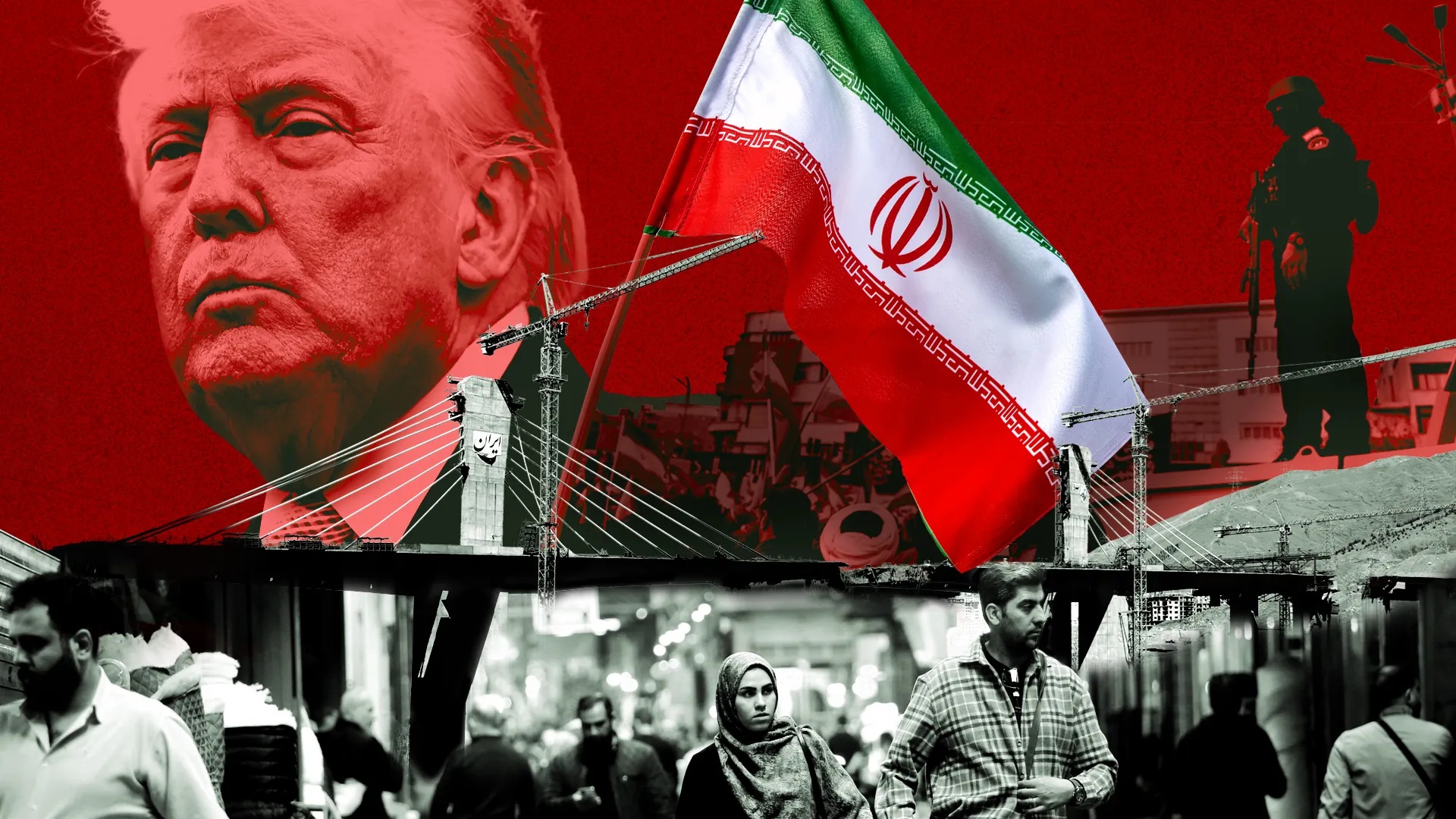
If the War in Iran Intensifies, It Might Create Uneven Balance on US Economy

0

Based on recent developments as of March 2026, the U.S. remains deeply engaged in the region through military, diplomatic, and economic levers, particularly under the second Trump administration.

However, there are signs of shifting dynamics, including strained alliances and a pivot toward more unilateral actions, which some analysts interpret as a relative waning compared to past decades. Far from retreating, the U.S. has ramped up its presence significantly.

In late January 2026, the U.S. initiated its largest military buildup in the Middle East since the 2003 Iraq invasion, deploying carrier strike groups (e.g., USS Abraham Lincoln and USS Gerald R. Ford), advanced aircraft like F-22 Raptors and F-35s, and missile defenses across bases in Israel, Jordan, and Qatar.

This buildup culminated in joint U.S.-Israeli strikes on Iran on February 28, 2026, which killed Supreme Leader Ali Khamenei and aimed at regime change, sparking the ongoing 2026 Iran war. The stated objectives include dismantling Iran’s nuclear program, halting the crackdown on 2025–2026 protests and preventing alleged weapons of mass destruction threats.

This level of involvement underscores active U.S. influence: the strikes have weakened Iran and its proxies allowing for potential realignments in Iraq, Syria, and Lebanon toward Western-leaning governments. Analysts note that Trump’s policies have inflicted “significant damage” on adversaries like Iran and ISIS, with more regional impact than in other global theaters like Ukraine or China.

The administration has also lifted sanctions on Syria’s transitional government and normalized relations, further shaping post-conflict outcomes. The Trump 2.0 approach emphasizes a “pivot to the Gulf,” prioritizing partnerships with Saudi Arabia, the UAE, and others under the Abraham Accords framework to counter Iran and expand U.S. commercial interests.

This includes new security guarantees and efforts to normalize Israel-Saudi ties, potentially creating a “new Middle East order” with U.S. leadership. North Africa is emerging as a U.S. priority, with engagement reducing tensions and opening political space.

However, not all trends point to sustained dominance. The U.S. withdrawal from numerous UN-linked organizations in January 2026 has created a “strategic vacuum” in multilateral forums, weakening indirect influence on issues like climate, health, and peacekeeping. Gulf states have shown reluctance, denying U.S. access to bases and airspace during the buildup due to fears of Iranian retaliation, which highlights dependency on allies and potential isolation.

Some experts argue this war is “unravelling U.S. strategy,” as it risks broader instability, oil price spikes, and proxy attacks on U.S. interests. Trump’s “unpredictable” stance on Iran—balancing escalation with possible de-escalation—adds uncertainty.

Sentiment on platforms like X often portrays U.S. influence as fading or “dead,” with claims that the Strait of Hormuz now favors Chinese and Russian ships, the U.S. is “abandoning” Arab allies for Israel, and a “shameful defeat” looms. Older analyses echo this, citing OPEC+ oil cuts as rebukes to U.S. requests and broader geopolitical tensions.

Think tanks like Defense Priorities suggest the administration aims to “deprioritize” the Middle East in 2026 to focus on China and the Western Hemisphere, potentially signaling a long-term drawdown. Yet, these views contrast with the reality of U.S.-led actions yielding “tremendous strides” against Iran, as acknowledged in the 2025 National Security Strategy.

Results have been “uneven,” with no “durable gains” for peace yet, but the U.S. has invested more in the region than any president since 2009 in their first year.

There is no “official” declaration or policy framing U.S. influence as in terminal decline—quite the opposite, with the Iran war and military buildup demonstrating robust projection of power. That said, the shift from multilateralism to more aggressive, Israel-centric unilateralism, combined with ally hesitance and global backlash, could erode soft power over time.

If the war leads to a stable, pro-Western Iran or expanded accords, U.S. influence might even strengthen; if it drags on with high costs, perceptions of overextension could accelerate a perceived sunset. As of now, the U.S. is far from disengaged—it’s at the center of reshaping the region.

US Congressmen Introduces Bill to Explicitly Ban Prediction Markets Contracts on DEATH and War Events

0

A bill has been introduced in the U.S. Congress to explicitly ban prediction market contracts related to death and war. Rep. Mike Levin (D-CA) and Sen. Adam Schiff (D-CA) introduced the DEATH BETS Act (: Discouraging Exploitative Assassination, Tragedy, and Harm Betting in Event Trading Systems Act).

This bicameral legislation amends the Commodity Exchange Act to prohibit any entity registered with the Commodity Futures Trading Commission (CFTC) from listing or offering contracts that involve, relate to, or reference: Terrorism Assassination and War.

An individual’s death including those that may closely correlate with death. The bill aims to codify and strengthen existing restrictions. While current law from the 2010 Dodd-Frank Act already gives the CFTC discretion to prohibit contracts on topics like terrorism, assassination, or war if deemed contrary to the public interest, the DEATH BETS Act removes that discretion for these categories and explicitly bans them outright.

It also extends the prohibition to contracts tied to death more broadly. Lawmakers cited ethical concerns; profiting from tragedies, national security risks potential incentives for harm or leaks of sensitive information, and the need to close loopholes amid the growing popularity of platforms like Kalshi and Polymarket, which allow event-based trading.

This move comes as the CFTC has been shifting toward more permissive regulation of event contracts in other areas, creating tension with some Democrats pushing for stricter limits. Related developments include: Other bills and letters from Democrats; e.g., Sen. Richard Blumenthal’s Prediction Markets Security and Integrity Act, focused on fraud, insider trading, and restricting manipulative listings like those on war/death.

A bipartisan House bill Event Contract Enforcement Act by Reps. Blake Moore and Salud Carbajal that would require the CFTC to prohibit contracts on similar “TAWGA” topics (terrorism, assassination, war, gaming, illegal activity). The DEATH BETS Act is very recent introduced so it remains in the early stages with no immediate passage prospects, especially in a potentially divided Congress.

Prediction markets have faced scrutiny over geopolitical events, including bets tied to military actions or assassinations. Kalshi (CFTC-registered US platform) faces direct and significant restrictions if the bill passes.

The DEATH BETS Act explicitly bans CFTC-registered entities like Kalshi from offering any contracts involving, relating to, or closely correlating with terrorism, assassination, war, or an individual’s death.

This directly closes the loopholes Kalshi has used, such as its high-profile “Ali Khamenei out as Supreme Leader” market which traded ~$54–55 million before being paused. Kalshi already prohibits “direct” death bets and relies on “death carveouts”; resolving at the last traded price before death or refunding losses/fees, costing the company ~$2.2 million in the Khamenei case.

The bill removes CFTC discretion and codifies an outright prohibition, forcing Kalshi to delist or redesign any conflict-related or leader-ouster markets that could correlate with death or war. Kalshi is already introducing standardized carveout rules and faces a separate class-action lawsuit over the Khamenei resolution.

Geopolitical volume (hundreds of millions on Iran strikes across platforms) has been a growth driver. Loss of a key revenue stream tied to explosive geopolitical interest. Analysts note this threatens the ~$20 billion valuation targets both platforms are pursuing, as Kalshi’s open interest exceeds $400 million and weekly volumes hover around $1.9 billion industry-wide, with much of the surge from war/death-adjacent betting.

Kalshi would likely pivot harder to non-controversial categories (elections, economics, weather) to maintain compliance and its “regulated” image, but could see reduced trader engagement in high-stakes global events.

Polymarket sees minimal direct legal impact. The bill does not apply to Polymarket, which operates on blockchain often via international venues and is not a CFTC-registered exchange. It continues listing sensitive contracts, including ouster/assassination-style markets and even live US-Iran ceasefire odds post-bill introduction.

It handled over $529 million in Iran-related volume including a trader reportedly earning $553,000 on Khamenei’s death and previously hosted (then removed after backlash) a nuclear detonation market. Heightened scrutiny, reputational pressure, and possible voluntary self-censorship (as with the nuclear market).

Articles frame the bill as “coming for Polymarket’s ‘death markets’” or creating broader regulatory challenges, which could deter US users, complicate partnerships, or invite future legislation targeting crypto platforms. Insider-trading concerns amplify calls for oversight.

If Kalshi is forced to restrict such markets, traders may migrate to Polymarket (its open interest >$360 million, with billions in election-driven volume historically). No immediate operational changes. The bill is in very early stages with low near-term passage odds in a divided Congress, especially amid CFTC’s push for looser event-contract rules.

It stems directly from the Iran/Khamenei controversy and aims to curb perceived national-security risks (insider trading on classified info) and ethical issues. Valuations for both ~$20B targets are explicitly tied to geopolitical betting growth, so sustained regulatory pressure could cool investor enthusiasm even without passage.

Kalshi must fundamentally adapt its offerings. Polymarket can largely continue but operates under a growing ethical/regulatory cloud. The sector’s rapid growth now faces a clear tension between innovation and restrictions on “death and war” contracts.

Mastercard Launches Crypto Partner Program to Foster Collaborations

0

Mastercard has officially announced the launch of its Mastercard Crypto Partner Program. This is a new global initiative designed to foster collaboration between the traditional payments world and the digital assets ecosystem.

The program unites more than 85 crypto-native companies, payments providers, financial institutions, and other industry players. The goal is to create a forum for meaningful dialogue, shared expertise, and joint innovation as digital assets like stablecoins and tokenized currencies mature and integrate into real-world payments.

Mastercard emphasizes building solutions that ensure “what’s next works with what already does,” focusing on scaling practical use cases such as: Cross-border transfers, Business-to-business (B2B) payments, Global payouts, On-chain payments connected to existing networks. This builds on Mastercard’s existing efforts in blockchain and digital assets, including programs like Start Path (with a blockchain/digital assets track) and its Engage platform’s Crypto Card program.

Key participants include major names across exchanges, stablecoin issuers, blockchain networks, custodians, and infrastructure providers. Some highlighted partners are: Binance, Circle (issuer of USDC), Ripple, Gemini, Paxos, PayPal, Crypto.com, Solana, Polygon, Ava Labs (Avalanche), Fireblocks, BitGo, MoonPay, Bybit, Aptos, Optimism And others like Anchorage Digital, Cosmos, Mercuryo, and more

The announcement positions Mastercard as a bridge between blockchain innovation and its vast global acceptance network, helping ensure security, compliance, and reliability for emerging digital asset payments. This move reflects growing mainstream adoption of crypto infrastructure, with stablecoins and blockchain rails increasingly eyed for efficient, real-world financial flows.

By uniting more than 85 crypto-native companies with payments providers and financial institutions, Mastercard is positioning itself as a central bridge between blockchain innovation and its vast existing network of merchants, banks, and cardholders.

The program shifts focus from speculative crypto trading to practical, enterprise-grade use cases: Faster, cheaper cross-border transfers and remittances (leveraging stablecoins’ near-instant settlement). B2B payments and global payouts, addressing pain points like multi-day delays and high fees in traditional systems.

On-chain settlements connected to card rails, enabling programmability while maintaining Mastercard’s security, compliance, and global reach. This reflects a broader trend where stablecoins and blockchain rails are evolving into core financial infrastructure rather than parallel systems. Annual stablecoin transfer volumes have already surpassed traditional card networks in some metrics, and Mastercard aims to capture and route more of this flow through its ecosystem to avoid disintermediation.

By deeply integrating crypto partners, Mastercard ensures emerging payment flows continue routing through its network instead of bypassing it entirely (a risk as on-chain alternatives grow). It builds on prior efforts like the Crypto Card Program, Start Path blockchain track, and Engage platform, but scales collaboration via a formal forum for co-designing products.

Potential revenue upside from new transaction volumes in high-growth areas like B2B stablecoin payments which saw explosive growth in recent years. Even modest market share gains in stablecoin card or settlement volumes could be meaningful long-term. This is one of the clearest indicators yet of TradFi’s full embrace of crypto rails. A payments giant like Mastercard organizing 85+ partners signals maturity and confidence in regulatory progress.

It creates a collaborative ecosystem that could standardize compliant on-chain integrations, on/off-ramps, and settlement options—potentially boosting liquidity and usability for users. Mastercard is competing aggressively with rivals like Visa which has similar stablecoin/card pilots to lead in hybrid fiat-crypto payments.

Exchanges, wallets, and issuers gain easier scaling, better fiat bridges, and access to Mastercard’s merchant acceptance—helping convert “crypto-native” tools into everyday finance. Regulatory and execution hurdles: Global compliance (KYC/AML, sanctions), geopolitical differences, and varying stablecoin rules remain barriers.

Partnerships are strong on paper, but real transaction flow will depend on product launches, merchant uptake, and proving cost/speed advantages. Visa and others are moving similarly; success hinges on converting partnerships into dominant share in emerging segments.

This isn’t hype—it’s pragmatic infrastructure building. Mastercard is betting that the future of payments is hybrid: blockchain’s speed and efficiency combined with traditional networks’ trust and scale. If executed well, it could normalize stablecoins and on-chain payments for billions, driving efficiency in global money movement while reinforcing Mastercard’s role in the evolving landscape.

China halts fuel exports amid fears Middle East conflict could trigger domestic shortages

0

China has imposed an immediate halt on refined fuel exports as authorities move to safeguard domestic energy supplies amid escalating geopolitical tensions tied to the U.S.-Israeli confrontation with Iran, Reuters reports, citing people familiar with the matter.

The export suspension, ordered by the country’s top economic planner, the National Development and Reform Commission, applies to shipments of gasoline, diesel, and aviation fuel that had not cleared customs as of March 11, the four sources with knowledge of the decision said.

The move represents Beijing’s most aggressive step yet to insulate its domestic fuel market from potential disruptions to global oil supply linked to instability in the Middle East.

Pre-Empting Potential Supply Shocks

The decision comes as energy markets increasingly brace for supply disruptions linked to rising tensions involving Iran, a key oil producer whose strategic position near the Strait of Hormuz gives it significant influence over global energy flows.

Roughly one-fifth of the world’s seaborne crude oil passes through the narrow waterway. Any conflict that threatens shipping through the corridor could rapidly tighten global supplies and push fuel prices sharply higher. By restricting exports, Beijing appears to be building a buffer to protect domestic fuel availability in case global supply chains are disrupted.

The export ban goes further than an earlier directive issued last week in which authorities urged refiners not to commit to new overseas fuel sales and to attempt to cancel previously agreed shipments.

Jet Fuel Partially Exempt

Two of the sources said jet fuel destined for aviation bunkering services would not fall under the new restrictions, suggesting Beijing may still allow limited supply flows tied directly to international aviation operations.

However, cargoes of gasoline, diesel, and seaborne aviation fuel intended for export markets are effectively halted if they have not yet cleared customs.

China is the world’s largest crude oil importer and one of the most important suppliers of refined fuel products to the Asian market. In recent years, Chinese refiners have routinely exported surplus gasoline, diesel, and jet fuel when domestic demand softened, particularly during seasonal slowdowns.

Traders had expected refiners to increase shipments in February and March this year, taking advantage of stronger refining margins during the Lunar New Year holiday period, when industrial activity and domestic fuel consumption typically decline.

Market forecasts had placed March exports of gasoline, diesel, and jet fuel—excluding aviation bunkering—at around 2.2 million to 2.3 million tons, roughly 300,000 to 400,000 tons higher than February estimates.

Data from ship tracking services and trading sources show that shipments have instead collapsed.

So far in March, China has exported only about 50,000 tons of gasoline (around 422,500 barrels), 300,000 tons of diesel (about 2.24 million barrels), and 300,000 tons of seaborne jet fuel (roughly 2.36 million barrels).

The sharp drop highlights how quickly authorities have tightened control over outbound fuel supplies.

Implications for global markets

The move could have significant consequences for regional energy markets. China has often acted as a balancing supplier in Asia, exporting refined products when demand weakens domestically and absorbing more crude when domestic consumption rises.

A sudden halt to exports removes a major source of supply for Asian fuel importers, potentially tightening product markets across the region if tensions in the Middle East persist. Countries in Southeast Asia and parts of the Pacific frequently rely on Chinese fuel cargoes to supplement domestic refining capacity.

If the conflict involving Iran escalates further, the simultaneous loss of Chinese exports and potential disruptions to Gulf oil flows could amplify price volatility across global energy markets.

Energy analysts say the export ban illustrates Beijing’s growing willingness to intervene in markets to protect domestic economic stability. With China heavily dependent on imported crude oil, any prolonged disruption to global supply chains could expose the country to fuel shortages or rising prices.

By prioritizing domestic supply over export revenue, Chinese authorities appear to be preparing for the possibility that the geopolitical crisis could evolve into a wider energy shock.