

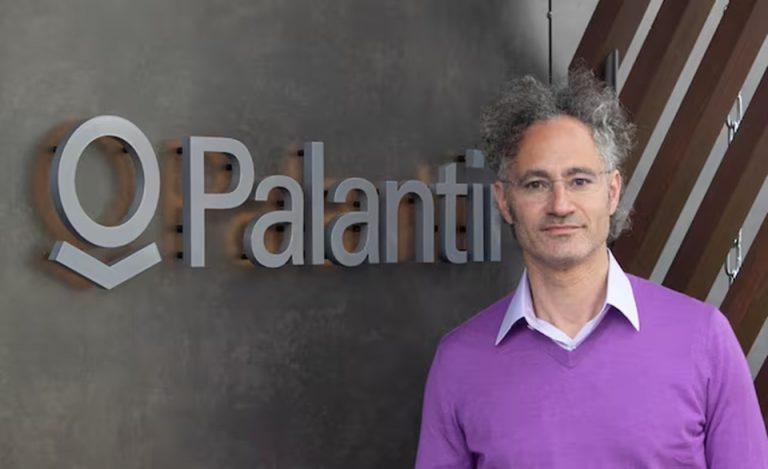
A growing cohort of employees at Palantir Technologies is questioning the company’s role in U.S. government operations, exposing a widening internal divide over how its software is being deployed in immigration enforcement and military campaigns.
The disquiet has sharpened during the second term of U.S. President Donald Trump, as Palantir expands contracts tied to border control and national security. What was once an abstract debate about civil liberties has, for many inside the company, become immediate and personal.
According to Wired, some former employees describe a clear break from the firm’s early ethos. Established in the aftermath of the September 11 attacks, Palantir positioned itself as a bridge between security and civil liberties — building tools to detect threats while avoiding the excesses of mass surveillance. That balance, employees say, is now under strain.
Register for the next Tekedia Mini-MBA.
Register for Tekedia AI in Business Masterclass.
Join Tekedia Capital Syndicate and co-invest in great global startups.
“The broad story of Palantir … was that coming out of 9/11 we knew that there was going to be this big push for safety, and we were worried that that safety might infringe on civil liberties,” one former employee said. “And now the threat’s coming from within… We were supposed to be the ones who were preventing a lot of these abuses. Now we’re not preventing them. We seem to be enabling them.”
The company’s work with U.S. immigration authorities has amplified the debate. Palantir’s platforms are used to integrate disparate datasets, travel records, financial information, and biometric identifiers into a unified system that can map networks and track individuals. For immigration enforcement, that capability translates into identifying targets for detention or deportation with greater speed and precision.
Employees say the concern is not only what the software does, but how little control the company ultimately has over its use. In internal discussions, staff pressed colleagues on whether safeguards exist to prevent misuse. One response was blunt: “A sufficiently malicious customer is, like, basically impossible to prevent at the moment,” with oversight relying largely on audit trails and legal recourse after the fact.

That limitation has become more consequential as Palantir’s government footprint expands. The company’s technology is now embedded across agencies responsible for border enforcement, intelligence analysis, and military operations, placing it closer to the execution of state power than at any point in its history.
The issue came into sharper focus following reports linking Palantir systems to U.S. military operations during the ongoing conflict with Iran. Internal messages show employees asking whether the company’s tools were involved in strikes that resulted in civilian casualties.
“Were we involved, and are doing anything to stop a repeat if we were,” one worker asked in a company-wide channel.

Investigations into those incidents remain ongoing.
Palantir has maintained a consistent public line, saying it is “proud” to support the U.S. military and government agencies. A spokesperson added that the company’s culture encourages “fierce internal dialogue,” a claim employees do not entirely dispute. What has changed, they say, is the perceived impact of that dialogue.
“It’s never been really that people are afraid of speaking up… it’s more a question of what it would do, if anything,” one current employee said, suggesting that internal criticism is increasingly seen as unlikely to influence decision-making.
The handling of internal communications has also drawn scrutiny. In at least one widely used Slack channel, messages began disappearing after seven days — a policy employees were told was introduced in response to leaks. For some, the move reinforced concerns about transparency at a time when scrutiny of the company’s work is intensifying.
Leadership’s messaging has compounded the unease. Chief executive Alex Karp has argued that Silicon Valley should more directly support U.S. national interests, a theme reiterated in a recent company manifesto summarizing his book The Technological Republic. The document called for closer alignment between technology firms and the state, and even suggested reconsidering military conscription.
Internally, employees warned that such positioning could have commercial consequences.
“Every time stuff like that gets posted it gets harder for us to sell the software outside of the US,” one wrote, reflecting concern that political alignment with Washington could limit the company’s appeal in international markets.
That concern speaks to a broader tension. Palantir’s growth has been driven by large, long-term government contracts, particularly in defense and intelligence. These deals provide stable revenue and deep integration into critical systems, but they also tether the company’s identity to the policies of its government clients.
For a firm that also seeks to expand globally, that alignment can be a liability. Governments and corporations in Europe, Asia, and elsewhere operate under different legal frameworks and political sensitivities, particularly around surveillance and data use. Perceptions of close ties to U.S. security operations may complicate efforts to win business in those markets.
The internal debate is also being shaped by generational shifts within the workforce. Many employees joined the company during a period when its mission was framed in terms of counterterrorism and external threats. The current focus on domestic enforcement and politically charged conflicts presents a different set of ethical considerations.
That shift has turned what was once reputational discomfort into a more fundamental question about responsibility. Employees are no longer only concerned with how the company is perceived, but with the real-world consequences of its technology.
Karp has shown little inclination to soften that stance. He has argued that meaningful positions inevitably carry internal costs, including employee departures. In that context, dissent may be viewed less as a problem to resolve and more as an expected byproduct of a clear strategic direction.