

U.S. semiconductor stocks climbed to fresh records on Friday, with a strong outlook from Intel reinforcing a market narrative that the artificial intelligence build-out is not only intact but widening across the chip ecosystem.
The Philadelphia SE Semiconductor Index advanced 3.2% to an all-time high, extending a run of gains that has become one of the most persistent streaks in recent market history. The index is now up more than 47% this year, reflecting sustained investor conviction that semiconductors sit at the center of the AI investment cycle.
That conviction is increasingly anchored in earnings visibility rather than speculation. The semiconductor sub-sector is expected to post first-quarter earnings growth of 109.2%, according to LSEG data—more than double the pace anticipated for the broader technology segment within the S&P 500. The divergence underscores how chipmakers have become the primary transmission mechanism through which AI spending translates into revenue.
Register for the next Tekedia Mini-MBA.
Register for Tekedia AI in Business Masterclass.
Join Tekedia Capital Syndicate and co-invest in great global startups.
“The AI build-out race is still on. We are seeing solid results, especially for semiconductors and no sign that demand for AI is slowing down,” said Angelo Kourkafas, senior global investment strategist at Edward Jones.
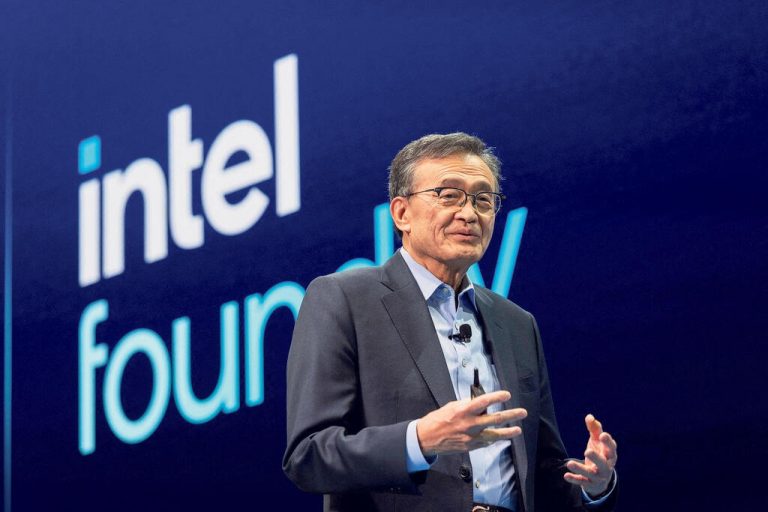
Intel’s results crystallized that trend. Its shares surged 22.6%, pushing past levels last seen during the dotcom boom, after the company issued a revenue forecast that pointed to strong demand for central processing units. The shift is notable. While early phases of the AI cycle were dominated by graphics processing units used to train models, the current phase is being driven by inference workloads—where CPUs play a critical role in handling real-time queries.
The rally extended across the sector. AMD gained 13.7%, Arm rose 12%, and Nvidia added 1.6%, maintaining its position at the apex of the market. The breadth of gains suggests that AI demand is no longer concentrated in a single segment but is cascading through memory, compute, and connectivity layers.

This broadening demand profile signals that the industry is moving from a build-out phase focused on model training to a deployment phase where AI applications are being integrated into enterprise systems, consumer platforms, and cloud services at scale. That transition tends to be more durable, as it is tied to recurring usage rather than one-off infrastructure spending.
Recent valuation adjustments have also helped sustain momentum. After peaking last year, multiples across the technology sector compressed as investors questioned whether heavy capital expenditure would yield commensurate returns. The forward price-to-earnings ratio for the S&P 500 information technology index has since fallen to around 22 times, down from 31.8, narrowing the premium to the broader market.
“Over the last 12 months, tech valuations have cheapened and have come in broadly in line with the overall market,” Kourkafas said, pointing to a reset that has made the sector more palatable to investors seeking earnings-backed growth.

That recalibration has coincided with continued spending by hyperscale technology firms, which are collectively committing hundreds of billions of dollars to expand data center capacity, secure advanced chips, and build out AI infrastructure. This creates a pipeline of demand that extends beyond near-term cycles for semiconductor companies.
Markets also appeared increasingly comfortable with competitive risks. A preview of a new model from DeepSeek, which unsettled investors last year with its low-cost approach, failed to materially shift sentiment.
“Over time, people have come to realize that actually they’re not the threat that they seemed to be. The market’s saying, ‘Hang on, we’re not going to be bitten twice with this,’” said David Morrison, senior market analyst at Trade Nation.
Even so, valuation differentials remain pronounced. The Philadelphia chip index is trading at roughly 26.6 times forward earnings, compared with about 20.7 for the S&P 500. That premium underlines expectations that semiconductor firms will continue to capture a disproportionate share of AI-driven value creation, but it also leaves the sector sensitive to any signs of demand moderation.
Additional support came from Texas Instruments, which forecast second-quarter revenue and profit above expectations, reinforcing the view that demand is not confined to high-end AI chips but extends into analog and industrial segments linked to automation and electrification.
What is emerging is a more mature phase of the AI cycle, one defined less by hype and more by execution. The focus has shifted toward throughput, utilization rates, and monetization, with semiconductor firms providing the clearest read-through on how quickly AI is being embedded into the real economy.
For now, the signals remain constructive because demand is broadening, earnings are accelerating, and capital flows continue to favor the sector.