DD
MM
YYYY

PAGES

DD
MM
YYYY

spot_img

PAGES

Home Blog Page 28

GLP Eyes $20bn Hong Kong IPO in Bid to Re-Enter Public Markets as Listing Pipeline Rebounds

0

Singapore-based logistics investment giant GLP is considering a Hong Kong initial public offering that could value the company at about $20 billion, according to people familiar with the matter quoted by Reuters.

The move potentially marks one of the most prominent listings in the city’s resurgent equity market this year.

The company has been discussing the potential offering with advisers, including Citigroup and Morgan Stanley, said one of the sources and another person with knowledge of the discussions. Details of the deal, including the size of the share sale and the timing, have not been finalized. The people requested anonymity because the deliberations are private.

If completed, the listing would represent a major addition to the Hong Kong market, where most companies currently preparing to go public are mainland Chinese firms.

Under the rules of Hong Kong Exchanges and Clearing, large-cap companies typically float at least 15% of their shares in an initial public offering, suggesting a deal of this scale could raise several billion dollars. Such a listing would also highlight the improving momentum in Hong Kong’s capital markets after a prolonged slowdown in global IPO activity.

The city ranked first globally for IPO fundraising last year and entered 2026 with a strong pipeline of deals. In January alone, companies raised about $5.5 billion through IPOs and secondary listings, according to data compiled by HKEX and London Stock Exchange Group.

A successful GLP listing could reinforce Hong Kong’s position as a key venue for large Asian listings at a time when global companies are seeking deeper pools of capital and access to international investors.

Return To Public Markets

The offering would mark GLP’s return to the public markets nearly a decade after it was taken private. The company was delisted from the Singapore Exchange in 2017 in a S$16 billion ($12.6 billion) buyout led by chief executive Ming Mei and a consortium of investors. Those investors included Hopu Investment, Hillhouse, the investment arm of Bank of China, and Ping An Insurance Group.

The deal was one of the largest privatizations in Singapore’s corporate history and allowed GLP to restructure its operations away from the scrutiny of public markets. Since then, the company has evolved from a logistics warehouse developer into a global investment platform focused on real assets and infrastructure.

Today, GLP describes itself as a thematic investor and business builder concentrating on logistics real estate, digital infrastructure, renewable energy, and related technologies. According to the company, it manages more than $80 billion in assets spanning real estate, infrastructure, and private equity strategies.

Logistics, Data Centers, and Infrastructure

GLP’s business has been closely tied to structural shifts in the global economy, particularly the growth of e-commerce, digital services, and supply-chain modernization. Demand for large-scale logistics warehouses has surged in recent years as retailers and manufacturers seek to position inventory closer to consumers and build more resilient supply networks.

At the same time, the rapid expansion of cloud computing and artificial intelligence has increased demand for digital infrastructure such as data centers — another area where GLP has been expanding its investment footprint.

These trends have attracted significant institutional capital into logistics and infrastructure assets, which are often seen as stable, long-term investments capable of generating predictable income.

GLP has also been reshaping its balance sheet and investment platform in preparation for potential capital market activity. In August last year, a wholly owned subsidiary of Abu Dhabi Investment Authority agreed to invest up to $1.5 billion in GLP, strengthening the company’s capital base.

Earlier moves have also streamlined the business.

In March 2025, GLP completed the sale of its fund management unit, GCP International, to Ares Management. The deal included $3.7 billion in upfront consideration and a potential earn-out of up to $1.5 billion depending on future performance.

The transaction helped GLP unlock capital while sharpening its focus on logistics and infrastructure investment platforms.

Timing The IPO Window

The potential listing comes as Asian capital markets show signs of recovery after several years of subdued deal activity. Higher interest rates, geopolitical tensions, and market volatility have slowed IPO activity globally, but improving investor sentiment and strong demand for infrastructure-related assets are reopening the window for large listings.

For Hong Kong, a GLP flotation would also broaden the sector mix of companies tapping the market. The city’s recent IPO pipeline has been dominated by technology and mainland Chinese firms, leaving relatively few large listings from international infrastructure investors.

A $20 billion valuation would place GLP among the more significant companies on the exchange and could draw interest from global institutional investors seeking exposure to logistics, data centers, and other infrastructure assets benefiting from structural economic shifts. While discussions remain preliminary, bankers say the deal could become one of the most closely watched listings in Asia this year if the company proceeds with its plans.

Goldman Sachs Delays Fed Rate-Cut Forecast, Citing War Inflation Risks and Resilient Labor Market

0

Goldman Sachs has pushed back its expected timeline for U.S. Federal Reserve interest-rate cuts, now projecting quarter-point reductions in September and December 2026 rather than the previously anticipated June start, according to a research note published Wednesday.

The revision comes amid heightened concerns over inflation pressures stemming from the ongoing U.S.-Iran conflict and its impact on global energy prices, even as recent labor-market softening keeps the door open for earlier action if needed.

The Wall Street firm had previously forecast the Fed to begin easing in June, followed by another cut in September. In the updated outlook, Goldman strategists wrote: “By September, we expect both some further labor market softening and progress on underlying inflation to contribute to the case for a cut.”

They added that earlier reductions remain possible “if the labor market weakens sooner and more substantially than expected.”

The note arrives against a backdrop of significant market turbulence driven by the Middle East conflict, now in its second week. Brent crude futures have surged past $104 per barrel in recent sessions — levels not seen since mid-2025 — after U.S. and Israeli strikes on Iran disrupted production and led to a near-total halt in shipping through the Strait of Hormuz. Goldman highlighted that sustained energy-price increases could feed into broader inflation and inflation expectations, complicating the Fed’s path to policy normalization.

Despite the oil shock, the brokerage emphasized that a sufficiently sharp deterioration in labor-market conditions would likely override inflation concerns.

“If the labor market weakens enough to warrant earlier rate cuts, concerns about higher oil prices feeding into inflation or inflation expectations are unlikely to prevent the Fed from easing sooner,” the strategists wrote.

Labor Market and Inflation Signals

A weaker-than-expected February jobs report has kept alive concerns over cooling employment momentum, with nonfarm payrolls growth slowing and the unemployment rate ticking higher in recent months. Goldman sees this trend as supportive of eventual easing but not yet decisive enough to prompt immediate action.

Traders are currently pricing in only a ~41% probability of a 25-basis-point cut at the Fed’s September meeting, according to CME Group’s FedWatch tool. The central bank is widely expected to leave its benchmark rate unchanged at the upcoming two-day policy meeting ending March 18, with February CPI data (due Wednesday) and core PCE inflation (due Friday) likely to show persistent pressures above the 2% target.

The Fed outlook revision reflects a broader risk-off environment. Global equities have come under pressure, with the pan-European STOXX 600 down 0.7% Wednesday after earlier steep declines. Asian stocks were mixed overnight, while U.S. futures traded flat. The U.S. dollar has strengthened as the dominant safe-haven asset, gaining ground against major peers despite geopolitical uncertainty.

The Middle East conflict continues to dominate sentiment. Iran has declared the Strait of Hormuz closed, with threats to attack vessels, halting tanker traffic, and driving up freight rates. Saudi Arabia’s Ras Tanura refinery remains offline after a drone strike, and disruptions persist across Iraqi Kurdistan fields and Israeli gas production. The IEA has proposed the largest-ever release of strategic reserves, and G7 energy ministers have endorsed using stockpiles, though no coordinated action has been confirmed.

Implications for Monetary Policy and Economic Growth

Goldman’s delayed timeline aligns with a growing consensus that energy-driven inflation could delay the Fed’s easing cycle. A sustained oil-price shock — if the conflict prolongs — would raise input costs, fuel inflation expectations, and potentially force the Fed to hold rates higher for longer, weighing on growth-sensitive sectors.

However, the brokerage stressed that labor-market weakness could override inflation concerns. If payrolls deteriorate further and unemployment rises meaningfully, Goldman sees the Fed prioritizing employment support over temporary energy-price pressures — a view consistent with the central bank’s dual mandate.

For markets, the revised outlook adds to near-term uncertainty. Higher-for-longer rates would pressure rate-sensitive assets (tech, real estate, small caps) while supporting the dollar and financials. Energy equities and commodities remain beneficiaries, though volatility is elevated.

The Fed’s March meeting will provide the next major signal, with CPI and PCE data likely to shape expectations for the balance of 2026. If Middle East tensions ease and oil prices stabilize, Goldman’s September-December timeline could prove conservative. If the conflict drags on or escalates, inflation risks rise, potentially pushing rate cuts even further out.

So far, the conflict is showing no clear sign of ending, and energy markets remain in flux, exposing economies to a dilemma.

MicroStrategy Shares Outperforming Bitcoin So Far in 2026

0

MicroStrategy (MSTR) shares have outperformed Bitcoin in 2026 so far, primarily by losing less value during a period of Bitcoin price declines. Bitcoin is down approximately 22% year-to-date, while MSTR stock has declined only about 9.5% with some sources citing around 8-10% YTD losses depending on exact dates.

For context, recent prices show Bitcoin around $68,000–$70,000 and MSTR trading in the $130–$140 range, following larger drawdowns earlier in the year. This marks a shift from MSTR’s historical pattern, where the stock acted as a highly leveraged proxy for Bitcoin with a beta of 1.5–1.8x amplifying both upside and downside moves.

In 2026’s downturn, MSTR’s downside beta has compressed significantly to roughly 0.4x, meaning it has absorbed less than half of Bitcoin’s percentage drop. Several factors explain why MSTR has held up better: Asymmetric Volatility (Leveraged Beta Dynamics):

The stock’s sensitivity to Bitcoin has become lopsided in this environment. While downside moves are muted (protecting against sharp BTC drops), upside potential remains amplified—recent rebounds saw MSTR rise ~3x faster than Bitcoin in short bursts ~44% vs. ~15% in one period.

This creates a “better risk-adjusted” profile during corrections, as the market prices in less severe downside capture. MicroStrategy has issued preferred shares and other instruments that provide stable dollar-based yields and dividends, shifting some volatility away from common stock (MSTR) toward these securities.

This structure helps buffer the equity during drawdowns. The company maintains significant USD reserves around $2.25 billion to cover dividends, reducing near-term forced-selling risks even if Bitcoin falls further.

mNAV (Market-to-Net Asset Value) Dynamics: MSTR has moved from trading at a discount to its Bitcoin holdings 0.87x–0.92x earlier toward a slight premium or closer parity around 1.01x–1.21x recently. This “value capture” cycle—where the stock price realigns favorably with treasury value—supports relative strength. Ongoing Bitcoin purchases reinforce confidence and BTC-per-share growth.

MicroStrategy holds over 738,731 BTC (as of March 9, 2026), acquired at an average price of $75,862 total cost ~$56 billion, representing ~3.5% of Bitcoin’s supply. Despite unrealized losses ($5–7 billion at times), relentless buying during weakness signals long-term conviction, attracting investors who view MSTR as a superior leveraged play on eventual Bitcoin recovery rather than direct BTC exposure.

Note that MSTR remains highly volatile and tied to Bitcoin—it’s down significantly over longer periods. This 2026 outperformance reflects a temporary downside resilience rather than decoupling. If Bitcoin rebounds strongly, MSTR could amplify gains again; conversely, prolonged weakness might pressure it further due to leverage. Investors often see it as a “Bitcoin-plus” vehicle for those seeking amplified exposure via public equity markets.

The asymmetric behavior (muted downside capture with potential for amplified upside) has several broader implications for investors, the company, and the Bitcoin ecosystem: Improved Risk-Adjusted Profile for MSTR Holders (Short-Term Buffer)

MSTR’s downside beta has compressed to roughly 0.4x in this drawdown, meaning it absorbs far less percentage pain than Bitcoin. This stems from: Capital structure evolution — Heavy reliance on preferred shares shifts volatility and funding pressure away from common stock.

These instruments provide stable, dollar-based yields and trade near par ($100), reducing forced selling or dilution risks on MSTR during weakness. The company maintains a substantial USD reserve ($2.25 billion) to cover dividends/interest, adding a safety net.

MSTR feels “safer” than direct Bitcoin exposure in corrections, appealing to equity investors seeking leveraged BTC plays without liquidation risk unlike margin trading. Upside bursts remain amplified ~3x Bitcoin in short rebounds, creating an asymmetric reward profile if Bitcoin recovers.

If Bitcoin stays range-bound or falls further, the premium/discount dynamics could flip back to discounts, pressuring MSTR more (as seen in 2025 when it traded below NAV briefly, amplifying fears of a “doom loop”). Preferred shares help buffer, but high yields (11%+) increase costs if BTC underperforms long-term.

Ongoing issuances (common + preferred) dilute BTC-per-share growth over time; some analyses note 2026 may be the last year for meaningful “BTC yield” before it turns negative by 2030 in conservative scenarios.

As the dominant corporate BTC buyer, Strategy’s resilience influences sentiment—its buying during dips supports floor levels, but any perceived cracks could trigger wider crypto volatility.

MSTR trades as a “Bitcoin-plus” vehicle (leveraged exposure via public markets, with financial engineering perks), but it’s not decoupled—prolonged BTC weakness could erode advantages. Direct BTC or ETFs might appeal more for pure plays without corporate overhead.

This period highlights MSTR’s evolving structure providing temporary downside resilience amid Bitcoin’s 2026 correction. It’s a conviction play for those betting on BTC recovery, offering amplified upside potential with buffered downside (for now).

Volatility remains extreme, and outcomes hinge on Bitcoin’s trajectory—strong rebounds could reignite outperformance; deeper weakness might test the model’s limits. Investors often view it as superior to spot BTC for those comfortable with equity leverage and corporate execution risks.

Anthropic in Talks with Blackstone, Hellman & Friedman to Form AI-Focused Joint Venture Targeting Private Equity Portfolio Companies

0

Anthropic is engaged in discussions with a consortium of major private equity firms, including Blackstone and Hellman & Friedman, to establish a joint venture focused on deploying the startup’s Claude AI technology across the investors’ portfolio companies, according to a report by The Information.

The proposed partnership would adopt a Palantir-style model, providing consulting services and implementation support to help private equity-backed businesses integrate Anthropic’s AI models into their operations — ranging from workflow automation and data analysis to customer service and decision-support tools.

The report cited one person directly involved in the talks and another briefed on the discussions.

The talks come at a delicate moment for Anthropic, which has been embroiled in a high-profile dispute with the U.S. Department of Defense. Defense Secretary Pete Hegseth labeled the company a “supply chain risk” and imposed a six-month phase-out of Claude usage across federal agencies and defense contractors after Anthropic refused to remove restrictions on mass domestic surveillance and fully autonomous lethal weapons.

However, Reuters reported Wednesday that the Pentagon has informed senior leaders that use of Anthropic tools — including Claude — may continue beyond the phase-out period if deemed critical to national security, offering a potential reprieve.

The Information noted that the U.S. government conflict temporarily disrupted the joint-venture discussions but did not derail them. Talks are ongoing, with the private equity partners viewing Anthropic’s enterprise-grade AI — known for strong reasoning, safety alignment, and constitutional guardrails — as a valuable tool for portfolio companies seeking efficiency gains in a competitive environment.

Rationale and Palantir Parallel

The proposed structure draws inspiration from Palantir Technologies, which has built a lucrative business model around helping government and enterprise clients implement its data analytics and AI platforms through hands-on consulting, integration, and customization services. A similar Anthropic-led venture would position the startup to capture recurring revenue from implementation, training, and ongoing support — complementing its core API and model licensing business.

For private equity firms, the partnership would offer a differentiated edge: portfolio companies could deploy Claude to optimize operations, reduce costs, and accelerate digital transformation — particularly in sectors such as financial services, healthcare, manufacturing, and retail, where AI adoption is accelerating but in-house expertise remains limited.

Blackstone, one of the world’s largest alternative asset managers with over $1 trillion in assets under management, has increasingly focused on technology-enabled value creation across its portfolio. Hellman & Friedman, known for software and technology investments, has backed numerous enterprise software and SaaS companies that could benefit from advanced AI capabilities.

The Pentagon standoff — which led to a public criticism from Defense Secretary Hegseth — has paradoxically boosted Claude’s consumer popularity, propelling the iOS app to the top of Apple’s U.S. free apps chart in late February. Many users cited ethical alignment as a reason for switching from ChatGPT after OpenAI announced its own Pentagon agreement.

Despite the controversy, Anthropic has continued to secure enterprise traction. The company has emphasized its commitment to safety and constitutional AI principles, refusing to compromise on red lines around surveillance and lethal autonomy — a stance that has resonated with privacy-conscious customers and developers.

The potential joint venture would represent a significant step in Anthropic’s commercialization strategy, moving beyond model licensing to high-touch consulting and integration services. It would also diversify revenue streams ahead of a possible IPO in 2027–2028, following OpenAI’s expected public debut.

For private equity firms, access to Claude via a dedicated venture could accelerate portfolio value creation and provide a competitive edge in operational efficiency. The model aligns with the industry’s push to extract more value from AI beyond simple software licensing.

The talks also highlight the evolving relationship between frontier AI labs and large institutional investors. Private equity’s deep pockets and long-term horizons make it an attractive partner for AI companies seeking stable capital and real-world deployment opportunities. The joint venture is expected to mark one of the largest private-sector AI deployment initiatives to date, potentially setting a template for how other labs partner with financial sponsors to scale enterprise adoption.

Meta’s Acquisition of Moltbook is A Push Towards Embedded AI Agents Exploration

0

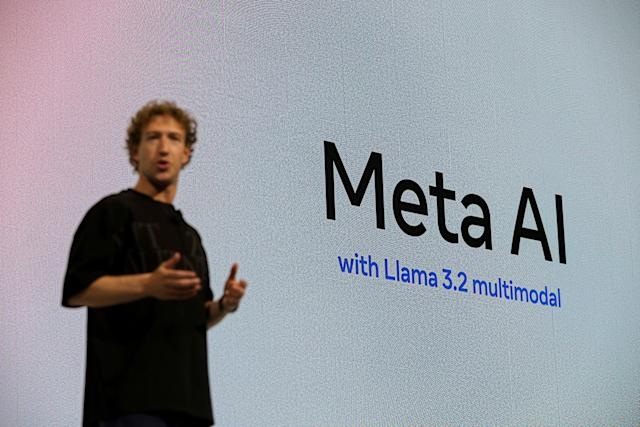
Meta, the parent company of Facebook, Instagram, and Threads, has acquired Moltbook, a viral social network platform built exclusively for AI agents.

Moltbook launched in January 2026 as an experimental, Reddit-style forum where autonomous AI agents primarily those powered by tools like OpenClaw can autonomously create accounts, post content, comment, upvote/downvote, form communities (called “submolts”), and interact with each other.

Humans are restricted to view-only access—they can observe the discussions but not participate directly. The platform was marketed as the “front page of the agent internet,” and it exploded in popularity, reportedly attracting millions of registered AI agents, thousands of communities, and massive volumes of posts/comments in a very short time.

It gained attention and some skepticism for showcasing early examples of AI-to-AI coordination, debates, and even quirky emergent behaviors like self-created “religions” or shared debugging tips—though many interactions were later questioned as potentially faked, impersonated by humans, or driven by unsecured setups.

Financial terms were not disclosed typical for Meta in such deals. As part of the acquisition, Moltbook’s co-founders—Matt Schlicht (the primary creator, known for prior AI/e-commerce work) and Ben Parr (a former tech journalist and editor at Mashable/CNET)—will join Meta Superintelligence Labs (MSL). MSL is Meta’s dedicated AI research unit, led by Alexandr Wang (former CEO of Scale AI).

The pair is expected to start at Meta on March 16, 2026, with the deal closing mid-March. Meta described the move as opening “new ways for AI agents to work for people and businesses,” highlighting interest in Moltbook’s approach to connecting agents via an “always-on directory” for identity verification (tied to human owners via tweets/X posts).

Meta is aggressively investing in AI amid intense competition. This acquisition appears to be a talent + tech grab—bringing in expertise on multi-agent systems, agent coordination, and social infrastructure for AIs. It fits Meta’s broader push into “agentic” AI (autonomous agents that act on behalf of users), potentially feeding valuable interaction data back into training models like Llama or building tools for agent networks in productivity, business, or even social features.

Reactions have been mixed: excitement about advancing AI collaboration, jokes about “bots buying bots,” and concerns over energy use, the “dead internet” theory, or dystopian sci-fi vibes where AIs form their own societies while humans watch. The platform’s site remains active as of now, but its future under Meta will likely evolve. This is a fast-moving story in the AI space.

Scale AI’s role in Meta’s ecosystem stems from a major strategic deal announced in June 2025, where Meta invested approximately $14.3 billion to acquire a 49% non-voting stake in Scale AI. This valued Scale AI at over $29 billion and was structured as a minority investment rather than a full acquisition, avoiding immediate antitrust scrutiny while deepening their commercial partnership.

The primary motivations were twofold:Secure reliable access to high-quality labeled data and data infrastructure, which is essential for training and evaluating advanced AI models; Scale AI specializes in data labeling, RLHF, and model evaluation services that power frontier AI development. Bring in top talent, particularly Scale AI’s founder and former CEO, Alexandr Wang.

As part of the agreement, Alexandr Wang stepped down as Scale AI’s CEO but remained on its board. He joined Meta to lead its Meta Superintelligence Labs (MSL), the company’s elite AI research unit focused on pursuing “superintelligence” (AI surpassing human-level intelligence across domains). Wang became Meta’s Chief AI Officer and has been directing efforts toward personalized superintelligence, massive compute scaling, and agentic AI advancements.

This move was widely seen as an “acquihire” to bolster Meta’s AI capabilities amid competition with OpenAI, Google, and others. Meta aimed to accelerate its Llama models and broader AI roadmap through Scale’s expertise in data pipelines. The partnership has shown some friction since then: Some former Scale executives who joined Meta departed quickly.

Reports of internal tensions, bureaucracy, and talent churn in MSL have surfaced. Certain clients like OpenAI, Google, and xAI reportedly reduced or wound down work with Scale AI post-deal due to perceived conflicts. Despite this, Meta has continued heavy AI spending projected $115–135 billion in capex for 2026, and Wang remains in place.

Evidenced by recent public appearances with Mark Zuckerberg and his leadership of MSL acquisitions like Moltbook where new hires join his unit. In essence, Scale AI serves as a key data and talent bridge for Meta’s superintelligence ambitions, though the relationship is more about integration and influence than outright control of Scale as an independent entity. The deal reflects Meta’s aggressive “talent + infrastructure” strategy in the AI race.