DD
MM
YYYY

PAGES

DD
MM
YYYY

spot_img

PAGES

Home Blog Page 28

The Aggregation Construct: How Digital Platforms Redesign Markets

1

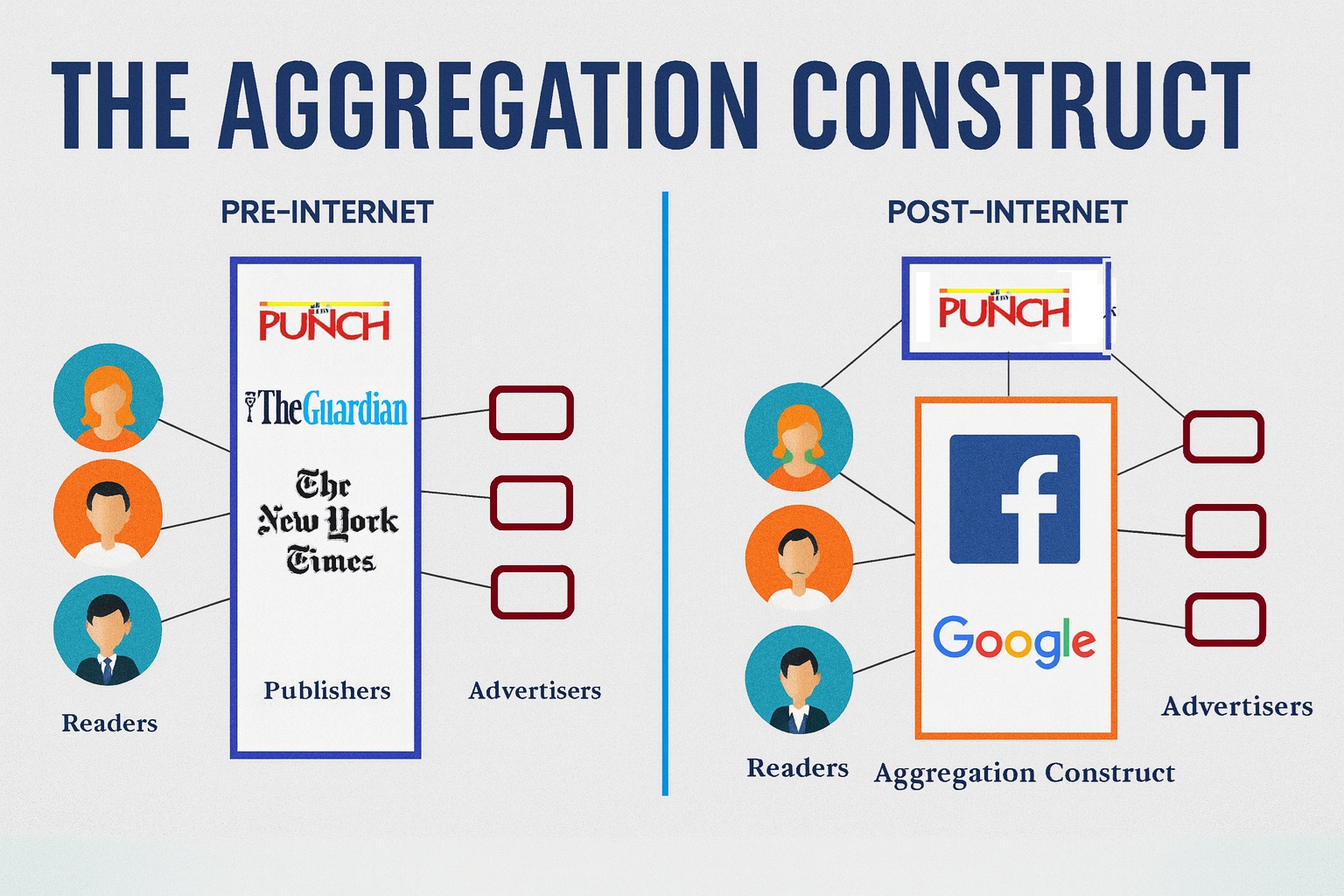
In the architecture of modern commerce, a silent redesign is taking place, one that shifts power away from producers and hands it to digital platforms. I have called this redesign the Aggregation Construct, a foundational pillar for understanding how value is created, migrated, and captured in the digital economy.

Before the Internet, the market equation was straightforward: those who produced controlled distribution, pricing power, and customer relationships. For example, newspapers wrote stories and sold them directly to readers. In this world, producers sat at the center of value creation.

But the arrival of the Internet collapsed the distance between producers and consumers. It democratized access, opened distribution, and introduced abundance. Yes, an abundance of information, options, and channels. Yet, instead of empowering producers, this abundance created a new scarcity: attention. And the companies that mastered attention became the new landlords of commerce.

This is where aggregation emerges. In the post-Internet era, entities like Google, Facebook, Airbnb, and Uber have become aggregators, platforms that do not necessarily produce the core product but aggregate users, data, and demand in such high concentration that they become the new centers of gravity in their industries.

Google does not write the news, yet it distributes more journalism than any newspaper in Nigeria. Netflix does not produce most of its films, yet it dominates viewership. Uber owns no vehicles, yet it commands mobility ecosystems across continents. In each of these cases, the aggregator captures the value while the producer bears the cost.

Here are four forces that make aggregation inevitable:

First is demand accumulation. Aggregators gather immense user bases, creating digital plazas where everyone converges. Where people converge, money follows.

Second is frictionless distribution. Aggregators eliminate the need for users to visit multiple websites, stores, or platforms. A single interface delivers the entire world’s options, reducing search and matching costs dramatically.

Third is data advantage. Every click, view, and transaction enriches the aggregator with data, data that becomes the fuel for personalization, prediction, and market dominance. This data flywheel compounds advantage in a way traditional producers cannot replicate.

Fourth is disintermediation. Once distribution is captured by a platform, producers lose their direct connection to customers. And once that connection is lost, pricing power and strategic leverage evaporate. The producer becomes a dependent participant in an ecosystem controlled by the aggregator.

My central thesis is clear: in the digital economy, the entity that controls demand, not supply, wins. This is the inversion of the industrial age, where scarce supply conferred power. Today, abundant supply and distributed access mean that the scarce asset is attention, and the companies that capture and organize attention become the new monopolies.

The consequences of this shift are profound. Producers must rethink their business models. Content creators, retailers, manufacturers, banks, and even governments must redesign how they deliver value in a world where distribution is no longer theirs. Nations must recognize that without indigenous aggregators, they risk economic dependence on foreign digital platforms. And industries must adopt platform thinking, moving from isolated production to ecosystem orchestration.

In summary, the Aggregation Construct explains the physics of modern markets. Aggregators, by mastering users, data, and convenience, reshape industries and capture outsized economic reward even when they do not produce the underlying product. It is one of the most important ideas in contemporary business strategy. In the digital era:

Whoever controls the user controls the value.


Bill Gates Warns of AI Investment Bubble, Citing Valuation Risks in “Hyper Competitive” Sector

0

Bill Gates, co-founder of Microsoft and prominent philanthropist, has issued a stern warning that while Artificial Intelligence (AI) is the “most important thing going on” and will fundamentally reshape the world, the current investment landscape is leading to inflated valuations for many companies that are unlikely to be sustained.

Thus, he predicts a fierce shakeout in the “hyper competitive” sector.

Speaking to CNBC’s Tania Bryer at Abu Dhabi Finance Week, Gates addressed the soaring capital expenditures and the recent volatility in the global markets, emphasizing that AI is only a bubble “in the sense that not all of these valuations will end up going up. Some of them will go down.” He asserted that “a reasonable percentage of those companies won’t be worth that much.”

Gates’ warning is rooted in the stark divergence between the trading multiples of high-growth, pure-play AI firms and those of more diversified technology leaders. The Price-to-Earnings (P/E) ratio—a key metric comparing a stock price to its earnings per share—highlights this extreme valuation disparity.

For instance, the P/E ratios of stocks like Palantir, at over 400x, and Tesla, well over 200x, signify that investors are pricing in decades of flawless, aggressive growth. This is a dramatic contrast to the S&P 500 average of about 25x. Even AI hardware leader NVIDIA, despite its explosive growth, has a P/E ratio that is significantly lower than Palantir’s, while Gates’ own Microsoft trades at a forward P/E ratio that is actually below its five-year average, suggesting its valuation hasn’t run too far ahead of its diversified earnings base.

This difference underscores Gates’ argument that only the companies with durable competitive advantages—and likely, more grounded valuations—will survive the “hyper competitive” shakeout.

Despite the financial frothiness, Gates remains unequivocally bullish on the long-term, beneficial applications of AI, particularly in global development.

The Microsoft founder affirmed that AI will “fundamentally change lives for the better,” especially in areas prioritized by the Gates Foundation, such as health, education, and agriculture. He stressed that “nobody should have any doubt” about the profound and real benefits of the technology.

“Is this profound and real and is going to provide all of these benefits, including the health, education and agriculture that we’re working on? Absolutely, nobody should have any doubt about that,” he said.

Gates predicted that next year would be big for global health as the foundation begins piloting next-generation AI tools. These initiatives include deploying AI-powered “virtual doctors” that can support all African dialects and launching farm advisors to assist the small-plot farmers who make up the majority of the population in Africa. Gates sees this as a path to “dramatically raise their productivity,” a feat he believes is entirely “doable.”

The focus on global health was reinforced by the recent pledge of $1.9 billion from the Gates Foundation and other international partners to combat polio, underscoring the foundation’s commitment to strengthening health systems alongside technological innovation.

“We can take these wonderful pledges that we’ve just got and make sure we use them very effectively. It’ll be a year where we’re piloting a lot of those AI tools, the virtual doctor, supporting all the African dialects, the farm advisor… most people in Africa are farmers who have very small plots of land, and today very low productivity,” he said.

China Rises Globally and India on the Way, Message for Africa

0

China recently announced that it generated a $1 trillion trade surplus in just 11 months, a staggering outcome that reinforces its dominance in global manufacturing and commerce.

At the same time, India is stepping boldly into the global AI debate, proposing a landmark rule that would require companies like OpenAI and Google to pay royalties for using copyrighted data in training their models. If implemented, this policy could fundamentally reshape how the world’s largest AI companies operate in one of their most strategic growth markets.

India has moved to the center of the global debate over AI training data with a sweeping proposal that would force companies such as OpenAI and Google to pay royalties for using copyrighted material — a move that could reshape how the world’s largest AI firms operate inside one of their most important growth markets.

On Tuesday, the country’s Department for Promotion of Industry and Internal Trade released a proposed framework that would grant AI developers automatic access to all copyrighted works for training in exchange for paying royalties into a new collecting body composed of rights-holding organizations. According to Tech Crunch, the money would then be distributed to creators.

India’s proposal argues that such a “mandatory blanket license” would lower compliance costs for AI firms while ensuring that writers, musicians, artists, and other creators are compensated when their work is scraped into datasets that power commercial models.

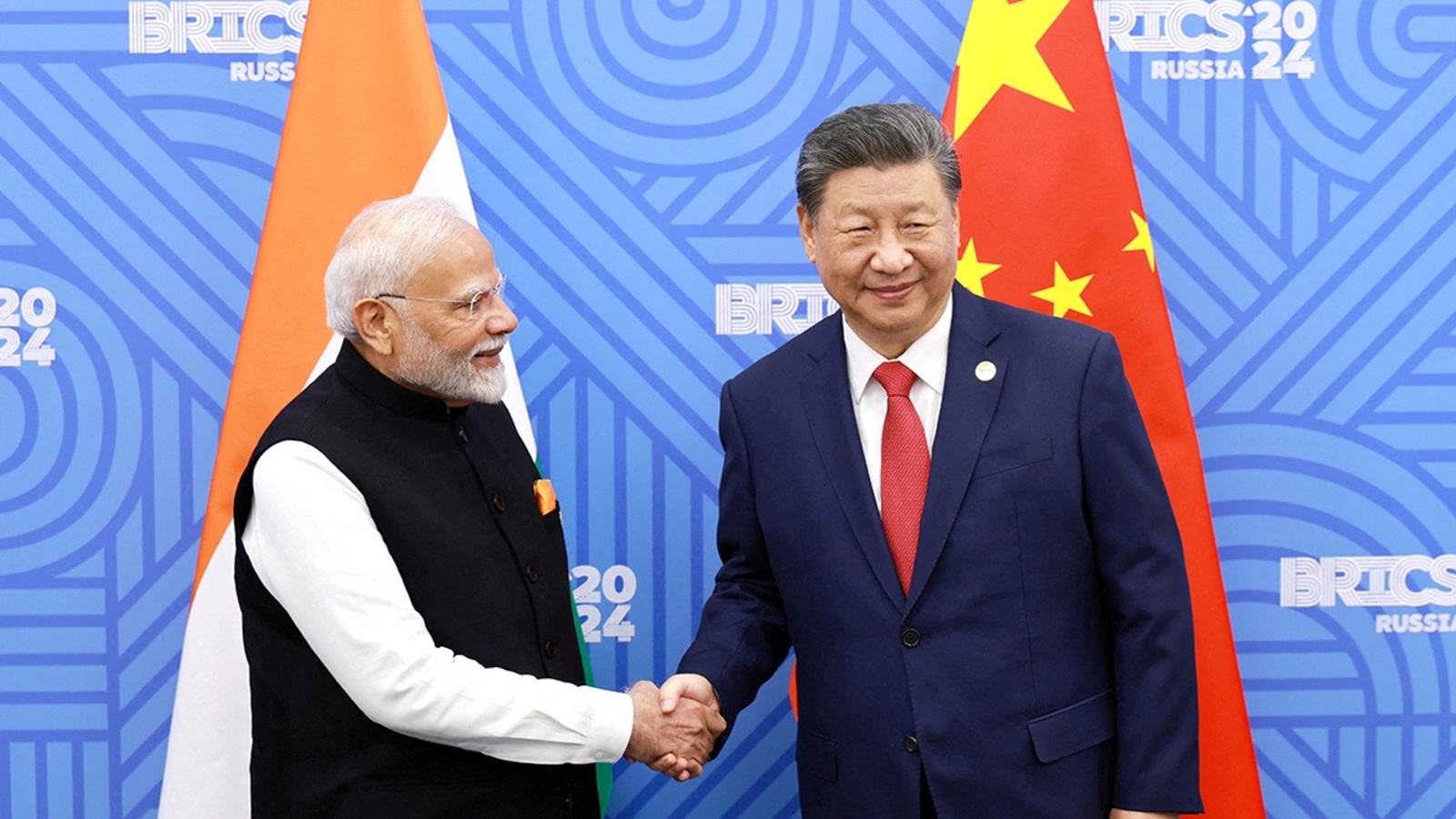
Good People, if you are not paying attention, please do. The world is experiencing a profound realignment. When China can produce a $1 trillion surplus without depending on the United States due to tarriffs, it signals something unmistakable: China has essentially won the economic battle for global production.

And India is rising with equal force, asserting control, shaping global AI policy, and redefining digital sovereignty. A tectonic shift is underway!

For Africa, this moment demands clarity and pragmatism. Power flows from economic capability, not speeches or political posturing. Europe may criticize China loudly, yet European nations continue buying “Made in China” at scale because economic competitiveness, not rhetoric, determines outcomes.

My message is simple: If we cannot compete, the speeches mean nothing.

Africa must build, industrialize, innovate, and strengthen its economic base because in the new global order, only those with economic power will have influence.

India Proposes AI Royalty Pay, Setting Up a Global Test Case for Copyright, Big Tech, and the Future of Model Training

0

India has moved to the center of the global debate over AI training data with a sweeping proposal that would force companies such as OpenAI and Google to pay royalties for using copyrighted material — a move that could reshape how the world’s largest AI firms operate inside one of their most important growth markets.

On Tuesday, the country’s Department for Promotion of Industry and Internal Trade released a proposed framework that would grant AI developers automatic access to all copyrighted works for training in exchange for paying royalties into a new collecting body composed of rights-holding organizations. According to Tech Crunch, the money would then be distributed to creators.

India’s proposal argues that such a “mandatory blanket license” would lower compliance costs for AI firms while ensuring that writers, musicians, artists, and other creators are compensated when their work is scraped into datasets that power commercial models.

The push lands at a moment when concerns over unlicensed training have erupted across global markets. Authors, newsrooms, artists, and photographers in the U.S. and Europe are taking AI developers to court, adding pressure on regulators to determine whether training qualifies as fair use. The legal uncertainty has not stopped AI companies from expanding, but it has left them exposed to costly litigation. India, by contrast, is offering one of the most interventionist solutions seen anywhere, essentially creating a statutory license that both guarantees compensation and standardizes access.

At the heart of the proposal is an eight-member government committee formed in April. In a 125-page submission, the group argues that a blanket license provides “easy access to content for AI developers,” reduces transaction costs, and ensures that rightsholders are paid. The committee describes the new collecting body as a “single window,” eliminating the need for individual negotiations and enabling royalties to flow to both registered and unregistered creators.

India’s pitch reflects the country’s surging importance in the global AI economy. OpenAI CEO Sam Altman has said India is the company’s second-largest market after the U.S. and may ultimately become its largest. The committee notes that AI companies generate significant revenue from Indian users while also drawing heavily on creative works from the Indian ecosystem, a dynamic it says justifies a “balanced framework” that returns some of that value to creators from the outset.

India is now positioning itself as the first major jurisdiction to impose a structured royalty system on the entire AI training pipeline. Its model goes far beyond transparency requirements debated in the U.S. and the European Union, where policymakers are still wrestling with disclosure obligations, audit mechanisms, and whether training can be considered transformative.

The solution, for India, is to dispense with those ambiguities and create a mandatory mechanism that pays creators while giving AI developers immediate legal certainty.

But the reaction from the technology industry has been anything but unified. Nasscom, which represents major technology companies including Google and Microsoft, filed a formal dissent urging India to adopt a broad text-and-data-mining exception instead. It argued that AI developers should be free to train on copyrighted content so long as they access the material lawfully. Nasscom warned that mandatory licensing could slow innovation and said rights holders who object should be allowed to opt out, rather than forcing companies to pay for all training data.

The Business Software Alliance, whose members include Adobe, Amazon Web Services, and Microsoft, also urged the government to avoid relying solely on licensing. In its submissions, BSA pushed for an explicit text-and-data-mining exception, arguing that a mandatory licensing regime might be impractical and could limit training datasets so severely that model quality suffers. It warned that restricting models to licensed or public-domain material could “increase the risk that outputs simply reflect the trends and biases” of limited datasets.

The committee, however, rejected the idea of combining a broad exception with an opt-out, arguing that such systems either weaken copyright protections or create enforcement challenges so enormous that rights holders cannot realistically protect their work. Instead, the proposed hybrid model would give AI developers immediate, automatic access to all copyrighted works — but require them to pay royalties into the central collecting body.

India is the world’s largest market by population, one of the fastest-growing digital economies, and an increasingly critical testing ground for enterprise AI adoption. If India adopts the system as proposed, every AI developer operating in the country would face predictable royalty obligations but also gain unrestricted access to rich, culturally diverse datasets. Companies may ultimately accept that trade-off if it provides legal certainty missing in Western markets. But royalty payments could reshape cost structures, especially for large-scale model training that depends on vast, continuously updated datasets.

For creators, the proposal marks a rare moment when regulatory momentum sits squarely on their side. Indian courts are already reviewing cases that test whether training violates copyright law. A Delhi High Court case brought by ANI against OpenAI has pushed judges to interrogate whether training itself counts as reproduction. Globally, similar lawsuits are moving through U.S. federal courts and European jurisdictions. India’s framework would bypass years of legal uncertainty by requiring compensation up front.

The political momentum behind the plan reflects India’s ambitions to regulate AI on its own terms rather than follow frameworks built in Washington or Brussels. The country sees AI as a strategic economic pillar and appears intent on designing a copyright system that reflects the size of its creative industries and the scale of its digital markets.

The government has opened the proposal for public consultation, giving companies and stakeholders 30 days to submit comments. After reviewing submissions, the committee will finalize its recommendations before the framework advances through the government.

India’s move sets up a dramatic global test case. If implemented, its system could become a template for other emerging markets with large creator communities but limited bargaining power against Big Tech. It could pressure Western regulators to accelerate their own debates. It could force companies like OpenAI, Google, and Microsoft to operate with new royalty liabilities in one of the world’s most consequential markets.

Or it could spark the industry to mount an aggressive pushback phase, warning that a licensing-heavy regime would slow innovation and limit India’s competitiveness.

Either way, India has just injected one of the boldest, most far-reaching proposals yet into the debate over who gets paid in the age of AI.

Quick & Easy Ways to Download Instagram Videos You Love

0

We’ve all been there: you’re scrolling through Instagram and stumble upon a video that stops you in your tracks. It might be a breathtaking travel clip, a hilarious meme, a crucial tutorial, or a precious memory shared by a friend. Your first instinct? Download Instagram video content to save it for later. Yet, as you probably know, Instagram doesn’t make this straightforward. Unlike some other platforms, its native app only offers a “Save” feature, which bookmarks the video within Instagram rather than saving it to your device. This guide will walk you through the simplest, safest methods to download videos from Instagram, focusing on one standout tool that makes the process effortless.

The Challenge of Downloading Instagram Videos

Instagram, at its core, is a social sharing platform designed to keep content circulating within its ecosystem. To protect creators’ rights and maintain user engagement, direct download options for videos and photos are not provided. This creates a common dilemma for users who wish to keep content for offline viewing, inspiration, or personal collection without relying on an internet connection or the risk of the original post being deleted.

Many users resort to taking screenshots or screen recordings, but these methods have significant drawbacks in quality and convenience. Others search the web for “how to download Instagram videos” and are met with a sea of websites and applications, varying widely in safety, reliability, and ease of use. Navigating this landscape can be time-consuming and sometimes risky, with concerns about malware, intrusive ads, or violating terms of service.

How to Save Instagram Videos Without Any Tools

Before exploring dedicated tools, it’s worth mentioning the manual workarounds.

  • Using Screen Recording (Lower Quality, Cumbersome)
    Most smartphones and computers have built-in screen recording functions. For a quick save, you can play the Instagram video in full-screen and activate the recorder. However, this method has notable flaws:
  • Lower Quality:The recording captures exactly what’s on your screen, which may not be the original resolution. You’ll also record UI elements, your own taps, and notifications.
  • Cumbersome Editing:You’re left with a video file that includes everything before and after the target clip, requiring you to trim it manually.
  • Audio Issues:Sound can sometimes be poorly captured or missing entirely due to app restrictions.

While this method is free and requires no extra apps, it’s inefficient for downloading multiple videos and rarely provides a clean, high-quality result. For a true download video from Instagram experience, you need a better solution.

The Easiest Way to Download Instagram Videos: EasyDown

For users who frequently want to save high-quality Instagram content, a dedicated downloader is the answer. Among the many options available, EasyDown Video Downloader stands out for its simplicity, reliability, and excellent results.
What is EasyDown?

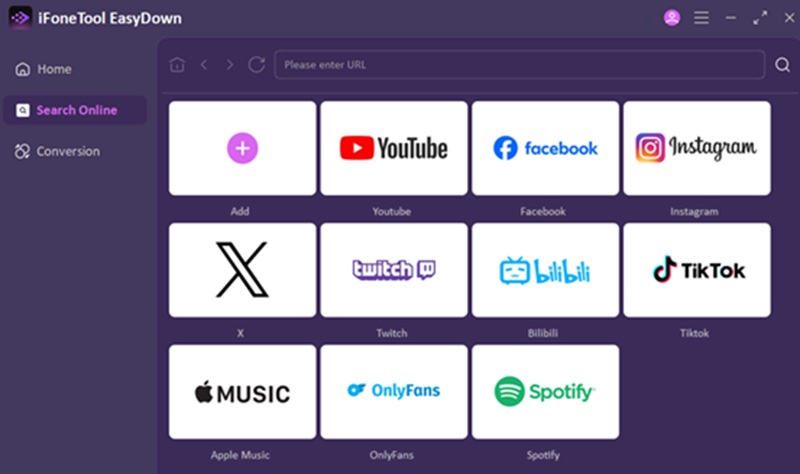
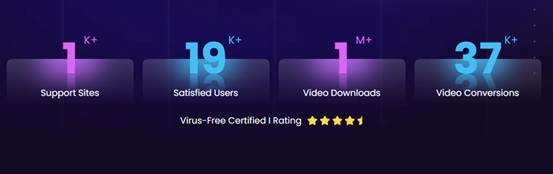
EasyDown is a versatile, multi-platform solution designed specifically for downloading videos and music from over 1,000 platforms, including giants like Instagram, YouTube, TikTok, and Spotify. From a quick Instagram Reel to a full YouTube playlist, it handles it all in one clean interface. For anyone figuring out how to download videos from Instagram and other sites, EasyDown presents a unified answer.

Key Features

  • Universal Platform Support: While our goal is to download video from Instagram, EasyDown’s capability extends far beyond. It’s a single tool for all your downloading needs, eliminating the clutter of multiple apps.
  • Batch Downloading Power: Imagine finding an Instagram user or a themed playlist whose content you adore. Instead of saving each post individually, EasyDown’s batch feature lets you download entire collections with one click, saving immense time.
  • Preserve Original Quality: There’s no point in saving a stunning 4K travel video if it loses its sharpness. EasyDown fetches the highest available resolution—up to 4K for videos—directly from the source, so what you save is what you saw.
  • Streamlined, Ad-Free Experience: The process is refreshingly straightforward. You’ll encounter no distracting pop-up ads or confusing navigation. It’s a clean space where you paste a link and get your file.
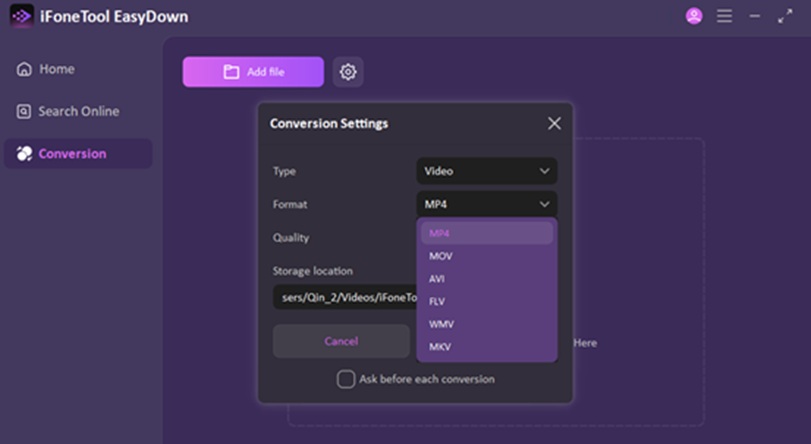
  • Smart Format Conversion: Need that Instagram video in MP4 for editing or MP3 for just the audio? With one click, EasyDown can convert your download into the optimal format for your device or project, ensuring hassle-free compatibility. It also allows you to download YouTube playlist to MP3.

Step-by-Step Guide to Using EasyDown

Using EasyDown is remarkably simple. Here’s how you can download Instagram video content in four easy steps:

  1. Copy Your Instagram Link: Within the Instagram app, tap the three dots (…) above the post you wish to save and select “Copy link.”
  2. Paste into EasyDown: Open the EasyDown application. You’ll find a prominent URL field—paste your copied link there.
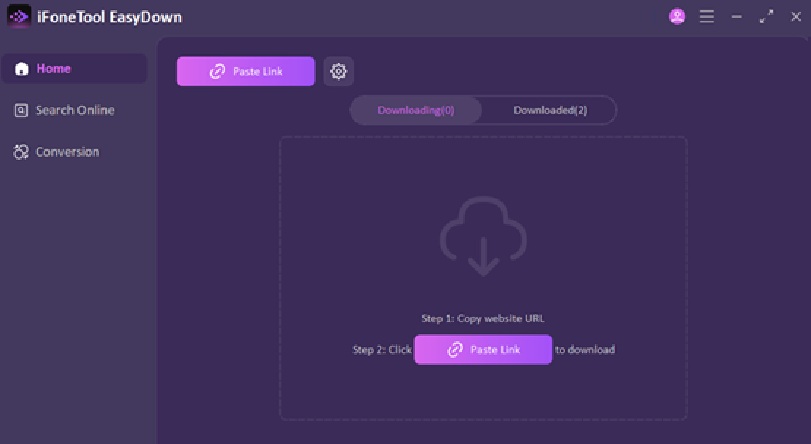
  3. Select Your Preferences: EasyDown will instantly analyze the link. It will present you with available download options. Here, you can select your desired video quality and output format.
  4. Initiate the Download: After making your selection, click the “Apply” EasyDown will process the file and save it directly to your designated download folder.

Why EasyDown is the Best Choice for Downloading Instagram Videos

With numerous downloaders available, why choose EasyDown? It excels in the areas that matter most to everyday users.

First, its versatility is a game-changer. In a digital world where our favorite content is scattered across Instagram, TikTok, YouTube, and more, EasyDown consolidates the need for multiple tools into one powerful application. Learning how to download videos from Instagram with EasyDown means you’re also learning how to save content from nearly any other platform, making it an invaluable addition to your digital toolkit.
Second, it never asks you to compromise on quality. Many free downloaders degrade video resolution or audio bitrate. EasyDown operates on the principle that you deserve the original file. Whether it’s a high-frame-rate Reel or a detailed IGTV video, you get a pristine copy, allowing you to truly preserve the content you love.

Finally, the experience is crafted for simplicity and respect. The ad-free, intuitive interface removes all friction from the process. There are no hidden steps, deceptive buttons, or unnecessary bloat. It performs its core function—allowing you to download video from Instagram and other sites—with impressive efficiency and respect for your time and attention. For the regular user who values quality, ease, and broad utility, EasyDown presents an unmatched solution.

Legal Considerations When Downloading Instagram Videos

It is crucial to address the ethical and legal side of downloading content. While tools like EasyDown provide the ability to download, the responsibility lies with you, the user.

  • Respect Copyright:Most content on Instagram is protected by copyright. Always assume the video belongs to the person who posted it.
  • Intended Use is Key:Downloading videos for personal, offline viewing is generally considered fair use in many contexts. This means you can save a tutorial to watch later or a friend’s post to keep as a memory.
  • What to Avoid:Never use downloaded videos for commercial purposes, re-upload them to other platforms as your own, redistribute them, or use them in a way that could harm the creator or infringe on their rights.
  • Seek Permission When in Doubt:If you intend to use the video beyond personal viewing, the safest course is to contact the content creator directly and ask for permission.

Instagram’s Terms of Service prohibit the use of automated means to collect content without permission. Using a downloader technically breaches these terms, so it’s essential to use such tools judiciously and respectfully.

Conclusion

The desire to download video from Instagram is a common one, driven by the wish to preserve inspiring, educational, or memorable content. While manual methods like screen recording exist, they are often inadequate. For a fast, high-quality, and hassle-free experience, a dedicated web tool like EasyDown is the optimal solution. It answers the question of how to download videos from Instagram with a process that is quick, easy, and reliable.

Remember, with the power to download comes the responsibility to do so ethically. Use these tools to enhance your personal media library, not to undermine the hard work of creators. Save the videos you love, respect the people who made them, and enjoy your favorite Instagram moments anytime, anywhere.