DD
MM
YYYY

PAGES

DD
MM
YYYY

spot_img

PAGES

Home Blog Page 28

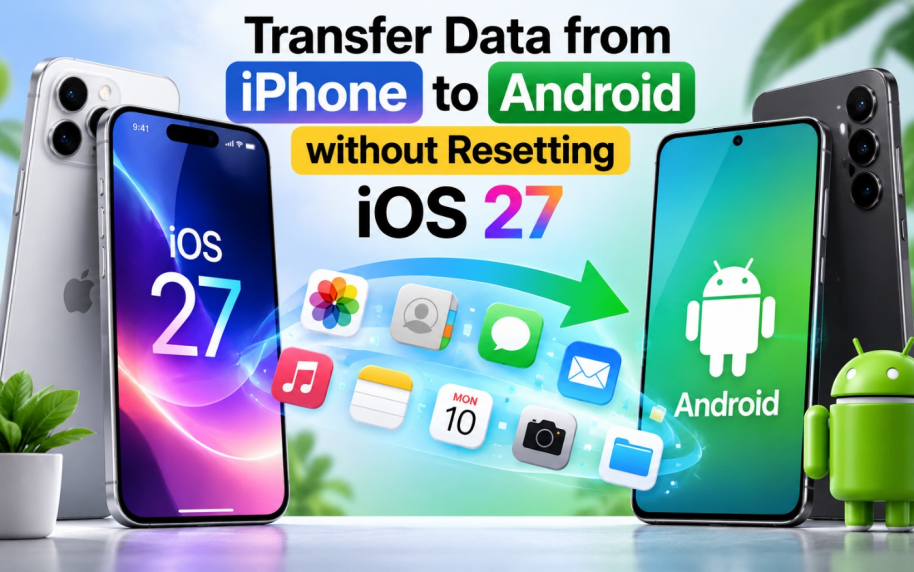
How to Transfer Data from iPhone to Android on iOS 27 without a Factory Reset

0

Moving data can be difficult when your Android phone is already set up. Fortunately, you can Transfer data from iPhone to Android without resetting iOS 27 using methods such as Android Switch, Tenorshare iTransGo, Samsung Smart Switch, and Google Services. Compare these four options to find the best way to transfer your contacts, photos, videos, messages, and other data.

Part 1. What You’ll Need to Transfer Data from iPhone to Android without Resetting iOS 27

Before transferring data from iPhone to Android without resetting iOS 27, make sure the Android phone has enough storage and both devices have sufficient battery. Keep your iPhone unlocked and prepare a compatible USB cable or stable Wi-Fi connection, depending on the transfer method.

Create a fresh iPhone backup using iCloud or another method, and sign in to the Google Account you plan to use on Android. Keep both devices available throughout the transfer, and do not delete any data from your iPhone until you confirm that everything has transferred successfully.

Part 2. Which Method Should You Choose to Transfer Data from iPhone to Android?

The best method depends on your Android brand, Android version, setup status, the types of data you want to move, and whether you have access to a computer. If you need selective transfer after setup, iTransGo offers a more direct option. Android Switch and Smart Switch work well when your device supports their transfer features, while Google Services works better for selected cloud-synced data.

Method Best For Setup Status Main Data Computer
Android Switch Supported Android phones Depends on device Photos, contacts, files, messages Usually no
iTransGo Selective cross-brand transfer After setup Photos, videos, contacts, messages, calendars, music Yes
Samsung Smart Switch Samsung Galaxy Depends on Galaxy model Photos, contacts, messages, calendars, files Optional
Google Services Selected cloud data After setup Photos, contacts, calendars, files No


Part 3. How to Transfer Data from iPhone to Android without Resetting

If you are deciding how to transfer data from iPhone to Android, first check whether your Android phone supports a built-in transfer option. If it does not meet your needs, you can use a computer-based tool or move selected content through Google Services. The four routes below can help you Transfer data from iPhone to Android while keeping the existing Android setup, but supported data and device compatibility differ.

Method 1. Transfer Data with Android Switch on iOS 27

Android Switch offers an official way to transfer supported iPhone data to compatible Android phones. Depending on the device and Android version, some phones may support post-setup transfers without resetting. If you want to Transfer data from iPhone to Android without resetting iOS 27, check your Android phone’s transfer settings first.

Steps to Transfer Data with Android Switch

Step 1: Open the Settings app on your Android phone and look for the data-transfer or backup option. Select the option that lets you bring data from an iPhone.
Open the Settings app

Step 2: Connect your iPhone to the Android phone using a compatible cable, or select the wireless option if your Android model supports it.
select the wireless option

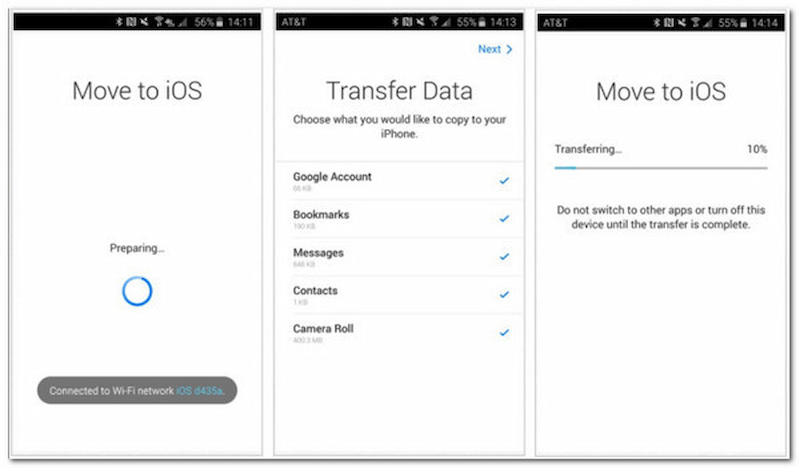
Step 3: Unlock your iPhone and approve the required permission when prompted. Select the supported photos, contacts, messages, or other data that you want to move.
data that you want to move

Step 4: Start the transfer and keep both phones connected and available until the process finishes. Check the transferred content on Android afterward.

Limitation: Android Switch does not offer the same post-setup transfer options on every Android phone. Supported data categories can also vary by device and Android version.

Method 2. Transfer Data from iPhone to Android after Setup with iTransGo

Tenorshare iTransGo suits users who already set up their Android phone and want to keep its existing content. It provides a computer-based way to Transfer data from iPhone to Android without resetting iOS 27 instead of making you start the Android setup again. You can select supported data categories and transfer only what you need. iTransGo also supports cross-brand iPhone-to-Android transfers, making it useful when your phones come from different manufacturers.

Key Benefits of iTransGo

  • No factory reset: Keep the existing Android setup while transferring supported iPhone data.
  • Selective transfer: Choose the data categories you want instead of moving everything.
  • Cross-brand transfer: Move supported content between an iPhone and different Android brands.
  • Computer-based process: Use a USB connection instead of depending on a wireless phone-to-phone transfer.

Steps to Transfer Data with iTransGo

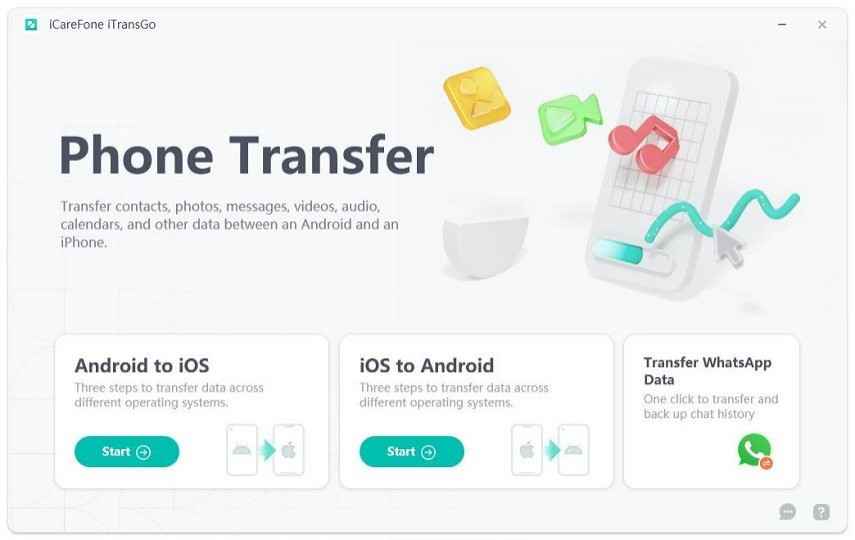
Step 1: Download and install iCareFone iTransGo on your computer. Open the program and select the iOS to Android transfer option from the main interface to begin the process.
Download and Launch iCareFone iTransGo

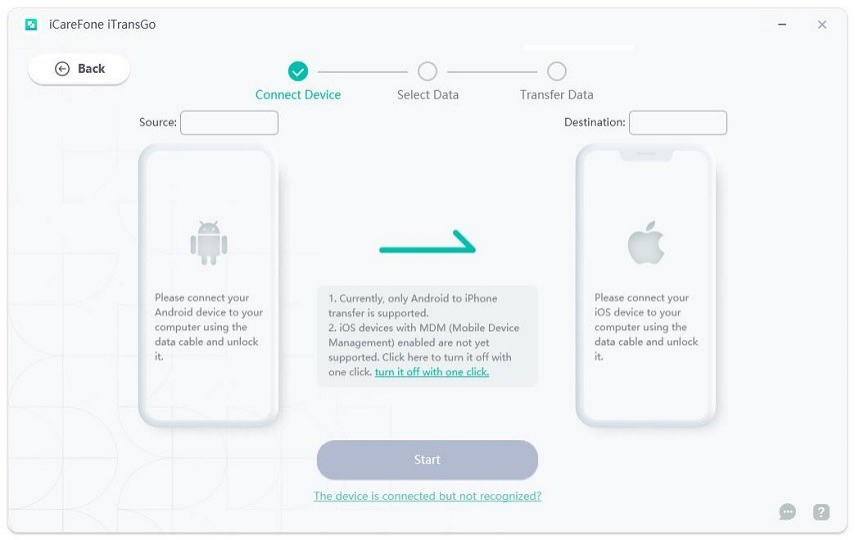
Step 2: Connect both your iPhone and Android phone to the computer using USB cables. On the iPhone, tap Trust when the permission prompt appears. On Android, follow the on-screen instructions to enable USB debugging so iTransGo can detect the device.
Connect Your iPhone and Android Phone

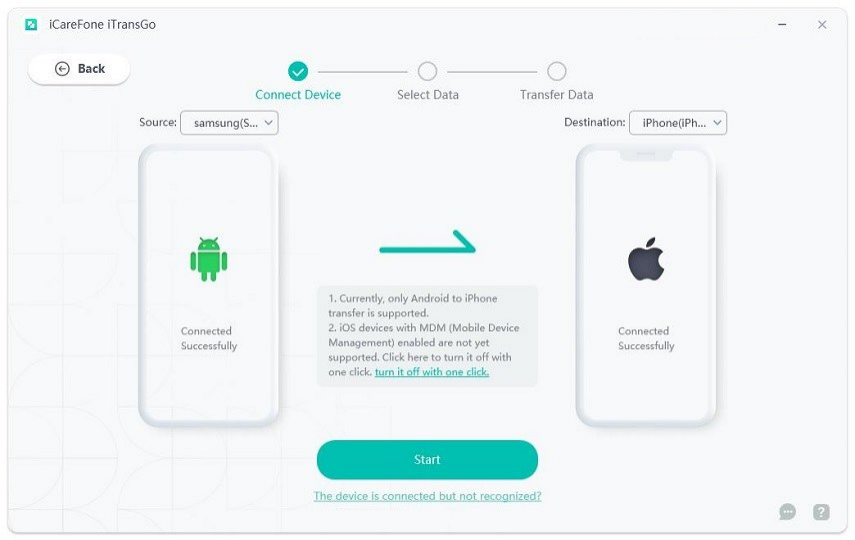
Once both phones appear in the program, check that the iPhone is the source device and the Android phone is the target device, then click Start.
Click Start

Step 3: Scan and Select the Data You Want to Transfer

Select the data categories you want to move from your iPhone, then click Start Scan. iTransGo will scan the source device and display the available data with its size and quantity. Review the results, select the content you need, and click Transfer Data to begin.
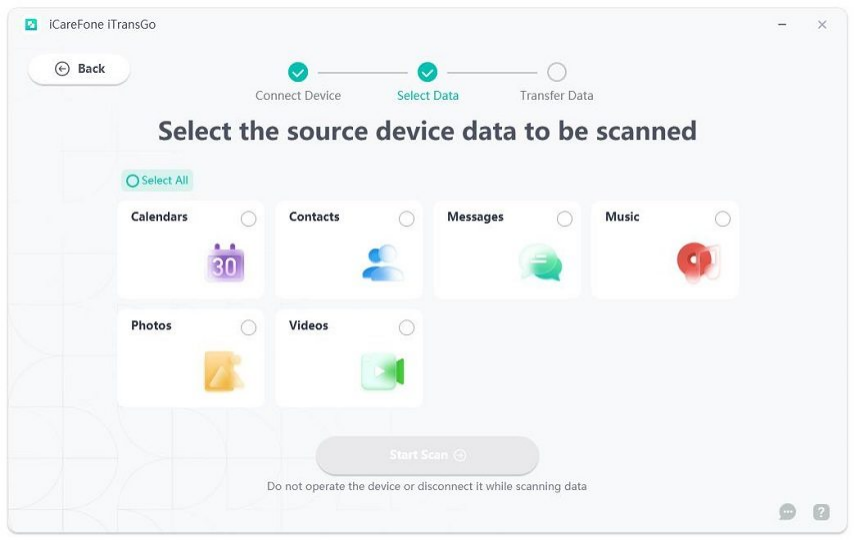
Scan and Select the Data You Want to Transfer

If the program asks for additional permissions, follow the on-screen instructions before continuing.
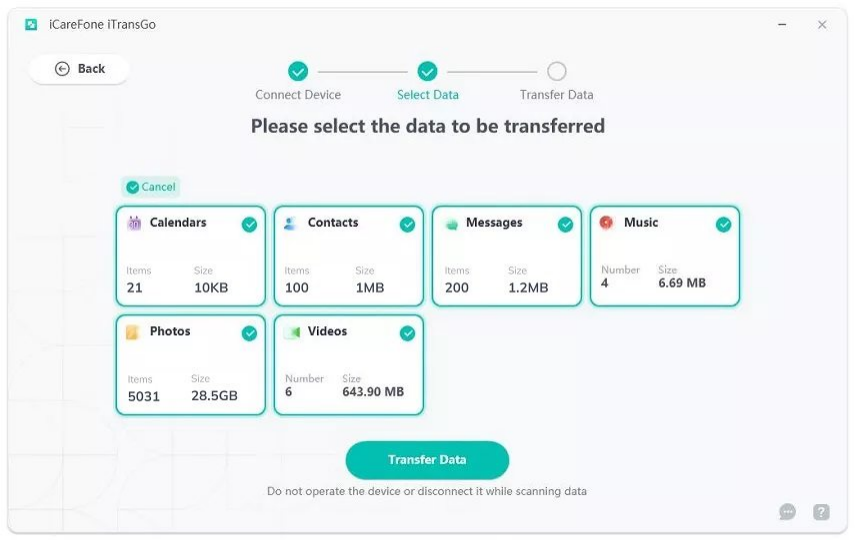
program asks for additional permissions

Step 4: Transfer the Selected Data to Android

iTransGo will transfer the selected content from your iPhone to the Android phone. Keep both devices connected throughout the process and do not disconnect either phone until the transfer finishes. The required time depends on the amount of data you selected.
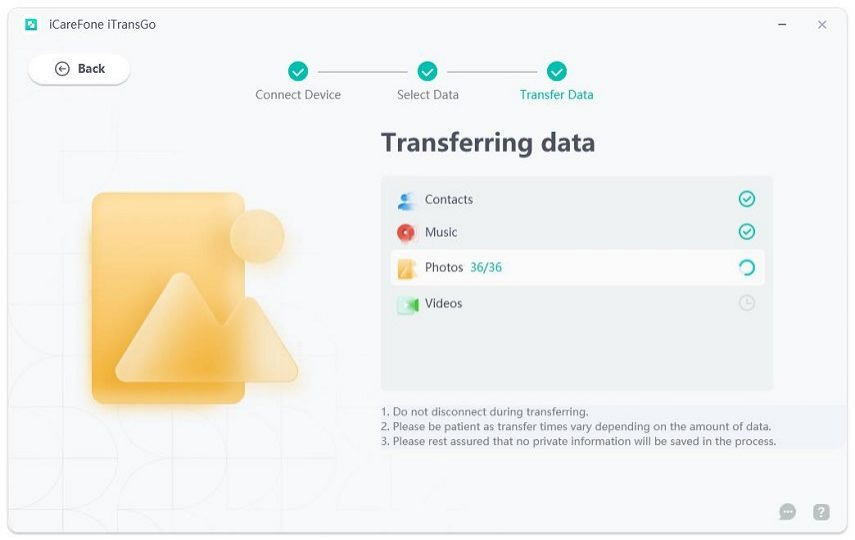
Transfer the Selected Data to Android

When the transfer completes, open your Android phone and check the transferred contacts, photos, videos, messages, and other supported content.
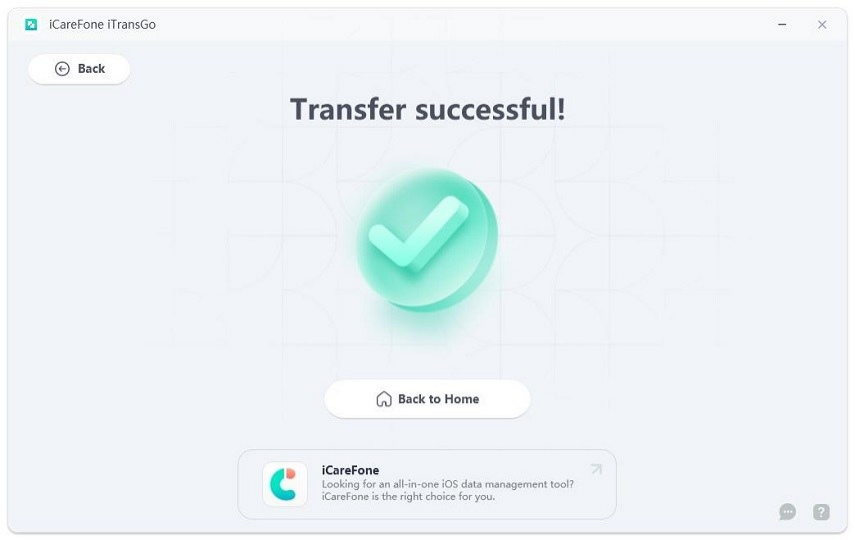
transfer completes

Limitation: iTransGo does not transfer every type of iPhone data or third-party app data. Check the supported data categories before starting your transfer.

Method 3. Transfer Data from iPhone to Samsung with Smart Switch

Samsung Smart Switch lets you transfer data from iPhone to compatible Samsung Galaxy phones via cable, wireless connection, or iCloud. It can transfer contacts, photos, videos, messages, calendars, and files, though some iPhone data may not be supported.

Steps to Transfer Data with Smart Switch

Step 1: Turn on your Galaxy and select iPhone or iPad when prompted. Scan the QR code with your iPhone Camera, keep both phones nearby, and tap Continue.
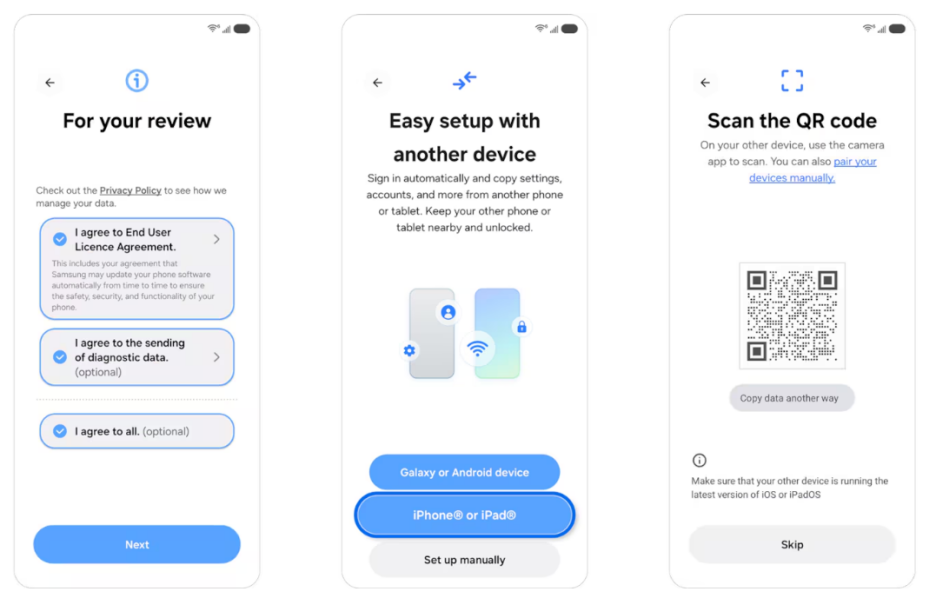
Start Galaxy setup and connect your iPhone

Step 2: On the Galaxy phone, tap Next, review the Smart Switch information, and allow the requested permissions. Continue on your iPhone and select the photos, contacts, messages, apps, or other supported content you want to move.

Step 3: After selecting your data, keep both phones close together and let Smart Switch begin the transfer. Watch the progress on the Galaxy screen and avoid closing the transfer screens or moving the devices away from each other until the process finishes.

Step 4: Complete the Galaxy setup by choosing your screen lock and reviewing Google and Samsung service settings. When setup finishes, open the Smart Switch notification to review the transfer results. Check your important content, turn off iMessage on the iPhone, and download remaining iCloud data if the available option supports it.

Limitation: Smart Switch mainly targets Samsung Galaxy devices, so it does not provide the same transfer experience on other Android brands. Some iPhone data may also remain unsupported.

Method 4. Transfer Data from iPhone to Android Wirelessly with Google Services

Google Services can help when you only need selected iPhone content rather than a full device transfer. This approach lets you transfer data from iPhone to Android wirelessly through services such as Google Photos, Google Contacts, Google Calendar, and Google Drive. You can upload your content from the iPhone and access it on Android by signing in to the same Google Account. This method works well for photos, videos, contacts, calendars, and supported files.

Steps to Transfer Data with Google Services

Step 1: Install Google Photos on your iPhone, sign in to your Google Account, and turn on backup. Keep the app active until your photos and videos finish uploading.

Step 2: Add your Google Account to the iPhone and enable contact and calendar syncing where supported. Then sign in to the same account on your Android phone.

Step 3: Open Google Drive on your iPhone and upload the documents or other supported files you want to access on Android.
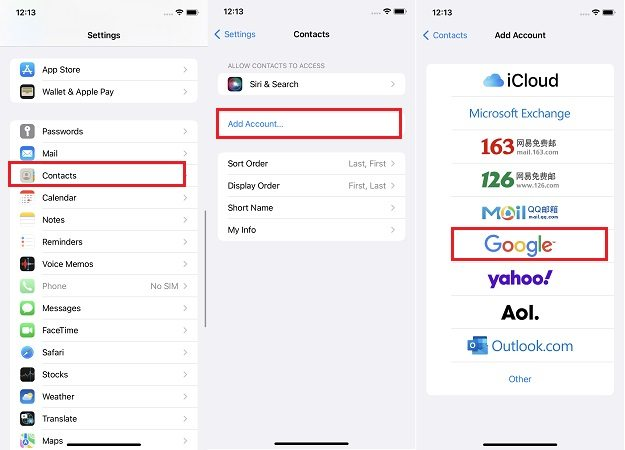
Add your Google Account

Step 4: Open Google Photos, Contacts, Calendar, and Drive on your Android phone using the same Google Account. Check your uploaded and synced content before deleting anything from the iPhone.

Limitation: Google Services does not provide a complete phone-to-phone migration. You need to handle different data types through their separate Google services, and some iPhone content may not have a direct equivalent.

FAQs

1. Can I Transfer iPhone Data to Android after Setup?

Yes. You can transfer data from iPhone to Android after setup, depending on your Android device. Some phones support post-setup transfers, while others may require a third-party tool or cloud service. If you want to keep existing data, choose a method that supports merging or selective transfer.

2. Does Transferring Data from iPhone to Android Erase Existing Data?

No. Transferring data does not always require erasing your Android phone. iTransGo supports transfer data from iPhone to Android without resetting iOS, while cloud services can add selected content to an existing device. Always back up important data first.

3. Can I Transfer All Data from iPhone to Android?

Not necessarily. Contacts, photos, videos, calendars, messages, and files can often be transferred, but some apps, passwords, protected media, and app-specific data may not transfer. Check the supported data types before starting.

4. How Can I Transfer Data from iPhone to Android without a Cable?

You can use cloud services or wireless transfer features. Google Photos can transfer photos and videos, Google Contacts can sync contacts, and Google Drive can store supported files. Some Android and Samsung phones also support wireless transfers.

5. Should I Turn Off iMessage before Switching to Android?

Yes. Turn off iMessage and FaceTime before switching to Android to prevent messages from continuing through iMessage. If you no longer have your iPhone, Apple also provides a way to deregister your number from iMessage.

Conclusion

You have several ways to Transfer data from iPhone to Android without resetting iOS 27. Android Switch works on supported devices, Smart Switch fits Samsung Galaxy users, and Google Services works well for selected cloud-based content. If you need transfer data from iPhone to Android without resetting iOS on an already configured phone, Tenorshare iTransGo is a practical choice for selective cross-brand transfers. Try Tenorshare iTransGo to move the supported iPhone data you need without a factory reset.
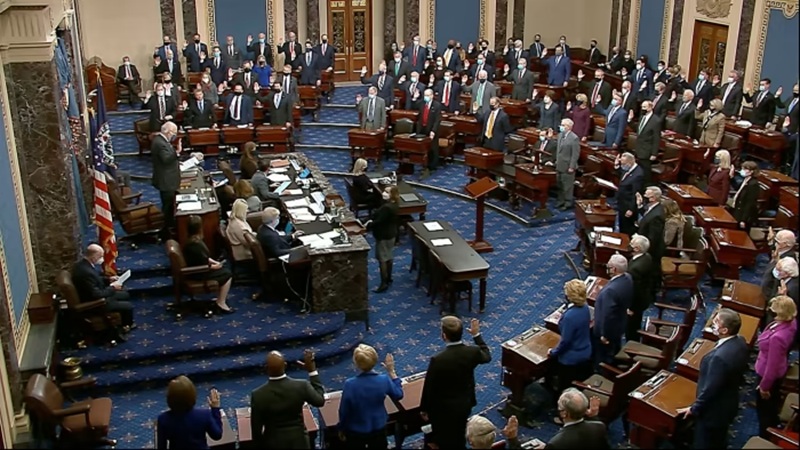

Sen. Cynthia Lummis Accuses Democrats of Prioritizing Politics After CLARITY Act Fails to Advance in Senate

0

Republican U.S. senator representing Wyoming Sen. Cynthia Lummis, has accused Democrats of putting politics ahead of progress, after the CLARITY Act failed to advance in the U.S. Senate, dealing a setback to efforts to establish a comprehensive regulatory framework for the cryptocurrency industry.

In a statement following the vote, Lummis said Democrats proved they were never truly serious about protecting consumers and preserving American leadership.

She argued that after more than a year of negotiations and substantial concessions, the opposition amounted to political gamesmanship rather than genuine policy disagreement.

She wrote on X,

This afternoon, Senate Democrats proved they were never truly serious about protecting consumers and preserving American leadership. I sat at the table with Senate Democrats working in good faith to get this done while they played games. For over a year, they presented demands and the second we met them, they made new demands and moved the goalposts. Today they voted against real limitations on politicians’ personal crypto investments. They voted against protecting American consumers from the scammers and fraudsters this bill would have shut down.

They voted against American leadership, and handed China and every one of our foreign competitors exactly what they wanted. Democrats chose politics over the American people—again. That’s not leadership on their part, that’s surrender to their radical, socialist base. The once-proud Democratic Party is anti-consumer and pro-illicit finance, anti-ethics, anti-free enterprise, anti-worker, anti-livable wage jobs, and pro-socialism. The Democrats are now anti-American. Sad!”

The Senate voted 49-50 against invoking cloture on the motion to proceed to H.R. 3633. The measure needed 60 votes to advance to full debate. All Democrats opposed the motion.

Lummis, the bill’s lead Senate architect, had framed Tuesday’s vote as “now or never.” Ahead of the tally she told reporters that if the cloture motion failed, “I think we’re done. It’s over,” noting that sponsors had already granted more than 120 Democratic requests. On the Senate floor, she urged colleagues to “vote yes” and lead the digital age rather than cede ground to foreign competitors.

The CLARITY Act aimed to establish the first comprehensive federal regulatory framework for digital assets. It would have clarified jurisdiction between the Securities and Exchange Commission and the Commodity Futures Trading Commission, set rules for trading, stablecoins, and decentralized finance, and included consumer protections and ethics restrictions on public officials’ involvement with crypto assets.

Republicans released what they described as the final text on September 14, incorporating 126 substantive changes Democrats requested over months of bipartisan talks.

The updated version featured strengthened ethics language, including a role for state attorneys general in enforcement and restrictions covering the president, vice president, members of Congress, federal judges, and their spouses—provisions Republicans said reflected all of a bipartisan ethics proposal substantially.

Democrats who had engaged in negotiations ultimately voted no. Concerns centered on whether the ethics provisions adequately addressed potential conflicts of interest, particularly those involving President Donald Trump’s crypto-related businesses, as well as remaining issues around enforcement, illicit finance, and other safeguards. Some argued the language still fell short of preventing personal profit from the industry while setting its rules.

The House had passed an earlier version of the bill by a wide bipartisan margin in 2025. The Senate Banking Committee advanced related text earlier in 2026. The failure leaves the legislation stalled with limited time remaining on the congressional calendar before midterm elections and the subsequent recess.

While the bill remains on the calendar and could theoretically return, Lummis expressed strong skepticism about further progress this year.

The outcome marks a significant setback for the cryptocurrency industry, which had invested heavily in lobbying for market-structure legislation to replace regulatory uncertainty with clear rules.

Markets reacted with declines in bitcoin and shares of major crypto firms following the vote. With comprehensive congressional action now unlikely in the near term, attention is expected to shift to ongoing rulemaking efforts by the SEC and CFTC.

Samsung Backs Dutch AI Chip Startup Euclyd in $231 Million Round to Challenge Nvidia

0

Samsung has backed Dutch artificial intelligence chip startup Euclyd in a $231 million funding round, adding another major semiconductor company to a growing wave of investment aimed at challenging Nvidia’s dominance of the AI computing market.

Euclyd, founded in 2024, raised 200 million euros in its Series A round from Somerset Capital Partners, EQT’s Scaleup Europe Fund and Innovation Industries, which co-led the financing alongside Samsung, the company’s chief executive Bernardo Kastrup told CNBC.

The startup is developing an AI computing system built around an architecture different from the graphics processing units that have made Nvidia the dominant supplier of advanced AI chips. Euclyd is initially focusing on inference, the process of running trained AI models to generate responses and perform tasks.

Nvidia became the world’s most valuable company after its GPUs, initially developed primarily for gaming and graphics, became the industry standard for training and running sophisticated AI models. The company has established a near monopoly in the highest-end AI accelerator market, creating an enormous commercial opportunity for competitors seeking to offer alternatives on price, energy consumption or specialized performance.

The competitive landscape is already widening.

Hyperscalers including Google, Amazon Web Services and Meta are developing their own processors for AI workloads, while OpenAI announced in August that its first AI chip, Jalapeño, delivered what it described as “industry-leading speed and efficiency.”

For startups such as Euclyd, the opportunity is not necessarily to replicate Nvidia’s GPU architecture but to question whether the same computing approach will remain optimal as AI workloads evolve.

“AI is becoming a foundation of economic growth, scientific discovery and national competitiveness, but its potential will remain constrained unless we fundamentally change the infrastructure beneath it,” Kastrup said.

Euclyd is betting that inference presents an especially attractive opening.

Training a frontier AI model can require enormous amounts of computing power, but once a model is deployed, the number of times it is queried can quickly become much larger. As companies integrate AI into customer service, software development, enterprise search and other applications, the cost and energy required to generate those responses can become a significant part of operating expenses.

That creates room for specialized hardware if it can deliver lower power consumption and lower costs without sacrificing performance.

Euclyd said its silicon systems for foundation models are designed to reduce the energy requirements and costs of AI data-center infrastructure. The company has not yet demonstrated its technology through commercial deployments at scale, leaving a significant gap between its architectural claims and what customers will ultimately pay for.

Samsung’s Bigger Role Beyond the Investment

Samsung’s involvement could nevertheless give Euclyd an advantage that goes beyond capital.

Kastrup said the South Korean technology giant can contribute memory expertise, engineering capabilities and supply-chain relationships as Euclyd moves from chip design toward physical systems.

“Samsung can help us in more ways than money,” Kastrup said. “They are one of the biggest memory manufacturers in the world. They do a lot of engineering, they know a lot about systems, they know the supply chain, they have a huge network.”

Samsung’s involvement is crucial because AI accelerators are not standalone products. Their performance depends heavily on the interaction between processing, memory bandwidth, packaging, networking, and the broader data-center architecture.

The recent AI-chip boom has exposed bottlenecks well beyond processor design, particularly in advanced memory. High-bandwidth memory has become one of the most important components in AI infrastructure, while packaging and manufacturing capacity can determine how quickly promising chip designs reach customers.

Samsung’s position across memory and semiconductor manufacturing therefore potentially gives Euclyd access to capabilities that a young chip designer would struggle to build independently.

The investment also shows that the AI-chip race is becoming less concentrated around the question of who can produce the fastest accelerator.

For years, Nvidia’s advantage was reinforced by the combination of its GPUs, software ecosystem and close relationships with cloud providers and AI developers. Competing directly on raw computing performance is therefore extremely difficult.

A startup with a different architecture can instead target a narrower problem, such as inference efficiency, where customers may care less about peak performance and more about the cost of running millions or billions of AI queries.

Euclyd is pursuing two business models. It plans to sell hardware and complete physical rack systems to enterprises that want to run AI inference on their own infrastructure, particularly where security and control make self-hosting attractive. It also plans to license its intellectual property to companies that want to develop their own processors using Euclyd’s existing technology.

The second model could potentially give the company a way to scale beyond the number of physical systems it can manufacture and deploy itself. But it also introduces a different competitive challenge: customers buying intellectual property will need to believe that Euclyd’s architecture offers enough of an advantage to justify developing around it rather than using established chip platforms.

Euclyd expects to begin rolling out its physical chip systems in 2028 and aims to serve thousands of enterprise customers by 2030, according to Kastrup. Those targets are ambitious given that the company is only two years old and has yet to demonstrate its systems in large-scale commercial deployments.

The funding nevertheless shows how investors are becoming more willing to finance alternatives to Nvidia at a time when demand for AI computing remains exceptionally strong. The opportunity is attracting both startups and the largest technology companies, with hyperscalers developing internal chips to reduce dependence on external suppliers and improve control over the economics of their AI infrastructure.

Nvidia’s position has been built not only on chip performance but also on software, developer adoption and scale. Any challenger must therefore demonstrate more than an attractive processor design. It must prove that customers can deploy the technology reliably, that developers can build for it efficiently and that the total cost of ownership is materially better.

Euclyd’s focus on inference could give it a narrower path into the market. If AI usage continues expanding, inference could become a larger and more persistent infrastructure expense than the current training boom suggests. Lower energy consumption and cheaper computation would then become commercial advantages rather than simply technical specifications.

Samsung’s investment gives that bet additional semiconductor credibility, especially because memory and system engineering are becoming as important to AI infrastructure as the accelerator itself. But the real test will come in 2028 and beyond, when Euclyd’s systems are expected to reach customers. Until then, the company remains an ambitious challenger in a market where Nvidia’s technological and ecosystem advantages are substantial.

While the funding signals investor confidence that the AI-chip market will support multiple architectures, it does not yet prove that Euclyd can displace Nvidia. The more immediate bet is that the next phase of AI computing will reward companies that can make inference cheaper, more energy-efficient, and easier to deploy, rather than simply making another faster GPU.

CLARITY Act Senate Vote: Crypto Regulation Bill Faces Opposition From States, Banks and Democrats

0

The revised Digital Asset Market Clarity Act has reached a decisive moment in Washington, but instead of producing a clean bipartisan compromise, the legislation is facing resistance from three powerful directions: state regulators, the banking industry and Democratic lawmakers concerned about presidential conflicts of interest.

Senate Republicans have presented the latest version as a final offer after months of negotiations. Senator Cynthia Lummis and other Republican leaders say the draft incorporates 126 substantive changes requested by Democrats, while adding provisions designed to address concerns over stablecoins, enforcement and government ethics.

Yet the concessions have not ended the opposition. New York Attorney General Letitia James has assembled a bipartisan coalition of 17 other state attorneys general urging senators to reject the legislation.

Their central concern is federal preemption: they argue that the bill could weaken states’ ability to register digital-asset businesses and pursue fraud, while giving the Securities and Exchange Commission excessive discretion over when federal rules override state authority.

That objection goes directly to one of the most important questions surrounding American crypto regulation: who ultimately has the power to police the industry? For years, state regulators have acted as an additional layer of enforcement in an industry frequently criticized for scams, market manipulation and consumer losses.

James argues that weakening this layer could leave investors more exposed precisely as digital assets become increasingly integrated into mainstream finance. The banking industry has a different concern. Eight bank trade groups are pressing lawmakers to tighten provisions governing stablecoin rewards.

Their argument is that the current language could still permit arrangements resembling interest payments, potentially allowing stablecoin issuers to compete with banks for deposits without facing equivalent regulatory obligations. That conflict highlights the economic stakes of stablecoins.

As dollar-linked digital assets expand, they increasingly sit between traditional deposits, payment infrastructure and crypto markets. Banks fear that attractive stablecoin rewards could accelerate deposit migration, particularly from smaller community institutions.

The revised bill therefore includes a Treasury “circuit breaker” intended to respond to substantial deposit outflows linked to payment stablecoins.

Then comes the most politically explosive issue: President Donald Trump’s crypto interests. Senator Elizabeth Warren has argued that the revised ethics provisions do not go far enough to prevent Trump and affiliated ventures, including World Liberty Financial, from benefiting from the regulatory environment created by the bill.

Democrats have questioned whether the proposed enforcement structure would actually prevent presidential conflicts of interest. Republicans counter that the legislation already incorporates substantial Democratic demands, including new enforcement mechanisms and ethics restrictions. Trump has agreed to provisions limiting certain crypto activities while in office.

The immediate test is therefore mathematical as much as political. Cloture requires 60 votes, meaning Republicans need at least seven Democrats to join them if every Republican supports advancing the measure. Reuters describes the vote as a crucial test for whether Congress can establish a comprehensive federal framework for digital assets this year.

The Clarity Act has consequently become larger than a crypto bill. It is now a referendum on federalism, banking competition, presidential ethics and America’s approach to digital finance. Its supporters see a historic opportunity to replace regulatory uncertainty with defined rules. Its opponents see unresolved loopholes that could weaken consumer protection and institutional safeguards.

The Senate’s vote will determine whether those disagreements move into the amendment process—or whether America’s long-awaited crypto market-structure legislation stalls before reaching the finish line.

From AI Infrastructure to Defensive Stocks: Markets Seek a New Safe Haven

0

Monday’s equity-market rotation offered a revealing snapshot of how investors are navigating a market increasingly shaped by artificial intelligence, elevated valuations and shifting expectations around economic growth.

Money moved out of AI infrastructure names and into sectors perceived as more defensive, while cybersecurity stocks emerged as an unexpected standout.

The move was not simply a retreat from technology. Instead, it reflected a broader reassessment of where investors could find resilience as Treasury yields eased after briefly approaching the 5% threshold.

The S&P 500 and Nasdaq, which had suffered steep early declines, recovered a significant portion of their losses as bond-market pressure moderated. Healthcare was among the beneficiaries. Johnson & Johnson and Eli Lilly strengthened as investors sought companies whose demand is less directly tied to corporate technology spending or aggressive economic expansion.

Pharmaceutical businesses can offer a degree of earnings visibility because healthcare consumption tends to remain relatively resilient even when financial conditions become less supportive.

Consumer staples attracted similar interest. Kimberly-Clark and Costco benefited as investors moved toward companies associated with everyday consumption.

These businesses occupy a different part of the economic cycle from high-growth technology companies, making them attractive when investors begin questioning whether lofty growth expectations are adequately reflected in stock prices.

Yet the most striking move came from cybersecurity. CrowdStrike and Palo Alto Networks surged roughly 14%, highlighting an important paradox within the technology sector. While investors were reducing exposure to portions of the AI infrastructure trade, they were simultaneously buying companies positioned to protect the increasingly digital economy.

Artificial intelligence is expanding the attack surface for businesses, governments and financial institutions. AI systems can accelerate productivity, but they can also generate new vulnerabilities, automate sophisticated attacks and increase the speed at which malicious actors can exploit weaknesses.

As organizations deploy more AI applications and connect more data to cloud infrastructure, cybersecurity becomes less of an optional technology expense and more of a fundamental operating requirement. That dynamic creates a powerful investment thesis.

The greater the adoption of AI and digital infrastructure, the greater the potential demand for security products capable of defending those systems. This does not mean cybersecurity stocks are immune to valuation concerns.

Companies such as CrowdStrike and Palo Alto Networks remain growth-oriented technology businesses, and their valuations can still respond sharply to changes in interest rates, earnings expectations and risk appetite. A 14% jump in a single session can also reflect positioning and short-covering rather than a permanent change in fundamental value.

The rotation illustrates how investors are differentiating within technology rather than abandoning the sector altogether. AI infrastructure companies remain central to the long-term technological transformation, but the market is beginning to distinguish between businesses financing AI expansion and those providing essential services around it.

The broader lesson is that defensive investing in the AI era may look different from previous market cycles. Investors do not necessarily have to leave technology to become defensive. Cybersecurity can itself function as a defensive growth theme because its importance rises alongside digital complexity.

Monday’s trading therefore represented more than a sector rotation. It was a reminder that markets constantly search for the next combination of growth, resilience and necessity.

Healthcare and consumer staples provided traditional shelter, while cybersecurity offered a newer form of protection—one built around the risks created by the very technological revolution investors are still trying to capture.