DD
MM
YYYY

PAGES

DD
MM
YYYY

spot_img

PAGES

Home Blog Page 288

AI Takes the Entry Jobs: UK Tech Sector Slashes Graduate Roles by Nearly Half

0

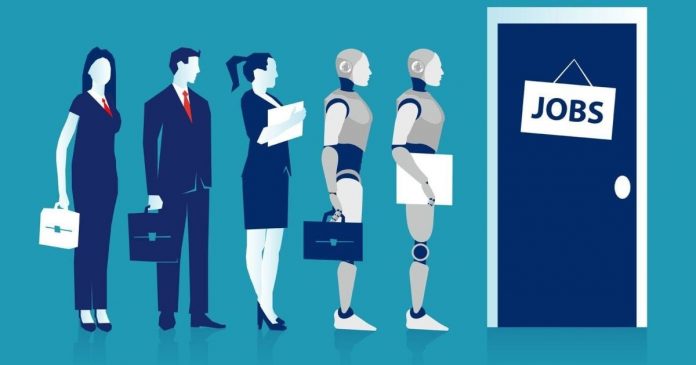
The United Kingdom’s technology sector is cutting back sharply on graduate recruitment, with new figures showing a 46 percent drop in entry-level roles over the past year — and an additional 53 percent decline projected for the coming year.

According to the Institute of Student Employers (ISE), the dramatic contraction signals a major shift in how the industry hires as artificial intelligence begins to take over the very tasks once assigned to new recruits.

The ISE’s annual data reveal that while overall graduate hiring across industries fell by 8 percent — the first annual decline since the pandemic-driven slump of 2020 — the technology and pharmaceutical sectors have been hit hardest. For tech, the change is both structural and symbolic as the sector that built the tools of automation is now being reshaped by them.

Stephen Isherwood, joint chief executive of ISE, said the displacement of entry-level professionals by AI was no longer theoretical.

“It is a tough market for students and young people in general. There is not much churn in the labor market and young people are suffering,” he told the Financial Times.

Employers are finding that AI systems can perform routine coding, data analysis, and digital maintenance — the same basic tasks that used to define the early stages of many tech careers. As a result, companies are choosing to recruit fewer graduates and instead prioritize experienced workers who can integrate AI into higher-value processes.

Despite the decline, tech remains the top field for graduate opportunities by volume, with 46 percent of organizations across the UK economy still seeking IT, digital, and AI skills. Yet the paradox remains that demand for technology skills is growing, even as the sector provides fewer openings for the youngest entrants.

The survey also highlights an ironic twist — while AI is reshaping the job market, it has not yet become central to graduate hiring itself. ISE found that although over half of employers use automated systems to manage some testing processes, direct AI use remains rare. Only 15 percent of employers said they employ AI tools in gamified assessments, though that number is expected to rise as both companies and candidates become more comfortable using AI technologies in recruitment.

Meanwhile, employers are increasingly wary of applicants using AI to gain an unfair advantage. Seventy-nine percent of surveyed companies said they were redesigning or reviewing their recruitment procedures in response to AI developments. Still, only 15 percent said they had never suspected candidates of using AI tools to cheat on assessments.

The broader trend has been visible across the global technology industry this year. Major software firms such as Salesforce and Workday have announced thousands of job cuts while simultaneously expanding their deployment of generative AI to handle internal operations. Microsoft, too, confirmed plans to eliminate about 10,000 positions in its workforce as it integrates new AI tools across its products and services.

The result, according to analysts, is an emerging “AI paradox” in employment — the very technology that fuels innovation in the sector is also squeezing out the entry routes for the next generation of professionals. What used to be considered “learning work” — debugging code, managing data sets, or assisting in development cycles — is now being done faster and cheaper by automation.

Isherwood’s comments suggest that the shift could have lasting implications. With fewer opportunities for graduates to gain early experience, the pipeline for mid-level talent may dry up within the next five years. The short-term efficiency gains companies enjoy today could lead to long-term skills shortages as fewer workers gain hands-on experience in the fundamentals of software engineering and data systems.

The contraction comes at a time when AI literacy is becoming essential in nearly every profession — yet the pathway into the tech sector, where those skills are most relevant, appears to be narrowing.

Experts warn that while firms may be optimizing for productivity, they risk undermining the development of human expertise that drives innovation. Without sufficient junior roles, fewer workers will have the chance to master the skills that senior technical positions require, leaving the sector more dependent on a shrinking pool of experienced professionals.

For graduates, the new reality is that even the most technologically advanced industries are no longer guaranteed to offer a starting point. The same tools that power progress — from automated code assistants to machine learning models — are now competing directly with them.

If ISE’s projections prove accurate, the UK tech sector could be facing not just a hiring slowdown, but a generational gap. And for thousands of students entering the workforce, the question is no longer how to get into tech — but whether there will still be an entry point at all.


X Launches Handle Marketplace, Puts $2.500 & Above Price Tags on Rare Usernames to Drive Premium Subscriptions

0

Elon Musk’s social platform, X, is rolling out a new Handle Marketplace that allows Premium Plus and Premium Business users to browse and request inactive usernames — a move that effectively turns dormant handles into digital assets for sale.

The company is framing the initiative as part of its broader effort to create new revenue streams and attract more paying subscribers.

According to the company’s latest announcement, handles will be divided into two main categories. Priority handles, which include typical full names, multi-word phrases, or alphanumeric combinations, will be available for free to eligible users.
Rare handles, however, will come with a price tag ranging from $2,500 to over seven figures, depending on the handle’s demand and uniqueness.

The launch represents one of X’s most ambitious attempts yet to monetize digital identity on the platform, transforming usernames—once free and available on a first-come, first-served basis—into premium digital real estate.

How the Marketplace Works

X describes the Handle Marketplace not as a one-time perk, but as an ongoing subscription-based service integrated into its Premium tiers. Only Premium Plus and Premium Business subscribers will have access, allowing them to search a catalog of dormant or inactive accounts and request ownership of their usernames.

Once a user secures a new handle through the marketplace, their previous username will be frozen, making it unavailable to others. The company also noted that it may introduce a redirect option—which would forward traffic from a user’s old handle to the new one—as an additional paid add-on in the future.

However, the ability to retain these rare handles will depend on a user’s subscription status. X stated that if a user downgrades or cancels their Premium plan, their account will automatically revert to its original username, and access to the marketplace-acquired handle will be revoked. This condition effectively locks premium usernames behind a continuous paywall.

The decision to monetize usernames follows months of speculation about X’s plans to auction off dormant handles. Musk first hinted in late 2023 that the company would explore reclaiming and reselling inactive usernames as part of efforts to “clean up” legacy accounts.

The marketplace formalizes that concept, aligning with X’s ongoing push to diversify income sources beyond advertising, which has declined sharply since Musk’s takeover. The company aims to attract more high-value subscribers, especially businesses, influencers, and collectors looking to secure distinctive brand identities by introducing an exclusive username economy.

Digital branding experts say this approach could turn social media handles into a form of digital real estate—similar to domain names in the early 2000s—where scarcity and prestige drive value.

A Strategy to Drive Paid Subscriptions

The Handle Marketplace fits neatly into X’s strategy to grow its subscription ecosystem. Since Musk rebranded Twitter to X, the company has leaned heavily on paid plans—Premium, Premium Plus, and Business tiers—as it seeks financial stability amid ongoing advertiser pullback.

Premium Plus users currently pay $16 per month, while Premium Business subscribers are billed $42 per month. These plans offer enhanced features such as reduced ads, higher ranking in replies, and increased revenue-sharing opportunities. The addition of a handle marketplace adds a tangible, status-driven incentive for users to remain subscribed at higher tiers.

Some believe the service could generate substantial non-advertising revenue if priced effectively, particularly among businesses seeking short, recognizable, or brand-aligned handles.

Potential Implications

While the initiative may appeal to businesses and elite users, it also raises questions about fairness and access. Critics argue that placing rare handles behind a paywall could erode X’s long-standing culture of open participation, effectively pricing out regular users from desirable usernames.

There are also concerns about transparency and disputes over ownership, particularly if inactive accounts are reclaimed and resold without clear notification to former holders. In similar past efforts, social media platforms like Instagram and TikTok have faced backlash for reclaiming inactive usernames for brand use or resale.

Additionally, the pricing structure—starting at $2,500 and reportedly reaching seven figures—suggests that X is betting heavily on exclusivity and prestige, mirroring auction-style domain markets rather than traditional social media systems.

A New Phase in X’s Monetization Drive

The Handle Marketplace launch continues X’s broader experimentation with paid digital identity features, following earlier initiatives such as verification badges and ad-revenue sharing for Premium users.

It also reflects Musk’s broader ambition to reposition X as an “everything app,” blending social media with payments, commerce, and professional networking.
X appears to be creating a new digital economy within its ecosystem—one where identity itself becomes a subscription-driven commodity.

For X’s business model, the question now is whether this marketplace becomes a sustainable revenue engine or just another feature that benefits a small fraction of elite users.

Either way, it marks another bold step in Musk’s push to rebuild X’s financial foundation around direct user monetization rather than advertising—a transformation that continues to reshape the platform’s identity, economy, and culture.

Bitcoin Rebounds Amid Renewed Optimism and Institutional Confidence

0

The price of Bitcoin has recorded a significant recovery, gaining momentum early Monday after the crypto asset retraced from $103,437.

Data from CoinDesk revealed that Bitcoin climbed 2.9% in the past 24 hours to reach $111,090. The uptick reflected renewed risk appetite as hopes rose for a de-escalation in U.S.–China tensions. President Donald Trump confirmed plans to meet Chinese President Xi Jinping in South Korea in two weeks, following threats of fresh tariffs on China.

Speaking with Fox Business, Trump expressed confidence in an eventual positive outcome, stating, “We’re going to be fine with China.”

Market sentiment was further boosted by cautiously optimistic economic data from Asia. China’s third-quarter GDP growth came in at 4.8%, in line with LSEG expectations, while Japan’s benchmark Nikkei 225 jumped 3.4% to close at a record high.

Shares of cryptocurrency exchanges Coinbase Global and Robinhood Markets also advanced between 3% and 4% in premarket trading, tracking the upward move in crypto prices. This came despite operational disruptions caused by a major Amazon Web Services (AWS) outage.

Other top-cap cryptocurrencies took cues from Bitcoin, with Ethereum rising 4.6% to reclaim the key $4,000 level. XRP, Solana, BNB and Dogecoin (DOGE) rose 3% to 5% over the past 24 hours. The global crypto market capitalization was up 4.6% to $3.78 trillion.

Despite Bitcoin price recovery, analysts suggests that Bitcoin might be showing early signs of bottoming out, even as gold’s powerful rally appears to have peaked. The precious metal, which reached an all-time high of around $4,380 per ounce on Friday, has since fallen by 2.9%, though it remains up over 62% year-to-date. Bitcoin may face challenges as long-term holders continue to take profits, analysts cautioned.

Market expert James Check dismissed conspiracy theories around price manipulation, noting that the crypto sell-off was driven simply by “good old-fashioned sellers.” Meanwhile, social media personality Andrew Tate warned that Bitcoin could still fall to $26,000 before forming a true market bottom, arguing that persistent optimism among traders could prolong the downturn.

CryptoQuant analyst Julio Moreno highlighted a key technical shift after Bitcoin broke below its previous consolidation range of $120,000–$108,000, drawing attention to $100,000 as the next major support level. Using the On-chain Realized Price Bands metric, Moreno identified this zone as a critical threshold that could determine the next phase of Bitcoin’s price movement.

Despite short-term volatility, institutional sentiment toward Bitcoin remains overwhelmingly positive. According to a recent Coinbase Institutional report titled “Navigating Uncertainty”, 67% of surveyed institutional investors expressed a bullish outlook for Bitcoin over the next three to six months.

Institutional activity continues to support the market’s resilience. Coinbase’s Head of Research, David Duong, noted the strong influence of digital asset treasury firms in stabilizing markets. BitMine, chaired by Tom Lee, has reportedly purchased over 379,000 Ether (ETH) worth nearly $1.5 billion following the recent crash that pushed ETH below $4,000. Similarly, MicroStrategy founder Michael Saylor hinted that his firm may increase its Bitcoin holdings, after sharing data showing $69 billion in reserves.

Analysts agree that the $100,000 mark remains a psychologically and technically significant level for Bitcoin. A sustained defense of this support could reinforce investor confidence, while a break below it could spark widespread selling among short-term holders seeking to minimize losses.

Outlook

For now, optimism is cautiously returning to crypto markets, buoyed by institutional confidence and improving macroeconomic sentiment. Investors however remain cautious in the market incase of a significant pullback.

Palantir CTO Warns of U.S. Economic Dependence on China, Says “We’re Funding Our Own Demise”

0

Palantir Technologies Chief Technology Officer Shyam Sankar has warned that the United States is already in an “economic war” with China and must recognize its dependence on Beijing as a national weakness.

Writing in an opinion piece published by The Wall Street Journal, Sankar argued that the U.S. is dangerously reliant on China for manufacturing and supply chains, and that many business leaders still refuse to acknowledge this reality.

“The first step to ending our dependence on China is admitting we have a problem,” Sankar wrote. “We can continue as useful idiots, decrying ‘China hawks’ who point out that we’re funding our own demise. Or we can wake up to the reality that we’re already in an economic war in which every purchase and investment will help determine which system survives.”

Sankar’s remarks, which mirror growing concern among U.S. policymakers about China’s rise as a technological and economic powerhouse, come amid a widening rift within Silicon Valley over how to deal with Beijing. The Palantir executive took aim at the complacency of corporate America, accusing some executives of ignoring the long-term risks of dependence on China’s market and infrastructure.

While Sankar did not name anyone directly, his critique appeared to counter recent comments by Nvidia CEO Jensen Huang, who said that being labeled a “China hawk” should not be considered a mark of honor. Huang told attendees at a conference earlier this year that it “doesn’t have to be all us or them. It could be us and them.” He argued that technological collaboration between the world’s two largest economies should not be viewed through a zero-sum lens.

Huang, whose company once relied heavily on Chinese demand for its advanced graphics chips, has consistently warned that export controls could harm U.S. interests. He said last year that restrictions on high-end chip sales to China could backfire, noting that “if [the U.S.] loses access to that market, companies like Huawei will define global standards.” Nvidia’s market share in China — once estimated at 95% in the data center GPU segment — has since fallen to near zero following Washington’s tightening of semiconductor export rules.

Sankar’s view sharply contrasts with Huang’s stance. He argued that China’s long-term strategy is to use foreign companies only until it can develop domestic substitutes. Once that happens, he warned, Beijing would flood the global market with cheaper alternatives while simultaneously limiting access to its own market for Western firms.

“China is using foreign companies to support its goals until it can develop a credible home-grown challenger,” he wrote.

Despite his criticism of China’s practices, Sankar acknowledged that U.S. corporations have played a major role in enabling China’s rise.

“American companies have been an undeniable part of China’s growth,” he noted, citing the investments of firms like Apple, Tesla, Intel, General Motors, Procter & Gamble, and Coca-Cola. The combination of Western capital, technology, and expertise, he said, has helped China become the world’s manufacturing hub.

Analysts have long argued that multinational companies remain in China not only because of low labor costs but also because it is the only nation that has built a complete, reliable supply chain for high-tech manufacturing. That advantage, Sankar warned, has left Washington in a precarious position — one in which it cannot easily disengage without economic disruption.

He urged U.S. policymakers and business leaders to face the problem directly by rebuilding the nation’s industrial base.

“While Washington does not have to completely stop trade with China, it does have to take steps to build alternative markets and supply chains,” Sankar wrote.

His position aligns with growing bipartisan calls in Congress to “de-risk” supply chains by diversifying production to allied nations like India, Vietnam, and Mexico.

Sankar also warned that the United States is running out of time to act. “The current situation will only get worse if the U.S. does not take action today,” he said, quoting American author Upton Sinclair: “It is difficult to get a man to understand something, when his salary depends upon his not understanding it.”

The line, he implied, captures the reluctance of U.S. executives to accept that their dependence on China poses strategic risks.

Economists say the trade relationship between the U.S. and China, the world’s two largest economies, has grown increasingly complicated since Washington began imposing tariffs and export restrictions during the Trump administration. President Donald Trump’s 2018 tariffs on Chinese goods, which targeted industries like steel, electronics, and solar panels, were meant to reduce trade imbalances and push companies to reshore production. Those measures were later expanded to include restrictions on semiconductors, artificial intelligence, and other critical technologies.

The Biden administration had largely maintained and expanded those controls, introducing new rules in 2023 to restrict the sale of advanced AI chips to China. Nvidia, AMD, and Intel were all forced by current Trump administration to develop modified versions of their products to comply with the new export standards. Beijing, in turn, has responded with curbs on Rare Earth materials like gallium and germanium, which are essential for chipmaking.

The result, analysts say, is a de facto economic standoff — one that Sankar argues the U.S. cannot afford to ignore. His warning reflects a growing school of thought in Washington that sees economic competition with China as an existential struggle, not merely a trade dispute.

“Every purchase and investment,” Sankar wrote, “will help determine which system survives.”

But shifting away from China will not be easy. American consumers have become accustomed to low-cost goods manufactured in Chinese factories, and U.S. companies still rely on China’s industrial ecosystem for mass production. Economists say that rebuilding domestic supply chains could take decades and require unprecedented public and private investment.

Sankar acknowledged the difficulty of the path ahead but insisted that denial is no longer an option. “It’s only with that realization that the United States can take the painful but necessary steps to ensure that it remains sovereign,” he concluded, warning that Beijing’s ambitions for global supremacy will not wait for American complacency to fade.

At the heart of Sankar’s argument is a call for strategic clarity — a demand that Washington and Silicon Valley recognize that globalization has costs as well as benefits.

BNB’s 13% Rally, DOGE’s $0.23 Target, & BlockDAG’s $430M Presale: 3 Coins Shaping Crypto’s Next Big Wave

0

The crypto market is heating up once again. Binance Coin (BNB) has surged more than 13%, climbing past $1,280 and reigniting talk of a potential long-term rally. Dogecoin (DOGE) is also flashing bullish signals as its chart forms a pennant pattern that could push prices beyond $0.23 if momentum continues.

But while traders chase short-term setups, another story is quietly stealing the spotlight. BlockDAG (BDAG), a next-generation Layer-1 project, has raised $430 million in its presale at just $0.0015 per coin, turning early buyers into believers in its long-term trajectory.

Audited by CertiK and Halborn, BlockDAG is attracting serious attention. Its thriving testnet, growing base of over 3.5 million users, and strong real-world utility position it as the best crypto platform to watch before Genesis Day reshapes the market conversation.

BNB Climbs 13% as Possible Bull Run Builds

BNB, the native token of Binance, has gained more than 13% to trade near $1,288, supported by a sharp 55% rise in daily trading volume to $10.7 billion. This uptick aligns with a 4.5% overall market increase, reflecting improving sentiment across major assets like Bitcoin and Ethereum.

The move above key resistance levels between $1,150 and $1,310 highlights renewed buyer confidence. Technical indicators, including a positive MACD and an RSI reading of 61, suggest ongoing strength. If momentum holds, BNB could aim for $1,320, though a pullback to $1,280 remains possible.

DOGE’s Pennant Formation Hints Bullish Breakout Ahead

Dogecoin (DOGE) is showing a promising setup after climbing from $0.185 to above $0.21, forming what appears to be a bullish pennant on the 4-hour chart. This structure typically signals a continuation pattern, where consolidation is followed by a price surge if support remains firm.

Currently, $0.21 acts as a critical level for short-term sentiment. A strong push above $0.212 could open the path toward $0.225 or even $0.23. However, falling below $0.20 would weaken this outlook. Traders are closely watching as meme coins often accelerate quickly when broader market optimism returns.

Whales Accumulate BlockDAG as $0.0015 Entry Window Nears Its End

BlockDAG’s presale is entering a critical phase, and the quiet accumulation by whale wallets is turning heads across the market. On-chain trackers have identified a surge in six-figure purchases throughout October, revealing that large holders are positioning early ahead of Genesis Day. With the presale price locked at $0.0015 in Batch 31 for a limited time and a confirmed $0.05 listing ahead, whales appear to be securing a 30x upside before the next valuation shift.

The scale of these transactions tells the story. Multiple buys ranging from $100,000 to $250,000 are being recorded daily, signaling growing institutional-sized confidence in BlockDAG’s fundamentals. With $430 million already raised, 27B+ coins sold, and 20,000 miners distributed globally, this project has surpassed the typical presale threshold and entered a phase of real-world validation.

Whales are not just chasing hype; they are betting on a network ready for immediate use. BlockDAG’s hybrid EVM-compatible design and developer base of 4,500 builders working on more than 300 projects show that its ecosystem will launch fully active. The technology is in place, and the community is expanding fast.

For retail participants, the opportunity lies in timing. Every batch brings higher pricing, and the $0.0015 window is narrowing. Once Genesis Day arrives, this stage of accumulation will be history, and the next wave of demand will belong to those who moved early.

Quick Breakdown

BNB’s recent breakout showcases resilience, while Dogecoin’s chart setup captures short-term excitement. Both moves reflect the market’s shifting rhythm, but BlockDAG stands apart for entirely different reasons. The $430M presale, 27B+ coins sold, and verified Layer-1 technology point to structural strength rather than speculative momentum. This is not just another trend but the foundation of something lasting.

As Genesis Day draws near and the TGE code opens early access for priority buyers, BlockDAG is shaping the next phase of market leadership. Where others follow cycles, BDAG is quietly creating one of its own.

Presale: https://purchase.blockdag.network

Website: https://blockdag.network

Telegram: https://t.me/blockDAGnetworkOfficial

Discord: https://discord.gg/Q7BxghMVyu