DD
MM
YYYY

PAGES

DD
MM
YYYY

spot_img

PAGES

Home Blog Page 29

US Fed Rate Decision, What to Expect This Week

0

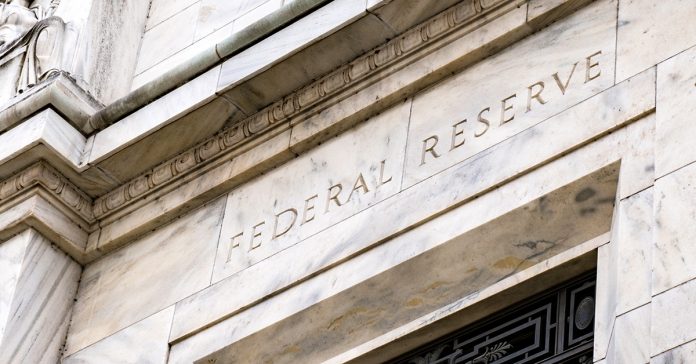
The Federal Open Market Committee (FOMC) is kicking off its final meeting of 2025 today, Tuesday, December 9, with the highly anticipated interest rate announcement set for tomorrow, Wednesday, December 10, at 2:00 p.m. ET.

This follows a two-day session, including a policy statement, updated economic projections including the “dot plot” for future rates, and a press conference with Fed Chair Jerome Powell starting at 2:30 p.m. ET.

It’s a pivotal moment, especially amid a year marked by economic turbulence, including a recent government shutdown that delayed key data releases like October’s inflation and jobs figures.

The market is pricing in a strong likelihood of the Fed delivering its third consecutive 25-basis-point (0.25%) rate cut, bringing the federal funds rate down to a range of 3.00%-3.25% from the current 3.25%-3.50% post-September and October cuts.

Tools like the CME FedWatch show about an 80-87% probability of this move, driven by a cooling labor market—layoff announcements hit 1.17 million through November, the highest since 2020—and persistent but moderating inflation— September’s core PCE at 2.9%, above the 2% target but down from peaks.

A Reuters poll of over 100 experts found 82% expecting the cut to support jobs without reigniting inflation. However, there’s internal Fed division—October’s minutes showed splits, with some preferring to hold steady—and forecasts for 2026 vary, with medians pointing to two more cuts but no clear consensus.

The Fed’s “data-dependent” approach is complicated by gaps from the shutdown, but Inflation held steady at 3% annualized in September up slightly from 2.9% in August, per BLS data. November figures drop post-meeting on December 18.

Jobs: Murky, but JOLTS job openings data releases today could show softening demand. Unemployment report follows on December 16. GDP growth forecasts in the SEP may be revised down slightly due to shutdown impacts, but the Fed ended its balance sheet runoff on December 1, signaling a pivot toward easing.

If the Fed surprises with a hold or bigger cut unlikely, <5% odds, it could jolt markets—stocks dipped Monday on caution. A cut could lift growth stocks and sectors like tech/real estate cheaper borrowing boosts valuations, but uncertainty lingers for 2026.

Asia markets fell today, echoing Wall Street’s pre-decision jitters. BTC hovered around $90K today (-1.4%), with traders eyeing dovish signals for a rally—non-yielding assets like BTC thrive on lower rates.

Yields may dip further; USD could weaken vs. EUR if cuts signal prolonged easing. Dovish tilt could squeeze shorts in silver/gold, with COMEX deliveries already at 52M oz 87% of inventories.

With the FOMC meeting underway today and the announcement looming tomorrow, the baseline expectation remains a 25-basis-point (0.25%) rate cut, lowering the federal funds target range to 3.50%-3.75%—the third consecutive easing move this year.

This would reflect the Fed’s prioritization of a softening labor market unemployment edging up to 4.2%, layoffs at 1.17 million through November—the highest since 2020 over sticky inflation (core PCE at 2.9%, above the 2% target but stable).

However, internal divisions evident in October’s 10-2 vote and hawkish dissent from members like Michelle Bowman and Christopher Waller and data gaps from the recent government shutdown introduce risks of a hold 12-20% odds per CME FedWatch or even a hawkish surprise.

A measured cut signals the Fed’s confidence in achieving a “soft landing”—sustaining moderate GDP growth ~2.1% annualized in Q3 while taming inflation without tipping into recession. By ending quantitative tightening on December 1, the Fed is injecting subtle liquidity which could boost credit availability and support business investment.

However, with forecasts for only 1-2 more cuts in 2026 median dot plot projection: 3.00%-3.25% by year-end, prolonged easing is off the table, tempering growth stimulus. Powell’s presser will be key—watch for hints on 2026 pauses or Chair succession his term ends May 2026.

Overall, expect volatility, but the base case is a measured cut to balance jobs and prices in a resilient if uneven economy.
Google Searches for “Debasement” Reach All-Time Highs

0

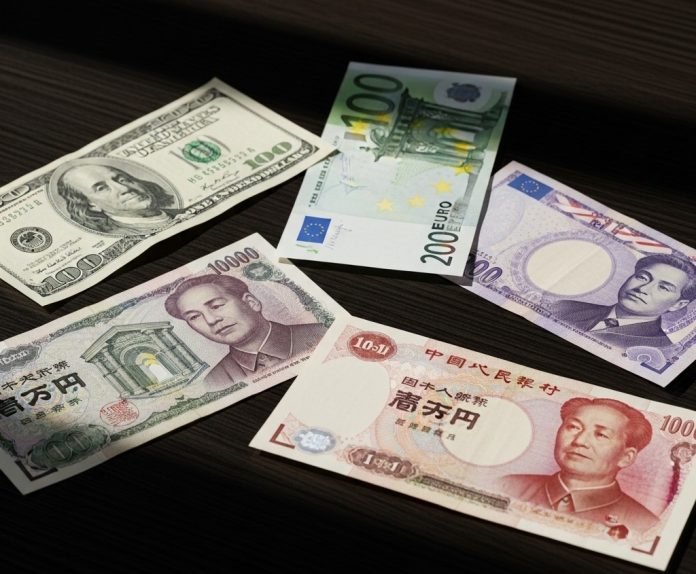
Google searches for “debasement” and especially “dollar debasement” have exploded to unprecedented levels in late 2025, signaling widespread public anxiety over currency erosion amid aggressive monetary policies.

This isn’t just a blip; it’s tied to the “debasement trade,” where investors flock to hard assets like Bitcoin and gold as hedges against fiat weakness. According to Google Trends, interest in “debasement” has hit its all-time high this quarter, surpassing previous peaks from 2012 during the Eurozone debt crisis.

Dollar debasement searches in the US reached record highs in recent weeks, peaking around early December 2025. The term’s visibility in global searches jumped dramatically starting October 9, 2025, coinciding with gold breaking $4,000/oz and Bitcoin nearing $120,000.

For context, the interest score Google’s normalized metric, where 100 is the peak popularity for “debasement” is now at 100 for the past 90 days, up from negligible levels pre-October.

This aligns with broader liquidity trends: US M2 money supply just hit an ATH of $22.3 trillion, fueled by the Fed’s pivot from quantitative tightening (QT) to easing, China’s stimulus, and ongoing BoJ printing.

Global M2 is even larger at ~$95 trillion. People are finally connecting the dots—this is why crypto exists. Currency debasement—historically, rulers like Henry VIII clipping coins with cheaper metals, or modern equivalents like money printing—erodes purchasing power.

Today, it’s amplified by: Post-COVID debt hangover: US debt at $37 trillion, with Trump’s fiscal policies threatening more issuance. Fed’s dovish turn: Rate cuts and balance-sheet expansion since Jackson Hole have weakened the USD to multi-year lows, boosting inflation fears.

Asset rallies as signals: Gold up 18% since August; Bitcoin searches also hit ATHs on Oct 23-24 amid these concerns. Markets are betting on “fiat debasement” over recession. Wall Street’s calling it the debasement trade: Buy scarce assets sell fiat or bonds.

As Lyn Alden noted in her December newsletter, this isn’t new—it’s the “monetary physics of a fiat system” pushing nominal prices up, even if real growth stalls. Bears shorting based on lagging data are getting squeezed by leading liquidity indicators.

Her latest deep dive, the December 3, 2025, newsletter titled “The So-Called ‘Debasement Trade'”, It unpacks why debasement fears are surging— dollar down 10% in H1 2025—the worst six-month drop in 50 years, gold blasting past $4,000/oz, and Bitcoin flirting with $120,000 in October.

This isn’t a shiny new “trade”— it’s the inexorable “monetary physics” of fiat systems playing out over five decades. Alden frames debasement as the slow erosion of fiat purchasing power through endless money printing, decoupled from gold since the 1970s.

It’s why everyday prices like Campbell’s tomato soup have steadily climbed post-1971 while asset prices balloon. The “trade” itself—short fiat/bonds, long hard assets like gold, Bitcoin, stocks, or real estate—has been winning since 2020, with bonds suffering their worst five-year run ever down nominally and way more after inflation.

The real bite comes when money supply growth outpaces bond yields. US broad money has grown 7% annually lately, but with 10-year yields at ~4-5%, net debasement is ~2-3%—mild compared to gold’s mining costs (1-2%).

Unlike the 2010s’ -5% debasement tailwind, expect “moderately negative” gaps ahead—money growing faster than yields, but without zero-rate magic. “The 40-year cycle of ever-lower interest rates is over… asset prices no longer have that tailwind of ever-lower rates behind them.”

Debasement isn’t a trade—it’s the default in fiat land, pushing nominal highs even as real growth sputters. With M2 at ATHs and Fed easing, expect more asset squeezes, but tempered by peak valuations.

For hedges, Bitcoin/gold remain her conviction bets she’s held BTC since $6,900 in 2020. The ‘monetary physics of a fiat system’ pushing nominal prices up. Debasement concerns are at an all-time high with a Trends screenshot showing the spike.

Bitcoin is the purest short-squeeze on fiat debasement. December = peak liquidity month historically. Even bearish voices are noting the shift: The ‘Recession’ trade is dead. The ‘Debasement’ trade is the only game in town.

This search frenzy reflects a tipping point—public awareness of endless money printing “No one is ever going to stop printing money,” as one post quips is driving adoption of alternatives.

Bitcoin fixes this by capping supply at 21 million, immune to debasement. If liquidity keeps flowing— ETFs front-running January inflows, per analysts, expect more ATHs in hard assets. If you’re stacking sats or eyeing gold, this is the vibe.

BHP Secures $2bn Investment From BlackRock’s GIP in Power-Network Deal as Miners Race to Unlock Capital

0

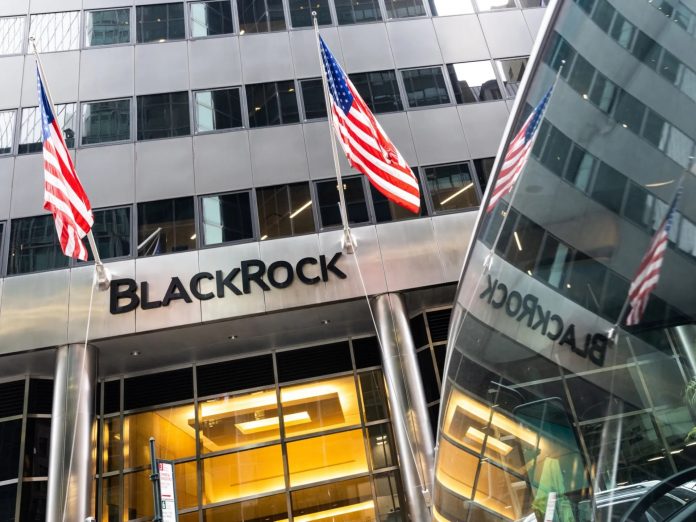
BHP Group said on Tuesday that BlackRock-owned Global Infrastructure Partners will invest $2 billion into Western Australia Iron Ore’s inland power network, marking one of the most significant recent moves by a major miner to recycle capital out of low-risk infrastructure and push it back into growth.

The agreement carves out WAIO’s inland power assets into a new entity in which BHP will hold a 51 percent stake and GIP the remaining 49 percent. Under the structure, BHP will pay the new entity a tariff tied to its share of WAIO’s inland power use over a 25-year period. The Australian miner added that operational control will remain fully with BHP, ensuring continuity in how the network supports its massive Pilbara iron ore operations.

The deal landed well with analysts. “It’s a great deal that will help BHP with its capital recycling,” said CLSA’s Baden Moore in Sydney, adding that he hopes to see “more of this from BHP as they pursue growth.”

The company’s shares pared early losses after the announcement and were recently trading flat.

Chief Financial Officer Vandita Pant said the structure reflects “BHP’s disciplined approach to capital portfolio management,” adding that it strengthens balance-sheet flexibility, supports long-term value creation, and enhances shareholder value. The push comes as the mining sector grapples with higher decarbonization costs, the need for new supply in iron ore and critical minerals, and a tougher funding environment for large greenfield mining projects.

The investment arrives at a moment when the world’s biggest miners are reassessing how much capital they want tied up in long-duration infrastructure such as power networks, rail, port capacity, and transmission lines. These assets are essential to operations but can tie up billions that could otherwise be deployed into exploration, expansions, or acquisitions. Investors on the other side are hungry for precisely these kinds of low-risk assets that offer stable, contracted returns.

That shift in thinking has been evident across the sector. Rio Tinto CEO Simon Trott said last week that the company had identified multiple infrastructure assets it does not need to own outright and would explore partnerships and divestments. The world’s largest iron ore producer, like BHP, is preparing for a more capital-intensive decade as ore grades decline, energy requirements climb, and governments push miners harder on emissions.

The GIP investment provides immediate liquidity for BHP, especially at a time when iron ore remains profitable but volatile, and when long-term decarburization plans require billions in spending. WAIO is among the world’s largest integrated mining operations, and its inland power network is critical to both energy reliability and the transition toward cleaner electricity sources. Structuring the asset as a tariff-based infrastructure play allows BHP to keep control while freeing capital to support expansions or cushion balance-sheet pressures from price swings in commodities.

This approach is believed to also give large miners a clearer path to partner with infrastructure specialists who can manage and optimize long-term capital needs while miners focus on operating performance and growth. For global funds like GIP it offers a foothold in Australia’s iron ore backbone at a time when long-dated infrastructure assets with predictable cash flows are in high demand.

BHP said the deal will not affect any existing joint-venture agreements within its Australian operations. But the move underlines a broader rethinking underway in the mining world about what needs to sit on miners’ balance sheets — and what can be monetized without undermining operational control.

With competitors already mapping out divestments and partnership opportunities, BHP’s agreement with GIP signals that the next phase of capital strategy in the mining sector may be less about outright ownership and more about finding ways to unearth value from the infrastructure that keeps the world’s biggest mines moving.

Why Are Altcoins Down in 2025?

0

2025 has been a tale of two cryptos: Bitcoin (BTC) soaring to new highs above $100K, while most altcoins—everything from Ethereum (ETH) and Solana (SOL) to smaller L1s like Avalanche (AVAX) and Cardano (ADA)—have bled out, down 15–60%+ year-to-date (YTD).

This isn’t just random volatility; it’s a structural shift in how capital flows, influenced by macro forces, institutional behavior, and market psychology. Think of it as BTC hogging the buffet while alts fight over scraps.

BTC dominance— BTC’s share of total crypto market cap has hovered around 55–65% for most of 2025, far higher than the 40–50% lows that typically kick off “altseason.” When BTC pumps up ~105% YTD, money rotates into BTC first, leaving alts sidelined.

Historical patterns show alts only rally when BTC stabilizes or dips below 55% dominance, but that hasn’t happened yet. Institutions and risk-averse investors park funds in BTC as the “safe” crypto play.

As one analyst noted, “Bitcoin’s strength comes from deep-rooted fundamentals: macro relevance, regulatory clarity, and institutional trust.” Alts, meanwhile, get treated like speculative side bets—down 80–90% from all-time highs for many.

Total altcoin market cap excluding BTC and stables is still ~9% below 2021 peaks, inflated only by new 2025 launches diluting older tokens. On X, traders echo this: “All roads lead to Bitcoin first… no altseason when Bitcoin is dropping” or pumping without rotation.

Spot BTC ETFs have sucked in billions like BlackRock and Fidelity piling into BTC and ETH, but altcoin ETFs remain stalled or limited. Approvals for tokens like SOL and HBAR started late in the year, but demand hasn’t materialized yet—unlike BTC’s $30B+ inflows.

Big money like pensions, hedge funds sticks to “blue-chip” cryptos due to lower perceived risk. As Willy Chuang of TrueNorth put it, “Institutional investors are largely driving the current Bitcoin rally, and they have minimal interest in altcoins.”

This creates a liquidity bottleneck: BTC absorbs new capital, starving alts. ETH ETF inflows hit $177M last week, but that’s dwarfed by BTC’s, and broader alt volumes are up only 20% sporadically.

X sentiment blames “ponzi DAT shenanigans” propping BTC while alts tank. Global M2 money supply growth correlates strongly with BTC (76-day lag), but alts need “spillover” liquidity that hasn’t arrived.

The Fed’s hawkish minutes in May and October meetings signaled slower rate cuts, boosting the US dollar and crushing risk assets. Inflation fears from jumping oil prices added fuel. Alts are hyper-sensitive to liquidity squeezes—think profit-taking after BTC milestones or correlated stock dumps.

Open interest in futures plunged from $250B to $142B by November, signaling fear and reduced leverage. Precious metals like gold also crashed alongside crypto in October, as the dollar rebounded. Rate cuts like the 25bps in October had a 2–3 month lag, so November–December relief is MIA.

While BTC enjoys clarity, alts face SEC scrutiny and delayed ETF approvals. A government shutdown scare in late 2025 amplified fears, and ongoing liquidations like the 1.6M investors wiped in October keep sentiment in “fear” mode.

Traders book profits on alts during dips, and narratives (AI, memes) fizzle without regulatory tailwinds. As one report states, “The regulatory landscape slowly becomes more defined and risk appetite stays muted.”

No broad alt ETF approvals until Q4, stalling inflows. 2025 saw a flood of new L1s and tokens like Hyperliquid’s HYPE, diluting the pie. Retail panic-selling during BTC dips amplifies this—alts drop harder 20–30% vs. BTC’s 10–15%.

Early-year FOMO rotates to alts (January–May seasonal pattern), but by mid-year, it’s retreat mode. Influencers hype, then dump, eroding trust. Older alts like ADA and AVAX are 40–60% off highs, while “total alts” look less bad due to fresh launches.

Experts aren’t writing alts off—2025’s pain could set up a monster 2026 rally if BTC bottoms ~$58K projected low and liquidity explodes. Watch for BTC dominance <55%, Altcoin Season Index >75, and ETH leading the charge.

Until then, it’s BTC’s world—alts are just living in it. If you’re holding, stack patience; if buying, wait for fear to peak. Crypto’s a marathon, and 2025 was the ugly middle miles.

US Shifts Stance on North Korea, Signaling Openness to Talks with Kim Jong Un

0
North Korean leader Kim Jong Un and his daughter Kim Ju Ae visit the Ministry of National Defense on the occasion of the 76th anniversary of the founding of the Korean People's Army in Pyongyang, North Korea in this picture released on February 9, 2024 by the Korean Central News Agency. KCNA via REUTERS

The Trump administration released its updated global security roadmap, a key policy document outlining national defense priorities for the coming years.

Notably absent from this document is any explicit reference to the “complete, verifiable, and irreversible denuclearization” (CVID) of North Korea—a cornerstone of US policy toward Pyongyang since the 2018 Singapore summit between Donald Trump and Kim Jong Un.

This omission has sparked widespread speculation that Washington is deprioritizing the long-stalled denuclearization goal in favor of pragmatic diplomacy, potentially paving the way for renewed high-level talks as early as 2026.

During Trump’s first term (2017–2021), the US pursued an aggressive “maximum pressure” campaign, combining sanctions, military exercises with South Korea, and personal diplomacy with Kim.

The three Trump-Kim summits produced vague commitments to denuclearization but collapsed over demands for sanctions relief versus verifiable steps from North Korea. The Biden administration maintained CVID as the baseline but saw no progress, with North Korea conducting over 100 missile tests since 2022, advancing its ICBM and submarine-launched capabilities.

The New Roadmap

Released amid escalating US-China tensions and Russia’s deepened ties with North Korea including arms transfers for Ukraine war support, the document emphasizes threats from China, Iran, and non-state actors while redirecting focus to “extended deterrence” alliances with allies like South Korea and Japan.

North Korea’s nuclear program—now estimated to include 50–60 warheads and missiles capable of reaching the US mainland—is not addressed, marking a departure from the 2017 National Security Strategy, which labeled it a “second-tier” existential threat.

Both the US and South Korean governments quickly clarified on December 8 that no formal policy shift has occurred and denuclearization “remains the ultimate goal.” However, analysts interpret the silence as deliberate, reflecting Trump’s personal affinity for Kim and a desire to avoid provoking Pyongyang while testing waters for “peaceful coexistence” without preconditions.

Hong Min, a senior researcher at South Korea’s Korea Institute for National Unification, described it as a “conscious intent” to revive dialogue by sidelining the divisive CVID demand. Trump’s Hints at Renewed TalksTrump has long touted his “special relationship” with Kim, once claiming they “fell in love” over letters exchanged post-2019.

In recent months, he’s amplified signals of openness :September 2025 Overture from Kim: During a Supreme People’s Assembly speech, Kim Jong Un explicitly invited talks, stating: “If the US drops its hollow obsession with denuclearization and wants to pursue peaceful coexistence… there is no reason for us not to sit down.”

He added fond personal memories of Trump, contrasting this with rejection of dialogue with South Korea, which he views as a “foreign enemy.” Trump’s Response interviews and social media posts since his January 2025 inauguration, Trump has echoed this, saying he’s “proactive” about meeting Kim again “to get something done” and floated ideas like economic incentives without tying them to disarmament.

At the October 2025 APEC summit in South Korea, Trump reportedly raised North Korea in side talks with Xi Jinping, though no breakthroughs emerged. SSome analysts ramed it as a pragmatic win for de-escalation, while critics called it a concession to a “nuclear rogue state.”

Experts like Yang Moo-jin of the University of North Korean Studies see it as lowering hostility to enable 2026 summits, possibly focusing on arms control (e.g., missile test freezes) or confidence-building measures rather than full disarmament.

Kim views such talks as regime validation, especially with North Korea’s arsenal now “irreversible” in his words. Dropping CVID might erode US credibility with allies South Korea fears abandonment; Japan worries about missile threats and embolden proliferators globally.

North Korea’s ties with Russia and China give it leverage, but Trump could counter with sanctions relief tied to verifiable limits on long-range strikes. With US-China rivalry dominating the roadmap, North Korea becomes a secondary lever—potentially traded for concessions on Taiwan or trade.

If talks materialize, they could echo the “freeze-for-freeze” proposals floated by China/Russia in 2017, halting tests in exchange for scaled-back US-South Korea drills. While official channels downplay the change, the roadmap’s silence speaks volumes.

Trump appears willing to meet Kim on equal footing, betting his rapport can yield stability without the “absurd obsession” of total disarmament. Whether this leads to de-escalation or a nuclear fait accompli remains the trillion-dollar question—literally, given the economic carrots Trump has dangled.