DD
MM
YYYY

PAGES

DD
MM
YYYY

spot_img

PAGES

Home Blog Page 29

Shein Ends Flat in Hong Kong Debut as Tariffs, Regulation Erode Fast-Fashion Edge

0

Shares of online fast-fashion retailer Shein ended almost unchanged in Hong Kong on Tuesday, in a muted debut that underscored investor concerns over slowing growth, rising trade costs and the weakening of the low-price advantage that helped propel the company to global prominence.

Shein shares closed at HK$48.50, compared with the HK$48.56 offer price, after falling as much as 10% earlier in the session. The closing price gave the company a market value of about $26.3 billion, a steep decline from its peak valuation of nearly $100 billion in 2022.

The lack of a first-day gain is notable in Hong Kong’s IPO market, where sought-after new listings can attract intense retail demand and generate substantial opening-day gains. Shein’s retail tranche was subscribed 5.63 times, while its international offering was 2.59 times subscribed, levels that indicate demand but fall well short of the exceptionally high oversubscription seen in some recent technology and robotics offerings.

The performance suggests investors are no longer willing to value Shein primarily on its extraordinary historical growth. Instead, they are assessing whether the company can preserve its business model as governments on both sides of the Atlantic dismantle the trade arrangements that helped make ultra-cheap cross-border fashion commercially viable.

Founded in China in 2012 and headquartered in Singapore since 2021, Shein spent years presenting itself as a global company while pursuing listings in the United States and Britain. Those efforts failed amid regulatory scrutiny, political concerns and opposition from Chinese authorities.

Its Hong Kong listing represents the culmination of a roughly four-year effort to access public markets and gives existing shareholders a route to liquidity after the company’s private-market valuation fell dramatically.

“As a new company listed in Hong Kong, we will continue to innovate, optimize, and cooperate with our supply chain partners for mutual benefit and win-win results,” Reuters quoted Shein Chief Financial Officer Leigh Gui as saying at the opening ceremony.

Shein’s central challenge is that the regulatory environment is increasingly targeting the very economics that made its model successful.

The company built its global business around inexpensive products shipped directly to consumers, allowing it to exploit low-value parcel exemptions and avoid some of the costs associated with conventional retail distribution.

The United States ended its de minimis duty exemption for e-commerce shipments worth less than $800 last year, while the European Union has also moved to impose fees on low-value packages. Higher tariffs, customs charges and logistics costs directly threaten Shein’s ability to maintain prices that have made it one of the world’s most recognizable fast-fashion platforms.

“Daily active users in Europe have fallen around 45% since the EU scrapped its duty exemption on small parcels, and Temu has seen a similar drop,” said Josh Gilbert, lead analyst for Asia-Pacific at eToro.

“This is less a Shein problem, but more so the end of an era for cheap cross-border shipping. The brand’s reach is unquestionable, but a large share of that loyalty has always belonged to the price tag.”

That matters for investors because Shein’s competitive advantage has not simply been its brand or fashion selection. Its model has been built around speed, massive product variety, and exceptionally low prices. If tariffs and shipping costs force prices higher, the company risks losing customers to competitors that operate through different supply-chain structures.

Shein’s financial performance is already showing the strain. Net income fell 39% last year, while the company swung to a loss in the first quarter. It has also warned that its first-half operating margin would be slightly below the first-quarter level because of higher customs duties, tariffs, fees and logistics costs in Europe and the Middle East.

Investors Question Valuation

The weak debut also indicates that Shein’s lower valuation may not yet be sufficient to compensate investors for the risks surrounding the business.

Charu Chanana, chief investment strategist at Saxo, said the stock was valued at about 15 times forward earnings, more than twice the multiple for PDD, the owner of rival Temu.

“I think the weak debut shows that even after the huge valuation reset, investors still don’t see Shein as obviously cheap,” Chanana said.

Investors are therefore being asked to pay a premium for a company facing greater uncertainty over growth, trade policy and regulation.

That is a significant change from the environment that produced Shein’s enormous private-market valuation. At its peak, investors were betting that the company’s algorithm-driven merchandising model and global reach could produce sustained rapid growth. The Hong Kong debut instead places a public-market value on a business that is entering a period of structural adjustment.

Shein Looks Beyond Ultra-Cheap Fashion

The company is responding by attempting to diversify its business rather than relying exclusively on its own ultra-low-cost clothing.

Shein has expanded its third-party marketplace, allowing other merchants to sell through its platform, and acquired U.S. apparel brand Everlane in May. The strategy could help the company build a broader retail ecosystem and reduce its dependence on the economics of shipping individual low-value parcels directly to consumers.

But diversification also introduces new challenges. Marketplace operations require Shein to compete with established e-commerce platforms, while branded fashion carries different cost structures and potentially weaker margins than the highly optimized fast-fashion model that made Shein successful.

The company also continues to face regulatory scrutiny. Shein has disclosed an ongoing investigation by the U.S. Federal Trade Commission that could result in significant penalties. The European Commission is examining issues including the sale of potentially illegal products, the potentially addictive design of its platform and the transparency of its recommendation systems.

Those investigations add another layer of uncertainty to a company already dealing with higher trade costs.

IPO Is Also About Existing Investors

The Hong Kong offering is considered not simply a mechanism for raising fresh capital. The transaction provides liquidity and helps restructure the ownership of a company whose early investors entered at substantially higher valuations.

Shein has agreed to make cash payments totaling about $3.5 billion and make share adjustments for some preferred shareholders.

The IPO itself represents only about 6.6% of Shein’s enlarged share capital. Cornerstone investors bought roughly one-fifth of the offering and are subject to a six-month lock-up, leaving only about 5% of the company freely tradable.

That relatively small public float can amplify price movements because a limited number of shares are available to trade. It also means Tuesday’s muted performance should not be interpreted as a complete verdict on Shein’s market value, particularly while a substantial portion of the shareholder base remains locked in.

Existing investors participating in the offering included Michael Bloomberg’s family office Willett Advisors, French investor Xavier Niel, Microsoft, Reliance Industries, Marcelo Claure’s Claure Group and SoftBank’s Vision Fund.

“This IPO is not just a fundraising event, it is also, and probably more of, a capital-structure event,” said Jianggan Li, CEO of consultancy Momentum Works.

Shein now has to prove that it can preserve the combination of low prices, rapid product turnover and global reach that drove its extraordinary expansion while absorbing a regulatory and cost environment that is becoming increasingly hostile to ultra-cheap cross-border e-commerce. Analysts see the flat Hong Kong debut as an indication that investors want evidence that Shein can make that transition before assigning the company a valuation closer to its former private-market heights.

U.S. Pushes G20 to Tackle Global Imbalances, Seeks Pressure On China As Bond Sell-Off Exposes Debt And Inflation Risks

0

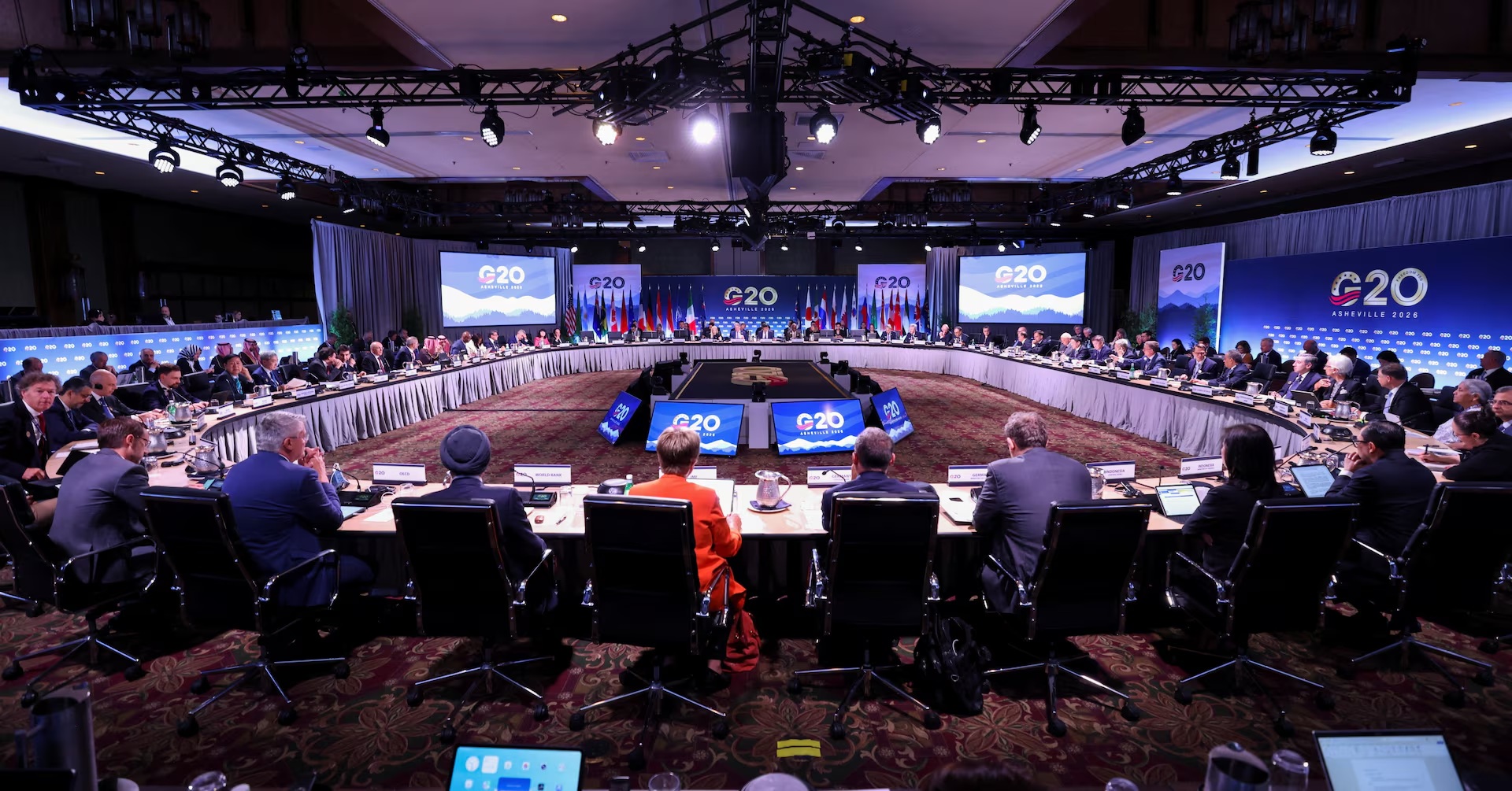
The Trump administration is pressing G20 economies to address global trade and fiscal imbalances as a renewed sell-off in government bonds highlights growing concerns over debt, inflation and the prospect of tighter monetary policy.

U.S. Treasury Secretary Scott Bessent is using the G20 finance ministers’ meeting in Asheville, North Carolina, to push for changes to trade relationships with China, arguing that Beijing’s export-heavy economic model is contributing to persistent global imbalances.

The U.S. is seeking greater pressure on China to shift its economy toward domestic consumption and away from exports. Bessent told Reuters that G20 members should reconsider their trading arrangements with China and examine higher barriers to Chinese goods.

The push comes at a particularly sensitive moment for global financial markets. Government bond yields rose sharply across major economies on Tuesday, with Japan’s 10-year yield reaching 3% for the first time since 1996. U.S., German, Eurozone and British borrowing costs also climbed as investors reassessed inflation and fiscal risks.

The combination of higher energy prices, renewed conflict in the Middle East and concerns about government debt has complicated the outlook for central banks. Higher inflation can delay interest-rate cuts or force policymakers to consider tighter policy, while rising yields increase governments’ debt-servicing costs and can put pressure on equity valuations.

China at the center of the trade debate

Washington’s focus on China reflects a longstanding dispute over the country’s large trade surplus and industrial policy.

China’s domestic demand has remained relatively weak, encouraging manufacturers to rely heavily on overseas markets. Chinese exports rose 23.9% year-on-year in July, according to the figures cited by Reuters, as companies increased shipments of electric vehicles, semiconductors and other manufactured goods.

The surge has intensified concerns in the United States and Europe that excess Chinese production could displace domestic manufacturers and widen trade deficits.

The European Union is also pushing for a more balanced relationship with China. European Economy Commissioner Valdis Dombrovskis said China needs to increase domestic spending, the United States needs to reduce its spending, while Europe needs to invest more.

“To put short the summary of this analysis … China would need to spend more, U.S. would need to spend less, and EU would need to invest more,” Dombrovskis said.

The scale of the imbalance is substantial. China’s goods trade surplus with the European Union reached €360.6 billion in 2025, up 15% from the previous year, and has continued to expand this year as Chinese exports to Europe rise while imports from the bloc decline.

Polish Finance Minister Andrzej Domanski also backed the U.S. position, arguing that China’s currency is significantly undervalued and that state support for exports is creating problems for European economies.

“We do know that Chinese currency is hugely undervalued, that China is supporting very actively subsidizing its exports and this is a problem for Europe as well,” Domanski told Reuters.

Fiscal Imbalance Complicates U.S. Argument

The U.S. push, however, faces a significant complication: Washington is itself running large fiscal and external deficits.

Economists have noted that reducing America’s trade deficit cannot be separated from the country’s fiscal position. The United States continues to run annual budget deficits exceeding $1 trillion, while its public debt has surpassed $40 trillion. That makes it difficult for Washington to demand greater fiscal discipline abroad without addressing its own borrowing requirements.

The bond market is already highlighting this tension. Higher Treasury yields mean the U.S. government must pay more to finance its debt, potentially creating a feedback loop in which larger interest costs contribute to wider deficits and greater borrowing needs.

The problem is not confined to the United States. Japan, Britain and several European economies are also confronting elevated debt burdens and rising financing costs.

The latest global bond sell-off therefore gives the G20 discussions an immediate financial dimension. If yields remain elevated, governments could face pressure to reduce spending, increase revenues or accept slower economic growth to keep debt dynamics under control.

Critical Minerals Add Another Fault Line

Trade tensions are also extending beyond conventional goods. China’s dominance of critical-mineral processing has become a major source of geopolitical leverage. Beijing imposed export restrictions on rare earths in April 2025 following the escalation of U.S. tariffs, measures that have also affected companies outside the United States.

Japanese Finance Minister Satsuki Katayama told G20 counterparts that arbitrary restrictions on critical minerals were damaging the global economy and should be removed.

The issue is proving difficult in negotiations over a joint G20 communique. China opposes language that singles out “non-market economies” and is resisting stronger wording on critical-mineral export restrictions, according to officials.

The dispute illustrates the limits of the G20 as an economic policy forum. The group brings together economies with sharply different interests, including the United States and China, whose strategic rivalry continues to shape global trade and supply chains.

Ukraine Adds Another Division

The talks are also being complicated by Russia’s participation. Russian Finance Minister Anton Siluanov attended the meeting in person, marking the first time Russia has participated in the G20 forum physically since its invasion of Ukraine in 2022.

European finance ministers expressed surprise and dismay at his presence, while European governments are seeking strong language condemning Russia’s war against Ukraine in the joint statement.

That development has created another obstacle to consensus at a meeting already divided over trade, fiscal policy, China and critical minerals.

For Washington, the broader objective is to use the G20 to address what it sees as structural distortions in the global economy. But reaching agreement will be difficult. China is unlikely to accept language that directly targets its industrial model, while European governments have their own concerns about Chinese competition and Russia’s war in Ukraine.

Meanwhile, the bond market is sending a separate warning that regardless of whether the G20 reaches an agreement, investors are increasingly demanding compensation for inflation, fiscal deterioration and geopolitical risk. That makes the debate over global imbalances more than a question of trade policy. Some analysts believe it is increasingly tied to the cost of capital for governments, businesses and households worldwide.

Why Trump’s Venezuela Oil Deal Is a Long-Term Bet, Not a Quick Fix

0

The announcement of Donald Trump’s Venezuelan oil deal has been presented as a historic energy victory: Washington says it has secured majority control over access to more than 65 billion barrels of Venezuelan reserves.

With plans to develop 17 oil fields and invest heavily in a devastated petroleum industry. Trump has argued that the arrangement will strengthen American energy security, replenish depleted strategic reserves and eventually lower gasoline prices.

But energy analysts and economists are considerably more cautious. The first distinction experts make is between oil underground and oil available to consumers. Venezuela possesses enormous reserves, but reserves are not the same thing as production.

Patrick De Haan of GasBuddy says bringing significant additional Venezuelan crude to market will require billions of dollars and years of drilling, rehabilitation and infrastructure development.

Rory Johnston of Commodity Context similarly argues that the 65 billion-barrel figure tells us little about how much oil can actually reach global markets.

That is the central economic problem with Trump’s promise of cheaper gasoline.

Tracy Shuchart, a senior economist at NinjaTrader Live, estimates that barrels capable of materially affecting U.S. pump prices could be five to 15 years away. Venezuela is currently producing around 1.2 million barrels per day, and much of its recent recovery has come from existing infrastructure rather than a massive wave of new production.

Amena Bakr of Kpler makes a similar argument. She says Venezuela needs years of sustained, major investment before production can move beyond the 1.5 million-barrel-per-day range targeted by the new arrangement.

That is a relatively modest addition to a global oil market producing roughly 105 million barrels per day. In other words, even a successful Venezuelan recovery would not suddenly create an ocean of cheap crude.

There is, a stronger strategic case for the deal. David Blackmon, a Texas-based energy policy analyst, views it as a long-term American energy-security strategy rather than a quick fix for gasoline prices.

Venezuela could eventually provide an important source of heavy crude while reducing U.S. dependence on Canadian and Mexican supplies. The deal could strengthen Washington’s geopolitical position in the Western Hemisphere and counter Chinese and Russian influence.

Yet even that optimistic interpretation comes with serious caveats. Venezuela’s oil industry has suffered from years of underinvestment, equipment deterioration, operational problems and political instability.

Much of its crude is extremely heavy, meaning specialized refining capacity is necessary. David Oxley of Capital Economics says logistical challenges remain significant and questions whether major American oil companies will actually find Venezuela attractive enough to commit the required capital.

Then there is the political risk. The agreement’s details remain unusually opaque, including precisely how the U.S. stake is structured, who finances the enormous investment and how future Venezuelan governments might treat the arrangement.

Analysts warn that a change in political conditions could threaten the project’s economics.  The smartest reading, therefore, is neither that Trump has discovered an instant source of cheap gasoline nor that the deal is economically meaningless.

It is a long-term geopolitical and energy bet. If Washington can stabilize Venezuela, attract private capital and rebuild its petroleum infrastructure, the rewards could be substantial. But Americans expecting Venezuelan oil to transform gasoline prices this year are likely to be disappointed.

Japan’s 10-Year Bond Yield Tops 3% for First Time Since 1996 as Yen Slides

0

Japan’s benchmark 10-year government bond yield climbed above 3% on Tuesday for the first time in three decades, as markets increased bets on further monetary tightening and investors demanded higher compensation for the country’s growing fiscal risks.

The yield rose 6 basis points to just above 3%, its highest level since 1996, adding to pressure on Tokyo as it prepares its next budget and grapples with the rising cost of servicing its enormous public debt.

The move came as U.S. Treasury Secretary Scott Bessent signaled that Washington expects Japan to take steps to support the yen, including potentially higher interest rates from the Bank of Japan.

“I have information that the market doesn’t have. And it’s my belief that the Japanese government and that the BOJ will do the things that will lead to a stronger yen,” Bessent told CNBC on Monday.

A U.S. official told Japanese broadcaster NHK that Bessent had emphasized the need for Tokyo to demonstrate a credible path toward fiscal sustainability and pursue further rate increases during separate meetings with Finance Minister Satsuki Katayama and BOJ Governor Kazuo Ueda.

Katayama said Japan and the United States had agreed to continue coordinating efforts to achieve “orderly” movements in the yen and remained prepared to respond to “disorderly” currency moves, according to Reuters.

The comments come as the yen weakens toward levels that could force Tokyo to consider another intervention. The currency was last trading around 160.1 per dollar, breaking above the psychologically important 160 level for a third consecutive session.

Japan and the United States conducted a rare coordinated intervention in late July to support the yen, but the currency has since surrendered much of those gains. A prolonged decline in the yen is becoming increasingly problematic for Tokyo because it raises the cost of imported energy, food and other goods, adding to inflationary pressure on Japanese households.

The bond market is now pricing a greater probability of a BOJ rate increase as early as September. Takuji Okubo, managing director at Japan Macro Advisors, said investors may also be reassessing where Japanese rates will ultimately settle in the current tightening cycle.

“Japan’s higher borrowing costs on Tuesday reflect a rising chance of a Bank of Japan rate hike in September, and the market perhaps adjusting the terminal rate from 1.5% to 1.75% or higher,” Okubo told CNBC.

The BOJ’s benchmark policy rate currently stands at 1%.

The surge in Japanese yields weighs beyond Japan because of the country’s position at the center of global capital markets. Japan is the largest foreign holder of U.S. government debt, meaning any decision by Tokyo to support the yen through foreign-exchange intervention could have implications for the U.S. Treasury market.

Japan typically acquires dollars when intervening to weaken the yen and can sell dollar-denominated assets, including U.S. Treasuries, when supporting its currency. A substantial liquidation of Treasuries could add to upward pressure on U.S. long-term yields at a time when global bond markets are already facing concerns over inflation, government borrowing and elevated debt issuance.

The latest increase in Japanese yields has also occurred against a deteriorating global inflation backdrop. The resumption of military hostilities between the United States and Iran over the weekend has revived concerns about energy supplies and inflation, putting additional pressure on government bonds around the world. Bond prices move inversely to yields.

For Japan, however, the rise in yields also marks another stage in the country’s departure from the ultra-low interest-rate environment that defined its economy for decades. A 3% 10-year borrowing cost would have been almost unthinkable during the years when Japan struggled with persistent deflation and negative interest rates.

Higher yields now indicate that investors increasingly expect Japan to operate in an environment of sustained inflation and positive real economic adjustments.

“A 3% 10-year borrowing cost is high in historical perspective, but it just means another step for Japan in leaving deflation in the past and joining the rest of the world where 2% inflation is an achievable normal,” Okubo said.

The challenge for policymakers is balancing those forces. Higher rates could support the yen and help contain imported inflation, but they would also increase borrowing costs for the government, households and companies. With Japan carrying one of the world’s highest public-debt burdens relative to economic output, even modest increases in interest rates can have significant fiscal consequences.

That tension is likely to keep Japanese bonds, the yen and BOJ policy closely watched by global investors. A further rise in Japanese yields could also encourage domestic investors to redirect capital away from overseas markets and toward Japanese assets, potentially affecting global bond and currency markets.

The combination of a weakening yen, rising bond yields and pressure from Washington leaves Tokyo’s policymakers with a difficult policy equation: support the currency without destabilizing financial markets, while tightening monetary policy without placing excessive strain on an already heavily indebted government.