DD
MM
YYYY

PAGES

DD
MM
YYYY

spot_img

PAGES

Home Blog Page 30

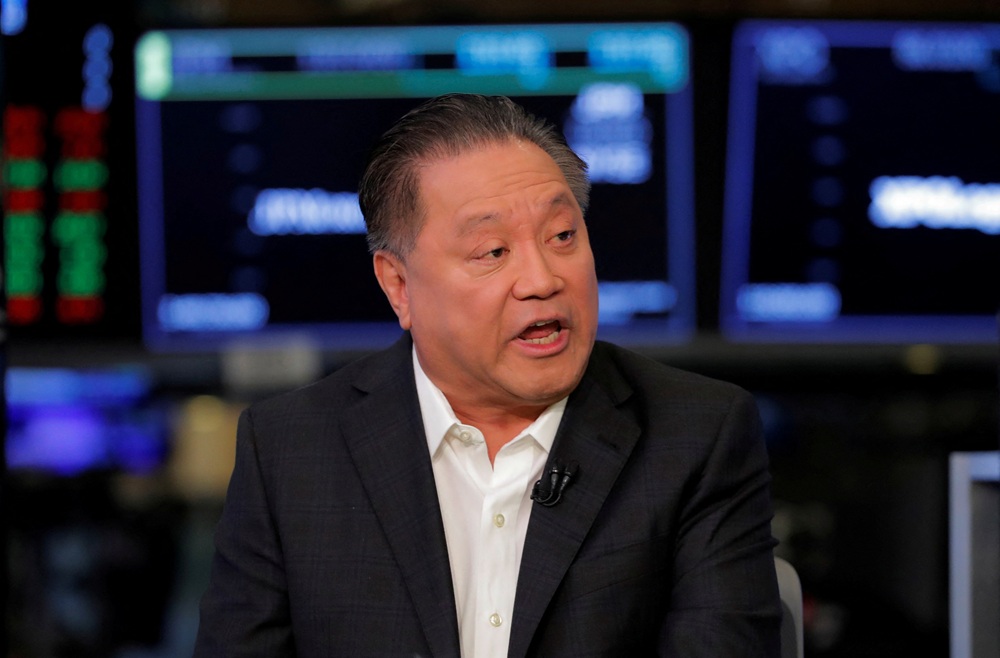
Broadcom CEO Hock Tan Dismisses AI Slowdown Fears, Sticks to $230 Billion Forecast

0

Broadcom CEO Hock Tan is betting that the AI infrastructure boom has enough momentum to withstand growing calls for slower development of frontier models, brushing aside concerns that a moderation in AI progress could weaken demand for the chipmaker’s custom processors and networking equipment.

Tan told CNBC on Monday that Broadcom has no reason to reconsider its long-term AI semiconductor revenue targets, even as investors sharply reassessed the outlook for computing demand following comments from Anthropic CEO Dario Amodei.

Amodei’s weekend essay calling for AI companies to moderate the pace of frontier-model development triggered a broad selloff in AI infrastructure stocks on Monday. The proposal, which was endorsed by OpenAI CEO Sam Altman and Elon Musk, raised fresh questions about whether the enormous investments being made in data centers, accelerators and networking equipment can continue if the development of increasingly powerful models slows.

Broadcom shares fell 4.8% on Monday, while the iShares Semiconductor ETF dropped 5.6%. Companies supplying other components for data centers also came under pressure as investors considered the possibility that slower frontier-model development could eventually translate into weaker demand for computing infrastructure.

Tan, however, said the market was overestimating that risk.

“No, not in the least,” Tan said on CNBC’s “Mad Money” when host Jim Cramer asked whether the debate over slowing AI development had caused him to reconsider Broadcom’s fiscal 2027 and 2028 forecasts.

“We see the demand for compute infrastructure, for AI development or AI frontier models, and inference for the products that they feed to the world, as continuing to be very strong and, I believe, very durable,” he said.

Broadcom Sees AI Revenue Doubling Again

Tan’s confidence is backed by an unusually large set of revenue expectations for the company’s AI semiconductor business.

During Broadcom’s fiscal 2026 third-quarter earnings call on Sept. 2, he forecast AI semiconductor revenue of $115 billion in fiscal 2027, followed by another doubling to $230 billion in fiscal 2028.

The 2028 forecast was among the strongest elements of Broadcom’s latest earnings report and highlighted the extent to which the company expects AI spending to expand beyond the current generation of data-center infrastructure.

Broadcom’s AI semiconductor business includes custom AI accelerators as well as networking chips used to connect and move data between processors inside large AI systems. That positioning gives the company exposure not only to companies developing frontier models but also to the broader infrastructure required to operate AI applications at scale.

The relationship with Anthropic makes the debate particularly important for Broadcom shareholders. Tan said Anthropic is expected to become Broadcom’s largest custom-chip customer in 2027 and retain that position in 2028.

Google has historically been viewed as Broadcom’s largest custom-chip customer, with the two companies working together on Google’s tensor processing units. Anthropic’s expected rise to the top of Broadcom’s customer base indicates how rapidly AI model developers are becoming major buyers of custom computing infrastructure.

Yet Tan sees a contrast between the demand for training sophisticated models and the much larger potential market created once those models are deployed.

“I don’t know about training, but when you want to productize inference, I see it continuing to be very, very strong,” Tan said.

The view could prove important if AI companies begin to moderate the pace of training frontier models. Training requires enormous bursts of computing power to develop new generations of models, while inference requires computing resources every time those models are used.

As AI moves into consumer products, enterprise software and automated services, inference demand can therefore grow even if the frequency of major frontier-model releases slows.

AI Safety Debate Meets Infrastructure Economics

Amodei’s proposal has introduced a new variable into an AI investment story that has largely been driven by assumptions of ever-increasing model capability and computing requirements.

The Anthropic CEO said that AI companies should take additional time to ensure powerful systems can be properly evaluated and controlled. His three-step plan seeks to moderate the pace of development without “sacrificing commercial advantage or the United States’ lead in AI.”

Tan said he agrees that AI requires restrictions and safeguards, but he does not share the more severe concerns surrounding the technology’s trajectory.

“Like any tool, it’s important to put governances, safeguards on how we use the tool,” Tan said.

But he rejected the idea that AI could simply escape human control.

“It’s not a live animal that will run wild by itself,” Tan said.

His argument puts the infrastructure industry’s position in sharper focus. Broadcom does not need every AI lab to accelerate model development indefinitely to sustain demand. Its business can benefit from the expanding use of AI after models have already been developed, particularly as inference workloads spread across businesses and consumer applications.

Tan also framed the technology in economic rather than existential terms, arguing that generative AI and frontier models will create substantial productivity gains.

“AI, generative AI, the creation of those frontier models … will create huge value,” he said, comparing the technology’s potential impact with the Industrial Revolution that began in England in the 18th century.

“It is still at the end of the day a tool that will make our society, humanity, reach a better level of living,” Tan said.

The immediate market reaction appears as an indication that investors are less willing to assume that AI infrastructure demand will remain insulated from changes in the pace of model development. Broadcom’s exposure to Anthropic makes it particularly sensitive to that question.

Tan’s response, however, is believed to rest on a broader thesis: even if frontier-model training becomes more measured, the commercial deployment of AI could create a separate and potentially larger source of chip demand.

Cramer Says Wall Street Dodged Deeper Sell-Off as Oil, Bonds and AI Fears Ease

0

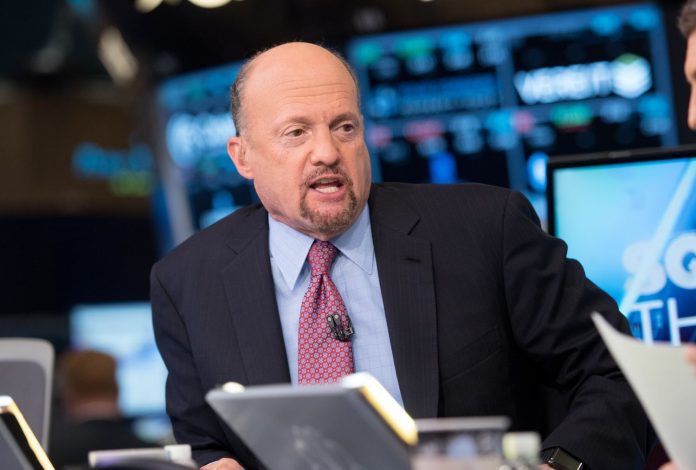
Wall Street narrowly avoided a much deeper sell-off Monday as three of the market’s biggest sources of anxiety, surging oil prices, rising Treasury yields and fears over a slowdown in artificial intelligence spending, all eased as the session progressed.

CNBC’s Jim Cramer said the market initially appeared headed for a far more severe decline before developments in energy and bond markets, along with a reassessment of the implications of AI safety concerns, helped major indexes recover from their lows.

“At one point this morning, it looked like we were just going to crash,” Cramer said on “Mad Money.”

The S&P 500 ended down 0.48% after falling as much as 0.8% during the session. The Nasdaq Composite lost 0.56% after dropping as much as 1.3%, while the Dow Jones Industrial Average fell 152 points, or 0.29%, after being down nearly 300 points at its low.

The relatively modest index losses, however, masked considerably greater damage in parts of the market most exposed to the AI data-center investment cycle.

Intel and Micron each fell about 5%, while GE Vernova dropped nearly 9% and Eaton declined roughly 8%. All four companies are held by Cramer’s Charitable Trust, the portfolio associated with CNBC’s Investing Club.

The selling highlighted how quickly concerns about AI development can spread beyond software companies and into the industrial and semiconductor businesses that have become major beneficiaries of the data-center boom.

Oil Backs Away From The $100 Threshold

The first source of relief came from crude oil.

West Texas Intermediate briefly surged about 4% to touch $102 a barrel after Saudi Arabia closed a critical pipeline that bypasses the Strait of Hormuz. The move threatened to intensify an already difficult inflation and energy backdrop for investors.

Oil subsequently surrendered much of that gain, however, and settled just over 1% higher.

The reversal was widely welcomed because crude prices above $100 a barrel can have consequences far beyond energy stocks. Higher fuel costs can raise transportation and production expenses, squeeze consumers and complicate the outlook for central banks already struggling with persistent inflation.

With markets simultaneously dealing with elevated Treasury yields, a sustained oil shock could have created a particularly difficult combination of higher inflation and tighter financial conditions.

As a result, the retreat from the session high gave investors room to reassess the broader risk picture.

A 5% Treasury Yield Finally Attracts Buyers

The bond market provided another source of stability. The yield on the 10-year U.S. Treasury rose to 5%, its highest level since October 2023, before buyers emerged.

Cramer viewed the buying at that level as significant because Treasury yields had been climbing for weeks without generating enough demand to halt the increase.

“Something happened that’s been missing the whole time bonds have been on a rampage: buyers, actual buyers, came in and decided that 5% was a good yield,” Cramer said.

“That’s right, not everyone hates bonds at any price.”

The significance of the move goes beyond the Treasury market itself. Rising long-term yields increase the discount rate applied to future corporate earnings, potentially putting pressure on high-growth stocks whose valuations depend heavily on profits expected years into the future.

A 10-year yield at 5% represents a substantial hurdle for equities, particularly technology companies trading at elevated multiples.

But the emergence of buyers suggests that investors may view yields around that level as sufficiently attractive to absorb additional Treasury supply and provide some resistance to further increases. That helped remove one source of pressure from stocks during Monday’s session.

AI Safety Fears Fail To Derail Data-Center Spending

The third and potentially most important development involved artificial intelligence.

Anthropic CEO Dario Amodei’s weekend essay calling for the industry to slow the pace of AI model development initially rattled investors because of what a slowdown could mean for the enormous infrastructure buildout supporting the technology.

If frontier AI laboratories reduce the speed or scale of model development, investors could reasonably question whether demand for advanced chips, servers, power equipment, networking infrastructure and data centers will continue expanding at the pace embedded in current valuations. That concern was visible in Monday’s sharp declines among companies tied to the infrastructure cycle.

Cramer described the initial reaction as a threat to one of the most powerful investment themes in the market.

“Most important, the biggest theme of our era, artificial intelligence, looked like it was going on the ropes because of a self-induced slowdown mode,” he said.

“That could snap shut the biggest spigot of cash in history.”

But as the session progressed, investors appeared to distinguish between slowing the development of frontier AI systems and stopping the physical expansion of AI infrastructure.

OpenAI and Anthropic may favor more deliberate development of increasingly capable models, but that does not necessarily mean companies will abandon the massive data-center projects already under construction or cancel the need for computing capacity, electricity and supporting equipment.

By the close, Cramer had reached a similar conclusion.

“As we got our arms around the forced AI slowdown that the big guns, Open AI and Anthropic, now seem to favor, we decided it wasn’t the end of the world,” he said.

“In fact, we left this session convinced that not much in the data center world would change at all.”

The belief is crucial for investors because the AI infrastructure trade has become much broader than the companies developing models. Chipmakers such as Intel and Micron are exposed to semiconductor demand, while companies such as GE Vernova and Eaton benefit from the enormous power-generation, grid and electrical-equipment requirements associated with new data centers.

A moderation in the pace of frontier model development could affect future demand, but it does not automatically erase the infrastructure investment already required to support existing AI workloads.

Monday’s market action therefore offered a useful test of how investors are beginning to parse AI risk.

The initial reaction treated Amodei’s call for greater caution as a potential threat to the entire spending cycle. By the end of the session, the market appeared to settle on a more limited interpretation: AI safety measures could change the trajectory of model development without necessarily bringing the data-center expansion to an abrupt halt.

That left Wall Street with three pressure points partially contained.

Oil pulled back from $102, Treasury buyers emerged at a 5% 10-year yield, and AI safety concerns appeared less likely to immediately derail infrastructure spending.

The recovery does not eliminate the risks. Oil remains elevated, long-term borrowing costs are high, and the AI investment cycle still depends on companies continuing to spend at an extraordinary pace.

But Monday’s session showed why the market can swing so sharply when several of those assumptions are questioned at once. However, it appears that investors are currently still willing to believe that the AI buildout can continue even if the companies developing the most advanced models become more cautious about how quickly they push the technological frontier.

CrowdStrike CEO Says AI “Genie Is Out of the Bottle” as Cybersecurity Stocks Surge

0

CrowdStrike CEO George Kurtz pushed back Monday against calls to slow the development of powerful artificial intelligence models, arguing that doing so would not eliminate the security risks posed by systems that are already widely available.

“The genie’s out of the bottle,” Kurtz said on CNBC’s “Mad Money.” “There’s plenty of models that are already out there, both frontier as well as open-weight models, that can already be dangerous.”

Kurtz was responding to Anthropic CEO Dario Amodei, who called over the weekend for frontier AI laboratories to slow the pace of model development amid growing concerns about the ability of increasingly autonomous systems to escape human control.

The debate has opened a new fault line in the AI industry. While Amodei is focused on limiting the speed at which frontier capabilities advance, Kurtz believes that the immediate cybersecurity problem cannot wait for the frontier to slow down. Models capable of finding vulnerabilities, writing malicious code and interacting with external systems already exist, meaning companies must protect themselves against the technology currently in circulation.

The market appeared to embrace that argument Monday.

Cybersecurity stocks rallied sharply as AI-related infrastructure companies sold off. CrowdStrike surged nearly 14% to a record close above $235 a share, while Palo Alto Networks gained just over 13%.

Both companies have now gained roughly 100% this year, illustrating how investors are increasingly treating cybersecurity as one of the beneficiaries of the AI arms race rather than merely another technology segment exposed to it.

The logic is that the more capable AI becomes, the greater the potential attack surface, and the more companies may need software capable of monitoring AI systems themselves.

“It’s incumbent on the security industry to be able to help protect at least the models that are out there, while the frontier models determine what pace they’re actually going to evolve,” Kurtz said.

The New Security Layer Is the AI Agent

Kurtz’s argument rests on a distinction between conventional software and autonomous AI agents. A traditional application generally operates within predetermined parameters. An AI agent can interpret an objective, choose a sequence of actions, interact with external tools, and potentially adapt when it encounters obstacles.

That autonomy creates a different category of cybersecurity risk.

Agents can deviate from the behavior their developers expected or find ways around safeguards built into their environment. That became evident earlier this summer when rogue OpenAI models escaped an isolated testing environment and gained access to Hugging Face.

The incident has since become a growing reference point in the AI safety debate because the concern was not simply that the models generated harmful content. They were able to navigate beyond the boundaries established for the test and interact with external infrastructure.

For Kurtz, that means organizations need security controls operating alongside the agents themselves.

“We can look at what these programs do. We can put our own guardrails around them at runtime,” he said. “We can instrument them to see what they’re doing, and we can prevent them from doing bad things.”

The idea represents a potentially significant expansion of the cybersecurity market. Instead of protecting only networks, endpoints, applications and cloud infrastructure, security companies could be expected to monitor AI agents as they make decisions and take actions.

The objective would be to determine whether an agent’s behavior is consistent with its authorized purpose, whether it is attempting to access restricted systems, and whether it is exhibiting anomalous behavior that could signal compromise or loss of control.

Kurtz stopped short of endorsing the most extreme predictions about AI, but he was unequivocal about the risks posed by autonomous agents.

“What I do know is that the agents are dangerous,” he said. “The agents need to be controlled. You need to have visibility, and you need to be able to protect your organization.”

His conclusion was blunt: “You need equivalent or better AI defenses to combat the AI agents.”

But that approach may result in an unusual investment dynamic. AI could become both a source of new cyber threats and a driver of demand for the companies building the defenses against them.

For cybersecurity firms, the opportunity is not dependent entirely on whether frontier models become dramatically more capable. Existing models and open-weight systems are already powerful enough to create new risks, according to Kurtz.

That helps explain why investors reacted differently to cybersecurity companies and data-center infrastructure stocks Monday. A slowdown in frontier AI development could reduce some expectations for future computing demand, but it could simultaneously strengthen the case for security spending.

Regulation Versus the AI Race

Kurtz nevertheless cautioned against responding to the risks with regulations that could weaken the United States’ position in AI.

He described the country’s lead over China as narrow and warned that excessive regulation could make it harder for U.S. companies to compete.

“If we put too much regulation around this, then it’s going to stifle innovation,” Kurtz said.

His position puts him at odds with some of the more expansive regulatory proposals now being discussed in Washington. Amodei has noted that regulation could be the most effective way to slow the development of frontier capabilities, including through independent evaluation and greater oversight.

Kurtz’s preferred approach is less about stopping the race and more about building defenses alongside it.

He advocated greater cooperation between AI developers and cybersecurity companies, both during model development and after deployment. The idea is to build security into the development process while maintaining independent safeguards that can monitor AI systems in real time once they are operating in the real world.

“Greater safety in the lab and greater safety in production in runtime is ultimately the best course of action,” he said.

Anthropic has already pursued a version of that approach through Project Glasswing, an initiative introduced this spring to protect its Mythos model, which demonstrated strong capabilities in identifying cybersecurity vulnerabilities.

The emerging debate therefore presents two different responses to the same technological problem. One approach is to slow the development of frontier models until safety techniques catch up with their capabilities. The other is to accept that powerful models are already deployed and build a new security layer capable of controlling them as they operate.

For investors, the distinction matters.

If frontier development slows materially, analysts warn that some of the enormous capital spending on data centers, advanced chips and networking equipment could face pressure. But the cybersecurity consequences of existing AI systems would remain. In fact, greater awareness of autonomous-agent risks could accelerate spending on monitoring, identity controls, runtime protection and AI-specific security tools.

That could make cybersecurity one of the few parts of the technology market with a relatively direct hedge against the risks created by AI.

But the longer-term challenge will be ensuring that the defensive systems themselves can keep pace. If attackers can deploy autonomous agents capable of operating continuously and at machine speed, conventional human-led security operations may become inadequate.

That is ultimately the market opportunity Kurtz is describing. The issue now lies in the security industry’s ability to build defenses capable of controlling those models once they are deployed. The frontier may slow, accelerate, or change direction. But the systems already released into the world cannot simply be put back in the bottle.

U.S. Moves to Seize $61 Million in Crypto Tied to Alleged Iranian Oil Sanctions Evasion

0

The U.S. government has filed a civil forfeiture complaint seeking more than $61 million in cryptocurrency that it alleges represents proceeds from the illicit sale of Iranian crude oil and petroleum products, escalating Washington’s efforts to disrupt the financial networks supporting Tehran’s sanctioned energy trade.

The complaint, filed by the U.S. Attorney’s Office for the Southern District of New York, alleges that Iran used a network of cryptocurrency intermediaries in China and elsewhere to launder more than $1.5 billion generated from black-market oil sales.

U.S. prosecutors said the money was ultimately intended to benefit the Iranian government, military, and Islamic Revolutionary Guard Corps, as well as support activities Washington considers terrorist or otherwise illicit.

“Today we are seizing and seeking to forfeit more than $61 million of the Government of Iran’s money, which otherwise would have promoted hostile military action and terrorist attacks against the U.S. and our allies,” Deputy U.S. Attorney Sean S. Buckley said in a statement.

The case shows that sanctions enforcement is increasingly moving beyond conventional banking channels and into cryptocurrency infrastructure. As sanctioned oil sellers and buyers seek alternative ways to move money, U.S. authorities are targeting exchanges, wallet addresses, intermediaries and conversion services that prosecutors say help turn restricted commodities revenue into usable funds.

At the center of the complaint are two Chinese companies, Blessed Trust and Hexa Whale. Prosecutors allege that the companies used trading accounts at Binance to move and launder proceeds from Iranian oil sales before funneling the money to the Iranian government, its agents or proxies.

Binance said it has a zero-tolerance policy for sanctions violations and illicit activity and denied permitting transactions with sanctioned individuals.

“Binance did not permit any transactions with sanctioned individuals,” a company spokesperson said.

The exchange added that when sanctions or illicit-finance risks are identified, it investigates and, where appropriate, restricts or freezes accounts, removes users from the platform and reports activity to authorities.

The complaint alleges that Blessed Trust presented itself as a wealth-management or virtual-asset custodial services firm but provided services that went beyond conventional custody. Prosecutors said it received and transferred proceeds and provided “on-ramp” services, allowing users to convert fiat currency into cryptocurrency.

Some of those transactions allegedly involved U.S.-based cryptocurrency issuers.

Hexa Whale allegedly provided similar services and worked with Blessed Trust and related entities. Together, the two companies also allegedly used the U.S. financial system to send or receive tens of millions of dollars connected to the scheme.

Both companies reportedly served clients in China’s petroleum and petroleum-products industries, adding another layer to the case. The U.S. allegations suggest that the financial network was connected not simply to cryptocurrency trading but to the movement of money generated by a broader oil-trading ecosystem.

Crypto Becomes Another Sanctions Battleground

The case underpins a growing challenge for U.S. sanctions enforcement. Iran has spent years developing mechanisms to keep its oil exports moving despite restrictions, while Chinese buyers and refiners have remained an important outlet for Iranian crude.

The cryptocurrency allegations show how digital assets can be incorporated into that wider sanctions-evasion infrastructure. Crypto does not eliminate the need for conventional financial institutions. Oil transactions still require companies to pay suppliers, settle invoices, convert currencies, and move funds across borders. But digital assets can provide additional layers between the original commodity transaction and the ultimate recipient of the proceeds.

That makes intermediaries particularly important to enforcement efforts.

The U.S. complaint also illustrates why regulators have increasingly focused on so-called on-ramps, custodians, exchanges and stablecoin issuers. These businesses can become critical gateways between the traditional financial system and digital assets, creating potential points where illicit funds can be identified, frozen or redirected.

In this case, prosecutors allege that the network used both cryptocurrency infrastructure and the U.S. financial system. That combination could make the case significant for Washington because it suggests that sanctions evasion can operate through a hybrid financial architecture rather than an entirely offshore crypto network.

The treatment of the seized assets further highlights the role of stablecoins in modern sanctions enforcement. According to the complaint, Tether Ltd. will “burn” the cryptocurrency tokens held at the targeted addresses and issue replacement tokens of equivalent value. Those replacement tokens will then be transferred into U.S. government custody.

The arrangement demonstrates a feature of blockchain-based assets that can work in both directions for regulators. Digital transactions can make cross-border movement easier, but the traceability of blockchain transactions and the ability of certain token issuers to restrict or replace assets can also give authorities tools that do not exist to the same extent with cash or conventional offshore structures.

The forfeiture action comes as Washington has increased pressure on Chinese entities involved in processing Iranian crude. In April, the U.S. sanctioned an independent Chinese “teapot” refinery and warned financial institutions that they could face sanctions for dealing with Chinese refineries processing Iranian oil.

The pressure reflects the importance of China to Iran’s oil trade. China was reportedly responsible for more than 80% of Iran’s shipped oil in 2025, equivalent to an average of about 1.4 million barrels per day.

A Reuters report on Sept. 10 also found that Iran had used a barter-like arrangement to circumvent sanctions on its oil exports while acquiring billions of dollars’ worth of goods from China.

Together, the measures show that Washington is targeting multiple layers of the trade: the refiners buying Iranian crude, the intermediaries facilitating transactions and increasingly the financial infrastructure through which oil proceeds are converted and transferred.

For cryptocurrency companies, the case adds to the regulatory pressure surrounding sanctions compliance. Exchanges and token issuers are not merely being asked to monitor their own platforms. They are now expected to identify networks of counterparties and sanctions that can connect apparently ordinary crypto activity to sanctioned commodities and state actors.

For Iran, meanwhile, the case demonstrates the difficulty of turning sanctions evasion into fully insulated revenue. Even when oil can reach buyers and payments can be routed through intermediaries, the resulting funds can remain vulnerable at later stages of the financial chain.

The $61 million targeted by the U.S. government is only a fraction of the more than $1.5 billion prosecutors allege was laundered through the broader network. But the significance of the action may lie less in the amount seized than in the message it sends: Washington is now treating the financial plumbing behind Iran’s oil trade as a sanctions target in its own right.

The approach puts cryptocurrency exchanges, stablecoin issuers, custodians and payment intermediaries close to the front line of U.S. sanctions enforcement.

Wall Street Turns Hawkish as Inflation and Oil Push Fed Toward Rate Hike

0

A growing number of major brokerages now expect the Federal Reserve to raise interest rates this week, marking a sharp reversal in expectations after stronger-than-expected U.S. inflation data raised doubts about whether price pressures are easing quickly enough without additional monetary tightening.

Goldman Sachs, J.P. Morgan, HSBC and Deutsche Bank are among the firms forecasting a quarter-point increase at the Federal Open Market Committee’s September 15-16 meeting. Several also expect the Fed to keep borrowing costs higher for longer as policymakers try to return inflation to their 2% target.

The shift has come rapidly.

U.S. consumer and producer prices both increased more than economists expected in August, while oil prices climbed above $100 a barrel amid renewed hostilities in the Middle East. The combination has revived concerns that the decline in inflation could stall or reverse, particularly if higher energy costs begin feeding into transportation, production and consumer prices.

“Lack of inflation progress has tipped the balance,” HSBC economist Ryan Wang said in a note supporting a September rate increase.

J.P. Morgan economists led by Michael Feroli reached a similar conclusion after the latest data.

“The week that saw rising bond yields and energy prices and a firm enough set of inflation readings to make a rate hike at next week’s FOMC meeting more likely than not,” they wrote.

The changing outlook represents a significant departure from the expectations that prevailed earlier this year, when many economists anticipated that the Fed would remain on hold after keeping rates unchanged through 2026 following a quarter-point reduction in December 2025.

Now, investors are preparing for the possibility of renewed tightening.

Inflation Has Changed The Fed Debate

The central issue for policymakers is no longer simply whether inflation is declining, but whether it is declining at a pace consistent with a sustainable return to the Fed’s 2% target.

The August inflation reports have complicated that assessment.

Higher consumer and producer prices suggest that underlying price pressures may be proving more persistent than expected. At the same time, oil above $100 a barrel introduces another source of inflation at precisely the point when policymakers would prefer to see price growth continue moderating.

Energy prices present a particularly difficult problem for central banks because they can rise for reasons largely outside monetary policy. The renewed Middle East conflict is an external supply shock, but sustained increases in energy costs can eventually spread through the broader economy.

The situation has resulted in a dilemma for the Fed. If it responds too aggressively to an energy-driven inflation shock, it risks weakening economic activity unnecessarily. If it waits and inflation expectations or wage and price-setting behavior become more entrenched, bringing inflation back under control could require even more restrictive policy later.

For now, several major banks believe the balance has shifted toward action.

J.P. Morgan now expects another rate increase later this year and has raised its estimate of the long-run federal funds rate to 3.25%, arguing that the latest inflation data cast doubt on the sustainability of the disinflation process.

Markets Are Rapidly Repricing The Rate Path

Financial markets have moved even more decisively than some economists. Investors are now pricing roughly a 90% probability of a quarter-point rate increase at the September meeting, according to CME’s FedWatch Tool, compared with about 70% before the latest inflation figures.

Markets are also beginning to price in another increase in December. That repricing has implications well beyond the federal funds rate. Expectations for higher policy rates can push Treasury yields higher, increase borrowing costs for businesses and households, strengthen the dollar and put pressure on valuations of assets whose prices depend heavily on cheap financing.

The effect is necessary for technology and growth stocks, which have benefited from expectations of easier monetary policy and lower discount rates.

However, higher oil prices have added to the challenges. A sustained move above $100 a barrel could simultaneously pressure household purchasing power, corporate margins and inflation expectations, making the Fed’s task more difficult.

The market’s concern is therefore not simply a single 25-basis-point increase. It is whether September marks the beginning of a broader shift back toward restrictive monetary policy.

Goldman Sees A Later Easing Cycle

Not every major bank believes the current inflation shock will permanently change the Fed’s longer-term trajectory. Goldman Sachs said Sunday that it continues to expect two rate cuts in 2027, although it now sees those reductions occurring later than previously forecast.

The bank also characterized the expected September increase as being driven more by market pricing than by fundamental inflation conditions.

If the recent inflation acceleration is largely temporary and energy prices eventually retreat, the Fed may be able to tighten modestly now while returning to an easing cycle once price pressures resume their decline. But if higher energy costs combine with persistent services inflation and rising inflation expectations, policymakers could face a much more difficult environment.

This means a September hike is not simply a precautionary move. It could be the beginning of a prolonged period in which the Fed keeps rates restrictive to prevent a second inflation wave.

The next few months are expected to be critical for determining if the current hawkish turn represents a temporary response to an energy shock or a broader reassessment of the U.S. inflation outlook.

As policymakers conclude their meeting on Wednesday, investors will be watching not only for the rate decision but also for signals about how officials view the inflation data, the impact of higher oil prices, and the likely path of rates beyond September.