DD
MM
YYYY

PAGES

DD
MM
YYYY

spot_img

PAGES

Home Blog Page 3156

Charges against SBF Painted Picture of Complex Web of Deceit Involving Multiple Frauds

0
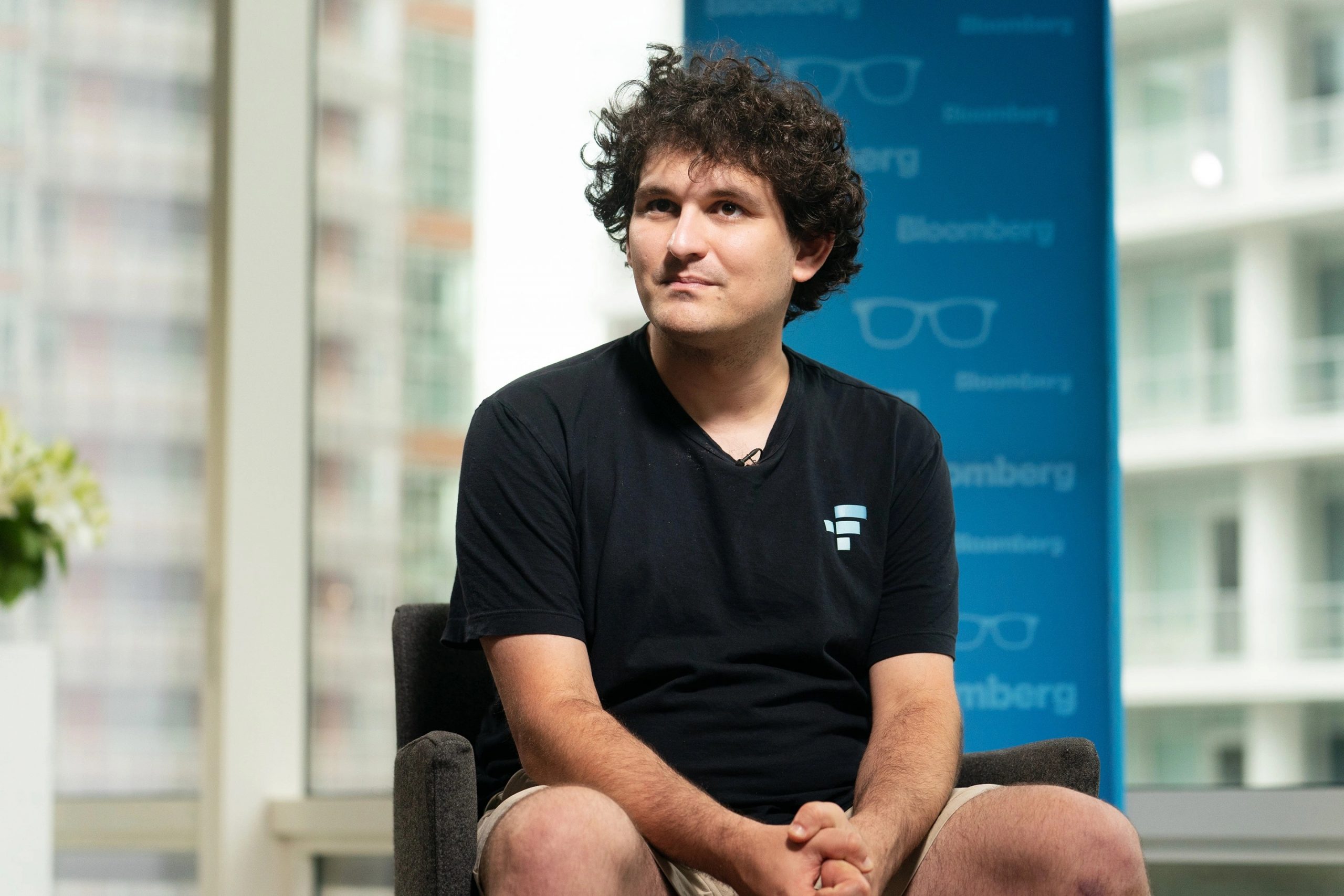
SBF gets 25 years in jail in FTX debacle.

In a landmark decision that has sent shockwaves through the cryptocurrency world, Samuel Bankman-Fried, also known as SBF, has been sentenced to 25 years in federal prison. This sentence comes after a tumultuous period for the former cryptocurrency mogul, whose rapid rise and fall have been likened to some of the most notorious financial scandals in history.

The charges against SBF painted a picture of a complex web of deceit involving multiple layers of fraud and conspiracy, affecting customers, investors, and lenders alike. The case against him was built on allegations of deliberate and calculated actions that contributed to one of the most significant collapses in the cryptocurrency industry.

Bankman-Fried’s journey from a crypto kingpin to a convicted felon is a cautionary tale of ambition, innovation, and the perils of unchecked power within the volatile world of digital finance. As the founder of FTX, once a titan in the cryptocurrency exchange arena, SBF was a prominent figure who championed the potential of cryptocurrencies to revolutionize the financial landscape.

The charges against SBF were severe, encompassing a host of fraud charges tied to his role in the implosion of FTX, a platform that was integral to the trading of digital assets. The prosecution painted a picture of a man who orchestrated one of the largest frauds in financial history, with the defense unable to mitigate the gravity of his actions.

The sentencing of SBF is not just about the fall of an individual but also serves as a pivotal moment for the cryptocurrency industry. It highlights the need for greater oversight and regulation in a sector that has been marred by volatility and accusations of insufficient safeguards for investors.

The collapse of FTX, once a behemoth in the cryptocurrency exchange market, has had far-reaching consequences for investors and the broader crypto economy. The downfall of FTX not only eroded billions in market value but also significantly dented investor confidence in the stability and reliability of cryptocurrency markets.

For individual investors, the impact was immediate and, for many, devastating. As FTX filed for bankruptcy, the inability to withdraw funds left countless users in financial limbo, with their life savings and investments trapped within the platform. The psychological toll of this loss has been profound, with reports of distress and disillusionment widespread among the affected individuals.

Institutional investors, who had increasingly embraced cryptocurrencies as a legitimate asset class, faced a stark reality check. The FTX debacle prompted a reevaluation of risk and due diligence processes, with many institutions likely to pull back or eliminate their allocations to cryptocurrency companies. This retreat could signify a broader trend of declining institutional capital in the crypto space, potentially leading to reduced liquidity and innovation.

As the dust settles on this chapter of the crypto saga, the industry faces a crossroads. The sentence handed down to SBF is a message to all that the financial world, no matter how new or technologically advanced, is not beyond the reach of the law. It is a reminder that trust, transparency, and accountability are the cornerstones of any financial system, traditional or modern.

The specific charges against Samuel Bankman-Fried (SBF), the founder of the now-defunct cryptocurrency exchange FTX, were extensive and serious, reflecting the gravity of the allegations against him. SBF faced seven counts of fraud and conspiracy, each relating to different aspects of the operations at FTX and its sister company, Alameda Research.

The repercussions of this case will likely reverberate for years to come, prompting introspection and, hopefully, progress towards a more secure and trustworthy digital economy. For now, the legacy of SBF and FTX stands as a stark reminder of how quickly fortunes can change and the importance of ethical stewardship in the world of finance.

The Creator Economy Isn’t Dying Off

0

The creator economy has been a hot topic in recent years, with many proclaiming its rise as a new frontier for individual creativity and entrepreneurship. However, as with any rapidly evolving sector, it faces its share of skepticism and predictions of doom. Despite these, the creator economy is not only surviving; it’s thriving and adapting in fascinating ways.

Firstly, it’s important to understand what the creator economy encompasses. It refers to the ecosystem of independent content creators, curators, and community builders monetizing their skills and passions online. This includes YouTubers, bloggers, podcasters, and influencers across various platforms. The creator economy empowers individuals to build their own businesses around their content and communities.

The resilience of the creator economy can be attributed to several factors. One significant aspect is the diversification of revenue streams. Creators are no longer solely reliant on ad revenue. They’re exploring and succeeding with direct monetization methods such as memberships, merchandise, paid newsletters, and online courses. This diversification provides stability and sustainability, allowing creators to weather the ebbs and flows of platform-specific monetization policies.

Moreover, the technological advancements in content creation and distribution tools have lowered entry barriers, enabling more people to participate in the creator economy. Platforms like Thinkific and Patreon offer creators robust tools to monetize their content directly and build closer relationships with their audiences.

Another key trend is the rise of the creator-educator. These individuals leverage their expertise to create educational content, carving out niches and cultivating dedicated followings. They’re not just entertaining; they’re providing value through knowledge and skills, which translates to more opportunities for monetization.

The creator economy is also witnessing a shift towards quality over quantity. With the saturation of content, creators who focus on producing high-quality, niche-specific content are finding more success. This shift is leading to a more mature and sophisticated market where creators are recognized for their unique contributions rather than just their follower counts.

Furthermore, platforms are increasingly recognizing the importance of creators and are adjusting their strategies accordingly. YouTube’s inclusion of Shorts creators in its Partner Program is a testament to this, offering a new revenue stream for short-form content creators.

Monetization remains a persistent challenge. While there are more avenues than ever to earn income from content creation, understanding and leveraging these options effectively is not always straightforward. Creators must be savvy about the various monetization strategies available, from direct support through platforms like Patreon to brand partnerships and merchandise sales.

Another issue is platform dependency. Many creators rely heavily on one or two platforms for their revenue, making them vulnerable to changes in policies, monetization structures, and algorithms. This reliance can lead to instability in income and necessitates a strategic approach to diversify revenue streams.

The creator economy is far from dying. It’s evolving, with creators finding new and innovative ways to connect with audiences and monetize their content. The challenges faced by the industry are not signs of its demise but rather growing pains as it matures into a more diverse and resilient market. The future looks bright for creators who are willing to adapt and innovate in this dynamic landscape.

Despite these challenges, the creator economy continues to grow, fueled by the passion and resilience of creators worldwide. By addressing these obstacles with creativity and strategic planning, creators can continue to thrive in this dynamic and rewarding field.

Whales Eye BlockDAG Presale Having Raised $10.4 Million Beating Fantom Price and Realio Network (RIO) in the Crypto Market

0

The cryptocurrency market is buzzing with notable movements, including the surge in Fantom price driven by its groundbreaking Sonic technology. Simultaneously, the Realio Network (RIO) celebrates a bullish rating, showcasing significant gains.

Amid these developments, BlockDAG (BDAG) stands out as the top crypto to buy in 2024, with its presale success heralding a new era in blockchain technology. These pivotal moments highlight the dynamism within the sector, with Fantom Price, Realio Network (RIO), and BlockDAG leading the charge as the top crypto to buy in 2024.

Fantom Price Surge Fueled by Sonic Launch

As per Coinspeaker, the Fantom price shows robust signs of strength, surging to $1.11 and indicating a promising upward trajectory, mainly attributed to the launch of the protocol’s Sonic technology. This innovative update is poised to elevate the Fantom price by enhancing the network’s efficiency, with capabilities of handling 2,000 transactions per second and reducing storage requirements by 90%. Such advancements place the Fantom price on a competitive footing with leading layer-one blockchains, potentially driving it to outperform in the market.

With the Fantom price benefiting from strong market fundamentals and a bullish sentiment reflected by a weekly RSI above 70, the network’s focus on community-centric developments and the upcoming enhancements in Sonic’s performance after a soft-fork upgrade could further catalyze the Fantom price. Ali Martinez’s prediction that the Fantom price will reach $1.44 soon, coupled with its recent listing on Binance, underscores the optimistic outlook for Fantom’s financial growth and potential as a leading cryptocurrency.

Realio Network (RIO) Soars with Bullish Rating

The Realio Network (RIO) received a bullish rating from InvestorsObserver this Thursday, showcasing a notable surge of 40.44% to $1.48, outperforming the broader crypto market’s gain of 6.53%, per Investors Observer. This uptrend is backed by a bullish sentiment score from InvestorsObserver, reflecting Realio Network’s impressive performance over the past five days through volume and price movements.

The Realio Network (RIO) is trading close to its five-day high of $1.571, indicating strong market confidence and positioning Realio Network (RIO) above key resistance levels. Realio Network’s (RIO) price above the resistance and a significant 88.92% increase from its five-day low suggest a potentially volatile market if the rally subsides. Despite trading on low volume recently, Realio Network (RIO) demonstrates the potential for both short-term and long-term investors. However, caution is advised due to this crypto’s current lack of data.

BlockDAG’s $10.4M Presale Ignites: The Must-Buy Crypto Phenomenon of 2024

BlockDAG’s presale success has positioned it as the top crypto to buy in 2024, with a remarkable $10.4 million raised, signalling strong investor confidence and market anticipation. This achievement, alongside the sale of over 5.7 billion BDAG coins, demonstrates its potential to reshape the crypto landscape.

Furthermore, selling 4000+ X Series Miners reinforces BlockDAG’s technological edge, making it a compelling choice for the top crypto to buy in 2024. Its rapid ascent and ambitious growth targets draw parallels to phenomena like Fantom and Realio. Yet, BlockDAG’s upcoming mainnet launch could distinguish it further, solidifying its status as the top crypto to buy in 2024. With such significant milestones, BlockDAG’s trajectory suggests it could outshine others, reinforcing its position as the top crypto to buy in 2024.

Wrap-Up

As we navigate the ever-evolving cryptocurrency landscape, the surge in Fantom price, the bullish ascent of Realio Network (RIO), and the unprecedented presale success of BlockDAG mark pivotal moments for investors. Each development, from Sonic’s technological innovation to RIO’s market performance and BlockDAG’s rapid rise, underscores the rich potential within the sector. These milestones reflect the vibrant nature of the market and affirm the standing of Fantom Price, Realio Network (RIO), and BlockDAG as top cryptos to buy in 2024, setting a promising outlook for the future of digital currencies.


Invest in BlockDAG Presale:

Websitee: https://blockdag.network

Presale: https://purchase.blockdag.network

Telegram:https://t.me/blockDAGnetworkOfficial

Discord: https://discord.gg/Q7BxghMVyu

Physics of Pricing – How Do You Price Your Products?

0

The greatest moment in a business is when a company discovers and operates a great business model. Why? It is through a business model that companies create value. Yes, a business model encapsulates the logic of a firm, and the way it combines and uses factors of production to create value for stakeholders.

But how do you create value for a profit company? Great question. Join me tomorrow as we discuss Pricing. Do you go cost plus or value-based pricing? How is that pricing going to help you scale, looking at your marginal cost?

Good People, your pricing strategy affects value capture which can shape your unit economics. When the unit economics is bad, you are not SCALING, but growing, and will hit diminishing returns soon on making money! The greatest companies SCALE, not just grow. And that happens when revenue and profit grow faster than your cost. So, if you plot the transaction cost, distribution cost, fixed cost, revenue, and profit, against Growth, the first three will be largely flat even as the last two are shooting into space. Go exponential on PROFIT!

Amazing People, when marginal cost continuously tends towards zero (i.e. asymptotically to the horizontal line) even as growth happens, you have a GREAT company because growth becomes unbounded and unconstrained – and alpha comes. Welcome to a successful company!

My grandmother, Lechi, in Orendu Market Ovim, on her yam and garri stores understood the shifting nature of pricing. If you cannot sell the plantain before the bulk traders from Umuahia are done buying, re-price immediately. If you do not do that, that product is possibly a waste due to lack of storage facilities.

Join me for the Physics of Pricing. This is Tekedia Institute, and we’re the #best. Pick a seat here for the next edition of Tekedia Mini-MBA here.

Making #BuyNaijaGrowNaija Campaign Work to Restore Naira’s Value

0

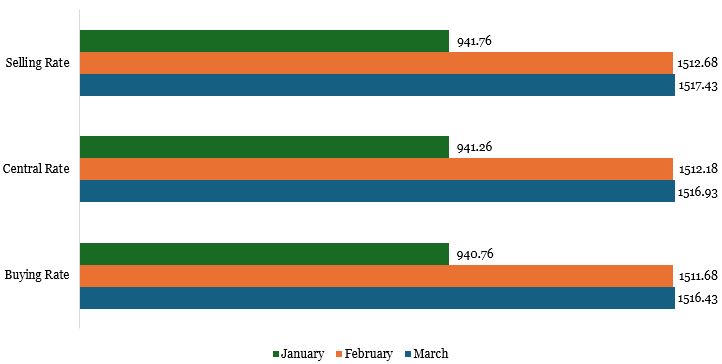
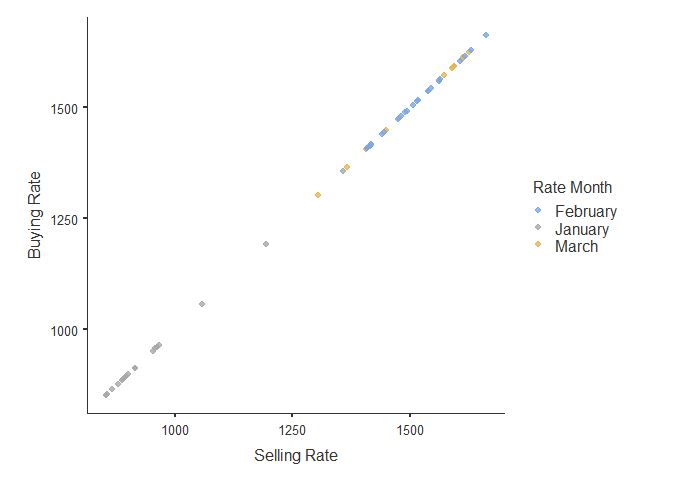
For the first time in three decades, Nigerians experienced what academics and public affairs specialists described as “severe panic” over the future of Africa’s most populous country. The fear escalated when the Naira’s floating policy against foreign currencies, particularly the US dollar, began to produce unforeseen results across sectors. The results began to have a significant impact on food and imported items in early February. As the data in Exhibits 1 and 2 show, Nigerians are clearly facing one of the most severe shocks of Naira depreciation.

The depreciation of the Naira has been a persistent concern for Nigerians and policymakers alike. Factors such as fluctuating oil prices, inadequate diversification of the economy, fiscal mismanagement, and external pressures have contributed to the erosion of the Naira’s value. Additionally, the prevalence of import dependency has exacerbated the situation, leading to a drain on foreign reserves and widening trade deficits.

As citizens grapple with the repercussions of a weakened currency, initiatives like the #BuyNaijaGrowNaija campaign spearheaded by Reno Omokri have emerged as beacons of hope, aiming to bolster the value of the Naira and revitalize the economy. In this thought leadership article, we delve into the dynamics of the Naira’s depreciation, the significance of the #BuyNaijaGrowNaija campaign, and propose strategies to ensure its success.

Exhibit 1: Average rate of Naira to Dollar (US) between January 1, and March 27, 2024

Source: Central Bank of Nigeria, 2024; Infoprations Analysis, 2024

Exhibit 2: Linearity of selling and buying rate between January and March 2024

Source: Central Bank of Nigeria, 2024; Infoprations Analysis, 2024

Reno Omokri believes that one of the important answers to the situation is for Nigerians to consume locally made goods and services from indigenous businesses. With this perspective, our analyst observes that Mr. Omokri has taken Nigerians back in time, calling their attention to the indigenous policies of governments in the early 1970s. According to Mr. Omokri, the goal is to encourage consumers to support indigenous firms, so driving economic growth, creating job opportunities, and ultimately strengthening the Naira.

Even though people are joining Mr. Omokri on X and other social media platforms by retweeting and creating content related to the campaign, our analyst observes that in order to ensure the campaign’s success, a number of strategies must be put into place. Regarding this, our analyst notes that in order to revive Nigerians’ interest in developing indigenous enterprises and the country’s economy in general, measures such as consumer education, government support, collaboration, awareness, and advocacy campaigns are needed now more than ever.

Initiatives must be developed to educate people about the benefits of purchasing locally produced goods. Highlighting the economic benefits, quality assurance, and good influence on communities might encourage people to make informed purchasing decisions. The government has an important role in promoting local industry growth. Policies such as tax breaks, access to financing, infrastructure development, and trade protection measures can help local firms prosper. The campaign’s successful implementation requires collaboration among government agencies, industry associations, financial institutions, and civil society organizations. By using the skills and resources of multiple stakeholders, synergies can be maximized, and difficulties handled collaboratively.

Embracing technology and innovation can help Nigerian products compete better in both domestic and international markets. Investments in R&D, digitization, and value chain optimization can increase efficiency and product quality. Continuous advocacy and awareness initiatives are required to maintain momentum and promote a cultural change toward supporting local industries. Leveraging traditional and digital media outlets, influencers, and community involvement efforts can help the campaign reach and affect more people.