DD
MM
YYYY

PAGES

DD
MM
YYYY

spot_img

PAGES

Home Blog Page 3166

SEC’s $2B Fine on Ripple and Future of Cryptocurrency Regulation

0

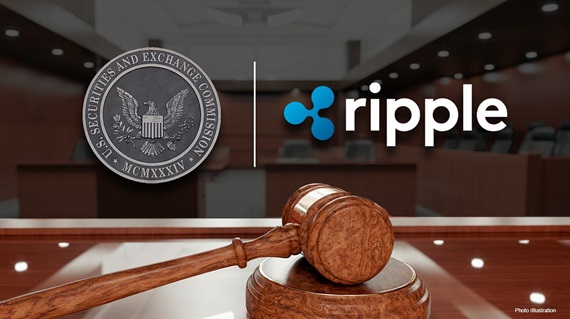
The cryptocurrency world has been closely watching the legal battle between Ripple Labs and the U.S. Securities and Exchange Commission (SEC), which has taken a dramatic turn with the SEC seeking a staggering $2 billion fine from Ripple. This development is a significant moment in the ongoing debate over the regulation of digital assets and their classification.

The case centers around the SEC’s allegations that Ripple conducted unregistered securities offerings by selling XRP, its native digital currency, to institutional investors. Ripple, known for its payment protocol that aims to facilitate faster and more affordable cross-border transactions, has been under scrutiny for its XRP sales practices, which the SEC claims violated federal securities laws.

The Ripple vs. SEC lawsuit, a pivotal case for the cryptocurrency industry, has seen significant developments recently. The case, which began in December 2020, revolves around the SEC’s allegations that Ripple Labs conducted unregistered securities offerings through the sale of XRP. Ripple Labs has maintained that XRP is a currency rather than a security, which would exempt it from such regulations.

The legal dispute has raised critical questions about the nature of cryptocurrencies and whether they should be classified as securities, which would subject them to stricter regulatory oversight. The outcome of this case could set a precedent for how other digital assets are treated by regulatory bodies in the United States and globally.

Ripple’s defense has been robust, challenging the SEC’s stance and advocating for a clear regulatory framework that distinguishes cryptocurrencies from traditional securities. The company argues that XRP is a currency and not a security, and thus should not be subject to the same regulations that govern stocks and bonds.

As of the latest updates, the legal battle has entered its third calendar year and is approaching a conclusion. Ripple’s legal team has been buoyed by a judge’s ruling against the SEC in a separate case involving the Binance (BNB) crypto exchange, which they believe could positively impact their case. Moreover, Ripple’s Chief Legal Officer, Stuart Alderoty, has expressed confidence in ultimately prevailing against the SEC’s claims.

The implications of the SEC’s proposed fine are far-reaching. A penalty of this magnitude could not only affect Ripple’s operations and financial health but also send shockwaves through the cryptocurrency market, potentially influencing investor confidence and the valuation of digital assets.

As the legal proceedings continue, the cryptocurrency community is left to ponder the future of digital asset regulation. Will this case bring about much-needed clarity, or will it further complicate the already complex regulatory landscape? The answers to these questions will undoubtedly shape the evolution of the cryptocurrency industry for years to come.

For more detailed information on the case and its implications, you can refer to the analysis by attorney Jeremy Hogan, or read the latest updates on the SEC’s actions against Ripple. The full extent of the SEC’s claims and Ripple’s response can also be found in recent articles covering the lawsuit.

The outcome of this lawsuit is eagerly anticipated by the cryptocurrency community, as it could influence the regulatory approach to digital assets in the United States and potentially worldwide. The final ruling, expected sometime this year, will have far-reaching implications for the industry, affecting not only Ripple’s operations but also the broader interpretation of digital assets under securities law.

BlockDAG’s Mobile Mining Breakthrough Sets the Stage for Optimism and STX Crypto to Soars

0

STX crypto surges amidst a sluggish market, buoyed by ecosystem enhancements and investor optimism. The Optimism (OP) price hints at gains despite potential sell-offs and challenging resistances.

BlockDAG’s entry revolutionises cryptocurrency mining. Its presale success indicates a promising future for ASIC miners, blending innovation with robust investment opportunities and setting a new benchmark in blockchain technology.

STX Crypto Positioned for Solid April Performance

STX, the cryptocurrency powering the Stacks network, impressively surged by 30% despite the sluggish crypto market. This significant uptick is attributed to anticipation of the upcoming Nakamoto Upgrade and several ecosystem developments. Notable advancements include additions to the Dharma Automated Market Maker and a partnership to enhance interoperability between Stacks and other blockchains.

Investor interest is rising, evidenced by StackingDAO surpassing the $100 million mark, showcasing growing confidence in Stacks’ potential within the DeFi space on Bitcoin. These milestones position STX crypto for potentially solid performance as April approaches.

Balancing Optimism with Caution

The Optimism (OP) price recently surged by 10%, indicating a potential for further gains. Despite nearing a golden cross on the 4-hour timeframe, bearish pressures exist due to the Market Value to Realized Value (MVRV) ratio entering a danger zone, suggesting a likelihood of short-term profit-taking.

OP faces solid resistance at $3.87 and $4.65, challenging a 20% rally. However, a golden cross observed could signal a bullish trend reversal, potentially driving prices higher if the bearish thesis is invalidated.

Investor Confidence Soars: BlockDAG Among Safest Crypto Presale Bets

BlockDAG’s market debut has set the cryptocurrency world abuzz, showcasing its impressive presale success and innovative mining solutions that solidify its stance as the cryptocurrency to watch in 2024. The project’s presale momentum is strong, with the price per coin escalating by 50% to $0.003 in its fifth batch, amassing close to $9.7 million.

This remarkable start hints at a forecasted 5,000x return on investment, drawing investors to the 5.21 billion BDAG coins already sold. BlockDAG introduces a novel hybrid consensus mechanism that combines Directed Acyclic Graphs (DAG) with Proof-of-Work (PoW), aiming to enhance transaction speeds while addressing scalability, decentralisation, and security concerns.

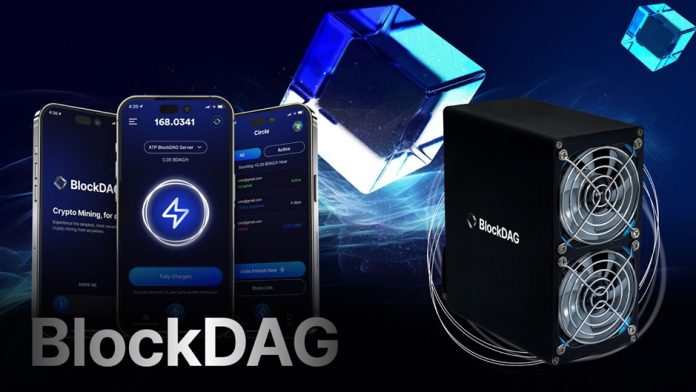
This innovative approach has generated significant investor interest, with presale price increments indicating confidence in exponential returns. Importantly, BlockDAG has opened new avenues for miners, from Mobile Mining to deploying ASIC miners and developing heavy-duty X series mining rigs. These initiatives cater to a broad spectrum of investment appetites, from the casual to the industrial scale, underscoring BlockDAG’s comprehensive mining strategy.

With ambitious plans, including a future coin valuation of $10 by 2025-30 and a strategic investment of $600 million, BlockDAG aims to redefine the blockchain space. Its projections, such as the potential 10,000x return on investment and achieving $100 million in liquidity post-coin launch, demonstrate its commitment to becoming a dominant force in the cryptocurrency market.

By introducing a crypto payment card and creating an ecosystem that supports ASIC miners and offers significant community incentives, such as a $2 million shared giveaway, BlockDAG is lowering investment barriers and fostering a strong community. This strategy marks BlockDAG’s entry into the market and positions it as a revolutionary force, promising to redefine blockchain technology and offer ASIC miners a golden opportunity.

BlockDAG’s Potential Plan To Reach The $600 Million

STX crypto, riding a 30% surge, exemplifies the vibrant potential in the sluggish crypto market, fueled by ecosystem upgrades and investor enthusiasm. Concurrently, Optimism (OP) price hints at growth with a 10% jump despite potential short-term profit-taking risks. The scene broadens with BlockDAG’s entry, revolutionising mining with ASIC miners and a hybrid consensus model, promising enhanced scalability and security.

Furthermore, BlockDAG’s commitment to strengthening the mining ecosystem by developing ASIC miners and high-performance X series rigs offers a promising avenue for miners.

Join BlockDAG Now!

Website: https://blockdag.network

Presale: https://purchase.blockdag.network

Telegram: https://t.me/blockDAGnetworkOfficial

Discord: https://discord.gg/Q7BxghMVyu

Nvidia Set to Face Stiff Competition as Rival Firms Group to Build Suite of AI-Powered Software Tools

0

American multinational corporation and technology company Nvidia, is poised to encounter fierce competition as a consortium of rival companies have collaborated to construct a suite of AI-powered software tools.

According to a report from Reuters, tech giants which include Qualcomm, Google, and Intel have grouped in a consortium named the UXL Foundation to build a suite of software and tools that will be able to power multiple types of AI accelerator chips.

The software, an open-source project built initially using Intel technology, aims to make computer code run on any machine, regardless of what chip and hardware powers it.

This collaboration signals a strategic effort by competing companies to leverage their collective strengths and expertise in artificial intelligence to challenge Nvidia’s dominant position. By joining forces, these firms can combine their research, development, and technological capabilities to create innovative solutions that rival Nvidia’s offerings.

With more than 4 million global developers relying on Nvidia’s CUDA software platform to build AI and other apps, these companies are trying to create their own version of CUDA software, that will see developers tempted to try out other chips, particularly at a time when supply constraints have ravaged Nvidia and others.

Senior Director and Head of AI and ML Product Management at Qualcomm Vinesh Sukumar disclosed to Reuters that the consortium was showing developers how to migrate out from an Nvidia platform. The consortium technology remains underwork, with technical details not expected to be nailed down until the end of the year.

Known for its dominance in AI chips, Nvidia has also fortified its market position through its CUDA software platform, crucial for AI and app development.

No other firm has benefited from the boom in artificial intelligence (AI) as much as Nvidia. Since January 2023 the chipmaker’s share price has surged by almost 450%.

Nvidia earned its $2.2 trillion market cap by producing artificial intelligence chips that have become the lifeblood powering the new era of generative AI developers from startups to Microsoft, OpenAI, and Google parent Alphabet. More than 4 million global developers rely on Nvidia’s CUDA software platform to build AI and other apps.

While the company has established itself as a leader in AI hardware with its GPUs (Graphics Processing Units), there are speculations that the rise of competing software solutions could disrupt its market dominance and reshape the competitive landscape.

It is interesting to note that the interest in unseating Nvidia through a potential weakness in software has ramped up since last year, with several companies and startups developing their AI-powered software chips.

For Nvidia, the prospect of facing intensified competition necessitates a strategic response. The company may need to invest further in research and development to maintain its technological edge, enhance its software offerings, and differentiate itself from competitors.

When asked about the open source and venture-funded software efforts to break Nvidia’s AI dominance, Nvidia executive Ian Buck said in a statement: “The world is getting accelerated. New ideas in accelerated computing are coming from all across the ecosystem, and that will help advance AI and the scope of what accelerated computing can achieve.”

Nvidia whose chip technology dominates in data centers used to create artificial intelligence (AI) software, announced new products to help the personal computer industry lure consumers with “AI PCs”.

Despite the intensified rivalry, the company is well-positioned to continue to be a leader in the AI hardware market for many years to come. The company’s strong track record of innovation, its strong ecosystem, and its large and growing customer base give it a significant advantage over its competitors. However, the company will need to continue to innovate and adapt to the changing nature of AI to maintain its dominance.

At the GTC 2024, an annual conference held by Nvidia, the company said it wants to become the “TSMC for AI” as it expands beyond hardware and taps into software services.

Nvidia, CEO Jensen Huang unveiled a series of platforms and tools that will make it easier for developers to custom-build and deploy their own AI products based on pre-built AI models by Nvidia.

Most analysts expect that Nvidia, which controls more than 95% of the market for specialist AI chips, will continue to grow at a blistering pace for the foreseeable future.

As demand for generative AI services continues to grow, with the AI chip market projected to more than double by 2027, to roughly $140 billion, it is evident that chips will be the next big battleground for AI supremacy.

El Salvador not slowing down on topping its Bitcoin Holdings

0

El Salvador, a nation known for its bold financial strategies, has been making headlines since 2021 when it became the first country to adopt Bitcoin as legal tender. This unprecedented move was part of a broader vision to revamp the country’s financial landscape and foster a more inclusive economic environment. Fast forward to 2024, and El Salvador’s commitment to this digital currency remains unwavering, with the country continuing to increase its Bitcoin holdings, now reaching a significant total of 5,700 BTC.

The country’s president, Nayib Bukele, citing a CoinDesk report said on Monday that the nation now owns 5,700 bitcoins versus mid-March’s roughly 5,690At bitcoin’s current price just above $70,000, El Salvador’s bitcoin stack is worth more than $400 million. Bukele earlier this month said the country’s bitcoin holdings had been moved to cold storage and published the address of its bitcoin wallet. That wallet showed just under 5,690 BTC, significantly more than the amount public trackers of El Salvador’s holdings had estimated.

The decision to integrate Bitcoin into the national economy was spearheaded by President Nayib Bukele, who envisioned leveraging the cryptocurrency’s potential to boost investment, secure financial freedom, and provide an alternative for citizens without access to traditional banking services. The move was met with both enthusiasm and skepticism, as the volatility of cryptocurrencies poses both opportunities and risks.

El Salvador’s journey with Bitcoin began with the purchase of 400 BTC in September 2021, and the country has since adopted a strategy of consistent acquisition. This approach has included the implementation of a daily Bitcoin purchase plan, which has contributed to the current holdings. The nation’s treasury has seen an increase in value, with reports indicating an unrealized profit of approximately $84 million, showcasing the potential financial benefits of this venture.

The country’s Bitcoin reserves are more than a financial asset; they represent a shift towards technological innovation and economic experimentation. El Salvador has also introduced initiatives such as Bitcoin mining using geothermal energy from the nation’s volcanoes, further intertwining the cryptocurrency with the country’s development plans.

El Salvador’s Bitcoin strategy extends beyond mere investment. The nation has eliminated income tax on foreign investments to attract global investors and has introduced legislation granting citizenship to those who invest a significant amount in Bitcoin. These policies aim to position El Salvador as a hub for cryptocurrency innovation and investment.

The implications of El Salvador’s Bitcoin adoption are far-reaching. It challenges traditional financial systems and offers a case study for other nations considering similar paths. The country’s experience will provide valuable insights into the practicalities and impact of integrating cryptocurrencies into a national economy.

As El Salvador continues to navigate the complex landscape of cryptocurrency, the world watches with keen interest. Will this bold financial experiment pave the way for a new era of economic development, or will it serve as a cautionary tale for the volatility of digital currencies? Only time will tell, but one thing is certain: El Salvador is carving out a unique position in the financial world, and its Bitcoin journey is one to follow closely.

Africa Energy Bank to Initiate Operations in 2024 with $5 Billion Capital Base

0

Reports from Reuters indicate that the proposed Africa Energy Bank, aimed at facilitating funding for oil and gas projects across the African continent, is set to commence operations this year with an initial capital base of $5 billion.

This venture is a collaborative effort between the African Export-Import Bank (Afreximbank) and the African Petroleum Producers Organization (APPO), designed to address the financial deficiencies within Africa’s energy sector.

The establishment of the Africa Energy Bank comes at a critical juncture as major financial institutions face mounting pressure from environmental advocacy groups to divest from fossil fuel projects, citing their adverse impacts on the climate.

Zakaria Dosso, the managing director of Africa Energy Investment Corporation (AEICORP), revealed that Ghana has recently made a significant deposit of just over $20 million to AEICORP, solidifying its position as the third African nation to contribute to the bank’s funding. Nigeria and Angola had previously contributed $10 million each last year to support the bank’s objectives.

Dosso emphasized the importance of Africa’s self-sufficiency in financing to drive development in the energy sector noting, “Africa should set up its financing capability so that we can still develop this strategic sector, that is the rationale. Africa Energy Bank is on the verge of becoming a reality and should be operational during the second half of 2024.”

Funding Mechanism and Bids for Headquarters

The capital base of the Africa Energy Bank is expected to be sourced from various channels. Each African member country is expected to contribute at least $83 million, with the collective target set at approximately $1.5 billion. Founding members Afreximbank and APPO are anticipated to match this funding commitment.

“The remaining $2 billion is slated to be raised from alternative sources, potentially including sovereign wealth funds from the Middle East,” Dosso added.

Moreover, the selection process for the headquarters of the proposed bank has garnered significant attention. Six nations – Algeria, Benin, Cote d’Ivoire, Ghana, Nigeria, and South Africa – are actively competing to host the headquarters. Egypt, initially a contender, has withdrawn its bid.

Dosso, who is part of the temporary leadership team responsible for establishing the Africa Energy Fund (AFE), disclosed that a selection committee comprising Angola, Libya, Senegal, Venezuela, and Afreximbank will evaluate all applications.

“The committee will present its recommendations to ministers for a final decision on the headquarters location,” he stated.

The establishment of the Africa Energy Bank heralds a new era of financial empowerment and strategic investment in Africa’s energy sector, poised to drive sustainable development and bolster economic growth across the continent.

The establishment of the Africa Energy Bank is expected to impact Africa’s energy security in five significant ways:

Increased Financing for Energy Projects: With an initial capital base of $5 billion and plans to raise additional funds from various sources, the Africa Energy Bank will provide much-needed financial support for energy projects across the continent.

This influx of capital is expected to enable the development of new oil and gas ventures, as well as the expansion and modernization of existing infrastructure, contributing to enhanced energy security.

Diversification of Energy Sources: While the bank’s primary focus may initially be on funding oil and gas projects, its establishment could pave the way for diversification into renewable energy initiatives in the future. By facilitating investments in clean energy technologies such as solar, wind, and hydroelectric power, the bank can help reduce Africa’s reliance on fossil fuels and promote a more sustainable and resilient energy mix.

Strengthening Regional Cooperation: The Africa Energy Bank is a collaborative effort between Afreximbank and APPO, signaling a commitment to regional cooperation in addressing Africa’s energy challenges. By pooling resources and expertise from member countries, the bank is expected to foster greater coordination and collaboration in energy development initiatives, leading to more efficient and effective outcomes.

Promotion of Economic Growth and Development: Access to reliable and affordable energy is essential for driving economic growth and development. By financing energy projects, the Africa Energy Bank can stimulate economic activity, create employment opportunities, and support industrialization efforts across the continent. This, in turn, can contribute to poverty alleviation and improve living standards for millions of people.

Enhanced Energy Access: Despite Africa’s vast energy resources, many communities still lack access to electricity. The Africa Energy Bank has the potential to address this challenge by prioritizing investments in off-grid and rural electrification projects. By expanding access to energy services, the bank can improve the quality of life for underserved populations and unlock their potential for socio-economic development.

The establishment of the Africa Energy Bank represents a significant step forward in advancing Africa’s energy security objectives. Through strategic investments, collaboration, and innovation, the bank is expected to play a pivotal role in shaping the continent’s energy industry.