DD
MM
YYYY

PAGES

DD
MM
YYYY

spot_img

PAGES

Home Blog Page 3404

Hamas Accepts Egyptian-Qatari-Brokered Ceasefire Deal As the world waits on Israel

0

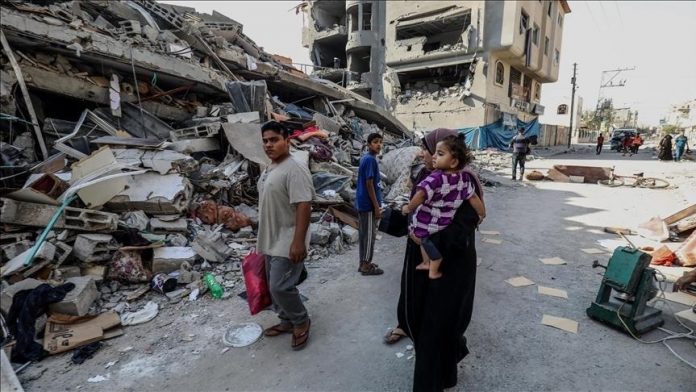
In a pivotal moment in the ongoing conflict between Israel and Hamas, the militant group Hamas announced on Monday its acceptance of an Egyptian-Qatari-led proposal for a cease-fire, the AP has reported.

This declaration came at a critical juncture, with tensions escalating and fears mounting over the possibility of an imminent ground invasion by Israeli forces. The decision by Hamas to accept the cease-fire proposal marked a significant development in the seven-month-long war that has ravaged the Gaza Strip and claimed countless lives on both sides of the conflict.

The conflict was ignited by an unprecedented raid into southern Israel on October 7, during which Hamas and other militants killed approximately 1,200 people, mostly civilians, and abducted around 250 hostages. Despite exchanges during a November cease-fire, Hamas is believed to still hold about 100 Israelis captive, along with the bodies of around 30 others.

The announcement by Hamas followed closely on the heels of Israel’s issuance of evacuation orders to approximately 100,000 Palestinians in the southern city of Rafah. The evacuation orders came as a stark reminder of the looming threat of a ground invasion, intensifying anxieties among civilians already grappling with the devastating impact of the conflict.

According to Gaza health officials, Israel’s bombardment and ground offensives in Gaza have resulted in the deaths of over 34,700 Palestinians, with approximately two-thirds of them being children and women. The tally does not differentiate between civilians and combatants. Additionally, more than 80% of the population of 2.3 million have been displaced from their homes, and hundreds of thousands in the north are facing the threat of famine, as reported by the U.N.

The proposed cease-fire offers a glimmer of hope for a reprieve from the relentless violence that has engulfed the region for months. However, the fate of the agreement hangs in the balance as Israel has yet to provide an official response, leaving the details of the proposal cloaked in uncertainty.

Netanyahu stated on Monday that the seizure of Rafah, which Israel identifies as the last significant Hamas stronghold in Gaza, was crucial to preventing the militants from rebuilding their military capabilities and launching another attack on Israel similar to the one on October 7 that sparked the war.

As anticipation mounts regarding the potential cease-fire, both sides remain on edge, bracing for the possibility of further escalation. The specter of a ground invasion in Rafah looms large, fueling fears of increased bloodshed and devastation in an already war-torn region.

Aid agencies have cautioned that an offensive would exacerbate Gaza’s humanitarian crisis and lead to a surge in civilian casualties in an Israeli campaign that, over nearly seven months, has resulted in the deaths of thousands of people and the devastation of the territory.

Hamas’s acceptance of the cease-fire proposal came following discussions between its top leader, Ismail Haniyeh, and officials from Qatar and Egypt. The news was met with cautious optimism among Palestinians in Rafah, who viewed the agreement as a potential reprieve from the threat of an imminent Israeli assault.

However, concerns linger among Israel’s allies, including the United States, regarding the ramifications of a ground invasion in Rafah. President Joe Biden emphasized the urgency of reaching a cease-fire agreement to protect the lives of Israeli hostages held in Gaza, noting the need for a swift resolution to the conflict.

However, in a fiery speech on Sunday evening commemorating Israel’s Holocaust Memorial Day, Netanyahu dismissed international pressure to cease the war, declaring that “if Israel is compelled to stand alone, Israel will stand alone.”

The potential consequences of a ground invasion are dire, with aid agencies and humanitarian organizations warning of an impending humanitarian catastrophe. The UN and humanitarian agencies said the displacement of tens of thousands of Palestinians in Rafah underpins the urgency of finding a peaceful resolution to the crisis and mitigating the suffering of civilians caught in the crossfire.

In response to Israel’s evacuation orders, Palestinians in Rafah grapple with the daunting prospect of uprooting their lives once again. The imminent threat of an attack has left many residents feeling anxious and uncertain about their future, as they confront the harsh realities of life in a conflict zone.

Tensions heightened on Sunday as Hamas launched rockets at Israeli troops stationed near Gaza’s main humanitarian aid crossing, resulting in the deaths of four soldiers. Simultaneously, Israeli airstrikes in Rafah claimed the lives of 22 people, including children and two infants, according to a hospital report.

The fate of Gaza hangs significantly on the implantation of the cease-fire deal. The coming days will be pivotal in determining whether the proposed agreement will hold and pave the way for a lasting peace in the war-torn region.
Nigeria’s 0.5% Cybersecurity Levy On Electronic Transactions Does Not Inspire

0

What a nation: “In a move said to be aimed at fortifying Nigeria’s digital defenses, the Central Bank of Nigeria (CBN) has issued a directive mandating financial institutions to enact a cybersecurity levy. This levy, amounting to 0.5% of the value of all electronic transactions, is intended to boost the National Cyber Security Fund administered by the Office of the National Security Adviser (NSA).”

We’re already paying NITDA Levy (information technology),  ITF (training), TETFUND (education), and now Cybersecurity Levy, besides other auxiliary fees. I expect by 2027 for a Federal Labour Levy to be enacted to help pay salaries of workers.

Nigeria does not need this playbook. What we need is to GROW the economy so that corporate taxes can take care of these auxiliary fees. America waived online sales taxes for more than a decade to grow the ecommerce sector, knowing that when companies like Amazon ascend, all the lost taxes would be made up.

In other words, there is a clear plan with a big picture. We need to learn something because this piecemeal disparate approach of charging this and that, as fees, on people’s properties, seems non-optimal in my view. Taking 0.5% is a lot of money, and it makes the Office of the National Security Adviser (NSA) the most investable fintech in Nigeria if it is open for investments.

Meanwhile, the plan to register POS agents in Nigeria is a good policy. There is no more room in Nigeria for informal players: “Nigeria’s 1.9 million PoS agents are now required to register with the Corporate Affairs Commission (CAC) by the Federal Government to tackle fraud and enhance financial inclusion. This move, which includes providing a unique terminal identification number to each PoS agent and may require Know Your Customer (KYC) documents for certain transactions, is expected to be completed within a two-month timeline with the support of fintech companies.”

Nigeria’s Central Bank Directs Financial Institutions to Charge 0.5% Cybersecurity Levy on all Electronic Transactions

0

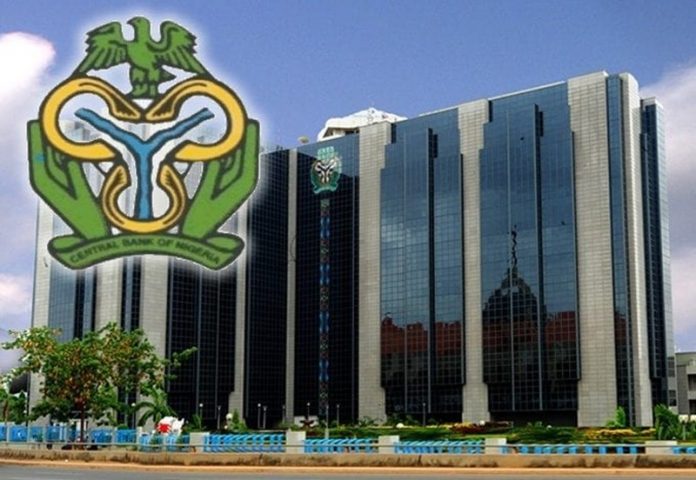
In a move said to be aimed at fortifying Nigeria’s digital defenses, the Central Bank of Nigeria (CBN) has issued a directive mandating financial institutions to enact a cybersecurity levy. This levy, amounting to 0.5% of the value of all electronic transactions, is intended to boost the National Cyber Security Fund administered by the Office of the National Security Adviser (NSA).

The CBN’s directive, communicated via a circular signed by Chibuzor Efobi and Haruna .B. Mustafa, Directors of payments system management and financial policy and regulation respectively, signifies a proactive approach to combating the escalating threat of cybercrime. This move comes in response to the enactment of the 2024 Cybercrime (Prohibition, Prevention, etc) Amendment Act, which provides the legal framework for the implementation of the cybersecurity levy.

According to the circular, financial institutions, including banks, mobile money operators, and payment service providers, are required to commence the deduction and collection of the cyber security levy within two weeks of the circular’s issuance. The levy will be calculated as 0.5% of the value of all electronic transactions, with the funds channeled into the National Cyber Security Fund to enhance Nigeria’s cybersecurity capabilities.

“Following the enactment of the Cybercrime (Prohibition, Prevention, etc) (Amendment) Act 2024 and pursuant to the provision of Section 44 (2)(a) of the Act, a levy of 0.5% (0.005) equivalent to a half percent of all electronic transactions value by the business specified in the Second Schedule of the Act, is to be remitted to the National Cybersecurity Fund (NCF), which shall be administered by the Office of the National Security Adviser (ONSA).

“Accordingly, all Banks, Other Financial Institutions, and Payments Service Providers are hereby required to implement the above provision of the Act as follows.

“Calculate the levy based on the total electronic transfer origination, then deducted and remitted by the financial institution.

“The deducted amount shall be reflected in the customer’s account with the narration: ‘Cybersecurity Levy’.

The CBN’s directive comes amid escalating threats posed by cybercriminals. With the rapid digitization of financial services and the increasing reliance on electronic transactions, Nigeria’s digital infrastructure has become a prime target for cyberattacks. The Nigeria Inter-Bank Settlement System (NIBSS) said that financial institutions lost about N17.67 billion to fraud in 2023.

Thus, the implementation of the cybersecurity levy is believed to be a proactive measure to safeguard against these threats and protect the integrity of Nigeria’s digital economy.

However, while the cybersecurity levy is a step in the right direction, its implementation also raises several challenges and implications for both consumers and businesses. 

Everyday users may experience concerns about the potential increase in the cost of digital services, as the levy is likely to be passed on to consumers in the form of higher transaction fees. This could impact consumer behavior and adoption rates of digital financial services, particularly among low-income individuals who are more sensitive to changes in transaction costs.

Similarly, businesses will need to adjust their financial strategies to accommodate the levy, balancing the need for compliance with the imperative of managing operational costs. The stringent penalties for non-compliance, including fines amounting to no less than 2% of the annual turnover for defaulting businesses, underscore the seriousness of this initiative and the importance of adherence to cybersecurity protocols.

Despite these challenges, many believe the implementation of the cybersecurity levy is a representation of a crucial step forward in Nigeria’s efforts to strengthen its digital resilience. They believe that by investing in cybersecurity infrastructure and capabilities, Nigeria can better protect its digital assets and safeguard against the potentially devastating impact of cyberattacks. 

Shocking: Lagos Commissioner Reveals 80% of Buildings in Ibeju Lekki-Epe Corridor Lack Government Approval

0

Amidst growing criticism faced by the Lagos government over the recent demolition of buildings and shanties across the state, Oluyinka Olumide, the Commissioner for Physical Planning and Urban Development in Lagos, has disclosed a startling revelation. 

In an interview with journalists, Olumide revealed that an overwhelming 80 percent of buildings in the Ibeju Lekki-Epe corridor lack government approval.

Olumide shed light on the challenges encountered in securing government approval for property development, citing the persistence of developers and property owners in circumventing due process. He explained the rigorous procedures involved in obtaining approval and stressed the importance of adhering to zoning regulations.

“The procedure to get approval is first to get the planning information, as to what those areas have been zoned for. In this case, what we have is agricultural land, and people now go to their families to buy agricultural land. Of course, those lands would be sold because those families do not know the use such land would be put to,” Olumide explained.

He outlined the multi-layered process involved in obtaining approval, including obtaining planning information, fence permits, and layout permits.

“The procedure to get approval is first to get the planning information, as to what those areas have been zoned for. In this case, what we have is agricultural land, and people now go to their families to buy agricultural land. Of course, those lands would be sold because those families do not know the use such land would be put to,” he said.

“The next thing to do is the fence permit. If you missed the earlier information on not knowing the area zoning, at the point of getting the fence permit, you would be able to detect what the area is zoned for. After that, the layout permits a large expanse of land. So, you can see all these layers. 

“But people still go ahead to start advertising. Some have even gone to the extent of displaying the sizes they want to sell. Imagine someone in the diaspora who wants to send money without any knowledge.

“Then, no approval is eventually gotten. Even if they pass the assignment and the survey to them, we would not grant the individual permit, because that area is not zoned for that purpose.”

Despite these stringent requirements, Olumide blamed the proliferation of unauthorized structures in the Ibeju Lekki-Epe corridor on developers’ actions.

The disclosure has stirred fresh criticism against the government, with many describing it as a sign of poor governance. 

One of the shortfalls cited by critics is the overly assertive function of the Lagos State Building Control Agency (LASBCA), which is expected to result in not less than 90 percent approval of buildings in Lagos. The LASBCA is notably at every construction site across the state, and in most cases, sealing them off until approval is given.

Thus, the people imagine, how despite this close monitoring of construction projects in Lagos, the government could boldly announce that 80 percent of buildings in the Ibeju Lekki-Epe corridor lack government approval. 

Against this backdrop, critics have raised concerns about the effectiveness of the LASBCA in ensuring compliance with building regulations across the state. 

Furthermore, economists warn that this development could have negative implications for Nigeria’s quest for foreign direct investments. The lack of proper regulation and oversight in Nigeria’s commercial capital undermines investor confidence and raises doubts about the government’s commitment to creating a conducive business environment.

In response to the criticism, the commissioner for the environment in Lagos, Tokunbo Wahab, said that the demolished structures were erected in contravention of the city’s master plan and had occluded drainage channels. He added that the government’s actions were by the law, aimed at removing encumbrances obstructing drainage channels.

However, the response has failed to curtail the growing anti-investment sentiment stemming from the state’s approach. 

Amidst mounting pressure, the Lagos government faces the daunting task of restoring public trust and ensuring adherence to regulatory standards to foster sustainable development and attract much-needed investment to Nigeria’s commercial hub.

Stakeholders are calling for greater transparency and accountability in the approval process for property development in the state. They note that the revelation of widespread non-compliance underlines the need for stricter enforcement measures to prevent unauthorized construction and safeguard public infrastructure.

Betting on Growth: Analyzing the Global Sports Betting Market Boom and Its Driving Forces

0

The sports betting market has experienced explosive growth across the globe, influenced by various economic, technological, and regulatory factors. This article delves into the intricate dynamics of this booming market, presenting a thorough analysis of its expansion, challenges, and prospects. By dissecting specific segments and key drivers, we provide an in-depth understanding of the forces shaping the global sports betting landscape.

Market Overview: Current Market Size and Predictions

The global sports betting market was valued at approximately $85 billion (about $260 per person in the US) in 2019 and is anticipated to reach $140 billion (about $430 per person in the US) by 2028, growing at a compound annual growth rate (CAGR) of 6.7%. Increasing legalization, the digital revolution, and the rising popularity of sports worldwide support this growth. The introduction of mobile betting platforms has made sports betting more accessible, contributing to market expansion.

Technological Innovations: Mobile Betting Advancements

Technological advancements have significantly shaped the sports betting industry. The advent of mobile betting applications has revolutionized how consumers engage with betting platforms, offering convenience and real-time betting opportunities. Approximately 72% of betting traffic now comes from mobile devices, highlighting the shift towards digital and mobile-first strategies among bookmakers.

Regulatory Landscape: Changes in Gambling Legislation

Regulatory frameworks play a crucial role in the development of the sports betting market. In regions like the United States, the repeal of PASPA in 2018 allowed states to legalize sports betting individually. Since then, over 30 states have passed legislation to permit sports betting, which has dramatically increased market participation and revenue generation.

Geographic Expansion: Emerging Markets Growth

Emerging markets, particularly in Asia and Africa, are experiencing rapid growth in sports betting, fueled by increasing internet penetration and mobile phone usage. Countries like Kenya, Nigeria, and India have seen a surge in sports betting activities among their populations, driven by the affordability and accessibility of mobile internet.

Consumer Behavior: Betting Preferences and Patterns

Consumer behavior in sports betting varies significantly across different regions. In Europe, football (soccer) attracts most bets, while in the United States, American football, basketball, and baseball dominate betting activities. The growth of live betting, where bets are placed during the event, has also altered consumer engagement, offering dynamic betting options that increase user involvement and betting volume.

Economic Impact: Revenue Generation and Job Creation

The sports betting industry has become a significant economic driver in many regions, contributing to job creation and revenue generation. In 2021, sports betting generated over $4 billion in total revenue in the U.S. alone, supporting thousands of jobs in technology, regulatory compliance, and customer service sectors.

Marketing Strategies

Marketing strategies in the sports betting industry are vital for customer acquisition and retention. Promotions such as deposit match bonus offers are common, where bookmakers match a player’s deposit by a certain percentage, effectively doubling the resources the player can bet with. This strategy not only attracts new users but also encourages higher deposit amounts and repeated engagement.

Sponsorships and Partnerships: Influence on Sports and Media

The symbiosis between sports betting and professional sports has intensified, with numerous partnerships forming between betting companies and sports leagues or teams. These sponsorships offer mutual benefits; leagues and teams gain financial support, while betting companies increase their visibility and consumer reach.

Challenges and Risks: Addressing Problem Gambling

While the sports betting market offers substantial economic benefits, it also presents challenges, particularly related to problem gambling. Regulators and companies are increasingly focusing on responsible gambling measures to mitigate risks, including setting betting limits, offering self-exclusion programs, and promoting awareness about gambling addiction.

Outlook: Innovations and Market Predictions

Looking ahead, the sports betting market is poised for further growth, with innovations in live betting, esports, and virtual sports betting expected to attract new demographics. The integration of advanced analytics and machine learning could also enhance personalized betting experiences, driving engagement and customer loyalty in a highly competitive market.