DD
MM
YYYY

PAGES

DD
MM
YYYY

spot_img

PAGES

Home Blog Page 3591

Examining the Middle East Corridor Initiative

0
An aerial picture shows workers using a crane to plant trees in a park project by the roadside in the Saudi capital Riyadh, on March 29, 2021. - Although the OPEC kingpin seems an unlikely champion of clean energy, the "Saudi Green Initiative" aims to reduce emissions by generating half of its energy from renewables by 2030. (Photo by - / AFP) (Photo by -/AFP via Getty Images)

The Middle East Corridor Initiative is a strategic plan to enhance the connectivity and cooperation among the countries in the region, especially in the areas of trade, energy, infrastructure, and security. The initiative aims to create a network of corridors that link the major cities and ports of the Middle East, as well as facilitate the movement of people, goods, and services across borders. The initiative also seeks to foster dialogue and trust among the participating countries, as well as address the common challenges and opportunities they face.

The initiative was launched in 2022 by the United Arab Emirates, Saudi Arabia, Egypt, Jordan, and Israel, with the support of the United States and the European Union. The initiative is open to other countries in the region that share its vision and principles.

The initiative is based on the recognition that the Middle East has a huge potential for economic growth and development, as well as a vital role in ensuring global stability and security. The initiative also acknowledges that the region faces many complex and interrelated challenges, such as conflicts, terrorism, climate change, water scarcity, and social unrest.

The initiative has four main pillars: trade, energy, infrastructure, and security. Under the trade pillar, the initiative aims to promote regional integration and diversification of markets, as well as reduce tariff and non-tariff barriers. Under the energy pillar, the initiative aims to enhance energy security and efficiency, as well as develop renewable and clean energy sources.

Under the infrastructure pillar, the initiative aims to improve the quality and accessibility of transport, communication, and digital networks, as well as support urban development and smart cities. Under the security pillar, the initiative aims to strengthen cooperation on counterterrorism, cyber-security, maritime security, and humanitarian assistance.

The initiative has already achieved some notable results since its inception. For example, it has facilitated the signing of several bilateral and multilateral agreements on trade, investment, tourism, aviation, and energy among the participating countries. It has also supported the construction of several infrastructure projects, such as pipelines, railways, bridges, and ports. It has also enhanced the coordination and information-sharing among the security agencies of the participating countries.

However, the initiative also faces many challenges that need to be overcome in order to achieve its goals. Some of these challenges are:

The persistence of political and ideological conflicts among some of the countries in the region, which may undermine the trust and cooperation required for the initiative. The lack of a clear and consistent legal and regulatory framework for regional integration, which may create obstacles and uncertainties for trade and investment.

The uneven distribution of resources and capacities among the participating countries, which may create imbalances and inequalities in the benefits and costs of the initiative. The vulnerability of the region to external shocks and pressures, such as geopolitical tensions, economic crises, and environmental disasters.

The initiative has four main pillars: trade, energy, infrastructure, and security. Under each pillar, the initiative has specific objectives and actions that aim to address these challenges and leverage the opportunities. These are:

Trade: To promote regional integration and diversification of markets, as well as reduce tariff and non-tariff barriers. Some of the actions include, establishing a free trade area among the participating countries; harmonizing standards and regulations; facilitating customs procedures; enhancing trade facilitation and logistics; supporting small and medium enterprises; promoting e-commerce; creating joint chambers of commerce; developing regional value chains; expanding trade with other regions.

Energy: To enhance energy security and efficiency, as well as develop renewable and clean energy sources. Some of the actions include, building interconnections among national grids; diversifying energy sources and suppliers; increasing energy efficiency and conservation; developing solar, wind, hydro, nuclear, and other renewable energy projects; establishing a regional energy market; creating a regional energy agency; cooperating on research and innovation; sharing best practices and technologies.

Infrastructure: To improve the quality and accessibility of transport, communication, and digital networks, as well as support urban development and smart cities. Some of the actions include, constructing pipelines, railways, bridges, ports, airports, roads, tunnels, and other infrastructure projects; upgrading existing infrastructure; improving cross-border connectivity; developing regional transport corridors; enhancing digital infrastructure; promoting broadband access; fostering digital literacy; supporting urban planning and management; developing smart city solutions.

Security: To strengthen cooperation on counterterrorism, cyber-security, maritime security, and humanitarian assistance. Some of the actions include enhancing intelligence-sharing and coordination among security agencies; conducting joint exercises and training; developing common strategies and protocols; combating terrorism financing and radicalization; strengthening cyber-security capabilities and resilience; protecting critical infrastructure; ensuring maritime security and safety; providing humanitarian aid and relief to conflict-affected areas.

The Middle East Corridor Initiative is a visionary and ambitious project that has the potential to transform the region for the better. It is not only beneficial for the participating countries, but also for the wider international community. It is a model of regional cooperation that can inspire other regions in the world. It is a testament to the power of dialogue and diplomacy over violence and confrontation.
When Boards Score Own-Goals and the Lessons from ChatGPT’s OpenAI and Sam Altman

2

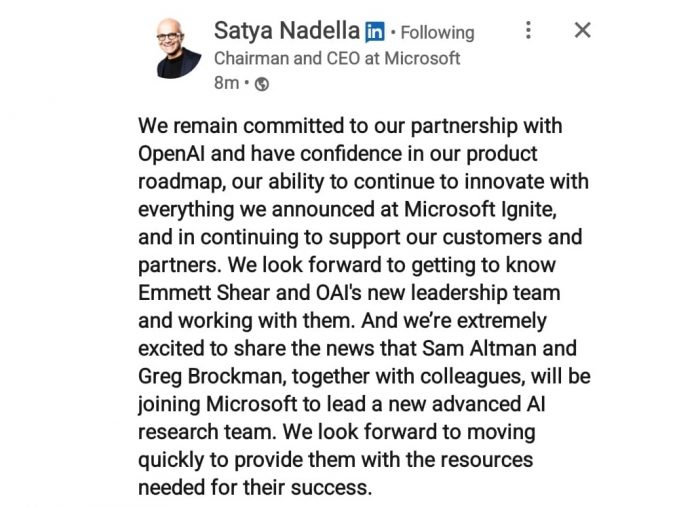
When the Board of OpenAI fired Sam Altman, arguably one of the finest generative AI business visionaries in the world right now, it scored an own-goal. Why did they fire him? Possibly, Sam does not know how to write very long memos since the complaint was on “communication”. Yes, they did not accuse him of not delivering economic value, not creating the right products and not doing the typical things which boards hire CEOs to do.

With that own-goal, Microsoft which has funded OpenAI’s ChatGPT jumped for the Sam’s team. Today, the team will be working with Microsoft to extend the mission. As that happens, watch out for the displacement of ChatGPT primarily because if Sam’s team can bake the right products in Microsoft, the tech giant may not see a lot of interest in wasting time with deeper collaborations with OpenAI. 

Why? What made ChatGPT amazing is not just the algorithm and code, but decades of Microsoft data which supported its evolution. If you disconnect the data, ChatGPT will stall. And that is the risk ChatGPT faces right now. The other investors should hope that Microsoft does not follow that path because if you take out the data coming from Bing and other Microsoft sources, ChatGPT will be like another PhD thesis.

The power unused is the most potent power because no one knows the extent of its efficacy, the Igbo axiom posits. But when it is used, people now know how effective it is. OpenAI used its “firing power” and became bare [Igbo sons and daughters, I do not want to use the right translation out of decency here] in the market because we have seen that while it can fire Sam, it is unable to “unfire” him, as they tried unsuccessfully.

Comment: “So I’m thinking that with Microsoft assimilating Sam, they’d still trail behind ChatGPT” . My response: If Microsoft stops providing data to train ChatGPT, it becomes a PhD project. There are better models in the world than ChatGPT but none has the data that Microsoft and Google have as they own search engines with all data. Without the Microsoft data, ChatGPT will fade over time.

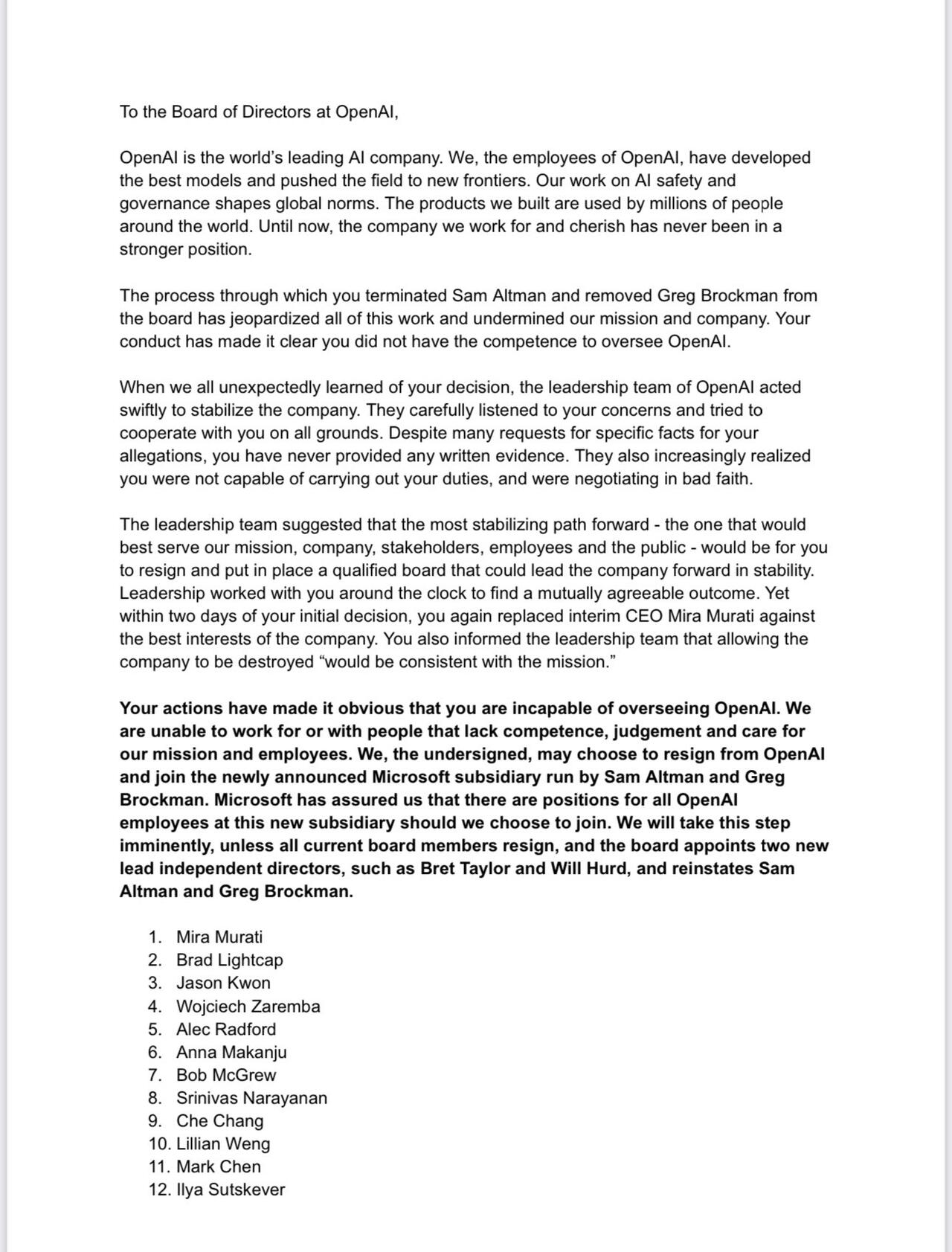
Staff asks for the Board to go

The Fintechnolization of Digital Platforms

0

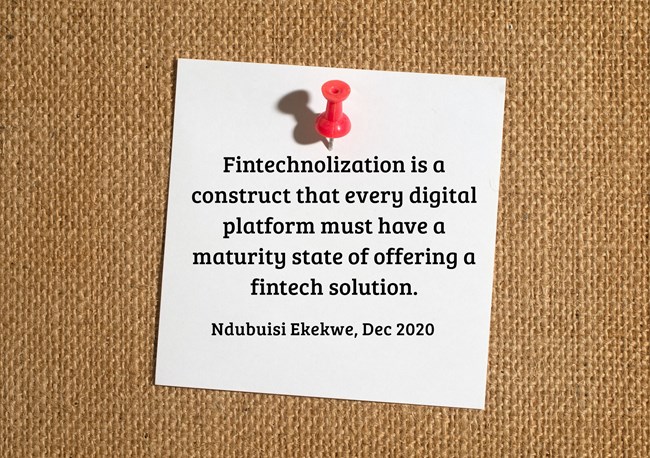
In December 2020, I introduced the concept of fintechnolization: “a construct that every digital platform must have a maturity state of offering a fintech solution. I had watched all great digital platforms on how they ended up providing fintech solutions even when they began in an unrelated sector.”

Other great media organizations have picked that construct. Ladies and Gentlemen, the greatest digital logistics, ecommerce, agtech, etc startups of the future will offer a fintech solution, because financial services is the operating system of commerce and industry. And as that happens, embedded finance will become a critical business category of the 21st century.

How do you plan to make profit on that digital platform?

Fintechnolization of Platforms – Expect This Redesign in Startups

Come and Master the Physics of Pricing at Tekedia Mini-MBA

0

A business model encapsulates the essence of a firm by providing the compass on how to create value in the company. It is the logic of a business and when you commit to one, you have committed all the factors of production in that business to a destiny. And as you execute that model, creating value in that firm, pricing becomes critical.

At Tekedia Mini-MBA, we have eminent pricing faculty to guide you. Yes, our Faculty members understand the physics of pricing, and how an efficient pricing playbook can unlock growth in a business.

Go here and register for the next edition of Tekedia Mini-MBA and get our early bird discounts with our free books. Do it and let us co-learn in Africa’s largest business school for entrepreneurial capitalism.

How To Look for a Job on LinkedIn

0

LinkedIn, the world’s largest professional networking platform, is not just a place to connect with colleagues or update your resume. It is also a powerful tool for passive job hunting. In this context, Passive job hunting means keeping an eye on job opportunities when you are not actively searching or unemployed.

This approach allows you to explore new career options without the pressure of a full-scale job search. Did you know you can do this on LinkedIn, too? Here are some tips to try out.

Optimize Your Profile

Your LinkedIn profile serves as your online resume. Ensure it’s complete, up-to-date, and showcases your skills, experiences, and accomplishments. Use a professional photo, craft a compelling headline, and write a summary highlighting your career goals and achievements. The more complete and appealing your profile is, the more likely you attract opportunities. You will find a lot of helpful videos and articles on the internet about how to optimize your profile for better visibility in your industry.

Connect and Network

Networking is a crucial aspect of passive job hunting on LinkedIn. Connect with professionals in your industry, including recruiters, HR managers, and colleagues. Engage with their content, participate in relevant discussions, and contribute valuable insights. Building a strong professional network can increase visibility and open doors to hidden job opportunities.

To bare the truth as it is, there are opportunities you will never come across until you get into certain circles. And the way to get into these circles is by connecting and engaging in conversations within the industry you want to be seen.

Follow Companies and Industries that you like

LinkedIn allows you to follow companies and industries you’re interested in. This keeps you updated on their activities, job postings, and industry trends. Following companies also signals to recruiters that you are interested in their organization, potentially making you a more appealing candidate. Of course, as you follow, engage and make meaningful contributions to conversations.

Engage in Thought Leadership

Share your knowledge, experience, and expertise by creating and sharing valuable content on LinkedIn. Write articles, share industry insights, or comment on relevant posts. Establishing yourself as a thought leader in your field can attract job offers from organizations looking for experts.

Update Your Skills As You Go

Continuous learning and skill development are essential for staying competitive in the job market. And expectedly, you should be learning and honing your skills on your job. As you do, ensure to update them to your LinkedIn profile. Also, add any certifications you obtain and showcase your expertise. A well-rounded skill set can pique recruiters’ interest in searching for candidates with specific skills.

Monitor Your Inbox

Recruiters often reach out to potential candidates via LinkedIn messaging. Keep an eye on your LinkedIn inbox and respond promptly to inquiries. This should not be when you leave messages unattended in your inbox for days and weeks. Engaging in conversations with recruiters can lead to job opportunities you may not have found on your own. And remember to let these conversations flow smoothly, without tension or undue expectations.

Use the “Jobs” Feature and set Your Job Preferences

LinkedIn’s “Jobs” tab is a valuable resource for passive job hunting. You can set up job alerts based on your preferences, allowing LinkedIn to notify you when relevant job opportunities arise. You can also explore “Suggested Jobs” to discover roles that match your profile.

LinkedIn allows you to signal your interest in job opportunities without actively applying. If you want, you can enable the “Open to Work” feature, which adds a green frame around your profile photo, signaling to recruiters that you’re open to job opportunities. You can specify your job preferences, including the type of job, location, and preferred start date. This helps recruiters match you with relevant job openings.

Summary

Don’t wait till you are actually out of a job. Keeping an eye out for other job openings can also enlighten you on what skills are currently in demand within your industry. That way, you can upskill while still on your job and add more value to your company. This would also put you in a better position to request a promotion or a raise.

LinkedIn is a dynamic platform that, when used strategically, can help you discover new career opportunities and skills while maintaining your professional image and reputation. Leverage the passive job hunting and watch the opportunities come to you.