DD
MM
YYYY

PAGES

DD
MM
YYYY

spot_img

PAGES

Home Blog Page 3617

How Do You Bring Jinns into Your Life?

0

When a Jinn takes possession of a person, the first place he or she travels is to the brain. You are aware that they are like rays that travel enormous distances in a matter of seconds. The possessed will begin to develop possession symptoms at this point. This is a stage of mental unconsciousness, our analysts note. The sufferer may withdraw from others and prefer to be alone. He or she may begin to speak things that you do not comprehend. If you try to keep the sick from leaving a given area, he or she may gain the power of five heavyweight men. In fact, if the patient is a Muslim who does not joke with prayers, he or she may quit observing his or her five daily prayers.

These are only a few examples of mental unconsciousness. The Jinn’s primary purpose is to make the patient misbehave. As a result, whether in private or in public, misbehavior frequently leads in stigma and stereotypes. Anyone who understands how Jinns produce mental unconsciousness and is in the presence of this patient would suspect that the patient is possessed, especially if the patient has no history of psychiatric disease or environmental triggers.

Read WHO ARE JINNS?

Many people wonder if humans can invite or summon Jinns. According to our knowledge and experiences, some fetishists may summon Jinns with whom they have a covenant. Some pseudo-clerics seek Jinn assistance as well. In our experience, we knew some persons who sought financial and academic assistance from Jinns. Finally, the Jinns cursed them with incurable, life-threatening mental diseases.

So, how do humans inadvertently invite Jinns into their lives? Documents and personal experiences demonstrate that non-believer Jinns enjoy watching humans engage in certain activities. When someone engages in such behavior, they are more likely to possess the person. Fornication and adultery; entering toilets/bathrooms without saying the recommended prayer; throwing hot water on earth surfaces (without saying Bismillahi); staying late and going very early to the market (it is recommended to recite protective verses and prayers when navigating a crowded market); and deriving pleasure/happiness from music are some examples. However, Jinns have been observed possessing patients merely because the Jinns like the patients as wives or husbands.

Read 4 Signs That You Are Living With Jinn(S) And A Signal For Severe Mental Health Conditions

Umar Olansile Ajetunmobian independent, interdisciplinary researcher with special interests in political, (mental) health, development, and digital media communication, contributes to the development of this piece through his skills and knowledge garnered over the years. 
$11 million film production funded by Netflix gambled on trading stock options

0

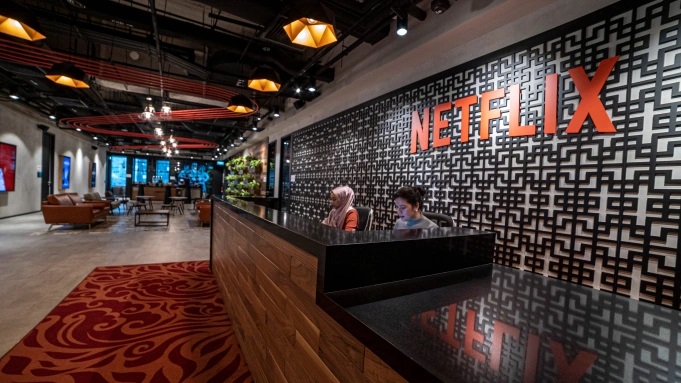
This is the shocking story of how a film production company, funded by Netflix, gambled away its entire budget on risky financial bets and left the streaming giant with nothing to show for it.

The company, called Red Flag Productions, was supposed to make a comedy movie starring Kevin Hart and Tiffany Haddish, based on a popular book by Steve Harvey. The movie, titled “Think Like a Man Too”, was expected to be a hit with audiences and critics alike.

However, instead of spending the money on hiring actors, writers, directors and crew, the company’s executives decided to invest it in the stock market, hoping to make a quick profit and pay back Netflix later. They used a complex and risky strategy called “options trading”, which involves buying and selling contracts that give the right to buy or sell a stock at a certain price in the future.

Unfortunately for them, their bets went horribly wrong. The stock market crashed in 2023 due to the global pandemic and political instability, and the company lost all of its money in a matter of days. Netflix was furious when they found out what had happened and sued the company for breach of contract and fraud. The lawsuit is still ongoing, but it is unlikely that Netflix will ever recover its money.

The movie project was cancelled and the rights to the book were returned to Steve Harvey, who said he was “disappointed and disgusted” by the whole ordeal. Kevin Hart and Tiffany Haddish also expressed their frustration and anger at being duped by the company. They said they had been looking forward to working together on the movie and had turned down other offers because of it.

Netflix have invested in several film project in Nigeria

Netflix, the world’s leading streaming service, has been expanding its presence in Africa, especially in Nigeria, where it has invested in several film projects. Nigeria’s film industry, known as Nollywood, is one of the largest and most prolific in the world, producing thousands of movies every year. Netflix has recognized the potential of Nollywood and has partnered with local filmmakers, actors and producers to create original content for its platform.

Some of the Netflix original films from Nigeria include Lionheart, a comedy-drama directed by and starring Genevieve Nnaji, one of the country’s most popular actresses; The Wedding Party, a romantic comedy that was the highest-grossing Nigerian film of all time; and King of Boys, a crime thriller that received critical acclaim and awards. Netflix has also acquired the rights to stream other Nollywood films, such as Half of a Yellow Sun, based on the novel by Chimamanda Ngozi Adichie; and October 1, a historical drama set during Nigeria’s independence.

Netflix’s investment in Nigerian films is part of its strategy to diversify its content and cater to different audiences around the world. The streaming service has also produced original films and shows from other African countries, such as South Africa, Kenya and Zimbabwe. Netflix has also launched a mobile-only plan in Nigeria and other African markets, offering a cheaper and more accessible option for subscribers who use their smartphones to watch content.

Netflix’s involvement in Nollywood has been welcomed by many in the industry, who see it as an opportunity to showcase their work to a global audience and to improve the quality and standards of their productions. Netflix has also provided training and workshops for Nigerian filmmakers, as well as funding and equipment. However, some challenges remain, such as the lack of infrastructure, piracy and censorship issues, and the competition from other streaming platforms and local TV channels.

Netflix’s investment in Nigerian films is a sign of the growing importance and influence of Nollywood in the global film industry. It is also a testament to the creativity and talent of Nigerian filmmakers, who have been telling stories that resonate with audiences across cultures and continents.

The scandal has tarnished the reputation of Netflix as a reliable partner for filmmakers and has raised questions about its oversight and due diligence processes. It has also exposed the dangers of options trading, which can lead to huge losses or gains depending on market fluctuations. Many experts have warned that options trading is not suitable for beginners or amateurs and should only be done by experienced and professional investors.

The AI Bill of Rights And Towards A Universal Blueprint

0

I recently stumbled upon this article on AI Bill of Rights, and I thought to share some of my highlights and thoughts on it. It is an exciting piece and one you should read if you are interested in conversations about how AI can be regulated in the interests of humans.

The article outlined a very realistic framework called the “Blueprint for an AI Bill of Rights,” and the goal is protecting the rights, opportunities, and access of the American public in the age of artificial intelligence (AI).

Even though it is focused on the USA, I think there is a lot that other countries can borrow a leaf or two from.

The framework discussed in that article is based on five core principles: Safe and Effective Systems, Algorithmic Discrimination Protections, Data Privacy, Notice and Explanation, Human Alternatives, Consideration, and Fallback.

Each of these principles is as important as the other. But let’s go back to my take.

Safe and effective systems

This principle took my mind back to a piece from AI Now Institute I read about how some tech giants are simply in a race against competitors and might be releasing AI products that are not entirely ready or safe for public use. But let’s not digress. The safe and effective systems as a principle in this bill advocate that Automated systems should be safe and effective and undergo pre-deployment testing and risk mitigation to ensure they are free from endangering individuals’ safety or the safety of their communities.

In detail, it suggests that it should be illegal to develop an automated system without consulting “diverse communities, stakeholders, and domain experts to identify concerns, risks, and potential impacts of the system.”

To put this simply, it means that if you want to decide on an AI robot that would speed up construction, you cannot do it without consulting with the stakeholders, which would include the builders and everyone involved in a typical construction site. This is a principle I wholly subscribe to 100%. Why?

Because it is easy to get overwhelmed with the excitement of creating the following big product, one might overlook tiny details about how the product might endanger other people involved. True, we want AI to help us do things faster and cheaper, but we must also begin to consider “safer.” And who would better understand safety in an industry better than its stakeholders?

Don’t design from the outside. Consult with the people in the system and identify and mitigate potential risks even before the product is out. Not just in the usage but also in the outcome, you should endeavour to take proactive safety measures. Your safety measures should include the possibility of not deploying the system or removing a system from use. Even if this were not a law, it should be the responsibility of any AI entrepreneur.

Human Alternatives, Consideration, and Fallback

Always keep an opt-out button active. If you are designing a product that is supposed to automate the processes of a particular department, for instance, there should be an opt-out option and a provision for human alternatives. Your product should also have seamless fallback and escalation processes for users to seek human consideration and remedy when automated systems fail or produce errors. These processes should be accessible, equitable, and effective.

I mean, if you are trying to make a product that makes my work more accessible, the product should not make my life more difficult. I should always have the opt-out option or a fast and seamless means to resolve every possible error. As an entrepreneur, no one understands better that time is money. And if the technology fails, humans should be able to hold briefly while the error is addressed.

Data Privacy

Data, Data, Data!

As far as the conversation is about AI, there will be concerns about data. What I like about the propositions on data privacy in this blueprint is that it is simple. Let users choose what will be done with their data and respect their choice.

Abusive data practices must be avoided. If this blueprint becomes the law across several countries, then you, as a user, will have total control over your data. You decide if or how they collect your data, use it, transfer it, and you even get to say when it should be deleted. I think this is already applicable in some technology, but the catch is that there are no clear consent systems. So, you probably click yes to one thing and are oblivious that the Yes now applies to several other things. There should be clear consent practices and protections against unchecked surveillance, especially for sensitive data domains.

If you are conversant with trends on Twitter, you’ll probably have seen that a certain bank had its customer database hacked, and some customers’ funds moved without their permission. You would also know that this is not the first of such occurrences, even in this year alone. One can never be too careful with data.

This could become a blueprint for several countries to adopt. What do you think? Are there other principles that you think should be a part of an AI bill of rights? What do you think about the five principles outlined in this article? Please share your thoughts.

Handling Noise Pollution From Religious Centres

0

There is no other day to talk about noise pollution and other societal menace caused by religious centres other than today being Sunday.

I saw a video on Twitter of a lady complaining bitterly of a church that is just a few feet away from her house that embarked on a week-long vigil; the church was blasting prayers through their speakers that the lady was unable to sleep or do other things at night for the week-long that the church engaged in the vigil. This is what facilitated this write-up. 

As a disclaimer, I am a proud Christian and I believe in God but we need to state the fact that you cannot because of your religion or prayers inconvenience others. The same goes for my other brethren that are of the Islamic religion; you cannot because of your Friday Jumat prayers block express ways or cause traffic jams and inconvenience others just because you want to pray. This is not the way to go. 

The Bible itself said in the book of 1 Corinthians 14:40; “ That everything should be done in a fitting and orderly way” (New International Version).

Churches and mosques are meant to be sited away from residential areas but some of these religious centres set up their places of worship without getting proper permits but when the government decides to go after them or when individuals that they are inconveniencing file a petition against them they will be shouting that they are being persecuted. That is no persecution, you are inconveniencing people. 

In the same way, some churches engage in vigils and deprive people living in that area of sleep, some mosques are also cited in residential areas and when they blast their prayer calls in the wee hours of the morning they deprive people living in that neighborhood of their peaceful sleep.

Let everything be done in moderation for our God or whichever God you call unto is not an author of confusion.

You do not have to blast your prayers from loudspeakers before God can hear your prayers. Our God is not deaf, he hears the silent prayers, you do not have to give people sleepless nights or inconvenience others before you will worship your God the same way you do not have to block roads and create heavy traffic before you can conduct your Jumat prayers. If the mosque is not for you then expand the mosque. 

I know that religion is a very sensitive topic that most people shy away from engaging in but we really need to start having these conversations, you can explore your religion and worship your God without inconveniencing others. If people have to suffer before you can observe your religious activities then you should question the goodness or the kindness of the kind of God you worship. 

The government should also step up to shut down religious centres that do not comply with regulations as to noise control. Even religious books admonish that everyone, even religious organizations should be in accordance and in obedience to the laid down rules and regulations of the government.


Formalist Analysis of Cinematography in King of Boys – The Return of the King

0

The Return of the King, the second installment of the Nigerian thriller Netflix film series King of Boys, provides a gripping narrative centered around Alhaja Eniola Salami, a multifaceted character with a complex past and a promising political future. In this piece, we delve into a formalist analysis of a specific scene from the film, exploring how cinematography serves as a powerful tool in conveying cultural nuances, emotional depth, and thematic significance.

The selected scene, occurring between the 13:01-15:25 timeline, focuses on a conflict between two traditional rulers, each grappling with the abduction of their children. The cinematography in this scene is not merely a visual spectacle; it serves as a deliberate storytelling device, intricately weaving together the cultural fabric of Nigerian society.
An extreme long shot is strategically employed to establish the mediation and potential reconciliation between the two rulers. Placing the abducted children at the left-hand corner of one ruler and his queen, and the second ruler and his queen seated at the left side of the mediator, creates a visual balance. This shot, coupled with pan left and right camera movements, crafts an ideal dispute resolution setting deeply rooted in Nigerian culture and broader African ethical systems.

As the camera gradually moves to a very long shot of the invited traditional ruler expressing his displeasure, the audience is drawn into the emotional landscape of the characters. The subsequent shift to a medium-close-up shot captures the second ruler’s anger, juxtaposed with his queen’s fearful expression. This deliberate use of shot composition heightens the emotional tension, creating a palpable atmosphere for the unfolding dialogue.

The cinematographic journey continues with a replication of similar shots to capture the responses of both rulers and their queens, showcasing their mournful moods. A close-up shot is then introduced to unveil the mediator as a traditional chief, emphasizing his pivotal role in calming the characters’ emotional imbalances. This seamless transition from medium-close-up to close-up enhances the audience’s connection with the characters, adding depth to the narrative.

Introducing a flashback proves to be a masterstroke in providing thematic meaning to the scene. Before employing this cinematic device, a close-up shot captures the mediator’s mood, allowing viewers to gauge the extent of his involvement. The queen of the invited ruler, strategically positioned, becomes the gateway to the flashback, underlining the importance of visual cues in narrative progression.

In essence, the formalist analysis of this scene unveils the meticulous craftsmanship of the director in utilizing cinematography as a language of its own. The deliberate choice of shots, camera movements, and the seamless integration of cinematic devices like flashbacks contribute to the overall aesthetic and narrative richness of the film.
As we consider this analysis, it becomes evident that the cinematography serves as a conduit for cultural representation, emotional expression, and thematic depth. It seamlessly integrates traditional elements with contemporary storytelling, making “King of Boys – The Return of the King” not just a cinematic experience but a cultural exploration.

the formalist analysis of this selected scene from “King of Boys – The Return of the King” highlights the director’s adeptness in using cinematography as a storytelling tool. The nuanced use of various shots and cinematic devices adds layers to the narrative, elevating the film beyond mere entertainment to a thought-provoking exploration of culture, emotion, and storytelling excellence.