DD
MM
YYYY

PAGES

DD
MM
YYYY

spot_img

PAGES

Home Blog Page 39

Zambia’s Democracy Under Scrutiny After Controversial Election Count

0

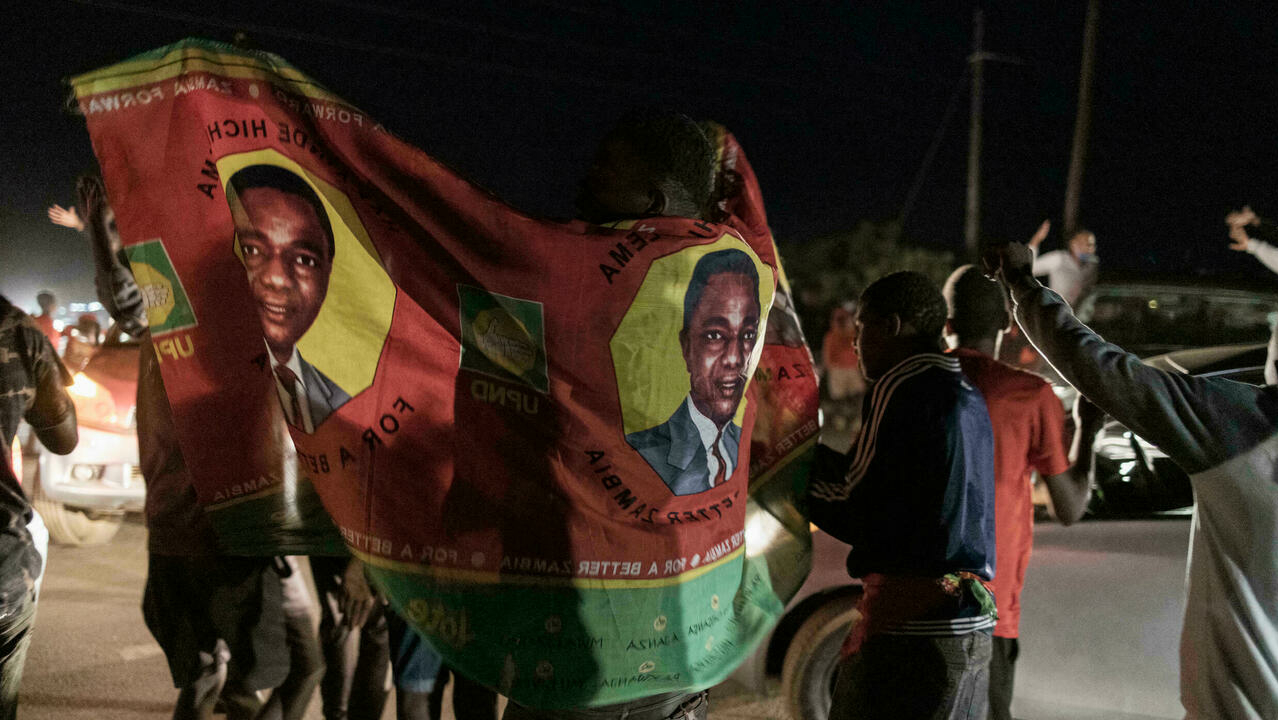
Zambia’s political landscape is entering another important phase after President Hakainde Hichilema was declared the winner of the presidential election with 60 per cent of the vote, securing a second term in office.

While polling day was largely peaceful, the period following the vote has been marked by controversy over the counting process, reported discrepancies in turnout figures and growing questions about the credibility of the electoral process.

The announcement by Zambia’s Electoral Commission was expected to provide political certainty after a closely watched election.

Hichilema’s victory gives his administration another mandate to pursue its economic programme, strengthen international partnerships and address some of the country’s longstanding fiscal and development challenges.

However, the dispute surrounding the vote count could complicate that mandate if opposition forces succeed in challenging the result. One of the central concerns involves reported differences between presidential and parliamentary turnout figures.

Such discrepancies can occur for legitimate administrative reasons, but they can also generate suspicion when electoral authorities do not provide sufficiently clear explanations.

For opposition supporters, the figures have become part of a broader argument that the election requires greater scrutiny before the result can be fully accepted.

Leading opposition candidate Brian Mundubile is considering a legal challenge, potentially shifting the dispute from the political arena into the courts. That development would place considerable importance on the independence and accessibility of Zambia’s judicial institutions.

Reports concerning court closures and the arrests of opposition figures have added another layer of controversy, raising concerns about whether political actors will have equal opportunities to contest the outcome through established legal channels.

The aftermath therefore matters almost as much as the election itself. Zambia has previously benefited from a reputation for relatively peaceful political transitions compared with some other countries in the region.

Maintaining that reputation depends not only on avoiding violence on election day but also on ensuring that electoral disputes are handled transparently, constitutionally and peacefully. For Hichilema, the second term presents both an opportunity and a challenge.

His government must translate electoral legitimacy into tangible economic improvements. Zambia continues to face pressure from debt obligations, inflationary concerns, unemployment and the need to attract investment.

Economic stability requires confidence from domestic businesses as well as international investors, and political uncertainty can influence investment decisions.

Investor confidence is particularly important because Zambia needs capital to support infrastructure, mining, energy and other productive sectors.

The country’s copper industry remains strategically significant, while the global transition toward electric vehicles and renewable energy has increased attention on copper and other critical minerals. A stable political environment could help Zambia capitalize on these opportunities.

Economic reforms can become politically difficult when they involve fiscal discipline, subsidy changes or measures that impose short-term costs on citizens. Hichilema’s second term will therefore require a balance between maintaining macroeconomic credibility and responding to public expectations for improved living standards.

Zambia’s political trajectory will depend on how the election dispute is managed. If concerns are addressed through credible institutions and transparent legal processes, the country can emerge from the controversy with its democratic reputation intact. If allegations are ignored or opposition participation is restricted, distrust could deepen.

The election has given Hichilema another mandate, but the legitimacy of that mandate will be shaped by what happens next. Zambia now faces a crucial test: whether its institutions can demonstrate that political competition, judicial independence and economic stability can coexist.

How that test is handled will influence not only the country’s democracy but also its attractiveness to investors and its position within Africa’s evolving political and economic landscape.

Meta Wants Its Managers Back As Andrew Tulloch Moves to Anthropic

0

The competition for artificial-intelligence talent is becoming as intense as the competition to build the technology itself.

Meta’s reported desire to bring some of its managers back comes at a moment when one of its notable AI researchers, Andrew Tulloch, has moved in the opposite direction, leaving Meta to join Anthropic and work on training and inference.

Tulloch’s departure is significant because the modern AI race is no longer determined solely by computing power, data centers or access to capital.

The people designing training systems, improving model performance and building inference infrastructure have become strategic assets. Companies can purchase GPUs and expand their data-center footprints, but experienced researchers and engineering leaders are considerably harder to replace.

Anthropic has emerged as one of the most formidable competitors in the frontier-AI industry. Its emphasis on advanced model development, enterprise applications and AI safety has attracted substantial investment and commercial interest.

Bringing in talent from Meta strengthens that position, particularly as Anthropic continues to push the boundaries of model training and inference. Training and inference represent two complementary sides of the AI infrastructure equation.

Training involves teaching increasingly capable models using enormous quantities of computational resources, while inference is the process through which those models generate responses and perform tasks for users.

Improvements in either area can have enormous commercial consequences, particularly as AI applications move from experimentation toward large-scale deployment.

For Meta, Tulloch’s move illustrates the broader challenge facing its AI ambitions. The company has invested aggressively in artificial intelligence, including substantial spending on infrastructure and the development of its Llama family of models.

Meta has also sought to recruit leading researchers and engineers as it attempts to compete with companies such as Anthropic, OpenAI and Google in frontier AI.

The irony is that while Meta is reportedly interested in bringing some managers back, its talent strategy remains part of a much larger industry churn. Employees are moving between major AI laboratories, startups and technology giants with unusual frequency.

Compensation packages have become extraordinarily competitive, but money alone does not determine where elite researchers choose to work. Access to cutting-edge compute, research freedom, leadership, company culture and the opportunity to influence the next generation of AI systems can be equally important.

Tulloch’s move therefore carries a message beyond one executive or researcher changing employers. It demonstrates how fluid the AI talent market has become. A leading scientist can move from one technological powerhouse to another and immediately become part of a different strategic effort.

For investors and technology watchers, the movement of AI personnel may increasingly deserve the same attention as chip purchases, model benchmarks and capital expenditure announcements. Talent can determine how effectively billions of dollars in infrastructure are converted into useful AI products.

Meta may be able to recruit managers back, expand its laboratories and deploy more computing capacity. But the departure of researchers such as Tulloch underscores an uncomfortable reality: in the frontier-AI race, companies are not merely competing to build the most powerful machines.

They are competing to retain the people capable of making those machines useful. Anthropic’s gain is consequently more than a personnel announcement. It is another indication that the AI arms race is becoming a battle for expertise—and that the most valuable asset in the industry may still be human intelligence.

Why Tech Billionaires Fear an AI Apocalypse—and Are Preparing for Societal Collapse

0

The artificial intelligence boom has produced extraordinary fortunes, but it has also created an unusual contradiction among technology’s most powerful executives: some of the people building the future are quietly preparing for the possibility that it could become dangerous.

Reports of underground bunkers, remote properties, private security and weapons stockpiles have transformed AI doomsday preparation into a symbol of Silicon Valley’s deepest anxieties.

These precautions are not evidence that catastrophe is inevitable. Rather, they reveal how seriously some wealthy technology leaders take the possibility of social disorder, technological accidents or a breakdown in the systems that sustain modern life.

The concern is rooted in AI’s extraordinary potential. Advanced systems could accelerate scientific discovery, automate complex work and reshape entire industries. Yet the same capabilities could also be misused, produce unpredictable outcomes or amplify existing political and economic tensions.

For executives whose fortunes depend on technological progress, the prospect of an AI-driven crisis is not merely a science-fiction scenario. It is a question of risk management. Some preparations reportedly resemble conventional disaster planning.

Wealthy individuals have invested in secure residences, remote land, backup power, food supplies and communications equipment. Underground shelters offer protection from civil unrest, extreme weather or other emergencies.

While isolation provides a degree of independence from crowded urban environments. In this sense, the bunker is less a prediction of the future than an insurance policy against uncertainty. More controversial are reports of firearms and ammunition stockpiles.

Such preparations reflect a belief that a severe crisis could weaken public institutions or create competition over scarce resources. But they also raise difficult questions about inequality and accountability.

A society in which the richest can purchase private security and fortified retreats is not necessarily a society that has become safer. It may instead be one in which access to safety is increasingly determined by wealth.

The psychology behind these preparations is equally important. Technology leaders are accustomed to thinking in terms of low-probability, high-impact events.

Entrepreneurs routinely invest in projects that may fail, while investors diversify portfolios against market shocks. Preparing for an AI catastrophe can therefore appear to be an extension of the same mindset: identify an extreme risk, estimate its consequences and build a contingency plan.

However, private survival strategies cannot substitute for public safeguards. If AI systems create serious risks, the consequences would extend far beyond the people who own them. Workers, consumers, governments and vulnerable communities would all be affected.

Effective preparation must therefore include robust testing, transparency, cybersecurity, emergency planning and clear rules for deploying increasingly capable systems. There is also a danger in allowing doomsday narratives to dominate the conversation.

Fear can encourage responsible investment in safety, but it can also distract from more immediate challenges, including labor displacement, misinformation, surveillance and unequal access to technology. The most useful response is neither complacency nor panic. It is disciplined preparation based on evidence.

The image of a tech billionaire retreating into a bunker captures a broader tension in the AI era. The people with the greatest resources to shape the future are also among those most aware of what could go wrong.

Their private precautions may be understandable, but the real measure of technological responsibility is whether society can build systems that make such precautions less necessary. The future of AI should not be defined by who can afford to escape it.

It should be defined by whether humanity can govern it wisely enough to ensure that technological progress remains a public benefit rather than a private gamble.

Larry Ellison Cancels Planned $7.5 Billion Oracle Stock Sale as Shares Slide

0

Oracle co-founder and Executive Chairman Larry Ellison has canceled a planned sale of 50 million Oracle shares worth about $7.5 billion, removing a potentially significant source of selling pressure on the technology company’s stock as it navigates a costly expansion into artificial intelligence infrastructure.

Oracle disclosed the change on Saturday, without providing a reason for Ellison’s decision.

“No Oracle stock was sold under that plan, and he has no other plans to sell any of his Oracle stock,” the company said.

Oracle had previously disclosed in a regulatory filing that Ellison intended to sell the shares, according to Reuters. The proposed transaction would have represented a substantial monetization of his stake, although it would not have changed his position as one of Oracle’s largest shareholders.

The cancellation comes as Oracle shares have faced a difficult year. As of Sunday afternoon, the stock was down about 22% since the beginning of 2026, reflecting investor concerns over the enormous capital requirements associated with the company’s push to become a major provider of AI computing capacity.

Oracle has been committing billions of dollars to data centers and related infrastructure as demand for AI computing accelerates. The company has emerged as an increasingly important cloud infrastructure provider, competing with much larger rivals while taking on substantial spending commitments to secure customers and computing capacity.

That expansion has created a complicated proposition for investors. Oracle is benefiting from one of the technology industry’s strongest growth opportunities, but the AI infrastructure business requires huge upfront investments in data centers, servers, networking equipment and power before the resulting revenue and cash flows fully materialize.

Ellison’s decision not to sell could therefore attract attention beyond the immediate reduction in the number of shares that might have entered the market.

For investors, insider transactions can carry a signaling effect, particularly when a founder and controlling shareholder chooses not to monetize shares after previously announcing a substantial sale. Ellison’s decision does not necessarily constitute a forecast for Oracle’s stock, and the company gave no explanation for the cancellation, but the absence of any new plans to sell removes one potential source of uncertainty around his holdings.

At the same time, Oracle’s falling share price highlights the broader tension surrounding its AI strategy. The company has been positioning itself to capture a larger share of the rapidly expanding market for AI computing while accepting much higher capital requirements than its traditional enterprise-software business.

The market has become increasingly focused on whether AI-related demand will generate sufficient returns to justify the infrastructure spending now taking place across the technology industry. For Oracle, that means investors must weigh its growing cloud and AI opportunities against the financing, depreciation and execution risks associated with building capacity at unprecedented scale.

Oracle has also become deeply involved in TikTok’s U.S. operations, emerging as one of the major owners and security partners for the social media platform’s American business. The relationship gives Oracle another significant technology asset, while adding to the company’s exposure to one of the most politically sensitive technology businesses in the United States.

Ellison’s financial interests extend well beyond Oracle. He has also used his considerable wealth to support his son David Ellison’s acquisition of Warner Bros., a deal that is currently being contested in court.

The decision to cancel the Oracle stock sale therefore comes at a point when Ellison’s personal wealth, Oracle’s capital-intensive AI expansion and his family’s broader investment activities are attracting considerable attention.

Still, the immediate message from Oracle is that Ellison did not sell any of the 50 million shares covered by the earlier plan and currently has no additional plans to sell Oracle stock. Ellison’s decision to retain his shares may remove one near-term supply concern, but it does not change the fundamental test of profit facing the company.

Record Diesel Prices Threaten US Consumers, Retailers and Supply Chains, as Low German Gas Storage Raises Questions

0

The global oil market is entering a period of renewed turbulence, with surging crude prices rapidly translating into higher fuel costs for businesses and households. In the United States, diesel prices have become the clearest warning signal.

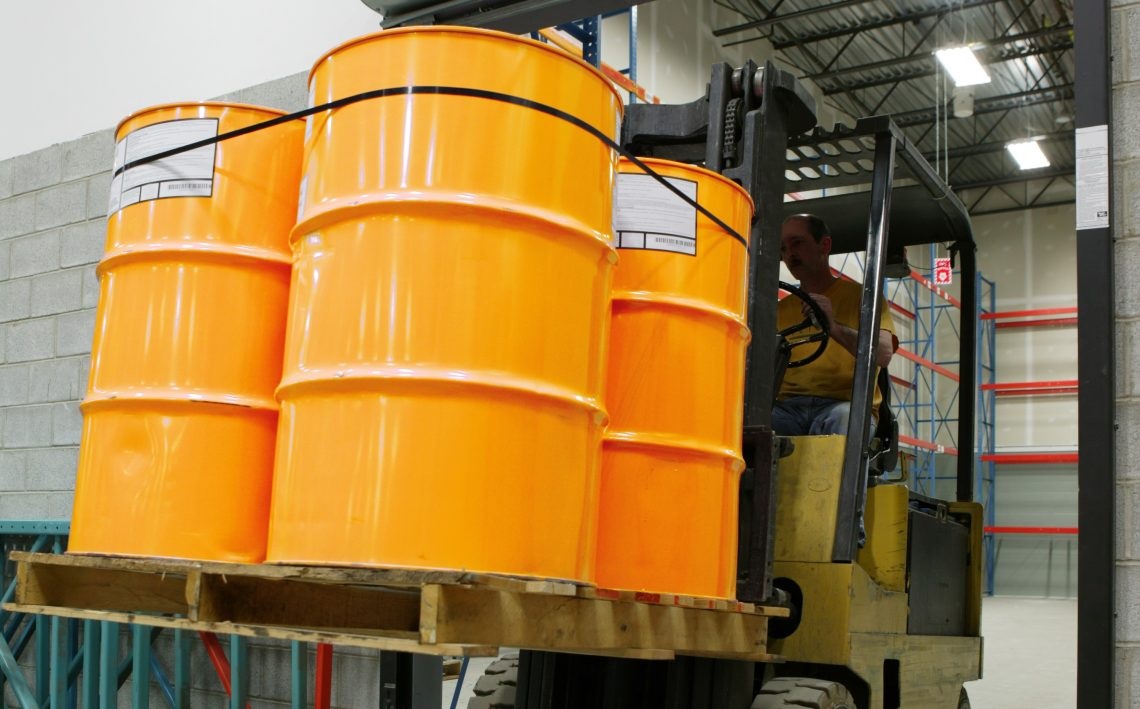
According to GasBuddy, the national average for diesel reached $6 a gallon for the first time on Thursday, while 28 states recorded all-time highs. In California, the pressure became even more extreme, with five stations reportedly charging $9.999 a gallon—the maximum price their pumps could display.

The magnitude of the increase is particularly significant because diesel sits at the heart of the modern economy. Trucks, agricultural machinery, construction equipment, delivery fleets and industrial generators depend heavily on diesel.

Prices roughly $2.30 above the level of a year ago therefore represent more than a painful increase at the fuel pump. They threaten to raise transportation costs across entire supply chains.

That pressure arrives at a sensitive moment, with businesses preparing for the holiday shopping season. Retailers typically rely on extensive trucking and logistics networks to move goods from manufacturers and ports to distribution centers and stores.

As diesel becomes more expensive, carriers face higher operating costs, potentially forcing them to increase freight rates. Those costs can eventually reach consumers through higher prices for food, household goods and other merchandise.

Behind the diesel shock is a rapidly tightening oil market. Brent crude approached $111 a barrel on Friday, reaching its highest level since late May. Both major international oil benchmarks have gained more than 20% over the past month, reflecting mounting fears that geopolitical disruptions could further constrain global supply.

The latest developments around Yemen and the Strait of Hormuz have intensified those concerns. Houthi forces reportedly seized Yemen’s port of Mocha on Thursday, while attacks involving tankers have continued to restrict traffic through the Strait of Hormuz, one of the world’s most strategically important energy corridors.

Any sustained disruption in the region can quickly add a geopolitical risk premium to crude prices because markets must account not only for barrels already lost, but also for the possibility of a much larger supply interruption.

Yet the oil rally contains a striking contradiction. Prices are climbing even as expectations for global demand weaken. OPEC has reportedly reduced its 2026 demand-growth forecast for the fifth consecutive time, suggesting that the underlying consumption outlook is becoming less optimistic.

That divergence between weaker demand expectations and stronger prices highlights how much influence supply risk currently has over the market. Normally, slowing demand would place downward pressure on crude.

But when traders fear that geopolitical disruptions could remove significant volumes from the market, supply concerns can overwhelm demand weakness. For consumers, the consequences extend beyond gasoline and diesel.

Higher crude prices can increase aviation, shipping, manufacturing and electricity costs, creating another potential source of inflation. For central banks, that complicates the task of balancing economic growth against price stability.

The $6 diesel threshold is therefore more than a record at the pump. It is a signal that geopolitical instability is moving directly into the real economy. If crude remains above $100 and transportation costs continue climbing, companies may face a difficult choice between absorbing shrinking margins and passing higher costs to consumers.

The oil market’s next move will depend on whether supply disruptions intensify or demand weakness begins to regain control. For now, however, the message from diesel prices is unmistakable: the world’s energy shock is becoming an economic shock.

Low German Gas Storage Raises Questions Over Winter Energy Security

Germany is heading toward another winter with its gas storage facilities at comparatively low filling levels, but the country’s energy authorities believe there is little reason for alarm.

The head of Germany’s Federal Network Agency has said existing reserves should be sufficient to ensure reliable supplies through the colder months, highlighting the country’s stronger energy infrastructure and improved ability to manage gas demand.

Gas storage remains a crucial component of Germany’s energy security. Storage facilities provide a buffer between periods of high consumption and fluctuations in imports, allowing the country to draw on accumulated supplies when temperatures fall and household and industrial demand rises.

Although current inventories are lower than in previous years, officials argue that the overall supply system is capable of handling the winter season.

The assessment reflects a significantly transformed German energy market. Since Russia’s invasion of Ukraine disrupted Europe’s traditional gas supply arrangements, Germany has reduced its dependence on Russian pipeline gas and expanded alternative sources.

Liquefied natural gas imports, additional pipeline connections and greater diversification among suppliers have helped strengthen the country’s ability to respond to potential disruptions. However, lower storage levels still carry economic and political significance.

Gas is not only essential for heating millions of homes but also remains important to major industrial sectors, including chemicals, manufacturing, glass, metals and other energy-intensive industries.

A prolonged period of exceptionally cold weather could therefore increase demand rapidly and place additional pressure on the market.

The Federal Network Agency’s confidence is consequently based on more than the headline storage percentage. Germany’s energy security depends on the interaction between storage inventories, imports, consumption patterns, infrastructure capacity and weather conditions.

If temperatures remain within normal seasonal ranges and imports continue without major disruption, existing reserves can provide an adequate cushion. Europe’s wider gas market will also influence Germany’s position.

European countries increasingly compete for LNG cargoes on global markets, meaning supply security can be affected by developments far beyond the continent.

Strong Asian demand, geopolitical tensions, shipping disruptions or unexpected production outages could push international gas prices higher and make replenishment more expensive.

That creates a delicate balance for German policymakers. Maintaining sufficient physical supplies is the immediate priority, but affordability is equally important. Higher gas prices can raise household energy bills while increasing production costs for German companies already facing intense international competition.

Energy security, therefore, is increasingly connected to Germany’s industrial competitiveness. The current situation also illustrates the strategic importance of Germany’s post-crisis energy policies.

Investments in LNG infrastructure, renewable energy, electricity networks and energy efficiency are intended to reduce exposure to individual suppliers and volatile fossil-fuel markets. Over time, expanding renewable generation and electrification could further reduce the amount of gas required for power generation and heating.

Still, natural gas is unlikely to disappear from Germany’s energy system immediately. The transition toward a lower-carbon economy requires reliable backup capacity, particularly when renewable generation is insufficient.

Gas infrastructure may consequently remain important during the transition, even as Germany seeks to reduce its long-term dependence on fossil fuels.

For consumers and businesses, the message from the Federal Network Agency is reassuring but not a guarantee against volatility.

A sufficient supply this winter does not eliminate the possibility of price increases or temporary market stress. Weather, international gas flows and geopolitical developments can change the outlook quickly.

Germany therefore enters the winter season with a more diversified energy system but a continuing need for vigilance. The comparatively low storage levels may attract attention, yet the broader picture suggests that resilience cannot be measured by storage alone.

Germany’s ability to combine reserves, imports, infrastructure and demand management could prove more important than any single inventory figure. The coming winter will test whether the energy reforms implemented since the European gas crisis have created lasting resilience.

For now, the Federal Network Agency’s assessment offers an important signal: Germany may have less gas in storage than it would prefer, but it believes the country has enough flexibility to keep the energy system supplied when winter demand arrives.