DD
MM
YYYY

PAGES

DD
MM
YYYY

spot_img

PAGES

Home Blog Page 3916

China Mobile launches LinkNFT marketplace in Hong Kong, as LINE NEXT Corp secures $140M

0

China Mobile, the largest mobile network operator in China, has announced the launch of LinkNFT, a new NFT marketplace in Hong Kong. LinkNFT is a groundbreaking platform that aims to connect artists, collectors, and fans of digital art and culture.

LinkNFT allows users to create, buy, sell, and trade NFTs, or non-fungible tokens, which are unique digital assets that represent ownership of various forms of online content. LinkNFT also offers a range of features and services to enhance the user experience, such as:

  • A user-friendly interface that supports both web and mobile access
  • A secure and transparent blockchain infrastructure that ensures the authenticity and provenance of NFTs
  • A curated selection of high-quality NFTs from various categories, such as art, music, gaming, sports, and entertainment
  • A social network that enables users to interact with other NFT enthusiasts, discover new content, and share their collections
  • A loyalty program that rewards users for their participation and contribution to the platform

LinkNFT is the first NFT marketplace in Hong Kong that is backed by a leading telecommunications company. China Mobile hopes to leverage its expertise and resources to promote the development and adoption of NFTs in the region and beyond. China Mobile also plans to collaborate with local and international partners to create exclusive and innovative NFT projects for LinkNFT users.

LinkNFT offers enterprises digital asset NFT casting services, facilitating the generation, transaction, and circulation of digital assets across various scenarios such as SocialFi, DeFi, and GameFi. Currently integrated with CMChain, LinkNFT is Web3.0 compatible through CMChain’s three-in-one cross-chain standard components: the CMChain Web3.0 Center cross-chain service agreement, cross-chain adapter, and cross-chain smart contract association chain.

Besides, Hong Kong residents can conveniently manage digital assets on their personal chain, including Ethereum digital assets like Opensea, using MyLink’s exclusive digital wallet “LinKey.”

China Mobile Hong Kong (CMHK) has collaborated across diverse sectors to pioneer the release of over 30 NFTs on LinkNFT. This collection also comprises 20 commemorative NFTs from the MyLink ArLink series, along with 15 NFTs from entities such as United Publishing House and Migu Music.

In this vein, MyLink has introduced LinkNFT, leveraging multiple technical standards of Web3.0 to forge a new business model centered around data elements for the Hong Kong business community. Enterprises can utilize the diverse NFTs launched to offer novel consumer rights to users, enhancing the overall user experience through the obtained NFTs.

LinkNFT is now open for registration and will officially launch in January 2024. Users who sign up before the launch date will receive a free welcome gift of 10 Link Coins, the native token of LinkNFT that can be used to purchase NFTs on the platform. Users can also earn more Link Coins by inviting their friends to join LinkNFT.

LinkNFT is a revolutionary platform that offers a new way to enjoy and appreciate digital art and culture. Whether you are an artist, a collector, or a fan, LinkNFT is the place for you to explore the exciting world of NFTs.

LINE NEXT Corp secures $140 million in funding, gearing up for global Web3 expansion

LINE NEXT Corp, a leading Web3 platform provider, announced that it has raised $140 million in a Series B funding round led by Sequoia Capital and joined by other prominent investors such as Andreessen Horowitz, Coinbase Ventures and Binance Labs. The funding will be used to accelerate the development and adoption of its decentralized applications (dApps) and protocols, as well as to expand its global presence and partnerships.

LINE NEXT Corp is a subsidiary of LINE Corporation, the operator of the popular messaging and social media app LINE, which has over 200 million monthly active users worldwide. LINE NEXT Corp leverages the expertise and user base of LINE to create innovative Web3 solutions that empower users to own and control their digital assets and identities, as well as to participate in the governance and economy of the decentralized web.

Some of the flagship products of LINE NEXT Corp include:

  • LINE Blockchain, a public blockchain platform that supports various dApps and protocols, such as DeFi, NFTs, gaming and social media. LINE Blockchain also offers a user-friendly wallet app that allows users to easily manage their crypto assets and access various dApps.

  • LINK, a native token of LINE Blockchain that serves as a medium of exchange, a reward for network participants, and a governance tool for the ecosystem. LINK has a total supply of 1 billion tokens, of which 800 million are allocated for user rewards and 200 million are reserved for the company.

  • BITMAX, a licensed cryptocurrency exchange that offers trading services for various digital assets, including LINK, Bitcoin, Ethereum and other popular tokens. BITMAX is integrated with the LINE app, enabling users to seamlessly trade crypto within the app.

  • Wizball, a knowledge-sharing platform that rewards users for creating and consuming high-quality content. Wizball uses blockchain technology to ensure the credibility and transparency of the content, as well as to distribute rewards to the content creators and curators.

  • TAPAS, a decentralized protocol that enables users to create and join communities based on their interests and preferences. TAPAS allows users to interact with each other through various features, such as chat, voice call, video call, live streaming and tipping. TAPAS also supports NFT creation and trading within the communities.

With the new funding, LINE NEXT Corp plans to further enhance its existing products and services, as well as to launch new ones that will enrich the Web3 ecosystem. The company also aims to grow its global footprint by establishing strategic partnerships with other Web3 players and expanding into new markets.

“We are thrilled to have the support of such prestigious investors who share our vision of building a more open, inclusive and democratic web,” said Jungho Shin, CEO of LINE NEXT Corp. “We believe that Web3 is the future of the internet, where users can enjoy more freedom, privacy and value creation. We are committed to delivering innovative Web3 solutions that will benefit our users and society at large.”


Play-to-Earn as we know it is dead?

0

This is a question that many gamers and crypto enthusiasts are asking themselves in the wake of the recent crackdowns on play-to-earn platforms by various governments and regulators. Play-to-earn, or P2E, is a model of gaming that rewards players with cryptocurrency or non-fungible tokens (NFTs) for their participation and achievements in the game.

P2E games have been gaining popularity in the past year, especially in regions where traditional income sources are scarce or unreliable, such as Southeast Asia, Latin America, and Africa.

However, P2E games are also facing increasing challenges and risks from the authorities, who view them as a threat to their monetary sovereignty, tax revenue, and social stability. For example, China has banned all crypto-related activities, including P2E games, and has arrested hundreds of people involved in the industry.

The Philippines has issued a warning to P2E players that they need to pay taxes on their earnings or face penalties. Vietnam has also announced that it will regulate P2E games as gambling and require licenses for operators and players.

These developments have cast a shadow over the future of P2E games and their potential to democratize gaming and empower millions of people around the world. Some analysts have even declared that play-to-earn as we know it is dead, and that the only way forward is to comply with the regulations or move to more crypto-friendly jurisdictions. But is this really the case? Is there no hope for P2E games to survive and thrive in the face of adversity?

We believe that the answer is no. Play-to-earn as we know it is not dead, but rather evolving and adapting to the changing environment. P2E games are not just a fad or a bubble, but a paradigm shifts in the gaming industry that offers a new way of creating value and engaging with users. P2E games are not only games, but also platforms for innovation, community building, social impact, and financial inclusion.

Therefore, we think that P2E games can overcome the current challenges and continue to grow and prosper in the long term. However, this will require some changes and improvements from both the developers and the players of P2E games. Here are some of the possible solutions that we propose:

  • Developers should design P2E games with more diversity and creativity, not just copying existing models or genres. P2E games should offer unique gameplay experiences, compelling narratives, rich graphics, and high-quality soundtracks that can attract and retain users from different backgrounds and preferences.

  • Developers should also implement more robust security and privacy features in P2E games, such as encryption, authentication, verification, and anti-fraud mechanisms. This will help protect users’ data and assets from hackers, scammers, and malicious actors.

  • Developers should collaborate with regulators and policymakers to educate them about the benefits and potential of P2E games, as well as address their concerns and comply with their requirements. Developers should also seek legal advice and guidance from experts in different jurisdictions to ensure that their P2E games are compliant with local laws and regulations.

  • Players should be more responsible and cautious when playing P2E games, especially when dealing with real money or valuable assets. Players should do their own research and due diligence before joining or investing in any P2E game or platform. Players should also be aware of the risks and challenges involved in P2E gaming, such as volatility, hacking, scamming, taxation, regulation, etc.

  • Players should also be more active and supportive of the P2E gaming community, by sharing their feedback, suggestions, opinions, experiences, and stories with other players and developers. Players should also participate in governance and decision-making processes of P2E platforms, by voting, proposing, debating, and implementing changes that can improve the quality and sustainability of P2E games.

We believe that play-to-earn as we know it is not dead, but alive and kicking. P2E games have a bright future ahead of them if they can adapt to the changing environment and leverage their strengths and opportunities. We hope that this blog post has given you some insights and inspiration on how to play-to-earn better in 2023.

Goldman Sachs-Backed Fintech Startup Tamara Achieves Unicorn Status Following A Series C Funding

0

Goldman Sachs-backed Saudi buy now pay later (BNPL) startup Tamara, has attained unicorn status, after it successfully secured $340 million in a series C funding round, pushing its valuation to $1 Billion.

The funding round was led by Saudi Arabian asset manager SNB Capital and Sanabil Investments, a subsidiary of Saudi Arabia’s sovereign wealth fund, the public investment fund.

Other participants included Shorooq Partners, Pinnacle Capital, Impulse, and existing investors such as checkout.com.

Tamara disclosed that the funds raised will be used to fund new products and services, going beyond BNPL, to take advantage of opportunities in shopping, payments, and banking services in Saudi Arabia.

The startup disclosed that achieving a unicorn status is a significant opportunity in a financial services market that is underpenetrated and underserved.

Tamara’s Co-founder and Chief Executive Abdulmajeed Alsukhan commenting on the company achieving a unicorn status said,

“Saudi Arabia deserves its place on the world stage for financial technology. As we set our sights on becoming the next big giant in shopping, payments, and banking we remain ever grateful for the significant opportunity in this unprecedented and underserved banking and financial services landscape”.

He added that this achievement is a testament to the ecosystem, to the company’s incredible team, investors, and the collaborative spirit that makes the region a great place for talent to flourish.

Tamara’s latest equity funding round comes after a debt-raising move last month led by Goldman Sachs and Shorooq Partners. The BNPL company operates in Saudi Arabia, UAE, and Kuwait, and has more than 10 million users and more than 30,000 partner merchants.

Founded in 2020 by Alsukhan alongside Turki Bin Zarah and Abdulmohsen Al Babtain, Tamara was the first company to be granted a permit to provide BNPL solutions from SAMA and to graduate from its inaugural regulatory sandbox and has over 500 employees across its headquarters in Riyadh and other cities, including Dubai, Berlin, and Ho Chi Minh City.

The three-year-old fintech’s primary revenue stream is derived from merchant discount rates. This approach, commonly employed by local and global BNPL providers, contributes significant value by improving conversion rates and increasing the average order value for merchants.

With Tamara, users can shop and split their payments, No late fees. The startup payment solutions are completely Sharia-compliant.

Notably, Tamara is the leading shopping and payments platform in Saudi Arabia and the GCC region, with a mission to empower people in their daily lives and change how they shop, pay, and bank.

Challenges and opportunities for Pension Funds on Crypto Investments

0

Cryptocurrencies have been gaining popularity and legitimacy in the past decade, attracting the attention of investors from various sectors and backgrounds. However, one of the most conservative and risk-averse segments of the investment world, pension funds, have been largely absent from the crypto space. Why is that, and what are the challenges and opportunities for pension funds to enter this new asset class?

Pension funds are long-term investors that manage the retirement savings of millions of people. They have a fiduciary duty to protect and grow their assets, while also meeting their liabilities and obligations to their beneficiaries. Pension funds typically invest in a diversified portfolio of traditional assets, such as stocks, bonds, real estate, and commodities, with a focus on generating stable and predictable returns over time.

Cryptocurrencies, on the other hand, are digital assets that are powered by blockchain technology and operate outside the control of any central authority. They offer several potential benefits for investors, such as high returns, low correlation with other assets, hedge against inflation and currency devaluation, and access to innovative projects and platforms. However, they also come with significant risks and challenges, such as high volatility, regulatory uncertainty, security breaches, fraud, and lack of institutional-grade infrastructure and services.

Given these characteristics, it is not surprising that pension funds have been reluctant to invest in cryptocurrencies. According to a recent survey by CFA Institute, only 2% of institutional investors globally have exposure to crypto assets, and only 6% plan to increase their allocation in the next year. Among the main barriers cited by the respondents were regulatory issues (54%), lack of transparency (47%), volatility (45%), and governance issues (30%).

However, some pension funds have started to explore the crypto space and allocate a small portion of their assets to this emerging asset class. For example, in 2019, two pension funds in Virginia invested in a venture capital fund that focuses on blockchain and crypto-related companies. In 2020, a pension fund in New Zealand invested 5% of its assets in Bitcoin, citing its potential as a store of value in times of crisis. In 2021, a pension fund in Germany announced plans to invest up to 1% of its assets in Bitcoin futures contracts.

These examples show that some pension funds are willing to take on some risk and experiment with crypto investments, as long as they can find reliable and regulated partners that can provide them with the necessary infrastructure and services. Some of these partners include crypto custodians, exchanges, brokers, asset managers, auditors, and consultants that can help pension funds navigate the complex and evolving crypto landscape.

As the crypto industry matures and develops more institutional-grade solutions, more pension funds may join the trend and allocate a small fraction of their portfolios to crypto assets. However, this will likely depend on several factors, such as the regulatory environment, the performance of crypto assets relative to other asset classes, the demand from beneficiaries and stakeholders, and the availability of education and research on crypto investing.

Pension funds stand today on the sidelines of the crypto space, but some are starting to dip their toes into this new asset class. Crypto investments offer both opportunities and challenges for pension funds and require careful due diligence and risk management. As the crypto industry grows and improves its standards and services, more pension funds may consider adding some exposure to crypto assets in their portfolios.

What Nigeria, Africa Can Learn As US Steel Becomes Japanese on Accelerating Destruction and Economic Transformation

1

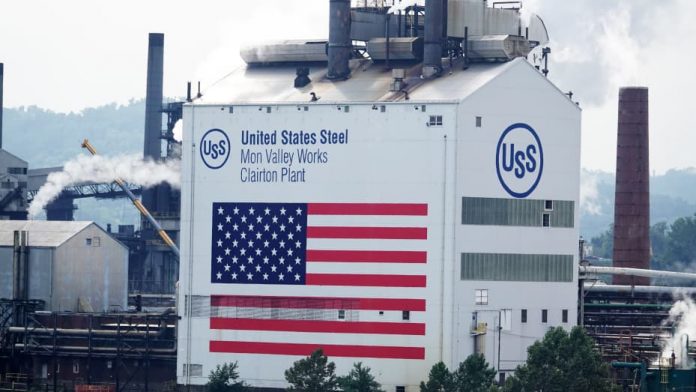
We’re learning that Japan’s Nippon Steel is acquiring US Steel for $14.1 billion after the Pittsburgh-based entity gave up on the heat of steely-fire competition, and put itself up for sale.  This transmutational fading of US Steel is nothing ordinary because of the heritage of this firm.

When you read about the men who built America, this company has a “chapter”.  When the United States overtook the United Kingdom at the end of the 1890s, the Americans wanted a pillar upon which they could scale a virtuoso industrialization vision. Two men – JP Morgan (the banker) and Andrew Carnegie (the industrialist) – decided in 1901 to establish US Steel. The company became a catalyst as America industrialized. Simply, US Steel was a fulcrum of America’s 20th century economic dominance.

When I went to interview at Carnegie Mellon University for a faculty job, the dean took me to a building. He explained how Carnegie designed some campus buildings with a steel roll in mind, just in case if the educational vision fails, he could convert all to a plant. As a faculty, you would see that he created that university in the likeness of his industrialization playbook: tons of technical components. CMU is ranked #1  or #2 in AI, autonomous systems, computer science and computer engineering in US.

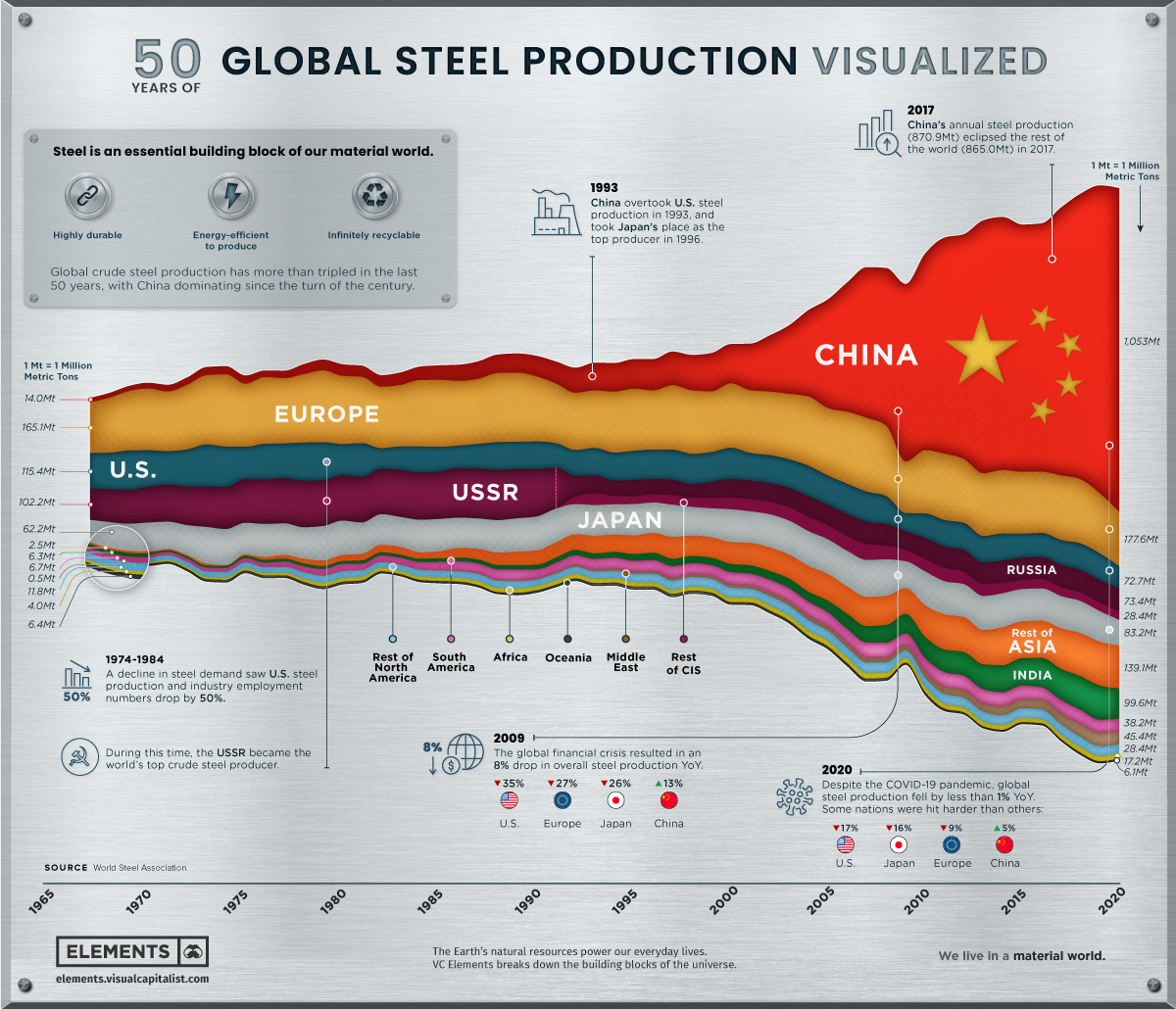
By 1917, the largest publicly traded company in the United States was US Steel. It was also the largest company in the world by market cap. Of course, its success began to change its relevance. Yes, fifty years later, in 1967, the largest recorded company in the US was IBM.  Later, it was GE in the early 1980s. Today, we have knowledge companies like Apple and Microsoft running the show.

In all these cases, we can learn of one thing: accelerating destruction. Simply, generations of companies prepare nations for the next phase, and if they succeed, most times, they fade in relevance. When US Steel powered America, its success produced infrastructure companies like IBM  and Intel which then provided automation and computing capabilities for GE across industries. GE organized America in many ways, seeding pillars which enabled modern knowledge firms like Apple and Microsoft to blossom. 

The next generation of largest American companies will feed on the success of Google, Microsoft and Apple. I posit that native and new species of AI companies will rule the markets by 2050.

Bringing it home to Nigeria: Nigeria will not transmute to the next level until companies like Dangote Cement, BUA Foods or new ones (our US Steel) and Glo, MTN  or new ones (our IBM, GE) have done their foundational jobs. Upon their catalytic pillars would Nigeria build a foundation for shared prosperity. But since they have not got the job done, they remain. But if they excel, one day they will fade like US Steel which has done its job and can now retire to Japan!

And by that I mean the old sectors continue to operate, but they do not drive the next conversations. Today, you still need steel companies and the like, but they do not anchor our daily conversations in America because while what they do remain important, they’re not as pioneering as before, to refresh the economy, and set new economic transformational orders. But woo to nations without them, nonetheless. 

Yes, due partly to their market caps and the profit margins, they seem overlooked before market makers, with clear evidence that even though you need them, they cannot be the next big thing as their time has passed. If you doubt that, go and try to acquire Apple (assuming you can do that), and you will see how America will react. But US Steel can go Japanese, and America can live with that reality.

Comment on Feed

Comment 1: I think you may be missing a certain perspective. The companies that are setting the stage for the next set of companies are the banks and the telcos. In the future, banking might not be a service just by itself, it would be as a service, bundled with other services and offered by large non-banking corporations. You might get a similar experience with telcos as well. The companies with the largest market cap at that point will no longer be banks and telcos.

My Response: ” The companies that are setting the stage for the next set of companies are the banks and the telcos” – I do not consider Nigerian banking catalytic because they do not take up big projects like seaports, airports like the American peers do. In my piece, US Steel was co-founded by a banker. Until you can tell me what major project a Nigerian bank has funded in Nigeria (except trade services, import and export), they do not make my analysis. 

So, I do not buy your “The companies that are setting the stage for the next set of companies are the banks and the telcos” because even if a bank has the highest valuation in NGX, it means nothing for Nigeria’s economic transformation, until they start funding catalytic projects.

My response does not mean you cannot be right and myself wrong. But looking at banking today in Nigeria, it is unlikely. A bank funded US Steel (Nigeria’s equivalent is Ajaokuta Steel). Can our banks fund Ajaokuta? The banks have decided how they operate and they have the rights considering our inflation and FX challenges, and there is no path for any bank to fund anything that lasts more than 6 months! If I own a bank, I will not do otherwise in Nigeria!