DD
MM
YYYY

PAGES

DD
MM
YYYY

spot_img

PAGES

Home Blog Page 40

Bessent Says U.S. Economy on Track for Strong Year-End Finish, Even as Economists Remain Unconvinced

0

Treasury Secretary Scott Bessent says the U.S. economy is finishing the year with unexpected strength, a narrative that has grown louder as fresh data shows American growth holding firm even after months of gloomy forecasts from economists.

His comments on Sunday came as part of a broader attempt by the administration to push back against frustration over the cost of living and to assert that the worst of the inflation wave may be easing.

Speaking on CBS News’ Face the Nation, Bessent said holiday shopping so far has been “very strong” and argued that momentum has been building for months.

“The economy has been better than we thought. We’ve had 4% GDP growth in a couple of quarters,” he said.

He projected that the year would close with “3% real GDP growth,” noting that the pace remained intact even with the “Schumer shutdown” disrupting federal operations and delaying key reports.

His confidence rests partly on the contrast between real-world data and the predictions many analysts made earlier this year. For much of 2025, economists warned that inflation would flare again toward the end of the year, driven by a mix of global supply tensions, higher energy prices, and Trump’s escalating tariff battles with China and several other trading partners. Many predicted a visible surge in prices by November and December.

So far, the feared year-end spike has not materialized. The latest inflation report — postponed during the shutdown — still showed prices rising at 3% year-over-year in September, with food-at-home costs up 3.1%. Those increases remain stubborn but have not accelerated in the way analysts once believed they would.

But economists warn that the threat is not gone. The tariff confrontations themselves are unresolved, and trade experts say that further escalation between Washington and Beijing could reignite cost pressures across major consumer categories. This is part of why many analysts remain cautious: inflation has cooled, but the underlying risks have not. Bessent did not address those concerns directly in the interview, but his upbeat tone suggests he sees the numbers as evidence that the economy is weathering tariff-related turbulence better than earlier forecasts suggested.

The broader growth picture has also been more resilient than expected. The year opened on shaky ground, with GDP contracting 0.6% year-over-year in the first quarter. But the second quarter delivered a sharp rebound at 3.8%. Now, the Federal Reserve Bank of Atlanta’s early estimate pegs third-quarter growth at about 3.5%, with the official Bureau of Economic Analysis numbers coming on December 23. If that estimate holds, the U.S. will have logged a solid three-quarter recovery arc that few predicted during the harsher months of inflation.

Still, American households have not felt much relief. Consumer sentiment remains severely depressed. The University of Michigan’s December reading came in at 53.3 — an improvement from November but far below last year, underscoring how disconnected consumers feel from the headline numbers. Food, rent, insurance, and basic goods continue to absorb a larger share of monthly budgets. With households responsible for nearly 70% of U.S. GDP, the mood on Main Street has become a central pillar of the political debate.

President Donald Trump has rejected the idea that affordability has become a source of hardship. During a cabinet meeting on Tuesday, he dismissed the topic outright.

“The word ‘affordability’ is a con job by the Democrats,” he said. “The word ‘affordability’ is a Democrat scam.”

But recent polling tells a different story. NBC News found that about two-thirds of registered voters believe the administration has fallen short on the cost of living and the broader economy.

When asked about the public’s dissatisfaction, Bessent attributed the price pressures to problems carried over from the Biden era. He argued that earlier Democratic policies created the supply constraints and regulatory friction that are still haunting households.

“The American people don’t know how good they have it,” he said. “Now, Democrats created scarcity, whether it was in energy or over-regulation, that we are now seeing this affordability problem, and I think next year we’re going to move on to prosperity.”

The administration is currently using the current run of GDP numbers to reinforce its case that the economy is stronger than its critics claim. But analysts counter that everything depends on what happens next: whether inflation continues to ease or whether the unresolved tariff confrontations push prices back up. The coming BEA report on December 23 is expected to offer the clearest picture yet, revealing whether the year truly ended on solid ground — and whether Bessent’s optimism is built on an enduring turn in the economic tide or a temporary burst of good numbers.
FCMB Group Reports Solid Nine Months 2025 Performance Driven by Digital Growth

0

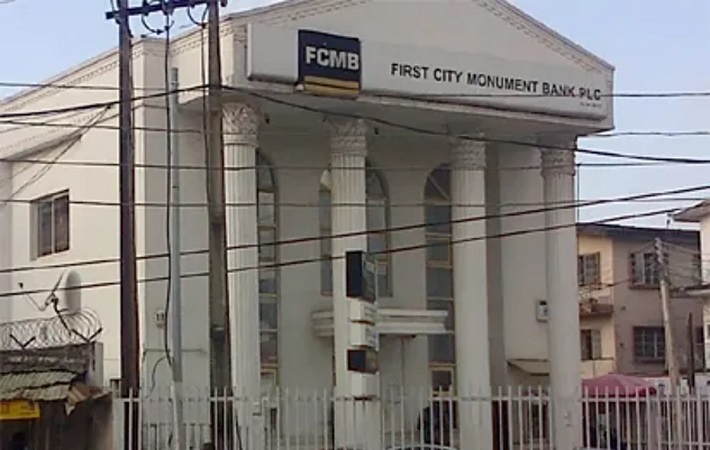
First City Monument Bank (FCMB Group) Plc has delivered a strong financial performance for the first nine months of 2025, buoyed by rapid expansion across its digital businesses and sustained improvements in core banking operations.

The group recorded significant growth in revenue, profitability, and margins, underscoring the success of its digital transformation strategy and its continued ability to navigate a challenging macroeconomic environment.

Financial Performance Highlights

FCMB reported gross revenue of N828.1 billion, representing a 40.9% increase from N587.7 billion in the same period last year. This growth was largely supported by a 64.7% rise in interest income, although non-interest income fell by 33.8% due to a N54.6 billion decline in currency revaluation gains.

Net interest income surged by 101.9% to N350.8 billion, buoyed by an improved yield on earning assets at 21.1%. This lifted the Group’s net interest margin to 10.1%, up from 6.3% recorded in FY 2024.

Operating expenses rose by 41.3% year-on-year to N238.9 billion, driven by higher personnel expenses, regulatory costs, technology investments, and business expansion efforts. Despite this, the cost-to-income ratio improved to 55.5%, compared to 59.9% in FY 2024.

Net impairment losses also increased by 28.6% to N57.1 billion, following the exit of the CBN loan forbearance, which raised the cost of risk to 2.8% from 1.8%.

The bank’s digital business spanning Lending, Payments, and Wealth continued its strong upward trajectory, contributing 13.7% to gross earnings.

Digital Lending

Digital revenues grew by 54% year-on-year, rising from N73.6 billion in September 2024 to N113.6 billion in September 2025.

In October, the group noted that it recorded loan disbursements of over N357 billion and over 1.6 million individual loans granted in 2024 through the digital channels. FCMB, through digital lending, offers FastCash loans, Salary-plus loans for salary account holders, SME digital loans, and Nano loans. 

Payments

Payments recorded a 23% (N26.1 billion) contribution to the group’s Digital Business, signalling a positive customer response to increased use of digital payments. The digital payment segment includes services available through the FCMB mobile app and FCMBOnline Business platforms, allowing for transfers, bill payments, and bulk payments.

The bank also offers specific collection platforms like FCMBCollect to help businesses manage multiple payment inflows and inventory. Other digital payment features are POS transactions, card payments, online merchant payments, USSD, and app payments. 

Wealth Management

At a 2.6% (3 billion) contribution to Digital Business, the group has witnessed growth in its Asset Under Management (AUM), supported by digital innovation. 

The digital wealth propositions on the FCMB app include mutual funds, digital savings, investment advisories, and asset management tools.

In its continued push for digital banking innovation, the group recently launched a digital cross-border global banking and payments platform, www.getrova.com, in the U.K. and Nigeria. 

The initiative aims to enhance remittance, trade flows, and the cross-border payments platform, known as the Rova App. The group seeks to support remittances and inbound and outbound payments to and from Africa for SMEs and individuals.

Overall, the Group delivered PBT of N134.5 billion and PAT of N125.4 billion, marking year-on-year growth of 46% and 52%, respectively. Return on average equity strengthened significantly from 12.7% in FY 2024 to 22.4%, while EPS improved from N2.46 to N3.91.

Performance across divisions included:

Consumer Finance: +78.5% PBT growth

Banking Group: +68.8%

Investment Management: +27.6%

Investment Banking: -34.6% (due to an exceptional gain in FY 2024)

FCMB Group’s total assets increased to N7.23 trillion, up 2.5% from December 2024. Loans and advances declined by 2.9% to N2.29 trillion due to currency impacts, write-offs, and concentrated paydowns. The Group closed the period with an NPL ratio of 5.2% and a capital adequacy ratio of 17.8%.

The Group noted that its digital banking initiatives have significantly enhanced operational efficiency by automating key processes, reducing manual workload and costs, and supporting improved margins.

Customer deposits rose by 2.3% to N4.40 trillion, with low-cost deposits increasing by 17.6% while term deposits declined by 18.4%. The mix of low-cost deposits improved to 66.1%, up from 57.5% in FY 2024.

Assets Under Management grew by 15.9% to N1.59 trillion, while Investment Banking transaction value surged by 285%, reaching N3.4 trillion compared to ?877 billion in the prior-year period.

Outlook

With expanding margins, increasing customer activity, scalable digital growth, and solid risk fundamentals, the FCMB expects to maintain strong profitability and a resilient capital position as it heads into 2026.

AI Infrastructure Buildout Is Pushing Costs Higher Than Its Market Can Guarantee

0

The recent controversy surrounding the $300 billion OpenAI deal between Oracle and Microsoft highlights a paradox within the AI economy: despite the tech industry’s massive investment in computing infrastructure, the financial risks and structural weaknesses may be building up even faster than the promised gains.

Oracle’s significant investment in OpenAI — through its Stargate data center partnership — has led to strong market skepticism. The credit rating agency, Moody’s, deemed that deal especially risky and has pointed out the “significant counterparty risk”. The main reason is Oracle’s heavy reliance on just a few companies to generate the majority of its future revenue.

According to Bloomberg, Oracle is assisting OpenAI in circumventing the export restrictions imposed on AI chips, thereby strategically positioning itself as a “one-stop shop” for OpenAI’s global expansion and assuming a crucial supplier role in its development.

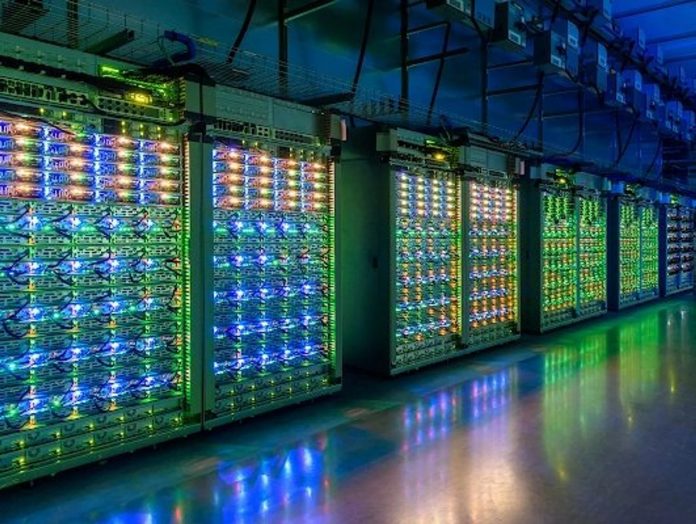
Such a situation is indicative of a larger trend: debt is the primary source of funding in the AI infrastructure boom. According to The Economic Times, the amount of debt for data centers in 2025 has increased by 112% and surpassed the $25 billion mark. Quite a few of these projects depend on risky financing, asset-backed securities (ABS), and intricate arrangements that predict continual demand.

According to JPMorgan, global data center and AI infrastructure spending is expected to exceed $5 trillion in five years, driven by “astronomical” demand for computing power. McKinsey, on the other hand, projects that AI workloads will drive a $6.7 trillion investment in data centers by 2030, with most of the new demand coming from generative AI.

However, the enormous amount of capital being utilized raises significant doubts. A large part of the infrastructure investments would face the capital expenditure-to-revenue mismatch issue: today’s construction of 10 GW+ computing power will only be profitable if AI companies can convert that capacity into revenue for an extended period and provide the expected value to investors, potentially achieving the status of high dividend stocks. Market analysis reveals that some of the largest AI companies are still incurring losses at a level significantly higher than their current revenue.

One more critical weakness is the concentration risk. The AI Now Institute’s landscape report predicts that only four cloud providers — Google, Microsoft, Amazon, and Meta — will cover 60 to 65 percent of all AI workloads by 2030, resulting in these companies having extraordinary power over the entire computing infrastructure stack. This may also significantly impact the performance of the SPX chart, as the companies represent some of the most prominent players.

Furthermore, research from the ground warns that such a concentration around computers, data, talent, capital, and energy may engender systemic fragility in the AI value chain. Additionally, power is coming up as a major limitation. The use of large GPU clusters consumes a significant amount of energy, and the associated costs may ultimately lead to very slim margins.

Regions with low electricity costs have been identified by analysts as particularly appealing for the location of data centers; however, grid limitations, rising electricity prices, or regulatory developments (such as carbon pricing and usage restrictions) may compromise the economic viability of AI infrastructure.

Markets Brace for a Major Pivot as Fed Rate-Cut Odds Surge Following Treasury Steady Posture

0

U.S. Treasury yields opened the new week in a steady posture as investors leaned further into expectations that the Federal Reserve will deliver a year-ending rate cut on Wednesday.

The bond market’s calm tone showed just how firmly traders believe the central bank is preparing to change direction after nearly two years of aggressive tightening.

By 2:39 a.m. in New York, the 10-year Treasury yield stayed anchored at 4.141% and the 30-year held near 4.794%. The 2-year, which usually mirrors expectations around Fed actions, hovered at 3.561% with barely a twitch. The stability across maturities suggested markets were no longer in a guessing game. Yields move opposite prices, and both sides sat locked in place as traders waited for the Fed’s announcement.

Odds of a quarter-point cut have surged to roughly 87%, according to the CME FedWatch tool. A month ago, the probability sat close to 67% as markets remained unsure about the Fed’s tolerance for softer data. That uncertainty faded quickly after last week’s reports: ADP posted a surprise drop in private payrolls, and the Labor Department recorded jobless claims falling to their lowest point since September 2022. Both signals pointed to an economy losing a bit of steam, though in a way that gives the Fed comfortable room to ease policy without appearing reckless.

Some Wall Street players have been recalibrating their own expectations. Morgan Stanley reversed its original prediction for a December cut, admitting that “it seems we jumped the gun,” though the bank still sees room for a move lower based on increasingly soft language from Fed officials. JPMorgan and Bank of America remain in the camp that expects a cut, grounding their forecasts in recent policymaker remarks that leaned away from aggressive tightening.

The larger economic backdrop in the U.S. has remained more robust than many anticipated. Treasury Secretary Scott Bessent said the holiday season has been “very strong,” offering reassurance that consumer spending is still carrying significant weight.

In an appearance on CBS News’ Face the Nation, he said, “The economy has been better than we thought. We’ve had 4% GDP growth in a couple of quarters. We’re going to finish the year, with 3% real GDP growth.”

His comments set the stage for an unusual situation in which the Fed may cut rates even as growth remains firm.

A rate cut at this moment would send a strong signal. Borrowing costs across mortgages, auto loans, credit cards, corporate debt, and municipal financing tend to cool when Treasury yields fall and central bank policy shifts lower. Households and businesses would likely feel some relief after more than a year of elevated financing expenses. A softer policy stance could also help stabilize sectors that have been weighed down by high rates, including housing, commercial real estate, and small-business lending.

For financial markets, a cut would likely lift equities further into year-end as investors price in a friendlier 2026. The bond market, which has taken the brunt of the Fed’s tightening cycle, may finally get breathing space if yields drift lower on expectations of a gentler policy path.

The ripple effects won’t stop at U.S. borders. Central banks across Europe and Asia are watching the Fed’s decision closely as they prepare their final policy meetings of the year. The Swiss National Bank is up on Thursday, followed by the Bank of England and European Central Bank on December 18. Each institution is balancing easing inflation with uneven growth, and the Fed’s tone could shape how far they feel able to loosen their own stance.

In Asia, the Bank of Japan meets on December 19 for its last policy gathering of 2025. Officials have hinted at the early stages of policy normalization, but the bank remains cautious, preferring to see durable wage growth before committing to any major shift.

Global markets are currently sitting in a holding pattern. The Fed’s announcement is shaping up to be the final decisive moment of the year, one that will influence everything from borrowing costs to currency flows. Some analysts believe that if the central bank delivers the expected cut, it could mark the official start of a new phase—one where the fight against inflation gives way to managing a gradual cooldown without tipping the economy into unnecessary strain.

Nvidia’s Jensen Huang Warns China Has Massive AI Infrastructure Edge Over the U.S., Citing Energy Capacity and Building Speed

0

Nvidia CEO Jensen Huang says China holds a structural infrastructure advantage that the U.S. can no longer ignore, warning that the next phase of the AI race will hinge not only on chips but also on construction speed and energy supply.

His comments add a sharper edge to a debate already intensifying inside Washington and across the global tech sector: as demand for AI supercomputing explodes, the world’s biggest economies are now racing to see who can build fast enough — and power those systems at scale.

In a late November conversation with Center for Strategic and International Studies President John Hamre, Huang laid out a blunt comparison.

“If you want to build a data center here in the United States from breaking ground to standing up a AI supercomputer is probably about three years,” he said. China, he added, can erect major infrastructure at a stunning pace. “They can build a hospital in a weekend.”

Those remarks tap into a long-running story about China’s industrial model. For two decades, the country has run what is arguably the world’s fastest large-scale building system: highways constructed at double-digit mileage per day, megacities carved out of farmland in under five years, and full manufacturing zones built in the time it takes U.S. developers to secure local permits. Much of this comes from China’s highly centralized planning structure, its tolerance for round-the-clock construction, and a regulatory environment that moves state-approved projects forward with few of the environmental-review delays common in the U.S.

That speed, Huang warned, is about to matter more than ever. The AI boom has forced companies and governments to think in gigawatts rather than gigabits. Massive clusters of GPUs require vast campuses, power lines, cooling systems, transformers, and highly specialized electrical infrastructure. If the U.S. wants to compete in the next generation of supercomputing, it must build all of that much faster than it currently can.

Energy Capacity: Huang Says China Holds Another Advantage

Huang pointed to another imbalance: national energy supply. China, he said, has “twice as much energy as we have as a nation, and our economy is larger than theirs. Makes no sense to me.” According to him, while U.S. energy capacity has stayed “relatively flat,” China’s continues to grow “straight up,” reinforcing its lead in the long-term ability to power AI supercomputers.

Energy is emerging as the new bottleneck in the AI race. U.S. utility companies have begun warning that they cannot keep up with the skyrocketing electricity demand from data centers. Some regions are already issuing moratoriums on new power-hungry facilities. Some analysts say permitting delays, aging transmission lines, and the slow pace of new power-plant construction all threaten to derail ambitious AI expansion plans in the U.S.

China, meanwhile, has poured trillions of yuan into grid expansion projects over the years, from sprawling ultra-high-voltage transmission lines to rapid power-generation buildouts led by state-owned giants. That includes coal, natural gas, nuclear, hydro, and solar deployments — all growing simultaneously, often at speeds not seen elsewhere.

Nvidia Still “Generations Ahead,” but Huang Warns Against U.S. Complacency

Despite the infrastructure gap, Huang stressed that Nvidia remains “generations ahead” of China in AI chips — the essential engines for training and operating large AI models. He said Nvidia’s semiconductor lead remains intact, particularly in the advanced manufacturing techniques required for high-performance GPUs.

Still, he delivered another caution: the U.S. should not underestimate China’s ability to catch up. “Anybody who thinks China can’t manufacture is missing a big idea,” he said, a reference to China’s rapid capacity to scale hardware production once political and economic priorities align.

Huang’s remarks also came after he briefly stirred controversy in early November when he predicted China would win the AI race. He later softened that framing on his company’s X account, saying China was “nanoseconds behind America,” signaling a race too close — and too fast-moving — for any clear long-term winner.

He remains optimistic about Nvidia’s direction, citing President Donald Trump’s push to reshore manufacturing and accelerate AI investments. Those policies, he suggested, could give the U.S. a counterweight to China’s speed and energy advantages.

A High-Stakes Building Boom

Nvidia is one of the most aggressive players in a U.S. data-center buildout that industry executives say will surpass anything seen before. Experts tell Fortune the country could see over $100 billion in new construction in the next year alone.

Raul Martynek, CEO of DataBank, which builds data centers for major tech firms, said one facility costs roughly $10 million to $15 million per megawatt (MW). A smaller-sized center typically requires 40 MW. Scaling those numbers up, he said, the U.S. is preparing to bring 5 to 7 gigawatts of new capacity online next year — a staggering expansion.

At those prices, the U.S. is preparing for a spending wave between $50 billion and $105 billion. The growth is fueled by cloud giants, model labs, and AI startups racing to secure capacity as training cycles grow more computationally intensive.

The scale of the boom also shows why Huang keeps drawing attention to China’s structural advantages. If Beijing can deliver the same scale of capacity in half or a third of the time — and with significantly more energy available to power it — the geopolitical balance in AI infrastructure could tilt quickly.