DD
MM
YYYY

PAGES

DD
MM
YYYY

spot_img

PAGES

Home Blog Page 403

Google Deepens Cloud Design Layoffs with More than 100 Employees as AI Spending Reshapes Tech Giants’ Priorities

0

Google has laid off more than 100 employees in its cloud design unit, the latest in a string of cuts that show how the tech industry’s restructuring around artificial intelligence continues to reshape workforces.

Internal documents seen by CNBC revealed that the roles eliminated include teams focused on “quantitative user experience research” and “platform and service experience,” as well as adjacent groups. These jobs — which often relied on user data and behavioral studies to guide product design — have been halved in some cases. Many of the affected employees, most of them based in the United States, were told they have until early December to find another role within the company.

This week’s reductions are part of a long-running trend. Google has been steadily scaling back across multiple divisions since the beginning of the year, offering voluntary exit packages and slashing more than one-third of its managers overseeing small teams. The company has also extended buyouts across human resources, hardware, search, ads, marketing, finance, and commerce, while pressing employees to use AI more directly in their daily work.

The restructuring reflects a deeper shift at the company. Google has pivoted aggressively toward building AI infrastructure, with CEO Sundar Pichai warning in August that the company must “be more efficient as we scale up so we don’t solve everything with headcount.” In practice, that has meant cutting people-focused roles like design and research in favor of the raw engineering capacity required to support AI models and supercomputing.

A History of Cuts

Google’s workforce has already been through several waves of layoffs in recent years. In January 2023, the company eliminated about 12,000 jobs — roughly 6% of its global workforce — in one of its largest rounds of cuts ever. That move followed slower advertising revenue growth and mounting costs as the company prepared for an AI arms race sparked by OpenAI’s ChatGPT. Later that same year, further reductions were made across recruiting and other non-technical divisions.

Other tech giants have followed similar patterns. Microsoft cut about 10,000 workers in early 2023 and announced another 9,000 in July 2025, with the company acknowledging that resources were being funneled into cloud and AI services. Meta launched what CEO Mark Zuckerberg called its “year of efficiency” in 2023, eliminating more than 20,000 roles and flattening its management structure, only to continue trimming teams as it shifted more investment into generative AI and immersive platforms. Amazon, too, has cut tens of thousands of jobs since late 2022, hitting its retail, devices, and cloud divisions.

No End in Sight

What is increasingly clear is that these job cuts are not temporary corrections but part of a structural transformation in Big Tech. As AI systems grow more capable, many roles tied to design, support, and even middle management are being sidelined. Analysts believe this trend will accelerate rather than slow down, as companies trade traditional headcount for the data centers, chips, and algorithmic research needed to stay ahead in the AI race.

It is believed that every new leap in AI makes more categories of work redundant. Thus, if Google and its peers can get better results through AI-driven processes and infrastructure, there’s little incentive to keep large teams doing the old work.

Against this backdrop, the message for employees across Silicon Valley is that the more AI improves, the more human workers risk being cut.

Meta to Use AI Interactions for Ad Targeting, Pushing Personalization Beyond Likes and Follows

0

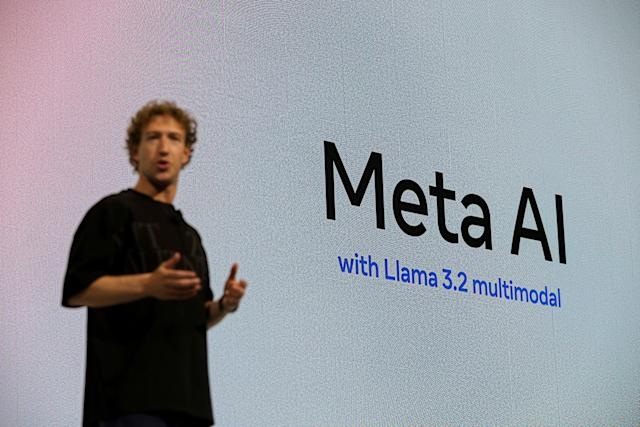
Meta Platforms said on Wednesday it will begin using people’s interactions with its generative AI tools to personalize content and advertising across its apps, including Facebook and Instagram, starting December 16 — a move that extends the company’s decades-long push to refine ad targeting and revives debate over user privacy.

The change, which applies only to users of Meta AI, will roll out in most regions outside the UK, the European Union, and South Korea. Users will be notified beginning October 7, and critically, they will not have an option to opt out, Meta said.

Interactions with Meta AI — whether by text or voice — will now be added to existing signals like likes and follows to shape recommendations for Reels, group suggestions, and ads. For instance, someone chatting with Meta AI about hiking could later see trail updates from friends, be nudged toward outdoor groups, or be served ads for hiking boots.

“People’s interactions simply are going to be another piece of the input that will inform the personalization of feeds and ads,” Christy Harris, Meta’s privacy policy manager, said. “We’re still in the process of building the first offerings that will make use of this data.”

Meta said that while interactions involving sensitive categories such as religion, political views, sexual orientation, health, or racial and ethnic origin will not be used for ad targeting, conversations on more general interests will feed into the company’s recommendation engines.

The update is designed to scale quickly. Meta AI already counts 1 billion monthly active users across its family of apps, giving the company one of the largest datasets of conversational interactions in the consumer internet space.

CEO Mark Zuckerberg has signaled this direction repeatedly. At the company’s annual shareholder meeting earlier this year, he said the “focus for this year is deepening the experience and making Meta AI the leading personal AI with an emphasis on personalization, voice conversations and entertainment.” At its Connect conference last month, Meta launched its first consumer-ready smart glasses with a built-in display, underscoring its commitment to blending hardware, AI, and platform services.

For Meta, the move represents the next stage in a long-running strategy to squeeze more value from its personalization systems. Advertising still accounts for nearly all of the company’s revenue, and AI-powered tools are increasingly seen as the key to maintaining its dominance as user growth matures.

But the decision also arrives against a fraught backdrop. Meta has faced repeated privacy controversies, most notably the Cambridge Analytica scandal in 2018, when the misuse of Facebook user data for political advertising triggered global scrutiny and led to a $5 billion fine from the U.S. Federal Trade Commission. More recently, Apple’s iOS privacy changes in 2021 — which forced apps to obtain permission before tracking users — significantly disrupted Meta’s ad business and wiped billions off its market value. These episodes underscored the risks of over-reliance on user data and remain fresh in the minds of regulators and investors alike.

Comparatively, Google and Amazon have also been monetizing AI, though largely through cloud-based services that target enterprise clients rather than consumer-facing personalization. Meta’s approach — feeding conversational data directly into its multi-platform ad engine — is more ambitious in scope, marrying AI-driven engagement with advertising at a scale unmatched by rivals.

The rollout may also test regulatory boundaries. The company has deliberately excluded the EU, the UK, and South Korea, regions with stricter data protection rules. By contrast, markets in North America, Latin America, and Asia are expected to see full adoption, offering investors a chance to evaluate the revenue potential before a broader global expansion.

The update highlights both opportunity and risk. Meta’s unmatched scale could give it a lead in AI-driven personalization, but its reliance on user trust and regulatory approval may prove a limiting factor. With competitors like Google and Amazon pursuing different monetization pathways, Meta’s strategy of embedding AI into the heart of its ad business faces the test of delivering measurable returns in 2025.

Ethereum Staking ETFs on the Horizon As Leveraged BMNR ETF Hits the Ground Running

0

The buzz around Ethereum staking ETFs is heating up as we head into October 2025, with regulatory green lights and product launches signaling a potential breakthrough for institutional crypto adoption.

While the SEC has delayed several key decisions on staking features for major Ethereum ETFs—pushing deadlines to mid-to-late October— October 18–23 for filings like 21Shares Core Ethereum ETF with staking, and October 30 for BlackRock’s iShares Ethereum Trust—the landscape is shifting positively.

This comes after a pattern of extensions rather than outright rejections, with prediction markets like Polymarket pegging approval odds for related assets (e.g., Litecoin and XRP ETFs) above 75%.

A major milestone already hit in late September: REX-Osprey™ launched the first U.S.-listed Ethereum staking ETF (ESK: REX-Osprey™ ETH + Staking ETF) on September 25, 2025, under the 1940 Act structure.

This fund offers spot ETH exposure plus monthly staking rewards, bypassing some SEC hurdles via a Cayman Islands subsidiary for staking operations. It follows their Solana staking ETF (SSK) debut in July, which has amassed over $300M in assets.

Grayscale Ethereum Trust (ETHE) shareholders also voted overwhelmingly over 90% approval on September 26 to amend their trust for ETH staking, paving the way for implementation pending regulatory nods.

Staking could add ~3% yield on top of existing basis trades already ~7% annualized, potentially driving massive inflows and reshaping ETH demand—possibly rivaling Bitcoin ETFs.

With ETH trading around $4,100 in September amid spot ETF inflows, approvals could catalyze an “altcoin season” by easing access to yield without direct node management.

Leveraged BMNR ETF Hits the Ground Running

BitMine Immersion Technologies (BMNR), the Ethereum-holding powerhouse with 2.4M ETH ~$9.6B at current prices, is making waves through its new leveraged ETF wrapper.

T-Rex’s 2X BitMine ETF (BMNU), which delivers 2x daily leveraged exposure to BMNR stock, exploded onto the scene on September 26, 2025, with $32M in first-day volume—ranking as the third-best ETF debut of the year among ~650 launches.

Over its first three trading days through September 29, BMNU racked up approximately $200M in cumulative volume, fueled by retail and institutional hunger for amplified crypto-tied plays.

This outperforms most 2025 launches, trailing only niche hits like the XRP ETF and Dan Ives-themed fund. BMNR itself saw massive liquidity, with average daily volumes exceeding 47M shares and a 52-week range from $3.92 to $161, reflecting its role as a “MicroStrategy for ETH” accumulator aiming for 5% of total ETH supply.

The surge underscores broader trends: Leveraged single-stock ETFs on crypto-adjacent firms are drawing speculators seeking volatility without direct coin custody. BMNU’s structure 2x daily reset amplifies BMNR’s moves, but remember the risks—compounding can erode returns over time, especially in choppy markets.

If BMNR hits its ETH hoarding goals, this could be just the start. By enabling passive yield generation typically 2.5–3.5% annually alongside spot ETH exposure, these products address a key barrier: the complexity of direct staking for institutions.

This isn’t just incremental; it could catalyze a feedback loop of demand, yield enhancement, and network security, with ripple effects across markets and regulation. Analysts forecast staking could supercharge the existing basis trade spot ETH ETFs vs. futures, yielding 7% annualized by layering on staking rewards, potentially drawing billions in new capital.

In late September, 10 wallets scooped up 210K ETH ($863M) via OTC desks like Kraken and Galaxy Digital, avoiding slippage and hinting at ETF positioning. Grayscale’s 90%+ shareholder approval for staking its 1.5M ETH holdings worth ~$6B on September 26 further underscores this, positioning it as a potential first-mover among spot ETFs.

If BlackRock, Fidelity, and 21Shares get the green light by October 30, inflows could rival or exceed Bitcoin ETFs’ $140B+ AUM, pushing ETH toward $7,500 by year-end per Standard Chartered forecasts—a 55%+ rally from September’s $4,100 highs.

Staking ETFs would make ETH a more compelling yield play than non-staking peers, attracting conservative allocators like pensions and endowments. This could reduce ETH’s volatility premium while amplifying upside during bull runs, as seen with Solana’s SSK ETF amassing $300M AUM since July.

Prediction markets like Polymarket now price XRP/Litecoin ETF odds at 75%+, suggesting broader altcoin momentum if ETH staking succeeds. With 29.45% of ETH supply already staked (35.3M ETH), ETF inflows could lock up more validators, slashing exit queues currently 910K ETH, ~$3.9B and stabilizing the Proof-of-Stake consensus.

However, the 9–50 day unbonding period poses liquidity risks for ETFs, requiring custodians like Coinbase to buffer reserves—potentially introducing minor sell pressure during high-activity periods.

Delays to October reflect scrutiny on custody, manipulation, and reward classification, but the pattern favors extensions over denials—echoing Bitcoin’s path. A Trump-era pro-crypto tilt could accelerate approvals, legitimizing staking as a commodity feature and paving for Solana/XRP variants.

Rejection, though, might cap ETH’s yield appeal, prolonging outflows like Fidelity’s $272M FETH dip in August. Centralization fears loom if ETFs control >50% of stake via a validator cartel, risking attacks or fraud. ETH price could dip short-term on uncertainty, as seen post-delays.

BMNR’s stock 52-week: $3.92–$161 saw 47M+ daily shares traded, trading at NAV premiums that could balloon with ETH’s rally—positioning BMNU as a retail/institutional bridge to crypto volatility.

Peter Thiel’s Founders Fund staking 9.1% 5M shares in July validates BMNR’s model, mirroring MSTR’s BTC playbook. The ETF could fuel BMNR’s ETH buys +135K ETH in August, tightening supply and pressuring prices upward—especially if staking ETFs approve, synergizing with BMNR’s yield-agnostic hoarding.

BMNU democratizes 2x bets on ETH treasuries, drawing traders eyeing AI/crypto convergence via holdings like CoreWeave. It outperforms vanilla ETH ETFs for short-term conviction, but compounding erodes long holds in sideways markets—ideal for directional swings.

Fundstrat’s Tom Lee envisions ETH treasury firms (BMNR, SBET, BTCC) merging into a “super-entity,” amplifying ETF flows and creating a $50B+ ETH vehicle. Granny Shots ETF ($GRNY) hitting $1B AUM in six months shows precedent for niche leveraged success.

BMNR risks flipping to NAV discounts if ETH corrects, crushing BMNU’s 2x leverage a 10% ETH drop could mean 20%+ ETF loss, plus decay. High volume masks this, but dilution from raises remains a drag.

White House Withdraws Nomination of Brian Quintenz for CFTC Chair

0
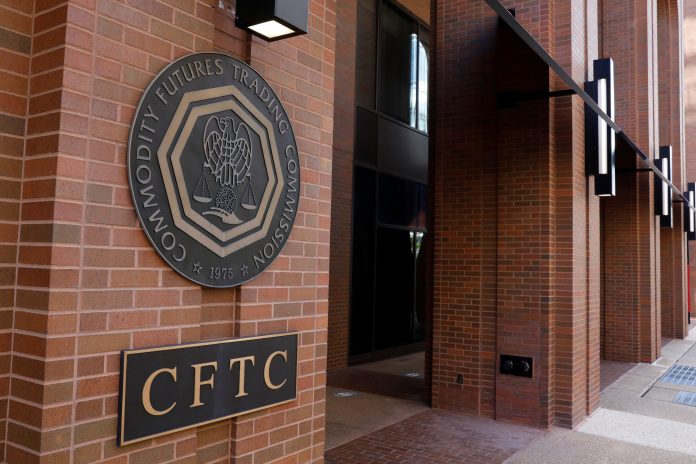
Signage is seen outside of the US Commodity Futures Trading Commission (CFTC) in Washington, D.C., U.S., August 30, 2020. REUTERS/Andrew Kelly

The Trump administration officially withdrew the nomination of Brian Quintenz to serve as chair of the U.S. Commodity Futures Trading Commission (CFTC), confirming reports from multiple outlets including Politico, Bloomberg, and CoinDesk.

Quintenz, a former CFTC commissioner during the first Trump administration and current global head of policy at Andreessen Horowitz’s (a16z) crypto division, had been nominated in February 2025 to lead the agency amid growing expectations for expanded crypto regulation.

Quintenz is a prominent figure in U.S. financial regulation, particularly in commodities and emerging technologies like cryptocurrency. He served as a Commissioner at the Commodity Futures Trading Commission (CFTC) from 2017 to 2021, nominated initially by President Barack Obama and later confirmed under President Donald Trump.

During his tenure, Quintenz was known for advocating innovation-friendly policies, including tailored approaches to blockchain and digital assets, while emphasizing risk management over broad regulations.

He has described himself as a proponent of “practical safeguards” for market innovations, drawing from his experience as a former fund manager at Saeculum Capital Management and a Capitol Hill policy aide.

Quintenz’s nomination was announced early in the year, positioning him to oversee the CFTC’s role in regulating derivatives and emerging digital assets markets, valued at over $4 trillion. He underwent a Senate Agriculture Committee hearing in June 2025 but never advanced to a full confirmation vote, with the White House requesting postponements in July.

As a pro-crypto advocate, Quintenz has advised firms like prediction market Kalshi and supported innovation-friendly policies. His potential role was seen as a boost for the industry, aligning with Trump’s vision to make the U.S. a “global hub for crypto markets.”

The decision followed months of delays attributed to: Crypto Industry Pushback: Major players, notably Gemini co-founders Tyler and Cameron Winklevoss, lobbied against Quintenz.

In September 2025, Quintenz publicly released private messages revealing the Winklevoss brothers’ concerns over his stance on a June 2025 CFTC enforcement action against Gemini for alleged investigative misconduct.

Quintenz had declined to commit to reversing the action pre-confirmation, frustrating the brothers. Tribal groups, gaming lobbies, and ethics watchdogs raised questions about Quintenz’s private-sector ties, including pre-nomination briefings with CFTC staff.

Reports also highlighted broader lobbying disputes within the crypto sector. The nomination stalled amid a pending government shutdown and congressional debates on expanding CFTC authority over crypto spot markets.

Quintenz responded graciously, stating: “Being nominated to chair the CFTC and going through the confirmation process was the honor of my life. I am grateful to the President for that opportunity… I’m looking forward to returning to my private sector endeavors during this exciting time for innovation in our country.”

A White House official emphasized that the pull does not preclude future collaboration with Quintenz, and the administration remains committed to appointing a crypto-savvy leader soon.

The CFTC is currently led by Acting Chair Caroline Pham, who has indicated plans to depart upon a permanent chair’s confirmation. All other commissioners from early 2025 have since left, leaving the agency understaffed during a critical period.

The White House is vetting new candidates, including: Josh Sterling, former senior CFTC official. Michael Selig, chief counsel to the SEC’s crypto task force. Tyler Williams, counselor to Treasury Secretary Scott Bessent on digital asset policy.

Jill Sommers, ex-CFTC commissioner. This development underscores ongoing tensions in crypto regulation, as the industry pushes for lighter-touch oversight while facing enforcement scrutiny.

The CFTC’s next chair will play a pivotal role in shaping U.S. policy on digital assets, especially with pending legislation. Updates are expected as the administration announces a replacement nominee.

Bitcoin Surges Above $118K as U.S. Government Shutdown Spurs Safe-Haven Demand

0

Bitcoin has broken past the $118,000 mark, gaining more than 3% in the past 24 hours as markets digested the news of a U.S. government shutdown.

While shutdowns traditionally increase risk aversion in financial markets, the cryptocurrency sector has reacted differently, with a broad-based rally across major assets.

The political standoff stems from a continuing resolution (CR) passed by Republicans without policy additions demanded by Democrats, led by Senator Chuck Schumer. The dispute centers on permanent extensions of Affordable Care Act tax credits, which Democrats argue are essential to prevent millions from losing healthcare coverage.

According to Ryan Lee, chief analyst at Bitget, both Bitcoin and the S&P 500 stand to benefit from the shutdown, as it may usher in a period of lower U.S. interest rates. He noted that Bitcoin’s perceived independence from government and political uncertainty makes it especially attractive to traditional investors seeking stability.

“While corrections are likely along the way, most promising altcoins appear to have bottomed out,” Lee said, adding that Bitcoin reclaiming the $116,000 level is a bullish signal heading into October, a historically positive month for the cryptocurrency.

Crypto trader/analysts Jelle described BTC upward price action as “pushing through the resistance like it isn’t even there.”

“One last thing to ‘worry’ about: a sweep of the September highs. Clear those, and the bears will have very little leg to stand on. Higher,” he told X followers.

Market reactions to government shutdowns have been mixed in the past. During the 2013 shutdown, equities slumped while Bitcoin surged, whereas in 2019 both asset classes declined. “Shutdowns always disrupt the flow of government, but the market’s reaction is never uniform,” macro resource Milk Road Macro wrote on X.

This latest shutdown, the first in six years, has coincided with gains in both Bitcoin and gold, reinforcing their roles as safe-haven assets. Technically speaking, the four-hour chart’s breakout of Bitcoin above the 50 EMA strengthens the bullish argument, and the RSI remains below overbought levels, suggesting the potential for additional upside.

Additionally, Bitcoin long-term holders continue to grow their stash with these accumulation addresses now holding a record 298,000 BTC. This trend suggests that they are optimistic about Bitcoin’s potential to continue rising.

Bitcoin closed September at $114,000, up 5% despite volatile swings that saw it drop to $108,650 earlier in the month. Analysts suggest that this level may have marked a local bottom. Data from Swissblock supports the view, noting that its aggregated impulse signal measuring price momentum across the top 350 assets collapsed to 20% from over 100%, a level historically linked to cycle bottoms and subsequent recoveries.

Historically, September has been Bitcoin’s weakest month, averaging –3% returns across 13 years. However, this year’s bullish September close is rare, and past instances of similar performance have preceded strong rallies in Q4. In fact, Bitcoin gained 48% in Q4 2024, 57% in Q4 2023, and an extraordinary 480% in Q4 2013.

Outlook

With the shutdown amplifying risk-hedging flows into digital assets, analysts argue that Bitcoin is fulfilling its original purpose, serving as an escape mechanism during periods of institutional uncertainty.

If history repeats itself, the current quarter may deliver the most significant gains of the ongoing bull cycle.