DD
MM
YYYY

PAGES

DD
MM
YYYY

spot_img

PAGES

Home Blog Page 4053

Politics and Ethics of Cancelling Davido Over Extramarital Affairs

0

The intertwining worlds of politics, ethics, and cancel culture have converged in the case of Nigerian artist Davido, who faced public backlash due to allegations of engaging in extramarital affairs. This piece examines the complexities of the politics and ethics surrounding the act of canceling Davido over his personal choices, exploring the broader implications and the need for nuanced discussions in our society.

The Context of Cancel Culture

Cancel culture, a phenomenon marked by public disapproval and withdrawal of support for individuals due to objectionable behavior, has become a prevalent aspect of our digital age. While it is crucial for society to hold public figures accountable, cancel culture often tends to oversimplify complex issues, offering little room for redemption or personal growth. The case of Davido and his alleged extramarital affairs brings these dynamics into sharp focus.

Ethical Considerations

When examining the ethics of canceling Davido, it is vital to distinguish between personal choices and professional conduct. Extramarital affairs, while deemed ethically questionable in the context of committed relationships, do not necessarily equate to professional misconduct. Ethical judgment should be tempered by an understanding of the distinction between an artist’s private life and their public persona.

Navigating Politics and Public Opinion

The politics surrounding Davido’s alleged extramarital affairs are multifaceted. As a prominent Afromusician, Davido’s personal life intersects with his public image and cultural influence. Critics argue that his actions are incongruous with the values he purportedly represents, while others contend that personal choices should not overshadow an artist’s creative contributions. Understanding the dynamics of power, societal expectations, and the influence of public opinion is crucial when evaluating the politics at play.

The Limits of Cancel Culture

While cancel culture aims to promote accountability, it often operates without a comprehensive understanding of the individual’s journey towards growth and redemption. The act of canceling Davido raises questions about the fairness of permanently tarnishing a person’s reputation for their personal shortcomings. It is essential to recognize that individuals are capable of change and should be given an opportunity to learn from their mistakes, without being eternally defined by them.

Balancing Accountability and Forgiveness

Striking a balance between accountability and forgiveness is key when evaluating the actions of public figures. Holding Davido accountable for his alleged extramarital affairs is a legitimate concern, but it is equally important to allow space for introspection, growth, and the possibility of redemption. Engaging in nuanced conversations about the consequences of one’s actions and supporting individuals in their efforts to rectify past mistakes can be a more constructive approach than outright cancellation.


Solana, Stacks (STX), Tradecurve making waves in the crypto community, how high can they go?

0

Solana is one of the SEC affected coins, resulting in a price drop to an attractive place for investors.  Stacks is in an opposite position, being SEC approved, and benefiting from its status.  Tradecurve is a decentralized trading platform that also looks to profit from the current regulatory situation.

>>BUY TCRV TOKENS NOW<<

Solana picks itself up and continues to develop

With the news that the SEC was declaring Solana as a security, the price went down by about 36%, falling from preannouncement levels of around $22 per coin to around $14.  This seems to have encouraged traders looking to buy the dip, as the price has been slowly rebounding to $17 with many traders suspecting that it is going to keep appreciating beyond the $20 mark.

Despite its regulatory woes, Solana has been trying to stay relevant, hosting and participating in various hackathons and competitions, and a social project located in one of the world’s largest slums – Kiberia located in Nigeria.

On the 17th of June Messari tweeted that Solana’s NFT activity is on the rise, outperforming both Polygon and Ethereum, and therefore indicating that Solana is still king of the NFTs.

>>BUY TCRV TOKENS NOW<<

Stacks – Interesting use case, interesting status.

Stacks is the coin on the blockchain based platform Blockstack. Stacks and Blockstack seek to offer people privacy by offering decentralized servers where people can upload and share their photos, videos, text files and more with family and friends. This is in contrast to now where most people use things like Whatsapp or Socials or FB Messenger to share their private pictures and data.

Furthermore, in a landscape where over 60 coins, including Solana, are now considered securities, Stacks parent company Blockstack has achieved a significant milestone by becoming the first company authorized by the SEC to conduct an initial public offering of bitcoin-like tokens.

Before this approval, Stacks raised over $50 million through authorized token sales exclusively to accredited investors. The IPO raised $23 million and was granted approval under Regulation A+ of the 2012 Jumpstart Our Business Startups Act, which facilitates capital generation for emerging companies with reduced disclosure requirements. Stack’s success sets an example for other cryptocurrency and blockchain startups looking to raise funds.

>>BUY TCRV TOKENS NOW<<

Tradecurve – decentralized and privacy oriented.

Whether you want to buy Solana or Stacks, the message is clear – privacy oriented solutions are needed in the current regulatory climate.  Tradecurve focuses on this with its decentralized trading platform that seeks to offer the perks of a CEX with the benefits of a DEX, and a trading brokerage, all in one place.

As Tradecurve is located in St Vincent and Kitts (where financial derivatives trading is allowed), and is a DeFi protocol, they are able to offer traders a legal way to trade everything from forex, bonds, commodities, indices and crypto, without requiring KYC.

The result is a privacy based platform that respects the anonymity of its users, and therefore opens up the options for people looking to trade, regardless of their country or socioeconomic situation.

Tradecurve can also assist the unbanked and possibly people like the residents of Kibera, in giving them a way to interact with the global financial world, especially if they team up with an on-ramp such as the Strike app, which does not require a bank account.

Tradecurve is in presale, with aims to raise $20 million, so that they can complete their platform with all its features.

At time of writing stage 4 has sold over 36%, bringing it closer to stage 5, at which point the price will rise from $0.018 to $0.025.

This means that investors are still very early, as the minimum launch price alone is $0.088 and the token is forecasted to reach a 100x once the token goes live and as the platform develops.

Learn more about Tradecurve and the TCRV token below:

Click Here For Website

Click Here To Buy TCRV Presale Tokens

Follow Us Twitter

Join Our Community on Telegram

Visa Acquires Payment Startup Pismo For $1 Billion, to Provide Core Banking Offerings For Clients

0

Global leader in digital Payments, Visa, has acquired payments infrastructure tech startup Pismo for $1 billion, to provide core banking and issuer processing capabilities across debit, prepaid, credit, and commercial cards for clients.

Through this acquisition, cloud-based payment startup Pismo will allow Visa to offer support and connectivity for emerging payment platforms like Pix, an instant payment platform created and managed by the monetary authority of Brazil, the Central Bank of Brazil.

The deal which will be paid in cash and is expected to close by the end of the year, is suggested to be one of the largest fintech M&A deals taking place this year.

Speaking on the acquisition of Pismo, Visa wrote via a statement that “It will be positioned to provide core banking and issuer processing capabilities across debit, prepaid, credit and commercial cards for clients via cloud-native APIs. The startup’s platform will also enable Visa to provide support and connectivity for emerging payment rails, like Pix in Brazil, for financial institution clients”, the company added.

Visa Chief Product and Strategy Officer Jack Forestell said,

“Through the acquisition of Pismo, Visa can better serve our financial institution and fintech clients with more differentiated issuer solutions they can offer their customers. The deal, which is subject to regulatory approvals and other customary closing conditions, is slated to close by year’s end. Pismo will retain its current management team, who will remain based in São Paulo”.

Also commenting on the deal, Co-founder and CEO of Pismo Ricardo Josua said,

“At Pismo, we aim to enable our clients to launch cutting-edge payments and banking products within a single cloud-native platform regardless of rails, geography, or currency. Visa provides us unrivaled support to expand our footprint globally and help shape a new era for banking and payments”.

Pismo is an all-in-one platform that offers a variety of products in a cloud-native environment to help clients future-proof their business. Its clients include tier-1 banks, major retailers, and game-changing neo-banks from around the globe.

Digital lending is part of Pismo’s cloud-native and API-based platform. It brings agility and flexibility to accelerate the creation of new products, covering traditional business and consumer offerings, as well as new opportunities such as Buy Now Pay Later (BNPL), for banks and fintechs of all sizes.

Since its Series B funding round led by SoftBank, Amazon, and Accel, which raised $108 million in October 2021, Pismo has grown exponentially.

As Visa positions itself to provide core banking and issuer processing capabilities, the acquisition of Pismo will see both companies better positioned to provide core banking and issuer processing capabilities across debit, prepaid, credit, and commercial cards for clients via cloud-native APIs.

Pismo’s platform will also enable Visa to provide support and connectivity for emerging payment rails, like Pix in Brazil, for financial institution clients.

Economic Policies And Their Impact On Crypto Supply And Demand: DogeMiyagi, Solana And XRP

0

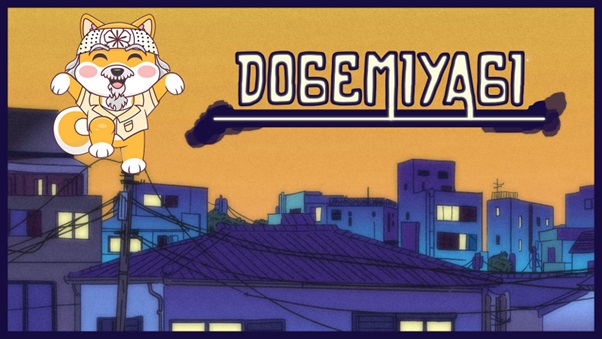
The economic strategies employed by blockchain projects hold substantial sway over the supply and demand dynamics of their tokens. In this article, we will explore the economic policies of DogeMiyagi (MIYAGI), Solana (SOL), and XRP, scrutinising their impact on token supply and demand.

By grasping these policies, we can glean insightful knowledge about the factors that steer token valuation and influence market behaviour. Appreciating the economic frameworks of these projects is of utmost importance to investors and users alike, empowering them to make well-informed choices and navigate the dynamic and ever-evolving cryptocurrency landscape.

Dogemiyagi’s Unique Inflationary Approach

DogeMiyagi (MIYAGI) employs an inflationary economic policy designed to incentivize community involvement and long-term token holding. The token’s supply increases with each transaction, as a portion of the transaction fee is distributed among existing token holders. This mechanism, known as a redistribution feature, rewards holders and encourages them to retain their tokens, thereby reducing sell pressure and promoting price stability. The inflationary nature of Dogemiyagi’s policy ensures a constant supply increase over time, aligning with the project’s goal of creating a sustainable and community-driven ecosystem.

As MIYAGI is still in its presale stage, it holds promising prospects as a lucrative investment opportunity. DogeMiyagi explores the monetization potential through non-fungible tokens (NFTs) and collectibles. By capitalising on the popularity of the meme, DogeMiyagi aims to create and sell NFTs, transforming memes into valuable digital assets. These unique tokens are expected to attract attention and generate revenue for the DogeMiyagi ecosystem. Notably, the project emphasises revenue sharing among the community, ensuring inclusive benefits.

Moreover, DogeMiyagi leverages its brand recognition for merchandise and licensing ventures. The strong appeal of the brand opens doors to collaborations and partnerships, leading to the creation of DogeMiyagi-themed merchandise. By offering licensed products, DogeMiyagi can diversify its revenue streams and solidify its position in the market.

Solana’s Deflationary Tokenomic Model

Solana (SOL) adopts a deflationary economic policy with a fixed maximum supply of 489 million tokens. Unlike DogeMiyagi, where new tokens are constantly minted, Solana’s supply is capped, which creates scarcity and a potential increase in token value over time. Solana’s deflationary model promotes long-term holding and scarcity, leading to a potential increase in demand as more users seek to acquire a limited supply of tokens. This economic policy aligns with Solana’s goal of becoming a scalable and sustainable blockchain platform with a robust ecosystem.

XRP’s Controlled Supply Mechanism

XRP operates on a controlled supply mechanism, with a total supply of 100 billion tokens. However, unlike Solana’s fixed maximum supply, XRP’s supply is predetermined, with a significant portion held by Ripple Labs. This controlled supply approach aims to ensure stability and prevent excessive inflation.

Ripple Labs periodically releases a portion of its XRP holdings, allowing for controlled token circulation. While the controlled supply mechanism may reduce the potential for significant price appreciation, it also provides stability and a predictable token supply, which can be appealing to certain market participants.

Impact On Supply and Demand Dynamics

The economic policies of DogeMiyagi, Solana, and XRP influence the supply and demand dynamics of their tokens in different ways. DogeMiyagi’s inflationary model, with its constant token minting, can potentially lead to an increase in the token supply. However, the redistribution feature incentivizes token holding, reducing sell pressure and promoting price stability. The community-driven nature of DogeMiyagi’s policy encourages engagement and involvement, which can contribute to long-term token demand.

On the other hand, Solana’s deflationary model, with its fixed maximum supply, creates scarcity, potentially driving up demand for the token. The limited supply of Solana tokens aligns with its goal of becoming a valuable and sought-after asset. The scarcity factor, coupled with the platform’s scalability and ecosystem growth, can contribute to increased demand for Solana tokens.

XRP’s controlled supply mechanism ensures stability and controlled token circulation. While this may limit the potential for rapid price appreciation, it also reduces the risk of excessive inflation. The predictable supply of XRP tokens can attract users who value stability and reliability in a digital asset.

Economic policies play a crucial role in shaping the supply and demand dynamics of cryptocurrencies. DogeMiyagi’s inflationary approach rewards token holders and promotes price stability, Solana’s deflationary model creates scarcity and potential value appreciation, and XRP’s controlled supply mechanism ensures stability and predictability. Each project’s economic policy aligns with their respective goals and philosophies. While DogeMiyagi focuses on community involvement and sustainability, Solana aims to establish scarcity and value appreciation, and XRP prioritises stability and controlled supply. Understanding these economic policies helps investors and users evaluate the potential impact on token supply and demand dynamics.


DogeMiyagi:

Website: https://dogemiyagi.com

Twitter: https://twitter.com/_Dogemiyagi_

Telegram: https://t.me/dogemiyagi

Caged Beasts Coin, Dogelon Mars, and Wall Street Memes: Top Meme Coin Investments of 2023!

0

In the universe of meme coins, unconventional investment opportunities intertwine with a touch of humor. In this article, we’ll enter an enlightening journey into three of the most popular meme coins on the market right now: Wall Street Memes (WMEME), Dogelon Mars (ELON), and Caged Beasts Coin (BEASTS). By navigating the features and performance records of these meme coins, we can make better investment decisions. 

Meme Coin Marvel

Wall Street Memes ($WSM) has swiftly risen as a meme coin of considerable intrigue, attracting attention for a myriad of reasons. Its presale triumph, amassing nearly $8 million, stands as a testament to the robust demand and unwavering investor confidence it has garnered. Notably, Wall Street Memes presents a tempting investment opportunity due to its remarkably affordable current price.

What distinguishes Wall Street Memes is its bold foray into the world of NTFs. The Wall Street Bulls NFT collection associated with the project achieved an impressive feat, selling out within a mere 30 minutes of its grand debut. This achievement underscores the project’s innate ability to curate highly sought-after and coveted digital assets.

With an established track record in Ethereum NFTs, Wall Street Memes ($WSM) stands poised for substantial growth as a meme coin. Discerning investors in pursuit of the next promising meme coin, brimming with significant growth potential, should undoubtedly take heed of this golden opportunity.

Embracing Uniqueness: Dogelon Mars Shakes Up the Meme Coin Market

Dogelon Mars (ELON) takes a unique approach to the meme coin market. Functioning as an ERC-20 token on the Ethereum blockchain, ELON aims to incentivize community building within its platform. The project has cultivated an active community on platforms like Twitter and Discord, where members regularly share news, updates, and discuss price movements.

Inspired by the success of Dogecoin, Dogelon Mars combines the love for memes with the aspiration for space exploration. Its dedicated community and philanthropic initiatives have carved out a distinctive niche within the crypto industry. However, it’s important to note that Dogelon Mars does not offer the same level of interactive engagement and exclusivity as Caged Beasts Coin.

A Memorable Breed: Caged Beasts Carves Its Niche

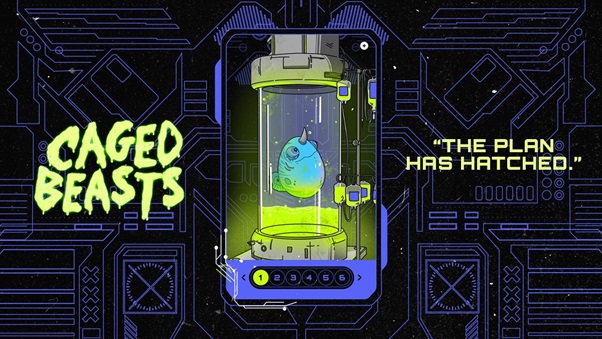
Amidst the bullish trend in the cryptocurrency market, Caged Beasts Coin (BEASTS) has recently gained attention as a potential contender for substantial adoption in the coming weeks. Unlike many meme coins flooding the market, Caged Beasts stands out with its emphasis on community and decentralization. The project draws inspiration from science fiction and cyberpunk styles, reflecting its unique art style and design.

What truly distinguishes Caged Beasts Coin is its highly lucrative referral system, which incentivizes users to invite friends and actively contribute to the project’s growth. The referral system encourages users to generate personalized referral codes. Each time someone signs up using the code, BEASTS rewards both the code sharer and the code recipient with 20% of their token holdings. This feature has generated a strong sense of community engagement and involvement.

Wall Street Memes, Dogelon Mars, and Caged Beasts Coin each bring their own unique contributions to the meme coin market. Wall Street Memes shines with a successful presale and ventures into NFTs. Dogelon Mars combines memes with a community-driven approach, while Caged Beasts Coin prioritizes community engagement and decentralization, supported by its innovative referral system. These coins present diverse opportunities for investors seeking both entertainment and potential growth in the meme coin market.


Follow the Links For More Information on Caged Beasts Coin!

Website: https://cagedbeasts.com

Twitter: https://twitter.com/CAGED_BEASTS

Telegram: https://t.me/CAGEDBEASTS