DD
MM
YYYY

PAGES

DD
MM
YYYY

spot_img

PAGES

Home Blog Page 407

OpenAI Launches Sora 2, Social Platform Where Users Can Create, Share AI-Generated Clips Of Themselves, Friends

0

OpenAI on Tuesday unveiled Sora 2, its latest audio and video generator, alongside a new social platform called Sora, where users can create and share AI-generated clips of themselves and their friends in a TikTok-style feed.

The launch not only marks a major consumer push for the Microsoft-backed startup but also introduces fresh questions about how investors and financial markets will respond to OpenAI’s expansion into the crowded short-form video space.

The new model builds on last year’s Sora, but with striking improvements in realism. OpenAI said Sora 2 better adheres to the laws of physics, correcting one of the most glaring flaws of earlier systems. In a blog post, the company contrasted prior video models’ tendency to “morph objects and deform reality” with Sora 2’s more grounded approach.

“For example, if a basketball player misses a shot, the ball may spontaneously teleport to the hoop. In Sora 2, if a basketball player misses a shot, it will rebound off the backboard,” it said.

OpenAI has already shared clips of beach volleyball, skateboard tricks, gymnastics routines, and diving-board cannonballs to showcase the model’s improved consistency. While the invite-only system has yet to be tested independently, the public examples underscore its technical leap.

A central feature of the Sora app is “cameos”, which allows users to insert themselves into generated clips. To participate, individuals must upload a one-time video and audio recording to confirm their identity and capture their likeness. Cameos can then be shared with friends, allowing multiple people to appear together in AI-generated scenarios. OpenAI said, “We think a social app built around this ‘cameos’ feature is the best way to experience the magic of Sora 2.”

The iOS app is live in the U.S. and Canada, with international expansion planned. Though the platform is invite-only at launch, ChatGPT Pro subscribers will gain direct access to the Sora 2 Pro model without needing an invite. Generated clips will be hosted in a TikTok-like feed, signaling a direct clash with short-form video incumbents.

That competition is already heating up. Just last week, Meta announced “Vibes”, a new short-form video feed inside its Meta AI app, underscoring how quickly tech giants are converging on the AI-driven video market. OpenAI’s move suggests it wants to establish itself not just as an AI model supplier but as a consumer media platform in its own right.

The Sora feed will be algorithmically curated using a blend of user activity, IP-based location, past engagement, and even ChatGPT conversation history, though the latter can be disabled. The app also includes parental controls managed through ChatGPT, such as overrides for infinite scroll, limits on personalization, and settings for direct messages to minors. Still, their effectiveness may depend on parents’ technical skills.

At launch, the Sora app will be free, with monetization limited to charges for extra video generations during peak demand. That mirrors the early growth strategy of TikTok — a play to quickly seed adoption before introducing revenue layers.

Yet the launch comes with significant risks. OpenAI has already faced scrutiny for ChatGPT’s safety guardrails, and embedding user likenesses into a social platform raises deeper concerns. Users can revoke access to their likeness, but abuse remains possible. Even trusted contacts could generate deceptive or harmful clips. Regulators and watchdogs note that non-consensual AI-generated videos are a persistent online problem, with few laws explicitly governing platform responsibility.

For financial markets, OpenAI’s bold step into social networking cuts both ways. Some investors may see the move as a high-risk distraction from its core model licensing business, one that drags the company into a regulatory minefield already consuming TikTok and Meta. Others may view it as a natural extension — a chance to diversify revenue beyond enterprise AI services and capitalize on booming consumer demand for short-form media.

Analysts note that enterprise buyers of OpenAI’s models could also take a wait-and-see approach, wary of how the company balances consumer ambitions with its commitments to business partners. Meanwhile, rivals like Meta, Alphabet, and TikTok owner ByteDance are likely to monitor whether Sora gains traction — not just as a novelty, but as a sustained competitor in the global attention economy.

Ultimately, the Sora 2 launch puts OpenAI on a new competitive frontier. But it raises the question of whether OpenAI’s transformation into a consumer-facing platform enhances long-term value or exposes the company — and by extension, Microsoft’s stake — to the volatility and scrutiny that have defined the social media business for more than a decade.
CoreWeave Seals $14 Billion AI Infrastructure Deal with Meta

0

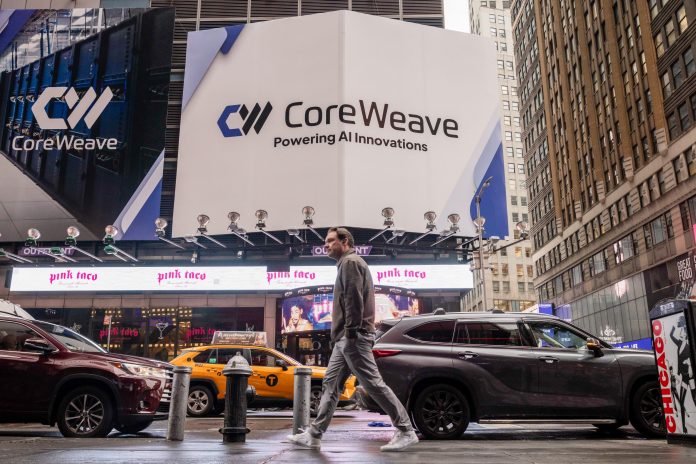
CoreWeave has signed a $14 billion agreement with Meta to supply computing power, the latest in a string of multi-billion-dollar infrastructure deals underscoring how artificial intelligence spending is shifting from software to the hardware backbone that supports it.

The contract, announced Tuesday, commits Meta to pay about $14.2 billion through December 14, 2031, with an option to extend into 2032 for additional capacity, CoreWeave said in a filing. Shares of the cloud computing company jumped 15% following the disclosure, pushing its valuation—which stood at $60 billion as of the last close—further into the ranks of high-growth AI service providers.

Under the agreement, Meta will secure access to Nvidia’s latest GB300 systems housed in CoreWeave’s data centers, according to CEO Michael Intrator in a Bloomberg News interview.

For Meta, the deal represents more than just raw computing power. It ties directly into its consumer-facing ambitions, including its recently launched Ray-Ban smart glasses, while complementing its vast spending on U.S. data centers and top AI engineering hires, where salaries now rival those of professional athletes.

For CoreWeave, Meta adds another pillar customer beyond Microsoft, its largest client. Just last week, the server provider inked its third multi-billion-dollar expansion deal with OpenAI, strengthening its position as the preferred partner for companies racing to scale AI.

Some analysts believe that the wave of long-term contracts marks a new phase in the AI boom. “Nvidia’s chips are in CoreWeave’s data centers, which will then be used by companies like Meta. These kinds of deals spark bubble concerns because of how insular the industry appears, and the massive dollar amounts involved,” said Emarketer’s Jacob Bourne.

He cautioned that valuations have been inflated by “circular” financing, where AI firms both consume and invest in each other’s services.

At the same time, the expansion of AI demand beyond the so-called Magnificent Seven—Apple, Microsoft, Nvidia, Amazon, Alphabet, Meta, and Tesla—suggests the risk of a sudden bubble burst may be tempered. Bourne noted that startups, cloud providers, and enterprises outside Big Tech are beginning to sign similar agreements, ensuring broader market participation.

The Meta-CoreWeave deal is also emblematic of a global trade divide in AI infrastructure. In the U.S., private-sector partnerships dominate, with hyperscalers like Meta, Microsoft, and OpenAI locking in long-term cloud deals to secure scarce Nvidia chips. In contrast, China has leaned heavily on state-backed investment through firms such as Huawei, Baidu, and Alibaba, which are scaling their own data centers to meet domestic AI demand while racing to reduce reliance on U.S.-controlled chipmakers.

This shift—away from flashy AI applications toward the invisible but capital-intensive infrastructure—has reshaped investment priorities. CoreWeave’s 8x manufacturing capacity increase in the past 18 months, with plans to expand another 4x in the next six to eight months, illustrates just how rapidly the market is evolving. After Taiwan Semiconductor Manufacturing (TSMC) produces its chip wafers, CoreWeave packages them in the U.S., an added signal of the strategic value of onshore production.

Meta’s deal, alongside CoreWeave’s tie-ups with Microsoft and OpenAI, confirms that AI’s next frontier lies in securing compute power before shortages bite harder. It’s a defensive move to maintain leadership in the global AI race for U.S. firms, underlining how access to chips and infrastructure has become the new battleground in trade and technology competition.

Nothing Launches Playground, An AI Tool That Lets Users Build Simple Applications Through Text Prompts

0

Nothing on Tuesday launched Playground, an AI tool that lets users build simple applications through text prompts, TechCrunch reports.

The tool deploys creations onto a companion hub called Essential Apps, signaling the smartphone maker’s ambition to infuse consumer software with AI-driven personalization.

At present, Playground is limited to generating lightweight widgets — such as flight trackers, next-meeting briefs, or even virtual pets — either from scratch using natural language or by customizing existing apps on the Essential Apps platform. More technically inclined users can dive into the generated code to fine-tune functions.

The company said developers will not yet be able to build full-screen apps, noting that the underlying technology is not mature enough to support that level of complexity.

The launch follows Nothing’s $200 million funding round led by Tiger Global earlier this month, with CEO Carl Pei emphasizing that the company’s long-term bet is on building an operating system with AI at its core, alongside AI-centric hardware devices.

In an interview with TechCrunch last week, Pei criticized the industry’s reluctance to reinvent mobile software.

“Something that has always bothered me is why we aren’t improving software? A lot of people look at what big companies like Apple do, and follow that because that is the safer path. I think software iteration is very slow,” he said.

“With breakthroughs in AI, we believe that operating systems will change and become more personal. Our devices have so much context on us, but that is not being leveraged right now,” he added.

Still, Nothing’s current AI footprint is modest. To date, it has launched only one AI-enabled application, Essential Space, which allows users to share screenshots, record voice notes, and transcribe meetings. Most of these functions are already available through existing smartphone operating systems or third-party apps, highlighting the challenge of differentiating in a crowded app ecosystem.

Founded in 2020, Nothing has positioned itself as a design-forward challenger brand in smartphones, but its global market share remains below 1%, according to data from IDC. That leaves it far behind entrenched rivals like Apple, Samsung, Google, Huawei, Xiaomi, Oppo, and OnePlus.

Pei, however, sees its underdog position as an advantage. He has repeatedly argued that Nothing can build hardware tailored specifically for AI use cases — starting with smartphones and extending to other categories.

“If we can get it right on smartphones, building hardware with specific use cases would be easier,” he has said.

The idea of “vibe coding”, as Nothing calls it, is compelling on paper, but history suggests hurdles ahead. Data from AppFigures shows that similar attempts at text-to-app functionality on smartphones have struggled to gain traction, largely due to security and maintenance concerns. Pei acknowledged the risks, stressing that Nothing must keep its platform safe without stifling creativity.

“We have millions of users on our devices. So whatever we ship should be easy to use and hard to make a mistake on. That is why, for us, maintaining a level of security with these apps will be important,” he said.

For now, Nothing is not charging for Playground or its Essential Apps tools. A premium tier is not in development either, with Pei saying the company is focused on cultivating a community of contributors and highlighting top creators.

The comparative picture shows both the promise and pressure facing Nothing. Apple has so far taken a measured approach, weaving AI tools into iOS incrementally — from personalized Siri updates to rumored generative AI functions in iOS 19. Google, meanwhile, has accelerated its Gemini AI integration across Android, linking AI to search, Gmail, Maps, and now Pixel-exclusive features. Samsung has leaned on partnerships with Google to market “Galaxy AI” across its premium devices, folding in translation, summarization, and productivity tools.

Against this backdrop, Nothing’s Playground stands out for its bold attempt to hand AI-powered app creation directly to users. But it also highlights the gap: Apple and Google can afford to roll out AI cautiously, confident their user bases will adopt new tools gradually, while Nothing must take risks to differentiate itself in a market where it controls less than 1% of global share.

Financial markets may see this divergence as both a risk and a potential opportunity. For investors, Nothing’s $200 million funding round suggests confidence in its ability to carve out a niche. Yet unless Playground evolves into a sticky differentiator, the company could be squeezed by giants who can outspend and out-integrate AI into their ecosystems. For enterprise buyers and developers, the launch may serve as an early test case: can a smaller player move fast enough to shape AI-driven consumer software before the dominant platforms shut the window?

The Physics of Business and Transduction from Ideas to Revenue

0

The concept of Business Transduction defines the critical, high-friction journey of a nascent idea from its initial energetic state (the invention) to its final, revenue-generating state (the commercialization). In the physics of business, this phase change is non-negotiable. An idea, no matter how elegant or technologically advanced, remains a mere thought artifact—an invention—until it is exposed to and validated by the market.

We must discard the notion that innovation is simply ideation; per Tekedia Institute, Innovation =: Invention + Commercialization. The market, therefore, acts as the ultimate arbitrator of value, demanding that the idea resolve tangible frictions in the consumer value chain. The failure to engineer this complex transition is the leading cause of mortality among ventures, transforming brilliant intellectual property into forgotten footnotes in entrepreneurial history.

The successful transduction of innovation is fundamentally dependent on two pillars: Great Products and Superior Execution. The former ensures market fit by solving a customer’s pain point uniquely; the latter ensures operational excellence, efficient combination of resources, and market penetration velocity.

A founder must adopt an unrelenting founder’s mindset, recognizing that the process is not a linear sprint but a complex, iterative cycle—a grand playbook that may require repeated refinement of the original idea based on hard data from customer behavior analysis. Execution is the kinetic energy that sustains this process, transforming strategic thinking and design principles into actual market momentum. Without superior operating teams to manage the combination and recombination of factors of production, even the most disruptive product becomes stranded in the competitive landscape.

Ultimately, transduction culminates in the establishment of a robust revenue engine, enabling Scalable Growth—the only trajectory that heals and cures corporate maladies. For emerging markets in Africa, this journey carries an added dimension: the necessity of “hacking trust” and often building the requisite infrastructure concurrently.

As we witness the current Cambrian moment of entrepreneurial capitalism, the ventures that secure greatness are those that not only convert ideas into functional products but also engineer momentous efficiency where the rate of revenue growth significantly outpaces expense growth. This outcome is not accidental; it is the deliberate application of business physics, ensuring that the initial energy of the idea is efficiently converted into realized commercial potential, thereby serving as the architecture for the continent’s new economic future. QED.

Tekedia Institute >> helping learners understand the physics of markets.

With a BWT Alpine Formula 1® Partnership & $415M Onboard, BlockDAG Surges Ahead of DOGE & XRP

0

The race for dominance among digital assets is heating up, with each candidate offering unique catalysts. Dogecoin (DOGE) has remained popular thanks to community-driven hype, while XRP price outlook suggests a potential breakout fueled by liquidity clusters and institutional demand. Yet, it is BlockDAG (BDAG) that has stolen the spotlight.

With a nearly $415M presale raise, an exclusive BWT Alpine Formula 1® Team sponsorship, and upcoming ecosystem milestones, the project is making a serious case for being the best performing crypto today. From cultural relevance to technical execution, BlockDAG combines sports partnerships, investor incentives, and cutting-edge blockchain infrastructure to secure a place at the front of the crypto grid.

XRP Price Outlook Builds Momentum

XRP (XRP) price outlook has turned bullish after months of consolidation. Analysts point to a breakout above $3.50 as the key trigger, with liquidation clusters suggesting a possible short squeeze that could rapidly drive the asset toward $5 and potentially $6. Institutional interest adds weight to the bullish case, with funds increasing exposure to XRP as regulatory clarity improves following Ripple’s courtroom victories.

The coin has spent nearly a year building momentum within a rectangular continuation pattern, a setup that often precedes significant rallies. Traders now view $3.00 as the critical support zone, while $3.50 marks the breakout threshold. Should buyers clear this resistance, XRP could reestablish itself as one of the best performing crypto today, driven by both technical strength and adoption in cross-border payments.

Dogecoin Breakout Setup Gains Attention

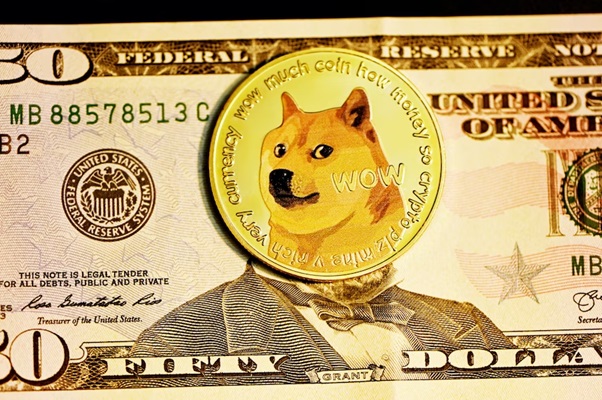
Dogecoin (DOGE) breakout setup is another storyline traders are watching closely. DOGE has held firm at key support levels, consolidating after recent ETF approval news sparked fresh institutional interest. Analysts note that the memecoin is coiling around long-term moving averages, preparing for a potential breakout if bullish momentum resurfaces.

The community’s role in sustaining demand remains crucial. DOGE thrives on cultural relevance and speculative energy, which, when paired with growing market infrastructure, positions it for sudden explosive moves. A clean break above resistance near $0.30 could push Dogecoin back into the spotlight, reigniting its reputation as one of the best performing crypto today.

However, its reliance on external hype contrasts with projects like BlockDAG, which are building concrete partnerships and technology foundations.

BlockDAG BWT Alpine Formula 1® Team Sponsorship & $415M Growth

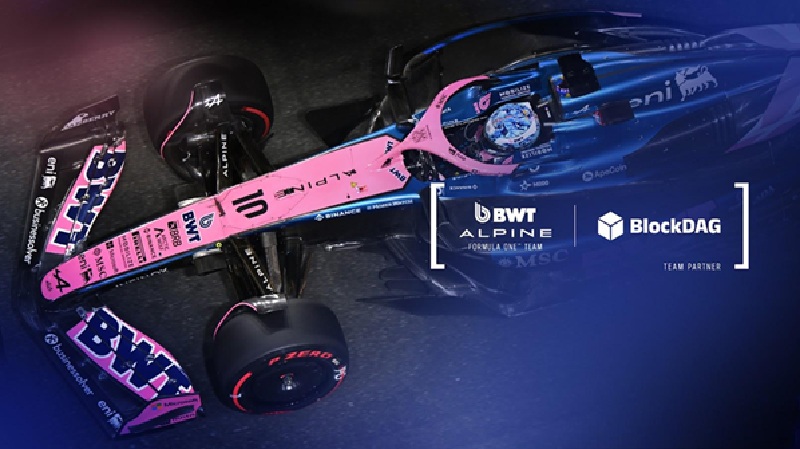
No project has captured both market momentum and cultural resonance like BlockDAG. Its landmark multi-year deal with the BWT Alpine Formula 1® Team has positioned it as the exclusive Layer 1 blockchain partner, aligning the brand with Formula 1®’s global image of speed, precision, and performance. The partnership made its debut at Singapore’s iconic Raffles Hotel ahead of Token2049 and the Grand Prix, featuring Alpine’s race car, team drivers, and official branding. This move pushes BlockDAG beyond traditional crypto marketing, embedding it in a sport watched by billions worldwide.

Financially, BlockDAG continues to shine. The project has nearly raised $415M in its presale, with coins priced at $0.0013 in the current batch and a confirmed launch price of $0.05. Such traction signals strong investor trust. Beyond fundraising, the project is rolling out advanced features like Buyer Battles, rewarding top daily buyers from a 50M BDAG pool. Referrals add another growth layer, with a 25% commission for referrers and a 5% bonus for referees, making community-led expansion a core driver.

On the tech side, BlockDAG’s Awakening Testnet is live, and being stress-tested its. This live simulation showcases scalability and transparency, while Dashboard V4 enhances investor faith through exchange-style charts, order books, and real-time participation metrics. Combined with rigorous audits from CertiK and Halborn, BlockDAG is solidifying its reputation for both innovation and security.

For those seeking the best performing crypto today, BlockDAG’s blend of cultural sponsorships, gamified presale tools, and secure blockchain infrastructure sets it apart from rivals like DOGE and XRP.

Wrapping Up

The competition for dominance among altcoins has never been more intense. XRP (XRP) price outlook highlights a possible short squeeze to $5, while Dogecoin (DOGE) breakout setup reflects its enduring community-driven appeal. Nonetheless, it is BlockDAG that is racing ahead of the pack. With a $415M presale raise, coins at $0.0013, an estimated $0.05 launch, and its multi-year BWT Alpine Formula 1® Team sponsorship, BlockDAG is redefining how crypto enters mainstream culture.

When paired with referrals, testnet readiness, and a secure DAG-based design, it becomes clear why many see it as the best performing crypto today, and perhaps the frontrunner for 2025.

Presale: https://purchase.blockdag.network

Website: https://blockdag.network

Telegram: https://t.me/blockDAGnetworkOfficial

Discord: https://discord.gg/Q7BxghMVyu