DD
MM
YYYY

PAGES

DD
MM
YYYY

spot_img

PAGES

Home Blog Page 4131

Apple Partners with Broadcom for 5G Radio, Expanding Its $430bn Investment Plan in US to Curtail Manufacturing in China

0

Apple on Tuesday announced a multibillion-dollar deal with Broadcom to produce new 5G radio frequency components in the US, marking a significant shift from the tech giant’s production expansion overseas.

The announcement follows Apple’s plan to spend more than $400 billion on domestic manufacturing, which will significantly curtail its manufacturing in foreign markets, especially China.

Per Qz, the Broadcom deal covers a range of 5G wireless connectivity components that include FBAR filters and acoustic resonators that enable iPhones to connect to 5G networks. As part of the plan, Apple will invest in production across a number of US cities, including Fort Collins, Colorado, where Broadcom already has a major facility, Quartz noted.

“We’re thrilled to make commitments that harness the ingenuity, creativity, and innovative spirit of American manufacturing,” Apple CEO Tim Cook said in a statement. “All of Apple’s products depend on technology engineered and built here in the United States, and we’ll continue to deepen our investments in the U.S. economy because we have an unshakable belief in America’s future.”

Apple is understood to have mapped out as much as $430 billion for investment in the US for the next five years.

Apple’s statement announcing the deal stressed the importance of 5G connectivity in consumer electronics, adding that the company is spending billions of dollars to develop the technology domestically, according Qz.

Though the US remains a huge manufacturing base for Apple with California alone holding more than 30 sites, the electronic device maker still does most of its manufacturing outside the US, with China being its largest base. The world’s most valuable company has also been expanding production of iPhone and Macbook hardware in India and Vietnam as secondary markets.

However, as noted by Qz, Apple’s move is part of a bigger plan by the US government to promote domestic manufacturing as the economic war between Beijing and Washington deepens.

US manufacturers have been under intense pressure to move most production back home from China. But in addition, Apple has blamed Chinese pandemic-era policies and riots at Foxconn factories for supply chain issues, according to Qz.

Apple’s move to India and Vietnam is understood to be in response to those concerns.

The $430 billion will include investment in silicon engineering and major chip manufacturing.

However, investment in 5G infrastructure is a significant move for Apple, as it may put the company in line to lead the 5G roll out in the US after it axed China’s Huawei. Apple has notably built devices compatible with 5G since 2020.

The move also underscores the willingness of big US tech companies to commit to Washington’s plan to boost domestic manufacturing of everything as the US-Chinese rivalry heightens. Qz noted that Cook announced last December that Apple would start sourcing its chips from a Taiwanese-owned Arizona factory as soon as 2024.

China is also implementing new policies that will hurt US companies operating in its market.

On Sunday, The Cyberspace Administration of China (CAC), declared the products of US memory chip company, Micron Technology, “a national security risk.” Micron’s products were thus banned from being used in critical infrastructure products.

The decision is understood to be in response to Washington’s recent policies geared toward protecting US semiconductor technology and national security. Given this development, there is no assurance that a major US company operating in China will not become the next victim of China’s retribution.


Ministers of State is Not an Aberration to the Nigerian Constitution

0

After Wednesday’s federal executive council meeting which happens to be the last cabinet meeting of this political dispensation, Mr. Festus Keyamo SAN, the minister of state for labour and employment in his closing address to President Muhammad Buhari raised a very controversial point which has got everyone talking. He after thanking President Buhari for appointing him and affording him the opportunity to serve as a minister educated President Buhari that though he is grateful to have been appointed and designated as a junior minister but “minister of state is an aberration to the constitution of the federal republic of Nigeria”. Mr Keyamo relied on section 147 of the constitution in driving home his point that Mr. Buhari committed a constitutional blunder by appointing Ministers of state.

Here are the  provisions of S147(1);

  1. (1) There shall be such offices of Ministers of the Government of the Federation as may be established by the President.

Mr Keyamo insisted that according to sub 1 of this quoted section, the provision mentioned particularly that there shall be “Ministers of the Government of the Federation” and never Ministers of states or minister of the government of the Federation and ministers of the states hence where he is basing his argument that the appointment of some ministers as ministers of states is totally never provided for in our constitution. 

Well, reading S 148 together with S147 you will see that the constitution accords the president the discretion to appoint a minister and designate any portfolio he deems fit on that minister be it the portfolio of a full-fledged ministry or the portfolio of a junior minister. 

Section 148 provides thus; 

  1. (1) The President may, in his discretion, assign to the Vice-President or any Minister of the Government of the Federation responsibility for any business of the Government of the Federation, including the administration of any department of government.

Mr. Keyamo, just in the bid to win his argument, tactically focused on S147 of the constitution but intentionally avoided making mention of S148 which gives the president the power to designate any minister to any portfolio that the president wants. 

It is as well important to note that we share similar arrangements with a country like the USA but in the USA instead of the moniker “Ministers” which we chose to call our executive cabinet members here, the USA call theirs “secretaries” and in the place of Ministers of state, the USA call theirs “undersecretaries” and it is all constitutionally provided and never unconstitutional as Mr. Keyamo claims.

Maybe Festus Keyamo is just giving a heads-up to the incoming administration that he was never happy to be appointed as a junior minister clamped under a senior minister by the Buhari administration, hence if this incoming administration is having the intention of appointing him a junior minister again they should die the idea or he is genuinely protecting the constitutional provisions as he claimed but if he is fighting for the constitution as he claimed and not for his personal interest, then the question will be why didn’t he raise this assertion four years ago when he was appointed as a “minister of state”, he would have turned down the appointment on the grounds that “Minister of state” is an aberration to our constitution then we could have taken him serious but he waited till his last official executive council meeting to make this known.

Why Digital Marketing is Essential for Small Business Growth

1

Small businesses are required to have a strong internet presence in the twenty-first century – it is no longer a choice. Digital marketing has become essential to the growth of small businesses as more and more consumers use the Internet to find goods and services. So let’s explore the potential of digital marketing for small businesses so you can use it to grow your company.

What is Digital Marketing?

Nowadays, there’s not one single industry left untouched by technological advancements. From our ability to purchase groceries on our phones, to 24/7 access to streaming services like Netflix, to even having the option to play real money blackjack online – all of these require digital marketing to help ensure that consumers worldwide are aware of their services and products. While online casinos attract large audiences via attractive bonuses and exciting gameplays, small businesses, which try to compete with larger well-established companies, should ramp up their digital marketing efforts even more.

What, though, does digital marketing entail? Well, this term describes the practice of promoting goods and services through digital platforms and channels. Basically, it’s all about using the power of the internet to more precisely target particular audiences than with traditional tactics, thereby increasing the likelihood that small businesses will make sales and expand their client base by enabling them to connect with those who would be more interested in what they offer.

Thus, learning how to effectively leverage digital marketing strategies can help small businesses achieve sustainable growth in today’s competitive landscape. As we all know too well, it’s no longer enough just to have a great product or service – you also need an effective online presence if you want your business to succeed. And in this area, a B2B blogging service is incredibly valuable, as it allows companies to consistently share insights, build authority, and attract potential clients through well-crafted content.

The Top Digital Marketing Options For Small Businesses

Digital marketing can really be a game-changer for small businesses. Firstly, identify your target audience and what platforms they’re using as this will help you tailor your content and advertising efforts for maximum impact. Next, create compelling content that engages your audience and offers value, this could include anything such as blog posts, videos, infographics, or social media updates.

There are various types of digital marketing options available for small businesses, each has its own unique set of advantages which can be used to achieve specific objectives. For starters, Search Engine Optimization (SEO) is a powerful form of digital marketing that aims to improve the visibility and ranking of your website on search engine result pages (SERPs). To clarify, this involves contacting an SEO content writing service to optimize your website, followed by structure and coding to make it more attractive to search engines like Google, making it easier to find for people.

When it comes to small businesses, keeping costs at a minimum is crucial, which is Pay Per Click (PPC) advertising is a must for you. It allows you to target potential customers through paid ads displayed on search engines or social media platforms, however, you only pay when someone clicks on your ad, making this an effective way to reach a highly targeted audience with measurable results.

Email marketing is another popular option that involves sending promotional messages directly to subscribers’ inboxes, this can lead to building relationships with customers and boost engagement rates. And you can’t forget about social media as a small business owner, the combination of low-cost and global use is unmatched. But make sure to choose the right platform/s based on your target demographic and goals.

By using multiple types of strategies simultaneously, you can create a stronger campaign that reaches a wider audience while achieving different objectives at once. And to stay on top of all of this, you can track your results regularly using analytics tools such as Google Analytics or even the readily available social media insights on each platform, just adjust your strategy regularly based on the data and what works best for your small business.

The Benefits of Digital Marketing For Small Businesses

Digital marketing provides real-time results that allow small business owners to make data-driven decisions about their campaigns. Business owners can track website traffic, lead generation rates, conversion rates along with other key performance indicators (KPIs) through analytics tools.

Another significant advantage of digital marketing is its affordability. Small businesses don’t need large budgets to run successful online campaigns as they do with traditional methods of advertising. It also offers higher engagement rates compared to conventional channels because it enables personalized communication between brands and consumers.

These benefits show how important it is for small businesses not only to embrace but also prioritize investing in effective strategies tailored towards growing their brand presence online while staying within budget constraints.

Conclusion

As you can see, digital marketing provides an affordable and effective way for small enterprises to reach out to a wider audience and grow their brand. From social media marketing and email campaigns to SEO optimization and content creation, digital marketing offers endless possibilities for expanding your online presence. Thus by leveraging these tools effectively, small businesses can build strong relationships with customers while scaling their operations.

And as we look toward the future of digital marketing, it’s clear that technology will continue driving innovation in this field. So make sure to stay up to date with all the latest trends and news. Remember: success lies not just in executing tactics but also in measuring results regularly so you can fine-tune your approach over time.

The Unification of Debit and NIN Cards Is A Good Policy, But Security Must Be Strong

0

This is a nice playbook since the BVN (bank verification number) and NIN (national identity number) are largely converging.  In the real sense of it, the BVN should be phased out since NIN offers at a higher level whatever it provides. Of course, the banks may not like that as they’re not sure of the reliability / uptime of whatever the government will provide.

That explains why this current unification of asking banks to also issue NIN cards makes sense. Yes, the ” Nigerian government is moving to empower banks to issue debit cards that will double as National Identity Cards to Nigerians, following the failure of the National Identity Management Commission (NIMC) to issue the cards to applicants.”

“As in the NIMC Act 2007, section 27, what is mandatory for our citizens and legal residents is the acquiring of the National Identity Number, not the card. However, the card is optional.

“But many citizens, particularly those living in rural communities, always go to NIMC offices complaining that they need the card at hand, even though it’s optional.

“To make it easier, NIMC last year, we introduced a smart ID card you can download from the NIMC app. It is just a smart card. You don’t need to have it physically, but that is becoming difficult for our people living in rural communities,” he said.

That would be a powerful card, with your bank and national ID in it, opening many security components. We must ensure everything is super-secure because failure could be consequential for citizens.

My Response: The details in the ID should be the same. In other words, your NIN, DOB, etc will be constant. I am not sure it makes sense for people to replicate those across all debit cards. But even if that is the case, it does not invalidate the identity because you’re reprinting the same things just as hotels print multiple cards to the same room. Banks will likely ask to be paid, and that will make people decide NOT to have those across all cards.

Comment on Feed

Comment 1: Well the only reason I see here why NIMC has failed to improve the issuance of NIN from a laminable paper print-out to a more secured chip embedded and durable piece is that they want to it done for profit. Shifting it to commercial Banks is simply another expression of our lack of national security consciousness and greed to exploit the people.

My Response: Zimako Ojukwu I am not sure about that. My understanding is that the law does not allow them to charge and that means they need to have money to print it. With the money voted for this stolen by the minister under OBJ (OBJ wanted to lock him up, and the rumour is that the man died out of depression, etc before trial), NIMC does not have funds to print cards. By using banks which will surely charge, NIMC is avoiding the trap. (Every fee charged under NIMC is illegal as it is designed to be 100% free)

Comment 2: Interestingly, this concept was initially proposed during the implementation of the National Identity Card project by Chams Plc under the Obasanjo regime. While progress was made at the time, the project did not reach its full potential after President Obasanjo left office. Subsequently, the banking sector joined forces and successfully implemented the Bank Verification Number (BVN) system. It is indeed gratifying to see the government revisiting this concept and going back to the drawing board.

I am pleased to share that I was actively involved in both projects before departing. Therefore, I have firsthand experience of the significance and potential impact of integrating debit and National Identity Cards. This approach holds great promise for streamlining identification processes and simplifying the lives of Nigerians.
By combining the functionalities of both cards into a single entity, individuals will no longer need to carry multiple cards, reducing the risk of loss or misplacement. Furthermore, this integration will facilitate smoother transactions and enhance the overall user experience.

My Response: Obasanjo did and envisioned many great things for Nigeria.

Nigerian Government Gives Banks Approval to Print National Identity Cards for Nigerians

Nigerian Government Gives Banks Approval to Print National Identity Cards for Nigerians

1
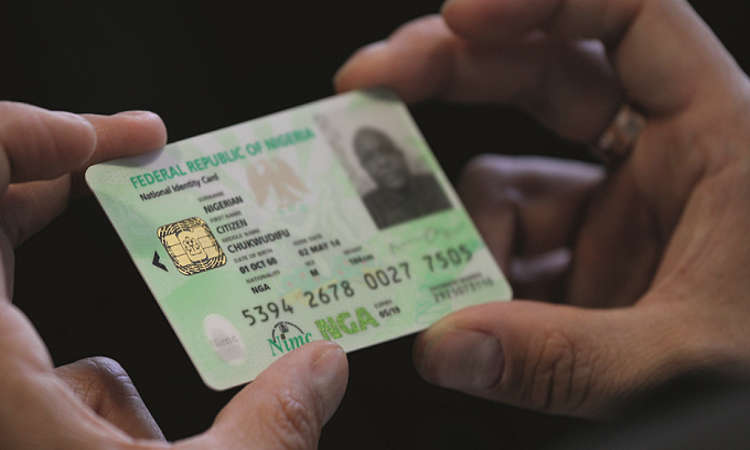
National ID Card, Nigeria

The Nigerian government is moving to empower banks to issue debit cards that will double as National Identity Cards to Nigerians, following the failure of the National Identity Management Commission (NIMC) to issue the cards to applicants.

The move, which was reported by NAN, was announced by the Minister of Communications and Digital Economy, Prof Isa Pantami, in Abuja.

The minister said the approval was obtained at the meeting of the Federal Executive Council (FEC), following a memo from the NIMC, allowing banks to print multipurpose debit cards that double as National identity cards.

“It is going to be a form of the multipurpose card where it will serve as your national identity card on one hand and also your bank card on the other hand, either Mastercard, Visa, or any other kind of card,” he said.

Pantami explained that although the NIMC Act 2007 only mandates Nigerians to have a National Identity Number and not necessarily a printout card, high demands for cards have prompted the need for cards, pushing the NIMC to seek the partnership with the banks.

“As in the NIMC Act 2007, section 27, what is mandatory for our citizens and legal residents is the acquiring of the National Identity Number, not the card. However, the card is optional.

“But many citizens, particularly those living in rural communities, always go to NIMC offices complaining that they need the card at hand, even though it’s optional.

“To make it easier, NIMC last year, we introduced a smart ID card you can download from the NIMC app. It is just a smart card. You don’t need to have it physically, but that is becoming difficult for our people living in rural communities,” he said.

The minister said NIMC had partnered with the Central Bank of Nigeria so that citizens who are interested in having a card at hand can easily go to the relevant banks and have them printed with either Mastercard or Visa card.

“It is going to be a form of a multipurpose card that will serve as your national identity card on one hand and also your bank card on the other. And based on the agreement, it is without any additional costs to our citizens.

“So when you apply for a card at your bank, you can indicate that ‘I want this card to be multiple purposes where it will serve as my bank card and also my national identity card’.

“Both of them are going to be printed on the same card and it is going to serve the same purposes without any additional costs,” he said.

The Minister disclosed that NIMC and the CBN signed a nondisclosure agreement to protect the privacy and confidentiality of card applicants.

“NIMC and the central bank signed a nondisclosure agreement where your privacy and your confidentiality must be respected in the course of providing the card for you.

“When you apply for the card, the bank will apply online to NIMC through their database.

”When they verify and confirm that your record in the database is in alignment with your record in the NIMC database, it will be permitted and the card is going to be printed for you immediately,” the minister added.

In addition, Pantami disclosed that FEC also approved a memo proposing the deployment of an automated system to integrate NINs with individual SIM cards. He said the system would consolidate the implementation of the NIN-SIM linkage.

The minister also revealed that the automated system would sanitize the database and ease the process of SIM replacement for Nigerians or legal residents.

National identity management has been a challenge in Nigeria since 1976 when it was first conceptualized by former president and the then military head of state, Olusegun Obasanjo. The implementation of the program, which started in 1981 under the leadership of President Shehu Shagari, failed for various reasons – ranging from corruption to poor management.

The story has remained the same for several other attempts made by successive governments, including Obasanjo as a civilian president in 2003, to implement a national identity database.

The NIMC’s decision to empower the banks to print the identity cards for Nigerians is the latest move by the government to simplify the process. However, while the program appears as a solution to the unavailability of NIMC-issued cards, Nigerians are concerned that it will not be sustained.