DD
MM
YYYY

PAGES

DD
MM
YYYY

spot_img

PAGES

Home Blog Page 42

Understanding Impermanent Loss and Michael Egorov’s View on Reducing Losses

0

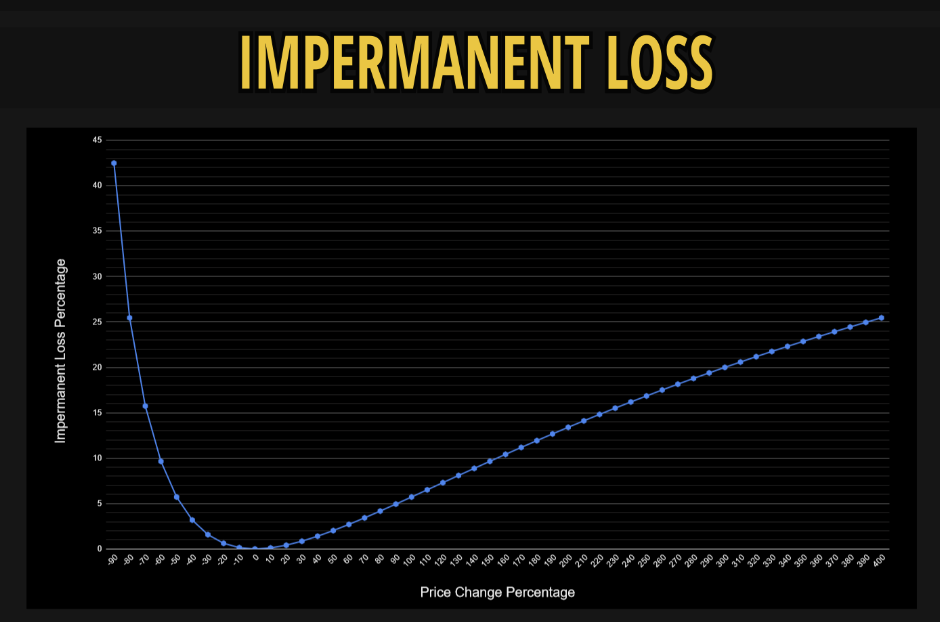
Impermanent Loss (IL) is the main pain point for passive liquidity providers in constant-function AMMs like Uniswap v2, most classic DEX pools, and even many Curve pools when prices move a lot.

Impermanent loss is the unrealized loss in value when providing liquidity to a decentralized finance (DeFi) liquidity pool compared to simply holding the assets. It occurs because market price changes rebalance the ratio of tokens in the pool, and the loss is only “impermanent” until you withdraw your liquidity, at which point it becomes permanent. You can mitigate this risk by providing liquidity to pools with stablecoin pairs or correlated assets, or by choosing pools with high trading volumes to earn more in fees. 

It occurs because the AMM rebalances the pool automatically, forcing LPs to sell the appreciating asset and buy the depreciating one ? when the price reverts or keeps moving, the LP ends up with less dollar value than if they had simply held the tokens.

Michael Egorov— Curve’s founder has been working on several ideas over the years to reduce or eliminate IL. LLAMMA lending-liquidating AMM algorithm, powers Curve’s native stablecoin crvUSD and its associated “Lending” markets.

A user deposits Bitcoin into a 2x-leveraged BTC/crvUSD Curve pool. The protocol borrows crvUSD to maintain the target leverage while managing exposure so LPs behave economically like spot BTC holders. The user doesn’t need to provide any crvUSD. Instead, the protocol borrows crvUSD against the liquidity position itself, for the other side.

Then, when price moves up or down, the protocol will grow or shrink the position so that the LP position moves in line with BTC prices. It gets larger when BTC goes up (increasing leverage), and gets smaller when BTC goes down (reducing leverage).

This is often what people mean when they talk about “Yield Basis” or Michael’s solution to impermanent loss, even if the branding has evolved. LLAMMA basically eliminates impermanent loss. Traditional AMM like those present on Uniswap v2/v3, classic Curve pools, your deposit is always 50/50 or fixed-ratio.

Any price move forces you to sell the winner and buy the loser ? IL. LLAMMA used in crvUSD markets and Curve “Lending” pools, instead of providing passive liquidity in a normal AMM, your collateral like ETH, BTC, is placed into a special “banded” AMM that continuously converts your collateral into crvUSD as the price moves against you, and converts back when price moves in your favor.

The conversion happens in the exact same direction and magnitude as a liquidator would do in a lending protocol like Aave or Compound. So the P&L of the position is almost identical to just holding the asset outright, minus small fees.

Result is near-zero impermanent loss actually slightly positive in many cases because of the soft-liquidation mechanics and the way bands are priced. When you deposit WBTC into the WBTC/crvUSD lending market, you’re not really suffering classic IL.

Your position slowly converts to crvUSD as WBTC price drops protecting you from further downside, and converts back to WBTC as price rises letting you capture upside again. WBTC/crvUSD and cbETH/ETH/crvUSD LPs have had effectively zero or slightly positive “IL” compared to holding, even through massive volatility.

Current products that use this mechanism as of Dec 2025 crvUSD lending markets (WBTC, WETH, cbETH, tBTC, etc.) – the original LLAMMA pools. Curve Crypto V2 pools with LLAMMA mode – some newer pools (e.g., ethenaUSDe/crvUSD, various LST pools) are being deployed with the same engine.

LlamaLend – one-click isolated lending markets basically private LLAMMA pools that Michael has been pushing more recently. Remaining limitationsIt only works well when one side is a stable asset crvUSD or similar. You still get classic IL in volatile/volatile pools.

Liquidity is still lower than the biggest Uniswap or classic Curve pools, so trading fees can be lower. Slightly more complexity. Michael’s LLAMMA mechanism (crvUSD + Lending markets) is currently the closest thing DeFi has to a real solution to impermanent loss for LPs who are happy to pair volatile assets with stables.

In many cases it doesn’t just reduce IL — it essentially removes it and even gives LPs very close to hold returns + yield.If you’re providing liquidity today and care about IL, the highest conviction places are usually: crvUSD lending markets (WBTC/crvUSD, WETH/crvUSD, etc.)

Some of the new LLAMMA-based crypto pools are the practical embodiment of what was once talked about under the “Yield Basis” name.

Polymarket Integrated into MetaMask Prediction as Race for Liquidity Deepens

0

MetaMask has officially integrated Polymarket into its mobile app, launching “MetaMask Prediction Markets”.

This feature embeds Polymarket’s decentralized prediction markets directly into the wallet interface, allowing users to bet on real-world event outcomes—like elections, sports, or economic forecasts—using USDC stablecoins without leaving the app.

Users fund their wallet swapping other assets for USDC if needed, access a new “Predictions” tab, and buy shares in event outcomes. Share prices reflect crowd-sourced probabilities, enabling on-chain trades that settle automatically based on verified results.

With MetaMask’s 30 million monthly active users, this turns the wallet into a seamless Web3 hub for prediction trading, building on recent additions like Hyperliquid perps and Solana support. It’s mobile-first to fix pain points like app-switching during live events.

The move follows Polymarket’s CFTC approval for U.S. operations and its November 2025 integration with Google Search and Finance for real-time odds display. It’s a step toward mainstream DeFi adoption, emphasizing self-custody and regulatory compliance.

The integration slashes friction in prediction market participation, allowing MetaMask’s 30 million monthly active users to fund trades with any EVM-compatible token from Ethereum, Polygon, Base, or Arbitrum and place bets without app-switching or bridging hassles.

This mobile-first design addresses pain points like mid-event delays, making it ideal for real-time events such as elections or sports. Early users report seamless onboarding and fast chart refreshes, turning wallets into intuitive “truth machines” for crowd-sourced insights.

Broader retail adoption, as prediction markets evolve from niche DeFi tools to everyday crypto features. MetaMask tie-up could flood the platform with liquidity—potentially $100M+ in new volume—as users from 250M+ wallet downloads worldwide gain one-click access.

It positions prediction markets as a mainstream alternative to traditional betting vs. Kalshi’s CNN broadcasts, with volumes already hitting $1.43B monthly on Polymarket alone. Higher participation sharpens market accuracy, drawing institutions and amplifying on-chain signals for events like the 2026 World Cup.

This isn’t just growth—it’s a catalyst for prediction markets to rival polls in forecasting power. MetaMask introduces a 4% flat fee per trade split with Polymarket, benchmarked against sports betting apps, providing predictable revenue while Polymarket remains free standalone.

Users earn MetaMask Rewards points (2 per $1 traded), tying into the upcoming $MASK token for deeper ecosystem perks like referrals and spending. For Polymarket, it boosts visibility and user count, potentially accelerating a $POLY token launch amid $9B valuations from recent investments.

It monetizes self-custody without compromising decentralization, fostering a “super-app” wallet model. MetaMask shifts from a simple gateway to a full DeFi hub, layering prediction markets atop perps via Hyperliquid and Solana/Bitcoin support.

This leverages Ethereum’s smart contracts for trustless settlements via oracles like Chainlink, enabling futarchy-style governance where market prices guide decisions. Prediction markets become “collective intelligence” tools for policy, crypto sentiment, and culture—more accurate than experts due to skin-in-the-game staking.

It could front-run narratives, with on-chain liquidity influencing real-world events, but requires robust anti-bot measures to preserve integrity. Regulatory scrutiny looms as prediction markets blur lines with gambling/securities, especially post-CFTC nods—U.S. users may face geo-restrictions despite compliance.

Oracle vulnerabilities could lead to faulty settlements, and volatile markets risk losses for novices. Fees and bot interference might deter purists, while centralization concerns arise if liquidity concentrates.

In essence, this integration democratizes probabilistic forecasting, accelerates Web3’s shift to unified experiences, and cements prediction markets as a core primitive for understanding reality through incentives. It’s bullish for DeFi’s maturity, but success hinges on scaling liquidity without compromising decentralization.

You’re Invited to Tekedia Graduation Lecture: 2030s – The Decade of Nigeria’s Capital Market

0

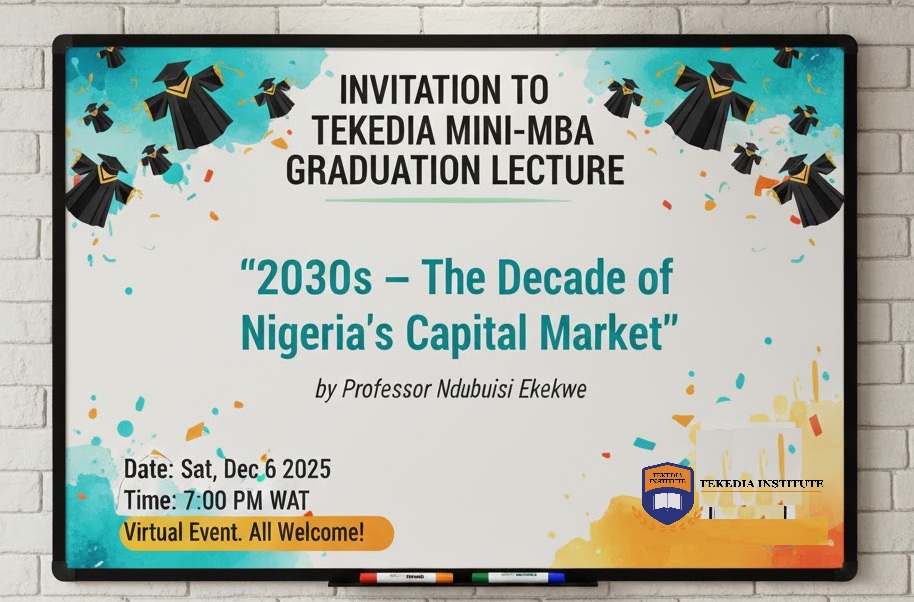
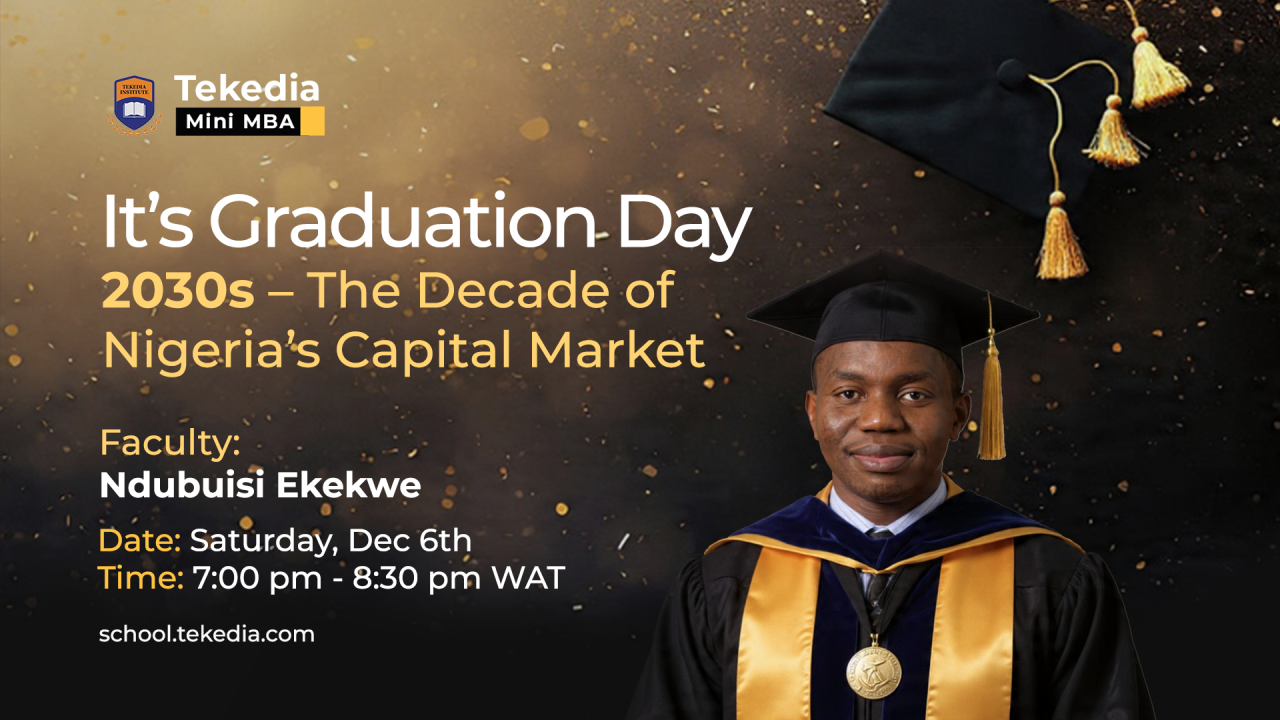
Greetings! Our co-learners are holding their physical graduation today in Lagos. Later this evening, we will host the Graduation Lecture, the academic festival that marks the conclusion of every Tekedia Mini-MBA edition. This will be our 18th Graduation Lecture, and the topic is “2030s – The Decade of Nigeria’s Capital Market.” It will be delivered by our Lead Faculty, Prof. Ndubuisi Ekekwe.

These lectures are designed to provide fresh perspectives and advanced insights to our co-learners, enriching their journey beyond the coursework.

(For context, the 17th Lecture focused on the Efficient Pricing of AI Products, explaining why their marginal cost structure differs from traditional SaaS models and why applying SaaS pricing formulas to AI products can bankrupt companies.)

We look forward to welcoming you to the 18th Graduation Lecture of Tekedia Mini-MBA. The date and time below…

Date and Time

Sat, Dec 6 | 7pm – 8.30pm WAT | It’s Graduation Day: 2030s – The Decade of Nigeria’s Capital Market – Ndubuisi Ekekwe |

To join us, go here for the Zoom link; it is open and free.

5 Trusted Cloud Mining Platforms to Earn Free Bitcoin Daily in 2025

0

Earning free Bitcoin daily through cloud mining has become a major trend in 2025, especially as traditional mining becomes more expensive and technical. With global electricity costs rising and ASIC hardware priced beyond the reach of most new miners, cloud mining platforms have become a convenient and profitable alternative.

But trust is everything in this industry. You need platforms that are transparent, operational, and capable of delivering consistent daily returns. Below is an updated list of 5 most trusted cloud mining platforms in 2025, starting with Bitsmine, the platform leading the industry right now.

  1. Bitsmine – Overall Best Cloud Mining Platform in 2025

Bitsmine has become one of the most reliable and modern cloud mining platforms globally, offering transparency, high performance, and beginner-friendly mining tools. Built under BITS INVESTMENTS LLC, the company operates using high-powered, eco-efficient data centers and supports miners from over 220 countries.

Whether you’re a complete beginner or an advanced investor, Bitsmine removes all the technical barriers:

  • No hardware to buy
  • No complex setup
  • No maintenance costs
  • No high electricity fees
  • Instant mining after activation

This simplicity, combined with substantial daily payouts, makes Bitsmine the top choice in 2025.

Why Miners Prefer Bitsmine

  • Free $100 Welcome Mining Bonus

New users instantly receive a $100 free mining plan, allowing them to begin earning Bitcoin daily with no deposit required.

  • DAO-Powered Cloud Mining Contracts

Bitsmine uses decentralized governance to ensure complete transparency, accurate profit calculations, secure payouts, and 24/7 risk management. Each contract includes clear profit rates, daily payouts, and principal refunds for all the paid plans.

  • Multiple Crypto Options

Bitsmine supports mining of: Bitcoin (BTC), Dogecoin (DOGE), and Litecoin (LTC). This gives miners the freedom to diversify based on market conditions.

Popular Bitsmine Mining Plans

Bitsmine currently offers several mining contracts, but here are two popular options used by most miners:

Free Mining Plan ($100 Bonus)

  • Cost: Free
  • Daily Profit: $0.70
  • Payout: Every 24 hours
  • Principal Refund: No

This trial plan is excellent for beginners who want to try mining without any upfront investment.

Black Friday Plan – 15 Days

  • Price: $1500
  • Daily Profit: $19.50
  • Total Profit: $292.50
  • Principal Refund: Yes
  • Contract Term: 15 days

This is a short-term plan designed for users who want faster and more significant returns within a few days.

How to Start Mining Crypto on Bitsmine

Step 1 – Sign Up

Open a free account with your name, email, and password.

Step 2 – Choose a Mining Plan

You can select the free bonus plan or upgrade to a paid contract that suits your goals.

Step 3 – Start Earning Daily

Mining starts instantly, with profits calculated every 24 hours and displayed in real time via the dashboard or mobile app. Note that Bitsmine offers:

  • automatic daily payouts
  • referral rewards
  • mobile app notifications
  • principal refund after the contract ends

If you’re stuck, support is always available via live chat.

  1. NiceHash

NiceHash remains one of the most recognized names in the cloud mining space due to its long history and transparent mining marketplace. Instead of fixed contract packages, users rent hashrate directly from miners worldwide. The platform provides:

  • real-time profitability tools
  • daily BTC payouts
  • flexible mining algorithm options

Its established reputation and offerings keep it among the most trusted mining platforms in 2025.

  1. ECOS Mining

Operating since 2017 from the Hrazdan Free Economic Zone, ECOS Mining is another reputable cloud mining service known for its transparency and real mining infrastructure. ECOS offers:

  • multiple BTC mining contracts
  • forecast calculators
  • a mobile application
  • daily payouts into user wallets

ECOS remains a stable, long-running option for miners who prefer fixed contract durations.

  1. Hashing24

Hashing24 connects users with established Bitcoin mining data centers. With years of mining history and a partnership-based model, Hashing24 allows users to buy Bitcoin hashrate without operating any hardware. Hashing24 is ideal for miners who want:

  • predictable daily returns
  • long-term BTC accumulation
  • proven mining facilities

The platform continues to operate reliably in 2025, joining the list of the best cloud mining platforms

  1. StormGain Cloud Miner

StormGain includes a built-in cloud miner within its mobile app, allowing users to mine Bitcoin by simply keeping the miner active. StormGain is a trusted option for those looking to accumulate small amounts of Bitcoin daily.

Conclusion

With cloud mining growing fast in 2025, choosing a trusted platform matters the most. Bitsmine stands out as the best choice, offering clear profit structures, free mining options, global accessibility, and an advanced DAO-backed system that prioritizes transparency.

If your goal is to earn free Bitcoin daily, whether through bonus mining plans, short-term contracts, or diversified crypto mining, Bitsmine offers the most complete and user-friendly experience in 2025. Join Bitsmine now, claim your free $100 trial plan, and experience the seamless mining experience it’s offering to savvy investors.

It’s Graduation Day: 2030s – The Decade of Nigeria’s Capital Market – Ndubuisi Ekekwe

0

Every ten years, Nigeria’s business landscape undergoes a tectonic shift, a profound re-sequencing of market power that defines the subsequent era. This decade-by-decade evolution is a masterclass in market dynamism, driven fundamentally by technology and regulatory foresight. The 1990s heralded the rise of the New Generation Banks, which did not merely digitize banking but fundamentally decoupled services from physical location.

They utilized VSAT technology to render the legacy institutions obsolete, delivering location-agnostic financial services, a true market discontinuity that established technology as the primary lever of competition. The 2000s followed with the Decade of Ubiquity, as GSM providers scaled voice telephony to the masses, radically changing how citizens connect, communicate, and transact across the nation.

The 2010s marked a significant elevation into the era of Mobile Internet. The telecommunications companies evolved beyond basic voice connectivity, transforming the mobile phone into the ultimate utility stack: it became a mini-bank branch, a portable school, and a platform for endless market possibilities. Today, we are immersed in the Decade of Application Utility, which represents a Cambrian Moment in Nigerian innovation. Here, young innovators are building sophisticated digital stacks, combining and recombining tools to solve critical frictions across financial services, logistics, and supply chains. They are designing the operating system for a newly digitized economy, establishing efficiency and access as baseline expectations for consumers.

This continuous cycle of transformation leads to an inevitable conclusion about the next frontier: driven by consequential legislation, the 2030s will be the Decade of the Capital Market in Nigeria. The passage of the Investment and Securities Act (ISA) 2025 is not merely a legal update; it is arguably the most consequential piece of market-reengineering legislation Nigeria has seen in a quarter of a century. This Act is the critical catalyst required for a massive expansion of economic redesign.

While nations like South Africa maintain a stock market capitalization exceeding $1 trillion, Nigeria’s remains below $70 billion, a disparity largely attributable to a lack of diverse asset representation. ISA 2025 opens the floodgates for new asset classes to be properly onboarded onto the national economic stack, initiating Asset Formation on an unprecedented scale.

This Tekedia Mini-MBA 18th Graduation Lecture will further unpack this future, detailing the critical financial market infrastructure necessary to support this growth and illuminating the abundance that awaits our market ecosystem as we enter this new phase of financial maturity.

  • Sat, Dec 6 | 7pm – 8.30pm WAT | It’s Graduation Day: 2030s – The Decade of Nigeria’s Capital Market  –  Ndubuisi Ekekwe | Zoom Link

Join Tekedia Mini-MBA for the next edition here