DD
MM
YYYY

PAGES

DD
MM
YYYY

spot_img

PAGES

Home Blog Page 4272

The rise of online casinos in Nigeria

0

Nigeria has a strong gambling culture, which is why it has hardly been a surprise that the online casino industry has managed to boom significantly over the last decade or so. With accessibility and convenience greater than ever through various advancements involving technology, the sector will likely only continue to keep growing at the rapid pace that has been experienced.

Many Nigerians live outside of the biggest cities like Lagos, meaning they did not always have the possibility of heading to a traditional brick-and-mortar casino. They would have to plan their journeys and trips could be very time-consuming. With the way many in the country live their lives, their busy schedules simply did not always allow for them to head to these physical venues.

The emergence of online casinos has allowed them to access their favorite games and utilize the great bonuses that they can find after they have read this article on their preferred or favored devices. Since iGaming can be played via smartphones and tablets while out and about or at home on computing devices, accessibility and convenience continue to drive its expansion across Nigeria.

The history of online gambling in Nigeria

Although Nigeria has always had a strong gambling culture, with many enjoying playing casino games or placing bets on sporting events such as when wagering on their favorite football teams, the online casino industry is one that has only really started to take off in the last 15 years or so.

According to data, it is understood that the first time residents in the African nation had managed to experience the activity was around 2006. Before being able to play through a website, they would have to download software that would then allow them to play the games they wanted.

Since the advent and proliferation of smartphones and other portable technologies, players have taken more notice and been playing more often. They’ve embraced these devices more than ever, increasing their overall playing activity exponentially.

The legality around online casinos in Nigeria

As is experienced across numerous countries, there are some grey areas that need to be considered that can help create an understanding of why the iGaming industry has boomed throughout Nigeria over the last couple of decades.

Casinos and the games that are playable were not widely accepted, with the African nation having only permitted a couple of casinos to be legally opened and made available. However, the laws had been a little outdated for a while and there had been nothing that specifically outlawed the usage of the internet to play gambling games. This did change in 2016, as the Nigerian government decided to introduce regulations that legalized operators who were offering their services in the country. Many are waiting for the Central Bank to change its decision regarding cryptocurrency and the ban it placed on it.

Verdict

With each of the advantages and benefits that Nigerians are able to obtain, it is hardly a surprise to learn that the iGaming industry is booming in the populous country. Online casinos have become a source of entertainment for many residents, and with a culture of gambling already in place, it was only a matter of time before the sites were embraced and widely used.
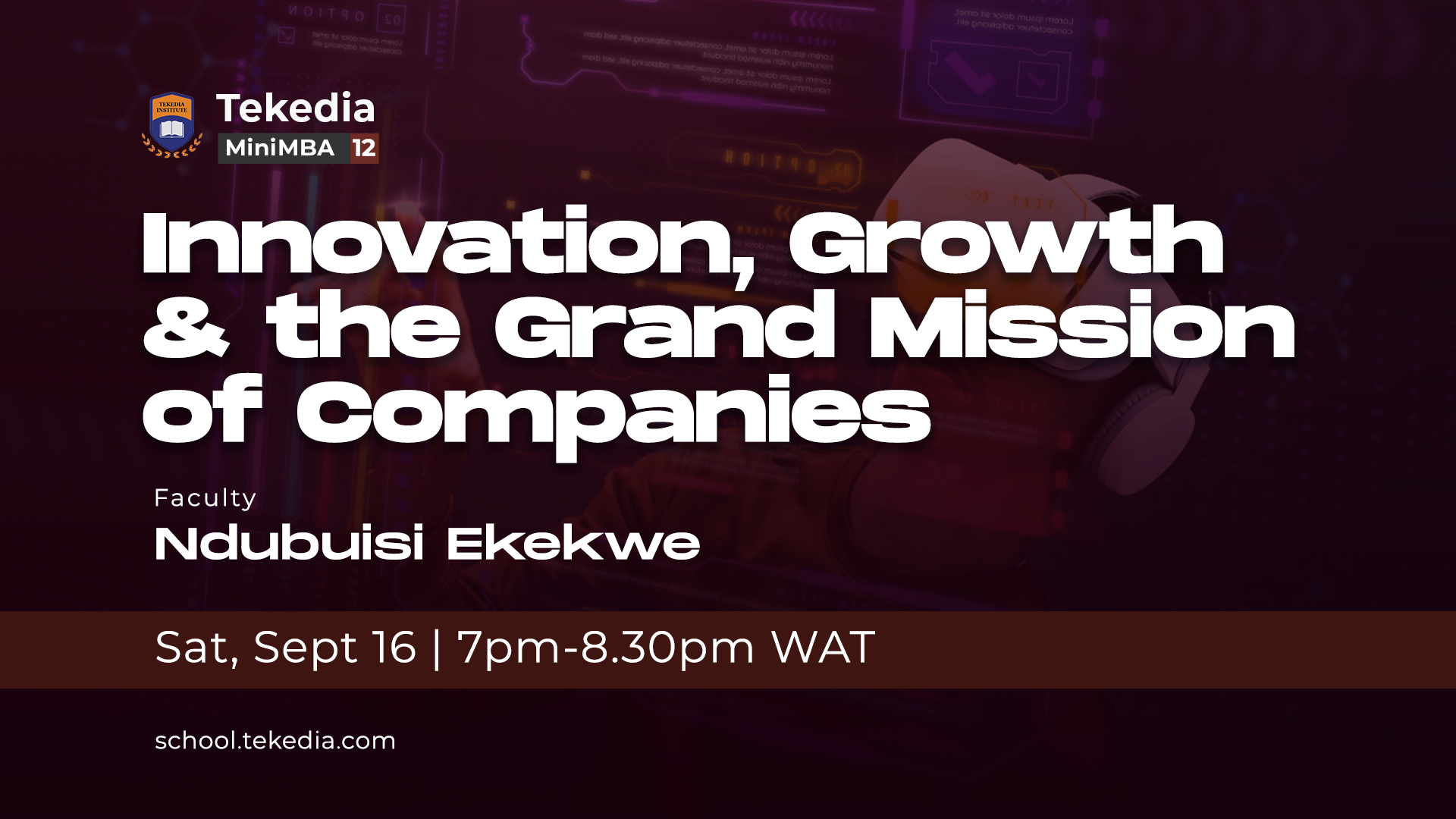
Tekedia Mini-MBA Live Lecture (Sept 16): Innovation, Growth and the Grand Mission of Companies

0
Innovation, Growth and the Grand Mission of Companies

The Academic Festival has started, and over the next 12 weeks, our Learners will co-learn on the mechanics of markets and business systems, through an award-winning program designed for professionals, students, business owners, and managers. 

The courseware draws cases which cut across industrial sectors, geographies and domains, and would be delivered by some of the finest business leaders working in leading companies of the 21st century.

In this program, our goal is to acquire, refine and deploy capabilities to Build and Mine Knowledge, in order to thrive in markets and in our personal economies. Within the African context, our Lead Faculty, Prof Ndubuisi Ekekwe, wrote in Harvard Business Review thus:  “Mines of knowledge, not gold or diamond or silver, will connect Africa to a greater destiny and to the growth regions of the world.” 

(If you registered for this program, and for any reason you have not received your login, please follow the steps here as you are already enrolled).

If you have not joined us, register and let us build MINES of Knowledge for your career, your business and your community. Cost is N90,000 or $170 and there are many options to pay here.

Tekedia Mini-MBA Team

What is a DAO (decentralized autonomous organization)?

0

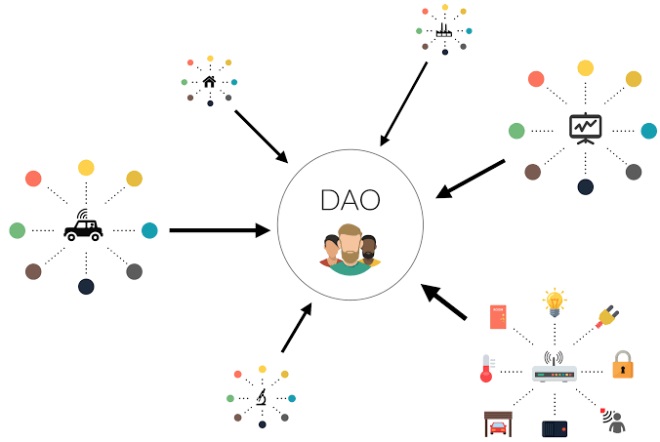
DAO, or decentralized autonomous organization, is a new way of organizing and collaborating with people around the world. Unlike traditional organizations, which have a central authority or hierarchy, a DAO is governed by its members through a set of rules encoded in smart contracts on a blockchain. This means that anyone can join a DAO, participate in its decision-making process, and benefit from its collective actions, without having to trust or rely on any intermediaries.

DAOs are important because they enable new forms of social and economic coordination that are more transparent, democratic, and efficient than existing models. DAOs can empower communities to pursue shared goals and values, such as funding public goods, creating digital art, supporting social causes, or building innovative products and services. DAOs can also reduce the costs and risks of collaboration, such as bureaucracy, corruption, censorship, or fraud, by leveraging the security and immutability of blockchain technology.

The core of a DAO is its smart contract, which defines the rules of the organization and holds its funds. The smart contract is deployed on a blockchain, such as Ethereum, which ensures that the rules are enforced, and the funds are secure. The smart contract also allows the members of the DAO to vote on proposals and actions that affect the organization, such as allocating resources, changing parameters, or updating the code. The voting process is transparent and verifiable by anyone on the blockchain.

Some examples of DAOs are:

The DAO, one of the first and most famous DAOs, which was created in 2016 to automate decisions and facilitate cryptocurrency transactions. However, it was hacked and drained of millions of dollars due to a vulnerability in its code.

MakerDAO, a DAO that manages a decentralized lending platform and a stablecoin called DAI. MakerDAO allows users to borrow DAI by locking up collateral in smart contracts and adjusts the interest rates and parameters through a governance token called MKR.

MetaCartel, a DAO that funds and supports projects in the Ethereum ecosystem that focus on user experience, adoption, and social impact. MetaCartel uses a token called METACARTEL to coordinate its members and distribute grants.

DAOs are still an emerging and experimental phenomenon, and they face many challenges and opportunities in their development. Some of the challenges include:

Security: DAOs need to ensure that their smart contracts are bug-free and resistant to attacks, as any flaw or exploit could compromise their funds or functionality.

Scalability: DAOs need to find ways to handle large numbers of members and transactions without sacrificing performance or security, as blockchain networks have limited capacity and high fees.

Regulation: DAOs need to navigate the legal and regulatory implications of their activities, as they may not fit into existing frameworks or jurisdictions.

Culture: DAOs need to foster a culture of trust, cooperation, and accountability among their members, as they rely on collective intelligence and self-organization.

Some of the opportunities include:

Innovation: DAOs can enable new forms of innovation and value creation that are not possible or feasible in traditional organizations, such as crowdsourcing, crowdfunding, co-creation, or co-ownership.

Inclusion: DAOs can enable more people to participate in and benefit from economic and social activities that are otherwise inaccessible or exclusive, such as investing, lending, donating, or voting.

Impact: DAOs can enable more effective and efficient solutions to global challenges that require collective action and coordination, such as climate change, poverty, or health.

DAOs are a revolutionary concept that has the potential to transform how we organize and collaborate with each other. By leveraging blockchain technology and smart contracts, DAOs can create decentralized organizations that are more transparent, democratic, and efficient than existing models.

However, DAOs also face many challenges and opportunities in their development, as they need to overcome technical, legal, cultural, and ethical issues. As more people experiment with and participate in DAOs, we may witness the emergence of a new paradigm of social and economic coordination.


Normalising Sex Video Leaks in Nigeria

0

In recent times, Nigeria has grappled with an unsettling surge in the sharing and distribution of explicit sex videos without consent. This disconcerting trend has not only cast a shadow over the privacy and dignity of those involved but has also raised serious concerns about societal values and the erosion of fundamental principles like consent and respect. In this piece, our analyst delves into the unsettling normalization of sex video leaks in Nigeria and proposes practical solutions to combat this deeply distressing phenomenon.

The normalization of sex video leaks in Nigeria is a distressing social phenomenon that has emerged as a byproduct of the digital age. The ubiquity of smartphones and easy access to the internet has created an environment ripe for the sharing of explicit content, often without the consent of the individuals depicted. What is most concerning is the seemingly indifferent response to these incidents that have begun to plague our society.

Recent cases involving public figures and celebrities have garnered significant media attention. Initially, there is shock and outrage. However, as time passes, these incidents tend to fade from public consciousness, leaving behind a disconcerting sense of complacency. This normalization of such behaviour is morally reprehensible and strikes at the very heart of principles that should underpin any civilized society: consent, privacy, and respect.

To effectively address this issue, it is crucial to delve into the root causes behind the normalization of sex video leaks in Nigeria. Several factors contribute to this disturbing trend. Many people remain unaware of the severe consequences of sharing explicit content without consent, both in terms of legal repercussions and moral implications.

Practical solutions can be implemented to combat the normalization of sex video leaks in Nigeria. Comprehensive digital literacy programs can educate citizens, particularly the youth, about online safety, responsible internet usage, and the importance of consent in the digital age. Legal protections for victims of sex video leaks can be enhanced by amending existing laws to include stricter penalties for offenders. Support systems, including counselling services, can be established for individuals who have been affected by sex video leaks, reducing the stigma surrounding such incidents and encouraging victims to seek help.

Nationwide awareness campaigns can educate the public about the consequences of sharing explicit content without consent, emphasizing the legal, ethical, and emotional aspects of such actions. Promoting responsible behaviour online by advocating for the principles of consent, privacy, and respect can be achieved through partnerships with social media platforms, educational institutions, and community organizations. Addressing the underlying economic pressures that drive individuals to engage in cybercrimes for monetary gain is also crucial, with job creation programs and support for those in need being potential solutions.

Normalizing sex video leaks in Nigeria is a grave concern that threatens to corrode the very fabric of our society. Urgent and decisive action is required to confront this issue. It is our collective responsibility to safeguard the rights and dignity of individuals in the digital age and ensure that the normalization of such harmful behaviour becomes a thing of the past. This is not just a legal or moral issue; it is a societal imperative that demands our unwavering commitment to fostering a culture of consent, privacy, and respect in our increasingly connected world.

Manifestos as Battlegrounds in Nigerian Politics

0

In the vibrant and often tumultuous world of Nigerian politics, the battle for power is waged not only in the polling booths but also in the pages of party manifestos. In this thought-provoking exploration, we embark on a journey into the political economy of party manifestos in Nigeria, using the analytical lens of Marxist theory to decode the intricacies of this crucial aspect of Nigerian democracy.

Class Struggle in Nigerian Politics

To unravel the enigma of party manifestos, we must first grasp the essence of class struggle, a concept famously expounded by Karl Marx. In Nigeria’s political landscape, candidates and their affiliated parties assume the role of capitalists. Their goal? To attain political supremacy through the electoral process, they seek the consent of the electorate during the campaign season. Winning elections grants them the coveted means and governance authority to shape the nation’s destiny.

On the flip side of this power dynamic are the voters and experts who engage in the vigilant scrutiny of political actors. In this context, they represent the proletarians, the labouring class. They must remain vigilant, discerning the messages propagated during campaigns and the actions of political actors. The experts, in particular, play a pivotal role in identifying inconsistencies and contradictions in these messages, as these can significantly influence voters’ decisions and, in turn, determine electoral outcomes.

Manifestos as Battlegrounds

The heart of election campaigns lies within the pages of party manifestos. Here, candidates engage in a unique form of class struggle, using specific statements to oppose one another on socio-economic and political issues in Nigeria. This battle is often waged through critiques of the ruling political party’s perceived failures in addressing citizens’ needs and improving the nation’s economy.

Aligned with Marx’s theory of labour surplus value, political parties skillfully package existing problems and needs as enticing products for the electorate. Their aim is clear: to secure votes. However, in the context of this study, votes are analogous to a form of labour power exchanged for sound policies and programs that promise to tackle the socioeconomic and political challenges that plague the nation.

The Role of Class Consciousness

Yet, beneath the surface of manifestos lies the critical role of class consciousness. This analytical framework, inspired by Marx, serves as the guiding compass for experts as they navigate the treacherous waters of political ideologies. Class consciousness enables them to identify the underlying narratives and ideologies within manifestos. It also shines a light on how these narratives and ideologies can potentially give rise to false consciousness among voters. In this scenario, vital information remains obscured, adversely affecting their decision-making.

In this reflective journey through the political economy of party manifestos in Nigeria, we have unearthed profound insights. This analysis offers a powerful tool for understanding the complex decision-making process of the electorate during electoral cycles in developing nations like Nigeria.

In a nation where the political landscape constantly evolves, the ability to grasp the deeper socio-economic forces at play becomes an indispensable asset. For both voters and the experts who guide them, this understanding is essential in navigating the intricate terrain of Nigerian politics and shaping the future of the nation.