DD
MM
YYYY

PAGES

DD
MM
YYYY

spot_img

PAGES

Home Blog Page 4312

Unleashing The Top High-ROI Crypto Presales: Meet The Pack Leaders Dogetti, Dogodoge & Love Hate Inu

0

The world of cryptocurrency is constantly changing, and new projects are emerging all the time that offer exciting investment opportunities. While Bitcoin (BTC) and Ethereum (ETH) remain dominant in the market, presales of new projects are giving investors the chance to invest in potentially profitable ventures.

This article will take a closer look at some of the top cryptocurrency presales that are generating buzz in the space, with a focus on meme coins and DeFi projects. In particular, we will explore Dogetti (DETI), DogoDoge (DOGO), and Love Hate Inu (LHINU) and what makes them stand out in the crowded world of crypto presales.

Dogetti: The Mafia-Inspired Meme Coin with Big Plans

The cryptocurrency market has seen a new addition to the dog-themed meme coins with Dogetti (DETI), which draws inspiration from the Mafia world.

This new presale project has a 2% reflection protocol that rewards its loyal supporters, which the community can use to differentiate itself from other meme coins. The main utility of Dogetti is its decentralised marketplace, DogettiSwap, which enables users to exchange one ERC20 token with another. Moreover, DogettiNFTs allows buyers to create their own virtual Dogetti pets/companions and participate in future NFT drops. With these exciting features and a growing community, Dogetti’s presale looks promising.

DogoDoge: Virtual Reality Dog Racing Meets Crypto

DogoDoge (DOGO) is a presale project that is taking virtual reality dog racing to the next level by combining it with a play-to-earn model. Players can compete for prizes and the $DOGO token in a community-generated platform that offers multiple ways to generate funds in the Dogoverse.

DogoDoge NFTs can be used to participate in virtual dog racing or bought, sold, and traded for $DOGO. Additionally, users can exchange their Dogo for any other Ethereum network through the Dogo Swap DEX. This project has already sold over half a million tokens and made over one million dollars, making it an attractive investment opportunity in its early stages.

Love Hate Inu: A Meme Coin Project that Rewards Users for Voting

Love Hate Inu (LHINU) is not your typical meme coin project. It introduces a novel way to earn rewards through its ‘Vote-to-Earn’ (V2E) mechanic, allowing users to vote on polls and receive rewards. Using the Ethereum network to record poll entries, Love Hate Inu ensures that the voting process is transparent and secure, promoting trustworthy poll results. The platform encourages users to express their opinions through a non-judgmental approach by letting them display whether they ‘Love’ or ‘Hate’ a specific event or person.

By hosting the voting process on the blockchain, Love Hate Inu ensures that all responses are anonymous and immutable, preventing poll results from being influenced by bad actors. Love Hate Inu is also positioned to collaborate with well-known brands to organise sponsored polls, which can offer additional rewards for participants.

The world of cryptocurrency presales is a constantly evolving landscape with innovative projects that offer exciting investment opportunities. Among these are Dogetti, DogoDoge, and Love Hate Inu, each focusing on different utilities, from decentralised marketplaces to virtual reality gaming and voting mechanisms, and providing unique and exciting investment opportunities. Investors can choose which projects to support based on their investment goals and preferences.

For more information on Dogetti (DETI):

Presale: https://dogetti.io/how-to-buy

Website: https://dogetti.io/

Telegram: https://t.me/Dogetti

Twitter: https://twitter.com/_Dogetti_

Meta to Begin Company-Wide Layoffs as it Works Towards “Year of Efficiency” Objective

0

Giant tech company Meta has revealed plans to commence a company-wide layoff, as it works towards its 2023 theme for the year which it tagged “year of efficiency”.

As announced last month, Meta’s CEO Mark Zuckerberg disclosed that the company’s cost-cutting measures will ultimately impact 10,000 positions, also noting that another round of layoff will take place in May.

Zuckerberg said in a statement, “We expect to reduce our team size by around 10,000 people and to close around 5,000 additional open roles that we haven’t. This will be tough and there is no way around that. It will mean saying goodbye to talented and passionate colleagues who have been part of our success. They have dedicated themselves to our mission and I am personally grateful for all their efforts. We will support people in the same ways we have before and treat everyone with the gratitude they deserve”.

Zuckerberg disclosed that Meta is focusing on the long term as it invests in tools that turn effective over years, including its development of AI tools. “Our single largest investment is in advancing AI and building it into every one of our products,” he said.

Reports reveal that the company’s proposed layoff will impact Facebook, Whatsapp, Instagram, and reality labs, as a companywide memo has already instructed managers to prepare to announce job cuts on Wednesday. According to the info passed across to managers, teams will be reorganized and various remaining employees will be reassigned to work under new managers.

Recall that Zuckerberg declared 2023 as the “year of efficiency” as Meta focuses on becoming “a stronger and more nimble organization” this year. His commitment to cost cuts and efficiency is a sign that increasing profitability is important to the company, which has witnessed massive growth before last year’s decline.

As part of the company’s year-long restructuring, Meta plans to lift hiring and transfer freezes in each group. The tech giant will focus on returning to a more optimal ratio of engineers to other roles. Zuckerberg also disclosed that Meta is preparing for the possibility that the current economic reality will continue for many years. 

Following the current economic downturn, high inflation, and Global inflation rate, that has impacted several tech companies around the world, which has led to massive layoffs of workers. In 2023, tech’s traditional big spenders are refocusing their priorities and staffing choices.

Meta CEO Mark Zuckerberg has already announced 2023 as a “year of efficiency”, to navigate the economic downturn. Also, several tech leaders such as Amazon CEO Andy Jassy have doubled down on efficiency talk during his earnings call as the company seeks to harness the potential of the massive transportation network it has been investing in for the past few years.

Also, Google CEO Sundar Pichai said belt-tightening is well underway at Alphabet during the company’s earnings call, and the process will include a “careful focus on our hiring needs.”

In addition to layoffs, tech giants are trimming entire projects and reorganizing their spending to reduce expenses.

Fantom (FTM) and Apecoin (APE) (APE) Investors Head Turn To TMS Network (TMSN)

0

Fantom (FTM) and Apecoin (APE) took the global crypto sector by storm when they were released. No doubt, their features and use cases were fascinating. And it gained them massive popularity. Many investors and web3 experts believed that either of these projects have the potential to rise to the top of the coin market. They have also grown exponentially since they were introduced to the crypto sector with more users and investors trooping in to enjoy on-chain benefits.

However, there’s another new crypto project that’s threatening to overthrow Fantom (FTM) and Apecoin (APE) – the TMS Network (TMSN). But what’s this latest addition to the coin market about? Keep reading to find out.

Fantom (FTM)’s Unbeatable Use Case

Fantom (FTM) is a decentralized blockchain platform that aims to provide fast and scalable solutions for decentralized applications (dApps). Its unique consensus mechanism, Lachesis, allows for high throughput and low latency transactions, making it suitable for use cases such as DeFi, supply chain management, and digital identity.

Fantom (FTM) offers a range of development tools and smart contract capabilities, making it easy for developers to build dApps on the platform. Overall, Fantom (FTM)’s key use case is providing a scalable and efficient platform for building decentralized applications that can handle a high volume of transactions.

Apecoin (APE)’s (APE) Key Features

Apecoin (APE) is a blockchain-based payment platform that provides fast and low-cost transactions. It uses a proof-of-work consensus algorithm to secure the network and process transactions. Apecoin (APE) aims to be a global payment solution with cross-border payment capabilities.

Its key features include a user-friendly interface, support for multiple currencies, and a fast transaction speed. It is also designed to be easily integrated into existing payment systems, making it an ideal solution for businesses looking to incorporate blockchain technology into their payment infrastructure. Apecoin (APE) is top 100 Cryptocurrencies in the rankings.

What is  TMS Network? 

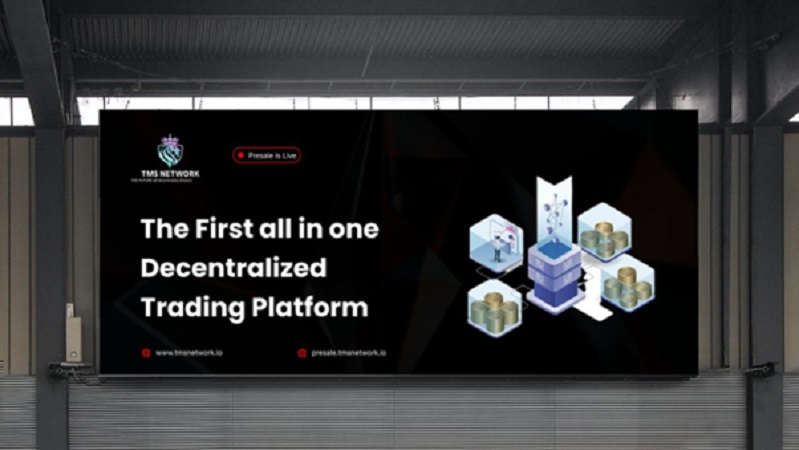
The TMS Network (TMSN), also known as the Token Management Service Network, is a blockchain platform designed to provide a decentralized and secure way to manage digital assets using Web3 technology. The TMS Network offers a range of features such as smart contracts, token issuance, authentication, and interoperability with other blockchains, making it ideal for a wide range of use cases.

One of the key features of the TMS Network (TMSN) is its decentralized architecture. Unlike traditional centralized systems, The TMS Network is designed to be trustless, meaning that users can transact with each other without the need for intermediaries. This is achieved through the use of a permissionless blockchain architecture, where anyone can participate in the network as a node, and transactions are verified through a consensus mechanism.

The TMS Network (TMSN) also offers a range of development tools and smart contract capabilities, making it easy for developers to build decentralized applications (dApps) that can interact with the network. This makes it an ideal platform for building decentralized finance (DeFi) applications, where users can lend, borrow, and trade digital assets without the need for intermediaries.

In addition, the TMS Network (TMSN) is interoperable with other blockchains, enabling users to move digital assets between different blockchain networks seamlessly. This interoperability is achieved through the use of crosschain bridges and other interoperability protocols, which ensure that assets can be moved between networks in a secure and efficient manner.

Conclusion

And that’s all about how the TMS Network (TMSN) compares with Fantom (FTM) and Apecoin (APE). No doubt, both projects are fascinating and have a long list of interesting features. However, the TMS network has displayed advantages that may overthrow Fantom (FTM) and Apecoin (APE). The signs are promising and someday the TMS network will get to the top of the coin market.


The following links will help you learn more about protocol;

Presale: https://presale.tmsnetwork.io

Website: https://tmsnetwork.io

Telegram: https://t.me/TMSNetworkIO

Twitter: https://twitter.com/tmsnetwork_io

BYD Continues To Gain on Tesla Globally After Beating It In China

0

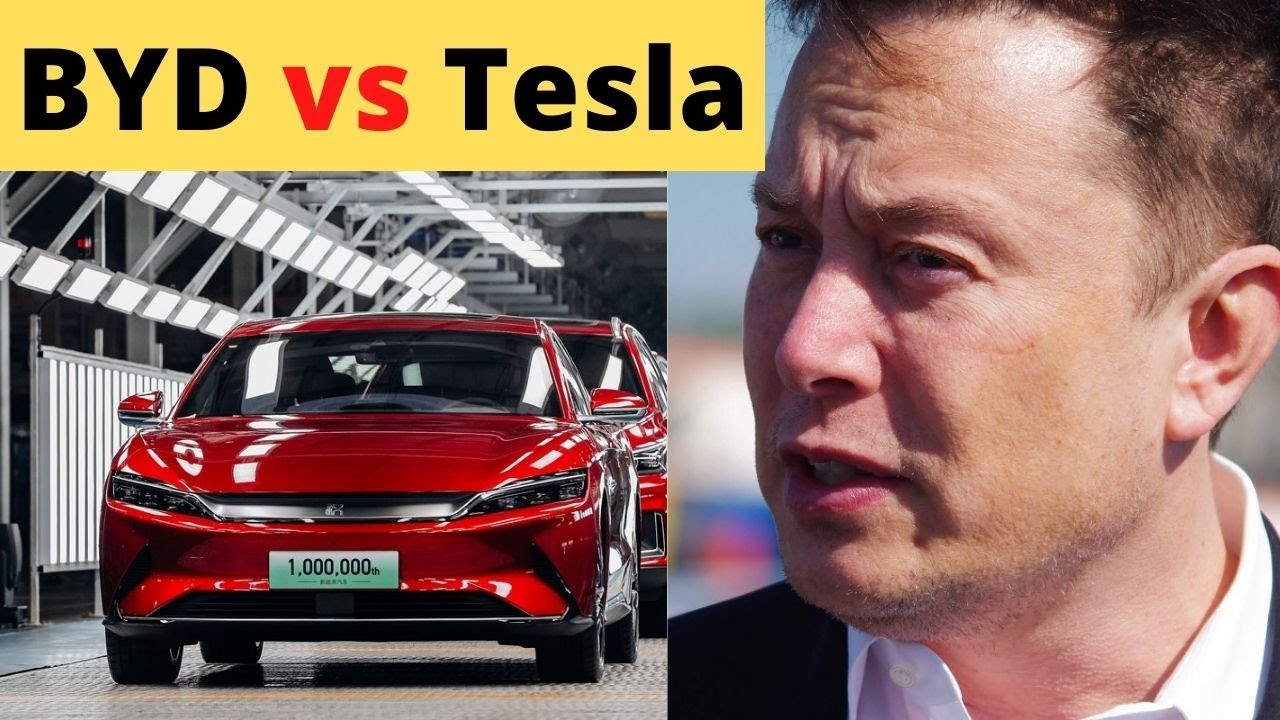
BYD is giving Tesla  a tough time in China. The implication is that Tesla will lose China and could also struggle to hold its global position as the Chinese automaker continues to advance: “China’s top electric vehicle company BYD has not only overtaken Tesla in sales there, but is close to surpassing it worldwide.” The dominance of China in the EV market is evident, and if Tesla cannot hold these Chinese brands, what that means is that the future of automobiles, at least in the EV space, could belong to China, globally.

Tesla isn’t saying why it’s a no-show at this year’s main industry event for EVs in China. The world’s leading electric vehicle maker hasn’t introduced a new model there since 2021, The Wall Street Journal notes. But it’s also facing intense competition from local manufacturers: Last year, 107 new electric or plug-in hybrid models launched in China, pushing Tesla’s market share down to 10% from 14% in 2020. Meanwhile, the Texas-based company is shifting gears to making more EVs in Mexico to ensure they qualify for customer tax credits under the Inflation Reduction Act.

Tesla fights with price cuts; this user explains. And even price cuts are not helping the market share in China.

Is Tesla cutting prices to fight a “price war”? Musk denies and reveals why

Musk further explained: “Many wealthy critics don’t understand that mass demand is constrained by affordability. There is a lot of demand for our product, but if the price is more than people have money, then that demand doesn’t matter. “

This month, Tesla set off a wave of price cuts around the world, sparking speculation about a price war:

On April 7, Tesla cut prices in the United States. Model 3/Y cut prices by $1,000 and $2,000 respectively, while Model S/X cut prices by $5,000. The overall drop was between 2% and 6%. Tesla also officially launched the low-priced Model Y model in the United States, starting at $49,990.

On the 12th, Tesla announced in Hong Kong, China that the price of the Model 3 high-performance version and long-range version were cut by more than 10%. On the 14th, Tesla Denmark reduced the price of the Model 3/Y high-performance version by more than 9%.

However, in the global market, Tesla currently has the lowest price in China. Taking the rear-wheel drive version of the Model 3 that has attracted the most attention as an example, the domestic price starts at 229,000 yuan, the lowest in the world. 

Indeed, BYD is so good that Warren Buffet’s company which invested in it is smiling.

Berkshire Hathaway chairman Charlie Munger says that Tesla is far behind BYD in the Chinese auto market, as stated during a virtual meeting in recent weeks that was covered by CNBC. Munger considered the answer easy when he was asked whether he preferred BYD or Tesla as an investment.

“I have never helped do anything at Berkshire [Hathaway] that was as good as BYD and I only did it once,” Munger said on a meeting call in recent weeks. “Tesla last year reduced its prices in China twice. BYD increased its prices. We are direct competitors. BYD is so much ahead of Tesla in China … it’s almost ridiculous,” Munger later added.

Even Tesla CEO Elon Musk has pointed to how important the Chinese auto market is, recently airing some respect for the country’s automakers. “We have a lot of respect for the car companies in China,” Musk said on January 25. “They are the most competitive in the world.”

Nine Additional States in The U.S Join Civil Antitrust Lawsuit Against Google Ad Business

0

Nine additional states in the U.S. have joined a federal lawsuit against tech giant company Google, claiming the company broke antitrust laws on its digital advertising business.

The U.S Department of Justice disclosed that the additional states that joined the lawsuit include; Michigan, Nebraska, Arizona, New Hampshire, Illinois, North Carolina, West Virginia, Minnesota, and Washington, as they accuse Google of monopolizing the online ad market, as they seek to break the company’s stronghold.

The justice department and attorneys general stated that Google’s suite of online ad tech tools technology to buy, sell and serve ads online, prevents competitors from entering the market and blocks publishers from monetizing their content. The Department further alleged that Google should be required to divest a host of entities that allow it to carry out offensively dominating behavior.

The Justice Department says Google did four things to establish and protect its advertising dominance, which are, It bought up competitors, forced website publishers to use its ad tools, distorted the online ad marketplace, and manipulated online ad auctions.

Part of the lawsuit reads,

Google’s competitive behavior has raised barriers to entry to artificially high levels, forced key competitors to abandon the market for ad tech tools, dissuaded potential competitors from joining the market, and left Google’s few remaining competitors marginalized and unfairly disadvantaged. Google is illegally using its outsized market share to take Supra-competitive profits for itself”.

The lawsuit further states that Google should be forced to sell its ad manager suite after abusing its dominance in the online advertising space. The Justice Department’s ad tech lawsuit followed a separate lawsuit filed in 2020, at the end of Donald Trump’s administration that accused the giant tech company of violating antitrust enforcement.

Google has for years faced scrutiny over its dominance in the ad tech space. From 2017 to 2019, the company was fined by the EU for allegedly abusing its market power and for limiting its rivals from working with companies that already had deals with Google’s Adsense platform.

It is also interesting to note that the EU has been investigating and bringing cases against Google for a very long time, but none of that action has had much of an impact on Google. Over a decade ago, the tech company was fined roughly $10 billion (8.6 billion Euros) by the EU, as those fines resulted from three separate antitrust violations alleged by the commission.

In a bid to fend off a lawsuit last year, Google had offered to split off parts of its ad-tech business into a separate company under the Alphabet umbrella. According to Insider Intelligence, Google remains the market leader by a long shot, even when its share of the US digital ad revenue has been eroding, falling from 36.7 percent in 2016 to 28.8 percent last year.