
DD
MM
YYYY

PAGES

DD
MM
YYYY

spot_img

PAGES

Home Blog Page 4428

African tech startup raised more than US$3 billion in 2022

0
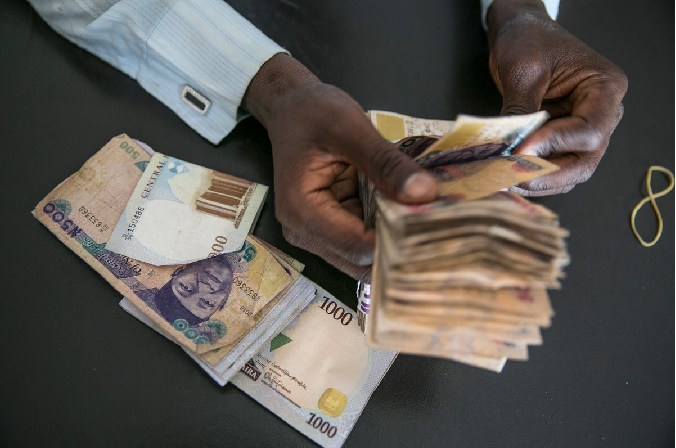
Fund, money cash dollar

Investment into the African tech startup ecosystem passed the US$3 billion mark for the first time in 2022, with the space withstanding global economic headwinds to post a record year.

This is according to the eighth edition of the annual African Tech Startups Funding Report released by startup news and research portal Disrupt Africa, which is available free to all as part of an open-sourcing initiative in partnership with Flat6Labs, MarketForce, 4Di Capital, Mercy Corps Ventures, Newtown Partners, and InsiderPR.

The report tells the story of an impressive 2022 in which more startups raised more funding than ever before, in spite of a global downturn in investments, especially in riskier asset classes such as venture capital. In all, 633 startups raised a combined US$3,333,071,000 in 2022. This represented incredible growth. The number of funded startups increased by 12.2 per cent on 564 in 2021, while the total secured funding jumped 55.1 per cent on US$2,148,517,500 in 2021.

Nigeria, Egypt, South Africa and Kenya remain Africa’s “big four” from a funding perspective, yet they secured a smaller share of total funding between them than in 2021, with startups from more African countries than ever before securing investment. Nigeria remained the undisputed leader, however, with 180 startups raising a combined US$976,146,000.

Though Nigeria and the rest of the “big four” remain clear leaders, there is still plenty of activity elsewhere on the continent, with startups backed in 27 African countries.

The fintech sector was, yet again, the most attractive to investors in 2022, with more startups securing funding than any other sector and a combined total that dwarfed all others. The sector raised almost US$1.5 million in funding.

Other sectors also had impressive years, however, with the likes of e-commerce and retail-tech, e-health, logistics, energy, agri-tech and transport.

The report is available for free download here. Aside from providing a full list of the funded startups, who invested in them, and, where possible, the amount raised, from the previous year, the annual reports also provide deep-dives into investment trends within key startup geographies and verticals, as well as data on African startup acquisitions.

“In spite of global pressures, 2022 was another outstanding year for the African tech space. Who knows what the future holds, and whether the sector will now enter a more fallow period, but for now the space can reflect on a very good 12 months work,” said Disrupt Africa co-founder Gabriella Mulligan.

Previously available for sale, the African Tech Startups Funding Report was previously purchased each year by leading tech companies from Africa and the rest of the world, Big Four consulting firms, banking and fintech leaders, venture capital firms, supranational investors and international trade bodies. Now, however, Disrupt Africa releases the publication for free, making it accessible to those for whom the information is most valuable – African entrepreneurs.

This year it is doing this with the help of partners Flat6Labs, MarketForce, 4Di Capital, Mercy Corps Ventures, Newtown Partners, and InsiderPR, with whose support Disrupt Africa will be distributing the African Tech Startups Funding Report 2022 to as many ecosystem stakeholders as possible.

“For too long access to crucial industry data such as this has been out of reach for active or aspiring entrepreneurs, as they are usually priced out of access,” said Disrupt Africa co-founder Tom Jackson. “It is the Disrupt Africa ethos to make as much information freely accessible as possible, and we can’t thank our partners enough for helping us with the open-sourcing of this publication.”

“In 2022, MarketForce raised a US$40 million Series A round – a significant milestone in its own right, but even more so for a startup founded by two young black men. On a continent where capital continues to pour in, it also matters where it is going. As an operator and investor myself, seeing the continued disparity in investment opportunities for growth-stage startups and underrepresented founders, including black and female founders, is disheartening. Yet, we must succeed – the impact of what we stand for and who we serve is too important not to. Let’s make this journey count,” said Muthoni Wachira, chief of staff at MarketForce.

“Well done and thank you to Tom, Gabriella and the Disrupt team for once again producing a top quality report. This information is crucial and very valuable for all players in the ecosystem,” said Anton van Vlaanderen, 4Di Capital partner.

“Africa remains one of the most exciting and diverse regions to invest in innovation globally. We see a huge impact potential with many of the continent’s startups and are pleased to partner with Disrupt Africa on their sector-leading insights report,” said Scott Onder, managing director of Mercy Corps Ventures and chief investment officer at Mercy Corps.

“As an active investor in Africa, we are eager to see the advancement of the ecosystem through knowledge-sharing and collaboration between local and international players. We are therefore delighted to support this initiative by Disrupt Africa to make this report freely available to all stakeholders,” said Newtown Partners managing partner Llew Claasen.

“InsiderPR was founded on the idea that visibility is the missing link for the entrepreneurs and investors driving innovation in African economies. We are proud to partner with Disrupt Africa to spotlight the African startup ecosystem’s successes in a year full of strong headwinds,” said Aubrey Hruby, co-founder of InsiderPR.
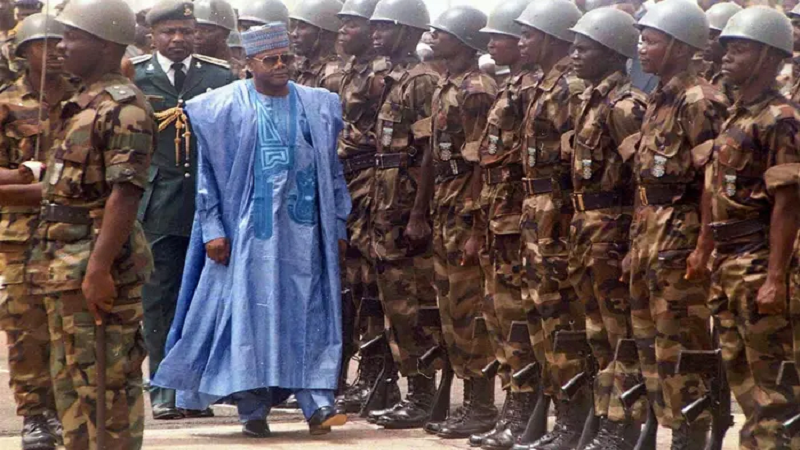
Young People, Do NOT Lose Focus Due to the Current Paralysis in Nigeria

1

I visited a family member who lived in a flat within his property in Owerri.  The man who would later become the king of Owerri asked me: “Ndubuisi, how are you doing with studies in FUTO?”.

I responded: “Sir,  Abacha is causing problems in Nigeria. He is making things very hard”.

Quickly, he explained: “Ndubuisi, your Abacha now is FUTO and you need to do well, graduate with good grades, etc. Leave Abacha for us”.

That conversation remains evergreen. Yes, one needs to know what his “real problems are”, and develop a plan to deal with them. That Elom Musk wants to relocate to the moon is not my problem today. As the paralysis deepens in Nigeria, young people, do not lose focus. Deal with things you can control and understand the ones you cannot. 

There is no argument, things are hard. But understand that every generation in Nigeria has had its own challenges. When I was in FUTO, we used to leave the hostel at 3am for a class scheduled at 8am. If you go there at 7am, you will likely not see the professor’s face. They used loudspeakers in MPH (a big hall in Lake Nwaebere campus) to teach those general courses with thousands of students.  

It was a mess; many broke down and dropped out! My engineering drawing exam was done on the floor because the space for the exam was not large enough to accommodate the drawing boards! Fast forward, every student in FUTO has his or her own hall with extra space to throw away.

Sure, this is not to say that young people should not pursue causes and activism. But the key thing here is this: understand when you can make impacts. Do your constitutionally protected demonstrations and show your frustrations, but destroying banks, ATMS, burning cars, etc will not advance the mission. Think about it: what has that auntie done for you to burn her family car? #focus is key. And make sure you vote in days! That would be the best response to bad situations.

Naira Redesign: Supreme Court Restrains the CBN from Enforcing Feb 10 Deadline [Update: Govt Reacts]

0
Naira

In a new development on Wednesday, the Supreme Court of Nigeria has restrained the Federal Government from enforcing the February 10 Deadline, earlier issued by the Central Bank of Nigeria (CBN) for redesigned N200, N500 and N1,000 notes to permanently replace the old ones.

The controversial policy, which has been widely criticized due to the chaos resulting from its implementation, has recently been contested by the ruling All Progressive Congress (APC) that has alleged it was meant to undermine its chances in the February 25 elections. Kaduna State governor, Mallam Nasir El-Rufai, had last week echoed the allegation that some elements in the presidency are working hard to undermine the APC because their candidate didn’t win the primary election.

Based on this, three northern states — Kaduna, Kogi and Zamfara — had on February 3rd, filed a motion ex-parte, praying the Supreme Court to stop the CBN from implementing the currency swap deadline.

In response to the prayer led by the states’ lawyer, AbdulHakeem Mustapha (SAN), a seven-man panel of the Supreme Court led by Justice John Okoro, in a unanimous ruling, granted an interim injunction restraining the federal government, the central bank and commercial banks etc from implementing the February 10, deadline for the old 200, 500 and 1000 Naira notes to stop being a legal tender.

The apex court further held that the FG, CBN, commercial banks, by this ruling, must cease to enforce the February 10 deadline pending the determination of notice scheduled to hold on February 15 on the issue.

After the ruling, counsel to the three states, Mustapha told the press that they made the decision to drag the matter to the Supreme Court because among other things, the CBN policy has brought about a lot of hardship on Nigerians, riling the public up against commercial banks.

“We invoke the original jurisdiction of the Supreme Court when there is a dispute between the state government and the Federal Government. It is one of the few occasions where the Supreme Court act as the original jurisdiction. So, we invoked the powers of the Supreme Court to hear this application.

“The reason for it is that as well-intentioned as this policy of the Federal Government on this naira redesign, it is causing hardship all over the country. As we can all see, banks are being harassed, Nigerians are suffering, especially the downtrodden, even in the urban areas they are having difficulty, but it is more excruciating in the rural areas.

“So, the three state governments – Zamfara, Kaduna and Kogi deemed it fit for us to invoke the powers of the Supreme Court to intervene,” Mustapha said.

However, other lawyers in the country have faulted the Supreme Court’s ruling, saying the apex court isn’t the proper place “for the adjudication of this issue.”

“What the States have done is used the apex court to extend the deadline for currency swap. The Supreme Court is not the proper place for the adjudication of this issue. The proper place is the High Court – for judicial review of the lawfulness of the decision of the CBN,” Abdul Mahmud, a senior lawyer and rights activist said. He added that the Supreme Court has kept turning itself into a political instrument, diminishing its respect.

It could be recalled that a Federal High Court sitting in Abuja, had on Monday, restrained the CBN from extending the February 10 deadline.

“An order of interim injunction is hereby made restraining the defendants whether by themselves, staff, agents, officers, interfacing banks or whosoever not to suspend, stop, extend, vary or interfere with the extant termination date of use of the old N200, N500, and N1000 bank note being 10th day of February, 2023, pending the hearing and determination of motion on notice,” the court held.

However, going by the Supreme Court’s ruling, the Nigerian public will have five more days to transact with the old naira notes. But experts have warned about courts’ rulings against the CBNs policies, saying it undermines the apex bank’s independence which will impact the economy negatively.

Update: The Nigerian Government Reacts

Premium Times reports that the Nigerian government has asked the Supreme Court to dismiss states’ suit.

The federal government has called on the Supreme Court to dismiss a suit challenging the 10 February deadline set by the Central Bank of Nigeria (CBN) to end the legal tender status of the old versions of some newly designed currency notes.

It argues that the Supreme Court lacks jurisdiction to hear the suit. The suit was filed by three states – Kaduna, Kogi and Zamfara States, all in the northern part of Nigeria and controlled by the ruling All Progressives Congress (APC).

The respondent maintains that the case is not a dispute between the federation and the state governments, but merely an issue about CBN’s policy.

It says the suit is, therefore, not qualified to be taken directly to the Supreme Court for adjudication. It argues that the suit ought to have been commenced at the Federal High Court.

The Attorney-General of the Federation (AGF), Abubakar Malami, sued as the sole defendant as the representative of the federal government, filed his opposition to the suit as a preliminary objection against it at the Supreme Court on Wednesday.

Mr Malami’s filings came hours after the Supreme Court granted a request by the three state governments for an order temporarily halting the CBN’s plan to end the use of the old currency notes on 10 February.

Neither the federal government nor the CBN has commented on their plan to comply with the ruling.

CoreDAO to Airdrop 25% Mined $CORE, Will List on Top CEX Today

6

CoreDAO Airdrop is one of the largest smart contract interactions of all time. Due to the sheer scale of the event, heavy network congestion is expected on February 8th. 25% $CORE coins ‘mined’ on the Satoshi app will be airdropped to users in a few days from now through a Decentralized Smart Contract. The remaining 75% will be airdropped to users on a monthly basis within a two years venting period.

Core DAO is the official decentralized organization developing the Satoshi Plus ecosystem. It represents an opportunity for miners to access new revenue streams by contributing hash power to the chain. Inspired by the principles of both blockchains, Core displays a deep appreciation for the crypto ecosystem’s history and an even greater excitement for Core’s role in its future.

Core DAO released a Twitter thread explaining the nature of the Core airdrop distribution. Users were advised to be aware of unauthorized $CORE tokens created on several sites using the Satoshi Plus consensus protocol. The company claimed that scammers will be able to con Core aficionados using the airdrop. Users are advised to consult Core DAO’s official sources for further information regarding the airdrop in order to prevent frauds as the Core mainnet is now operational.

Although the airdrop will increase $CORE liquidity, market volatility is unavoidable. Top-tier market makers and exchanges support legal early market $CORE formation in order to control market challenges.

Secret to Core’s success is Satoshi Plus Consensus which starts with the efficient PoW algorithm that Bitcoin uses. Each transaction is validated by having miners Delegate all of their Hash to a preferred Validator, thereby creating proper decentralization, secured and reliable ledger. Another essential mechanism is the DPoS system, all CORE holders can delegate their asset to a validator, so even those with a small number of tokens can vote to validate transactions.

This enhances decentralization and makes the system much more scalable. To combine PoW and DPoS, Core starts with a pool of validators who have both hash power and staked tokens. They then pick a blend of these validators with an algorithm designed to select an efficient mix of both mechanisms. The result is high transaction rate that can maintain optimal security and decentralization

Apparently, February 8th at 12 PM UTC is the scheduled time for the $CORE airdrop. The team has released information on the airdrop, including crucial mainnet information for the community, ahead of the significant development milestone.

The liquid $CORE markets will open around the same time as the Feb 8th airdrop. In the coming days, $CORE transactions from Core DAO’s public reserve multi-sig will be executed to get CORE tokens to partner market makers so that liquid markets exist when the airdrop occurs, .“Having legitimate $CORE token markets available when the airdrop occurs will allow for safer, faster, and more accessible trading for Core users.”Users can start staking when the airdrop is over to take part in the network’s growth.

Core Price Predictions

Many received 0.1 Core which serve as gas fees from Core mainnet to Metamask or Trust wallet, going by the price shown on Metamask ($6000/1 Core) there is price speculations among Core miners, some sees it as a glitch while others opines its going to start with a price from $6000.

As Centralized Exchanges; Huobi, MEXC Global, BKEX, Bybit and others plan to list CORE today, the real price value of the token will become visible.

Google Set to Roll Out SafeSearch Blurring Setting to Ensure Safer Internet

0
A picture shows a You Tube logo on December 4, 2012 during LeWeb Paris 2012 in Saint-Denis near Paris. Le Web is Europe's largest tech conference, bringing together the entrepreneurs, leaders and influencers who shape the future of the internet. AFP PHOTO ERIC PIERMONT (Photo credit should read ERIC PIERMONT/AFP/Getty Images)

Tech giant company Google is set to roll out a new SafeSearch blurring setting in the coming months to ensure safer internet for users.

This setting will blur out explicit images in users search results such as Violence, Sexually explicit content like pornography, etc.

The setting, which is already on default for users below 18 years, will be expanded, which will see the feature become a default for people who do not have the SafeSearch filter turned on.

Once this setting becomes the default setting on the search engine, it will notify users that the SafeSearch feature has been turned on. However, users can choose the “filter” option, which helps filter explicit images, text and links or select the “off” option, which means that they will view all of the relevant results for their query, even if they’re explicit.

Speaking on the launch of this feature, Google’s senior vice president of Core Systems & Experiences Jen Fitzpatrick, said, “A new setting rolling out in the coming months, will blur explicit imagery if it appears in Search results when SafeSearch filtering isn’t turned on.

“This setting will be the new default for people who don’t already have the SafeSearch filter turned on, with the option to adjust settings at any time.”

Google also notes that while SafeSearch isn’t 100% accurate, it helps filter out explicit content in Google search results for all your queries across images, videos and websites.

It is however interesting to note that Google SafeSearch only works on Google search results, which implies that it won’t block explicit content users come across on other search engines or websites that they decide to use.

Also, Google has no doubt continued to play a key role in helping parents keep their children safe online. Last year, the tech giant created an app called “Family Link”, to help parents set up a supervised account for their child/children as they start to use their own device to explore the Internet.

Whether the children are younger or in their teens, Family Link allows them to approve what apps and games they should use, helping them to keep an eye on screen time and help set digital ground rules for their kids.

The tech giant also created YouTube Kids, a safer environment for children to explore their interests through curated online videos. The tech Giant revealed it invested heavily to ensure it creates a safe place where kids can explore their curiosity without encountering any explicit content.

On YouTube Kids, kids can find family-friendly videos on all different topics and for different ages helping them to be entertained, learn new things or discover the world around them.