DD
MM
YYYY

PAGES

DD
MM
YYYY

spot_img

PAGES

Home Blog Page 4442

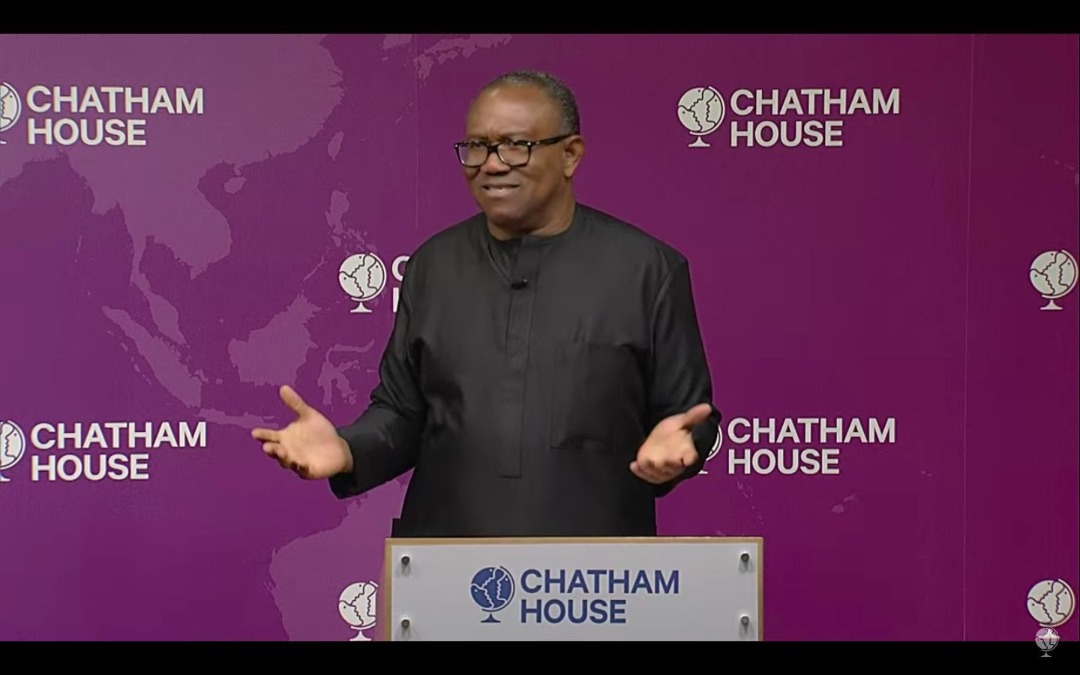
Nigeria 2023: Bloomberg News’ Premise Data Poll Calls it for Peter Obi

1

A pre-election poll conducted for Bloomberg News by Premise Data Corp has called it for Peter Obi.  All the polls have been calling this election for Obi:“ Two-thirds of respondents said they intend to vote for Obi, a third-party candidate, in elections scheduled for later this month. The results of the survey conducted for Bloomberg News by Premise Data Corp. were published on Friday – 15 days before the vote to choose President Muhammadu Buhari’s successor ”

“Of the 93% of participants who said they’ve decided how to vote, 66% named Obi as their preferred choice. Obi scored a slightly higher 72% among decided respondents in an earlier Premise poll that was released by Bloomberg in September as the official election campaign kicked off.”

For me, this election will remain the most #open and the best poll is on the election day. Please #vote.

Mobile internet is reducing information asymmetry as more voters can bypass the filters and intermediaries to get information from the sources. The existence of information asymmetry makes market systems imperfect.  In politics, it does the same thing – imperfect electoral systems.

But in 2023, Nigeria will have the first mobile internet era election. This is the first app utility-anchored national election. I am not arguing that decades-old political  structures are not important, my point is that disintermediation (cutting out intermediaries) is evident, and general voters have access to more information about candidates now, to make decisions independently, out of the influence of political bundlers and brokers.

The Ezes, Obas, Amanyanabos and Emirs influenced many past elections through zone defense and zone offense (as in football) via block voting, being custodians of information;

Comment and response:

Comment:Ndubuisi Ekekwe …we ve challenged Prof.several times to show us the capacity, verified track record of Obi,maybe we can change our minds…”

My Response: I do not respond to […] because I am flummoxed, looking at his grammar, usage of words, blind partisan noise, etc, that someone like him is working to write Bills for Nigeria.  But this is Nigeria where anything goes.  See the thought-processes. He saved these banners, texts, and next week, he will repost the same things irrespective of the topic. Yet, on Monday, he goes to the National Assembly to work on Bills. I put this comment because he keeps challenging me to tell him what Obi has achieved in life.

He is one of the 3 people paid by a party to come to challenge anything I put here. They work on banners, texts and repost exactly the same things when I have a post that has “Obi” on it even if that Obi means Our Brothers Institute.

As I have said, I admire Atiku, Tinubu, Obi, etc and insults should be off. He insults Obi for owning a bank. He insults Obi for taking Anambra from #28 in WAEC to top 3. He insults Obi for making primary education compulsory in Anambra, boosting literacy from 56% to 95% in the state. This guy insults Obi for his name. Yet, he works in the parliament with that blind partisan mindset. Do not waste time on him. I do not respond to him but he keeps “challenging”.

National Council of State Backs Naira Redesign Policy, But Wants CBN to Ensure Adequate Circulation

0

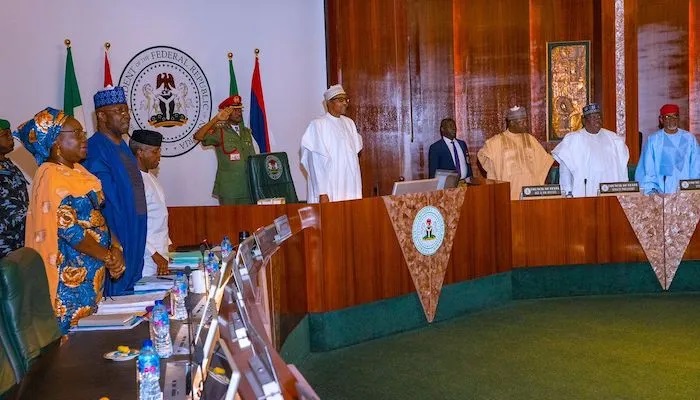
At the end of the National Council of State (NCS) meeting held in Abuja on Friday, the Council has thrown its support behind the naira redesign policy recently introduced by the Central Bank of Nigeria (CBN), on the condition that the central bank either prints enough of the new naira notes or allows the old notes to coexist with the new ones.

The policy has been immersed in chaos due to poor circulation of the redesigned naira notes, which has been attributed to insufficient printing of the new naira notes.

The 2023 NCS meeting, which was presided over by President Muhammadu Buhari, and was graced by former presidents, including Goodluck Jonathan and Olusegun Obasanjo, was among other things, to deliberate on the policy, which has become a national concern.

Governor Darius Ishaku of Taraba state told newsmen after the meeting that as much as the Council is backing the policy, it would want the CBN to recirculate old notes if it cannot print enough new notes. He said the move will ease the economic tension created by the scarcity of the new naira notes.

Currently, the federal government is facing several lawsuits from states including Kogi, Kaduna, Ondo and Zamfara, seeking to stop the CBN from implementing the policy, at the Supreme Court. Though the lawsuit has been described as political, the states said they’re seeking to ameliorate the economic hardship the policy has unleashed in the country.

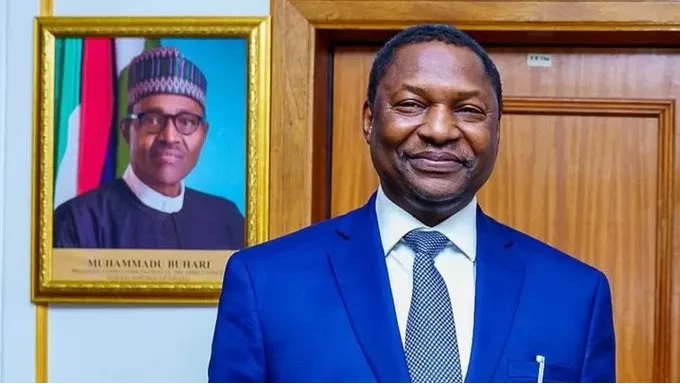
Speaking on the matter also, the Attorney General of the Federation and Minister of Justice, Abubakar Malami, acknowledged the need for aggressive action from the CBN, but said that the policy stands.

“The council agreed that there is need for aggressive action on the part of the CBN as it relates to the implementation of the policy by way of ensuring adequate provision being made with particular regard to the supply of the Naira in the system,” he said.

On Thursday, Malami said the federal government will obey the order of the Supreme Court, mandating the CBN and commercial banks to allow for transactions with the old naira notes pending the determination of the suit brought before it by the states on February 15.

The federal government has remained resolute in implementing the policy despite the hiccups that have characterized the currency swap exercise. However, it is not clear if there is going to be a change this time, following the NCS meeting.

Buhari had earlier said that the policy is for the economic benefit of the country, urging Nigerians to bear with the CBN as it makes efforts to ensure that it is successfully implemented.

Welcome Be The Help Foundation To Tekedia Institute

0

Join me to welcome a really fascinating non-profit in Nigeria to Tekedia Institute: Be The Help Foundation. Be The Help Foundation runs an agroforestry project and offers hands-on training centers for agroforestry and rural development. The team will spend weeks at Tekedia Institute, starting Monday, Feb 13, 2023, and together we will co-learn on business systems and productivity elements.

Tekedia Institute Corporate Training helps companies optimize factors of production to become more efficient. From farming entities to microfinance banks, from logistics firms to real estate companies, from fintech to consulting firms, dozens of companies come to co-learn with us every year.

Welcome BHF Foundation; learn about it here.

What are Open Editions NFTs and Why are They Surging?

0

Non-fungible tokens (NFTs) have transformed the art world by making it easier to own and trade unique digital pieces. Although the NFT industry experienced a downturn in 2022, there has recently been a resurgence in demand for Open Edition NFTs.

What Are Open Edition NFTs?

Open Edition NFTs are digital assets or collectibles that can be minted in unlimited quantities, with no cap on the number of copies available. This contrasts with Limited Editions, which restrict the number of copies. Open Edition NFTs generally fall into two categories:

Timed Open Edition NFTs

Timed Open Editions NFTs can be minted repeatedly during a specific period set by the creator. Once the minting period ends, no additional copies can be created.

Infinite Open Edition NFTs

Infinite Open Edition NFTs can be minted endlessly without any time restriction, allowing collectors to generate as many copies as they wish.

How Do Open Edition NFTs Work?

Open Edition NFTs use blockchain technology to issue digital certificates of ownership for each collectible. All transactions and ownership records are stored on the blockchain, and creators earn a percentage from each sale of their digital assets.

What Are the Benefits of Open Edition NFTs?

Open Edition NFTs play a significant role in reshaping NFTs and advancing Web3. Here are some of their key advantages:

Cost-Effectiveness

Most Open Edition NFTs are priced below $10, making them affordable and accessible to a broader audience. This lowers the entry barrier for Web3 and also attracts new users.

Artist Control and Reach

Creators can continually add value to their collections and reach a wider audience. The affordability and unlimited availability of these NFTs reduce the risk for buyers, potentially increasing sales.

Fan Support

Collectors can support their favorite artists by minting unlimited editions, showing appreciation, and backing the creators they admire.

Brand Promotion

High sales volumes can increase creators’ visibility and reputation, helping them gain global recognition over time.

Flexibility

Open Edition NFTs are easier to create than Limited Editions because they require less programming. Platforms like Zora and Manifold simplify the process for creators.

How Did Open Edition NFTs Become Popular?

The rise of Open Edition NFTs began in 2022, largely driven by infrastructure-minting platforms like Manifold and Zora, which attracted many artists at the time. In January 2023, several Open Editions achieved notable sales. For instance, the Checks VV NFTs generated significant revenue, with 19 ETH (approximately $29.87) recorded in secondary sales.

The emergence of derivative projects has also contributed to the boost in NFT sales. For example, Vincent VanDough’s Pepe meme collection, which featured Checks VV NFTs, sold 238,000 copies at $6.90 each. This resulted in $1.6 million in revenue and a substantial increase in NFT trading volume in 2023.

What Is the Future of Open Edition NFTs?

Open Edition NFTs are growing in popularity and may witness price surges. However, as the NFT industry grows, they may become just another market trend, similar to Zero-Utility NFTs or unconventional art collections. Trends in the NFT space are often speculative, which means their popularity might wane over time.

Final Thoughts

Open Edition NFTs have gained traction since their introduction in 2022. Given the speculative nature of the market, their success may fluctuate. So, always ensure to conduct thorough research (DYOR) before investing in any NFT collection.

Nigerian Govt Will Obey Supreme Court’s Order on Naira Swap Deadline – AG Malami

0

The federal government of Nigeria has said it would obey the ruling of the Supreme Court, suspending the implementation of the February 10 deadline for the naira swap exercise mandated by the Central Bank of Nigeria (CBN).

This was made known by the Attorney General of the Federation (AGF) and Minister of Justice, Abubakar Malami, during his appearance on AriseTV on Thursday. But the AGF said the federal government is taking necessary steps to ensure that the Supreme Court’s interim order is set aside.

He disclosed that the federal government, in regard to rule of law, will obey the Supreme Court’s order while working out modalities within the provisions of law to challenge the lawsuit that resulted in the order.

The Minister called the Supreme Court’s jurisdiction to handle the case into question. He said that the singular fact that the CBN was not joined as a party in the suit robbed the apex court of necessary jurisdiction. He said the federal government will be challenging the jurisdiction of the Supreme Court to handle the case next week Wednesday, and also will fight to vacate the interim order.

On Wednesday, a seven-member panel of the apex court presided by Justice John Okoro, suspended the February 10 deadline, pending the determination of an ex parte application brought by three northern states; Kogi, Kaduna and Zamfara, challenging the CBN’s policy. The hearing is billed to hold on Wednesday, February 15.

The three states had asked the Supreme Court to quash the CBN’s implementation of the February 10 deadline, set to phase out the old naira notes. The federal government had, late last year, unveiled redesigned N200, N500 and N1,000 notes, setting a January 31 deadline for the old notes to be returned to the banks. The deadline was later extended to February 10.

However, the implementation of the currency swap has been marred by the insufficiency of the redesigned naira notes, unleashing economic hardship as cash scarcity undermines economic activities. The three states, in their argument, said in addition to the suffering the currency swap has caused, the federal government did not give adequate period of time for the implementation of the policy and that the CBN did not follow laid down procedure.

However, the Supreme Court’s restraining order has been criticized by many legal practitioners, with some asking the federal government to ignore it and go ahead to enforce the February 10 deadline.

Malami, clearing the confusion that has trailed the apex court’s ruling, said the federal government will abide by the order until Wednesday next week when it will challenge the lawsuit brought by three states.

“I think what we are talking about is not whether the ruling is binding or not binding, we are talking about what we intend to do, there is no doubt about the fact that the ruling of the Supreme Court, regardless of the prevailing circumstances, is binding and then within the context of the rule of law.

“And what we are doing in essence is in compliance with the rule of law both in terms of obedience to the ruling and in terms of challenging the ruling by way of putting across our own side of the story, putting across our case, challenging jurisdiction.

“So the issue of obedience to the ruling of the Supreme Court is out of it. We are wholeheartedly in agreement that naturally, we are bound by it and will comply accordingly. But within the context of compliance, we shall challenge the ruling by way of filing an application seeking for it to be set aside, it is all about the rule of law,” he said.

Malami added that the federal government will challenge the Jurisdiction on the grounds that when you talk of monetary policy, regardless of the characters they take, the central bank is an indispensable and a necessary party for that matter.

“What we have at hand is a situation where the central bank was not joined as a party and if the central bank as an institution was not joined as a party, the position of the law is clear that the original jurisdiction of the Supreme Court cannot be properly invoked,” he said.

The federal government is arguing that it is the Federal High Court and not the Supreme Court that is vested with the exclusive jurisdiction to entertain this suit.

On Monday, a Federal High Court sitting in Abuja had ruled against any move to force the CBN to extend the February 10 deadline. The federal government is arguing based on this, that the plaintiffs have no cause of action.

“This suit is an abuse of judicial process. The plaintiffs have no locus standi to institute this action. The plaintiffs have no reasonable cause of action against the defendant,” it said in its response to the lawsuit.