DD
MM
YYYY

PAGES

DD
MM
YYYY

spot_img

PAGES

Home Blog Page 4546

Why Experts Recommend Big Eyes And Other Four Cryptos For Long-Term Investment?

0

Big Eyes Coin (BIG) has been making headlines recently as a result of a recent virtual advertisement in Times Square, New York, which may have increased the overall hype for BIG tokens. It is no secret that the best time to make a long-term investment in the crypto market is during the token’s presale, which is exactly where Big Eyes is at the moment.

Given the recent volatility of the cryptocurrency industry, predicting the success ratio for this upcoming project is difficult. Big Eyes Coin (BIG) can, however, be compared to some successful cryptocurrencies like Shiba Inu (SHIB), Ethereum Name Service (ENS), Binance (BNB), and ApeCoin (APE). Big Eyes is predicted to hit or even surpass the success level of these coins. Let’s get this party started!

Shiba Inu (SHIB) Shows Other Memecoins How Its Done

Shiba Inu (SHIB) is currently leading the Decentralized Finance (DeFi) market by directly competing with Dogecoin and even breaking into the top ten cryptocurrency list. While its use case is somewhat limited, crypto whales have played a significant role in its price increases, benefiting other Shiba Inu ecosystem crypto users.

According to reports, fourteen whale wallets control the equivalent of $100 million in SHIB, with the first wallet controlling 5% of the total supply. Significant burn events also contribute to Shiba Inu’s price stability, which could make several holders and whales wealthy in the future.

Big Eyes Coin (BIG) Reveals Itself To Be Top Tier

Big Eyes Coin (BIG) is a new meme token project based on community members and their interactions. Following in the footsteps of previous successful meme tokens such as Dogecoin (DOGE) and Shiba Inu (SHIB), Big Eyes Coin (BIG) aims to top the list and defeat them in this competition.

The Big Eyes ecosystem team will incorporate features such as decentralized finance (DeFi), decentralized autonomous organization (DAO), non-fungible tokens (NFTs), and much more for this purpose. These features will not only add value to this project but will also make it more user-friendly.

Speaking of BIG, it will serve as the platform’s native cryptocurrency, allowing users to pay for transactions and purchase NFTs via the trading marketplace. Furthermore, these tokens empower users by granting them voting rights to decide what to do with the profit and to make future upgrade decisions.

Ethereum Name Service (ENS)

ESN is the platform’s native token. This is the Ethereum Name Service’s primary governance token, allowing holders to table and vote on proposals that change how it operates, ensuring that it always aligns with the will of the community.

Because of its limitless application potential, ENS is one of the cryptos with the greatest potential. However, due to the sheer number of competitors and competing blockchains that now exist, it can also be considered high risk.

Nonetheless, despite the overall crypto market downtrend, the value of ENS has shown remarkable strength in recent times. Big Eyes is predicted to outrun the success of the Ethereum Name Service project.
Binance (BNB) Arrives

Binance Coin was created by one of the world’s largest cryptocurrency exchanges, Binance. It has evolved beyond transaction fees to become a platform where users and traders can trade various pairs with BNB, process payments, and even book travel arrangements.

Furthermore, despite bearish market conditions, its price remains relatively stable, which appeals to crypto whales looking to fill their bags with Binance coins. Crypto experts have placed the Big Eyes meme coin side-by-side with Binance (BNB).  Crypto traders and investors can diversify their portfolios by adding the BIG Eyes Coin now!

ApeCoin (APE) Swinging Aloft The Crypto Amazon

Despite massive price volatility in 2022, NFTs continue to gain traction among investors. Hence, ApeCoin is now a high-potential altcoin due to its connection to popular NFTs in the market.

This ERC-20 token is closely linked to the Bored Ape Yacht Club, or BAYC, a collection of NFTs. These NFTs have received a lot of attention from celebrities and have become very popular among crypto enthusiasts as some of the best NFTs available today.

ApeCoin is also finding applications in the rapidly expanding Metaverse space. While Yuga Labs, the organization behind BAYC, did not create ApeCoin, its popularity has led to its inclusion in the Otherside Metaverse. Although this virtual world is still in its early stages, ApeCoin has achieved such a high success rate within the crypto space.

With the current speed at which Big Eyes Coin is moving on its presale, the token is predicted to highly reward investors once it is launched.

Use code BIGsave055 for bonus tokens.


Big Eyes Coin (BIG)

Presale: https://buy.bigeyes.space/

Website: https://bigeyes.space/

Telegram: https://t.me/BIGEYESOFFICIAL

Modulating Your Emotional Processing System

1

Many ask me how I write regularly. Yes, do you have this burden that sometimes you may hurt the emotions of people? Absolutely, there is that concern that anything you write will make some people happy and some unhappy. Nonetheless,  my focus is to think strategically to make sure I am not disappointing the “right readers”. Yes, I am fine if I occasionally disappoint the “wrong readers”.

I am very aware that if I write and make 100% of readers happy, I am not writing, since a 100% batting percentage is not a possibility. So, the focus is how to make sure the right readers are not disappointed since, partly, they are the reasons you write. 

Having that self-assessment brings calm to me since by default, I do not desire for all my posts to be accepted by all. The struggle comes to many because they are writing for everyone to like what they write; that is a dangerous expectation.

Just answering “Ndubuisi” activates verbal attacks on any political post, irrespective of the content. But knowing that most of those attacks are coming from the wrong readers, you do not even notice.

A great liberation in life comes when you own your space and determine how others could influence you. If you do allow default settings, you may be in trouble. I recommend you finetune those default settings so that when the wrong readers do their jobs, those are already calibrated out in your emotional processing system!

Emotional intelligence is the ability of a person to manage his emotions and that of people around him. It involves being able to control your feelings at dire moments. A person is said to be emotionally intelligent if he doesn’t lose his temper at the slightest provocation. Hence, people that lack emotional intelligence are those that pick offences easily and waste no time to react.

The importance of emotional intelligence is too great to be enumerated. Its benefits can never be over-emphasised. People that have mastered this skill have been able to prevent harming themselves and those close to them. The skill is needed by everyone irrespective of who they are or what they do. Some people think that it is not necessary to develop this skill because “if you don’t say ‘I am’, nobody will say ‘you are’”. They believe that tolerating ‘nonsense’ leads to more ‘nonsense’. So they lash out immediately at people that trigger them. But what people with this kind of mindset fail to understand is that exhibiting violence never pays. Instead of this sort of attitude attracting respect for the person, it attracts hate and loneliness.

5 Components of Emotional Intelligence

Amazon to Cut 18,000 Jobs As Sales Decline Continues

0

Ecommerce giant Amazon has announced plans to cut more than 18,000 jobs as the tech sector continues to grapple with current economic headwinds.

The 18,000 jobs, which is the largest number in the firm’s history, represents more than one percent of Amazon’s global workforce.

The tech industry has been hit hard by the global economic downturn buoyed by Russia-Ukraine conflict. Most of the firms that increased headcount during the pandemic-induced shift to digital life are now cutting workforce to save cost as life returns to normal, curtailing the online life’s economic boom.

Amazon, which has a global workforce of 1.5 million employees, said in November that it will “eliminate a number of positions across Devices and Books businesses”, and also there will be “voluntary reduction offer for some employees in our People, Experience, and Technology (PXT) organization.”

The company said additional roles have been added to last year’s plan to increase the number of impacted jobs to 18,000. Most of the affected jobs are from its consumer retail business and its human resources division.

“S-team and I are deeply aware that these role eliminations are difficult for people, and we don’t take these decisions lightly or underestimate how much they might affect the lives of those who are impacted,” CEO Andy Jassy said in a memo to employees. “We are working to support those who are affected and are providing packages that include a separation payment, transitional health insurance benefits, and external job placement support.”

Jassy, like other CEOs, acknowledged that Amazon hired rapidly over several years.

“We don’t take these decisions lightly or underestimate how much they might affect the lives of those who are impacted,” he said.

Jassy said Amazon would typically wait to speak directly to people affected by decisions like this but for an employee who leaked it to the press, the communication was hastened.

“We intend on communicating with impacted employees (or where applicable in Europe, with employee representative bodies) starting on January 18,” he said without giving details about countries with the impacted employees.

Jassy, citing economic strains, said “companies that last a long time go through different phases. They’re not in heavy people expansion mode every year.”

Amazon is one of the hardest hit as people returned to normal life. The pandemic-buoyed sales started to decline as in-person activities resume. The resulting revenue drop for companies accelerated as Russia-Ukraine conflict intensified – stirring inflation and setting economies up for potential recession – leading to consumer frugal spending.

The tech sector gradually became a victim of the circumstance. Meta, the parent company of Facebook, Instagram and WhatsApp announced major job cut last year. Others like Salesforce, Twitter – which has cut its workforce by more than half after Elon Musk’s acquisition of the social media company late last year, and video-sharing platform Vimeo, were among Silicon Valley giants that have trimmed their headcount to save cost.

CNBC Jim Cramer, host of Mad Money, said more tech companies are going to cut jobs due to bloated payrolls.

Data is the oil of Digital Public Relations – An Interview with Dr Adebiyi, University Don

0

The ongoing technological revolution and digitization of things also has its tentacles spread to the field of Public Relations, generally impacting a paradigm shift and the development of new methodologies in the profession. Rashid Adebiyi (PhD), a communication expert and lecturer at Fountain University, co-authored a new book; “Handbook of Public Relations Case Studies”. Adebiyi shares insights about his new book and the emerging trends in the PR profession with Tekedia. Here are the excerpts of the interview:

Tekedia: Every year, businesses, governments and individuals experience with the public changes as a result of emerging technologies that shift needs and create challenges in real time. What is your view on how emerging technologies have transformed and still shaping public engagement?

Rasheed Adebiyi: Emerging technologies are continuously impacting on the organization-audience interaction whether at the governmental or business level. The availability of the platforms for an average member of the public to hit at organizations is making it difficult for corporate communications handlers to cope. For instance, gone are the days when only poor customer service or product issues were under the spotlight. Today, organizations are taken up on their companies’ values and ethics. So, it is becoming very difficult to manage the conversation with the public in today’s PR ecosystem of any organization.

Social media platforms and rising social justice journalism is putting the communications teams of organizations under high pressure. This is not to say that there are no pluses resulting from the technologies, but, of course, negative publicity goes more viral than the positive ones. So, PR practitioners who are charged with managing the reputation of organizations are expected to be on top of their games to improve the organizational reputation while minimizing the chances of undue negative publicity.

Observations have shown that there is a gap in knowledge among PR practitioners in handling the issues as concerning digital PR. Even though, this is more noticeable and prevalent in public or governmental PR practice than in the private sector. Still, because of the changing nature of technologies and consumer/audience power to rock the boat facilitated by the emerging technologies and internet platforms, there is a need for constant reskilling and upskilling for the image makers of organizations in both the private and public sectors on audience management through these technologies.

Tekedia: As you have said, technologies are tools that public relations practitioners cannot do without in today’s PR Practice. Presently, we cannot compare digital PR Practice in the global north with what is obtainable in the global south. How do you think the practitioners in the south can be at par with their counterparts in the north, especially during challenging times?

Rasheed Adebiyi: It is like comparing death with sleep when we want to look at digital PR practice in both the global north and the south. Let me say there is no basis for comparison. This is reflected in PR landscape of both the north and the south. In terms of practices, the north has a well-established practice ecosystem, better infrastructure as well as a pedagogical system that easily tailor PR practices to emerging trends and technologies. So, this gives them the advantage of dictating what happens elsewhere such as the global south. Similarly, the economy also gives the countries of the global north the edge. So, we cannot compare the two.

As to what the practitioners in the global south should do to bridge the practice and knowledge gap, there is a need for aggressive acquisition of knowledge and deployment of such in managing the reputation of their organizations.
They do not have to wait till the crisis time. Rather, they should continue to create scenarios of crisis situations and see what they have to do in ensuring that the image of their organizations are protected at all times. As a matter of fact, PR professionals and agencies should let digital PR be part of their crisis management plan and toolkit. As a matter of fact, social listening online and sentiment analysis are strategies through which the image of organizations could be managed online. Therefore, the way out is to continue to follow the trends as they emerge and see what insights could be derived to use in their bid to manage the reputation of their companies or organisations. It is also incumbent on the PR professional bodies to let digital PR be part of their conversations for professional development of the members.

Tekedia: Nowadays, technologies are the conduits of small and big data for managing organizations’ image, products and services. They have been developed and mostly handed over to the public than organizations in times of crises. How do you think PR practitioners can overcome possible public use dominance for constructing and sustaining negative identities during crises?

Rasheed Adebiyi: Again, I have to reiterate that we should not wait until crisis erupts before we look for how to handle them. Since, there is an understanding that crisis is part of the recurrent factors for any organization, then we should always be prepared for it. There is an urgent need to look at data, whether small or big. Data is the oil of the digital PR. Through data you know what your public desires. You equally understand what is not wanted by them.

With emerging digital platforms, the public is empowered to express their opinions about services, products, organizations as well as the ethics and norms of the business. There are review platforms where the consumers are given the opportunity to rate goods or services. This is a data point for the PR professional of this era. In the same vein, the comment sections of social media handle of many organizations are sources of data. Thus, PR practitioners need to keep their eyes on these points and many more where they could have access to data either as small, big, quantitative or qualitative to make spot on decisions. Google Trends is also a good tool for following what is trending.

When properly deployed, it could help the PR marketing ability. You cannot hijack any conversation without first understanding the nuances and the platforms used for such. So, I think for image makers to be on top of the game, they must understand what the platforms used for constructing and sustaining both positive and negative identities are, and see how to appropriate them to the benefit of the organizations. This, again, should be emphasized to come before the crisis period.

Tekedia: From your responses so far, we have understood that practitioners and managers of businesses as well as not for profit establishments need to key to digital and data driven PR Practice. However, our checks suggest that digital and data driven PR are hardly taught in Nigerian institutions. What factors could you identify for this? How can stakeholders address the challenge?

Rasheed Adebiyi: Well, this challenge of the absence of traces of digital and data driven component in the curriculum of Public Relations could be traced to the often talked about problem of the wide gap between the industry and the classroom. I believe that a collaboration between the teachers of PR and the industry professionals would yield a lot for the curriculum. However, there is an improvement in the Core Curriculum Minimum Academic Standard (CCMAS) recently released by the National Universities Commission (NUC) and I believe that would have taken care of that because of the unbundling that happened to Mass Communication. With PR and Advertising standing alone as courses, there should be space for digital and data-driven PR. As I noted earlier, the depth of practice too will have some influence on pedagogy. So, I believe as we move forward and the two concept evolves in our clime, we should naturally have some space for it in the curriculum.

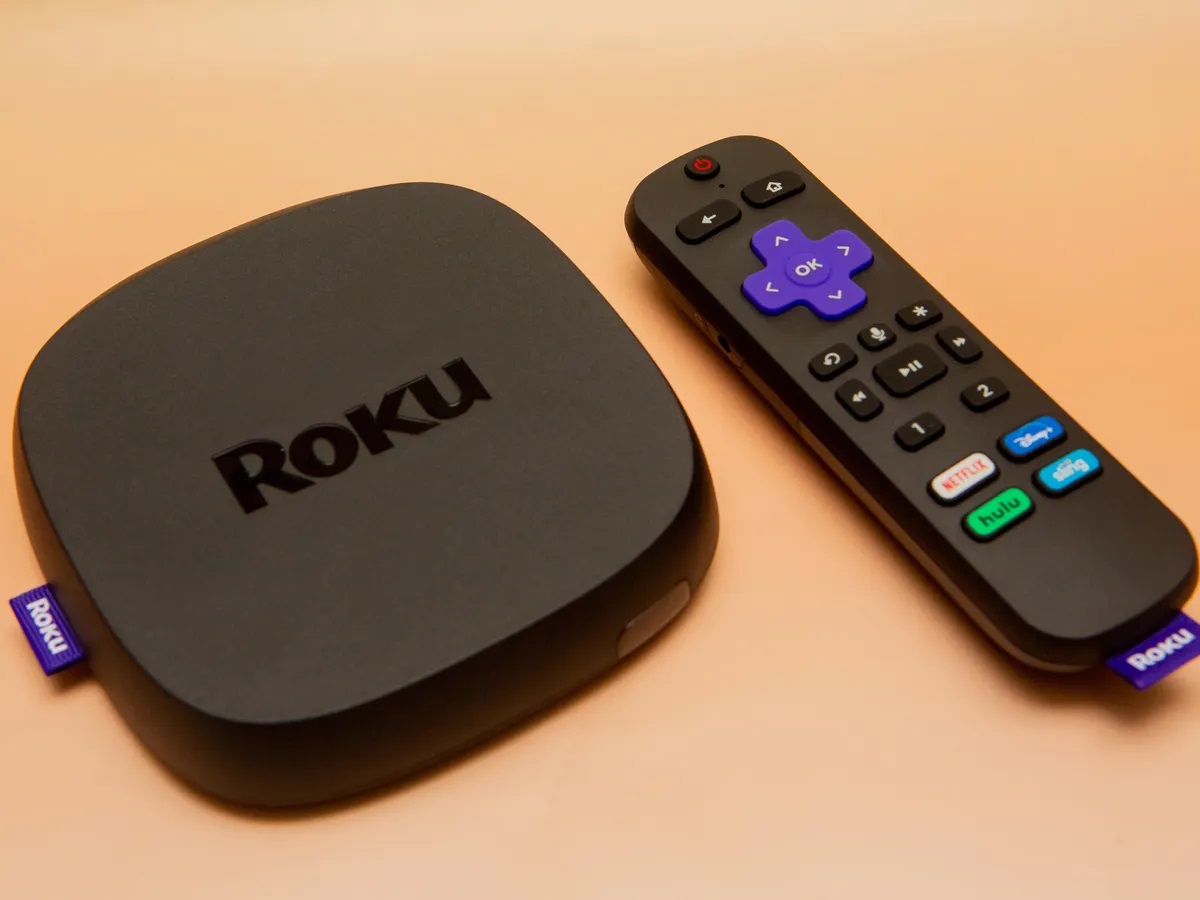
Roku’s Strategic Mistake By Going to Make TVs over being Streaming Operating System for TVs

2

As an MBA student, which one is a better business model?

A: Hire 10 great movie producers to produce 200 short videos for your digital platform over two years (Quibi like). (Quibi was a media company that developed media content designed for smartphones)

B: Allow tens of thousands of amateur creators, and use an AI to select the best videos daily, and distribute them massively in your platform (Tiktok like).

When Quibi launched, I wrote that it was a bad idea; yes, even though eBay and HP former CEO (Meg Whitman) was in charge, along with legendary producer, Jeffrey Katzenberg: “In 2000, Option A would have been a good business because the computing resources to run AI and crunch the numbers were not (commonly) available for Option B. But with cloud computing and the age of AI here, Option B wins. The probability of getting a hit video compounds in Option B while A is limited by the insights of just 10 people; virality is key for short movies. That is why Tiktok will remain a better business than Quibi”. Quibi had since collapsed.

This takes me to Roku which makes streaming software for TVs. The company now wants to make TVs. To understand this business, consider Taiwan’s TSMC which fabricates microchips for hundreds of companies around the world. Those companies merely design while TSMC fabricates. With that strong customer base, the probability of winning and having orders is close to “1” since all those design companies like Nvidia, ADI, TI, etc will end up coming to it, irrespective of who has the best circuit. Contrast  with old Intel which had a closed foundry (not sharing with any other firm); if Intel is off by design, its foundry will not have orders. In other words, if a product is not selling well, Intel will not have orders to use its expensive foundries. (Intel has recently opened its foundries for competitors to use, becoming like TSMC in the contract manufacturing business)

A third of all new televisions sold in the U.S. run Roku’s streaming software. Now the company is jumping directly into the small-screen space by launching its own line of Roku-branded TVs. Roku will offer 11 models, ranging from a 24-inch TV ($119) to a 75-inch screen ($999). The move into TV hardware “has been rumored for some time,” The Verge notes; rival Amazon began selling Fire-branded sets in 2021. Roku will need to move carefully to avoid alienating existing makers of Roku-loaded TVs, which could shift to the Google TV platform.

Roku software runs on 30% of new TVs sold in the U.S. Largely, it was emerging as a convergence for most TV makers. But as it moves to make its own TV, this will happen: most TV brands will move to other software brands, especially Google TV. When that happens, Roku has to win the TV hardware market (extremely tough) for its software to be relevant.

I do think Roku made a mistake on this playbook; you win on bytes, not atoms these days. Selling TVs seems off when you see the emerging convergence around software operating systems. As Android is to multi-vendor smartphones, Roku was poised to become the same in the TV world. But now, it has dropped its future; bad call there.

Yet,  I understand the pressure when your unit share has traded at $440 in the last 24 months, and now hovers around $40, anything becomes an effort.

Comment on Feed

Comment #1: me say if you are serious about software then you should make hardware. Wonder how this applies to them

Response: Possibly, the person was referring to Apple. The irony is that Apple was a hardware company which means it owned and had the customers before becoming an operating system in the Apple Store.  There is no record of any software company that transmuted from software to hardware and did well in the two-play consumer market. Why? Any successful consumer software company has been on some hardware. Any attempt to take over those hardware firms will damage the software. Even Google has been unable to move from being a software firm (Android) to make a great phone in Pixel.

Comment #1A: Ndubuisi Ekekwe I agree with that thesis sir.

If you start as a software company trying to win the hardware market too, it is harder. (e.g Android, Roku)

  • You’re producing for other hardware companies as your source of revenue.
  • You’re optimizing to be accepted by many brands
  • Trying to add hardware play serves as a threat to your initial primary customers
  • The consumers of your new hardware + software aren’t exactly getting any strong unique treatment because your software is available on other hardware brands (e.g. pixel, new Roku TV)

When you start as a hardware company on the other hand, there’s a clause to being able to replicate Apple’s success.

  • Started as a hardware company with a strong moat (Macintosh, Ipod, Iphone)
  • They had other hardware (phone) competitors in the market
  • By choosing to build their own software, instead of adopting from a provider; they created a unique experience for their users and hence extra moat for their own phone
  • The Clause (Their software is not open for for other hardware companies to integrate)

Tesla is the next to win the hardware -software play by continuing their leadership in the hardware (car) business whilst building their own car software.

Comment #2: As a newbie in Canada, I was having a tough time with my creditworthiness report, though minute, it was worrisome to me because I couldn’t fathom where the leakage was coming from especially as I can pay off my credit card uses and other debt obligations before due dates and other debt. This was not until I discovered a certain bank account I opened that I later disused and even delete the app. This bank kept on posting debits to the account in form of monthly service charges. Roku Tv may be a profit-eroding segment here.

Even though diversification helps to evolve and meet the demands of the times, I still think this idea is not a very ideal one especially in this era where competitiveness is extremely high in the marketplace.

If you find a niche, and you are able to grow it to a category king, build and sustain it (thanks to the Tekedia Institute’s mMBA). This will be tough with Sony, LG, Panasonic, and Hisense, just to mention a few. And if Roku TV has its parent company software segment as its main OPS, it may create a sense of choice limitations in consumers.

My Response: “If you find a niche, and you are able to grow it to a category king, build and sustain it (thanks to the Tekedia Institute’s mMBA).” – great perspective Alexander Oloriegbe (MBA student – Healthcare), Bsc. I am very happy that Tekedia Mini-MBA is expanding our business lexicons. We like having you here.

Comment #3: In every ecosystem, the OS is no doubt revered because she is the land. But it is the builders with the most popular housing estates that control the community. for without the builders, she would be a barren wasteland.

This scenario can be likened to the much hyped metaverse. No matter who first succeeds with the metaverse OS, it will be controlled by those who build the hardware gateway to it.

I hope Roku learns from the travails of Google with the Pixel and makes a U-turn to save what’s left of their business. Great Analogy, Professor.

Comment 4: Amazon, a competitor is already doing the same, is almost inevitable for Roku. Otherwise they might become another Nokia.

My Response: Amazon may not be a good example since Amazon has Prime which requires at least $120 per year membership. Amazon does not make money on the Fire business (it wrote down $billions) but it makes up on those membership fees.  It makes $25 billion from those memberships yearly and uses that money to subsidize everything, from TV to sports games! Roku does not have membership and will need to make money on its TV, and that complicates its business model.

Comment 5: It’s actually important to understand the workings of dependencies in the business world and build your model around it. I would rather remain in business, grow my numbers while servicing others and have them depend on me than going into their space, becoming a competitor, losing the market and dropping GMV. Know your place and appreciate it else you get pushed out of business.

Comment 6: Ndubuisi Ekekwe not only that, they’ll be taking on (or trying to take on) heavy CAPEX investment that either they cannot afford in the long term, cannot access, or are not structurally geared up to manage and mitigate risks. It’s like Tesla and making cars. Now VW has the ID range out in the market at a better price point, I feel it’s only a matter of time before Tesla may need to pivot into making EV platforms and leave the car makers (who have economies of scale and the distribution network) to make the overall car.