DD
MM
YYYY

PAGES

DD
MM
YYYY

spot_img

PAGES

Home Blog Page 4581

NAICOM Reviews Third-Party Motor Insurance Policy for Nigerian Road Users

0

The National Insurance Commission (NAICOM) has reviewed the premium for the third-party motor insurance mandated on all private vehicle owners from the present rate of N5,000 to N15,000 effective January 1, 2023.

Consequently, private vehicle owners covered in the third-party motor insurance can make a claim of third party property damage of up to the tune of N3million as against the sum of N1million they are accustomed to.

The adjustment in the insurance policy was contained in a circular titled, New Premium Rate for Motor Insurance numbered; NAICOM/DPR/CIR/46/2022 and dated December 22, 2022.

The signatory to the circular, Mr Leo Akah, Director for policy and Regulation, NAICOM, remarked that the circular on the new motor insurance premium rates was issued in pursuant to the exercise of the commission’s function of approving rates of insurance premium under section 7 of NAICOM Act 1997 and other extant laws.

Also contained in the circular are rates for other kind of vehicles and road users which include the following:

Premium for staff bus has been put at N20,000 with a TPPD of N3million. Also, the premium for own goods was marked at N20,000 but with compensation of up to N5million.

Commercial vehicles, trucks/general cartage has TPPD limit of N5million with a premium cost of N100,000 while special types has TPPD benefit limit of N3million with a premium of N20,000.

More so, tricycle, TPPD limit of N2million with a premium N5000; and Motorcycle, TPPD limit N1million with a premium of N3000.

According to the circular, failure to comply with the new provision shall attract appropriate regulatory sanction. Also mentioned in the circular is; the comprehensive motor insurance policy premium rate shall not be less than five percent of the sum insured after all rebates or discounts.

The National Insurance Commission approved the new rates following a series of meetings between the commission and Insurance companies in the country, the Nation reported.

Modernism vs. Postmodernism: A Critical Analysis of the Impacts on People Without Knowledge and Economic Power

0
Source: Dreamstime.com

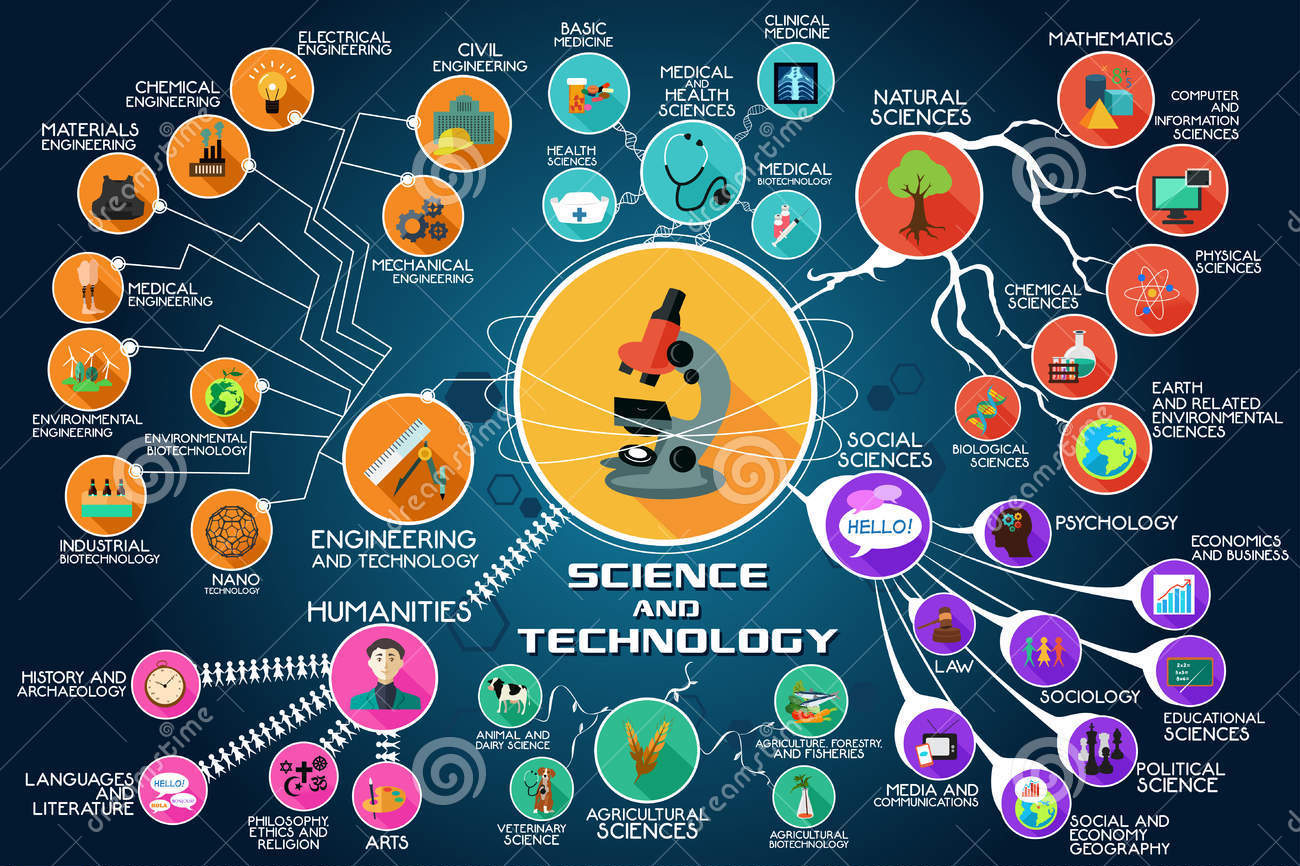
Before postmodernism, there was modernism. Modernism, according to scholars who believe in it, focuses on idealism and reasons for judging knowledge (re)production and/or representing culture. These parameters are opposed by postmodern vanguards such as Michael Foucault, Jacques Derrida, Jean-Francois Lyotard, Richard Rorty, Stanley Fish, Frank Lentricchia, Catherine Mackinnon, Andrea Dworkin, Jacques Lacan, Robert Venturi, Andreas Hussysen, challenging the notion that there are universal certainties or truths. Therefore, postmodernism is premised on philosophical thoughts of anti-foundationalism, anti-essentialism, anti-representationalism and anti-dualism (Hicks, 2004).

These scholars or philosophers set direction and tone for postmodern intellectual world in the areas of art, cultural, literary and legal criticism, philosophy, psychology among others (Hicks). Hicks argues that “many of these scholars believe that in the name of reason, truth and reality Western civilisation has wrought dominance, oppression and destruction”. Thus, rectifying the wrongs of modernism is highly imperative through postmodernism. As the conversation continues on the two concepts, in this piece our analyst focuses on the historical evolution, similarities and differences using the views of two of the vanguards regarding how the concepts have evolved.  According to our analyst, the benefits of both ideologies remain the exclusive “right” of people and countries wielding knowledge and economic power.

Intellectual Ideas and Movement

From Jameson (1979) to Lyotard (1979), the emergence of postmodernism is documented differently and similarly. Jameson builds his narration of the concept on radical distinction and cultural dominance of the logic of late capitalism. The two approaches have led to moral judgment evaluation (positive and negative) and genuinely dialectical attempt to think about our present time in history. The moral judgement evaluation becomes imperative as some western citizens continue to see the consequences of what their political and business leaders (the capitalists) did to “third world countries” as morally wrong, not conforming with natural ethics and laws of God.

Therefore, vanguards of modernism should not be complacent about benefits of post-industrial society. The dialectical approach, on the other hand, focuses on discerning issues associated with modernism using discourse. Jameson points out that “Marx powerfully urges us to think about postmodernism positively and negatively all at once, a thinking that is capable of grasping baleful features of capitalism along with its extraordinary and liberating dynamism simultaneously within a single thought.” With this thinking we would be able to see that capitalism is both the best and worst thing that has ever happened to human race (Jameson). In general, Jameson associates “late” with the pervasive condition of age, which resonated with our rapidly changing economic and cultural structures. Jameson disagrees with the term “postindustrial society,” as it implies a radical departure from the forms of capitalism that prevailed in the nineteenth century (and, implicitly, a departure from Karl Marx’s conception of capital). Jameson is more concerned with recognizing continuity from earlier forms of industrial society (while acknowledging differences) and affirming Marx’s theories’ continuing relevance.

In Lyotard’s text titled The Postmodern Condition: A Report on Knowledge, I discovered that postmodernism is historicised and explained through 14 chapters. Before postmodernism, Lyotard believes that knowledge derived from lengthy discourse was at the heart of philosophical scientific debates. He presented this as a metanarrative that allows for constant change and growth in knowledge over time. The trend that allows scientists to commercialize their knowledge. As a result, metanarrative no longer exists.

Zuboff (2019) later aligns with Lyotard’s position with the idea of surveillance capitalism which stresses how capitalists with technological power aggregate and commodify people’s digital traces for commercial purpose. “In postindustrial and postmodern age, science will maintain and no doubt strengthen its preeminence in the arsenal productive capacities of the nation-states” (Lyotard), concluding that the gap between the developed and developing countries will grow ever wider in the future…In other words, knowledge economy would be one of the significant factors for gaining political power, where fight for control of information would be dominant like what happened in the past centuries in which countries fought for control over territory, control of access to and exploitation of raw materials and cheap labour.

When this occurs, with his rhetorical question of “who decides what knowledge is, and who knows what needs to be decided”, in our analyst’s view, he becomes worried about the future of people and organisations who do not have control over knowledge creation and protection. Lyotard discusses this concern under his legitimisation concept in relation to problematization of postmodernism. According to Lyotard, in a civil context, legitimisation is the process by which a legislator is authorised to promulgate that a given category of citizens must perform a specific kind of action…In a scientific context, legitimisation is the process by which a “legislator” dealing with scientific discourse is authorised to prescribe the stated conditions (in general conditions of internal consistency and experimental verification) determining whether a statement is to be included in that discourse for consideration by the scientific community.

This description indicates that performing specific actions related to knowledge requires having motive power and authority to do so. Lyotard places this in different modes of discourse. For instance, he stresses facts of language and most importantly its pragmatic aspect. Speakers are in knowing position because of specific authority and power they command. While addressees are in unknowing positions because they lack the required elements (power and authority). However, addressees are in position of giving consent or refuting knowers’ statements. Therefore, methodological approaches are needed in understanding society. Lyotard captures this in his section which focuses on the nature of the social bond in modernism and postmodernism eras.

Citing Talcott Parsons & Marx, Lyotard lists functional whole and division models as two means of understanding society. The functional whole model, which is dominated in the minds of founders of French school, wants us to see society as an indivisible entity in which everyone performs actions or engages in activities for society to survive, while Marx suggests society division into two model (accepting the principle of class struggle and dialectics as a duality operating within society).

These approaches are predominant in modernism era. In the postmodernism era, as Lyotard questioned earlier, emerging technologies have revolutionised ways of performing actions, creating and regulating knowledge. People do not really have control over their personalized generated data. Hence, in Lyotard’s views it is imperative to find answers to the question of who has access to the machines for purposeful use of the knowledge and guarantee that the right decisions are made? Lyotard reiterates that access to data will be exclusive right of experts and capitalists, while the ruling class will continue to be the class of decision makers. When this becomes dominant states, administrators, professionals and sociopolitical organisations will be losing their historical traditions.

Wait And Watch How Big Eyes Coin Competes With Apecoin And Tezos With Nfts And Dapps

0

The cryptocurrency industry has evolved into a massive market with more than 12000 currencies. Every currency that starts its journey will face many competitors. The same is the case with Big Eyes Coin (BIG), it is currently in the pre-sale phase, but many competitors are waiting for it. It comes with one of the most comprehensive protocols, and its potential competition with ApeCoin and Tezos is on the cards. There are a lot of exciting developments taking place with all of these currencies.

What is Big Eyes Coin (BIG)?

Big Eyes Coin (BIG) is a meme coin based on one of the finest blockchains, Ethereum. It is said to be a community-driven token focused on transferring all the wealth into the DeFi ecosystem. It comes with a cute cat as a meme. It thinks that the future of this world belongs to the DeFi ecosystem. Big Eyes Coin (BIG) is focused on launching NFTs as well. Its launch on the Uniswap exchange is right around the corner. Here are its key features that will help it to achieve its goals.

Protecting water

Big Eyes Coin (BIG) has many qualities, and its charity works are one of them. It comes with a beautiful division of tokens that empowers the community mainly. Moreover, it has announced that 5% of its tokens are specified for charity. The amount raised through this charity will remain on record. It will be used for the betterment of oceans. Oceans are an integral part of the earth, especially for this cute cat.

Cat in NYC

There are many ways of advertisement for this cute cat, but it has decided on a unique way. New York City is home to a beautiful advertising place called Times Square. Big Eyes Coin (BIG) is also advertised in times square with a huge 3d ad. It is more than cute, so it becomes exciting to watch in 3d form. Big Eyes Coin (BIG) is also advertised in the streets of London and NYC.

Tech guidance

The primary aim of Big Eyes Coin (BIG) is to transfer wealth into the DeFi ecosystem. Unfortunately, 90% of the people in this world aren’t even aware of the fact that what is DeFi. Because they think it is too technical to be understood. Big Eyes Coin (BIG) is here to make it easy for people with complete video guides, how-tos, tutorials, and media stunts.

Liquidity locked

There are many ways to gain investors’ confidence for regular investment. One of these techniques is the liquidity locking technique. A token ratio is locked to tell people that this currency isn’t going anywhere. Big Eyes Coin (BIG) has also locked the liquidity for the next two years. That makes it a safe investment.

Where is ApeCoin (APE) based?

ApeCoin is one of the finest success stories in 2022. It was launched in march 2022 as a utility token for the BAYC ecosystem. BAYC is a club that hosts more than 10k Bored Apes. A long list of NFTs is one of the reasons behind its success. ApeCoin is based on the Ethereum platform and is ERC-20 compliant. ApeCoin has seen an incredible rise as it has a 1.5 billion USD market cap in the same year.

All about Tezos (XTZ)

Tezos is one of those open-source blockchains that have seen significant ups and downs. It follows Proof of Stake consensus, and its policy is made with governance tokens called XTZ. Tezos is mainly known for producing eco-friendly setups for DeFi, NFTs, and dApps. It saw the most successful ICO in 2017. It was valued at around 8 USD when at peak. It faced many lawsuits and is currently valued at 0.95 USD only.

Use this promo code for extra BIG tokens: BIGG2937

You can study more about Big Eyes Coin (BIG) by visiting the following links:

Presale: https://buy.bigeyes.space/

Website: https://bigeyes.space/

Telegram: https://t.me/BIGEYESOFFICIAL


After Its Launch, Can Big Eyes Coin Surge Past Cosmos And Stellar?

0

New cryptocurrency users regularly require support selecting the best economical yet practical coin. Big Eyes Coin (BIG), Cosmos (ATOM), and Stellar (XLM) are three promising low-cost cryptocurrencies to consider purchasing.

Despite being the newest of the three cryptos, Big Eyes Coin (BIG) guarantees to maximize returns and provides customers with competitive interest rates. It has had a very successful presale and is moving toward being a commercial project.

Stellar: Conventional Finance with Decentralization.

A blockchain-based payment network called Stellar (XLM) exists. Its network enables the digital depiction of fiat and cryptocurrency, as well as all other forms of money. Stellar (XLM) supports several different money denominations, and significant institutions favor it. Its benefits also include low transaction costs and quick transaction times.

The Stellar organization is a blockchain-based platform that enables stable connections between banks, payment systems, and customers all around the world. The creation of economies to interact with banking administrations, such as bank credits and settlements, is a key objective of the Stellar organization.

Cosmos: Developing the World of Blockchain Platforms

Using a variety of tools and technologies to unite the whole industry, Cosmos (ATOM) is a new Blockchain project that aims to enhance the Blockchain industry. To allow smooth communication across various blockchains, Cosmos (ATOM) is designed as a network of Blockchain networks. By acting as a bridge, the Cosmos (ATOM) ecosystem enhances the crypto space’s total capacity to carry out crucial functions and evolve.

Through the Cosmos (ATOM) network, blockchain networks with specific use cases can coexist, work together as a single system, and even benefit from one another’s strengths. The year 2022 got off to a strong start when Cosmos (ATOM) reached an all-time high of USD 44.45 on January 17.

Cosmos (ATOM) is currently selling at a staggering 76% discount to its ATH. However, experts believe Cosmos (ATOM) will succeed. Despite the token’s depreciation, reports show that the overall value of Cosmos (ATOM) transfers has increased.

Big Eyes Coin: Big Win for Early Purchasers

Big Eyes Coin (BIG) is a brand-new cryptocurrency that plans to use DeFi resources to enhance its community to boost market liquidity. It also aims to take advantage of the buzz around meme coins and NFT. The benefits of owning these NFTs include a portion of the tax revenue from NFT sales. NFT holders would also have accessibility to the Big Eyes NFT Sushi Crew and the Deluxe NFTs.

Big Eyes Coin (BIG) is a crypto network bringing its users’ enjoyment and value to the world of cryptocurrencies. Big Eyes Coin (BIG) has developed a sound plan to increase the value and ubiquity of its Big Eyes Coin (BIG) in the cryptocurrency market and inside its ever-expanding community.

Use the code for a BIG bonus: BIGG9688

For more information on Big Eyes Coin (BIG), you can visit the following links:


Presale: https://buy.bigeyes.space/

Website: https://bigeyes.space/

Telegram: https://t.me/BIGEYESOFFICIAL