DD
MM
YYYY

PAGES

DD
MM
YYYY

spot_img

PAGES

Home Blog Page 4597

Big Eyes And  Less Prominent Crypto Asset Like Quant Could Pump In Price Around Christmas And Beyond

0

Not all crypto assets enjoy the huge buzz and much attention from crypto enthusiasts. Some are valuable and have promising prospects, but their low market prominence has made crypto investors miss out on their excellent run a number of times. Quant (QNT) falls in this category. However, analysts have suggested that crypto enthusiasts should keep the focus on the crypto asset during the next few weeks, as it is likely to experience a price pump.

The existing altcoins could be great purchases alongside Big Eyes (BIG), a new meme coin aiming to revolutionize the space. According to market experts and price predictors, the market condition may improve around the yuletide and beyond, increasing the possibility of gaining good returns on the right buy. Big Eyes (BIG) and Quant (QNT) show signs of being good crypto assets to buy, during this period. This makes it necessary for you to monitor them closely.

Quant (QNT) The Blockchain Operating System

Quant is a blockchain operating system that facilitates seamless assets and information exchange between users (financial institutions, developers, and enterprises), leveraging Over Ledger technology. The interoperable platform eliminates unnecessary gaps between blockchain networks, thereby facilitating strong interaction between multiple blockchains globally.

Blockchain developers can leverage the operating system to build decentralized applications on multiple blockchains. Users are exposed to lesser risk on Quant, and they also enjoy reduced transaction costs and efficiency. The crypto project is playing an active role in shaping the future of finance to be safer, more seamless, and satisfactory.

By easily connecting global blockchain networks, Quant facilitates global transactions among different businesses and individuals at a low cost without delay. The platform’s native currency QNT is used to pay for these transactions and other activities in the protocol. Quant (QNT) has over a billion market capitalization and had an impressive run in the previous year, but not many take cognizance of the crypto asset. Analysts believe the crypto asset should be part of your watchlist now if you want to profit from the coin market in the coming months. 

Big Eyes Coin (BIG) The New Meme Coin

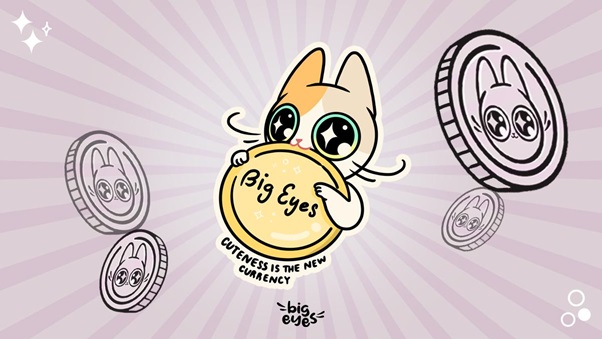
Meme coins have grown in prominence since the meme craze and are gradually becoming crypto assets with defined functionalities and beneficial applications. Big Eyes (BIG) is one of the new meme coins eradicating the ‘no use case’ tag attached to meme coins. The crypto project aims to help individuals build their finance and achieve growth through DeFi and NFTs.

Big Eyes will function on the Ethereum network, and the blockchain ecosystem will be a hub of opportunities. The crypto project will facilitate increased DeFi adoption while ensuring proper wealth distribution and circulation. Users would be able to leverage its native token, BIG, to carry out transactions on its swap and trade digital items in its marketplace.

Also, Big Eyes non-fungible tokens (NFTs) will be a great asset to holders as its value will increase as time progresses. The NFTs will grant special access to exclusive events and content, allowing community members and users to benefit from the NFTs market effectively. Big Eyes (BIG) will have a total of 200 billion supply. However, the cat-themed meme token will undergo periodic burns to reduce circulating quantity, create scarcity, and improve value. A part of the treasury is set aside to achieve this.

Charity funding will also get allocation from Big Eyes treasury. The charity funds will be utilized effectively to protect the aquatic part of the world’s ecosystem. This will ensure the water bodies and aquatic life dwelling in them remain safe. Big Eyes (BIG) isn’t launching just to increase the number of crypto assets in the market. Rather, it is optimized with features and functions that can make it compete fiercely with other top assets in the crypto market. Early holders are optimistic about the meme coin fairing well in the market, and it’s not too late to join the presale.


Join the presale:

Presale: https://buy.bigeyes.space/

Website: https://bigeyes.space/

Telegram: https://t.me/BIGEYESOFFICIAL
Godwin Emefiele Said Nigeria’s New Cash Withdrawal Policy May Be Adjusted

0
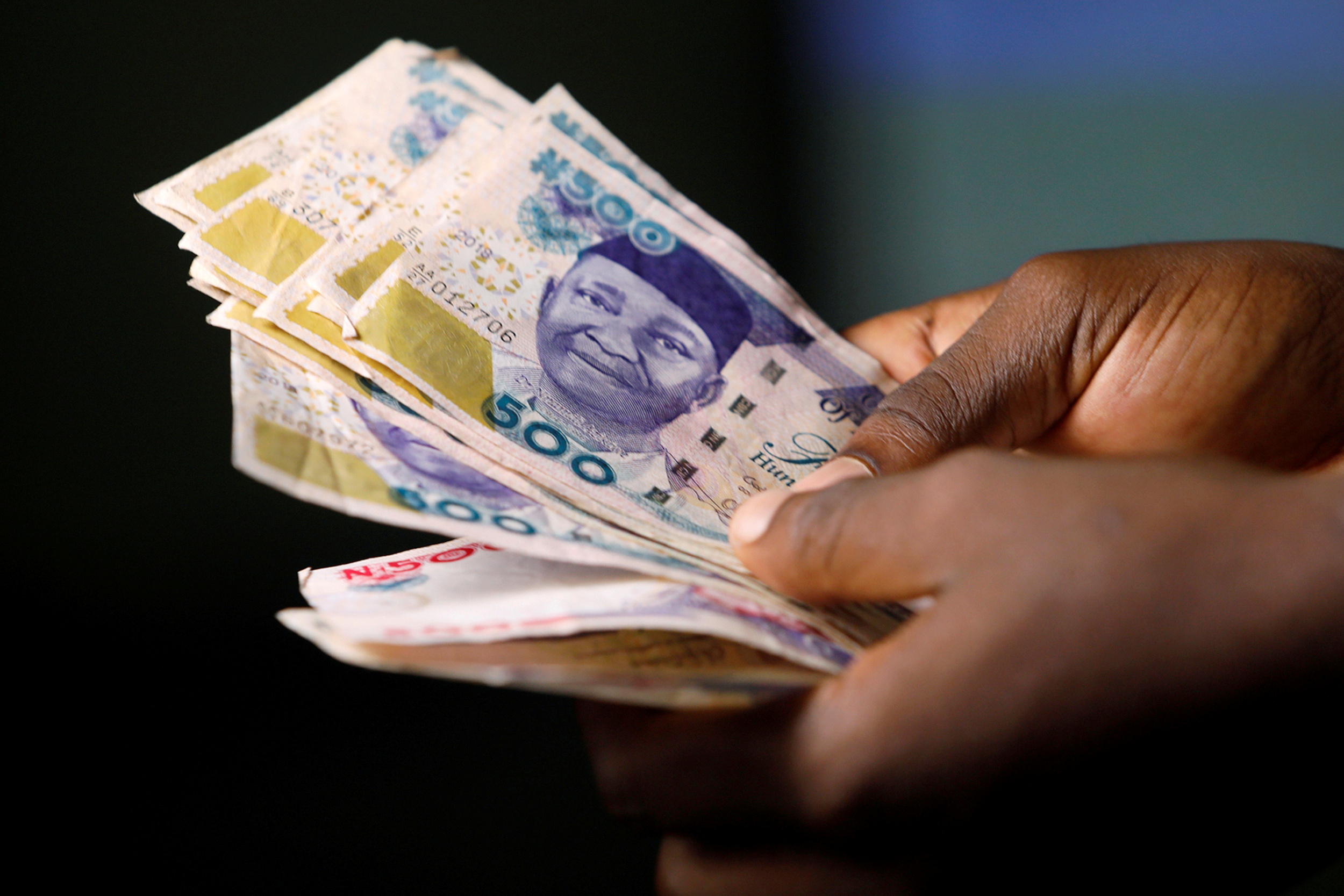
Nigerian naira banknotes are seen in this picture illustration, September 10, 2018. REUTERS/Afolabi Sotunde/File Photo

The governor of the Central Bank of Nigeria (CBN), Godwin Emefiele, said on Thursday that the apex bank has not ruled out possible adjustments to the recently announced limited cash withdrawal policy that has stirred criticism.

Emefiele, who disclosed this to State House Correspondents in Daura, Katsina State, where he’d had a meeting with President Muhammadu Buhari, said that while the policy could be adjusted, there is no going back on the Jan. 9 kickoff date.

The CBN had on Tuesday announced a new ATM and over the counter withdrawal limit of N100,000 per week and N20,000 per day for POS for individuals, a move Emefiele said it’s part of the regulator’s broader monetary policy. Companies are given cash withdrawal allowance of N500,000 under the new policy.

The policy has become a subject of controversy, prompting the intervention of the House of Representatives. The House on Thursday summoned Emefiele, after asking him to suspend the policy.

Against the backdrop that it will deeply limit spending; experts say the policy will impact the growth of Small and Medium Enterprises (SMEs), compounding Nigeria’s economic woes as those in rural areas, who rely on cash for business, will find it hard to cope.

But Emefiele allays the concerns, after informing the Nigerian public that the policy has the backing of Buhari. He said the fear being expressed that the policy will exclude rural dwellers is needless. According to him, many financial platforms that will make the operation of the policy painless have found their way to remote places in the country.

Addressing the concerns raised by the House, which includes the need for the CBN to heed required sections of the CBN Act in implementing its policies, the governor said it will be working with the National Assembly to make the policy work. He assured the Nigerian public that the central bank “will be reviewing from time to time how [the policy] is working”.

As part of efforts to ensure that the policy succeeds, Emefiele said that the central bank will not be rigid, “but this is not to say it will be reversed; nor that we will change the timing.”

“But whether it’s about tweaking some amount to be a little bit higher or a little bit lower and the rest of them; we will do so because we are human, we want to make life good for our people; we do not want to make life difficult for them,” he said.

“I can assure everyone that we are alive to our responsibility and we will do what is right for Nigeria and Nigerians.”

Besides his assurance that the CBN will work with the National Assembly to ensure that key policies such as this is implemented in way that it will not hurt the public, Emefiele said that the CBN will be monitoring developments as the policy comes into effect.

“From time to time we brief them (National Assembly) about what is happening and about our policies.

“I’m aware that they have asked for some briefings and we will brief them, but I think it’s important for me to say that the cashless policy started in 2012.

“Almost three to four occasions we have had to step down the policy because we felt that there is a need for us to prepare ourselves and deepen our payment system infrastructure in Nigeria.

“Between 2012 and now 2022, almost about 10 years, we believe that a lot of electronic channels have been put in place that will aid people in conducting banking and financial service transactions in Nigeria.

“We heard people talk about some of the people in the rural areas and the truth is that even online banking, as I was coming out to Daura, I saw a kiosk that has super agent today.

“It’s because of the way we felt that there was a need for us to deepen the payment system infrastructure.

“We have 1.4 million super agents that are all over different parts of the country, all local governments, and all villages in this country.

“I have told my colleagues, some of their names are already on the CBN website and we will publish all the names of all the super agents, which is different from the banks, which is different from microfinance banks, which is different from other financial institutions.

“Having 1.4 million of them is as good as having 1.4 million banking points where people can conduct services and we think, Nigeria as a big country, the biggest economy in Africa, that we need to leapfrog into the cashless economy.

“We cannot continue to allow a situation where over 85 per cent of the cash that is in circulation is outside the bank. More and more countries that are embracing digitization have gone cashless.

“I said it at different fora, that this is not targeted at anybody, it’s just meant for the good and development of the Nigerian economy and we can only continue to appeal to Nigerians to please see this policy the way we have presented it.

“We will be reviewing from time to time how this is working because I cannot say that we are going to be rigid.

“But it is not to say that we will reverse it. It is not to say that we will change the timing, but whether it is about tweaking some amount to be a little bit higher or a little bit lower, and all the rest of them (we will do it).

“We will do so because we are humans, we want to make sure that we make life good for our people. We do not want to make life difficult for them.

“So, there is no need for anybody to worry, the Central Bank is monitoring what is happening and I can assure everyone that we are up and alive to our responsibilities and we will do what is right for Nigeria and Nigerians,” he said.

African Union Must Plan Ahead As The World Resets

1

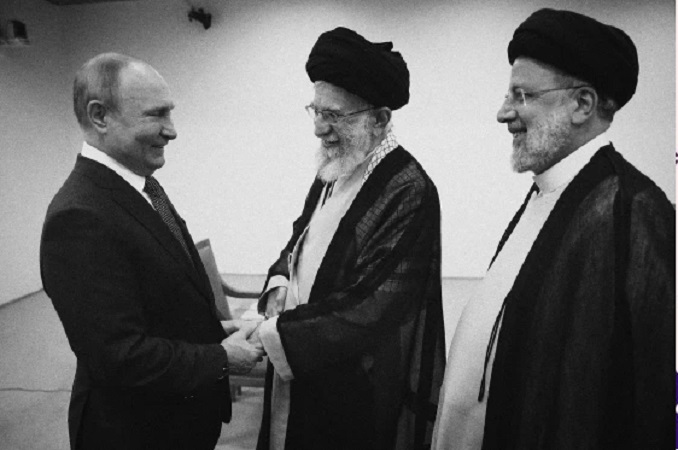
Presidents Biden and Putin should get over their strategic differences and find immediate peace in Ukraine. Listening to the BBC today, and learning that Russia and Iran are forming a fully-fledged defence partnership, I can write that the war in Ukraine is entering an injury time. Certainly, there is a possibility that Russia can support Iran to become a nuclear power. You cannot make this up understanding that Russia is the world’s most sanctioned country – and has few things to lose.

For Finland and Sweden, disconnecting from Russia with Russia connecting with Iran may not be the outcome Brussels hopes. Even Saudi Arabia and Israel will have concerns if the military webs of Russia and Iran become more entwined. A Europe with Iran and China into its heart via Russia will not sleep well.

The moral ambivalence that NATO cannot easily bomb Iran after condemning Russia in Ukraine may create new challenges. We may be entering a new age of global confrontations with the US on one side, Russia on another, and China voting present. It will affect everything and everyone – and that is why they need to move for diplomacy.

The African Union must wake up for the sake of its citizens as the world resets to avoid the citizens becoming the denominator: “Weapons being used for the war in Ukraine and Russia are equally beginning to filter to the region. This illegal movement of arms … continues to threaten our collective peace and security in the region”- Muhammadu Buhari.


“It must however be stated that despite the successes recorded by the gallant troops of the MNJTF and the various ongoing national operations in the region, terrorist threats still lurk in the region,”

“Regrettably, the situation in the Sahel and the raging war in Ukraine serve as major sources of weapons and fighters that bolster the ranks of the terrorists in the Lake Chad Region. A substantial proportion of the arms and ammunition procured to execute the war in Libya continues to find its way to the Lake Chad Region and other parts of the Sahel.

“This illegal movement of arms into the region has heightened the proliferation of small arms and light weapons which continues to threaten our collective peace and security in the region. There is, therefore, the urgent need for expedited collaborative actions by our border control agencies and other security services to stop the circulation of all illegal weapons in the region.”

The President said the Multinational Joint Task Force (MNJTF) deserved commendation for various operations that had brought measurable stability to the Lake Chad Basin.

“The threat of Boko Haram terrorism in the Lake Chad area no doubt brought to the fore, the imperative of enhanced collaboration among the defense forces of the region in the face of a common aggressor. I am pleased that through the Multinational Joint Task Force we responded to the challenge, proving beyond reasonable doubt that with the requisite commitment and determination, the region can solve its challenges in the best ways possible.

“The MNJTF has indeed become a model, breaking physical barriers, and affirming the workability of the common approach to conquer challenges in the area.

“Permit me, therefore, to pay tribute to the untiring efforts of the officers and men of the Multinational Joint Task Force and our various National Armed Forces who continue to make remarkable sacrifices in the fight against terrorism in the region.

“The efforts and memories of these gallant soldiers, some of whom have paid the supreme sacrifice in the line of duty for the survival and restoration of stability to the region, will never be forgotten.”

  • In a statement signed by Femi Adesina, his Special Adviser on Media and Publicity,  President of Nigeria

A Legal appraisal of Central Bank of Nigeria Withdrawal Limit Policy

0

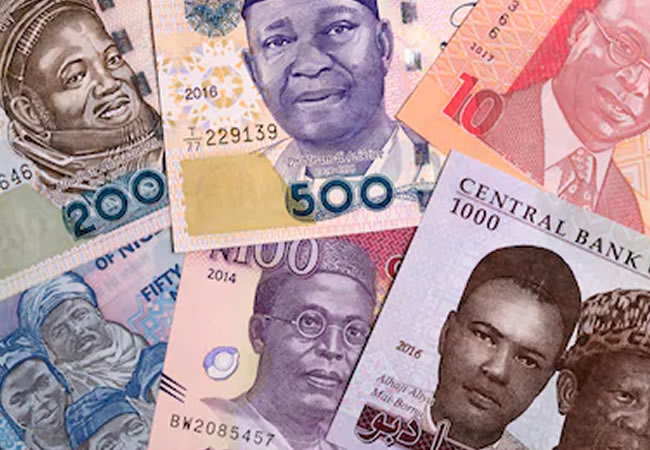
The Central Bank of Nigeria launched on the 6th of December, 2022, a new withdrawal limit directive in keeping with its cashless policy objective and the launch of the new Naira notes by the CBN as well.

This policy has been received with some mixed feelings among the Nigerian population, with its urban & upwardly mobile demographic sections hailing it as a smart move while other sections of the population, especially those involved in what many call the “real economic sectors” of Nigeria, see the withdrawal limit policy as one more badly thought out move by the CBN which has been accused by some sections of the country of limitless incompetence.

However, the focus of this article is to look at the literal provisions of this directive and their legal implications as well as  provide a prediction of the regulatory and legal issues that may or may not arise from this policy.

What is the applicability scope of the Naira Withdrawal limit policy?

The CBN policy (set to take effect from January 9,2023) is applicable to all deposit money banks and OFIs (Other Financial Institutions) in Nigeria. 

What exactly are the provisions of the CBN withdrawal limit policy?

The provisions of the CBN Naira Withdrawal limit policy are :-

– Maximum OTC (Over The Counter) cash withdrawals per week of 100,000.00 Naira for individuals and 500,000.00 Naira for Corporate entities.

– Processing fees of 5% for Individuals & 10% for Corporate entities regarding withdrawals above the limits mentioned in the preceding paragraph.

– 3rd party cheques for amounts above 50,000.00 Naira shall not be eligible for OTC payments, though extant limits of 10 Million Naira I’m clearing cheques still exist.

– The maximum cash withdrawal limit per week from Automated Teller Machines or Points of Sale(POS) machines shall be 100,000.00 Naira subject to a maximum limit of 20,000.00 Naira per day.

– Only denominations of 200 Naira and below shall be loaded into Automated Teller Machines.

– In compelling circumstances not exceeding once a month where cash withdrawals above the prescribed limits is required for legitimate purposes, such cash withdrawals shall not exceed 5 Million Naira for individuals and 10 Million Naira for corporate entities respectively and shall be subject to the processing fee percentage mentioned in the first paragraph in addition to enhanced due diligence requirements.

For transactions under this paragraph, customers are required to obtain the following information at the minimum and upload same on the CBN portal created for the same purpose :-

– A valid means of identification.

– The payee’s Bank Verification Number (BVN).

– A notarized customer declaration of the purpose for the cash withdrawal.

– Senior Management approval for the withdrawal by the Managing Director of the drawer where applicable.

– An approval in writing by the Managing Director or Chief Executive Officer of the bank authorizing the withdrawal.

What are the legal & regulatory implications of the CBN withdrawal limit policy?

The withdrawal policy has its legal pros and cons which will be carefully outlined below :-

Pros 

  1. The withdrawal limit policy has greatly reduced the ability to safely evacuate the proceeds of financial crime.
  1. The New Naira redesign and withdrawal limit comes with even stricter AML/ CFT (Anti-Money Laundering/Combating the Financing of Terrorism) compliance requirements.
  1. The withdrawal limit may serve as the single biggest boost given to the use of the E-Naira.
  1. The withdrawal limit policy may potentially create in line with the CBN cashless policy drive, a very significant explosion in Fintech service demand while by Fintech awareness penetration into formally underbanked areas as well as the creation of previously unknown service platforms like Digital Bureaux De Change & E-Naira Speed wallet payment option enabling & support. 

Cons

  1. The CBN withdrawal limit policy stands as a very big violation of the fundamental right to own and access property (moveable and  immoveable) guaranteed under the 1999 Constitution (as amended).
  1. The CBN withdrawal limit policy might have inadvertently created a new shadow industry specializing in racketeering on the huge gap in physical cash supply that might arise from the policy similar to the strong Dollar racketeering allegations that trailed the CBN some years ago.
  1. The CBN Guidelines do not apply to other financial entities like Cooperative societies that will simply become more parallel to the CBN by virtue of being closer to the most underbanked sections of the population most affected by this withdrawal limit policy.
  1. The CBN might sooner or later be knee-deep in lawsuits for vicarious liability claims arising from the expectedly large number of electronic transaction payment issues that the sheer forced demand for cashless financial services might cause.

How To Register A Licensed Credit Bureau In Nigeria

0

Credit Bureaux are basically corporate entities that specialize in providing lenders & creditors with due diligence-based information on potential borrowers needed to make lending decisions. 

In Nigeria, credit bureaus are licensed businesses operating under a defined regulatory framework.

The focus of this article is the process of getting a a credit bureau registered, with a focus on :-

– The components of the regulatory framework governing credit bureaux in Nigeria.

– Who is eligible to promote and own a credit bureau registered in Nigeria.

– The licensing requirements for a credit bureau in Nigeria.

– The permissible purposes of a credit bureau in Nigeria.

What is the main Regulatory instrument governing credit bureaux in Nigeria?

The main regulation governing credit bureaux in Nigeria is the CBN Credit Bureaux (Licensing, Operations & Regulations) Guidelines 2008.

What is the applicability scope of the CBN Guidelines?

The CBN Guidelines are applicable to all credit bureaux licensed by the CBN in Nigeria.

What is the objective of the CBN Guidelines?

The CBN Guidelines were drafted and passed to define the licensing, operational & regulatory requirements for a privately owned credit bureau under the CBN Act.

Who can legally own and invest in a credit bureau?

– Individuals and corporate entities can invest in a credit bureau subject to CBN approval.

– A bank is not allowed to invest in more than 1(One) credit bureau.

– Investments by a bank and its subsidiaries in a credit bureau shall not exceed 10% of the total paid-up capital of the credit bureau.

What are the licensing requirements for credit bureaux in Nigeria?

Licensing credit bureaux in Nigeria is in 3 stages namely :-

– The Application receipt and appraisal stage.

– The Approval-in-Principle stage.

– The Final Licensing stage.

Application Receipt and Appraisal

This stage involves sending an application to the CBN along with:-

  1. A non-refundable application fee of 250,000.00 Naira made payable to the CBN.
  1. Evidence of Payment of the minimum capital requirement of 500 Million Naira (refundable) to the CBN.
  1. A Certified True Copy CTC of the applicant company’s MEMART Memorandum/Articles of Association.
  1. A detailed feasibility report on the proposed credit bureau.

The Approval-in-Principle (AIP) stage

Upon being satisfied with an application, the CBN will grant an AIP lasting 180 days within which the credit bureau must comply with all the conditions specified in the guidelines, otherwise the AIP might be withdrawn by the CBN.

The Final Operating Licensing stage

After the AIP grant has expired and all necessary pre-conditions have been satisfied by the applicant, a final operating license will be granted subject to the following:- 

– The CBN has conducted an on-site verification to ascertain it’s readiness to commence operations.

– A license will automatically expire if a credit bureau has not commenced business within the first 6 months of the issuance of the license.

– All licensed credit bureaus shall be required to add “credit bureau” to their corporate names e.g. ABC LTD(credit bureau).

– Such names as mentioned in the preceding paragraph shall be registered with the Corporate Affairs Commission (CAC).

– No credit bureau shall be registered with a name which includes words like ‘central’, ‘federal’, ‘federation’, ‘national’, ‘Nigeria’, ‘state’, ‘Christian’, ‘Islamic’ or ‘Biblical’.

What are the permissible purposes for accessing credit information from a credit bureau under the CBN Guidelines?

Some of the permissible purposes for accessing any credit information from a credit bureau are:-

  1. Applications for credit by borrowers.
  1. The review of existing credit facilities.
  1. Funds transfers of 1 Million Naira and above.
  1. Prospective/Current employee checks. 
  1. The acceptance of guarantees.

Where is a credit bureau allowed to collect customer/borrower data from?

Credit Bureaux shall under the Guidelines be allowed to collect data from:-

  1. Nigerian banks.
  1. The CBN Credit Risk Management System 
  1. Insurance companies.
  1. Asset management companies.
  1. Other licensed credit bureaux.

Are there sanctions for illegal data disclosures by credit bureaux?

Yes, there are. Illegal disclosures by credit bureaux can attract punitive fines of 500 Thousand Naira and subsequent daily fines of 10,000.00 Naira from the CBN.