DD
MM
YYYY

PAGES

DD
MM
YYYY

spot_img

PAGES

Home Blog Page 47

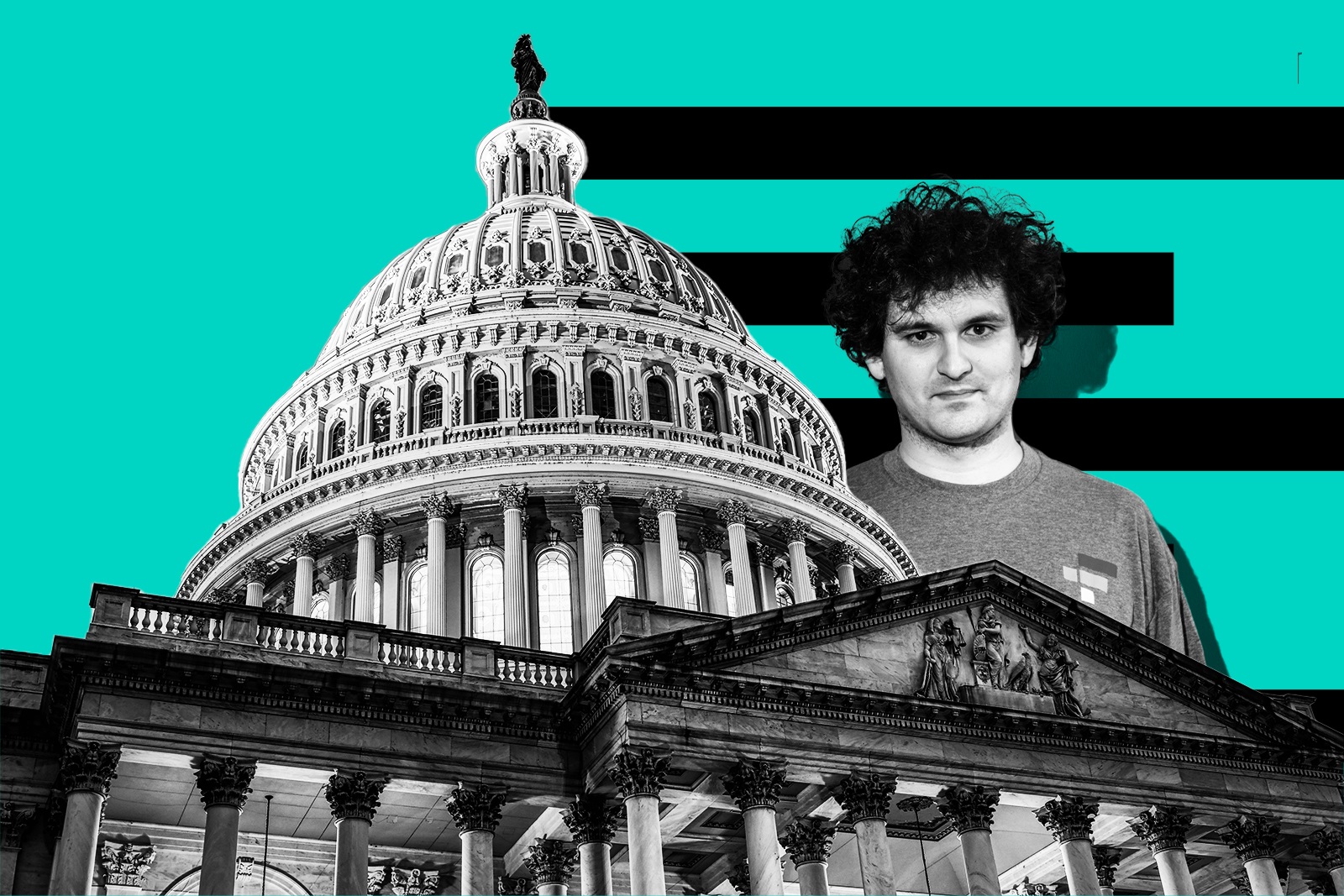
Sam Bankman-Fried Petitions Supreme Court to Overturn FTX Fraud Conviction And $11 Billion Forfeiture

0

Sam Bankman-Fried, the founder of the collapsed cryptocurrency exchange FTX, has asked the U.S. Supreme Court to overturn his 2023 fraud conviction and the accompanying 25-year prison sentence.

In a petition for a writ of certiorari filed on September 10, 2026, his legal team seeks to vacate an approximately $11 billion forfeiture order.

Bankman-Fried was convicted in November 2023 on seven counts of fraud, conspiracy, and money laundering. Prosecutors argued he misused billions of dollars in FTX customer funds to cover losses and debts at his trading firm Alameda Research, as well as for personal spending, investments, and political donations.

At the heart of the case was the relationship between FTX and Alameda. Bankman-Fried had publicly represented that customer funds were kept separate and that Alameda did not receive preferential treatment on FTX.

Prosecutors, however, presented evidence that Alameda had special access to customer funds and that Bankman-Fried directed changes to FTX’s computer code that allowed the trading firm to withdraw large amounts of cryptocurrency from the exchange.

The conviction marked a dramatic reversal for Bankman-Fried, who had risen from a young cryptocurrency entrepreneur to one of the industry’s most prominent figures.

FTX had become one of the world’s largest crypto exchanges before collapsing into bankruptcy in November 2022, exposing a multibillion-dollar shortfall in customer funds. U.S. District Judge Lewis Kaplan sentenced him in March 2024, and he is currently serving that term.

His recent petition centers on two main claims. First, Bankman-Fried’s lawyers argue the trial court improperly allowed prosecutors to present evidence suggesting customers suffered large losses while blocking the defense from introducing evidence that FTX and Alameda, though temporarily illiquid, held sufficient assets to repay customers and investors eventually.

The filing notes that customers have since been repaid through the FTX bankruptcy process, including with substantial interest.

Second, the petition contends that the $11 billion forfeiture order constitutes an excessive fine in violation of the Eighth Amendment. Defense counsel, which includes Stanford law professor Jeffrey Fisher according to some reports, has described the penalty as a “crushing fine.”

The U.S. Court of Appeals for the Second Circuit upheld the conviction and sentence in June 2026. That panel relied in part on the Supreme Court’s 2025 decision which held that wire fraud can be established even without an intent to cause net economic harm to victims.

Bankman-Fried’s petition accepts that framework in part but argues it creates an imbalance. If actual losses are irrelevant to proving fraud under that theory, prosecutors should not have been permitted to emphasize losses while the defense was prevented from responding with evidence of available assets.

The Supreme Court receives thousands of petitions each term and grants review in only about 1 percent of cases, typically hearing arguments in roughly 60 matters. Four justices must vote to accept the case.

A decision on whether to grant certiorari is expected later in 2026. The filing does not suspend Bankman-Fried’s sentence or the forfeiture while the Court considers the request.

Bankman-Fried has separately sought a presidential pardon, though that effort has not advanced. The Supreme Court petition represents the final stage of his direct appeals in one of the largest financial fraud cases tied to the cryptocurrency industry. If the justices decline to hear the matter, the conviction, 25-year sentence, and forfeiture order will stand.

Bitcoin ETF Outflows Meet India’s $620 Billion Corporate Bond Tokenization Experiment

0

Financial markets are increasingly being shaped by two seemingly opposite forces: capital retreating from established digital-asset investment products and financial institutions experimenting with blockchain to modernize traditional markets.

The latest developments in Bitcoin exchange-traded funds and India’s corporate bond market illustrate this transition clearly. Bitcoin ETFs have recorded approximately $282 million in net outflows, highlighting renewed caution among investors despite Bitcoin’s broader emergence as an institutional asset.

ETF flows are closely watched because they provide a window into institutional demand. When capital leaves spot Bitcoin ETFs, it can signal profit-taking, shifting risk appetite, or a temporary preference for cash and other assets.

The outflows do not necessarily invalidate Bitcoin’s long-term institutional thesis.

Instead, they demonstrate how quickly digital-asset markets can respond to changes in liquidity, interest-rate expectations, macroeconomic uncertainty and investor positioning. Bitcoin increasingly trades within the same global liquidity environment as equities, bonds, commodities and other risk assets.

Consequently, ETF flows can fluctuate sharply even when the underlying adoption story remains intact. At the same time, India is moving in the opposite direction on blockchain adoption by testing tokenization in one of the largest segments of its traditional financial system.

The country has launched a pilot aimed at tokenizing its roughly $620 billion corporate bond market, potentially creating a new infrastructure for issuing, trading and settling fixed-income securities.

Tokenization involves representing ownership or claims on financial assets through blockchain-based digital tokens.

In the corporate bond market, this could eventually make certain processes more programmable and transparent while reducing friction between issuance, settlement, recordkeeping and secondary-market transactions.

The significance extends beyond simply putting bonds on a blockchain. A successful tokenization framework could allow financial institutions to experiment with faster settlement, automated compliance, fractional ownership and more efficient collateral management.

Smart contracts could also introduce programmable features into securities, although regulatory oversight, interoperability and investor protection remain essential. India’s experiment therefore represents a particularly important development for the broader real-world-asset tokenization movement.

Much of the blockchain industry’s attention has traditionally focused on cryptocurrencies, stablecoins and decentralized finance. Increasingly, however, the larger opportunity may lie in connecting blockchain infrastructure with government-regulated financial assets.

The contrast with Bitcoin ETF outflows is revealing. On one side, investors are temporarily withdrawing hundreds of millions of dollars from a mature crypto investment vehicle. On the other, a major economy is testing blockchain technology for an enormous traditional capital market.

These developments suggest that blockchain adoption should not be measured exclusively by cryptocurrency prices. The technology’s deeper transformation may occur quietly inside financial infrastructure, where tokenized bonds, equities, funds and other real-world assets can potentially improve how capital moves.

For investors, the immediate lesson is that market sentiment and technological adoption can move in different directions. Bitcoin can experience short-term capital outflows while blockchain simultaneously gains credibility through regulated financial experiments.

The larger story is therefore not simply about Bitcoin versus bonds. It is about the gradual convergence of digital assets and traditional finance. As India tests tokenized corporate bonds and institutional investors continue refining their exposure to Bitcoin.

Financial markets are entering an era in which blockchain may become less a separate industry and more an underlying layer of global capital infrastructure.

Trustee Sues JPMorgan, Alleging Bank Enabled Disbarred Lawyer’s $20 Million Client-Fund Theft

0

The trustee overseeing the bankruptcy of disbarred New York attorney Mitchell Kossoff’s law firm has sued JPMorgan Chase, alleging the bank knew about Kossoff’s misuse of client funds but failed to intervene, allowing nearly $20 million in stolen money to disappear.

In a lawsuit filed Wednesday in Manhattan bankruptcy court, Albert Togut, the court-appointed Chapter 7 trustee of Kossoff PLLC, accused JPMorgan of being “complicit” in Kossoff’s fraud. Togut alleges that the bank knew Kossoff was commingling and misappropriating money held in client accounts and nevertheless failed to prevent or report the activity.

The trustee is seeking $18.5 million from JPMorgan Chase.

The lawsuit centers in part on a bounced check from one of Kossoff’s client accounts in 2015. According to Togut, the incident should have triggered a report to the New York Lawyers’ Fund for Client Protection, a state agency responsible for addressing claims arising from attorney misconduct.

Togut alleges that JPMorgan failed to make the required report.

“The fraud would have ended there. Defendant allowed it to continue,” Togut said in the lawsuit.

The allegation puts the bank’s handling of Kossoff’s accounts at the center of the bankruptcy trustee’s effort to recover funds lost through the attorney’s scheme.

Kossoff is accused of using clients’ money to finance personal expenses.

Kossoff was once a prominent figure in New York’s real estate market before his law practice collapsed under the weight of the fraud allegations.

New York prosecutors accused him of misappropriating more than $14.6 million from at least 35 people and companies. Kossoff pleaded guilty in December 2021 to one count of fraud and three counts of grand larceny.

Prosecutors said Kossoff diverted money from client accounts to support another family business and cover his personal expenses. His spending included an average of about $16,000 a month on personal credit-card bills and roughly $19,000 a month to rent a luxury apartment in Manhattan.

The amounts were pointed to as evidence of how client funds allegedly became a source of financing for Kossoff’s personal lifestyle and other financial obligations.

Kossoff was ultimately sentenced to up to 13.5 years in prison. He is now 72 and incarcerated at Groveland Correctional Facility, according to New York correctional records. He is eligible for parole beginning in November.

The bankruptcy lawsuit is separate from Kossoff’s criminal case and shifts attention toward whether another party can be held financially responsible for losses stemming from the scheme.

At the heart of Togut’s case is the allegation that JPMorgan had information that should have raised concerns about the handling of client funds. The trustee argues that the bank’s alleged failure to report the bounced check allowed the misconduct to continue for years and contributed to the eventual losses suffered by Kossoff’s clients.

The $18.5 million claim is also notable because it seeks to recover a substantial portion of the funds allegedly lost through Kossoff’s misconduct from the financial institution that maintained his accounts.

JPMorgan’s response to the allegations could determine how the bank contests the trustee’s claims, including whether it disputes having sufficient knowledge of Kossoff’s conduct or any legal obligation to act in the manner alleged.

For now, the lawsuit adds a new layer to a fraud case that has already resulted in Kossoff’s criminal conviction and imprisonment. The bankruptcy proceeding is now seeking to trace responsibility beyond the lawyer himself, with the trustee arguing that the banking relationship should have provided an earlier opportunity to detect and halt the theft.

Kalshi’s Stock Perpetuals and Bitwise’s Dogecoin ETF Retreat

0

The U.S. financial market is entering an unusual phase in which prediction markets, cryptocurrency derivatives and traditional equities are increasingly converging.

Two developments involving Kalshi and Bitwise illustrate this transformation from opposite directions: Kalshi is seeking to expand perpetual futures into individual U.S. stocks, while Bitwise is preparing to close its Dogecoin exchange-traded fund less than a year after launch.

Together, they reveal both the appetite for innovative financial products and the unforgiving discipline of investor demand.

Kalshi, the prediction-market operator, plans to seek U.S. regulatory approval for perpetual futures tied to individual stocks and exchange-traded funds.

The proposed products could include major companies such as Tesla, Apple and Nvidia, with approximately 60 contracts reportedly under consideration. If approved, they would represent the first regulated single-stock perpetual futures in the United States.

Perpetual futures are particularly important because they do not have conventional expiration dates. Traders can maintain positions continuously while using leverage, with funding mechanisms helping keep contract prices aligned with underlying assets.

Kalshi has already entered the perpetual-futures market through crypto products and recently expanded into gold and silver, building the infrastructure for a broader derivatives strategy.

The proposed stock perps could therefore represent a major bridge between the crypto-native trading culture and Wall Street. Markets that traditionally operate during defined exchange hours could become accessible through a more continuous trading model.

For traders, that could mean greater flexibility and faster responses to global events. For the industry, however, the proposal raises difficult questions around leverage, market manipulation, insider trading and investor protection.

The regulatory structure will be especially important. Kalshi is regulated by the Commodity Futures Trading Commission as a designated contract market, but stock-linked perpetual products create questions that touch both derivatives and securities regulation.

Kalshi has indicated that it wants the products regulated under an appropriate framework involving U.S. regulators.

At the same time, Bitwise is moving in the opposite direction with its Dogecoin ETF. The asset manager announced that it will liquidate the Bitwise Dogecoin ETF, ticker BWOW, with trading expected to end on October 14, 2026.

Remaining shareholders are expected to receive cash based on the fund’s October 21 net asset value, with distribution around October 22.  The decision comes roughly ten months after BWOW launched in November 2025.

The fund reportedly struggled to attract sustained investor demand, with assets falling to well below $1 million by September. Its weak activity contrasts sharply with the broader growth of crypto investment products and demonstrates that regulatory approval alone does not guarantee a viable ETF market.

The two stories therefore present a striking lesson. Kalshi is betting that investors want more sophisticated, continuous and leveraged exposure to traditional assets. Bitwise’s Dogecoin closure shows that investors can quickly reject products that fail to achieve sufficient liquidity, scale or relevance.

For the broader financial system, this is more than a story about two companies. It reflects a market increasingly defined by experimentation. Prediction markets are evolving into financial infrastructure, while crypto-inspired derivatives are moving toward traditional assets.

At the same time, capital remains selective. Innovation can open the door, but liquidity, regulation, risk management and genuine investor demand ultimately determine which products survive.

Why Robinhood’s 61% Crypto Volume Increase Matters for the Digital Asset Market

0

Robinhood’s crypto business is gaining momentum as trading activity surges across its platform, with monthly cryptocurrency trading volume jumping 61% month-over-month to $17.5 billion.

The increase highlights a broader revival in digital-asset participation and reinforces Robinhood’s growing position at the intersection of traditional finance, retail investing and crypto markets.

The $17.5 billion figure is significant because trading volume is one of the clearest indicators of user activity and market engagement.

A 61% monthly increase suggests that Robinhood customers are becoming considerably more active in digital assets, whether driven by stronger price movements, renewed investor confidence, new products or a combination of these factors.

Crypto markets have increasingly moved beyond their earlier identity as a niche alternative-asset sector. Bitcoin, Ethereum, Solana and other major digital assets are now increasingly integrated into the broader investment ecosystem.

Platforms such as Robinhood benefit from this convergence because their users can access stocks, options, exchange-traded products and cryptocurrencies within the same financial environment.

For Robinhood, this creates an important strategic advantage. Rather than competing exclusively with traditional crypto exchanges, the company can position digital assets as another component of a broader investing experience.

The surge in crypto volume therefore matters not only as a trading statistic but also as evidence that crypto is becoming increasingly embedded within mainstream retail finance.

Robinhood’s expanding blockchain strategy adds another dimension to this development. The company has been pursuing tokenized assets and blockchain-based financial infrastructure.

Reflecting an industry-wide movement toward bringing stocks and other traditional financial instruments onto public blockchains.

Increased crypto trading activity could provide a stronger user base for these products as the boundary between digital assets and conventional securities continues to narrow.

The development comes as competition within the crypto trading industry intensifies. Established exchanges remain important, while fintech companies and traditional financial institutions are increasingly incorporating cryptocurrency into their platforms.

Lower barriers to entry, simplified interfaces and access to multiple asset classes could become decisive factors in attracting the next generation of investors.

However, rising volume does not automatically translate into sustainable growth. Crypto trading is highly sensitive to market conditions. Strong price movements can encourage speculation and increase transaction activity.

While periods of declining volatility can rapidly reduce volumes. Robinhood will therefore need to demonstrate that its crypto growth can extend beyond short-term market enthusiasm.

Regulation will also remain central. As digital assets become more deeply integrated with mainstream financial services, platforms must navigate evolving requirements around custody, market structure, consumer protection and tokenized securities.

The companies that successfully combine regulatory compliance with technological innovation could have a significant advantage as financial markets become increasingly digitized.

For investors and observers, Robinhood’s $17.5 billion monthly crypto volume is therefore more than a headline number. The 61% increase signals renewed retail engagement and demonstrates how rapidly cryptocurrency can move within established financial platforms when market conditions and product availability align.

The larger story is the convergence of finance. Stocks, crypto, tokenized assets and blockchain infrastructure are increasingly being presented through the same digital interfaces.

Robinhood’s latest volume surge suggests that this convergence is not merely a theoretical trend. It is becoming a measurable part of how millions of users interact with financial markets.