DD
MM
YYYY

PAGES

DD
MM
YYYY

spot_img

PAGES

Home Blog Page 472

Nigeria Sees 84% Drop in Spam SMS as Airtel Onboards AI in Its System Across Africa

0

Airtel Nigeria has recorded an 84% decline in spam text messages following the rollout of Airtel Africa’s Artificial Intelligence (AI)-powered spam detection tool, Spam Alert.

The free service, introduced earlier this year, has flagged more than 205 million fraudulent and unsolicited SMS across 13 African markets in the past six months.

In a statement signed by the Vice President, Corporate Communications and CSR, Airtel Africa confirmed that Kenya accounted for the highest spam volume with 68 million flagged messages, followed by Tanzania with 47 million and Zambia with 33 million. But Nigeria stood out for its steepest decline, underscoring the impact of the system in curbing unwanted and often fraudulent text messaging.

How the system works

The Spam Alert tool prefixes suspicious SMS with “SPAM Alert,” giving subscribers real-time protection without the need for any extra apps. Airtel said it is tackling phishing scams and nuisance texts that have long plagued mobile money users and smartphone owners by intercepting messages before they reach end users.

“We are proud to pioneer an advanced tech solution powered by AI in tackling spam messages that are a major concern in Africa as smartphone penetration increases,” Airtel Africa CEO Sunil Taldar said.

Currently active in 13 of Airtel’s 14 markets, including Nigeria, Kenya, Zambia, Uganda, Gabon, Congo Brazzaville, Malawi, Madagascar, DRC, Rwanda, Tanzania, Chad, and Niger, the company said Spam Alert has already reduced spam SMS across Africa by 12%. Seychelles is expected to be added soon.

Nigeria’s experience

In July, Airtel Nigeria disclosed that the system had intercepted 9.6 million suspicious messages between March 13 and May 20, 2025. Of that figure, 528,080 originated from Airtel users, while over 9.1 million came from off-network sources.

The system runs on advanced AI models that scan every incoming SMS against more than 250 parameters such as sender identity, link structure, message volume, and regional anomalies. Messages flagged as malicious are tagged “Suspected SPAM” and filtered before delivery.

Importantly, Airtel emphasized that the solution preserves user privacy by avoiding the storage or analysis of message content, with each SMS processed in under two milliseconds.

Regulatory support

The Nigerian Communications Commission (NCC) welcomed the initiative, describing it as a critical addition to the country’s digital security arsenal.

“Spam messages and fraud are becoming more sophisticated, and this AI-powered solution provides a much-needed layer of security,” said the NCC’s Executive Vice Chairman, Dr. Aminu Maida.

The NCC has, in recent months, been pushing for stronger collaborative frameworks between operators and regulators to strengthen consumer protection. Its 2023 Industry Risk Report had flagged phishing via SMS and unsolicited bulk messaging among the top five risks facing mobile users, particularly rural subscribers and first-time smartphone owners.

A growing digital threat

Experts have warned that spam and phishing attempts in Africa often target mobile money transactions, which have surged in recent years. With smartphone penetration climbing and digital payments expanding, operators face pressure to protect users from schemes that can erode trust in mobile platforms.

Airtel has put itself at the center of a continent-wide effort to shore up defenses by leveraging AI. The success in Nigeria, where spam volumes dropped by more than four-fifths, may set a precedent for other operators and regulators to adopt similar tools in combating digital fraud.

OpenAI is Reportedly Developing AI Eyeglasses, Other Hardware

0

When word broke that OpenAI’s first hardware device, designed with Apple’s former chief design officer, Jony Ive, could resemble “a smart speaker without a display,” industry analysts were quick to draw comparisons.

The idea of a screen-free conversational gadget taps into a vision many tech giants have tried to execute — with mixed results.

According to The Information, people with direct knowledge of the project say OpenAI has already secured a contract with Luxshare and approached Goertek, two of Apple’s longtime product assemblers, to provide components such as speaker modules. Both firms have deep experience building high-volume consumer hardware: Luxshare assembles iPhones and AirPods, while Goertek works on AirPods, HomePods, and Apple Watches.

The device is only one part of what insiders describe as a broader “family of devices,” with OpenAI also considering glasses, a digital voice recorder, and a wearable pin. These are reportedly targeted for release between late 2026 and early 2027.

Echoes of Old Experiments

OpenAI’s rumored speaker recalls Amazon’s Echo, which popularized the smart assistant category but has struggled to justify years of losses as Alexa usage plateaued. Yet, by stripping away the display, OpenAI signals that its bet is not on replicating the smart home hub but on creating a device where its conversational AI models are the core product.

Sam Altman, OpenAI’s CEO, previewed this philosophy in May, describing the first device as pocket-sized, contextually aware, and screen-free — a clean break from the information-overload approach of modern smartphones. That design direction carries Jony Ive’s fingerprints, with his long-standing focus on simplicity and seamless interaction.

At the same time, comparisons to other high-profile failures are inevitable, especially given the project’s chances of failing. Google Glass launched with similar promises of contextual awareness but collapsed amid privacy backlash and limited utility. Snap Spectacles, too, captured hype but never cracked mainstream adoption. And Meta’s Ray-Ban Displays — announced this week with a $799 price tag and a small in-lens display — already face skepticism after CEO Mark Zuckerberg fumbled a live demo call.

A Delicate Moment for Apple

Apple’s own trajectory adds another layer to the story. While Apple bets heavily on the Vision Pro mixed-reality headset, OpenAI is pursuing screen-free, minimalist hardware in direct contrast. That divergence may help explain Apple’s unease. According to The Information, the company canceled a meeting with its supply chain teams in China last month, worried that time away from headquarters could accelerate defections to OpenAI.

And defections are indeed mounting. Tang Tan, OpenAI’s chief hardware officer and Apple’s former product design head, has been actively poaching Apple employees, promising “less bureaucracy and more collaboration” than they would encounter in Cupertino. For Apple, OpenAI’s poaching spree risks draining key hardware talent just as it navigates the delicate rollout of the Vision Pro.

The AI Pin Debate

Perhaps the most surprising rumor is that OpenAI may be working on a wearable AI pin. That move would put it in direct conversation with Humane’s AI Pin — a product Jony Ive openly criticized — as well as Meta’s experiments with wearable AI. Ive’s reluctance toward such devices makes the rumor notable, if not contradictory. Still, it highlights OpenAI’s willingness to explore uncharted territory despite the failures of early pioneers.

Earlier leaks also hinted at the possibility of in-ear devices, though no such product appeared in the current reported lineup. If OpenAI does move forward with audio wearables, it would enter a field that Apple and Amazon dominate with AirPods and Echo Buds, respectively.

The broader question, however, is whether OpenAI can avoid repeating the mistakes of predecessors. Hardware infused with AI has historically been a minefield: too intrusive, too limited, or too expensive. OpenAI hopes to sidestep those pitfalls and instead create products that feel intuitive and indispensable by leveraging Apple’s supply chain and Ive’s design sensibilities.

Yet the risk remains that consumers have shown hesitation toward AI-first gadgets unless they solve real problems. OpenAI’s ChatGPT has already found a foothold in software, but the leap into physical devices will test whether AI can become a daily companion in the way the smartphone once did.

With prototypes reportedly advancing and contracts already in place with Apple’s manufacturing partners, the race is no longer theoretical. This means OpenAI’s first hardware family is taking shape — and its success or failure could redefine the company’s role in consumer tech.

North America Leads Global Institutional Crypto Adoption in 2025, With The U.S Securing Second Place

0

North America has firmly established itself as a dominant force in the global cryptocurrency landscape, driven largely by the United States’ rising role as a digital asset innovation and regulation hub.

According to the Chainalysis 2025 Adoption Index, the U.S. ranked second, accounting for 26% of all cryptocurrency transaction activity during the period studied.

Between July 2024 and June 2025, the North American region received a staggering $2.3 trillion in crypto transaction value, peaking in December 2024 when an estimated $244 billion flowed in during a single month. This December surge was marked by unprecedented stablecoin activity, setting a record for the highest monthly stablecoin transfers ever recorded.

Analysts attribute this spike partly to the election of President Donald Trump in November 2024, which fueled bullish market sentiment and optimism around clearer, more crypto-friendly regulatory policies. Monetary easing in Q4 2024 and increased institutional trading activity including ETF-driven flows and portfolio rebalancing also played key roles.

Although activity moderated slightly in 2025, transaction levels remained significantly higher than in the previous year, signaling sustained interest in digital assets. North America exhibited greater volatility than other regions, largely due to its heavy concentration of institutional players and active trading strategies.

Between September 2024 and June 2025, monthly transaction growth rates swung wildly, from a sharp 35% month-on-month decline in September to an 84% surge in November, demonstrating how sensitive the region is to short-term catalysts such as macroeconomic signals and shifts in investor sentiment.

By contrast, other regions displayed more stable adoption trends, reflecting differing market structures with North America leaning heavily on institutional and investment-driven activity, while other regions focus more on utility-driven and remittance-based usage.

Retail Participation Remains Strong

Despite the institutional dominance, retail investors continue to play a major role. Data from centralized exchanges between June 2024 and July 2025 revealed that everyday users purchased $2.7 trillion worth of Bitcoin using U.S. dollars, followed by $1.5 trillion in Ethereum (ETH) and $454 billion in Tether (USDT).

Remarkably, Bitcoin’s share of fiat-based trading has held steady at around 42% over the past four years, underscoring its enduring role as the leading digital asset for retail investors.

Regulatory Shifts Boost Institutional Growth

The year 2025 has seen sweeping regulatory reforms in the U.S., creating a more favorable environment for institutional crypto adoption. Agencies such as the Securities and Exchange Commission (SEC), Office of the Comptroller of the Currency (OCC), and Commodity Futures Trading Commission (CFTC) have reversed restrictive policies and introduced clearer guidelines that encourage broader participation by traditional financial institutions.

The President’s Working Group on Digital Asset Markets further bolstered these efforts by issuing recommendations aimed at positioning the U.S. as the “crypto capital of the world.” This shift marks a departure from the SEC’s previous “regulation by enforcement” strategy, which had long been a source of uncertainty for market participants.

As a result, North America now leads the world in high-value transactions, with 45% of all crypto transaction value involving transfers over $10 million. Europe trails behind at 34%, highlighting the U.S.’s outsized influence in global institutional adoption.

Two segments have emerged as key drivers of growth: tokenized real-world assets and spot Bitcoin ETFs.

The market for tokenized money market funds, particularly those holding U.S. Treasuries, has expanded dramatically. Assets under management (AUM) for these funds nearly quadrupled, rising from $2 billion in August 2024 to over $7 billion by August 2025.

These tokenized products are attractive for both crypto-native investors and institutions seeking regulated, yield-bearing assets that can also be deployed in decentralized finance (DeFi) protocols or fintech platforms.

Meanwhile, the Bitcoin ETF market has experienced explosive growth. As of mid-July 2025, global Bitcoin ETF AUM reached approximately $179.5 billion, with U.S.-listed ETFs accounting for over $120 billion of this total. This rapid growth since their approval in early 2024 highlights the deepening integration of crypto into traditional financial systems.

These developments signal that cryptocurrencies are increasingly recognized as mainstream investible asset classes.

Notably, the U.S. dollar’s global dominance is mirrored in the explosive growth of stablecoins, which now facilitate trillions in cross-border transfers every month. In 2025, stablecoin transfer volumes regularly exceeded $2 trillion per month, with peaks approaching $3 trillion.

From January to July 2025, the total adjusted stablecoin transaction value reached nearly $16 trillion, almost triple the levels recorded during the same period in 2024. This underscores how dollar-backed digital assets have become deeply embedded in global finance, serving not only as a settlement mechanism for crypto trades but also as a lifeline for populations underserved by traditional banking systems.

By enabling efficient, stable, and borderless transactions, stablecoins are reinforcing the U.S. dollar’s influence on a global scale extending America’s monetary reach far beyond its domestic borders.

Stage 3 Ends Soon: $4,500 Gets 62M BullZilla Tokens as Ripple ETF and TRON Growth Fuel the Top Crypto Coins to Invest in This Week

0

What happens when whales rush into a presale that climbs every 48 hours or every $100,000 raised? Investors are finding out as Ripple pushes institutional adoption and TRON expands stablecoin dominance. These two giants are making headlines, but it’s BullZilla ($BZIL) that’s roaring the loudest.

In just a few stages, the BullZilla presale has surged past $530,000 with over 1,700 holders and 27 billion tokens sold. The price is currently locked at $0.00007241, with Stage 3C offering a projected 7179.94% ROI at listing ($0.00527). For anyone seeking top crypto coins to invest in this week, $BZIL is quickly rising from a meme coin narrative into a generational wealth play. The next price surge of 9.21% is already on the clock, making this one of the top weekly crypto investments before it races further.

BullZilla’s Progressive Presale Engine: The Bull That Never Sleeps

How many projects can promise investors that the price goes up either by time or by capital flow? The BullZilla presale is built on a Progressive Price Engine, a design where the token price climbs automatically every 48 hours or the moment $100,000 is raised. This dual mechanism forces urgency into every buying decision. Every hesitation costs money, because the presale never flatlines.

At the current Stage 3 (404: Whale Signal Detected), $BZIL trades at $0.00007241. With over $530,000 already raised and whales showing signs of accumulation, the next trigger point is closing in fast. Token holders already exceed 1,700, proving that early conviction is spreading among the top crypto coins to invest in this week.

Stage Current Price Raised Holders Tokens Sold ROI to Listing ($0.00527)
3rd (404 Whale Signal) $0.00007241 $530K+ 1700+ 27B 7179.94%

Now consider the potential. A $4,500 investment at the current stage buys 62,148,114 BZIL tokens. At the presale listing price of $0.00527, those tokens are worth $327,506. That’s a life-changing 7179.94% ROI baked into the mechanics. With whales already buying in, this stage won’t last long.

Secure BullZilla Coins Before Stage 3 Ends

Set up a wallet like MetaMask or Trust Wallet, fund it with ETH from Binance or Coinbase, then connect to the Bull Zilla presale portal. Swap ETH for $BZIL, confirm, and your allocation is secured. The earlier you buy, the bigger the multiple.

Every $100K fed the beast. Every 48 hours pushed the price higher. Only those who acted early on the top crypto coins to invest in this week walked away with the apex rewards.

Ripple’s Institutional Push: ETF Launch and RLUSD Expansion

Ripple has just scored one of its biggest wins with the launch of the first U.S. spot XRP ETF (XRPR), which hit $24 million in 90 minutes and nearly $38 million by day’s end. This ETF provides institutions with a direct channel into XRP, making it one of the top crypto coins to invest in this week for exposure to regulated markets.

At the same time, Ripple partnered with DBS and Franklin Templeton to tokenize a U.S. dollar money market fund on the XRP Ledger. This fund, combined with Ripple’s RLUSD stablecoin, now offers trading and collateralized lending options for institutional players. These moves are game-changers following Ripple’s SEC lawsuit updates, cementing XRP as a regulated yet innovative asset for top weekly crypto investments.

TRON Expands Stablecoin Power: PayPal USD and Whale Watch

TRON continues to flex its ecosystem power with new integrations. PayPal USD (PYUSD) is now live on the TRON blockchain through LayerZero’s cross-chain system, positioning TRON as a settlement hub for global stablecoin payments. This follows consistent reports of strong TRON blockchain activity, including a deflationary token model that saw TRX inflation drop to –1.6%.

Price action shows TRX holding steady around $0.33–0.35, with analysts pointing toward near-term upside if the momentum continues. For investors comparing meme presales performance with established blockchains, TRON is offering stability while new coins joining exchanges build speculative fire. Its combination of stablecoin growth and network revenue keeps it in the list of top crypto coins to invest in this week.

Conclusion

The BullZilla presale is setting a new benchmark for meme coin tokenomics. With a 7179.94% ROI projection, automatic price climbs, and whale accumulation already visible, its stages are flying by. Ripple’s ETF milestone and TRON’s stablecoin expansion add credibility to the crypto market, but BZIL’s presale is where exponential growth stories are born.

The clock is ticking on the top crypto coins to invest in this week, and each $100,000 raised tightens the window. Whales have already heard the roar. The only question is: will you act before the next surge resets the price floor?

For More Information:

BZIL Official Website

Join BZIL Telegram Channel

Follow BZIL on X  (Formerly Twitter)

FAQs

What makes BullZilla unique among meme presales?

Its Progressive Price Engine guarantees price climbs every $100K or 48 hours, forcing early buying pressure.

How much has BullZilla raised so far?

Over $530,000 has been raised, with more than 1,700 token holders.

What’s Ripple’s latest breakthrough?

The launch of the first U.S. spot XRP ETF and institutional RLUSD adoption via DBS and Franklin Templeton.

How is TRON attracting investors?

By integrating PayPal USD through LayerZero, driving TRON blockchain activity and deflationary TRX tokenomics.

What’s the projected ROI for BullZilla?

At listing, investors at current stages can earn up to 7179.94% ROI, turning $4,500 into over $327,000.

Glossary

Presale – Early fundraising stage where tokens are sold before exchange listings.

Progressive Price Engine – Mechanism where price rises by time or capital raised.

ROI – Return on investment.

Stablecoin – Cryptocurrency pegged to a stable asset like USD.

ETF – Exchange-traded fund holding real assets.

LayerZero – Protocol enabling cross-chain token movement.

Token Burn – Permanent removal of tokens to reduce supply.

APY – Annual percentage yield from staking.

Liquidity Injection – Funds added to stabilize markets.

Deflationary Token – Asset with decreasing circulating supply over time.

Keywords

Top crypto coins to invest in this week, Ripple SEC lawsuit updates, TRON blockchain activity, top weekly crypto investments, meme presales performance, new coins joining exchanges, BullZilla presale ROI, BZIL token holders, XRP ETF launch, TRON PYUSD expansion

Summary

BullZilla ($BZIL) is redefining meme coin presales with a Progressive Price Engine that ensures the token price climbs every $100K or 48 hours. Already past $530K raised with over 1,700 holders, Stage 3 offers investors a 7179.94% ROI projection by listing. A $4,500 investment today can grow into over $327,000. Meanwhile, Ripple’s U.S. spot ETF launch and DBS/Franklin Templeton partnership highlight institutional growth, while TRON secures PayPal USD integration, boosting stablecoin settlement and network revenue. Together, these updates cement BullZilla, Ripple, and TRON as the top crypto coins to invest in this week.

Disclaimer: This article is for informational purposes only and does not constitute financial advice. Cryptocurrency investments carry risks, including potential loss of capital. Conduct your own research before investing.

Microsoft to Spend $4bn on Second Wisconsin Data Center as AI Demand Surges

0

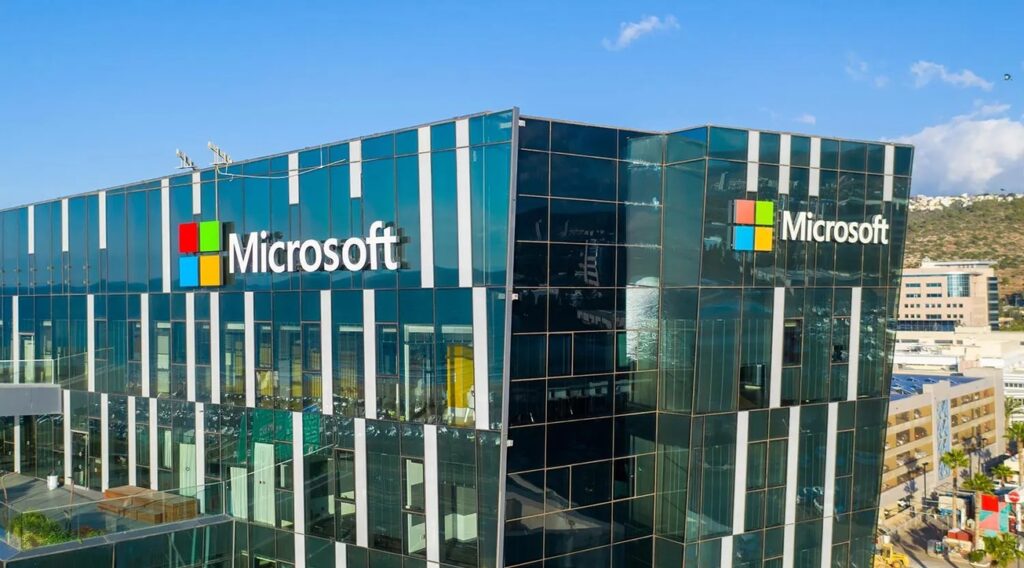
Microsoft said Thursday it will allocate $4 billion to construct a second data center in Wisconsin, expanding its U.S. footprint as demand for artificial intelligence infrastructure continues to accelerate.

The announcement comes just months after the company committed $3.3 billion to its first Wisconsin facility, located in Mount Pleasant, which is expected to go online in early 2026. Together, the two sites represent one of Microsoft’s largest single-state infrastructure projects, underscoring the intensifying race among global cloud providers to secure capacity for AI workloads.

The first Mount Pleasant data center will house hundreds of thousands of Nvidia Blackwell GB200 GPUs, Microsoft President and Vice Chair Brad Smith said at a town hall meeting. The chips, unveiled earlier this year, are designed to handle the most advanced AI training and inference workloads.

“It will deliver 10x the performance of the world’s fastest supercomputer today, enabling AI training and inference workloads at a level never before seen,” Microsoft CEO Satya Nadella wrote in a post on X.

Smith, who spent part of his childhood in Mount Pleasant, said the company paused to carefully evaluate the second phase of construction before committing another $4 billion. The new facility will be of a similar scale to the first and is expected to go live in 2027 or later.

A Homegrown Power Play

Wisconsin’s Democratic Governor Tony Evers hailed the announcement, noting the state will now be home to the largest concentration of GPUs under one roof in the world. The project also repurposes land once slated for Foxconn’s manufacturing plant, which failed to materialize at the promised scale.

Water use has been a concern for locals, but Smith emphasized that the facility’s impact will be modest compared with Foxconn’s plans. The data center will require about 2.8 million gallons of water annually, while Foxconn had been permitted to consume over 7 million gallons per day.

Smith acknowledged that building such a vast computing infrastructure raises energy concerns. The two data centers together may require more than 900 megawatts of power. To mitigate the impact, Microsoft has pledged to match its fossil fuel use with carbon-free contributions to the grid.

“I just want you to know we are doing everything we can, and I believe we’re succeeding, in managing this issue well, so that you all don’t have to pay more for electricity because of our presence,” Smith told residents.

A 250-megawatt solar farm currently under construction about 150 miles northwest of the site will contribute renewable energy to the project.

Part of a Global Buildout

The Wisconsin announcement is the latest in a string of multibillion-dollar data center investments by Microsoft. Earlier this week, Smith said the company has earmarked $15.5 billion for infrastructure in the U.K. through 2028, as part of efforts to scale up AI capacity in Europe.

Separately, Amsterdam-based Nebius Group disclosed last week that Microsoft agreed to spend up to $19.4 billion over five years to rent AI data center capacity, highlighting the company’s reliance on both owned and leased infrastructure.

With more than 700 million users relying on OpenAI’s ChatGPT, which runs on Microsoft’s Azure cloud, and with enterprise software makers from Adobe to Salesforce rolling out AI enhancements, demand for GPUs and hyperscale infrastructure has reached unprecedented levels.

For Microsoft, the Wisconsin buildout represents more than just capacity. It signals the company’s ambition to dominate the global AI infrastructure market, placing it in direct competition with rivals Amazon Web Services and Google Cloud.

Smith suggested that Microsoft’s careful phasing reflects both market opportunity and community engagement.

“We did pause to think through exactly what we would build for phase two, how we would build it,” he said, adding that the company is balancing growth with sustainability.

If completed on schedule, the dual Wisconsin sites will cement the state as a central hub in the global AI arms race — a transformation few anticipated when Foxconn first broke ground in Mount Pleasant.