DD
MM
YYYY

PAGES

DD
MM
YYYY

spot_img

PAGES

Home Blog Page 4907

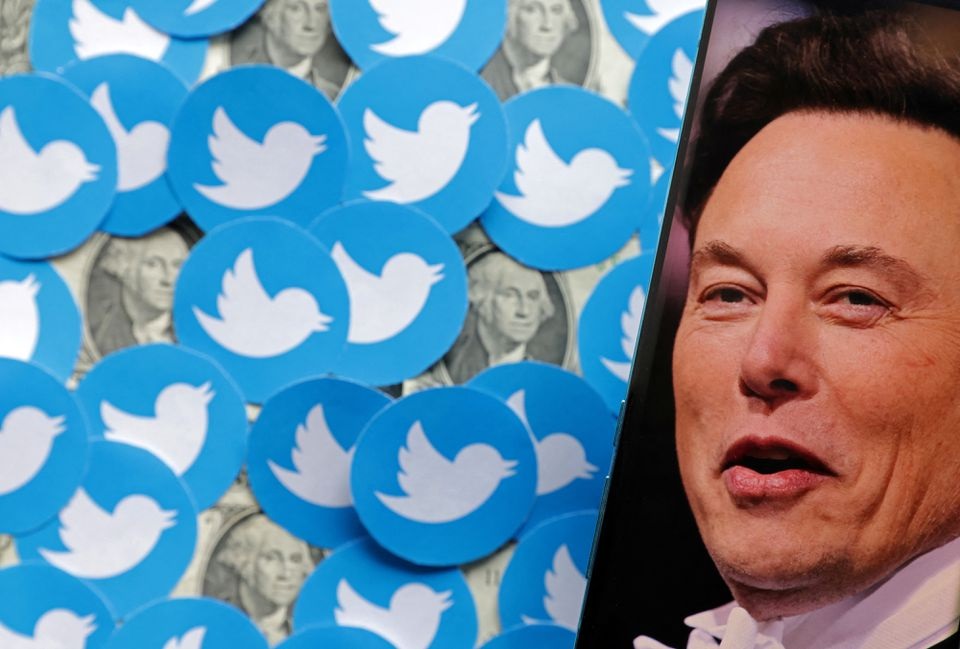
Twitter Reveals Elon Musk Attempt To Scrap Deal Wrongful And Invalid

0

Recall that Tesla CEO Elon Musk, during the process of acquiring Twitter, had accused the social media company of committing a material breach by where they lied about the number of bots on the platform, which prompted him to opt out of the $44bn deal.

Not too long after, a former security Chief of Twitter turned whistleblower Peiter Zatko also revealed that Twitter lied to Elon Musk about the number of fake and spam accounts on its platform, which he also revealed some hidden secrets about the company.

Elon Musk also sent an additional letter of deal termination to Twitter Inc (TWTR.N) to include a recent whistleblower complaint from the former security head of the social media firm as another reason to scrap the $44 billion deal

Following the whistleblower revelation, it was later disclosed by Elon Musk’s lawyer that Twitter had gone behind to pay him $ 7 million to secure his silence.

The payment was mentioned in passing at a Sept. 6 hearing in the lawsuit between Twitter and Elon Musk, over his attempts to cancel a $44 billion purchase of the company.

In the words of Musk’s lawyer at the hearing;

“They’re paying the guy $7 million and making sure he is quiet”.

People familiar with the matter confirmed that the reference was to payment to whistle-blower Peiter Zatko to forever remain silent.

Following this allegation, Twitter representatives however declined to comment about the payment to Zatko, the company’s former head of security.

However, some unidentified people familiar with the matter, disclosed that the payment made by Twitter, was part of a settlement related to Zatko’s lost compensation after leaving Twitter and not to silence him over his recent revelations.

In a recent letter to Twitter, lawyers for Musk stated that Twitter’s failure to seek his consent before paying $7.75 million to whistleblower Peiter Zatko and his lawyers violated the merger agreement, which restricts when Twitter could make such payments.

Twitter lawyers responded on Monday, stating that Musk’s reasoning to back out of the deal was however “invalid and wrongful.”

The company issued a rebuttal on Monday, stating that  payments made to the whistleblower did not breach any terms of its $44 billion buyout by Elon Musk after the world’s richest man made another attempt to scrap the deal.

The latest turn of events comes as the two sides head to a five-day trial at the Delaware Court of Chancery set to begin on Oct. 17. Twitter is asking Chancellor Kathaleen McCormick to order Musk to buy it for the agreed $54.20 per share.

Google Completes $5.4bn Mandiant Acquisition Deal

0

Google has completed the acquisition of cybersecurity firm Mandiant, for $5.4 billion, the company has announced.

The proposed acquisition is part of Google’s efforts to secure its computer systems and had been in the pipeline since March.

“Today we’re excited to share the next step in this journey with the completion of our acquisition of Mandiant, a leader in dynamic cyber defense, threat intelligence and incident response services. Mandiant shares our cybersecurity vision and will join Google Cloud to help organizations improve their threat, incident and exposure management,” Google Cloud CEO Thomas Kurian wrote in a blog post.

Under the deal, Mandiant will operate under the auspices of Google Cloud, though the Mandiant brand will continue to exist.

Google’s move to acquire Mandiant came a year after the company was traded by its former owner FireEye in a $1.2 billion deal with private equity firm Symphony Technology Group.

The internet giant said Mandiant aligns with its cybersecurity goals, and the addition of Mandiant Threat Intelligence—which is compiled by their team of security and intelligence individuals spread across 22 countries, who serve customers located in 80 countries—will give security practitioners greater visibility and expertise from the frontlines.

“Mandiant’s experience detecting and responding to sophisticated cyber threat actors will offer Google Cloud customers actionable insights into the threats that matter to their businesses right now,” Google said.

Google said its Cloud security customers use its cloud infrastructure to ingest, analyze and retain all their security telemetry across multicloud and on-premise environments. The web search giant added that by leveraging its sub-second search across petabytes of information combined with security orchestration, automation and response capabilities, its customers can spend more time defending their organizations.

This is where the Mandiant brand becomes important to Google’s cybersecurity architecture.

“We will retain the Mandiant brand and continue Mandiant’s mission to make every organization secure from cyber threats and confident in their readiness,” Kurian said.

Google is a competitor in the cloud computing market where other players such as Amazon and Microsoft have gained ground. To keep its customers, Google need to keep their entire data and cloud infrastructure secure. This means updating its cybersecurity system continually with new products that will strengthen it. These new products are better found with well-established cybersecurity firms – the reason why Google had to acquire Mandiant.

“Ultimately, we hope to shift the industry to a more proactive approach focused on modernizing Security Operations workflows, personnel, and underlying technologies to achieve an autonomic state of existence – where threat management functions can scale as customers’ needs change and as threats evolve.

“Combining Google Cloud’s existing security portfolio with Mandiant’s leading cyber threat intelligence will allow us to deliver a security operations suite to help enterprises globally stay protected at every stage of the security lifecycle. With the scale of Google’s data processing, novel analytics approaches with AI and machine learning, and a focus on eliminating entire classes of threats, Google Cloud and Mandiant will help organizations reinvent security to meet the requirements of our rapidly changing world,” Kurian said.

Cashew Processors Granted Five-Years Tax Exemptions Towards Boosting Sub-sector

0

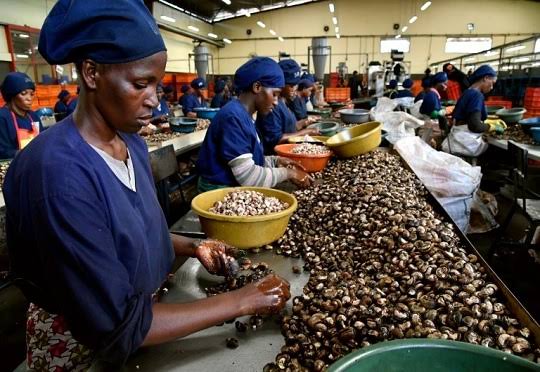
Nigerian companies involved in cashew processing will enjoy five years income-tax exemption as part of the concerted effort of the Nigerian Government to diversify the economy and boost the food and agriculture sector. This was made known by the Minister of Industry, Trade and Investment, Adebayo Adeniyi through the Permanent Secretary, Ministry of Industry Trade and Investment, Dr. Evelyn Ngige at the ongoing 16th edition of the African Cashew Alliance Conference in Abuja which kick started today, September 12 and is scheduled to close on Thursday, September 15.

The annual conference which is holding in Nigeria for the first time since its establishment in 2006 is alternated amongst member countries to avail cashew-producing countries of the opportunity to share experiences and attract investment to the sub-sector. This year’s event has the theme; “Strengthening Sustainable Kernel And By-Products Marketing In The African Cashew Industry”.

According to the Minister, “This event has continued to be of immense support to the over 48 cashew-producing African countries in providing access to important knowledge and Information that assist in the development of the cashew value chain of their respective countries.

The minister noted that since the inception of the current administration, the Nigerian Government has continued to pursue deliberate policies to diversify the nation’s economy away from its over-dependence on the oil and gas sector. “It is in this regard that Nigeria like other member countries of the ACA, has sustained its commitment to the provision of enabling environment and incentives for the development of the cashew value chain” he stated.

“These efforts have enhanced activities in the subsector, resulting in an increase in the commodity’s production in the country. Presently, some government incentives in the sector include. Zero percent (0%) duty on all Agro-allied machines and equipment acquired for the production of cashew. Capital allowances are granted 100% to companies involved in cashew production and processing.

”As of today, Nigeria produces about 260,000 metric tonnes of cashew nuts annually. Plans are ongoing to raise the annual production capacity of cashew nuts to well over 500,000 metric tonnes. Out of the current production figure of 260,000 metric tonnes, 180,000 metric tonnes are traded as raw cashew nuts. 15,000 metric tonnes are processed into cashew kernels and about 10,000 metric tonnes of the kernel are exported.

“Cashew production is limited to only about 10 states out of the 36 states and the Federal Capital Territory. The leading state in cashew nuts production is Kogi State”.


Tekedia Capital Pre-cycle Deal, Portfolio Exit and Other Updates

0

This email was sent to Tekedia Capital members; sharing here.

Dear Sir/Madam,

Greetings! Tekedia Capital participated in a pre-seed round of a very fast-growing startup*, investing before our scheduled investment cycle. This company has achieved so much with little funds raised and its seed round is projected to be 7x of this pre-seed with companies like Visa and QED already lined up. The team could not wait for our cycle because of timing. With no option, Tekedia Capital invested.

This investment will be distributed for members who end up showing interests. The valuation, of course, is the same as we got it [the same with every other investor in the round]. We are very confident that it is a rare opportunity. Log into the board and see the company. We have provided the SAFE agreement with the valuation, CEO contact and the amount we signed (login to read all). The plan is that everything would be allocated in proportion based on interest.

Other updates:

On Monday, Sept 19, 2022, the companies for the investment cycle will go live in the Board. We are bringing real estate, manufacturing, downstream oil & gas tech, biotech and digital firms. You will receive an email once everything is posted.

We expect to close the exit of a portfolio company* we had noted that is being acquired this month. The final approval from the United States is expected next week; the firms  had already agreed. Investors in this startup are already informed.

KlaDot, one of our portfolio firms, is looking for someone with deep experience on growth. Preference is someone who has managed growth in a leading fintech in Africa. KlaDot is a digital bank; it helps individuals and companies to acquire foreign bank accounts, virtual debit cards, etc. If you know someone, please email here as we are assisting in this placement.

  • log into the Board for the companies

If you have any question, please let us know.

Tekedia Capital Team

Kippa, Nigerian Digital Bookkeeping Fintech, Raises $8.4m in A Seed Round

0

When it comes to digital bookkeeping, Nigeria and the whole of Sub-Saharan Africa remains an untapped market dripping with growth opportunities for startups. The Nigerian bookkeeping market alone is worth $200 billion. This is because the majority of small businesses still depend much on paper and pen in keeping their transactional records.

For many startups like Kippa, Pastel, Bamba, OZÉ and Bumpa that have taken up the job to provide digitized records for Small, Medium Enterprises (SMEs), Sub-Saharan Africa has provided huge markets that keep investors running after these startups.

Thus, Kippa, a Nigerian fintech startup serving small businesses, announced that it has raised $8.4 million in a seed round.

The investment, which the startup said will allow it to develop financial products that help SMEs grow their businesses and expand its operation in Nigeria, was backed by Goodwater Capital, TEN13 VC, Rocketship VC, Saison Capital, Crestone VC, VentureSouq, Horizon Partners and Vibe Capital.

“We expect the number of digitally active small businesses to grow exponentially over the next three to five years. As more small businesses come online, Kippa will own the money button on the devices of these merchants,” Kippa CEO Kennedy Ekezie-Joseph said.

Kippa offers financial management services that include payments and bookkeeping to SMEs in sub-Saharan Africa. The fintech which was launched in June 2021 by Kennedy Ekezie-Joseph, Duke Ekezie and Jephtha Uche, saw the seed round oversubscribed. It had earlier in November last year, announced its $3.2 million in a pre-seed round led by Target Global.

Digital documentation offered by startups like Kippa is helping small businesses to make a shift to digital life by moving their inventory tracking, staff and sales records from offline to online. This means that their records are protected from unforeseen events like fire, and they can be accessed from anywhere in the world. This minimizes risks for small businesses and helps them to keep track of their financial flow.

Lack of proper record-keeping is said to be responsible for almost nine out of 10 small businesses fizzling out in the first five years.

Startups like Kippa, through their digital bookkeeping services, now offer small businesses the opportunity to change their story. Kippa’s CEO told TechCrunch in an interview last November that the startup had more than 130,000 active businesses consisting of kiosks, street corner shops, local food vendors and high-end merchants in its customer-base.

The customer-base has since then grown to have over 500,000 small businesses, signifying a massive growth within a short period.

Kippa said its services are available across Nigeria with its merchants scattered across the country’s 774 Local Government Areas. But there is a huge challenge that it has found a way to overcome to clear the path for growth. Kippa said the majority of small businesses in Nigeria are not formally registered. This is due to cost and the complex process of registering businesses with the Corporate Affairs Commission, Nigeria’s business registration agency.

The company said to beat the challenge; it has to make registration cheaper and the process easier for small businesses.

“We’ve built a product on top of the current Kippa product that allows businesses to register in 3 days for N15,000,” said Ekezie-Kennedy indicating his platform’s alternative to help these businesses incorporate legally. This feature forms the basis for Kippa’s plans to stack financial products besides getting significant traction and driving more revenue, the CEO added.

Besides its core bookkeeping business, Kippa is planning to establish itself on other financial services fronts. The company announced last week that it has secured a license from Nigeria’s central bank to operate as a Super Agent, which means, merchants on Kippa’s platform can offer some financial services such as cash withdrawals and deposits, bank account opening, bills and utility payments, and insurance to their individual customers.

“We have over 500,000 merchants on our app and there’s a lot of opportunities for us to do more for them and provide more financial services,” said Ekezie-Joseph. “The super agent license allows merchants and typical neighborhood shops who already use our bookkeeping app into a one-stop-shop for essential financial services for their customers.”

Kippa said annualized transactions on its platform have already exceeded $3 billion, a milestone for a company of its age that has raised $11 million in a full year of operation.

In anticipation of a future boom, the startup has embarked on a hiring spree. Kippa said it has recruited ex-regulators and senior executives at startups like OPay, BharatPe, Khatabook, TeamApt, OKCredit, NIBSS, and Unified Payments, amongst others. Some of them include Toyin Albert as executive director of payments services, Osagie Alonge as director of marketing and Niyi Ajao, the ex-deputy managing director at Nigeria Inter-Bank Settlement System (NIBSS) as chairman.

“Our mission is to make it easy for anyone to start and run profitable small businesses in Africa. It is why we are building a full suite of software and financial services that enables this ambition, thereby empowering African business owners. We say this because we’ve spent time understanding their most significant needs,” said Ekezie-Joseph.