DD
MM
YYYY

PAGES

DD
MM
YYYY

spot_img

PAGES

Home Blog Page 4968

Politics and Economics of Concentrating Media in Osun

0

The development of the Osun media ecosystem would not be complete without mentioning that the first publicly-owned radio station began operations using transmission equipment inherited in 1991, the year the state was created from the old Oyo state by the administration of former military president, General Ibrahim Badamosi Babangida. Prior to the establishment of the state, the Broadcasting Corporation of Oyo State owned radio and television transmission equipment in Ile-Ife, Iwo, and Obokun. During the old Oyo state, the equipment assisted BCOS in relaying live and recorded broadcast services to the people of Osun region.

Citizens in the cities and towns where the transmission equipment were located expected the equipment to be transformed into full broadcasting stations as soon as Osun state was established, particularly those in Iwo, where the administration of Chief Bola Ige had previously constructed a mega broadcasting complex (Iwo). For years, this expectation was an afterthought because military and civilian administrations ignored the complex despite the large amounts spent on it.

Previous administrations considered Osogbo as the capital city for the location of the state broadcast media prior to the Prince Olagunsoye Oyinlola administration. Because of the inherited transmission equipment located in the city, Ile-Ife housed the first state-owned radio station. For years, the city was primarily used to relay FM radio broadcasting services to the public until 2001, when the Ife-Modakeke conflict erupted, resulting in vandalism of broadcasting equipment and the broadcasting house.

For months, indigenes and residents had no way of keeping up with what was going on in the government. This resulted in the revitalization of Iwo’s AM radio transmission. Chief Bisi Akande’s administration quickly commissioned the station for public broadcasting services. Then, public affairs analysts and indigenous peoples questioned the non-use of the broadcasting complex built during Chief Bola Ige’s administration in the same city. The government’s response was a lack of funds to build a mini-studio to provide the necessary broadcasting services. The government feared that continued government silence would lead to anarchy among the populace.

Chief Bisi Akande did not stop at revitalizing the state’s emerging media ecosystem, particularly in the broadcast sector. He awarded the construction of a modern broadcasting complex in Osogbo. The complex was designed with television and radio stations in mind. When the complex became operational, Obokun, which had the state’s first television station, lost its status.

The issue of ignoring the Iwo complex arose once more. During the 2007 governorship election campaign, the people of Iwo confronted Prince Olagunsoye Oyinlola with a series of questions about the neglect of the Iwo broadcasting complex. As previously stated, Prince Oyinlola promised to make the complex operational. Apparently, Prince Oyinlola made the pledge in order to garner the most votes from Iwoland. He kept his promise a few months after the election. Some Osun State Broadcasting Corporation employees from Osogbo and Ile-Ife were relocated to Iwo to ensure the proper launch of the Osun Reality Radio Vision Service.

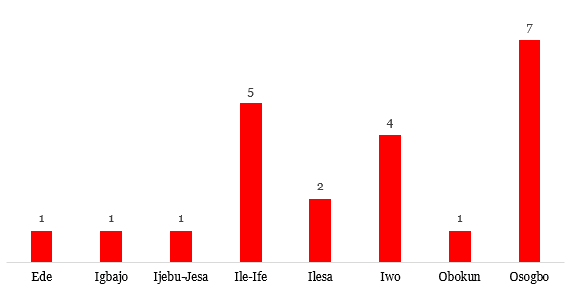
These narratives depict how political relationships and power have influenced the location of public media organizations in Osun state. A state with one radio and television station in 1991 has transformed into a state with 22 media organizations in 2022 (as of August 11, 2022), with private individuals and/or organizations owning 54.54% of the organizations. The location of some federal radio and television stations in Ile-Ife, Osogbo, and Ilesa has called into question the state government’s sole government broadcast media. According to our data, it is now 50% for both publicly-owned radio stations and publicly-owned television stations.

Exhibit 1: Number of media establishments per location
Source: Media Organisations, 2022; Infoprations Analysis, 2022

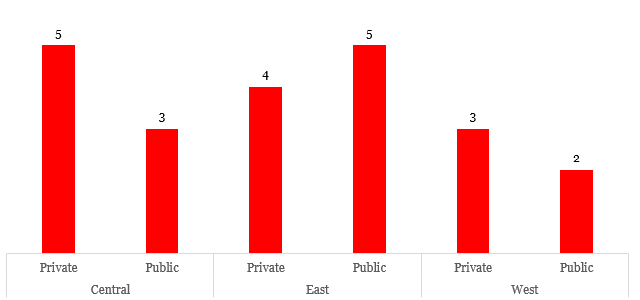
Furthermore, our data show that publicly-owned media are more concentrated or located in Osun East and Central than in Osun West. Osun East has also benefited from private individuals and/or organizations establishing media outlets in the region. In terms of locating private media organizations, Osun Central lags behind Osun East.

Exhibit 2: Ownership by political administrative district
Source: Media Organisations, 2022; Infoprations Analysis, 2022

Looking at the data, our analyst notes that it is reasonable to draw the conclusion that publicly-owned media are being located with a strict preference for political over economic considerations. For instance, the hybrid measures taken by the Chief Bisi Akande administration were in line with the need for government to interact with the populace in order to prevent potential disorder. The administration did, however, give some thought to the economy because there wasn’t enough money to rehabilitate the Iwo broadcasting complex. The locations of the federal radio and television stations in Ilesa, Osogbo, and Ile-Ife are also better understood in light of political factors. According to our observations, prominent sons and daughters as well as traditional rulers of these cities influenced the location of the stations.

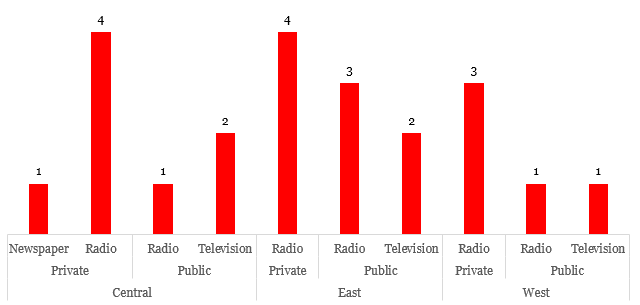
Exhibit 3: Media type by ownership pattern and political administrative district
Source: Media Organisations, 2022; Infoprations Analysis, 2022

Data in Exhibit 3 indicate that the concentration of private radio stations in Osun East and Osun West may be related to the lower cost of living in those areas than in the Central region, especially Osogbo. In other words, it could be said that private individuals and/or organizations that choose where to locate their facilities gave economic factors precedence over political ones. Our analyst notes that as the state media ecosystem continues to change, a number of unexpected indices will appear in the competitive landscape over the next three years. This is premised on the fact that broadcast media entrepreneurs are targeting states with low concentrations of radio and television stations. Nigeria’s Western states of Lagos and Oyo are already overrun with radio stations and other forms of media.

Join Us At Tekedia Capital – Let’s Breed New Unicorns in Africa

0

It is that time of the year. Tekedia Capital begins another quest to find and breed a new generation of special “animals” called unicorns. Africa* has about 9 of them at the moment – Chippers Cash, Andela, OPay, Wave, Flutterwave, TeamApt, Interswitch, Esusu and Fawry – and we expect the number to hit 15 by Dec 2023. If you want to join us in this farming process where the best outcomes would be farm animals (yes, startups) valued at least US$1 billion, click to join Tekedia Capital Syndicate. The investment next cycle begins next month

Membership fee of $1,000 or N550k required with minimum of $10k when investing.

Civility on Health Matters and That First (Nigeria) Presidential Debate

2

Young People, it is not progressive to attack health conditions for any reason. I challenge all of you to avoid that path. Mocking Senator Bola Tinubu on health reasons diminishes your mission. Those videos have to stop. Focus on the policies and avoid looking lost in a modern world.

I always want to challenge Senator Tinubu to tell his wife, Senator Oluremi Tinubu, to stop  her attacks on Igbos.  Statistically, she is 1/3 of being the next First Lady of Nigeria. 

I lived and worked in Lagos. My house at Alade Avenue was close to Fela’s family house in Ikeja. Everyone was a Nigerian. Dividing in the name of politics takes us backward. I call on the National Orientation Agency (NOA) to do its work. 

On the records, APC is a failed party and those records must be used to take power out of APC. Senator Tinubu’s health is not necessary; use his party’s failed policies and prosecute the campaigns. He represents the ruling party and that means you have data to make your case. We can show civility even as we debate the future of Nigeria. Health status should not be used as a vehicle to mock. But voters can consider it as they make decisions to vote.

I am still waiting for the first presidential debate; I have offered to moderate it (lol). We can also fund it if the top 3 candidates will show up. We will provide a blackboard and ask them to design a flowchart on how to fix Nigeria. The start will have “a broken nation [current state]” and the end “emerging nation” [desired in 4 years]. They have to fit in policies, actions, initiatives, etc within the chart. People, we need to see how these men think, on the fly.

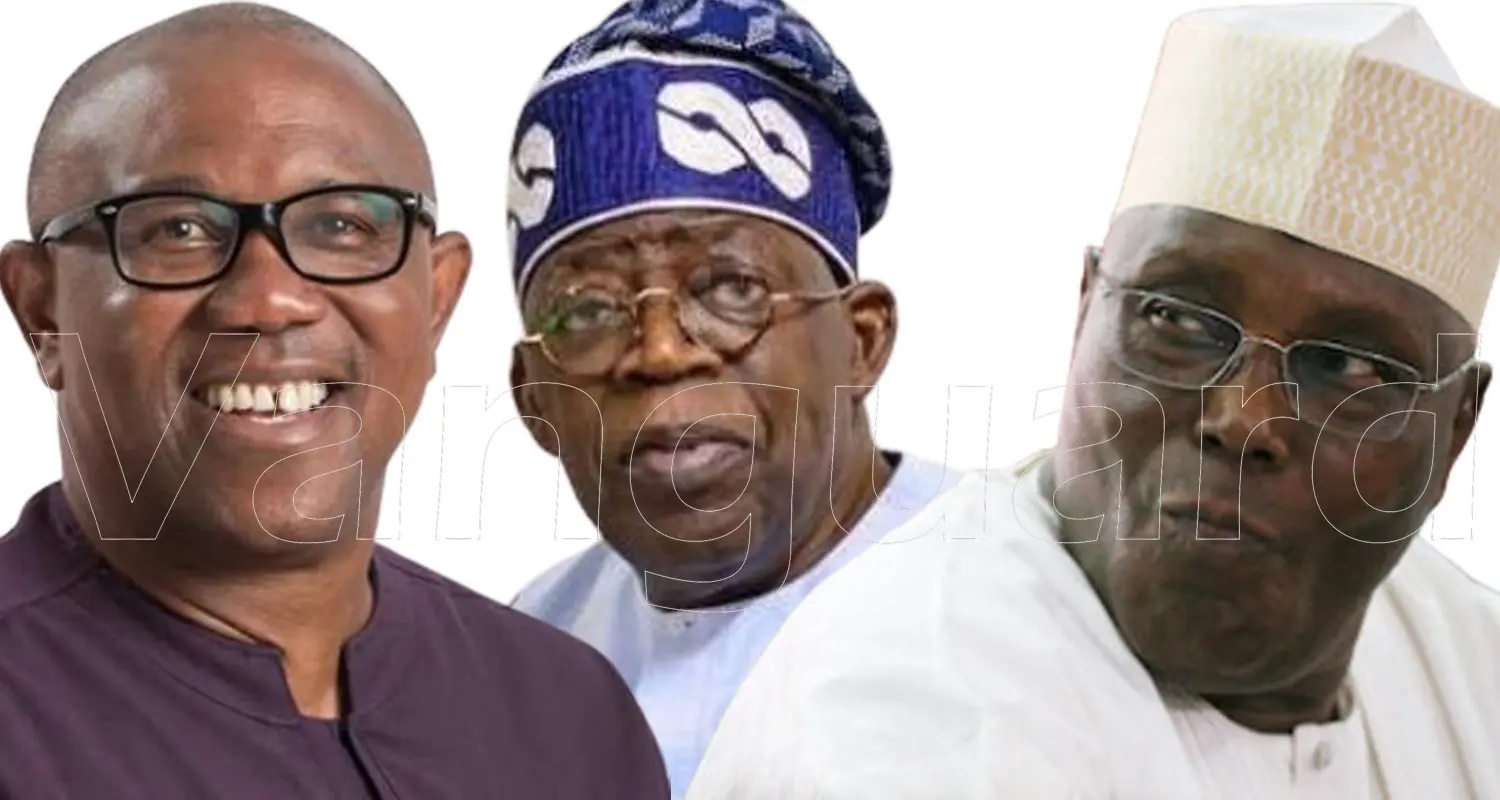
#Respect even as we #debate Obi, Atiku and Tinubu.

“prof. Said let discuss basic issues disturbing us and not health of a candidate, he will be on the ballot whether you like it or not, why wasting precious time on what you can’t change.” – Salam Ahmed in Facebook comment of this post

Comment on LinkedIn Feed

Comment #1: Ndubuisi Ekekwe why shouldn’t we address health conditions? In the West where you live and thrive, would any political party be brazen enough to pick and try to sell a heavily flawed candidate crying Emi Lokan to the voting public without consequences? You know as well as I do that these bunch of clowns get their way because of our age long deference to seniority and respect. We must get rid of that rubbish, and seek accountability from whomsoever puts themselves out there.

My Response #1: Just like Republicans attacked Joe Biden with nursery home photos, when you do that, you remind the biggest and most reliable voting block that age is a “sin”. They will despise that message. I am not aware of any debate anyone has called that BAT has not shown up due to health. So, if he can do what others are doing and you have not designed a way to make him make excuses, innuendos should be off.

Until we have a required component that presidential aspirants must submit an independent doctor’s report, these videos of candidates may not help. Tinubu representing APC and promising to continue the current policy is a poor candidate; I can make that call without mocking his health or whatever.

Comment 1b: Ndubuisi Ekekwe it’s not even about his age, it’s about his health, it’s about his entitled spirit. He has guts to think that you can pass down Nigeria, just because he enthroned the catastrophy called Buhari. You can buy the APC nomination, because the caucus was clearly a den of thieves, but the wider Nigerian population? Are we such cowards? I am irreverent without doubt, but this candidate’s identity and health condition has to be called to question.

My Response 1b: Like I noted, it is all innuendos until you have a medical report. The governor of Texas who is certain to win re-election is in a wheelchair. To most Texans, he is a very competent dude.  Tinubu is not on a wheelchair. I am not defending him. I am defending those with health cases just as I defend people of color, minorities, women, etc who most times are denied opportunities due to perception. Make the points on policies and vote based on that capacity but do not mock on health. You can include that health perception as you vote.

Comment #2: Prof.Ndubuisi Ekekwe. That’s all there’s. “We’ll provide a blackboard and ask them to design a flowchart on how to fix Nigeria.” ???

This puts every argument to sleep.

Because if you can’t design the flowchart, it means among other things:

  1. You don’t even know and understand the problem.
  2. You don’t have a modicum of appreciation of the bigness of the problem.
  3. You can’t assemble the best team.
  4. You won’t understand and spot faults in it in a timely manner even if you hire some expert to design it.
  5. You’ll create clashes in your administration because everyone would think what they bring to the table is feasible and thereby unhealthily jostle for undeserved positions.
  6. Your administration will be anchored on a quicksand— the revered Chenua Achebe’s book comes to mind.
  7. You cannnot be a rallying point for inspiration to weather storms should any arise, because you’d have lost your bearing from the blast of the whistle.
  8. You can’t articulate what needs done.

Comment 3: Greetings my Prof. Excellent perspective as always sir. Usually, People don’t go about mocking every random old person’s health and age. Here is the exception, Senator Bola Ahmed Tinubu wants to become Nigeria’s next president come 2023. That’s gives Nigerians the exclusive right to subject this candidate to scrutiny and that includes his family, health, education, age and others…..

A presidential debate anchored by the Prof. himself, I believe, will be many Nigerians delight which will be part of the right pathway for the #EmergingNigeria. God bless our country #nigeria . #respect #presidentialDebate

My Response 3: You can make a point on the health matter. You can include that as you vote. But you do not mock someone for his health condition. That is not progressive. I am not saying that you cannot include physical health capacity as a consideration to elect a leader. I am saying it is not cool mocking someone over it. If we believe in civility, we need to live it.

Comment 3b: His supporters will always see any comment on health as making a mockery

My Response 3b: I am not a supporter and will NEVER vote for anyone who promised to continue the current disastrous APC policies. But that does not mean I cannot show civility.

Comment : “I guess you’re not trying to say his state of health shouldn’t be considered but it shouldn’t be a point for campaign. His state of health should be left to individual persons to decide on.”

My Response: “I guess you’re not trying to say his state of health shouldn’t be considered but it shouldn’t be a point for campaign. His state of health should be left to individual persons to decide on.” – that is my point. Health state should not be used as a vehicle to mock. But voters must consider that as part of making decisions to vote.

Building Category-King Companies and Winners – Ndubuisi Ekekwe

0

  Share this: Click to share on Facebook (Opens in new window) Facebook Click to share on X (Opens in new window) X Click to share on WhatsApp (Opens in new window) WhatsApp Click to share on LinkedIn (Opens in new window) LinkedIn Click to email a link to a friend (Opens in new window) […]

To access this post, you must purchase Tekedia Mini-MBA (Feb 9 – May 2, 2026) | $170 or N120,000.

Nigeria Projects To Generate N136.3 Billion Revenue From Electronic Money Transfers

0
FIRS signpost

Recall that the Electronic Money Transfer levy was introduced in Nigeria through the Finance Act in 2020, replacing the previous stamp duty on electronic receipts or Electronic transfers.

The Electronic Money transfer levy is a singular one-off charge of N50 on electronic receipt or transfer of money deposited in any bank or financial institution on any type of account on the sum of N10,000 or more.

Just recently, the federal government of Nigeria disclosed its projection to generate the sum of N136.3 billion as revenue from Electronic Money transfers to be paid by bank customers in 2023. This is based on a projected 2.7 billion volume of eligible online transfers in the year.

The government disclosed that Electronic Money transfer charges generated N97.3 billion for the government in April 2022, which was the highest amount generated from Electronic Money transfers in the country since its adoption in 2020.Revenue generated from electronic money transfers made up 14.29% of the total N680.78 billion generated by the federal government in the month of April.

The budget office of the federation which disclosed its projections in its 2023-2025 medium-term expenditure framework and fiscal strategy paper released on Friday, stated that the recently approved regulations given by the administration of the electronic money transfer levy, is expected to boost collections of the revenue.

To ensure that it meets its projected target revenue from Electronic Money Transfer, the federal government disclosed that it would ensure proper monitoring of banks and other financial institutions to conduct reconciliation and to ensure deduction and remittance of the levy.

Although the government did not realize its projected revenue of 500 million naira in 2021, as it only realized the sum of N111.84 billion at the end of the year. It might interest you to know that since the introduction of Electronic Money Transfer levy, Nigeria has generated not less than N129.62 billion.

One might ask why the government is imposing a levy on Electronic Money transfers. Well, the revenue derived from the EMT levy is shared based on the derivation and distributed at 15% to the federal government and the federal capital territory (FCT), 50% is also allocated to the state governments, and 35% to the 774 local governments in the country.

Electronic Money Transfer levy is a source of revenue for most countries in Africa, as it is used to boost the nation’s economy. In Africa, East African country Uganda, was the first to impose this levy in Africa in July 2018, followed by Zimbabwe in October 2018.

The Electronic mobile transfer levy has been termed “lazy tax” due to the fact that the federal government does nothing to learn it. After its adoption in Nigeria in 2020, it was followed by widespread criticism.

Some individuals and experts disclosed that people who use transfer channels are over-levied, as they have to pay a maintenance fee, and transfer fee, which will discourage a lot of individuals from using electronic channels.

Also, they cited that this levy will impose too much burden on the citizens as they are already faced with a myriad of problems. With the EMT levy, it has been disclosed to discourage more people from using banks and their services which will deepen the financial exclusion of many Nigerians.

On the flip side, with the influx of Fintech startups in the country, a lot of people will not hesitate to embrace the digital mode of payments due to its ease of use and convenience, which will no doubt still generate money for the federal government.