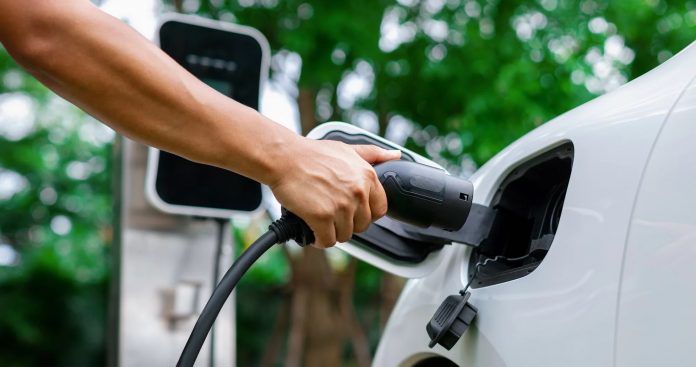
Germany’s automotive market is undergoing a significant transformation as consumers increasingly turn toward electric vehicles (EVs), while the country’s major carmakers struggle with declining profitability.
New data highlights two interconnected developments: electric cars are gaining ground not only among new buyers but also in the used-car market, while the average operating profit generated by leading manufacturers per vehicle fell sharply during the first half of 2026.
According to new data from German insurer HUK Coburg, growing numbers of drivers are switching from conventional petrol and diesel vehicles to electric cars. Particularly significant is the acceleration of electric mobility in the used-vehicle market.
This suggests that the transition toward electric transport is moving beyond wealthier consumers purchasing new vehicles and is gradually becoming accessible to a broader section of German motorists.
The expansion of EVs in the second-hand market could become an important driver of adoption.
New electric cars remain expensive for many households, but as more vehicles enter the used market, consumers have greater opportunities to purchase EVs at lower prices. Improved availability, greater consumer familiarity and the expansion of charging infrastructure could further strengthen this trend.
The growing popularity of electric cars is taking place against a difficult backdrop for the automotive industry. An analysis by the Center of Automotive Management found that the average operating profit earned per vehicle by 15 major carmakers declined sharply during the first half of 2026.
The figures highlight the pressure facing manufacturers as they attempt to finance the transition to electric mobility while dealing with intense competition and changing consumer demand.
The decline in profitability is particularly important because producing electric vehicles requires substantial investment.
Carmakers must spend billions of euros on battery technology, software, new production facilities and charging-related partnerships. At the same time, manufacturers face pressure to reduce prices as competition increases, particularly from Chinese automakers that have expanded their presence in global EV markets.
The result is a difficult balancing act. Carmakers need to invest aggressively in the technologies that will define the industry’s future, but they must also protect margins and satisfy shareholders.
Lower profits per vehicle can restrict the amount of money available for investment precisely when the industry requires enormous capital expenditure. Germany’s automotive sector therefore finds itself at a crossroads.
Consumers appear increasingly willing to embrace electric mobility, with the used-car market providing an important pathway for broader adoption. Manufacturers, meanwhile, must adapt to a market in which traditional advantages in combustion-engine technology are becoming less decisive.
The developments demonstrate that the electric transition is no longer simply a question of environmental policy. It is becoming a fundamental economic and competitive issue.
Companies that can produce attractive EVs efficiently, control battery costs and develop profitable software-driven services may gain an advantage, while those unable to adapt could face further pressure.
The stakes are particularly high because the automotive industry remains a major pillar of its industrial economy. The rise of used EVs indicates that consumer behavior is changing rapidly. The simultaneous decline in operating profit per vehicle shows that manufacturers are paying a significant price for that transition.
The challenge for Germany’s carmakers will be to turn rising electric-vehicle demand into sustainable profitability. The coming years could determine which companies successfully navigate this transformation and which struggle to remain competitive in an increasingly electric global automotive market.