DD
MM
YYYY

PAGES

DD
MM
YYYY

spot_img

PAGES

Home Blog Page 5

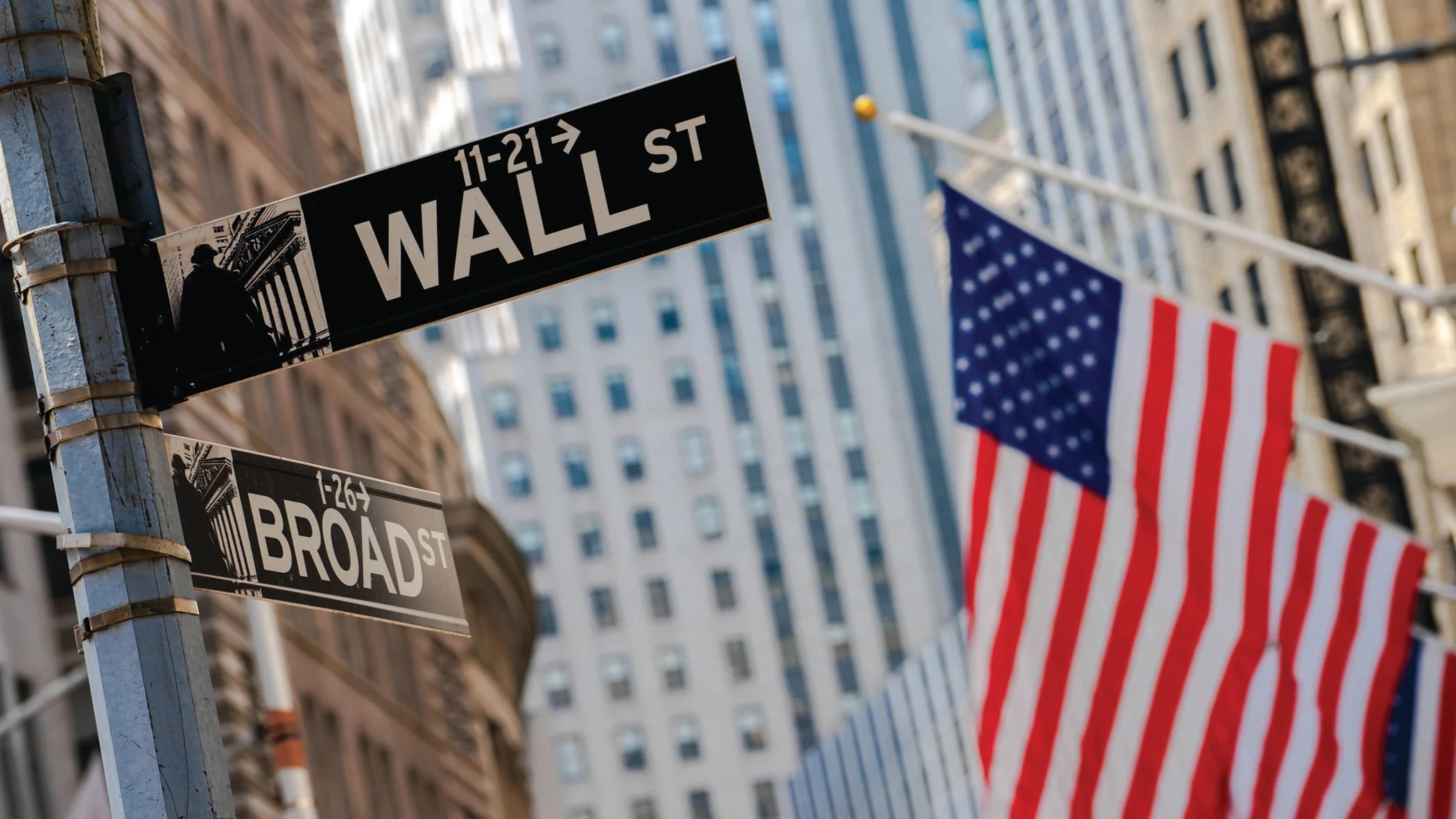
Wall Street Erases War Shock as S&P 500 Hits Record High on Iran De-Escalation Hopes and Strong Earnings Outlook

0

Wall Street delivered a striking reversal on Wednesday as the S&P 500 closed at a fresh record high, fully recovering the losses triggered by the outbreak of the U.S.-Iran conflict and signaling that investors are once again willing to rotate aggressively into risk assets.

The benchmark index settled at 7,022.95, up 0.8%, according to LSEG data, surpassing its previous closing peak set in January. It also touched a new intraday high of 7,026.24, marking its first record since the Middle East conflict erupted.

The development is notable not only because of the level reached, but because of the speed and breadth of the recovery. Barely weeks ago, the market was gripped by fears that the war-driven oil shock could reignite inflation, force the Federal Reserve into a prolonged rate freeze, and derail the U.S. growth outlook. The selloff was severe enough to push the S&P 500 down nearly 9% from its January high, while both the Nasdaq Composite and Dow Jones Industrial Average briefly entered correction territory after falling 10% or more.

What Wednesday’s record close now shows is that markets are increasingly pricing in a less catastrophic geopolitical outcome. Investor sentiment improved after President Donald Trump said talks with Iran aimed at ending the war could soon resume, even after the collapse of the first round of negotiations in Islamabad.

“You should stay there, really, because something could be happening over the next two days, and we’re more inclined to go there,” Trump said. He added that Pakistan’s army chief, Field Marshal Asim Munir, was doing a “great job” in arranging the talks.

“He’s fantastic, and therefore it’s more likely that we go back there,” Trump said.

The prospect of renewed diplomacy has eased some of the risk premium that had been built into equities, oil, and bond markets since late February.

The rebound is being reinforced by a strong earnings backdrop, which has helped investors justify higher valuations despite still-elevated geopolitical risks.

Executives at major U.S. banks have signaled that the American consumer remains resilient, even after the energy shock caused by the conflict. That resilience serves as a buffer of stability because consumer spending remains the primary engine of U.S. economic growth.

However, Wall Street is drawing confidence from a healthy pipeline of deals and public listings, suggesting that corporate America has not materially pulled back from capital markets activity. Analysts now expect S&P 500 companies to post combined first-quarter earnings of $605.1 billion, up from the $598.7 billion estimate at the start of the quarter.

That upward revision is deemed crucial because in an environment shaped by war risk, high oil prices, and uncertainty over monetary policy, rising earnings expectations provide fundamental support for equity multiples. In effect, the market is no longer rallying solely on hope; it is also being underpinned by improving corporate profit forecasts.

The rally has also been driven by valuation logic. Several brokerages have treated the war-driven selloff as a buying opportunity, arguing that the sharp decline had temporarily depressed prices for fundamentally strong companies. This “buy-the-dip” behavior has become a defining feature of recent market action, especially in technology and AI-linked stocks, where investors remain highly sensitive to momentum and future earnings power.

However, the recovery faces risks, with the most immediate threat being the potential renewed escalation in the Middle East. Analysts warn that events such as a flare-up that pushes crude prices sharply higher could quickly revive concerns about inflation persistence and interest-rate policy, forcing investors to reassess the optimistic pricing currently embedded in the market.

Even if geopolitical tensions continue to ease, the pre-war concerns that had dominated sentiment earlier in the year could return. Among them is the growing unease around artificial intelligence disruption.

While AI has powered strong gains in technology shares and underpinned much of the recent rally, it has also raised questions about capital allocation, margin pressure, and the sustainability of elevated valuations across the sector.

There is also stress building in parts of the credit market. Private credit firms are reportedly contending with redemption risks as nervous investors seek liquidity, a development that could become more consequential if broader risk sentiment weakens again.

In that sense, Wednesday’s record high is both a symbol of resilience and a test of conviction. The market has effectively declared that the worst-case economic scenario from the Iran conflict may be avoided. But that confidence rests on a delicate balance of continued diplomatic progress, stable oil prices, and earnings delivery strong enough to justify stretched valuations.


Aqueduct Racing Guide: What New Bettors Should Know

0

Aqueduct Racetrack is a major thoroughbred horse racing track located in Queens, New York. It is one of the primary racing venues in New York and hosts year-round racing. This includes the winter meet when other tracks are inactive.

The place is known for challenging conditions and distinct track surfaces because racing at Aqueduct Racetrack often takes place during winter. This is one of the reasons many new bettors struggle early on. Let’s talk about the key strategies and patterns every Aqueduct bettor should understand.

Aqueduct’s Unique Track Layout

There are two surfaces in horse racing at Aqueduct. First, the inner dirt track, commonly used in winter, favors early speed due to its tighter turns and shorter straights. This means horses that get to the front early are harder to catch, so selections should lean toward runners with proven early pace.

The second is the main track. This surface is more balanced, allowing races to develop more naturally. That means horses that sit just behind the leaders or finish strongly have a better chance compared to the inner track. In this case, consider both early speed and finishing ability, not only one running style.

Track Bias Is Everything

At Aqueduct Racetrack, track bias can be strong, especially during the winter meet. Before placing any bet, observe how earlier races unfold on the same day. If multiple races are won by front-runners who control the pace, that signals a speed bias, which is common on the inner dirt track.

If winners consistently come from the rail or from late runs, that indicates a different Aqueduct bias that must be respected. The track may favor inside paths or closers depending on the surface and weather. Considering this, always adjust to the day’s pattern rather than relying only on pre-race analysis.

Trainer Patterns Matter

Certain trainers consistently perform well at Aqueduct. Some stables excel with cold-weather runners and frequently win in claiming and allowance races at this track. Others show strong results when dropping horses in class or returning from layoffs, specifically at Aqueduct.

A bettor should focus on trainers with strong recent stats at Aqueduct. This can be done by checking race programs or past performances that show win percentages for the current meet. Trainers in form at Aqueduct often continue to produce winners throughout the meet.

Class Drops Require Interpretation

Class drops are especially important at Aqueduct, where many races involve claiming-level competition. A horse dropping in class is often facing weaker rivals, which increases its chances of winning. This move is commonly used by trainers targeting winnable spots at the track.

However, not all class drops are positive, especially during the demanding Aqueduct winter meet. Check recent performances and workouts to confirm current condition. Also, watch for jockey upgrades, as these often signal stronger intent in competitive Aqueduct fields.

Pace Makes the Race

Pace plays a major role at Aqueduct, particularly on the inner dirt track where early speed is often dominant. Identifying which horse will lead early is critical, as lone speed can be very difficult to catch. This is especially true in winter races where the track favors front-runners.

When multiple horses compete for the lead, the pace becomes fast and tiring. This creates opportunities for horses that sit just behind early and finish late. Take Post Time in the Carter Handicap as an example—he tracked a contested pace and finished strongly when the early leaders weakened.

Jockey and Trainer Combinations

Jockey and trainer partnerships are important at Aqueduct, where familiarity with the track can make a difference. Certain combinations consistently perform well, especially during the winter meet. Reviewing Aqueduct-specific results helps identify these reliable pairings.

A proven jockey and trainer pairing in a race often signals a dependable entry. This becomes useful in competitive Aqueduct races where margins are small. Giving preference to these combinations can help narrow down contenders.

Weather and Track Conditions

Track conditions at Aqueduct should always be checked before betting, especially during winter. Snow, rain, and freezing temperatures frequently create muddy or sloppy surfaces that affect race outcomes. These conditions are more common here than at many other tracks.

Looking at past performances helps identify horses that handle Aqueduct’s winter conditions well. Focus on runners proven on muddy or sloppy tracks. Then, downgrade those who struggle in similar conditions to avoid overvaluing them.

From Gate to Gain

At Aqueduct Racetrack, preparation starts with identifying the track in use and checking weather and surface conditions. From there, review trainer patterns, class drops, and past performances to help narrow contenders. Watching earlier races also reveals any track bias that can impact results.

During the race, focus on how the pace unfolds, especially whether early speed is uncontested or heavily pressured. After the race, review results to track which biases, trainers, and conditions produced winners.

SEC Approves Ending the “Pattern Day Trader” Requirement of Holding $25k

0

The old SEC pay-to-play barrier is gone, but the market’s risks aren’t. The SEC approved the change on April 14, 2026. It eliminates the long-standing Pattern Day Trader (PDT) rule and its $25,000 minimum equity requirement under FINRA Rule 4210.

The rule, in place since 2001, classified a trader as a pattern day trader if they executed 4 or more day trades; buying and selling the same security on the same day within 5 business days in a margin account, and those trades made up more than 6% of total trades in that period. If flagged as a PDT with less than $25,000 in account equity, the trader faced restrictions: they could only make up to 3 day trades in a 5-business-day window, or the broker would limit them to cash-only trading until the equity threshold was met.

This aimed to protect smaller accounts from excessive risk and potential margin calls. The PDT designation is removed entirely. The $25,000 minimum equity requirement for frequent day trading is scrapped. The specific day-trading buying power calculations tied to the old rule are eliminated.

In their place, FINRA introduces new intraday margin standards — a more flexible, risk-based approach applied to all margin accounts; not just frequent day traders. Brokers will calculate required margin in real time or intraday based on positions and volatility, rather than a flat equity floor or trade-count limits. This means smaller accounts even under $25k, or even under the typical $2,000 minimum for margin will generally be able to day trade more freely, without the old 3-trade limit or forced restrictions.

The SEC granted accelerated approval, but the change isn’t immediate: FINRA will publish a Regulatory Notice soon with the official effective date. Brokerages can begin implementing the new rules ~45 days after that notice potentially late May 2026 onward. Firms get up to 18 months for a full phase-in, so some brokers may roll it out gradually between mid-2026 and early 2028.

Check with your specific broker like Robinhood, Webull, Fidelity, E*TRADE for their exact timeline and how they’ll handle intraday margin. Positive for retail traders — Lower barrier to entry for active trading. More people can day trade stocks and options without saving up $25k first. Stocks like Robinhood ($HOOD) and similar retail-focused brokers saw strong gains on the news.

Without the hard $25k buffer, undercapitalized traders could face quicker and larger margin calls under the new intraday rules if positions move against them. Losses can still wipe out small accounts fast due to leverage. Expect higher trading volume, but also potentially more volatile client accounts and risk management adjustments.

Under the previous rules (FINRA Rule 4210), the PDT designation and $25,000 minimum equity requirement applied to options just as they did to stocks. A day trade in options counted toward the 4+ trades in 5 business days threshold.If flagged as a PDT with under $25k in a margin account, you were limited to 3 day trades (round-trip buys/sells of the same option contract or underlying on the same day) in a rolling 5-day period.

This severely restricted scalping, intraday hedging, or multiple adjustments in options strategies. Many smaller traders avoided options day trading altogether or switched to cash accounts which have T+1 or T+2 settlement delays and no margin/leverage for options.

Notably, 0DTE options which expire the same day often didn’t fully trigger the old day-trade definition in the same way, creating a partial loophole—but the overall PDT flag still capped activity for undercapitalized accounts. The $25k barrier effectively gated retail options day traders from using leverage freely, even though options are already highly leveraged instruments often requiring only a fraction of the notional value as margin.

This is a significant modernization of rules that many viewed as outdated in today’s market. It gives more freedom but shifts more responsibility onto traders and brokers for managing intraday risk. If you’re planning to day trade, focus on solid risk management, position sizing, and understanding your broker’s new margin policies—regardless of account size.

X Launches Smart Cashtags: Introduces Real-Time Stock And Crypto Data Directly on The App

0

X (formerly Twitter), has officially rolled out its highly anticipated Smart Cashtags feature, bringing live financial data straight into users’ timelines.

Announced on April 14, 2026, the update is now live for iPhone users in the United States and Canada.

The new feature transforms simple $TICKER mentions such as $BTC, $ETH, $TSLA, or $NVDA into interactive elements, allowing users to access real-time financial data.

Tapping any cashtag opens users to a dedicated view displaying, real-time price, market cap, percentage change, interactive price charts, related posts and discussions about that asset.

Users can now stay informed about market movements without leaving the X app, making conversations about finance more dynamic and data-rich.

According to X’s Head of Product, Nikita Bier, Smart Cashtags are only the beginning. He described the feature as “just the first step” toward making X the best destination for finance and crypto communities. 

How It Works

When posting or searching on the platform, X now intelligently suggests the correct asset when users type a ticker symbol or even paste a crypto smart contract address.

This ensures precision, for example, distinguishing between different tokens or stocks with similar symbols.

Users can test it with popular assets like BTC (Bitcoin), ETH (Ethereum),XRP, SOL, DOGE, TSLA (Tesla), AAPL (Apple), NVDA (NVIDIA) and many more.

A Step Toward the Everything App

When Elon Musk acquired X, (formerly Twitter) in 2022, it was never just about owning a social media platform. From the outset, Musk made it clear that the purchase was a stepping stone toward a much bigger ambition, transforming the platform into a global “everything app.

At its core, Musk’s “everything app” concept was about consolidation, by bringing multiple digital services into one platform.

Instead of switching between apps for messaging, payments, entertainment, and business, users would be able to do everything within X.

The recent launch of marks a significant milestone in Elon Musk’s vision of turning X into an all-in-one “everything app” that combines social media, payments, and finance.

In Canada, the feature goes even further, tapping certain cashtags can route users directly to Wealthsimple, a leading online brokerage, enabling seamless stock and crypto trading from within conversations.

Notably, the rollout aligns closely with other recent financial initiatives on the platform, including:

•The launch of X Money for payments

•Planned integration of investment and trading services

•Expansion into fintech and digital commerce

Together, these features are transforming X from a social platform into a hybrid of social media, financial terminal, and trading interface.

Community reactions have been enthusiastic, with many users calling it a “game-changer for traders” and predicting that X could evolve into a full financial super app. Some have joked about future possibilities like “Xchange” for in-app trading.

Future Outlook

Analysts see this as the first concrete step toward deeper financial integration on X, potentially including more advanced trading tools in the future.

If successfully scaled, this feature could redefine how millions of users engage with the financial markets, bringing the world closer to Musk’s ultimate goal of a fully integrated, all-in-one digital ecosystem.

Wall Street Surges Toward Record Territory as Middle East Peace Hopes, Cooling Inflation, and Bank Earnings Fuel Risk Rally

0

U.S. equities rallied sharply as investors piled back into risk assets on growing optimism that diplomatic channels in the Middle East may yet produce an off-ramp to the Iran conflict, while softer-than-expected inflation data and a strong start to the earnings season added fresh momentum to the advance.

The move pushed the Nasdaq nearly 2% higher and left the S&P 500 within touching distance of its all-time closing high, underscoring how quickly sentiment has shifted from war-driven panic to renewed risk appetite.

The rebound reflects a market increasingly willing to look beyond immediate geopolitical turbulence and price in a less severe macro outcome. After several weeks in which every headline from the Gulf sent stocks and oil sharply in opposite directions, investors are now seizing on even tentative diplomatic signals as justification to buy the dip.

That shift was evident across the major benchmarks.

The Nasdaq Composite climbed 1.96% to 23,639.08, marking its tenth consecutive daily gain, one of its strongest winning streaks in recent years. The S&P 500 advanced 1.18% to 6,967.38, ending just a few points below its January record close of 6,978.60, while the Dow Jones Industrial Average rose 0.66% to 48,535.99, its highest finish since early March.

The market’s rebound is being driven primarily by expectations that diplomacy may resume. Talks aimed at ending the Iran war could restart in Pakistan within days, according to comments attributed to President Donald Trump, after the collapse of weekend negotiations led Washington to impose a blockade on Iranian ports. At the same time, the U.S. State Department said Israel and Lebanon had agreed to begin direct negotiations at a mutually agreed time and place, offering another sign that the region may be moving, however cautiously, toward de-escalation.

This is of huge interest to investors because oil has been the key transmission channel between the war and broader financial markets. Volatile crude prices have dramatically altered inflation expectations in recent weeks, forcing markets to rapidly reprice the outlook for Federal Reserve policy and global growth. As fears of a prolonged supply shock eased, oil prices retreated sharply, dragging energy stocks lower but providing relief for the broader market.

The S&P’s energy sector fell 2.2%, the weakest among the major industry groups, as crude prices declined on optimism around diplomacy. That decline in oil helped reinforce another positive catalyst: inflation.

Tuesday’s producer price data came in softer than expected, with U.S. producer prices rising less than forecast in March as service costs were unchanged. The reading eased concerns that the conflict’s impact on energy prices would quickly spill over into broader inflation, giving investors greater confidence that the Federal Reserve may not need to maintain a tighter stance for longer.

Anthony Saglimbene, chief market strategist at Ameriprise, captured the mood well.

“The market is kind of moving past this concept of peak uncertainty. There’s been a lot of uncertainty in the market, whether that’s coming from the Iran conflict, AI disruption fears, inflation concerns or Federal Reserve policy concerns,” he said.

“Markets are starting to kind of walk away from some of the worst-case scenarios for these events and because valuations have improved over the last couple of weeks and months, investors are buying the dip right now.”

That point is central to the current rally because this is seen as not merely a headline-driven bounce. The recent war-driven selloff had compressed multiples across key growth sectors, particularly technology and semiconductors, leaving many investors convinced that prices no longer reflected underlying earnings resilience.

That view was reinforced by earnings. The first major batch of bank results provided fresh evidence that the U.S. economy remains sturdier than feared. BlackRock rose 3% after posting higher first-quarter profit, supported by strong ETF inflows and performance fees, while Citigroup gained 2.6% after beating profit estimates and reaching its highest level since 2008.

Even where the reaction was mixed, the broader read-through remained constructive. JPMorgan’s results received a more muted response, and Wells Fargo declined after missing expectations on net interest income. Still, investors largely interpreted the earnings season’s opening phase as confirmation that the economy has not materially weakened despite geopolitical stress.

As Burns McKinney of NFJ Investment Group put it, “We don’t have a resolution yet but investors don’t want to miss the rebound.”

However, technology once again led the rally. Software stocks gained 1.6% for a second straight session, while the Philadelphia Semiconductor Index rose 2% for its fifth consecutive record close, a remarkable signal that AI-linked optimism remains intact despite recent volatility.

This is particularly important because tech has become the market’s preferred expression of dip-buying sentiment. As concerns around AI monetization, war risk, and inflation begin to ease simultaneously, capital is rotating back into the highest-beta growth names.

Breadth also confirmed the strength of the rally. Advancing stocks outnumbered decliners by more than 2.6 to 1 on the NYSE and 2.2 to 1 on the Nasdaq, while the S&P 500 posted 20 new 52-week highs against just one new low.

The broader takeaway is that Wall Street is increasingly pricing a scenario in which the Middle East conflict does not spiral into a prolonged economic shock. With inflation showing signs of moderation, corporate earnings holding firm, and technology stocks regaining leadership, investors are positioning for the possibility that the worst-case macro scenarios are beginning to recede.

If diplomatic momentum continues, industry experts say the next milestone may not simply be recovery, but a push to fresh record highs.