DD
MM
YYYY

PAGES

DD
MM
YYYY

spot_img

PAGES

Home Blog Page 4

U.S. Economy Shows Resilience Despite Iran Conflict, Treasury Secretary Bessent Asserts, While Eyeing Tariff Restoration by July

0

Treasury Secretary Scott Bessent projected confidence in America’s economic foundations on Tuesday, insisting that the underlying U.S. economy remains strong and that annual growth could still surpass 3 percent or even reach 3.5 percent this year, even as the U.S.-Israeli war with Iran continues to roil energy markets and unsettle global forecasts.

Speaking at the WSJ Opinion Live event in Washington, Bessent pushed back against recent downgrades from international institutions, framing them as an overreaction to temporary shocks stemming from elevated oil prices and supply disruptions.

“I think the underlying economy remains strong,” Bessent said. “I do think that the growth could easily exceed 3%, 3.5% this year, still.”

His remarks come amid fresh turbulence triggered by the conflict that erupted in late February. The fighting has driven oil prices sharply higher, with Brent crude trading above $100 per barrel, prompting the United States to enforce a blockade of Iranian ports and shipping routes through the Strait of Hormuz. That narrow waterway, through which roughly 20 percent of global oil and natural gas exports flowed before the war, has become a focal point of volatility, tightening supplies, and amplifying inflationary pressures worldwide.

Bessent cast the International Monetary Fund’s decision on Tuesday to cut its 2026 global growth outlook—now pegged at 3.1 percent in its baseline scenario, assuming a relatively short-lived conflict—as overly pessimistic. The IMF cited energy price spikes and Hormuz-related disruptions as key factors, warning that a more adverse scenario could see world growth slow to 2.5 percent or lower, potentially pushing the global economy toward recession if hostilities drag on.

The World Bank has similarly revised its projections upward for inflation risks. Bessent, however, maintained that such adjustments underestimate the durability of U.S. domestic momentum and the market’s capacity to adapt, pointing to a well-supplied oil environment beyond the immediate Gulf disruptions.

The administration has already signaled pragmatic steps to ease price pressures, including earlier considerations of lifting sanctions on Iranian oil already at sea, potentially releasing up to 140 million barrels, or roughly 10 to 14 days of global supply, to prevent excessive tightening.

Bessent has emphasized that the oil market itself is adequately supplied when accounting for floating cargoes and alternative sources, suggesting that any short-term volatility will give way to longer-term stability once the conflict resolves.

On the trade front, Bessent addressed the future of U.S. tariffs following the Supreme Court’s February ruling that President Donald Trump had overstepped his authority by imposing sweeping duties under the International Emergency Economic Powers Act (IEEPA). The decision struck down those emergency-based tariffs, forcing a reset in the administration’s trade toolkit. Bessent indicated that equivalent measures could soon return through alternative legal avenues, such as investigations under Section 301 of the Trade Act of 1974.

“The tariff could be back in place at the previous level by beginning of July,” he said, referring to options the Trump administration is actively pursuing.

This timeline would allow the White House to reimpose targeted or broader duties after completing required probes, restoring leverage in ongoing negotiations with trading partners while sidestepping the legal constraints highlighted by the Court. The move fits into a broader strategy of using trade policy to address perceived imbalances, even as the Iran conflict adds another layer of complexity to global supply chains and inflation dynamics.

Bessent’s upbeat assessment contrasts with the cautionary tone from multilateral bodies, yet it aligns with the administration’s emphasis on American economic strength as a buffer against external shocks. Domestic indicators, ranging from steady consumer spending to a resilient labor market, provide some support for his view that the United States can weather the energy-driven headwinds better than more import-dependent economies.

Still, prolonged closure or restricted access through the Strait of Hormuz risks feeding higher gasoline prices and broader cost pressures that could eventually test consumer confidence and corporate margins.

By downplaying the IMF’s revisions and reaffirming a path to solid growth, Bessent sought to project steadiness at a moment when markets remain sensitive to developments in the Middle East. His comments also preview a more assertive trade posture later this year, blending fiscal optimism with a determination to reassert tariff tools as a core element of economic statecraft.

Six Group Partners with Chainlink for Real Time and Historical Equities Market Data Onchain

0

SIX Group has partnered with Chainlink to bring real-time and historical equities market data from its exchanges onchain. SIX Group operates two major European exchanges: SIX Swiss Exchange (Switzerland) and BME Exchange (Spain).

The partnership uses Chainlink’s DataLink, an institutional-grade data publishing service to make equities data directly accessible to smart contracts on blockchain networks. This covers a combined market value of approximately €2 trillion in listed equities, including major blue-chip names like Nestlé, Novartis, Roche (Swiss), and Santander, Inditex (Spanish), plus key indices.

Real-time and historical pricing data for equities and indices listed on these exchanges. The data is now available onchain across 75+ public and private blockchain networks. This is not (yet) full tokenization of the stocks themselves—it’s primarily market data infrastructure. Reliable, regulated onchain data feeds are a foundational step for building things like tokenized equities, onchain derivatives, structured products, or automated trading strategies without relying on offchain oracles that could introduce trust issues.

Traditional finance institutions increasingly need trustworthy data rails to interact with blockchain-based applications. SIX, as a regulated European exchange operator, choosing Chainlink signals growing institutional comfort with decentralized infrastructure for premium market data. This follows Chainlink’s similar deals with other major data providers.

It strengthens Chainlink’s position in bridging traditional capital markets with onchain finance. This is another incremental but meaningful step in bringing high-quality traditional market data onchain, which could accelerate the development of hybrid TradFi-DeFi products in Europe and beyond.

This serves as foundation for tokenized European equities and products — Reliable, regulated real-time + historical pricing data from ~€2T in Swiss and Spanish blue-chip stocks and indices is now directly accessible to smart contracts. This removes a major trust barrier for building tokenized stock indices, structured products, onchain derivatives, and automated strategies without relying on centralized or unverified oracles.

Accelerates RWA adoption in Europe — It bridges traditional capital markets with DeFi and hybrid finance. Developers and institutions can now create compliant onchain applications using premium European market data across 75+ blockchains, potentially unlocking new liquidity and 24/7 use cases for these assets.

Strengthens Chainlink’s dominance in institutional data — This adds another major regulated exchange operator following Deutsche Börse, FTSE Russell, S&P Global, etc. to Chainlink’s DataLink network. It reinforces Chainlink as the go-to infrastructure for high-quality TradFi data onchain, expanding its reach into European equities and supporting broader tokenization efforts.

Signals growing institutional comfort — A regulated European exchange group choosing decentralized oracle rails for its flagship data shows increasing acceptance of blockchain infrastructure by traditional finance players. It lowers technical barriers for other data providers and could encourage more exchanges to follow.

Not full tokenization yet — This is primarily market data infrastructure, not the actual issuance or trading of tokenized shares. However, it’s a critical enabling step—accurate pricing is essential before meaningful onchain equity products can scale with institutional standards.

Overall, it’s an incremental but high-signal move that advances the convergence of TradFi and onchain finance, particularly in Europe. It benefits builders of RWA and DeFi products and bolsters Chainlink’s positioning in the evolving tokenized asset ecosystem.

Chinese Robotaxi Firms Accelerate Middle East Expansion Despite Iran War, Underscoring UAE’s Rise as Global AV Hub

0

Even as the war in Iran continues to cast a shadow over regional markets and cross-border logistics, Chinese autonomous driving companies are pressing ahead with aggressive expansion plans in the Middle East, signaling strong confidence in the Gulf’s regulatory stability and long-term smart mobility ambitions.

The latest move comes from Didi, which plans to begin its first overseas robotaxi test in the United Arab Emirates later this year, marking a significant milestone in its international expansion strategy. The company disclosed the plan on Wednesday, shortly after co-founder Zhang Bo, who heads its autonomous driving unit, addressed a UAE-China business cooperation forum in Beijing.

The announcement coincided with a high-level state visit by Abu Dhabi Crown Prince Sheikh Khaled bin Mohamed bin Zayed Al Nahyan, who met Chinese President Xi Jinping in Beijing on Tuesday. That diplomatic backdrop adds weight to the commercial announcement, suggesting that autonomous mobility is becoming part of the broader economic and technology partnership between China and the UAE.

Besides Didi, at least three other major Chinese robotaxi players are already advancing commercial deployments in the emirate, transforming Dubai and the wider UAE into one of the most active international launch markets for autonomous driving technology outside China.

Leading the charge is WeRide, which earlier this month launched a fully driverless, fare-charging robotaxi service in Dubai’s Jumeirah and Umm Suqeim districts, two of the city’s busiest coastal and tourist corridors. Riders can book the service directly through Uber’s app, marking one of the first large-scale commercial Level 4 deployments in the region.

The scale of WeRide’s ambitions in the Gulf is weighing heavily. In February, the company and Uber announced plans to deploy at least 1,200 robotaxis across Dubai, Abu Dhabi, and Riyadh by 2027, building on existing fully driverless operations and pilots already underway. WeRide said it already has more than 200 robotaxis in the region.

This expansion has continued despite regional instability, including the ongoing Iran conflict. In fact, the company explicitly noted that it remained committed to long-term operations in Dubai “in challenging times,” underscoring how Gulf markets are increasingly being treated as strategic long-term growth regions rather than opportunistic tests.

Pony.ai is also moving forward. In late March, chief executive James Peng said the war had not affected the company’s application for a commercial license in Dubai, describing the conflict as a short-term issue. The company had already secured testing approval from Dubai’s Roads and Transport Authority in September and is now pursuing commercial operations in the emirate.

For robotaxi companies, regulatory approvals, fleet deployment, and local partnerships are capital-intensive and long-dated decisions. The willingness to proceed amid geopolitical tension suggests these firms view the UAE as sufficiently insulated from broader regional risk.

Baidu’s robotaxi arm, Apollo Go, has also joined the push. On April 1, the company announced that residents and visitors in Dubai could begin hailing fully driverless rides through its app, with the initial rollout starting with 50 vehicles and plans to scale to more than 1,000 robotaxis over the next few years, according to Dubai’s media office. This means Dubai now hosts parallel commercial deployments from multiple Chinese AV firms, a development that is rare even among major global cities.

The broader significance is that the Middle East, particularly the UAE, is rapidly emerging as the preferred overseas proving ground for Chinese autonomous vehicle companies.

Analysts believe there are several reasons for this. First, the region offers comparatively faster regulatory pathways and strong state backing for smart-city initiatives. Second, governments in the Gulf are actively integrating autonomous transport into long-term urban mobility strategies. Dubai, for example, has publicly targeted 25% of all journeys to be autonomous by 2030. Third, the geography and infrastructure are highly favorable.

Wide roads, modern city planning, newer transport systems, and government-led digital infrastructure make Gulf cities ideal testing grounds compared with the regulatory fragmentation often seen in Europe and North America.

This expansion trend also reflects China’s growing lead in autonomous driving commercialization. While Waymo continues expanding in the United States and testing in London and Japan, Chinese firms are increasingly building international scale through the Middle East and Europe.

The larger insight is that the global robotaxi race is becoming geographically bifurcated. U.S. companies dominate North America, while Chinese firms are rapidly locking in early-mover advantage across the Gulf, parts of Europe, and select Asian markets.

In that context, Didi’s UAE test is more than an isolated pilot. It is another sign that the Middle East is fast becoming the first major overseas battleground in the global commercialization race for autonomous mobility.

Best Activities for Student Engagement (Across All Grade Levels)

0

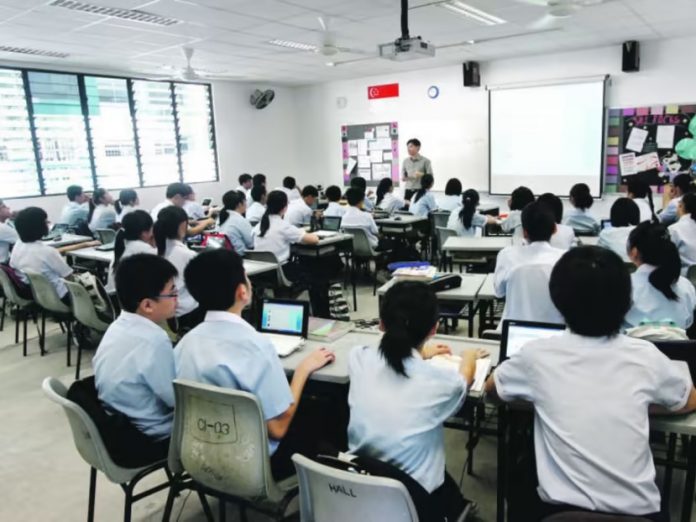
Elevated student engagement is at the heart of every successful classroom. If you’ve ever watched a lesson fall completely flat, you know the feeling. You can spot high student engagement when students are eager to participate, share ideas, and tackle challenges with enthusiasm. On the flip side, signs of low engagement, like blank stares, distraction, or silence, signal that it’s time to try something new.

Activities that work the best share a common thread: stimulating the minds of your students while holding them accountable to learn.

Creating a Supportive Classroom Environment

A positive classroom environment is the foundation for promoting student engagement. When students feel respected, included, and supported, they’re more likely to take risks, ask questions, and participate actively in the learning process. Building this kind of environment starts with encouraging collaborative learning and giving students opportunities to work together, share their perspectives, and learn from one another.

Simple strategies like think-pair-share, group discussions, and peer review can make a big difference. These activities allow students to engage with the course material in a group setting, helping them feel connected to both the content and their classmates. Using inclusive language and inviting every student to contribute ensures that all voices are heard, which is especially important for diverse learners. By fostering a classroom environment where students feel valued and supported, teachers can encourage students to take ownership of their learning and stay engaged throughout the year.

Here are five activities worth keeping in your back pocket.

1. Collaborative Learning Simulations

There’s something magical that happens when you put students in a scenario where the outcome depends on what they do. They stop waiting to be told what to think and start actually thinking. Collaborative simulations are a form of active and experiential learning, immersing students in real-world problems that require reflection, analysis, and teamwork.

The key is making sure every student has a role, not just the confident ones who always volunteer. Group work and collaboration give students a welcome break from solo bookwork and allow them to benefit from each other’s perspectives. Organizing students into small groups can promote active participation and deeper learning.

Mission.io does this well. Students join as a crew, get dropped into a crisis scenario, dig through evidence as a team, debate what to do, and take action. These simulations require students to participate actively, think critically, and apply what they’re learning to develop critical thinking skills and improve knowledge retention.

The Missions are tied to real standards, too. In Tackling Toxins, kindergartners investigate the contaminated water supply on a nearby planet, hitting NGSS K-ESS2-2 and K-ESS3. In The Abyss, 3rd graders explore the deep-sea Abyssal Zone to study bizarre creatures, covering NGSS 3-LS3-2, 3-LS4-3, and Common Core writing standards. In Brace for Impact, 5th graders use coordinate graphing to protect a town’s power plant from an incoming asteroid, applying CCSS 6.NS.C.8.

The Missions respond to student choices, so if students do the work well, the Mission succeeds, and if they struggle, the Mission could fail.

2. Socratic Seminars for Critical Thinking

Most classroom discussions follow the same pattern. You ask a question, two or three students answer, and everyone else waits for it to be over. Socratic seminars break that pattern.

The idea is simple. Everyone comes in having read or engaged with the same material. Students sit in a circle and work through open-ended questions together. You’re there to keep things moving, not to give the answers.

It works at every grade level with the right setup. Younger kids need more structure and simpler questions. Older students can handle real disagreement and complexity.

One thing that helps is giving students a chance to think before the live discussion starts. Since Flipgrid shut down its standalone app in July 2024, a lot of teachers have moved to Padlet for this. You post a prompt, students record a short video response before class, and they can watch and react to each other’s thinking ahead of time. By the time the seminar starts, nobody’s coming in cold.

A few ways teachers actually use it: the Stream format works well for pre-seminar video responses, with posts showing up chronologically so students can scroll through and comment on each other’s thinking before class. The Shelf format, available from the same settings page, is better if you want to organize discussion by topic ahead of time: set up sections for each theme, and students post under whichever one fits their response. For a simpler starting point, Padlet’s video discussion guide walks through exactly how to set up a board where students record responses before seeing each other’s work. Students don’t need an account to post, just the link. The free plan covers the basics and connects easily to Google Classroom.

3. Student-Created Content

One of the best ways to find out if a student actually understands something is to ask them to explain it to someone else, not on a test. Actually explain it, out loud or in writing, in a way another person could follow. When students write and share their understanding, they not only develop their presentation skills but also achieve a deeper understanding of complex ideas.

The format can be anything: a video, a podcast episode, a poster, or a presentation. What matters is that students have a real audience in mind, even if that audience is just their classmates or their families. Providing relevant examples and connecting course content and course readings to real-world situations can further engage students by making learning more meaningful and applicable beyond the classroom. That shift in purpose changes how seriously they take the work.

Seesaw is a practical tool for running this in K-8 classrooms. There’s a library of thousands of teacher-created activities across subjects, a Classroom Dailies calendar with standards-aligned activities for every day of the school year, and students can respond in whatever format fits the task: voice recording, drawing, video, photo, or text. Everything goes into a portfolio that their families can see. The newer Flexcard feature lets you build multi-sided interactive cards combining text, images, and voice prompts, which opens up some creative assignment options. Encouraging students to present and share their work regularly drives engagement and helps make the classroom an equitable space for all learners.

The audience piece matters more than teachers sometimes give it credit for. Students work differently when they know someone outside the room is going to see what they made.

4. Game-Based Review

Game-based review works because the format itself drives participation. Students answer questions, earn points, compete individually or in teams, and watch a leaderboard update in real time. Ten focused minutes of this tends to be more productive than a long review worksheet. The key is using it to reinforce material students have already learned, not to introduce something new.

Kahoot is the most widely used option. You can build your own quizzes, pull from a library of over 30 million public Kahoots, or use the AI generator to turn any topic or PDF into a quiz quickly. The newer Robot Run mode gets students moving if you want to add some physical energy to it. Lecture Mode removes the timers and points if competition isn’t the right fit for your class, which is a useful option for students who don’t respond well to that kind of pressure. Digital tools like Kahoot!, Quizlet, Socrative, and Google Forms are used for interactive quizzes, real-time polling, and class-wide discussions, making it easy to encourage participation and gather instant feedback.

If you teach vocabulary-heavy content, Quizlet Live is worth trying. It puts students in collaborative teams instead of individual competition, which creates a different kind of engagement. Using mixed media to present learning content, such as combining text, images, and video, can engage students and provide a welcome change from traditional methods.

Wayground (formerly Quizizz) works similarly but goes broader. You can build quizzes, interactive lessons, and assign standards-aligned activities, making it useful beyond just vocabulary practice.

Using mixed media to present learning content, such as combining text, images, and video, can engage students and provide a welcome change from traditional methods. When designing questions for these games, consider including questions with more than one correct answer. This approach can promote deeper engagement and help students explore multiple valid responses, rather than focusing solely on finding the single correct answer.

To encourage participation, it’s helpful to provide students with a few ideas for presentation topics or sharing methods. This can make it easier for everyone to get involved and increase regular participation during review activities.

5. Role-Playing and Perspective-Taking

Ask a student to argue for a position they don’t personally agree with; or to make a decision from inside someone else’s shoes, and you get a different quality of thinking than most assignments produce.

It can take a lot of shapes. A mock trial in history class. Students representing competing stakeholders in a science or environmental debate. A writing assignment where students respond to a pivotal moment in a novel from the perspective of a secondary character. The specifics depend on your subject and your students, but the underlying structure is the same: students have to inhabit a perspective that isn’t their own and make it work.

If your school uses Houghton Mifflin Harcourt (HMH) curriculum, HMH Classcraft is worth a look. It pairs standards-aligned ELA and math lessons with engagement routines, including Turn and Talk, where students discuss with peers and submit written responses. A built-in AI tool summarizes those responses in real time so teachers can see where the class stands without reading every single submission.

What These Have in Common: Student Engagement

None of them involves students sitting quietly while someone else does the thinking. That’s really it. Student engagement activities and innovative teaching practices, as modeled by associate professors and other expert faculty, are essential for effective learning and help foster a positive classroom environment.

The tools listed here make these activities easier to run, but they’re not the point. A good simulation or Socratic seminar works without any technology at all. Scaffolding tasks with checkpoints helps prevent confusion and disengagement by breaking larger tasks into manageable steps, while Universal Design for Learning (UDL) is a framework that captures the diversity of student learning preferences. The platform just helps with scale, consistency, and data.

Using entry and exit tickets, such as short prompts at the start or end of class, can help gauge student understanding, and incorporating think, pair, share as an active learning exercise encourages all participants to contribute while creating space for deeper reflection.

If you’re figuring out where to start, collaborative simulations tend to get the most immediate buy-in across grade levels, especially with students who have checked out of traditional instruction. Mission.io is the strongest option for K-8, with over 100 standards-aligned Missions, no setup required ahead of time, and session data that tracks knowledge, application, initiative, collaboration, critical thinking, and resilience. Free to try, no expiration date.

Mixing up teaching strategies with new activities can prevent boredom and enhance student engagement.

Technology-Enhanced Learning

Technology offers powerful ways to increase student engagement and make the learning process more interactive. Digital tools can transform passive learning into active engagement, whether students are exploring virtual field trips, participating in simulations, or playing educational games. These experiences not only make learning more memorable but also help students develop critical thinking and problem-solving skills.

Technology also opens up new avenues for collaboration. Online discussion boards give students a platform to share their ideas and respond to others, while video conferencing tools make it easy to hold virtual group discussions, even in online classes. By integrating technology into your teaching methods, you can prepare students for the digital world, enhance participation, and create a dynamic learning environment that keeps students engaged and motivated.

Assessment and Feedback Strategies

Assessment and feedback are essential for keeping students engaged in the learning process. When students receive regular, meaningful feedback, they’re more likely to reflect on their progress, identify areas for growth, and stay motivated to improve. Incorporating a mix of assessment strategies, like self-assessment, peer review, and formative assessments, can help students take an active role in their own learning.

Technology can make assessment and feedback even more effective. 

  • Online quizzes and interactive games provide students with immediate results, helping them see where they stand and what they need to work on. 
  • Peer review activities encourage students to give and receive constructive feedback, building communication skills and deepening their understanding of the course material. 

By providing students with timely feedback and opportunities to reflect, teachers can create a supportive learning environment that promotes student engagement and helps every student succeed.

Get Started Today

None of these ideas involves students sitting quietly while someone else does the thinking. The tools listed here make these activities easier to run, and every student has a reason to participate.

Mission.io is the best platform to try first. Every student has a role, every decision affects the outcome, and the whole class is in it together. Pick a mission, share a session code, and you’re running. Teachers in over 1,000 schools use it for exactly that reason.

Samsung SDS Soars on KKR’s $820m Investment as AI Infrastructure Spending Race Reaches Korea

0

Shares of Samsung SDS staged a powerful rally after global investment giant KKR & Co. Inc. agreed to inject 1.22 trillion won ($820 million) into the South Korean technology and logistics provider through newly issued convertible bonds.

The stock surged as much as 21.3% intraday before paring gains to close 17.89% higher, making it one of the strongest performers in the market and signaling strong investor conviction that Samsung SDS is positioning itself at the heart of Asia’s next major AI infrastructure buildout.

This is far more than a routine financing deal. The structure, scale, and strategic advisory framework suggest a long-term transformation story centered on AI, digital infrastructure, and cross-border expansion.

At the core of the transaction is KKR’s purchase of convertible bonds, a hybrid instrument that combines the defensive characteristics of debt with the upside potential of equity conversion. This offers KKR a relatively protected entry into a high-growth technology asset. It provides substantial growth capital for Samsung SDS without the immediate dilution that comes with a direct equity raise.

More importantly, the deal turns KKR into an active partner rather than a passive investor. Samsung SDS said KKR will advise management on mergers and acquisitions, capital allocation, AI product strategy, and international expansion, a mandate that significantly broadens the scope of the partnership.

“Through this strategic collaboration, we will actively explore a wide range of growth opportunities, including M&A by leveraging KKR’s expertise accumulated in global capital markets,” said Jun Hee Lee, President and CEO of Samsung SDS.

That statement is especially important because it points to a likely inorganic growth phase. The market is increasingly reading this as a prelude to overseas acquisitions, particularly in AI software, cloud orchestration, enterprise automation, or cybersecurity, areas where Samsung SDS could rapidly scale its global footprint.

Samsung SDS already occupies a strong position within South Korea’s enterprise technology ecosystem. As part of the broader Samsung Group and an affiliate of Samsung Electronics, the company has long been a major provider of cloud services, digital transformation tools, and logistics solutions to corporate clients across industries.

What is changing now is the emphasis. The company is accelerating its transition from a traditional IT solutions provider into a full-stack AI solutions platform, a term that has become increasingly central to investor enthusiasm.

In practicality, this means Samsung SDS aims to deliver the full AI value chain: computing infrastructure, data storage, model deployment layers, workflow integration, and business-facing applications. This end-to-end capability is strategically valuable because enterprises increasingly want fewer vendors and tighter integration across their AI deployments.

The company said proceeds from the KKR investment will be used to accelerate spending on AI infrastructure and strengthen its AI transformation business competitiveness. This could include expanded data-center capacity, GPU and accelerator deployments, enterprise cloud platforms, and AI-native workflow systems.

There is also an emerging narrative around new growth verticals. Recent disclosures indicate Samsung SDS is exploring expansion into areas such as physical AI and stablecoin-linked business services, which suggests the company is not limiting its ambitions to conventional enterprise software.

That makes the story more compelling from an investor standpoint. Rather than merely riding the AI spending wave, Samsung SDS appears to be building a broader technology ecosystem that could span infrastructure, enterprise intelligence, industrial automation, and next-generation financial rails.

KKR’s investment thesis makes that clear.

“Against a backdrop of increasing demand for digital transformation and AI solutions, we have strong conviction in Samsung SDS’ market leadership and growth potential by playing a critical role in advancing Korea’s digital capabilities and infrastructure,” said Chung Ho Park, Partner and Head of Korea at KKR & Co. Inc.

This language indicates that Samsung SDS is not just a company-specific story, but a part of South Korea’s broader digital competitiveness agenda. In effect, KKR is making a large-scale bet on Korea’s AI modernization cycle.

The deal also highlights a wider capital-markets trend. Global private equity firms are increasingly shifting capital toward AI-adjacent infrastructure assets rather than purely speculative software startups. Infrastructure-backed enterprise technology companies with recurring revenues and strong cash positions are being viewed as more durable long-term AI bets.

Samsung SDS enters this phase from a position of financial strength. The company already holds about 6.4 trillion won in cash and cash equivalents, meaning the KKR capital comes on top of an already robust balance sheet.

That combination of internal liquidity and fresh external capital materially enhances its capacity for acquisitions and aggressive capital expenditure. The transaction is expected to close in the second quarter, with KKR saying the investment will primarily come from Asia Fund IV.

Together, the sharp share-price reaction reflects more than enthusiasm over a funding announcement. Investors are increasingly pricing in the possibility that Samsung SDS could emerge as one of Asia’s most important enterprise AI infrastructure players, particularly as global spending on digital transformation and artificial intelligence continues to accelerate.