DD
MM
YYYY

PAGES

DD
MM
YYYY

spot_img

PAGES

Home Blog Page 5045

Rwanda Coffee Cooperatives: A Case Study of Beautiful Coffee Rwanda

0

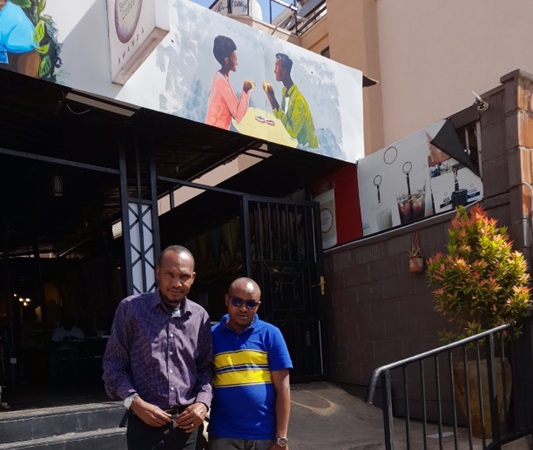
It was a great privilege finally catching up with Josias Harerimana, the founder and CEO of Beautiful Coffee Rwanda (BCR henceforth).

Before delving into why this expose on BCR, it is appropriate, I think, to first provide some background on the man behind the enterprise. Born in 1982, and married with a kid, Josias Harerimana holds a bachelor’s degree with honours in Biomedical laboratory sciences, as well as a Master’s degree in Public health and Food studies. He has also worked for over 13 years in the health sector, as well as nearly a decade working with coffee cooperatives and companies.

About Beautiful Coffee Rwanda (BCR)

Beautiful Coffee Rwanda (BCR) is a “fair trade” social enterprise supporting farmers’ partnership to build a sustainable business model together. As a fair-trade company, BCR is helping, and has helped, farmers to build sustainable business models by introducing fair trade certification, and other certificates to cooperatives, as well as exposing these entities to international buyers. Broadly speaking, BCR partners with a host of coffee cooperatives such as Coocamu, Bwishaza coffee, Gishyita coffee, Karora coffee – all of which are profiled below. 

The COOCAMU coffee cooperative (Rutsiro District)

Headquartered in the Rutsiro District, Musasa Sector (Western Province) on the shores of Lake Kivu, COOCAMU was founded April 2010 Producers: 368 smallholders (82 members are women). The COOCAMU coffee cooperative is located on Kivu belt region, where the rich soil, high altitudes and abundant rainfall give the bourbon coffee trees dotting the slopes above Lake Kivu the best environment to yield the best Arabica beans. It contributes to the community development through taxes payment and supporting Gabiro Cell in different ways and train farmers on Best Agricultural Practices or BAP. Cooperatives were trained about Fair Trade and on getting this certificate, cooperatives will be able to sell their specialty coffee to international buyers while accessing fair price, environmental and health protection, fair labour conditions and community development. Cooperatives will become self-reliance and recognize on international level BC Korea buy fair trade certified coffee from COOCAMU since 2017 COOCAMU got 2 new buyers (Olam & DR Weakfield) due to BCR. Cooperative capacity building through different trainings, coaching & follow up certification coaching (FLO/WFTO, RA etc.) Quality improvement training World coffee fair exhibition preparation & participation export promotion training. COOCAMU has been Fair Trade certified and currently COOCAMU specialty coffee is distributed in Rwanda, in the Republic of Korea and Europe. Coffee is marketed in Republic of Korea by Fair trade company (Beautiful Coffee Korea).
Bwishaza Coffee Cooperative (Rutsiro Western Province)

Located in Gihango Sector on the Eastern shore of Lake Kivu, the Bwishaza coffee cooperative was founded in February 2010 Producers: 593 smallholder farmers (203 women; 390 men). The Bwishaza Cooperative cultivates its high-quality coffee near a Peak Congo Nile Mountain near Kivu Belt.  By producing high-end coffee and employing a majority female workforce, the cooperative ensures maximum benefits to local families.  In 2010, the Cooperative built a washing station with funds provided by the Investor KCC with Project Techno Serve. To pay this support, the Bwishaza cooperative supplied parchment coffee to KCC and pay back the loan, and the net profit were calculated after deduction of loan annually.

Karora coffee cooperative (Karongi, Western Province)

Located in Mubuga (Karongi) on the Eastern shore of Lake Kivu, Karora was also founded in 2010. The cooperative has 16 smallholders in its membership. Due to the low number of members who have many coffee trees the management of coffee quality from farms to the washing station is easier than other cooperatives and to maintain their farms in organic conditions for getting organic certificate was much easier than the other cooperatives discussed in this article.

Gishyita coffee cooperative (Gishyita Sector)

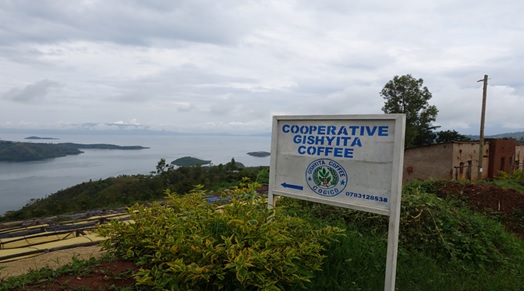
Headquartered in the Gishyita Sector Region, also on the Eastern shore of Lake Kivu, KARONGI, Western Rwanda, the Gishyita cooperative was founded in March 2010 and has about 89 smallholder farmers (26 women; 63 men) as members. All women members and men’s members wives are trained about Best Agricultural Practices, and the women are motivated in coffee processing techniques – from Seed to Cup.

How does it all work – from seed to cup?
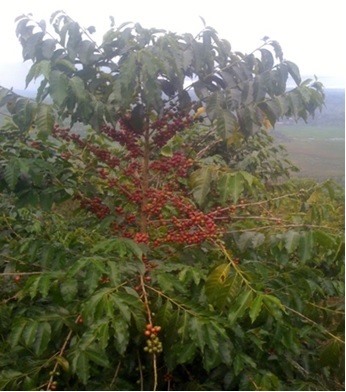
Processing – The coffee is grown organically using compost manure and the cherries are carefully handpicked and washed with fresh clean water then sun dried on raised screens above the shores of the Lake Kivu. A light orange-blossom aroma with soft acidity and delightful body this Rwanda Kivu coffee displays sweet mandarin and caramel flavours “

Production capacity – COOCAMU produces 4 containers, Bwishaza coffee produces 4 containers, Both Gishyita coffee and Karora coffee produce 2 containers each.

In his presentation in Korea in 2018, Josias was optimistic about the future of BCR and its partners. As he pointed out, “All the cooperatives are cultivating across Kivu belt region which is high altitude zone with volcanic soil and favourable climate for producing quality coffee.
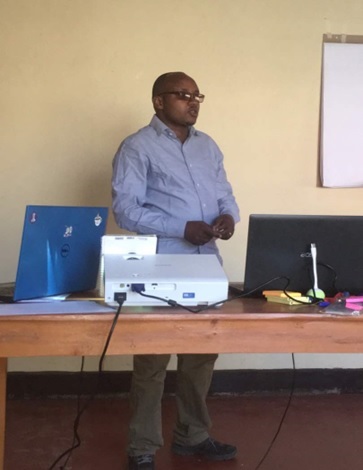
As he further points out, all the coffee produced score above 85%, all buyers who visited the cooperatives liked this coffee as it’s a specialty one.” He went on to state that, “by buying this coffee, you will support financially the farmers who spend their time in coffee plantation and processing to make sure they’re producing quality coffee from seed to cup. It’s very important to continuously support these small cooperatives due to their effort in taking care of coffee but also by producing specialty one.” Where does the money go? To this, Josias was clear, “the money you buy their coffee return to farmers as an investment to their plantations and their family welfare.”

Ultimately, there’s a context to all of this. It was only recently in June 2022, on Africa Science Focus, that the first G25 African Coffee Summit took place in Nairobi, Kenya, to find out what the continent’s coffee future looks like. We hear from Elijah Gichuru, the director of the Coffee Research Institute at the Kenya Agricultural and Livestock Research Organization, about climate impacts on coffee production and consumption. And, coffee farmer Prudence Jackie tells us how a local collaboration is supporting small-scale female farmers, who provide the majority of the labour in the coffee industry. 

A final note for the curious reader about Rwanda

Here’s what the Government of Rwanda: Administrative structure (www.gov.rw) says about the administrative structure of the country: Rwanda is currently composed of two layers of government (central and local) and of six administrative entities: These structures, which were reorganised under the 2005 reform, are complementary. The country is divided into four Provinces and the City of Kigali which are also further divided into 30 districts. Moreover, the districts are further divided into 416 Sectors. Additionally, the sectors are further divided into 2148 cells and lastly, these cells are divided into 14837 villages. All these subdivisions are headed by different people at every level and they all have different roles though directing towards the same cause. The “Province” serves as a coordinating organ to ensure the efficiency and effectiveness of Central Government planning, execution, and supervision of the decentralized services. It serves mainly as an advisor to the decentralized entities and coordinates development activities. There are four provinces and the City of Kigali – they consist of the Northern Province, Southern Province, Eastern Province and Western Province.

Ndubuisi Ekekwe To Speak in Pastor W.F. Kumuyi’s Impact Academy

0

Yes, I accepted Pastor W.F. Kumuyi’s personal invitation to speak at the Impact Academy. As a kid growing up in Ovim, Abia State, his teachings shaped my life. In the Scripture Union, he influenced us immensely in secondary school. In the Chapel in the University, he educated us. After college, he continues to minister to us. Today, whenever I am in Lagos, going to the temple, Deeper Life Gbagada, is always a great experience. I invite all to attend. More details later.

I will speak on the topic – Against All Odds.

The event schedule is here.

Become A Growth Hacker With Tekedia Institute

0

We’ve hit our 2022 target! Sure, we underestimated our brand and our products. So, we have set a new target – and we need you to help us exceed it. The mission is simple: to become the best place to prepare innovators, project champions, entrepreneurs, managers, students, etc on how to build modern companies in Africa. We invite you or your company to join us as a Growth Hacker. Learn more here .

Zazuu, UK-based African-focused Fintech, Raises $2m to Scale Cross-border Operation

5

Zazuu, a U.K.-based fintech that offers customers various remittance options, has announced that it has raised $2 million in a new venture round.

The African-focused payment startup was developed in 2018 to fill a gap in cross-border remittance affecting mostly migrants living in the US and the UK. It has grown to attract investors who are willing to bet big on its growth potential.

The round received participation from pan-African investors Launch Africa and Founders Factory Africa, Hoaq Club, ODBA VC, Jonomi Ventures, British rapper Tinie Tempah, iROKOtv founder and CEO Jason Njoku and Kuda chief executive Babs Ogundeyi.

The Zazuu idea was born when the founder and CEO Kay Akinwunmi  and his cofounders, Korede Fanilola, Tola Alade and Tosin Ekolie had firsthand experience what the majority of Africans in the US and UK go through while trying to send money back home.

As noted by TechCrunch, financial systems in the U.S. and the U.K. do not favour migrants, particularly African ones. For many, performing certain financial activities like building one’s credit history or sending money back home can be difficult.

“We’ve experienced this. Seeing my mom send money and the friction there is pretty much the story of millions of Africans and migrants sending money,” said Akinwunmi. “Africans in the diaspora, whether you’re sending money to another side of the world or trying to get a loan here in the U.K., are at a disadvantage.”

Zazuu started off as a chatbot in 2020, publishing via Facebook and Telegram, remittance rate and fees from different remittance platforms such as WorldRemit, Chipper Cash, Nala and Western Union.

“We looked at the typical African customer to understand their behavior, and we noticed a fascinating trend,” Akinwunmi told TechCrunch. “We realized that Africans have this pathological behavior, which is, we love to shop around, to compare our choices and try different options before we finally make a decision.”

In further conversation with TechCrunch, the CEO said among other things, that the initial product helped dispel customers’ preconceived notions about which service had the best rates as they got introduced to new providers. The product has now evolved into a full-blown aggregator with more than 17 service providers (money transfer companies that serve multiple corridors) listed. It provides options for money transfers from Canada, the U.S. and seven European countries, including the U.K., letting customers use its “Search and Compare” service and find providers that can move money from these countries to Africa.

“The core of Zazuu is to take power away from financial institutions and money transfer companies, which are inherently biased. We want to give customers this bird’s eye and transparent view so that for the first time, they can see all of the options in one place, including rates, speed and reviews. The onboarding experience is going to be a lot smoother and much better for them,” he said, comparing Zazuu’s processes to traditional market players.

Zazuu’s proposition is clear to customers; however, it can be tough to see what’s in it for providers on the platform. But Akinwunmi argues that his platform solves providers’ most significant pain points: churn and high customer acquisition costs. “Zazuu is a marketplace, and the reality is customers are shopping around looking for multiple entities to send money. But it is an opportunity for providers to reinforce their brand message or advertise other parts of their business aside from good rates. And as opposed to getting just a referral, we’re bringing real transactional value to them,” he expressed.

While Zazuu didn’t provide hard user numbers, it said this base has grown 2.3x in Q1 2022 compared to the entire 2021. The company will use the new investment to keep these numbers up, hire more talent and scale its Pay with Zazuu feature that allows users to complete transactions in-app. Although this service is only available to senders in the U.K. and receivers in Nigeria and Ghana, Zazuu says it plans to expand access to other sender and receiver countries. Also in the works are a couple of products that address financial challenges African immigrants face, such as access to credit.

“The aim is to build a completely non-biased financial wellbeing for African immigrants across the world,” said the chief executive.

Commenting on why Launch Africa invested in the four-year-old company, Zach George, the firm’s managing partner, said, “Zazuu is building a true marketplace for financial services, starting with remittances and payments. We believe their business will bring fairer, more transparent pricing and better cross-border mobility of money across the African continent.”

Why Nigerian Fintechs are Gradually Morphing Into Lenders

1

Some months back, one of my neighbors who works with AXA Mansard bought a Geely Coolray. Nothing special about that, a Geely Coolray is a Range-Rover Evoque with a sharp face and a horizontal shield logo instead of the iconic and symbolic Landrover logo.

Beyond this however is a testament to the growth of the vehicle lending space in Africa, a growth that firms like AutoChek have made possible, partly by being one of the early movers in the space, and partly by consolidating the market via an aggressive acquiring spree. Nothing aggressive about acquiring 4 companies (at least on a global scale), but in a market where startups largely prefer to spread organically as against inorganically via acquisitions, that says a lot.

Today, if you earn N600,000 (US$1000) a month in Nigeria and you’re serious, you can save N225,000 (US$375) of that a month, and after 8 months have the 30% deposit (N1.8m (US$3,000)) required to make the down payment for a Foreign used 2015 Toyota Camry which retails for about N6million (US$10,000). The growth of the vehicle lending space is phenomenal.

People think Moove is in the mobility space, like this author that called them an “African Mobility company with a fintech play”, or this author that calls them a “ Nigerian Mobility Startup”. Moove is actually a B2B fintech lender with a specific niche – revenue-based vehicle financing (i.e the guy I’m giving car financing to is using that car to make money), calling them a mobility startup is like calling Starbucks a coffee shop (they’re more likely a bank considering they have more than US$1.4bn in interest-free “customer deposits” via their loyalty cards, etc ), or calling Apple a consumer goods company, considering it makes money selling products to consumers. Understanding that this is majorly just marketing speak and Apple is actually a luxury brand because only a luxury brand can sell a basic product like a smartphone and make a 100% mark up on it as profit, just by slapping a brand name on it.

When a young lady in her 20s earning N250,000 (US$416) a month is willing to save or pay N300,000 (US$500) in 4 monthly installments just to buy a second-hand 128GB iPhone 12 Pro (that she probably doesn’t need), you’ll realize that it’s more than just the functionality of the phone she’s paying for, she’s also paying for the signaling that comes from using an iPhone. It’s like luxury watches – a US$35,000 Hublot Big Bang time-piece will not tell you what time Jesus is coming, but in the right room and amongst the right people, it’ll signal that you’re a person of value and significance, considering you’re carrying two foreign used Toyota Venza’s on your wrist (and with the way the exchange rate is going, possibly three). But I digress.

The use case and demand for lending has grown in leaps over the years, and I believe strongly that Nigerian fintechs are gradually morphing to serve that market.

UNDERSTANDING THE NIGERIAN PAYMENTS LANDSCAPE

For those who do not know, payments is generally a low-margin business. Payment companies charge a Merchant Service Charge fee (that is usually regulated by a regulatory agency) for transactions on their platforms.

In Nigeria, this charge is capped at a maximum of 1.5% for local transactions, and around 3.5% for international transactions. What this means is that for every transaction processed via a payments gateway, the gateway keeps 1.5% as gross revenues. This also indicates that payments is a scale business, scale meaning that transaction volume somewhat culminates into higher revenues, similar to how eCommerce companies operate where scale (In this case GMV) is (or should be) equal to higher revenues.

However, the payments acceptance process in Nigeria both for CNP (Card not present)/online acquiring and Card present/offline acquiring) transactions in Nigeria involves multiple stakeholders who make up the value chain and also take a cut of that 1.5% MSC. A typical online acquiring transaction involves 6-7 main stakeholders;

Issuing Bank: The Bank that issued you a card i.e Zenith Bank, GTBank, etc.

PSSP: The owner of the gateway you’re inserting your card details into i.e Remita, Paystack, etc.

Card Processor: Player responsible for processing card transactions e.g Interswitch, UPSL, PayU, Cybersource, etc.

Card network: Network responsible for routing transactions i.e VISA, MasterCard, etc.

Transaction Switch: A tool that allows for transaction routing between the various stakeholders during a transaction.

PTSP: The company issuing the merchant a payments terminal (POS terminal) – only applicable for in-person transactions i.e Global Accelerex, Itex, etc.

Acquiring Bank: The bank the merchant deals with i.e Zenith Bank, GTBank, etc.

NIBSS: Nigerian Central Switch for settlement.

Each of these stakeholders keep a cut from the 1.5% merchant service charge for the transaction, and at the end of the day, the PSSP ends up with a lesser percentage of that to record in their books as net revenue.

For context purposes, Stripe, the US-based Fintech company charges 2.9% plus 30 cents per transaction to accept card payments. This is significantly higher than what its Nigerian counterparts are permitted to charge. Stripe reportedly processed about US$640billion in transaction volumes in 2021 (slightly less than what the entire Nigerian ecosystem pushed digitally including NIP in 2021) with gross revenue at US$12 billion and net revenues of almost US$2.5billion. Net revenues of US$2.5billion indicates Stripe keeps approximately 0.4% of what it processes or 13% of its total Merchant service charge.

However, Stripe is not a conventional fintech that makes money from only transaction processing, as it offers a plethora of services to merchants on its platforms including virtual card issuance, capital solutions, startup incorporation, etc.

p.s: this US$640billion in transaction volume is across all 50 countries where Stripe operates and may also include Paystack volumes.

THE SWITCHING STRATEGY

Nigerian Fintech companies in a bid to bolster profitability are therefore looking for ways to feature more prominently in the payments value chain and bolster ARPU from existing users.

Acquiring a switching license has become a good way to execute this. I mentioned in an earlier post that Fintech 1.0 players like Interswitch and UPSL who own the majority of the switching market in Nigeria, partly because of the first mover advantage they had, and partly because prior to now, card switching has really been the only (or most profitable) kind of switching to engage in Nigeria considering that more than 30% of online transactions in Nigeria occur via cards (yes! Nigeria is not a mobile money market).

I’ve always believed that as long as card switching exists, the two aforementioned firms would continue to dominate that space –  considering the cost of maintaining such infrastructure yourself or trying to convince banks and other financial stakeholders to yank off a UPSL or an Interswitch may be difficult, however, recent developments in the fintech space have shown that while yanking off a card switch may still be undesirable, companies with significant transaction volumes are choosing to switch and process their own transactions – Companies are going ahead to acquire switching licenses.

Over the last 6 months, Remita acquired a switching and processing license from the CBN, but Remita is only one company – TeamApt also acquired a switching license, so did Appzone, Paystack, and HabariPay (GTCo’s fintech arm). I can bet blood and water right now that if Flutterwave doesn’t already have an Approval in Principle Switching license from the Central Bank of Nigeria they haven’t publicly announced yet, they at least have some kind of document with the CBN payment system division applying for one.

According to the Central Bank of Nigeria’s Framework for licensing switching and processing companies, switching and processing companies in Nigeria are allowed to offer switching services, card processing, transaction clearing, settlement agents services, and non-bank acquiring services. The TL;DR of this is that payment companies with this licensing type can reduce reliance on third-party transaction switches for switching and processing and choose to process their own transactions, thereby extracting more value from the payments value chain.

However, this doesn’t in any way mean that the Fintech 1.0 players already providing these services will become redundant – far from it, but it does mean that a significant portion of transaction volumes passed on to these switching companies for processing will likely be self-processed by these companies themselves. I expect more payment companies processing huge transaction volumes to follow this route.

Beyond transaction switching, however, a switching license allows its holder to act as a PSSP, PTSP (Payment terminal Issuer), and a Super Agent. This means excluding normal PSSP operations, a company with a switching license can issue payment terminals to its merchants and run a super agency network.

What this means is that for a typical offline card transaction, Remita or Paystack who would ordinarily play one role – PSSP, can now directly offer 3 out of the 7 services (PSSP, PTSP, and switching) in the value chain thereby capturing more value for itself in the process. A company like HabariPay which is a subsidiary under GTCo can also find itself in transactions where it can offer 5 out of the 7 services required for a physical transaction to go through by being the PSSP, PTSP, and switch, but also the issuing and acquiring bank via GTBank.

This ultimately means that payment companies are now positioning themselves to increase their net revenue per transaction processed from payments and also bolster it via other value-added services, one of which is lending.

The Lending play

Lending is a big business. Banking is lending. Between the top 5 Nigerian banks by market capitalization (FUGAZ), about N1.386trn (US$2.3bn) was made in interest income (revenue from lending) in 2021 alone, which represented an average of 40.4% of portfolio income.

The appetite for lending in Nigeria is also huge, both from a consumer lending perspective, and an SME lending perspective. Banks are ordinarily supposed to be well positioned to feed that market, but they aren’t. While banks are very comfortable lending to billionaires, large corporate entities, and individuals with steady sources of income (salary earners), they fear lending to normal consumers and SMEs. High NPL ratios can be detrimental to the existence of a commercial bank, and the latter category of users are usually harbingers of such, especially when such loans are uncollateralized.

When a billionaire takes a loan from a bank, his 5 bedroom house in Lekki Phase 1 and his 2021 Bentley Bentayga have been placed as collateral, if he defaults, the bank has a nice piece of real estate to sell (or wait for it to appreciate in value then sell), and a nice car for someone to bid for and buy. A salary earner will always receive a salary, and a large corporate entity has a lot to put on the table as collateral.

But if Mike takes a non-collateralized loan from the bank for personal expenses and he can’t pay it back – it’s on God. No joke, and since banks rarely shame people like loan sharks, Mike MAY end up going scott-free, albeit his name may get blacklisted and placed on some database that may severely hamper his chances of receiving credit in the future (if that database is shared with the relevant parties off course).

SMEs also struggle to access business loans for their businesses, because while they may run profitable businesses, their poor bookkeeping may simply hinder them at the banks. Some consumers also feel emboldened to not pay back loans (except when the consequences include you being accused of all manner of things by loan sharks).

The US economy is built on credit. A poor credit score in the US is somewhat tantamount to economic suicide. Fred’s iPhone 13 Pro was acquired on credit (he’s paying monthly for it), his Mercedes E series is also on credit – he has a car note on it, and the new house he announced was also on credit – he has a 25 years mortgage to pay on that property, including taxes. The fact that there is a shared credit bureau database in the US means the consequence of a loan/credit card default is severe. In Nigeria not so much.

Fintech Plays

Nigerian fintech companies recognizing the potential and market opportunity in the lending space are building multiple business models around it. Almost every payments company today in Nigeria has a lending play – Flutterwave announced Flutterwave Capital at its Flutterwave 3.0 event earlier this year, and also hired two key executives this year one of which is Oneal Bhambani a former VP at American Express with years of experience offering business enablement and credit solutions to SMEs. Interswitch has Quickteller for loans, TeamApt has a lending play it piloted with its agency business, and Remita empowers the lending economy via a proprietary solution that doesn’t just give lenders access to salary records of over 3 million users on its platform to enable them make better lending decisions, but also helps increase loan repayment by initiating loan repayment at source (i.e debiting the borrower directly from his employers end before the money gets to his account).

Every fintech offering business banking and SME enablement solutions today is largely poised to monetize via lending to the SMEs on their platforms – Brass Banking, Kippa, Prospa, Bumpa, etc.

All digital banks largely employ the same strategy – free float from users transacting on their platforms to power lending to the same users and make a decent markup – Kuda Bank, Fairmoney, Sparkle, Carbon, and Kredi Bank. In fact, I personally believe a digital bank that cannot offer credit to its users will likely underperform, especially when free transactions on its platform are a key part of its customer acquisition strategy.

Even M-Pesa allows its users’ access loans from its banking partners (likely based on their M-Pesa transaction histories) and possibly keeps a cut on revenues. Non-fintech businesses like TradeDepot, and OmniBiz offer BNPL (Buy Now Pay Later) services to their merchants to bolster transactions on their platforms, while open API banking players like Mono and Okra recognize that the biggest use case for transactional data and statement APIs is still to power credit-scoring for lenders.

I personally do not expect companies to slow down in their extension of credit to their users as a way to bolster and increase ARPU.

CONCLUSION

The growing use cases for lending in Nigeria and the relative gap in the market continues to create opportunities for fintechs to serve this market, and as more fintechs continue to desire profitability and revenue growth, directly offering credit and/or empowering the credit economy will continue to look like an attractive avenue to venture into.

Inspired By The Holy Spirit